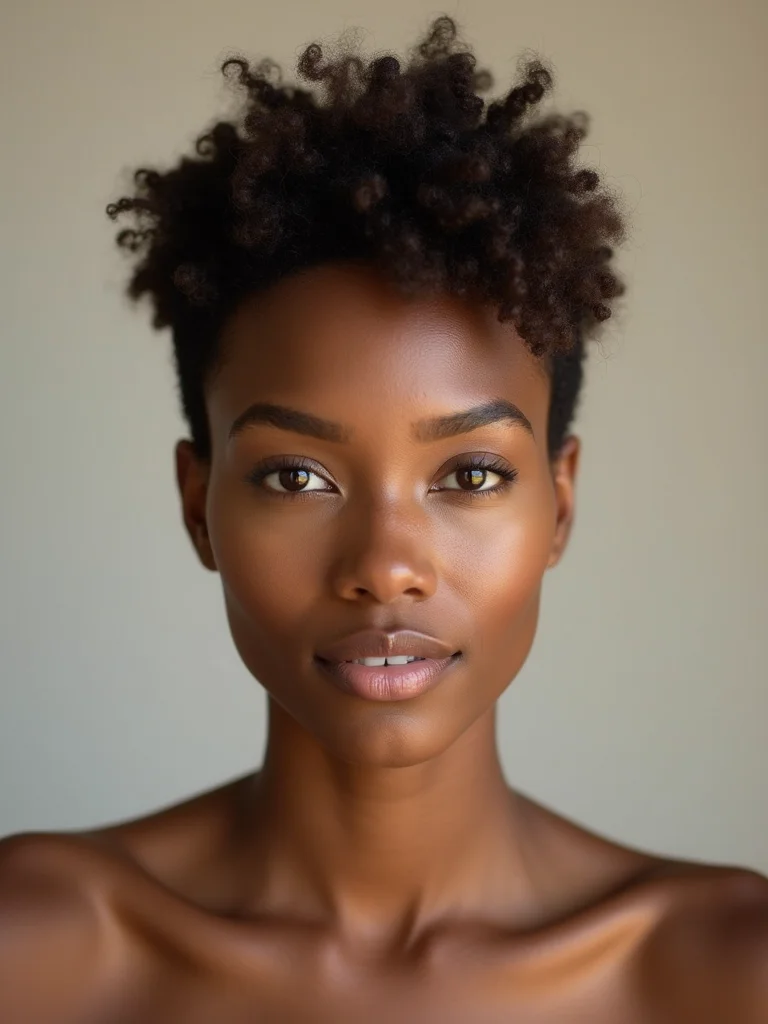
A client once sat down convinced her natural wave and a pixie cut could never coexist, that short hair only worked sleek and smooth. The cut that afternoon proved the opposite: waves settled into the crop on their own, and the flat iron stayed in the drawer from that day forward.
Short hair and natural bend turn out to be a genuine match, not a workaround. The wave adds movement a sleek crop can’t fake on its own, and the short length keeps the whole thing wash-and-go. Fifteen versions follow, from barely-there texture to full beach waves, each with the trim schedule, product, and technique it actually needs.
What a Wavy Pixie Actually Asks Of You
How much length should stay on top for the wave to actually show? Enough for the bend to complete at least one full turn, which varies by how tight the wave pattern is; a stylist checks this on dry hair before deciding the top length. Too short and the wave reads as a kink instead of a curve.
Does natural wave make the cut easier? It helps, since the cut can be shaped around the wave pattern from the start, but it isn’t required for any version here.
How much daily styling does it need? Most versions take under five minutes once the technique clicks, and a few are close to wash-and-go. A shape-up costs about the same as a straight pixie trim, typically $40 to $75, since the cutting itself doesn’t add chair time.
A Soft, Tousled Wavy Pixie

This is the gentlest version here: soft, airy layers tousled into a relaxed, undone shape, with a wave that’s more bend than curl. It’s the easiest entry point into a wavy pixie, since it takes a scrunch of product and almost no technique to wear well.
- Scrunch a light texture cream through damp hair and let it air-dry
- Holds its shape between visits longer than any bolder version here
- A gentle starting point for anyone new to wearing hair this short

A Piecey, Sea-Sprayed Wavy Crop

Push a salt spray into damp hair and work the pieces apart with your fingertips, and the soft pixie turns into something with real grit, the kind of texture that looks like it happened outdoors rather than in a bathroom mirror.
Salt is drying on hair this short, so a lightweight oil on just the ends afterward keeps the crop from feeling brittle by the second day.
- Work from the crown outward so the crown pieces separate first
- A slightly damp re-scrunch on day two revives the texture without a full restyle
- Skip the oil near the roots; it flattens the volume the salt just built
🅰️Salt Spray Texture
Matte, gritty, and beach-worn; the pieces separate cleanly but the finish can feel dry without a follow-up product.
🅱️Cream or Mousse Texture
Softer, glossier separation with more hold; less drying, but the waves read more polished than piecey.
A Side-Swept Wavy Pixie

Sweeping the top to one side with a soft, curved fringe adds a flattering diagonal line to a wavy pixie. The sweep softens a round face, and the curved fringe frames the eyes without covering them.
Style the sweep while the hair is still damp, pushing it toward the higher eyebrow and letting the wave carry through the fringe. A touch of light paste holds the direction without stiffening it.
- Push the sweep toward your higher eyebrow while hair is damp
- A light paste holds direction without looking set
- One of the more universally flattering ways to wear this cut
An Undercut Wavy Pixie

Pair an undercut pixie base with a wavy, textured top and the sharp underneath plays off the soft top for real contrast. Clipping the underneath short takes density out from where nobody sees it.
That makes it a smart pick for thick hair that tends to sit heavy on top, since the crown gets lighter without the length or texture up there changing at all. Growing the top out just far enough to cover the undercut on a low day, then pinning it back on a bold one, is the whole appeal.
- Ask the stylist how gradual to keep the taper between the two lengths
- A pomade rather than a spray keeps the covered undercut from showing through
- Plan a touch-up on the shaved section faster than a shape-up on top
A Choppy Wavy Pixie

For a pixie with real attitude, choppy layers and waves work together, close in spirit to a full choppy pixie cut but softened by the natural bend. The crop gets point-cut into separated pieces, and the wave amplifies that texture into something alive.
The Edgiest Version Here
Point-cutting is the technique behind it, with the scissors notching into the ends to remove weight and build the separation. Thicker, wavy hair suits this especially well, since there’s enough density to break apart into real texture. Plan a shape-up around every eight weeks; the choppy ends blur into a softer shape faster than a blunt crop would.
Face-framing bits soften the front so the boldness stays wearable. Finish with a matte paste, pinched onto the ends rather than combed through.
A Curly-Defined Wavy Pixie

For hair that lives somewhere between wave and curl, defining your own natural pattern is the most flattering route for texture like this. The cut shapes itself around the bend and coil you already have, close to what a full curly pixie guide walks through, just with less overall curl to account for.
- Have it cut on dry, defined hair so the stylist can see and account for shrinkage
- Define with a curl cream on soaking-wet hair, then let it air-dry undisturbed
- Refresh between washes with a little water and leave-in
A Wavy Pixie With Micro Bangs

Add a tiny, high micro fringe to a wavy pixie, closer to a pixie cut with bangs than to the fringe-free versions here, and the contrast does the work: undone waves against a bold, blunt little fringe reads confident and a little editorial.
The Editorial Pairing
Micro bangs flatter oval and heart-shaped faces best, where the proportions have room for a bold horizontal line. They’re also the highest-upkeep piece in this whole roundup.
The waves keep everything below the fringe relaxed, so the bangs are the only part asking for real commitment.
Fringe Upkeep Reality
Micro bangs grow into the eyeline fast. Expect a bang-only trim close to every two weeks, or the graphic line softens into something closer to a curtain fringe within a month.
An Asymmetrical Wavy Pixie

Cutting a wavy pixie longer on one side adds a bold, dynamic line to all that soft texture, a wave-softened take on a full asymmetrical pixie. The waves keep the strong asymmetry from reading too hard, gentling what would otherwise be a sharp, graphic shape.
- Comb the longer side flat first to check where the cut line actually falls
- A texture spray on the shorter side keeps it from looking like an afterthought
- Plan a shape-up closer to every five weeks to keep the line deliberate
A Sleek-Bend Wavy Pixie

A wavy pixie can be polished too. This version keeps the hair smooth overall and adds just a few controlled, sleek bends for a refined, put-together finish, closer to the office or an event than to the beach.
- Press in a few controlled bends with a flat iron, then smooth the rest
- Finish with a shine serum for a polished, non-matte gloss
- Best suited to straight-to-wavy hair that takes a smooth finish easily
📋Getting the Sleek-Bend Finish
- ✓Blow-dry smooth first with a paddle brush before adding any bend
- ✓Use a narrow flat iron so the bends stay soft, not sharp corners
- ✓Direct each bend a different way for varied movement across the whole style
A Voluminous-Crown Wavy Pixie

Building volume at the crown gives a wavy pixie real lift exactly where short hair tends to fall flat first. The waved, lifted top adds body and shape standing up off the head instead of lying against it.
The lift comes from the cut and the styling working together: layers cut to support volume at the crown, then dried against the direction they naturally grow before being set back into place.
- Ask for layers cut specifically to support crown volume
- Dry the roots against their natural growth direction, then settle them back
- A root-lifting spray locks the height in through the day
A Shag-Inspired Wavy Pixie

Borrow a shag pixie‘s rumpled, layered spirit and scale it down further, and the result carries fuller, rougher texture than a standard crop. The shaggy layers and waves read undone and full of movement, with the same easy attitude a shag carries at longer lengths.
- Choppy, shaggy layers build the fullest texture of any version here
- Twist small sections while damp for extra piece definition before it dries
- Air-dry it for the most natural finish
A Wavy Pixie-Bob Hybrid

This hybrid sits between two cuts, close to a wavy version of a full pixie-bob: a little longer and fuller than a true pixie, a little shorter and edgier than a bob. Adding soft waves gives the in-between length real movement and range.
A Compromise That Actually Works
With a bit more length to work with, the waves are easier to create and hold than on a very short crop, and the shape dresses up or down without much effort. It’s a strong option for anyone who can’t decide between a pixie and a bob.
The length also grows out more gracefully than a shorter crop would, buying time between full cuts.
A Beachy, Matte Wavy Pixie

A matte, beachy finish gives a wavy pixie sun-and-salt texture without any shine, for a thoroughly undone, casual look. Unlike the piecey, salt-heavy crop earlier, this one leans on stretching wash day rather than a fresh application each morning.
Texture Without the Shine
Second- and third-day hair actually improves here: natural oils redistribute through the lengths, and a matte texture spray on the roots alone keeps that first-day shine from creeping back in. Glossing products undo the whole point, so they’re worth skipping.
It’s about as low-maintenance as this cut gets, since the routine gets easier the longer it goes between washes instead of the other way around.
A Deep-Part Wavy Pixie

A deep side part is the fastest way to add drama and volume to a wavy pixie without changing the cut itself. Moving the part over pushes extra height into the root on one side and sweeps a wave of hair across the forehead.
One Move, a Different Mood
Set the deep part while the hair is still damp for the most lift, then style the wave to fall over one side. The deeper the part sits, the more volume and drama the finished look carries.
Switching the part occasionally also keeps the roots from flattening in one spot, which matters more on shorter hair than longer.
👍Why It Works
- +Adds drama and height without a single cut change
- +Takes minutes to set once the hair is damp
- +Easy to dial the intensity up or down by how deep the part sits
👎Worth Knowing
- –A very deep part can look severe on a rounder face
- –Needs re-setting daily; it doesn’t hold overnight
- –Switching sides regularly is necessary to avoid flattening one section
A Grown-Out Wavy Pixie

A grown-out pixie deserves its own spot on this list, since the in-between stage can be one of the prettiest rather than something to dread. As a pixie grows, the extra length gives the waves more to work with.
A shaping trim roughly every ten weeks keeps that awkward phase from turning into a shapeless mass, holding the proportions steady while the length catches up underneath.
The waves disguise the in-between length well on their own, and a texture spray keeps the whole thing looking like a deliberate style through the awkward stretch.
What to Expect
Whichever version gets picked, the daily math is similar: a few minutes with product on damp hair, and the wave does most of the remaining work on its own. Trim schedules are where the versions actually split. Micro bangs, asymmetry, and deep choppy texture want tighter appointments; the tousled, side-swept, and grown-out versions forgive a stretched one.
Compared to a sleek, blow-dried pixie, the styling routine here runs about half the time, since there’s no fighting the hair’s natural bend into something it isn’t.
Wavy Pixie Cut Questions
?Will a wavy pixie work if my hair is completely straight?
It will. Nothing about the cut itself depends on natural texture, and a curling wand, a texture spray worked in while damp, or an overnight heatless set builds the same bend by morning. The one adjustment worth asking for is a touch more length up top than a natural-wave client would need.
?What’s the trick to making a wavy pixie read intentional instead of messy?
The line comes down to product and shaping. Work a light texture spray through damp hair, break the pieces up by hand, and keep the underlying cut on schedule so the shape stays clear underneath the texture.
?Does a wavy pixie work on thick hair?
It does, and often looks fuller than a sleek pixie on the same density, since the wave adds visible texture on top of the weight already there. Internal thinning may still be needed if the hair sits especially heavy.
?Can color be added on top of a wavy pixie without wrecking the texture?
Yes, though a stylist may adjust products afterward, since some lightening services can loosen a natural wave pattern on the lightened strands themselves. Any loosening tends to be structural, so the bend fully returns as new, unprocessed growth comes in rather than through a change in routine.
?What happens if I skip styling and let it air-dry every day?
The waves still show, just softer and less defined than with product worked through damp hair. It’s a reasonable trade for zero effort, though the shape reads closer to undone than intentional, and a few sections may need a quick finger-scrunch once they’re fully dry.
Short Hair That Moves With You
The thread running through all fifteen is the same: a wavy pixie delivers the ease and boldness people love about short hair, plus a softness a sleek crop never quite manages.
Screenshot whichever one caught your eye, and ask a stylist to cut with the wave in mind from the first snip, not smooth it flat and hope the bend comes back later.
Next Up