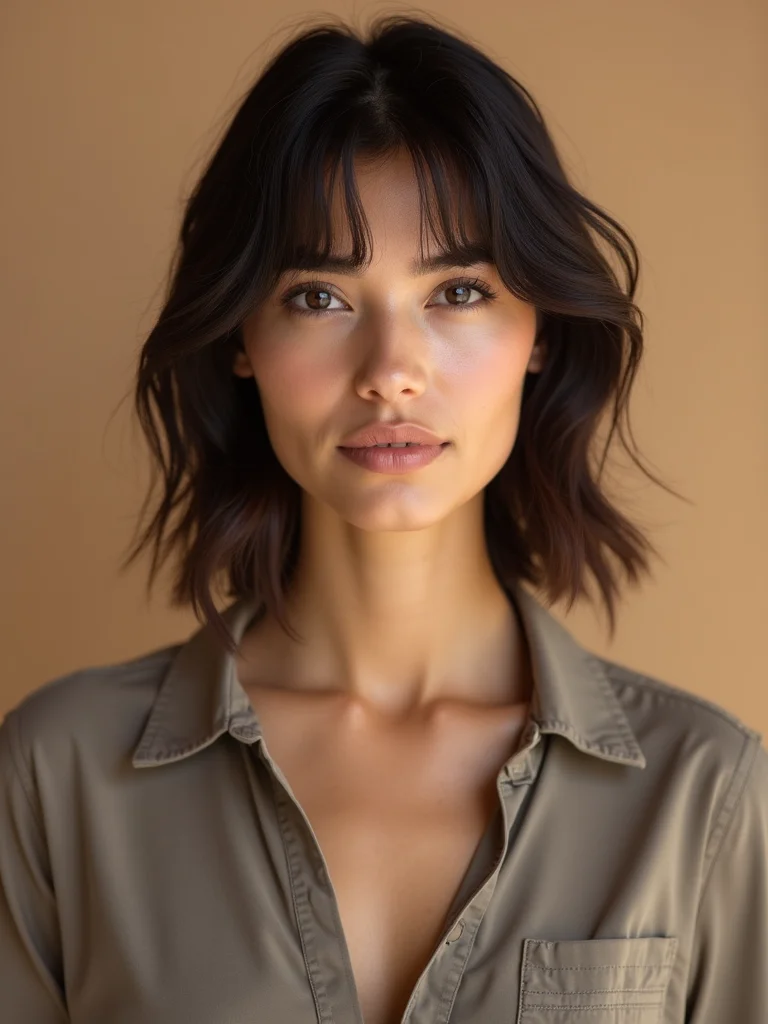
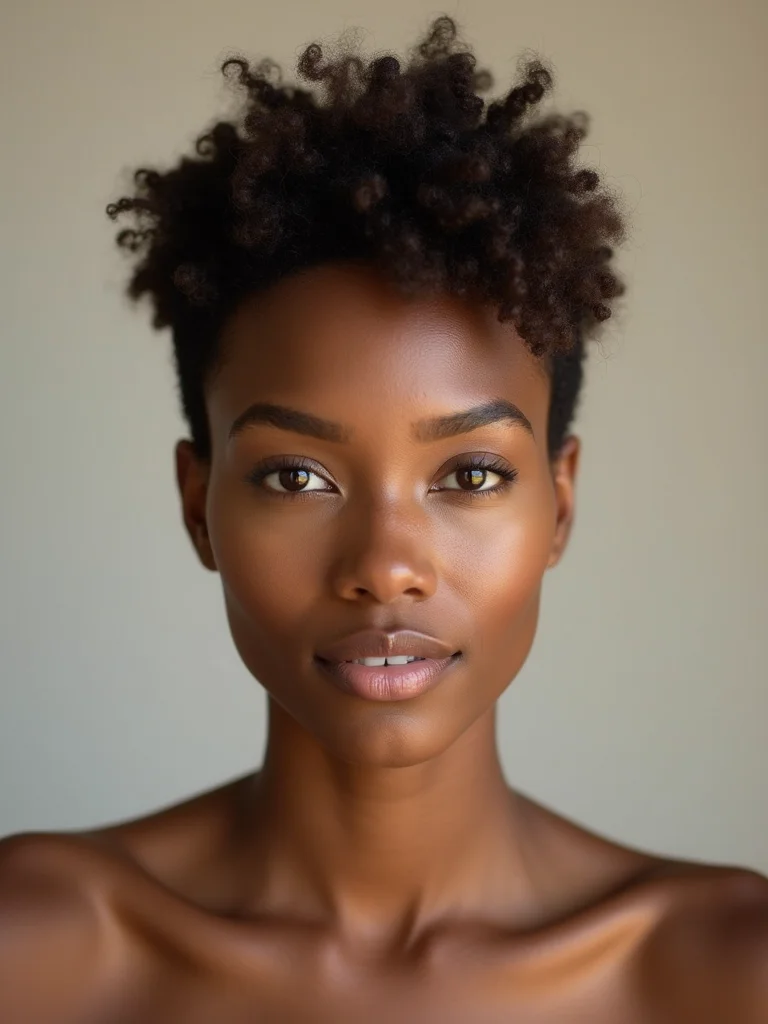
An undercut pixie works on a dimmer switch, not an on-off switch. By week three of growing out a hidden nape section, most people barely notice it. By week three of growing out a full shaved side, the difference is impossible to miss. Both are still undercut pixies, and the gap between them is the whole point of this guide.
Fifteen versions follow, from a shaved line so subtle it hides under a single layer of hair to a fully etched, graphic design that asks for real upkeep. Each entry covers the mechanics behind it, how it holds up between salon visits, and who tends to actually love wearing it.
Reading the Undercut Dial
- An undercut removes bulk underneath a pixie, which is why it works especially well on thick or coily hair that sits heavy on top.
- How loud it lands is a choice: a hidden nape patch stays covered day to day, while a full shaved side stays visible constantly.
- Upkeep scales with boldness. A soft fade barely needs touch-ups; a crisp, etched design wants regular buzzing to hold its lines.
Sleek Undercut With Razor-Sharp Lines
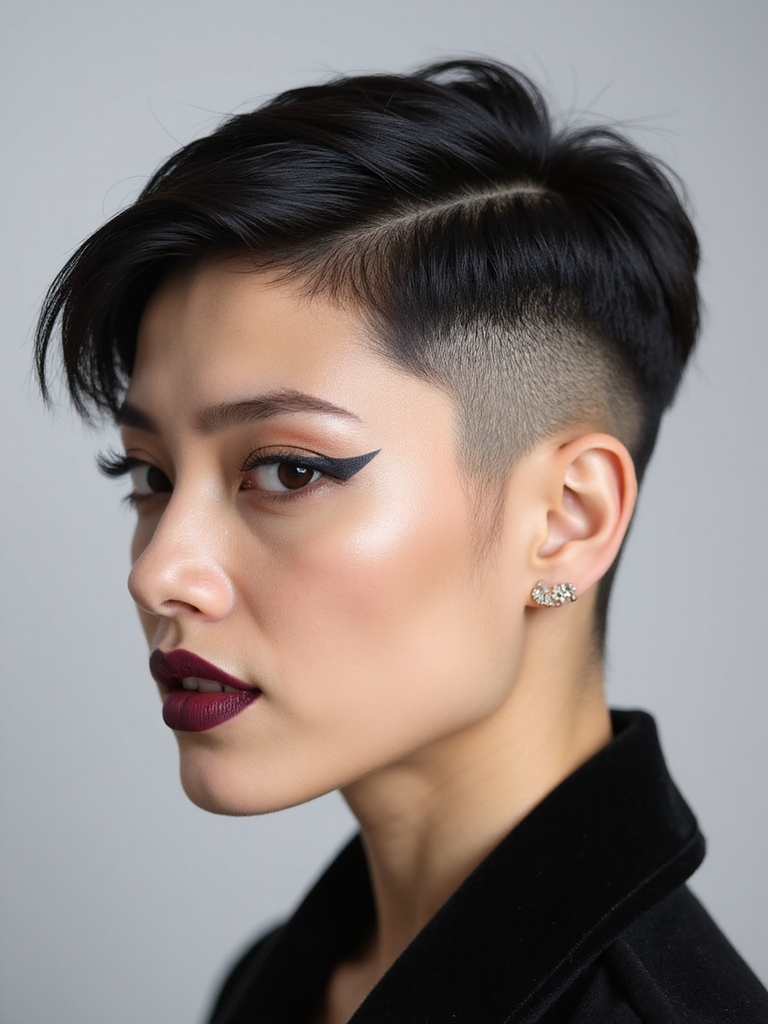
A smooth, combed top sitting directly over crisp shaved lines is the most polished version of this cut, all sharp geometry and deliberate contrast. Straight to wavy hair holds that smoothness on top without much extra product, which is part of why this version photographs so cleanly.
- Best suited to hair that lies flat without much styling effort
- A shine-free pomade keeps the top matte and free of shine
- The line work needs regular attention to stay this crisp
Textured Crop With a Hidden Nape Undercut
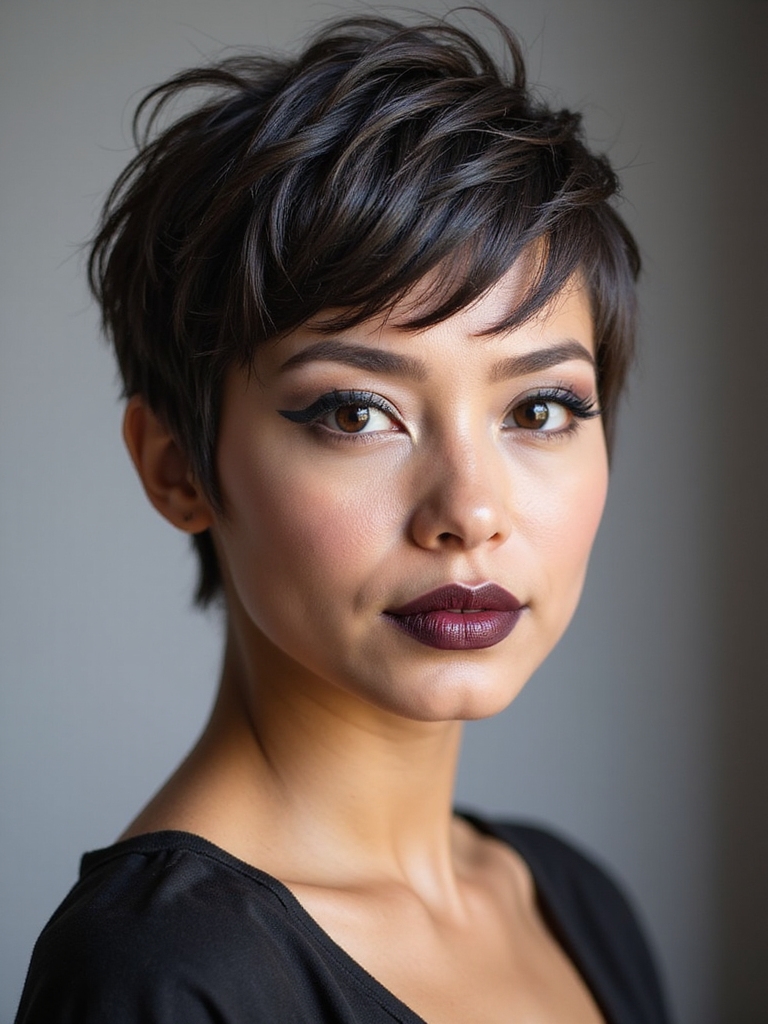
Anyone curious about undercuts but not ready to go public usually lands here first. The shaved patch sits low at the hidden nape, fully covered by a textured crop worn down, and only shows when the back gets lifted or the hair gets pulled up. It removes real weight at the neck without changing the visible shape of the cut at all.
- Coverable entirely on an average day, no extra styling required
- The point is weight removal at the neck, not visible edge
- A gentle entry point for anyone still deciding if an undercut is for them
Asymmetrical Pixie With a Shaved Side
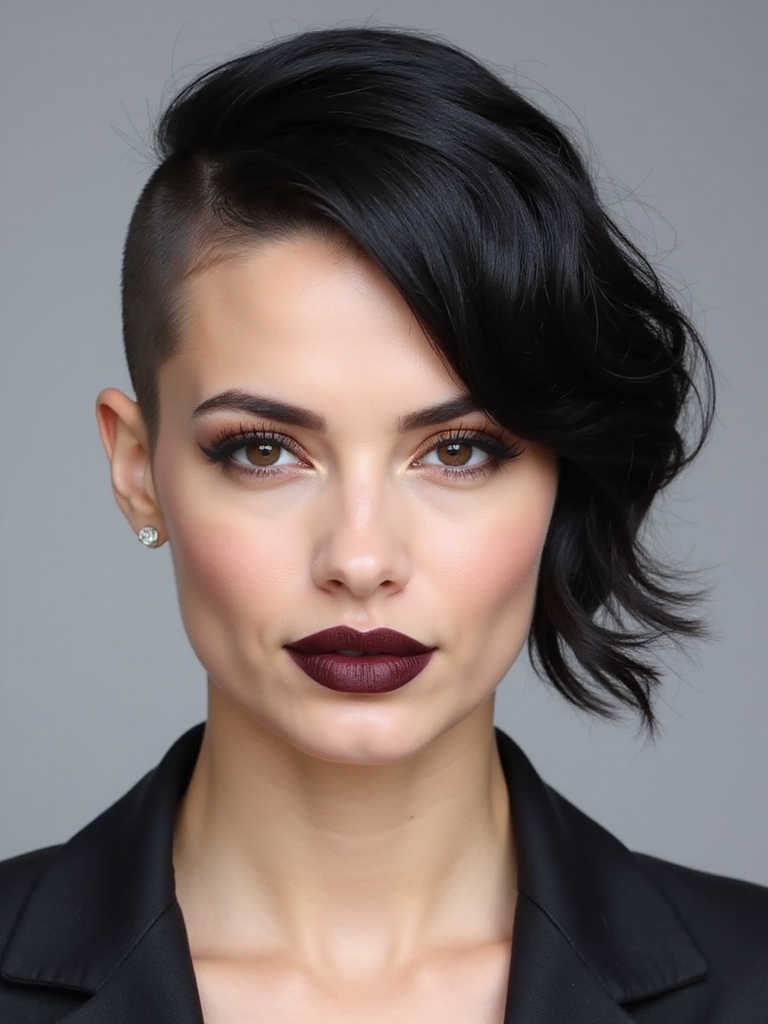
Shaving one side of an already-asymmetrical pixie turns a soft diagonal into something considerably more dramatic. The bare side gives the long, swept length something stark to sit against.
Growing this one back to even length takes real patience, since one side is starting from close to zero. Oval and heart face shapes tend to hold up especially well against that much contrast. Our asymmetrical pixie guide covers a smaller commitment if the full shave feels like too much.
- Style the longer side smooth with a flat iron and a drop of serum; the shaved side needs nothing beyond a towel-dry
- Recovery to a symmetrical shape takes months, not weeks
- A stylist experienced with sharp lines matters more here than usual
👍What This Version Gets You
- +Maximum visual contrast for very little extra cutting
- +A distinctive shape that’s hard to mistake for anyone else’s
- +Works with both straight and wavy hair on the long side
👎What It Asks Of You
- –A committed grow-out period with no real shortcut
- –Regular touch-ups on the shaved side to keep it defined
- –Not easily softened once it’s been cut this short
Curly Pixie With a Tapered Undercut
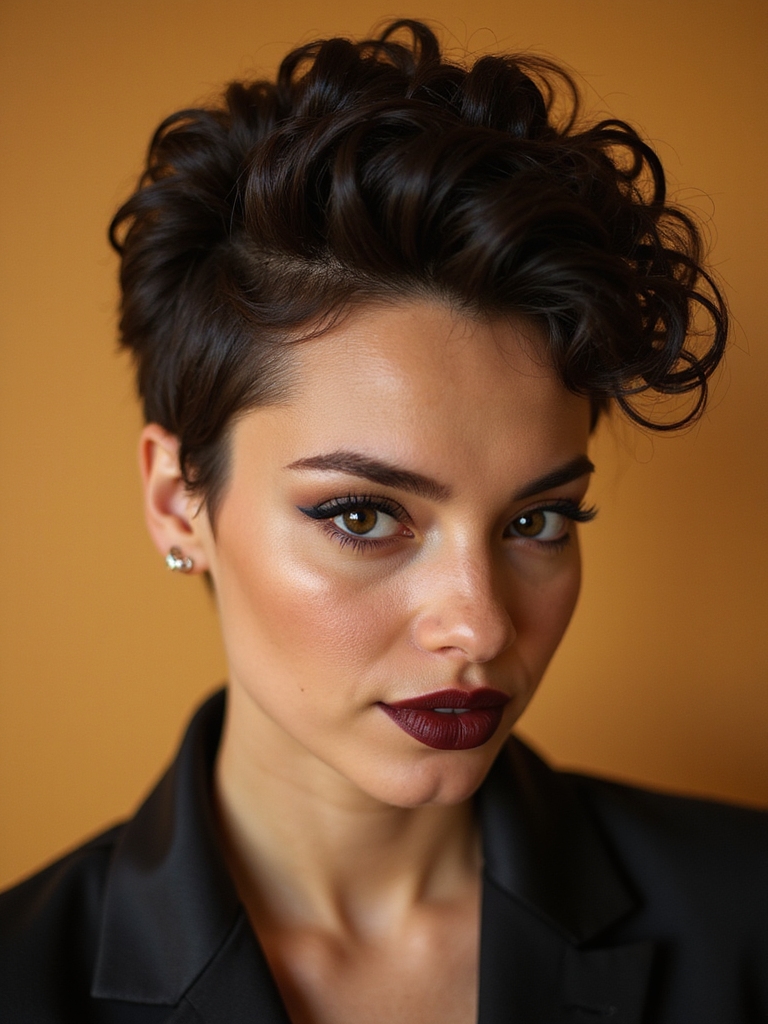
Dense curls tend to sit wide and heavy at the sides of a pixie, and a tapered undercut is what corrects that without flattening the pattern on top. The taper fades the length down gradually, without a hard line to manage as it grows.
Cutting the top dry, in its natural pattern, lets the stylist see how much the curls will spring up once finished, rather than guessing at wet length. The result rounds and lifts the shape at the sides.
- Removes side bulk without disturbing the curl pattern on top
- A gradual taper wears better than a hard line on curly hair
- Have it cut dry so the finished shape accounts for shrinkage
Soft Fringe Over a Disconnected Underside
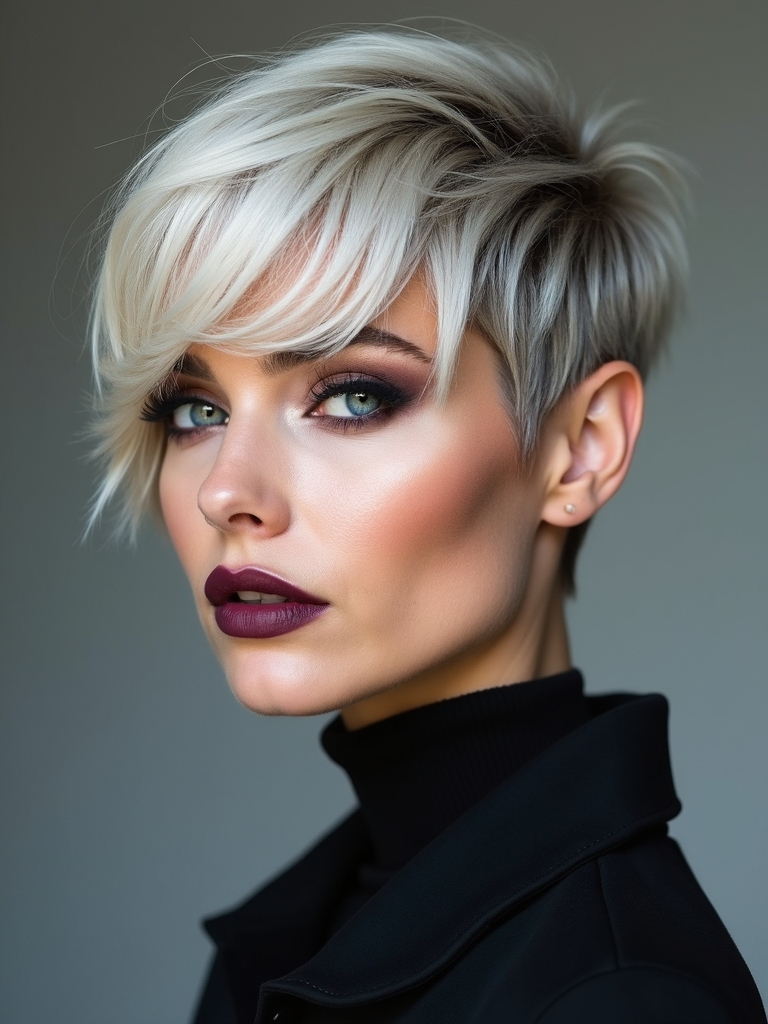
This version plays two textures against each other on purpose: a soft, romantic fringe sitting directly above a sharply disconnected undercut, with no blending between the two lengths. That clean break is what makes the contrast feel deliberate.
Worn down, the fringe covers everything and looks gentle. Pinned back or flipped, the disconnected section shows in full, giving one haircut two distinct personalities depending on the day.
- A single cut that looks soft in the morning and sharp by evening
- The disconnect has to be cut clean to look deliberate
- A strong pick if you want range without committing to one look full-time
Long-Top Pixie With a Faded Undercut
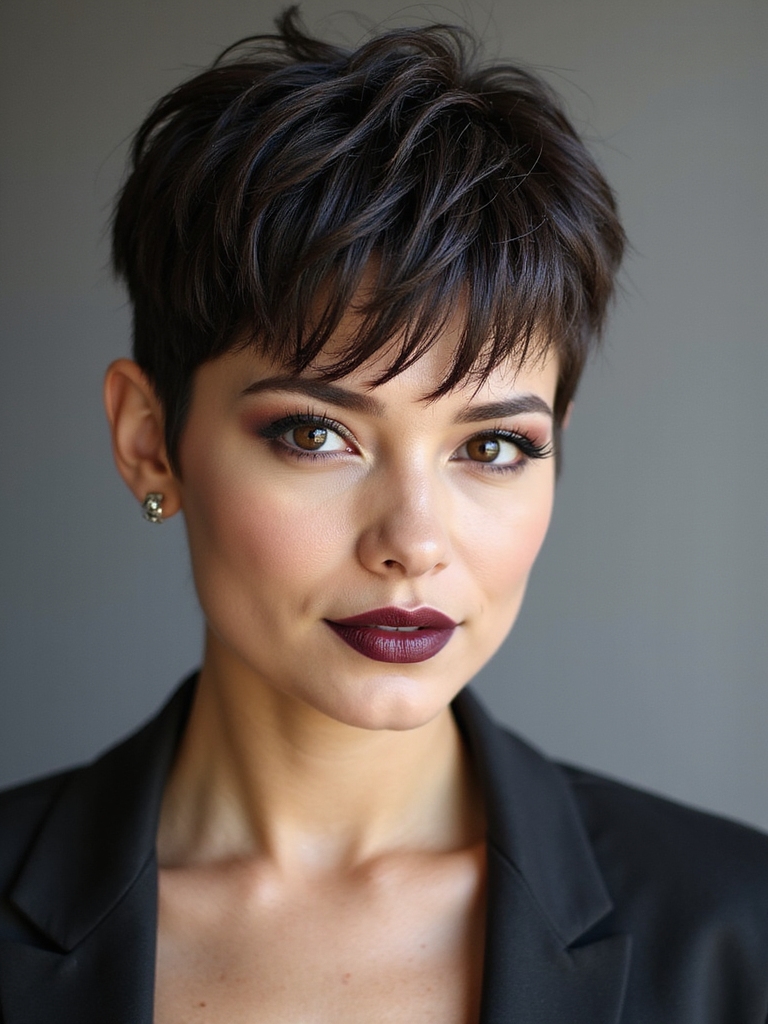
A fade blends the undercut gradually from skin to full length, which makes it the most forgiving way to wear this style day to day. Paired with a long, styleable top, the shape looks polished some days and relaxed on others without ever needing a redo.
The soft gradient also means the grow-out is far less noticeable than it is with a sharp shaved line, part of why this version suits the widest range of people on this list.
- The long top gives real styling range: sleek, tousled, or swept back
- A fade grows out gracefully, with no hard line to maintain
- A dependable first choice for anyone unsure how bold to go
How a clean fade actually gets built during the appointment:
1Guard sequence
The clippers move through a run of guard sizes, shortest at the base of the neck, blending up toward the length on top.
2Blend check
The stylist runs a comb through the transition zone to catch any visible lines before finishing the top.
Choppy Pixie With an Etched Design
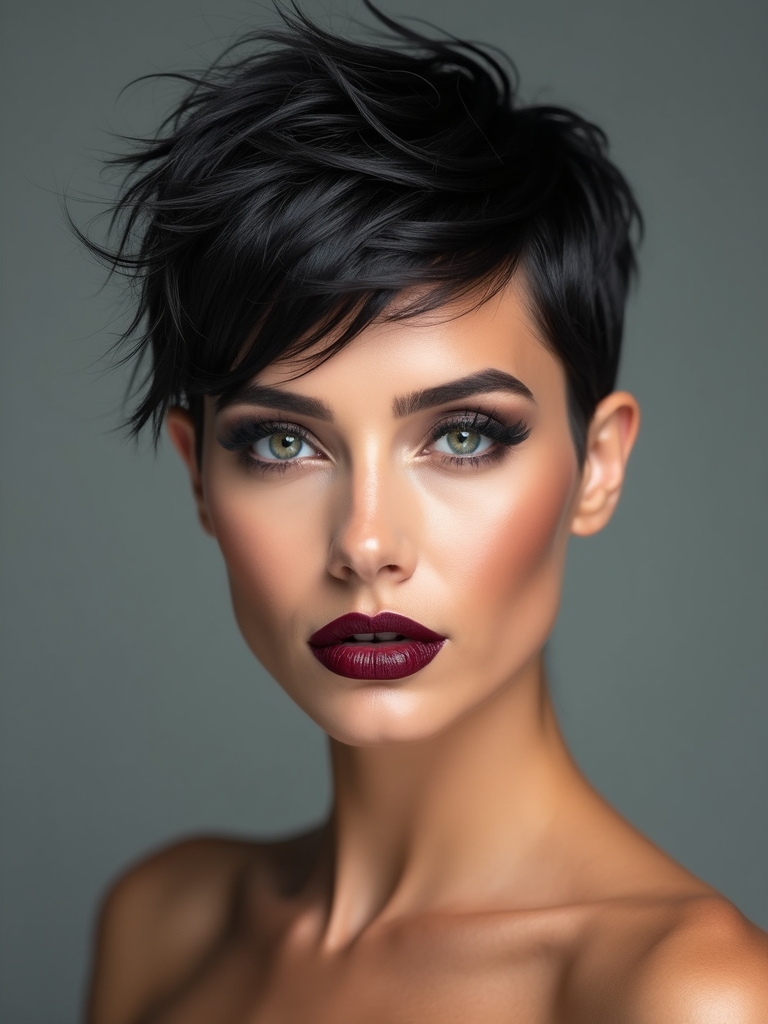
When the undercut itself is meant to be the statement, a shaved section can become a small canvas. Lines, geometric shapes, even simple patterns turn a practical undercut into visible design work.
How Long the Etching Actually Holds
Paired with a choppy, piecey top, the whole shape lands as expressive rather than tidy. A trimmer and a steady hand do the etching, and simpler patterns hold their crisp edges longer than intricate ones, which soften within days.
This is the highest-upkeep version here by a wide margin, and I only recommend it to clients who already know they’ll be back close to every two weeks; anything looser than that and the lines blur into something that reads unintentional rather than graphic. Touch-ups run a small linework fee on top of a regular buzz, often another $20 or so.
Platinum Pixie With Shadowed Sides
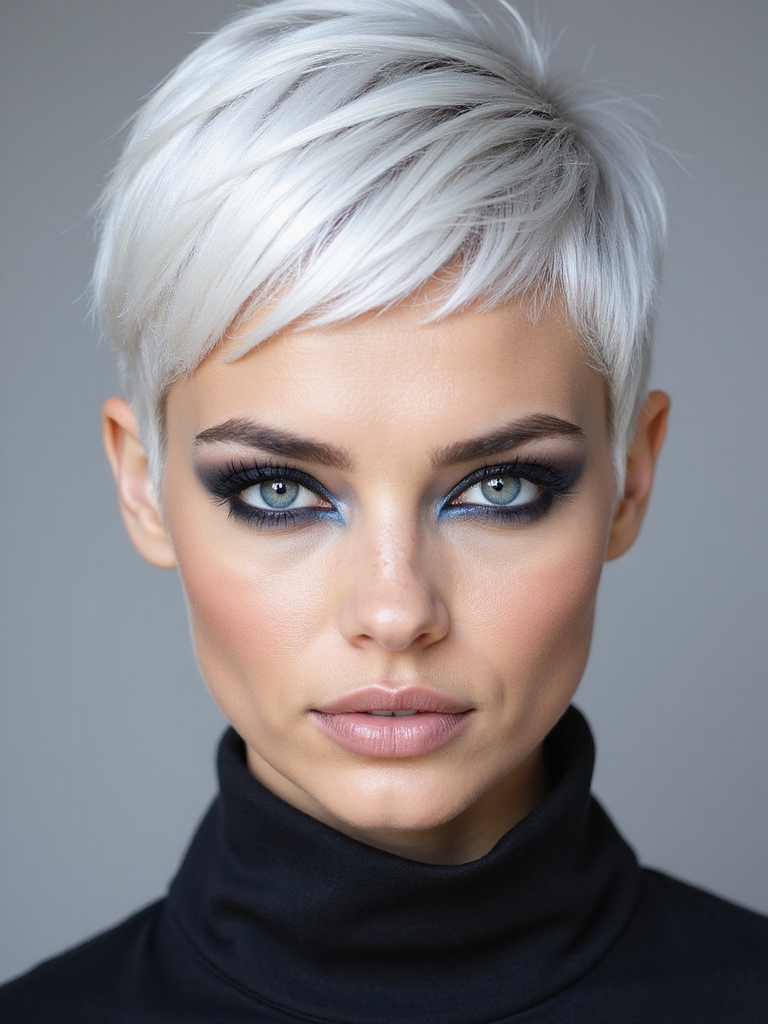
Pairing a platinum top with darker, shadowed undercut sides creates depth that a single flat color never quite manages on its own. The bright top stays the focal point while the darker sides ground the shape and keep it from looking washed out.
- Lighten the top to platinum first, then leave the sides darker for contrast
- A cool-toning session keeps the platinum from drifting brassy between visits
- Plan on around $70 for the fade-and-buzz visit, separate from toning up top
Micro-Bang Pixie With a Shaved Nape
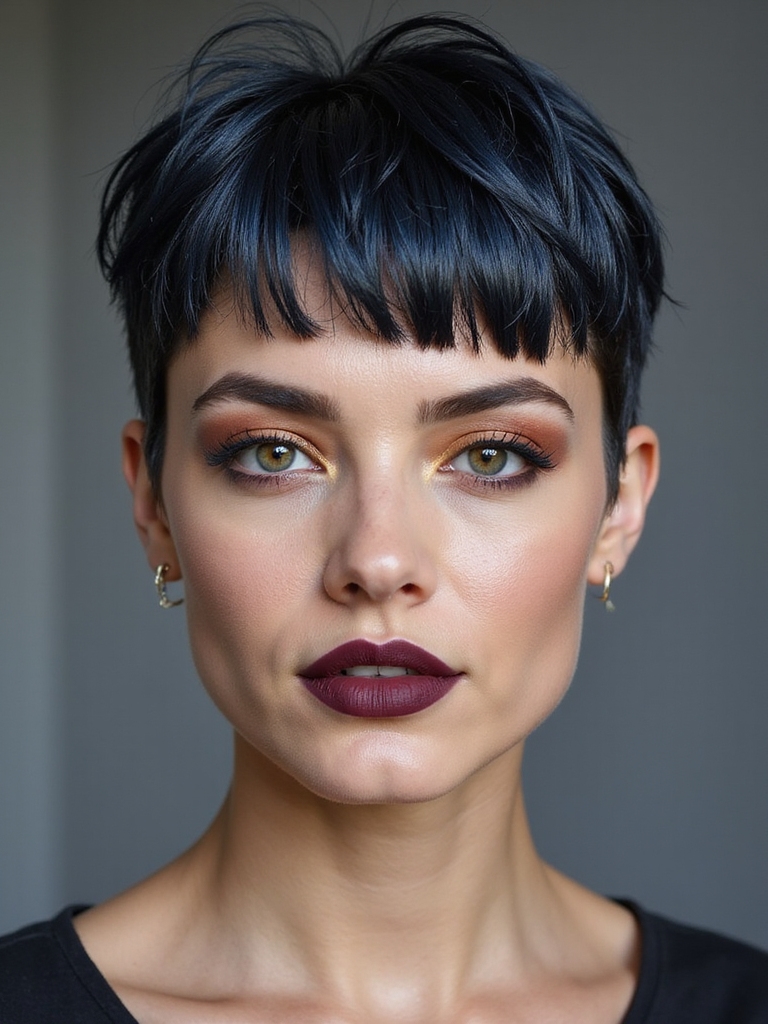
Tiny, graphic micro bangs up front and a fully shaved, visible nape at the back stack two bold statements into a single cut. Neither element is subtle on its own, and together they land as a shape built entirely on confidence.
Both the fringe and the shaved nape need attention on a similar timeline to hold their lines, which puts this version firmly in high-commitment territory. This one’s for you if you’re already used to sitting in a stylist’s chair often, not for someone easing in.
| Element | Typical Touch-Up Cost | How Often |
|---|---|---|
| Micro bangs | Often folded into a regular cut, free or a few dollars | Close to the two-week mark |
| Shaved nape | A small standalone buzz fee if booked between cuts | Roughly once a month |
Tousled Pixie With Undercut Temple Detail
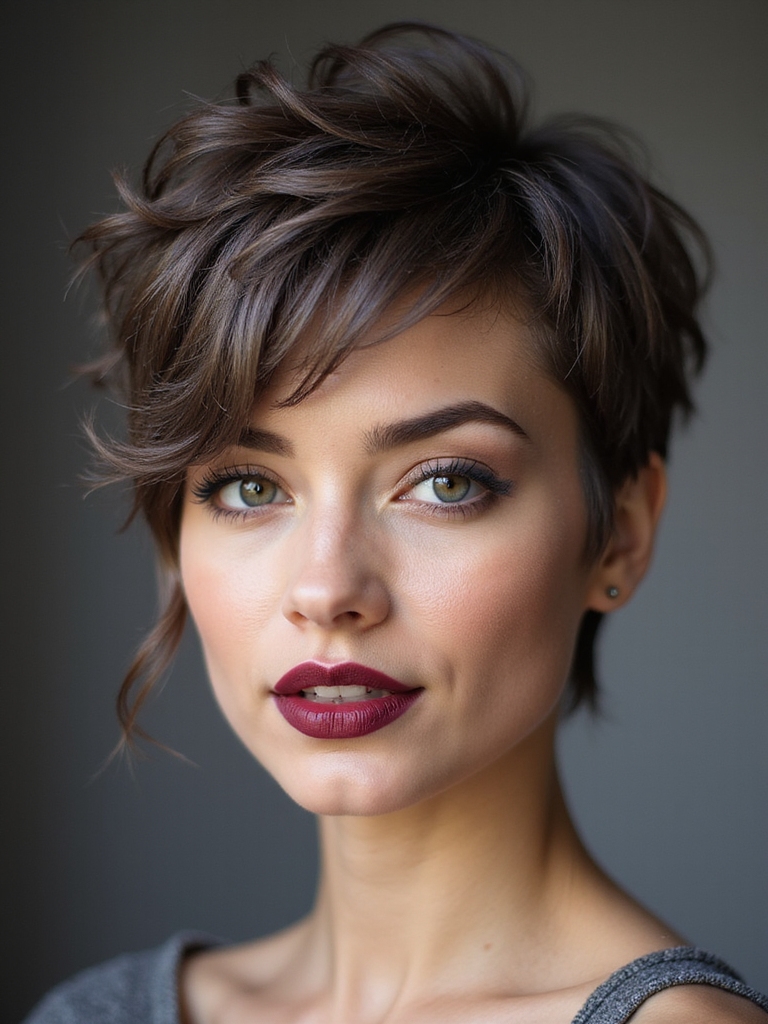
A small shaved detail at the temple works almost like a piece of jewelry built into the haircut. Set above a soft, tousled pixie, that sliver of exposed skin near the hairline adds a quiet edge to an otherwise relaxed shape.
- Barely noticeable growing in, since so little is shaved to begin with
- Pairs an easy, undone top with one deliberate sharp point
- Tuck hair back to reveal it, or leave it fully covered
Side-Swept Pixie With an Undercut Part
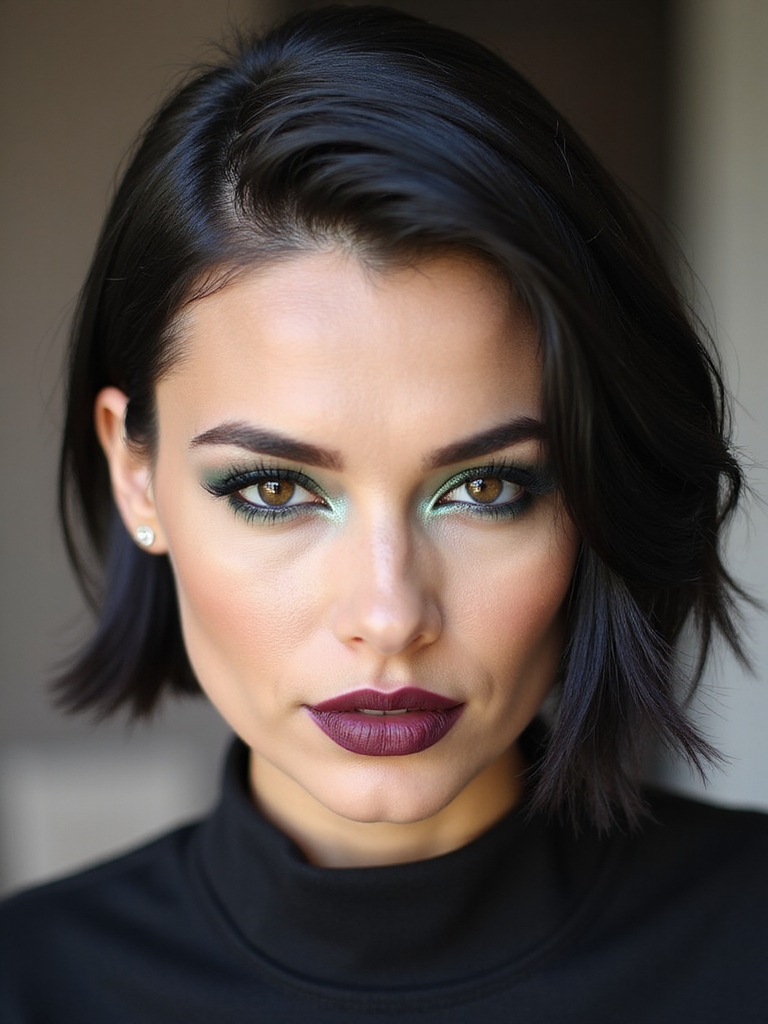
An undercut part is a single shaved line cut where hair naturally splits, turning an otherwise soft side-swept pixie into something with a hard architectural edge. The shaved line gives the sweep a defined starting point, so the whole style looks intentional even when everything around it stays soft.
- Following the natural part gives the cleanest, most flattering line
- Sweep the longer side across and away to keep the line visible
- The line needs a fresh shave on a short cycle as new growth fills it in
Wavy Pixie-Mullet With an Undercut Perimeter
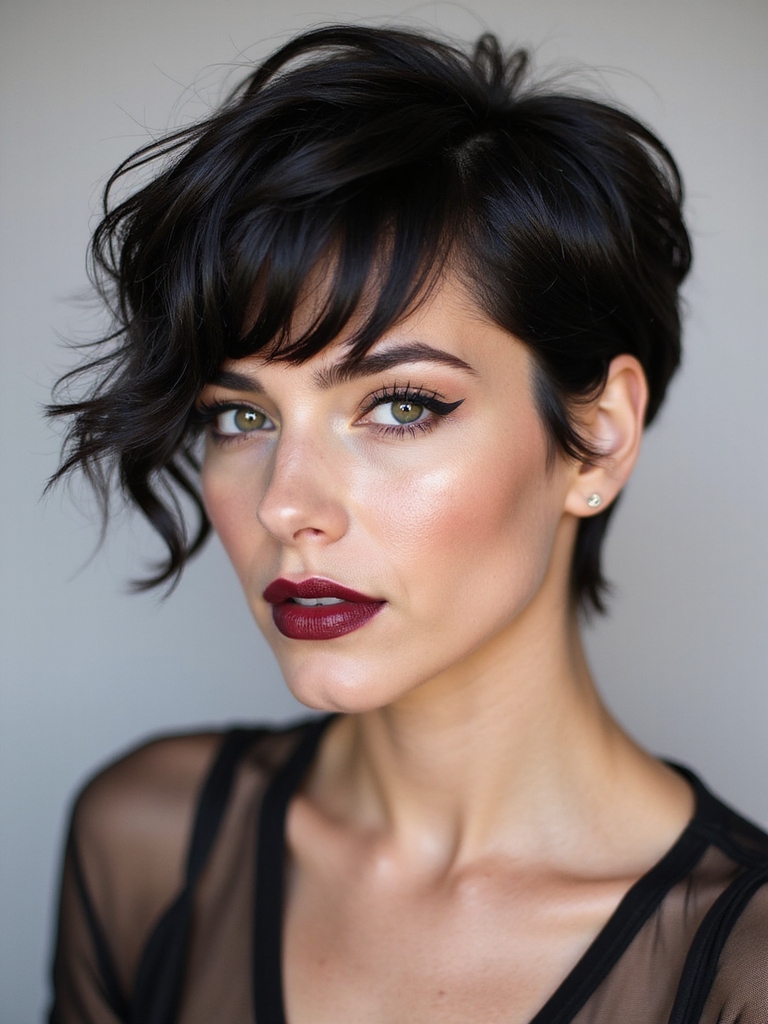
A pixie-mullet keeps a short, textured top with a longer, wavy tail at the back, and shaving the perimeter around it sharpens the whole shaggy outline into something more deliberate. Cleaning up the edges is what turns loose waves and a mullet tail into a shape that looks chosen.
- Air-dry the waves and tail for the most natural movement
- Works best on hair with enough length at the back to form a real tail
- The clean perimeter is what keeps the whole shape from looking messy
🅰️Undercut perimeter
Sharp, shaved edges around a shaggy shape. More upkeep, more visual definition, looks intentional even at its messiest.
🅱️No undercut at all
A softer, blurrier outline with none of the shave-line upkeep, though the shaggy layers can start to look unstructured over time.
Bowl-Inspired Pixie With a Graphic Undercut
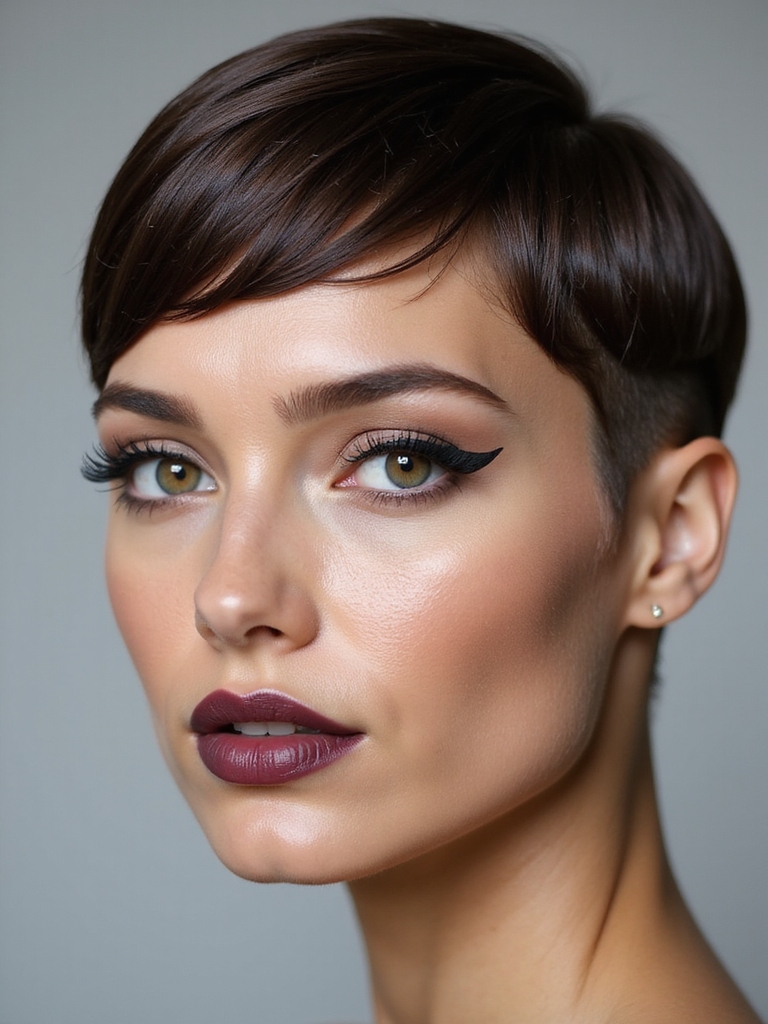
A rounded bowl shape looks dated to a lot of people on its own, but pairing it with a graphic undercut pulls it firmly into current territory. The strong, blunt top sits over sharply shaved sides, and that contrast turns a once-retro shape into something bold. Blow-dry the top flat and blunt with a paddle brush before the sides get any attention, so the rounded shape sets first and the shaved contrast reads as deliberate against it.
- Keep the rounded top weighty and blunt so it holds against the shaved sides
- A precise stylist matters more here than on almost any other version
- Best on straight, dense hair that can hold a strong rounded outline
Pixie Pompadour With Skin-Fade Sides
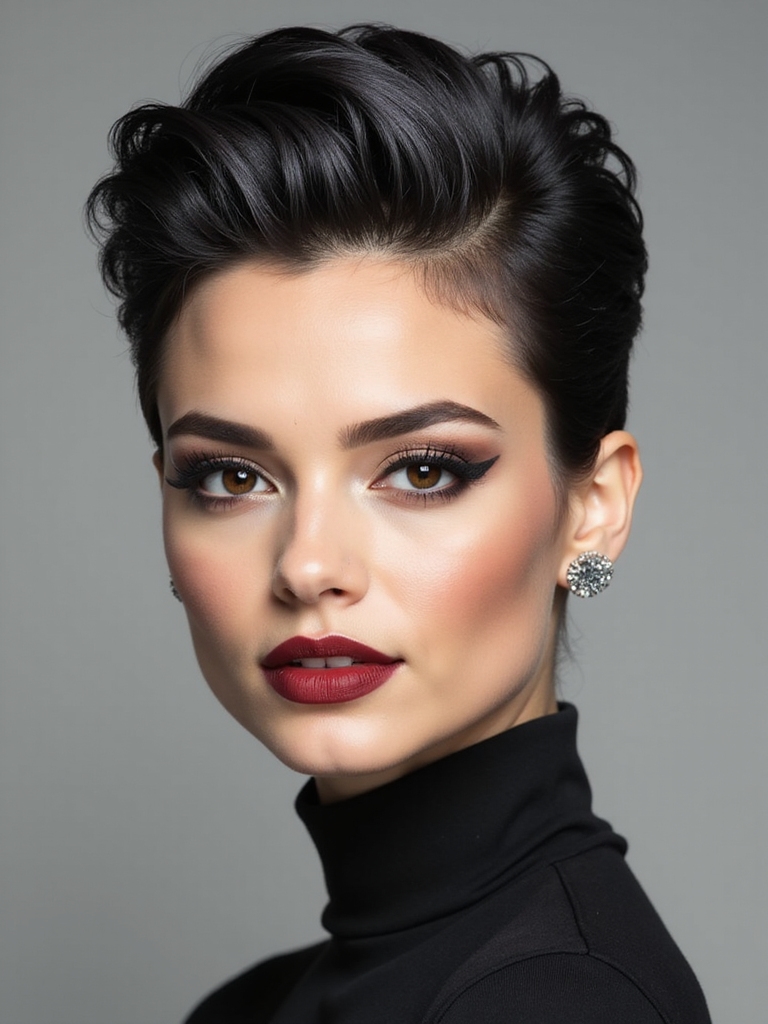
Height at the front is the whole point of a pompadour, and skin-fade sides make that height read even taller by stripping everything around it down to bare skin. The contrast between a lifted, voluminous top and completely bare sides is dramatic, with a slightly retro edge.
The pompadour itself asks for daily styling, usually a round brush and a strong-hold product to lift and set the front. The skin fade needs its own regular buzz to stay crisp, which makes this a real two-part styling commitment each time it’s worn.
Shaggy Pixie With a Peekaboo Undercut
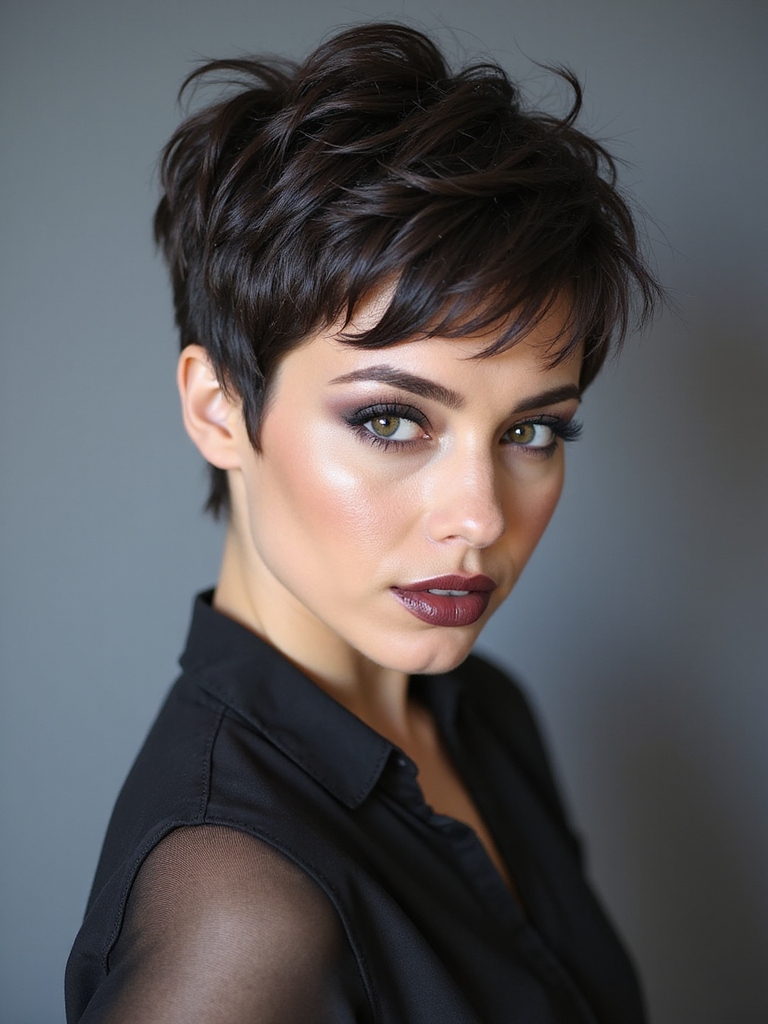
A peekaboo undercut is a small, often playful shape shaved into one section, one that stays hidden under shaggy, layered hair most of the time and only shows when the hair moves or parts a certain way.
There’s nothing to style on the shaved section itself; the shag on top just dries the way it always does, which is most of the appeal. It’s among the lowest-pressure ways to try an undercut in the first place, since the shaggy layers cover it completely whenever it’s not wanted, and it works as a genuine test run before committing to something more visible.
Common Mistakes to Avoid
A shaved section looks crisp in a photo, but that photo is a snapshot of day one, not day fourteen. Within roughly two weeks it can start looking fuzzy at the edges instead of defined, and the appointments that keep it that sharp are the part most people forget to budget for when they’re picturing the look, not the actual cut.
Being honest about how often a salon visit is realistic, or learning basic clipper touch-ups at home, matters more than which version gets chosen in the first place.
I’d rather talk a client into a hidden nape first and let them come back six weeks later asking for something bolder than talk someone out of an etched design they can’t actually keep up with. Going louder is always available later; walking back a fully shaved side isn’t, not for months.
Undercut Pixie Questions Worth Asking First
?Does an undercut work on very fine hair, or does it need thickness to look right?
It works on fine hair too, though the visual effect changes. Instead of removing bulk, a shaved or faded section on fine hair mostly adds graphic contrast and a bit of edge, since there’s less weight underneath to take out in the first place.
?Can an undercut be added later to a pixie that’s already cut?
Usually, yes, as long as there’s enough length underneath to work with. A stylist can shave or fade a section into an existing pixie without redoing the whole cut, though a very short crop may not leave much material to shape into a design.
?How noticeable is an undercut once the hair starts growing out?
It depends entirely on how bold the version was. A hidden nape or subtle temple detail grows out with almost no visible transition, while a sharp shaved line or an etched design shows new growth clearly within a couple of weeks and needs a refresh to stay crisp.
Where This One Sits on the Dial
An undercut pixie isn’t one fixed look; it’s a range, from a whisper of shaved hair nobody notices to a fully graphic design that announces itself constantly. The right version matches both the boldness someone actually wants day to day and how often they’re willing to sit in a chair to maintain it.
Screenshot whichever version pulled focus, and lead the consultation with that image rather than a verbal description. A stylist can talk through the real grow-out and upkeep once they can see exactly what’s being asked for.
Related Reads