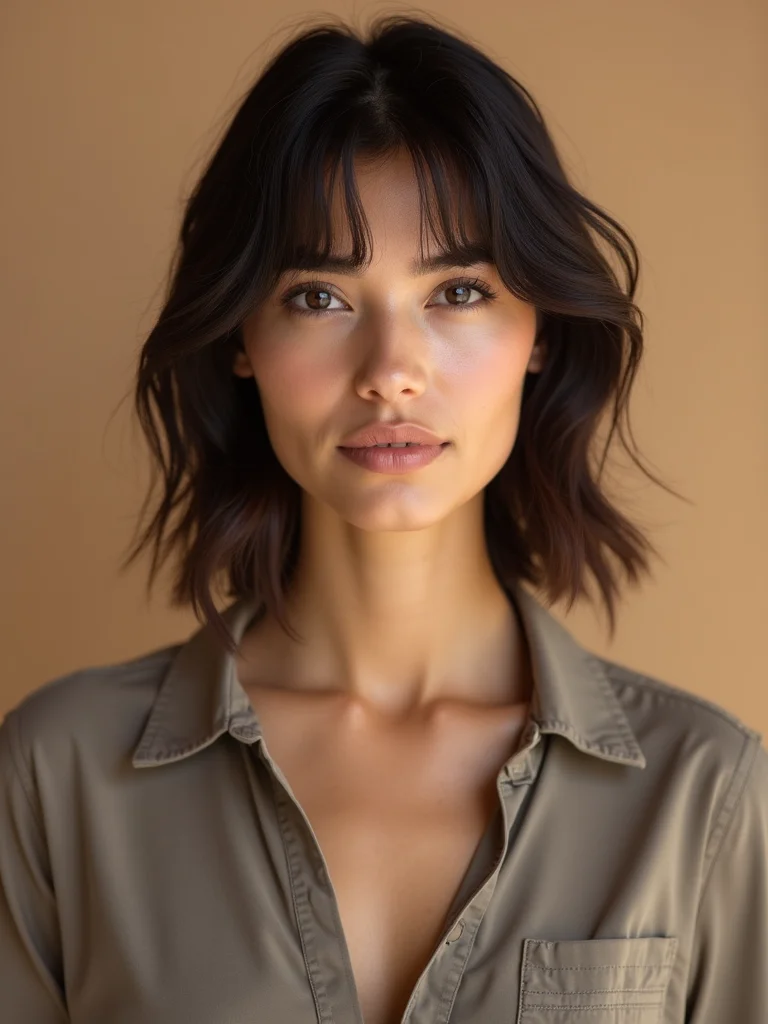
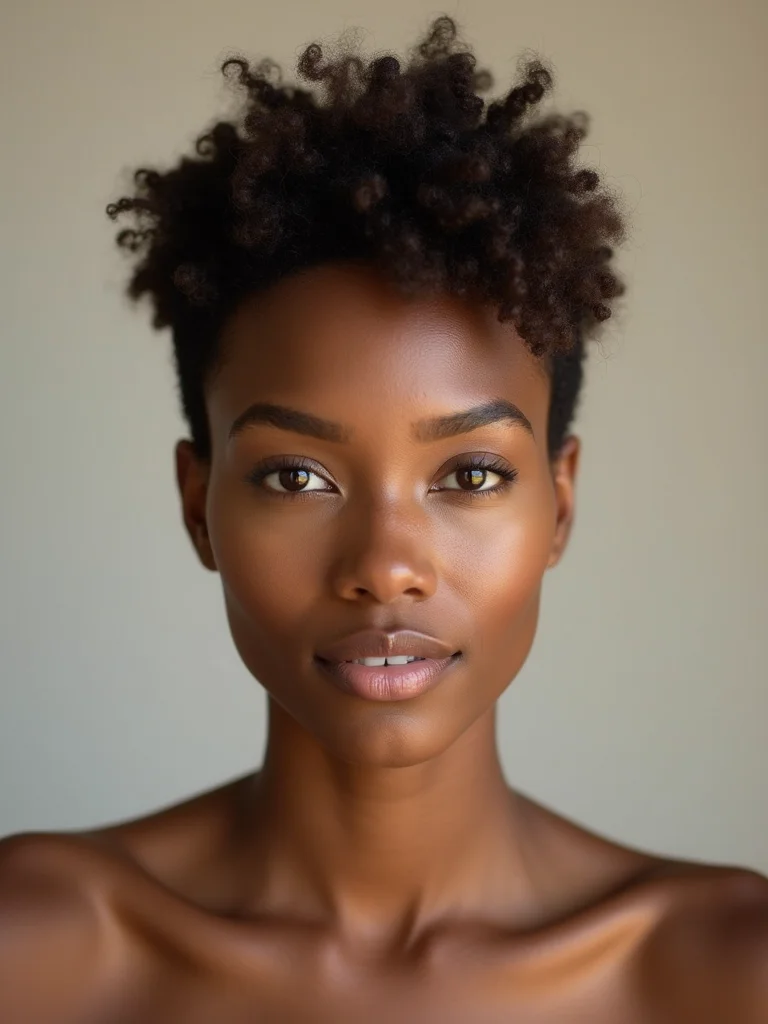
Run a hand through a well-cut shaggy pixie and the texture registers before the shape does: pieces that separate, ends with real catch to them, a crown with actual air trapped underneath it. That physical quality is what a plain short crop never quite manages.
More than a dozen distinct versions live inside that one idea, plus the styling routine and grow-out plan that keep any of them working, from a soft everyday crop to an undercut with real attitude. Each one asks something slightly different of your hair type, your face, and your calendar, so the honest trade-offs matter as much as the photos.
The Trade Every Version Shares
Structure, not length, is what separates these from a plain crop: broken, piecey layering a stylist builds in on purpose, not something the hair happens to do on its own. Every version below leans on that same foundation, just styled and cut to different depths.
Plan on the cut running close to two hours, typically $50 to $75 at a salon that does this properly, since building the layering correctly takes real time. The trade for that investment is a shape that photographs well from day one and keeps earning its keep for weeks after.
The Everyday Crop With Soft Bangs

Most women who book this cut end up living in this exact version: softly textured through the crown, wispy bangs sitting just below the brow. It’s polished enough for a Monday meeting and undone enough to still feel current by Friday.
The bangs carry most of the personality here, which is exactly why they’re the part worth asking about first at the consult. Once they drop past the brow line, the whole face-framing effect quietly disappears.

The Razor-Feathered Version
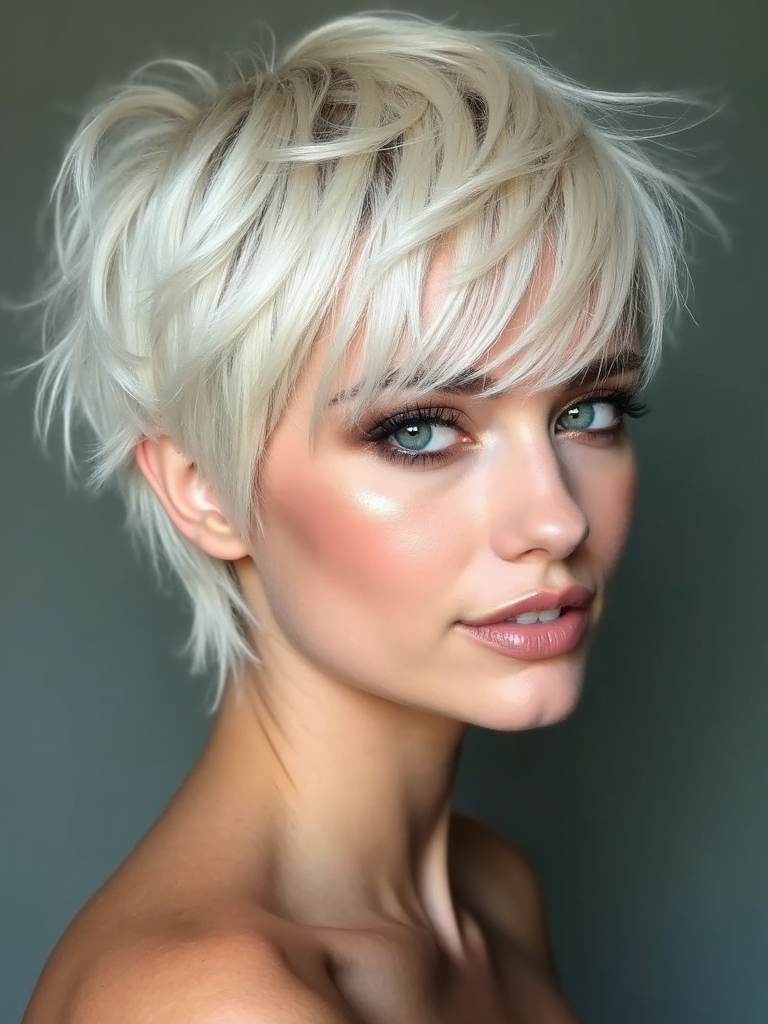
Most stylists work the blade on slightly damp hair here, not soaking wet and not bone dry, since that’s the point where a razor slices cleanly instead of tugging. Too wet and the blade drags; too dry and it can split the strand instead of feathering it.
The finish looks lightest in the first two or three weeks, right after cutting. Past that point the feathered ends soften and blend into the rest of the layering, so a fresh razor cut and a six-week-old one photograph noticeably differently.
- One pass with the blade angled shallow reads as texture; several steep passes in the same spot start to thin the hair down to nothing.
- Color-treated or previously damaged hair holds up worse under a blade; ask about point-cutting shears for a comparable finish with less stress on the strand.
- A stylist who razor-cuts every day can usually gauge in seconds how much a given head of hair can take.
💡Ask This Before the Razor Comes Out
A quick strand test on a few pieces first shows how your specific hair reacts to the blade before it’s used across the whole head.
Built-In Volume for Fine Hair

Fine strands rarely hold shape at longer lengths, but cropped short and layered from the crown down, the same hair looks noticeably fuller. Placement does the work here, not extra cutting.
More than one client with thin hair has left the chair surprised at how much fuller it read once the layering moved higher. The perimeter is where that trick can backfire: thin the ends too aggressively and fine hair goes see-through instead of textured, so most of the layering should concentrate at the top.
- A root-lifting spray applied before drying holds the crown height through the day.
- Heavy oils and creams collapse fine hair fast; skip them entirely on this version.
- Ends left slightly blunt, not fully thinned, actually read fuller than aggressively feathered ones.
Curly Texture Does Half the Work

Curl and coil patterns already carry the volume and shape this cut is chasing, so the layering has less to accomplish than it does on straight hair. The result usually needs less daily effort than the same haircut built on straight strands. One rule holds across every pattern: nothing gets cut until the hair has fully air-dried into its resting shape, since that’s the only point where a stylist can actually see where each curl lands.
- 2B to 2C waves hold the shape with barely any product beyond a light cream.
- 3A to 3C curls benefit from a bit more definition cream to control frizz at the crown.
- 4A to 4C coils wear this as an actually low-manipulation style, with shrinkage factored into the length from the start.
Angling the Fringe Instead of Cutting It Straight

A fringe swept to one side changes the whole read of a face in a way a straight-across bang never does. That diagonal line softens strong features and works across more face shapes than a blunt fringe manages, and it grows out without ever hitting a harsh, in-between stage.
- Round and square faces both benefit from the angle more than most other fringe styles.
- It blends into the surrounding layers as it grows, staying clear of the eyes far longer than a blunt fringe would.
- Works on nearly any length of fringe, from barely-there to full curtain, without changing the diagonal effect.
Shattered Ends for Maximum Movement

Cutting the ends into deep, irregular points, some barely half an inch apart, takes texture about as far as it can go before the shape stops holding together. Where the softer versions lean on the overall silhouette, this one runs almost entirely on movement at the ends themselves.
- Hair with some natural body holds the irregular shape better than very fine, limp strands do.
- A matte paste worked through with fingers, not a comb, keeps individual pieces separated.
- This is the version that photographs the most differently between a still shot and a moving one, since half the effect only shows up when hair actually moves.
The Mullet-Leaning Micro Shag

Leaving extra length at the nape while keeping the crown cropped and choppy blurs the line between a pixie and a shaggy mullet, and it’s the version clients bring up when they’re circling a mullet but haven’t worked up the nerve. A client who booked this last year still asks for it slightly longer at the nape each time she’s back.
- The longer nape softens the jump from a full-length cut for anyone hesitant about going short.
- Trims land closer together here, roughly every four weeks, since the crown loses definition before the nape grows out.
- Works especially well for someone curious about a mullet but not ready for the full commitment.
An Undercut Underneath the Shag

Shaving or closely buzzing a section, usually at the nape or behind the ears, does two things at once: it removes real bulk from thick hair and adds an edge no amount of layering alone provides. Hidden under the top hair on a normal day, it shows the moment you want it to.
- Best on hair with enough density that the top can hide the shaved section when styled down.
- The buzzed section grows in fast and usually needs a touch-up on a tighter, roughly-three-week cycle, well ahead of the main cut’s own schedule.
- A middle ground for anyone who wants visible edge without a fully shaved head.
Two quick checks before booking the boldest versions.
1Can you realistically get back to the salon every 2 to 4 weeks?
If not, skip the undercut or micro-shag for now; the upkeep gap is the part people underestimate most.
2Does your workplace have a strict dress-code culture?
A hideable undercut (buzzed section tucked under the top) splits the difference better than a fully visible one.
Long on Top, Cropped at the Sides

Keeping real length on top while the sides taper short gives more daily styling range than almost any other version here: slicked back, swept to one side, piled up with volume, or pushed forward into a fringe. It offers more range than most of the asymmetrical pixie cuts built around a single fixed style.
The trade is the line where long meets short. That contrast softens fastest of any version, and it wants a touch-up sooner than a more uniform crop would.
Curtain Bangs Over a Piecey Crop

Center-parted curtain bangs fall away on both sides to frame the face, adding a soft, romantic quality that balances the choppier energy of the cut underneath.
It’s one of the more forgiving fringe choices to grow out, since it simply lengthens into face-framing pieces as it grows. Anyone wanting short hair that still feels feminine, closer to the feminine pixie cuts end of the spectrum, tends to land here.
Debulking Thick Hair Without Losing Shape

Left alone, thick hair on a short cut tends to expand outward into a dome shape by midday, which keeps plenty of women with dense hair away from pixies entirely.
A pair of thinning shears run through the underside, well below the visible top layer, is what keeps that from happening. It takes practice to know how much to remove; too little and the dome comes back within days, too much and the ends go wispy and thin.
- A stylist checking the cut dry, not just wet, catches puff that only shows up once hair has fully dried and settled.
- Humid climates sometimes call for a slightly shorter length overall, since more hair means more surface area for moisture to swell.
- Second appointments on very dense hair sometimes run a bit past the usual slot while the stylist confirms the weight is evenly removed.
One myth about thinning shears worth clearing up.
❌ Myth: Myth: thinning shears damage or weaken the hair.
✅ Reality: Used correctly, they remove bulk without cutting the strand’s structural integrity. Overuse in the same spot is what causes damage, not the tool itself.
The Gentlest, Most Face-Framing Version

At the softest end of the spectrum, longer wispy layers brush the cheekbones and soften the jawline, so the whole cut comes across approachable and soft.
It carries the same texture and ease as the boldest versions here, just without the severity that keeps some women from going short in the first place.
- Strong or angular features soften noticeably under this much face-framing length.
- The extra length gives something to tuck or sweep on days that call for it.
- An easier bridge than most versions for anyone moving from long hair for the first time.
One Sixty-Second, Tousled-Lift Routine for Every Version

Whatever version ends up in the chair, the daily styling routine barely changes. On dry hair, a nickel-size scoop of clay worked between the palms and scrunched from the ends upward sets the texture for the day.
Overuse is the one real risk. Short hair holds far less product than it looks like it should, and going in heavy turns the whole style stringy within an hour.
The Grown-Out Stage, Handled Without Awkwardness

One advantage rarely mentioned before committing: this cut grows out more kindly than a classic, blunt crop, since the shape is already broken up into pieces with nothing sharp waiting to blur.
Letting a Stylist Steer the Grow-Out
The smart move is coming back every several weeks to reshape toward a longer textured crop, letting a stylist steer the process the whole way. That keeps every in-between week looking deliberate.
The fringe and the sides outgrow the crown first, so those are the spots that need the earliest attention while everything else is left to grow undisturbed.
| Area | Shows Growth By | Fix |
|---|---|---|
| Fringe | 3 to 4 weeks | Quick fringe-only trim |
| Sides | 5 to 6 weeks | Light taper refresh |
| Crown | 8+ weeks | Full reshape toward a longer crop |
The Editorial Micro-Fringe
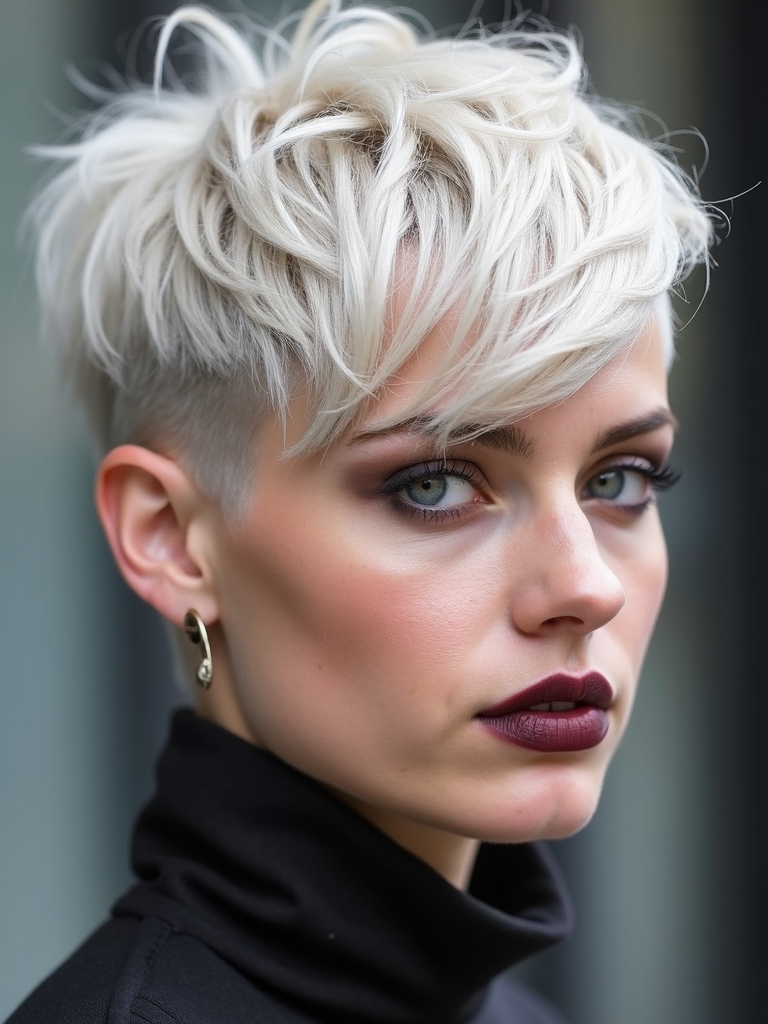
For the boldest finish in this whole set, a blunt, very short bang cropped high on the forehead comes across fashion-forward and fully committed.
Who This Actually Flatters
Balanced or longer face shapes carry this fringe well; on a round face, the same bang tends to shorten proportions further rather than balance them.
It also asks for near-constant upkeep, since even a small amount of growth throws the proportion off within days rather than weeks.
How to Get the Look
The consultation decides more of the outcome than any single reference photo, and it’s the part I wish more clients spent time on. Bringing two or three images and naming exactly what draws you to each one, the fringe, the texture, the length on top, gives a stylist something real to work from.
A shot of the back and sides matters as much as a front-facing photo, since that’s the part a mirror never shows. Being honest about how many minutes you’ll actually spend styling closes most of the remaining gap between the picture and the result. Anyone wanting a fuller look at the whole family of cuts can browse the companion shaggy pixie guide alongside this one.
Questions Worth Asking Before You Book
?Does a shaggy pixie work for someone who’s never had short hair before?
Yes, and the curtain-bangs or soft face-framing versions are the gentlest way in. Both keep enough length to tuck or sweep, which softens the leap as much as the visual change itself.
?Can this cut be styled without heat?
Most versions, yes. The texture comes from the cutting itself, so a scrunch of product and an air-dry usually gets close to the finished look. Straighter hair needs a bit more manual texturizing to get there than wavy or curly hair does.
?How much longer does an undercut version take to cut?
Expect extra time at the first appointment specifically, since shaping the buzzed section and blending it into the longer top takes more precision than a single-length crop. Follow-up visits move faster once the shape is established.
?Will color show up well on this cut?
Yes, and dimensional or multi-tonal color tends to show up more clearly here than on longer hair, since every layer catches the light separately as it moves. The blonde pixie cuts gallery shows how far that effect can go on lighter shades.
?What’s the easiest version to grow out if I change my mind?
The long-top, cropped-sides version, since most of the length is already there. Growing it out mainly means letting the sides catch up rather than waiting out an entirely new length.
One Foundation, More Directions Than You’d Guess
Every version here comes back to the same idea: broken, piecey layering that gives short hair more range than a smooth shape ever could. The differences sit in the details: fringe, length on top, how much edge gets added underneath.
Anyone still weighing options might compare this against the wider pixie cuts roundup for a broader lens, or look at how a similar shape reads on curly pixie cuts before deciding how bold to go.
Keep Reading