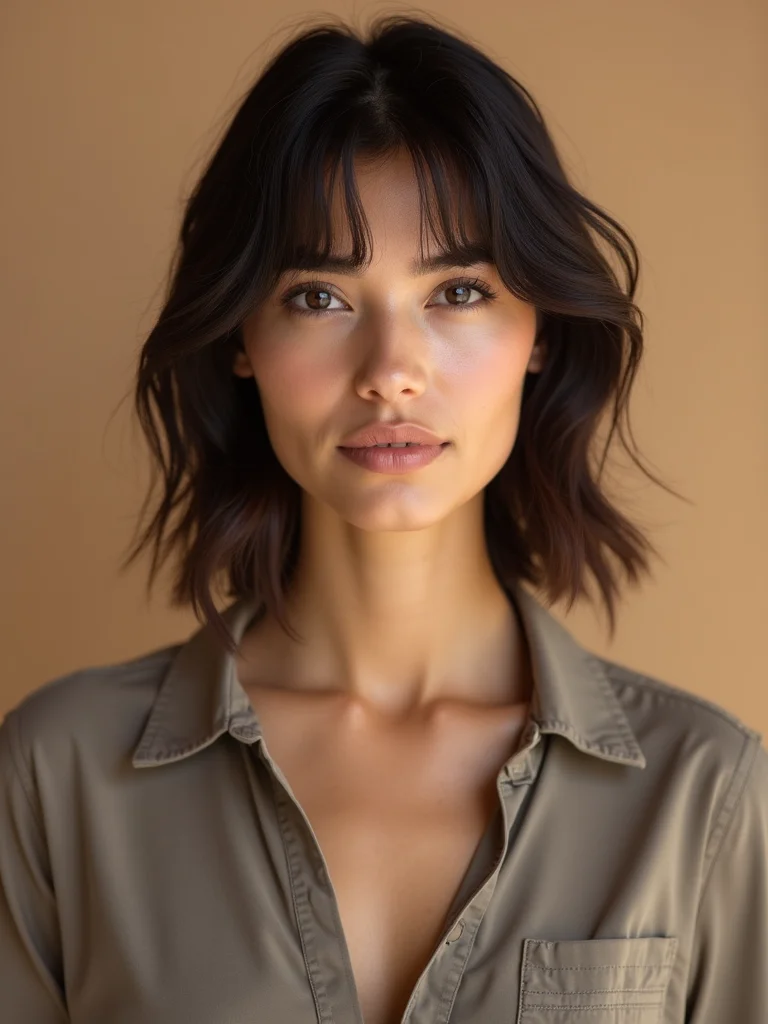
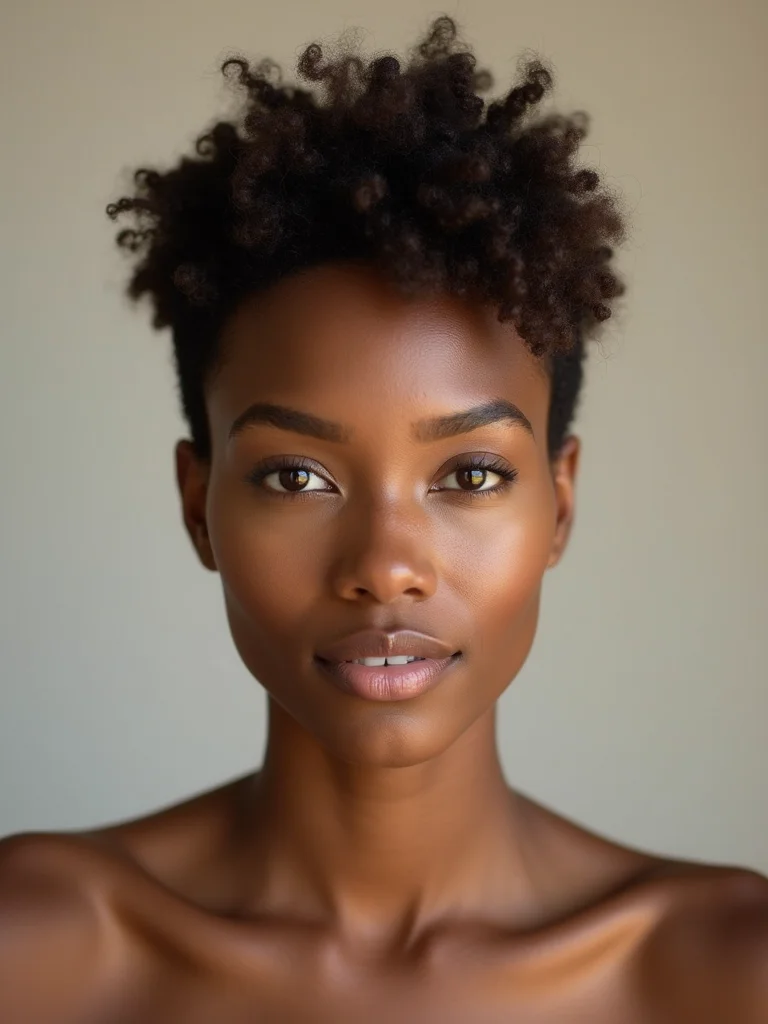
The shaggy pixie has a reputation for boldness it doesn’t entirely deserve. Underneath the choppy, undone texture is one of the more forgiving short cuts around: the layers hide a rough morning, build their own volume, and often look better on day three than day one.
Density and curl pattern change the layering more than most people expect, which is exactly where a lot of shaggy pixies go wrong.
Quick Answers, No Fluff
Is a shaggy pixie hard to style? Not really. The choppy layers are built to look undone, so there’s no chasing smooth or perfect. A pea-size amount of paste worked through with fingertips is usually the whole routine.
How often does it need a trim? Plan on roughly a four-week rhythm, since the shape is short enough that regrowth shows within days rather than weeks. Fringe-only versions sometimes need a mid-cycle touch-up on top of that.
Will it work on my hair type? Almost certainly. Fine, thick, wavy, curly, and coily hair all wear a version of this well once the layering is adjusted for texture.
What Turns a Plain Pixie Into a Shaggy One

A classic pixie relies on a clean, sculpted outline. The shaggy version keeps that short silhouette but borrows a modern shag’s choppy layering, so the hair lifts and separates into distinct pieces on its own. That single change accounts for the whole textured, rebellious feel.
- Heavy layering through the crown builds lift and separation on its own.
- Piecey, broken ends replace a smooth, blunt perimeter.
- A wispy fringe usually finishes the front, softening the whole face.
The Soft, Wispy-Bangs Version, Built for First-Timers
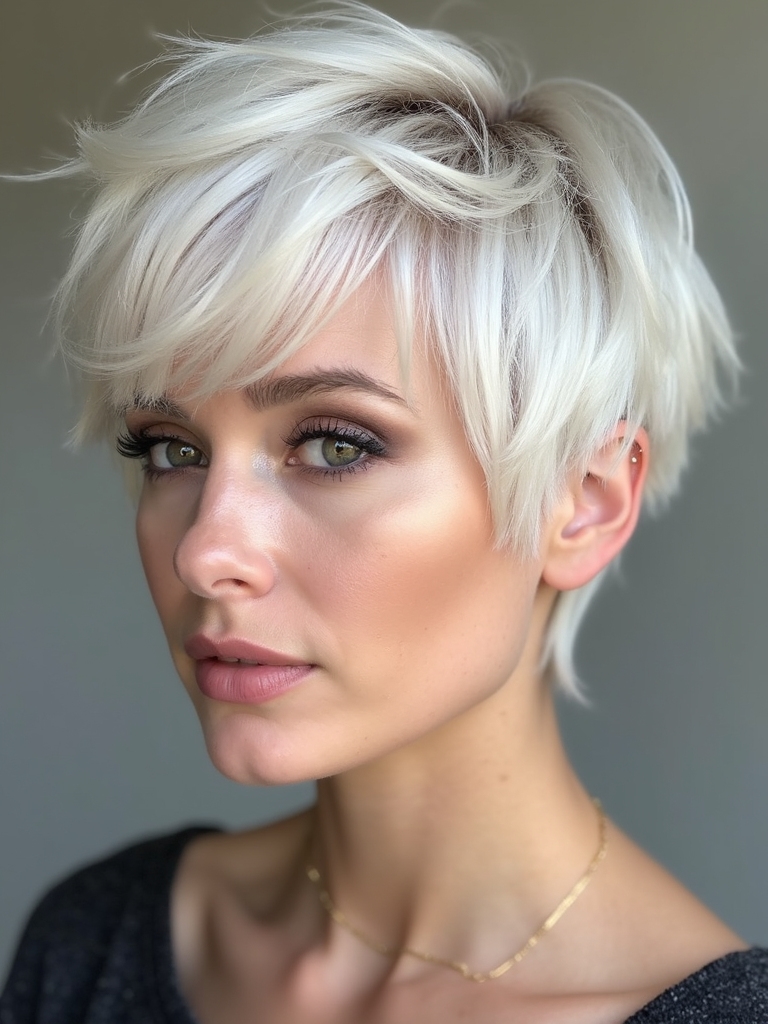
This is the version I reach for first when a client is nervous about the word pixie. A little extra length stays on top and through the fringe, so the edges land soft rather than severe.
Why the Fringe Does Most of the Work
Airy bangs blur a high forehead and pull attention toward the eyes, which accounts for most of the flattering effect. Enough length stays behind to tuck behind an ear or sweep to one side on a self-conscious day, which makes the jump from longer hair feel smaller than it actually is.
The trade-off is upkeep on the fringe specifically. Once bangs this length grow past the brow, the face-framing effect disappears, so this version asks for more frequent bang-only trims than the crown or sides need.
The Cropped Micro-Pixie, for Total Commitment
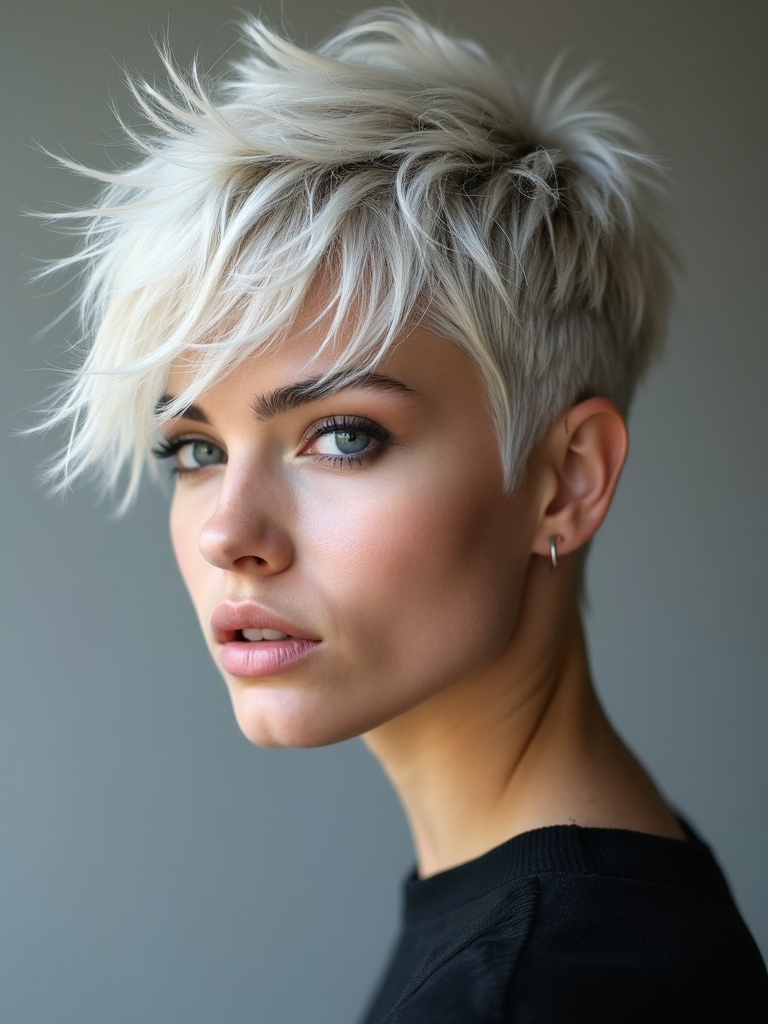
At the other extreme sits the micro-pixie: cropped close everywhere, living entirely on its choppy layers. More than one client has booked this version chasing a low-fuss life more than a specific look, and it delivers on that promise every time.
A real honesty check comes before going this short, though. A bad hair day has nowhere to hide, and there’s no length to fall back on if the shape doesn’t suit. It rewards confidence more than caution.
The Razor-Cut Take, for Real Edge

A razor carves the ends into fine, feathery points where scissors would leave a cleaner line, and that’s exactly what gives this version its undone attitude. For a similar edge minus the razor, the edgy pixie hairstyles roundup covers other ways to push a pixie further.
Who Should Skip the Razor
The technique suits strong, medium-to-coarse hair that can take the extra stress. On fine or fragile strands, a razor can fray the ends and invite breakage, so anyone with delicate hair should ask for the same look built with point-cutting shears instead.
Styled, this version wants almost nothing beyond a small amount of matte paste worked through damp or dry hair.
Two cutting terms worth knowing before the consult.
📖Razor-cutting
Slicing into the ends at an angle with a blade instead of shears, which feathers and thins the hair as it cuts.
📖Point-cutting
Snipping straight up into the ends with the tips of open shears, a gentler way to add texture without a razor’s added stress on the strand.
The Curly Shaggy Pixie

This is one of the few short cuts where curl pattern actually simplifies the job, since layering gives the natural texture room to expand on its own. A curly pixie puts the pattern fully on display, an approach the curly pixie cuts collection explores at greater length.
The hair has to be completely dry before any layer gets cut. Curls shrink noticeably once they dry out, sometimes by a couple of inches on tighter coil patterns, and a stylist working on stretched, wet hair is cutting blind to that change.
- Coily and tighter patterns tend to wear this as a low-manipulation, wash-and-go style with almost no daily routine.
- Definition creams or curl gels replace paste as the main product, since paste can weigh down a tight curl pattern.
- Ask how the stylist confirms shrinkage before cutting; some check a stretched strand against the dry length first rather than guessing from memory.
The Wavy Shag Pixie

Waves land in a sweet spot for this cut: enough natural bend to fall into a piecey finish on their own, but not so much spring that the shape needs careful daily management.
Styling barely qualifies as styling. Rough-drying with fingers, a mist of salt or texture spray, and a scrunch to coax the wave forward covers most mornings. A round brush undoes the exact movement the cut is chasing, so it stays out of the routine entirely.
Waves that go flat by afternoon usually just need a light mousse worked into damp roots before drying, enough to hold the shape through a full day.
One myth about wavy pixies worth retiring.
❌ Myth: Myth: wavy hair needs a diffuser to look intentional in a pixie.
✅ Reality: Air-drying with fingers works just as well at this length; a diffuser adds time without adding much extra shape.
The Fine-Hair Version
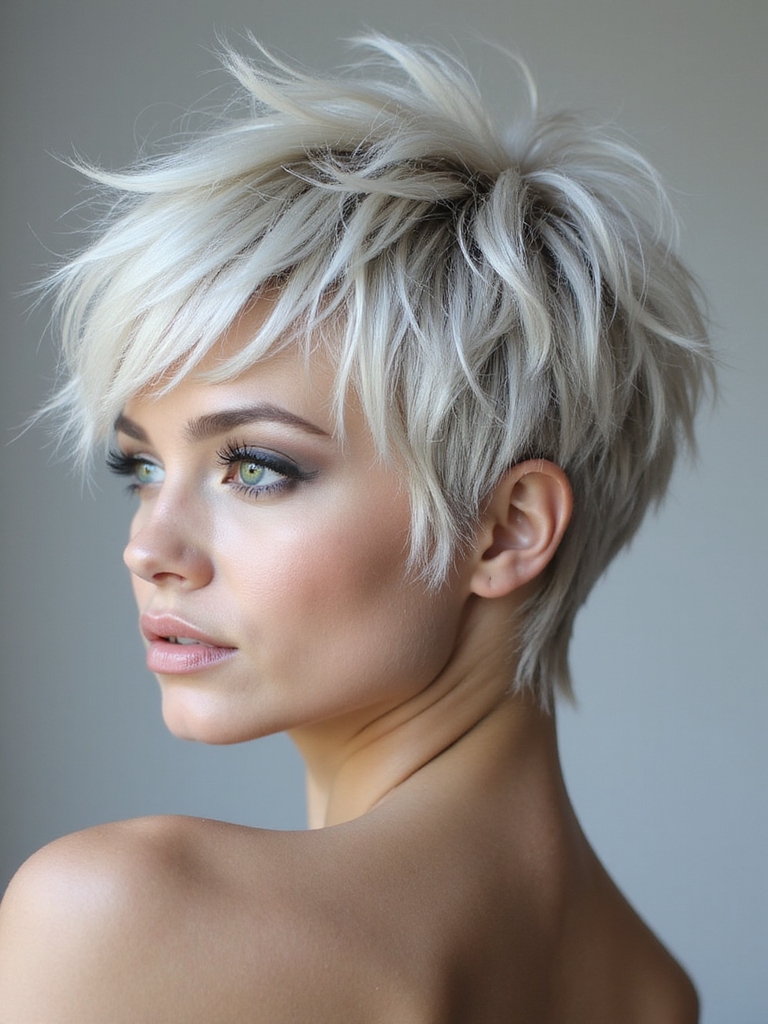
Fine hair and a shaggy pixie work well together, since short length carries less weight pulling the crown flat, and layering builds an illusion of density fine hair rarely gets at longer lengths.
Restraint matters most here: layers concentrated up top for lift, ends left slightly fuller, since fine hair has little extra to spare. Handled with a light touch, the cut makes the most of the texture that’s actually there.
The Thick-Hair Version

Thick hair presents the opposite problem: left unmanaged, a short cut can balloon into something closer to a helmet than a haircut. The shaggy pixie solves this by removing weight from underneath while keeping the outer shape intact, so the cut keeps real motion.
- The weight has to come out from underneath the surface; texturizing the outer layer alone just leaves a fuzzy, unfinished edge.
- Slightly longer layers let gravity work with the shape, giving it somewhere to settle.
- A light smoothing cream tames frizz on humid days without flattening the texture.
Cutting It for a Round Face
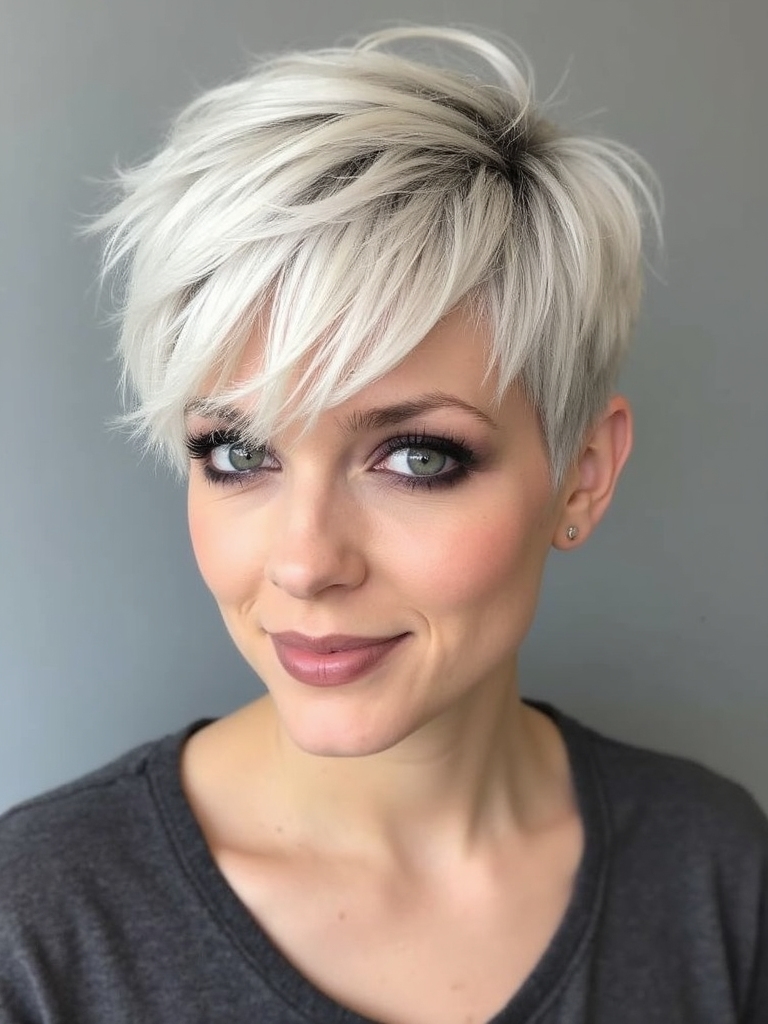
For round or full faces, the goal is height, not width. Lift and layering concentrated at the crown draws the eye upward, while the sides stay close and tapered rather than full.
The Fringe That Helps Most
A side part paired with a longer, side-swept fringe cuts a diagonal line across the face that visually narrows it. A heavy, straight-across fringe does the opposite, shortening the face and emphasizing roundness.
This height-and-taper approach shows up across most short cuts built to flatter round faces, so it’s a dependable starting point for a consultation.
Cutting It for a Heart-Shaped Face

A blunt, heavy top paired with shaved-close sides is the one combination worth steering away from on a heart-shaped face, since it exaggerates width up high and narrowness down low at the same time.
What works instead: heart-shaped faces, wider through the forehead and narrower at the chin, benefit from softness and width added toward the jaw. Longer, textured pieces left around the lower face accomplish exactly that.
- A soft, side-swept fringe balances a broad forehead without hiding it.
- Wispy pieces angled toward the cheekbones bring the proportions into better balance.
- Extra length at the jawline does more visual work here than length anywhere else on the head.
A Mature-Friendly Cut at Any Age

Few short cuts age as gracefully as this one. Built-in layering adds volume that hair naturally loses over time, and the low styling demand suits anyone who’d rather skip a lengthy morning routine altogether.
- Soft, piecey layers flatter without the harshness of a severe, blunt crop.
- Choppy layering disguises thinning at the crown better than most longer styles can.
- On gray or silver hair, the textured finish reads current, a pairing the gray hair pixie cuts gallery covers in more depth.
Shape First, Texture Second: How It Gets Built
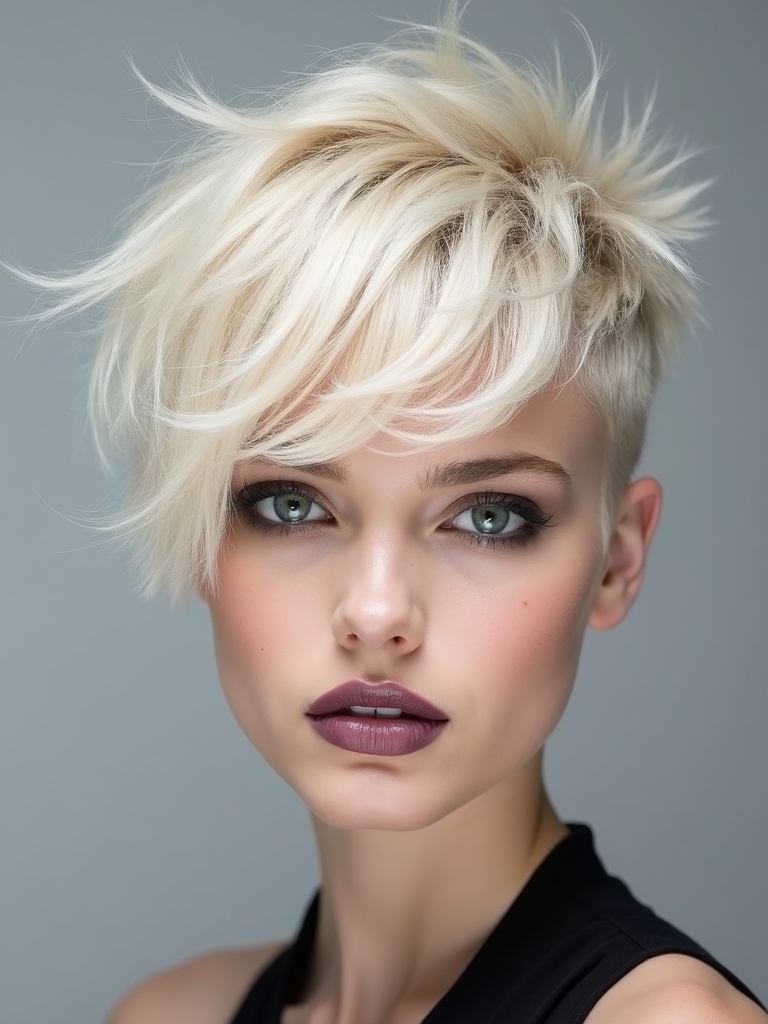
A good version of this cut goes through two distinct stages: shape first, texture second. Skipping straight to texture without nailing the underlying shape is how a choppy cut turns into a choppy mess instead. The layered pixie cut breakdown walks through the shaping stage in more detail on its own.
- Stage one sets the overall length and outline against the head shape and features.
- Stage two adds layering and point-cutting to break up weight and build lift.
- A skilled stylist works with cowlicks and growth patterns rather than against them throughout.
Styling for Piecey Lift in Under a Minute

Styling takes seconds here, which is the whole point. Rub a dime-size dab of paste between dry palms until it’s evenly warmed, then push it up through the crown and press the ends between fingertips to separate the pieces.
- Shine flattens the piecey texture into something greasy-looking, so matte formulas do the job better.
- Short hair overloads fast; start with less product than seems reasonable and add more only if needed.
- A brush erases the separation a good cut already built in, so fingers stay the better tool.
Why Color Reads Louder on Short Hair

With so little length on display, color carries more visual weight than it would on longer hair. Dimensional, multi-tonal color through the layers makes each piece pop as it separates, catching light in a way a single flat shade can’t.
Short hair costs less to color per visit but grows out faster, so a root-smudge or soft, grown-in placement stretches the time between salon trips. A root touch-up alone runs far less than a full balayage or fashion shade, which tends to land closer to $120 and up depending on how much lightening is involved; the upkeep, not the first appointment, is the real ongoing cost.
Low-Maintenance Styling, One Real Trade: Regular Trims
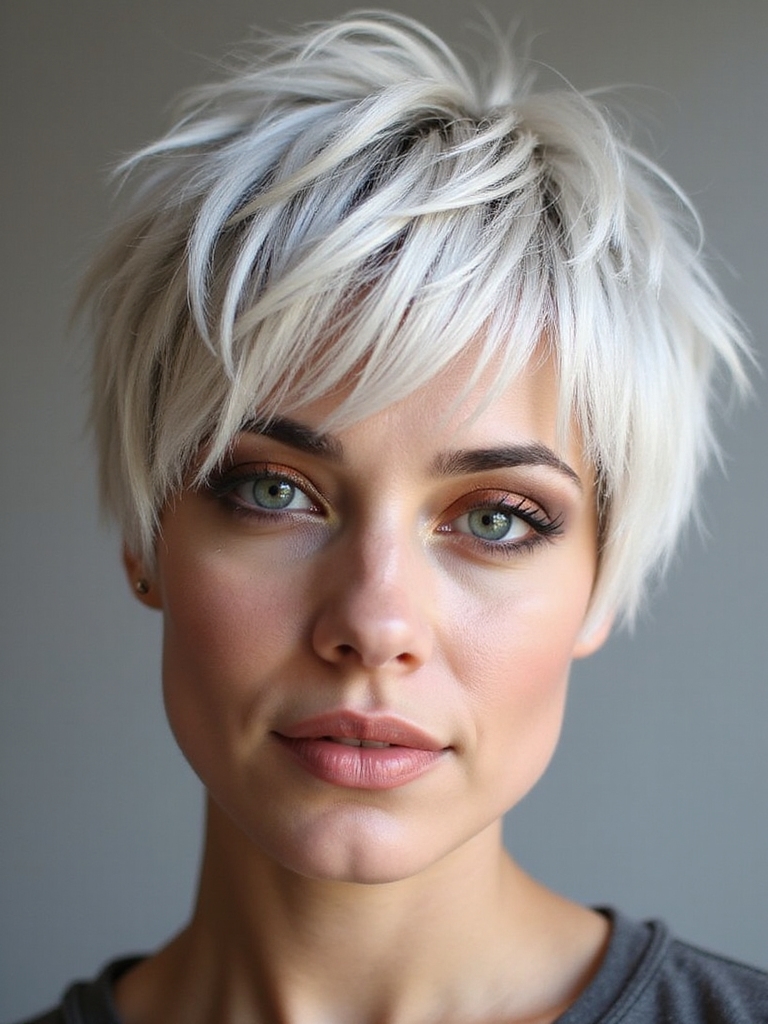
Easy day-to-day styling comes with a catch: the shape needs consistent trims to stay sharp, roughly every four weeks for most versions. Short cuts lose their outline fast, and the gap between a deliberate shaggy pixie and one that’s simply overgrown is only a few weeks of growth.
Putting the next date on the calendar while still sitting in the chair is the single easiest way to stay ahead of that gap.
- A clarifying wash every week or two keeps product buildup from dulling the texture; curl and coil patterns generally want that stretched out further to avoid drying out the strand.
- Telling a stylist to maintain shape and separation specifically keeps the cut from softening into something plainer.
- A trim pushed well past schedule usually turns into a bigger, pricier appointment instead of a quick cleanup.
What to Expect at the Consultation
The first ten minutes of the appointment are the part I actually care about most: which version, how short the sides go, whether the fringe stays or goes. Clients who skip that conversation and just point at a photo are the ones most likely to walk out disappointed.
Plan on around $65 for the cut at a mid-range salon, and expect the first visit to run longer than a standard trim, since building the shape from scratch takes more attention than maintaining it afterward. Later visits move faster once that foundation is set.
📋Worth Confirming Before the First Snip
- ✓Whether the fringe gets cut fresh every visit or only every other one
- ✓How the price changes if color gets added to the same appointment
- ✓Whether a follow-up call or photo check-in is available if the shape settles wrong after a few days
Shaggy Pixie Questions, Answered Directly
?Can a shaggy pixie be grown out without an awkward stage?
More easily than most short cuts, since the layering already builds in the kind of texture that hides regrowth. The trickiest stretch is usually around ear-length, when the sides haven’t caught up to the top yet; a stylist can blend that stage with a strategic trim rather than a full cut.
?Does this cut work with an undercut or shaved sides?
Yes, and it’s a common way to push the boldness further without losing the shaggy texture on top. The shaved portion needs its own maintenance rhythm separate from the longer top, since stubble grows in faster than layered hair does.
?What’s the biggest mistake people make asking for this cut?
Bringing a single reference photo and assuming it will translate directly. Hair texture, density, and face shape all shift the outcome, so the same photo can produce noticeably different results on two different heads.
The Takeaway
The shaggy pixie earns its bold reputation without asking for a bold amount of daily effort. Texture carries the visual weight that styling would otherwise have to do, which is the whole trade that makes this cut worth considering. The shag pixie cut guide covers a closely related take for anyone still comparing options.
Save the version that matches your hair type and face shape, bring it to a consultation, and walk through how the stylist plans to handle your specific texture before anything gets cut.
More Worth Saving