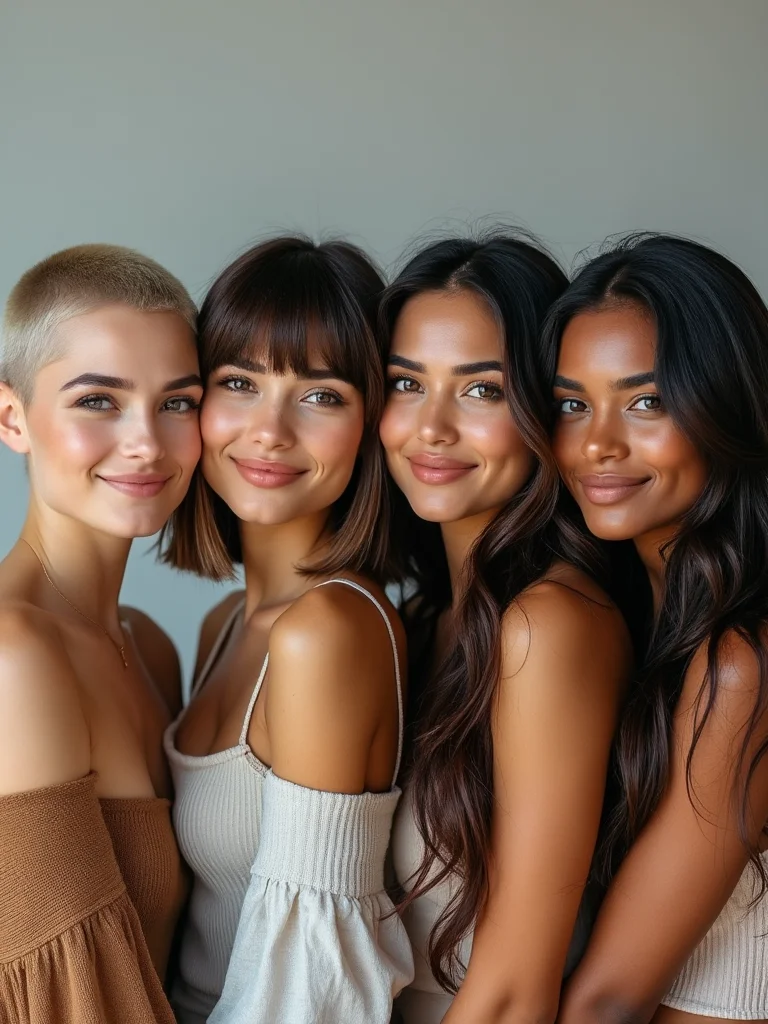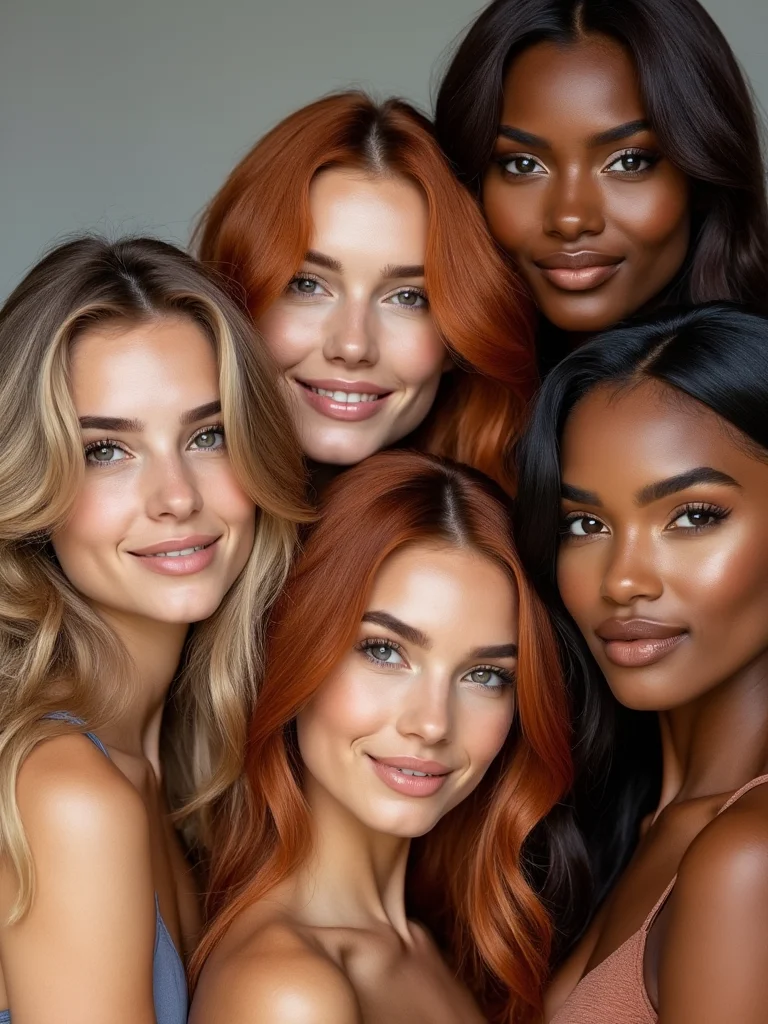
Most people wash, dry, and cut for the wrong texture for years. Answer ten honest questions about how your hair actually behaves — not how you wish it did — and I'll place you on the 1A to 4C chart, then show you the cuts that finally work with your hair instead of against it.
How This Hair Type Quiz Works
This quiz reads how your hair actually behaves, not how you style it. The ten questions look at the things that don’t lie: what your hair does air-drying with no product, how it shifts in humidity, how it looks soaking wet, and how thick a single strand feels.
Those signals place you in one of the four families on the Andre Walker scale — Type 1 straight, Type 2 wavy, Type 3 curly, or Type 4 coily — and your strand width and curl tightness narrow it down to a sub-letter from A to C.
One thing worth saying up front: heat damage, color, and product buildup can mask your real pattern.
Half the people who sit in my chair sure they have straight hair turn out to be heat-trained 2s once it grows out. If you’ve been flat-ironing for years, your hair might test straighter than it grows. The most honest read comes from clean hair that’s had a wash or two with nothing heavy on it.
The Hair Type Chart: What 1A to 4C Really Means
The chart everyone references comes from hairstylist Andre Walker, and it sorts hair by the shape each strand grows in. The number is the family; the letter is how loose or tight the pattern runs inside that family.
- Type 1 (1A–1C) — Straight: no natural curl. 1A is fine and flat, 1C is coarse with a little body.
- Type 2 (2A–2C) — Wavy: a loose S. 2A is barely-there, 2C is nearly curly and frizz-prone.
- Type 3 (3A–3C) — Curly: defined loops. 3A is loose and wide, 3C is tight corkscrews.
- Type 4 (4A–4C) — Coily: tight coils to sharp zig-zags. 4C has the most shrinkage and the most fragile strands.
Most heads are a mix — it’s normal to be 2B at the crown and 2C underneath, or 3C in front and 4A at the nape. The quiz gives you your dominant type, which is the one to build your routine and your cut around.
What's My Hair Type?
Ready to find out? It takes about two minutes — just answer honestly about how your hair actually behaves.
Why Your Hair Type Changes How You Cut and Style It
This is the part most quizzes skip, and it’s the part that actually matters in the chair. Your texture decides which cuts hold up and which ones fight you every morning.
Straight hair shows every line, so blunt edges and clean long bobs look sharp on it. Wavy hair comes alive with the soft, grown-out layers of a shag or a wolf cut.
Curly hair needs a cut shaped for the curl pattern, like a curly bob that accounts for shrinkage. Coily hair rewards shapes built around its density and growth, from a short natural cut to a loc bob.
When you finish the quiz, your result links straight to the cuts that suit your type — so you’re not just learning a label, you’re walking into your next appointment knowing what to ask for.
Hair Type vs. Porosity — They're Not the Same Thing
Type is the shape your hair grows in. Porosity is how well it absorbs and holds moisture, and the two don’t always line up.
You can be Type 1 straight with high porosity that drinks up product, or Type 4 coily with low porosity that takes forever to get wet. Knowing your type tells you which cut and styling approach to use; knowing your porosity tells you how rich your products should be.
Quick at-home test: drop a clean, dry strand in a glass of water. Floats for a few minutes means low porosity, sinks slowly means balanced, sinks fast means high porosity. It’s a useful second data point once you know your type from this quiz.
How Accurate Is a Hair Type Quiz?
A quiz like this gets your family right almost every time — straight versus wavy versus curly versus coily is hard to miss when you answer honestly about clean hair.
The sub-letter is where it gets fuzzier, because curl tightness lives on a spectrum and a single strand can vary across your head. Treat your A-B-C result as a strong starting point, then confirm it by looking at your hair wet and undefined in a mirror.
The quiz can’t see heat damage, a relaxer growing out, or a section that behaves differently from the rest. If your result feels off, it’s usually one of those, and that’s a good moment to bring it to a stylist who can look at the whole head.
When to Ask Your Stylist Instead
Knowing your type is enough to fix most of your routine on your own. Bring it to a professional when you want a cut shaped around your texture, when your pattern is changing and you can’t tell why, or when damage is making it impossible to read your real hair.
I can usually call someone’s type from across the salon, but the cut is the part that matters. A stylist who works with your texture can confirm your type in seconds and, more importantly, cut for it — which is where the right type knowledge turns into hair that finally cooperates.
Frequently Asked Questions
What is my hair type?
Your hair type is the shape your strands grow in, sorted on the Andre Walker scale into Type 1 (straight), Type 2 (wavy), Type 3 (curly), and Type 4 (coily), with an A-to-C letter for how loose or tight the pattern runs. The quiz above places you by reading how your hair behaves air-drying, in humidity, and soaking wet.
How do I know if I'm 2B or 2C?
Look at clean, product-free hair as it air-dries. 2B settles into a defined S-shape that tends to frizz at the crown when it’s humid; 2C waves are tighter, start higher up the strand, and are nearly curls with real spring. If yours pulls into a near-curl on a humid day, you’re closer to 2C.
Can your hair type change over time?
Yes. Hormones, pregnancy, menopause, certain medications, and heat or chemical damage can all shift your pattern — sometimes temporarily, sometimes for good. It’s common to grow up with straight hair that turns wavy or curly in your twenties or after a big hormonal change. If your texture is shifting, retake the quiz on clean, healthy hair.
What's the difference between hair type and porosity?
Type is the shape your hair grows in; porosity is how well it absorbs and holds moisture. They’re independent — you can be straight with high porosity or coily with low porosity. Use your type to choose your cut and styling method, and your porosity to decide how rich your products should be.
Is straight, wavy, curly, and coily the same as 1, 2, 3, and 4?
Yes. Type 1 is straight, Type 2 is wavy, Type 3 is curly, and Type 4 is coily. The number is the family and the letter (A, B, or C) tells you how loose or tight the pattern is within it, so 3A is loose curls and 3C is tight corkscrews.
How accurate are hair type quizzes?
A well-built quiz nails your main family almost every time when you answer honestly about clean hair. The sub-letter is less precise because curl tightness is a spectrum and can vary across your head. Treat the letter as a strong starting point and confirm it by checking your hair wet and undefined.
Can I have more than one hair type?
Almost everyone does. It’s normal to be one pattern at the crown and another at the nape, or curlier in front than in back. The quiz gives you your dominant type, which is the one to build your routine and your cut around, while you adjust for the sections that behave differently.
What is the rarest hair type?
True 1A — completely straight, fine hair with no bend at all — is the least commonly reported. Most people fall somewhere in the wide middle of the chart, across the 2 and 3 ranges, which is exactly why so many of us get washing and styling advice that was written for a different texture.