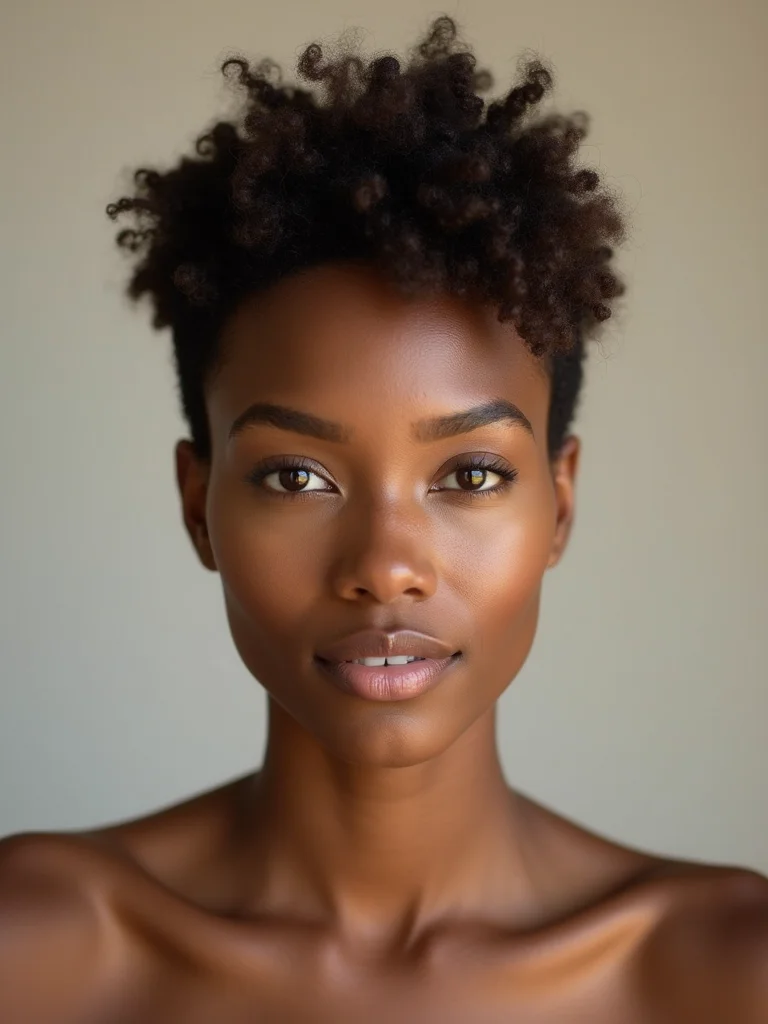
The sound in the chair changes when hair gets short. The dense, muffled weight of a full head goes quiet, shears start making a cleaner sound against the comb, and by the end you can hear a hand moving across the scalp. Most people notice how light their head feels before they notice how they look.
Short natural haircuts cover a wide range, from a quarter inch all over to a tapered shape with three inches of coil at the crown, and each one asks for something different from your mornings. What follows is eighteen of them with the trade-offs attached, because the cut is only half the decision.
Before You Book the Chop
- Shrinkage is not a problem to be solved. Coily hair can sit at a quarter of its stretched length, so a cut that measures four inches wet may look like one inch dry, and any stylist shaping it should be working with that.
- The shape lives in the taper, not the length. A tapered cut keeps fullness at the crown and shortens toward the nape, which is what creates a silhouette out of hair that is short everywhere.
- Budget for the upkeep, not the cut. A shape-up on a taper runs around $45 and lands roughly monthly, which over a year outweighs what you paid for the original chop.
Letting Coily Texture Lead

A short cut on coily hair is the one length where the texture itself becomes the shape. There is no weight pulling anything down, so every coil sits where it grew and the head becomes a defined silhouette instead of a hairstyle applied on top of one.
That is also why the cut has to be shaped dry, coil by coil. Wet coily hair can stretch to four times its dry length, so a stylist cutting it wet is guessing at where every strand will land once it springs back.
The catch is that short hair reveals density differences. Where your crown is thinner or your edges are finer, a short cut shows it, which belongs in the consultation, well before you meet it in a mirror. Our natural texture guide covers the fundamentals in depth.

The Tools a Short Natural Cut Actually Needs

Short natural hair needs fewer tools than long natural hair and needs them to be gentler, because there is no length to absorb rough handling. Everything on this list exists to reduce friction on a strand that is already at its most exposed.
- A wide-tooth comb or your fingers, used only on soaking-wet, conditioner-covered hair
- A satin bonnet or pillowcase, which does more for your ends than any leave-in you could buy
- A soft-bristle brush for edges and a spray bottle you refill daily; both live on the counter
💡Detangle Wet, Never Dry
Coily hair is at its strongest when it is soaking and slippery with conditioner, and at its most fragile bone dry. Every detangling session belongs in the shower with conditioner on, working from the ends toward the scalp with fingers first. Dry combing is the single most common cause of breakage on short natural hair, and it is entirely avoidable.
Choosing a Shape That Suits Your Face

Two settings do almost all the work here: how much height sits at the crown and how tightly the sides are tapered. Height lengthens a rounder face, and a close taper narrows a wider one.
Long or oval faces have the opposite problem and usually want less height with a softer, longer taper, since a tall crown on an already long face stretches the whole head. This is a five-second adjustment at the cut and impossible to fix afterward, which is why it belongs in the conversation before the clippers come out.
The Teeny Weeny Afro

The TWA is a quarter to an inch of hair all over, and it deserves to be treated as a destination. Our natural pixie guide picks up where it grows into a shaped crop. Plenty of people wear it for years, and treating it as something to endure until length arrives misses what it actually offers.
It is the fastest routine on this page. A spray of water, a curl cream through with your palms, and you are finished, which for a lot of people is the entire reason they cut.
Where this struggles is with expectations of versatility. At this length you can change color, add a headwrap, or vary your part, and that is honestly the whole range. If you want styling options, the tapered cut two entries down is the better fit.
The Tapered Cut

The taper is the most-requested short natural shape and the most flattering by a wide margin, because it manufactures a silhouette. Length is kept at the crown, the sides and nape shorten gradually, and the whole head gains a defined line without needing any styling to hold it.
- Ask for length kept on top and a gradual taper through the sides and nape, cut dry
- It grows into itself for about a month before the taper blurs and needs a shape-up
- Two to four inches at the crown is the sweet spot; less loses the shape, more needs styling
The Undercut

An undercut takes the sides and back down to the skin or near it while the top stays full, and on dense coily hair it does two jobs at once: it delivers a strong graphic line and it removes a meaningful amount of bulk, which makes the top easier to style than it was before. What it does not do is come back quickly, and that is the part worth sitting with before you book.
- Ask for a low undercut hidden under the top length if you want a way back
- The buzzed section needs a clipper pass roughly every two weeks to stay crisp
- It changes how product distributes, since there is far less hair to cover
Ask What the Regrowth Looks Like
Before anyone shaves anything, ask your stylist to describe month three specifically: how the buzzed panel will sit against the top, and whether it can be blended or has to be waited out. Anyone who does this work regularly will answer immediately and honestly. A vague answer is a reason to book a low, hidden version instead and take it higher at the next appointment.
Finger Coils

Finger coiling means winding a small section of wet hair around one finger, releasing it, and letting it dry in that spiral. On a short cut the whole head takes somewhere between forty minutes and an hour and a half depending on how small you go.
An Hour Now, Five Days Later
It is the most defined a short natural cut can look without any tools at all. Each coil dries as its own separate spiral, and the definition holds for three to five days if you protect it at night.
The honest cost is time. This is a Sunday-evening job, which is why most people who wear it plan the week around a single styling session.
The Fade
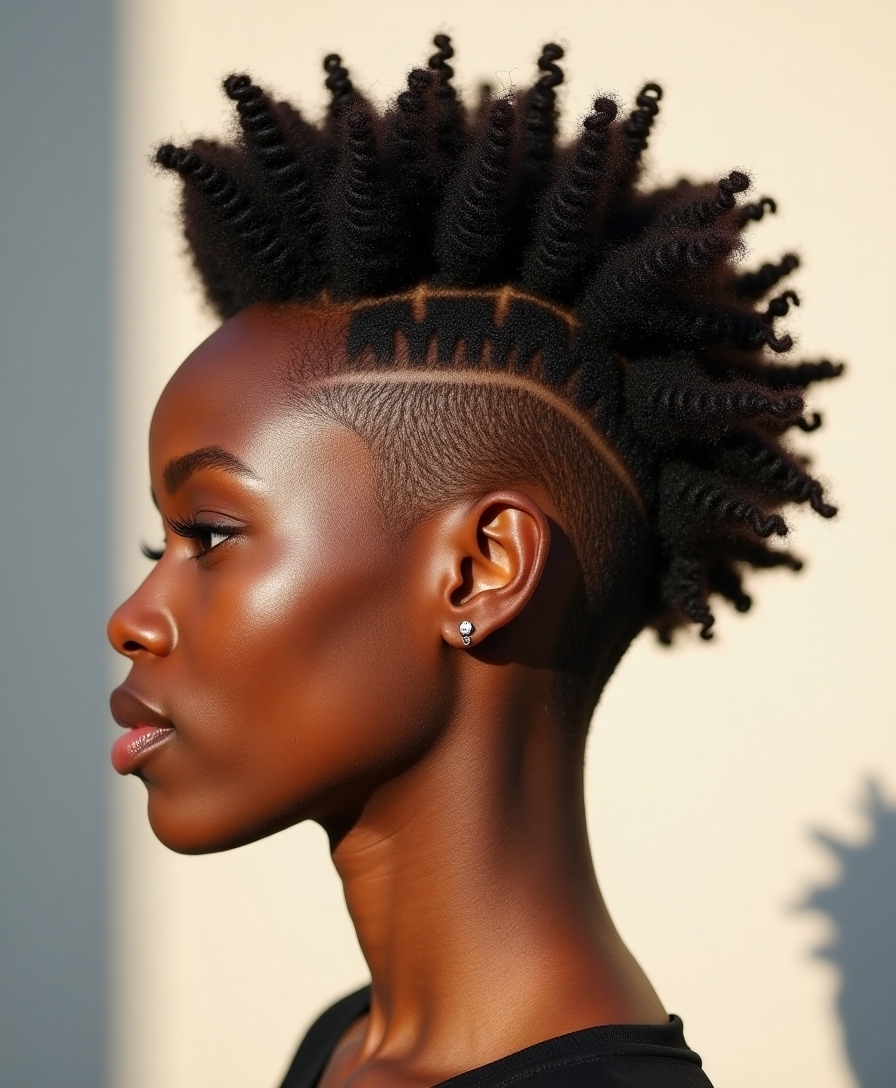
A fade is precision clipper work: hair graduating from skin at the bottom to your full length at the top with no visible line anywhere in between. On coily texture it is harder than on straight hair, because coil pattern hides the transition and a barber has to read the shape by feel as much as by eye.
That difficulty is why the person matters more than the technique. Ask specifically whether they fade textured hair regularly, and look at their work on hair like yours.
- A skin fade shows growth within about ten days; a low or taper fade buys you three weeks
- Booking a barber and a natural-hair stylist separately is common and completely reasonable
- The top can stay long enough to coil, so the fade does not force you into a single look
Fade or taper? Pick by how often you want to sit in a chair.
1You want the sharpest possible line
A fade. It looks precise for about ten days on a skin fade, so plan on a standing barber appointment and treat it as part of the style.
2You want shape with breathing room
A taper. It softens gradually as it grows instead of going blurry, which buys you the full three weeks between visits.
Sculptural Shapes and Geometric Designs

Designs cut into the faded section, whether clean parallel lines, a curved part, or something more elaborate, are a form of barbering with a long history in Black hairstyling and a genuine craft behind them. On short natural hair they read beautifully because the surrounding texture is matte and the shaved lines are sharp, which gives the eye maximum contrast to work with.
- Bring a reference image and expect the artist to adapt it to your head shape
- Simple lines last about two weeks; intricate work looks fuzzy sooner
- Ask about touch-up pricing at the booking, since designs need refreshing more often than the cut
Maintaining It at Home

The daily routine here is small, and the biggest risk is doing too much. Water and a light product in the morning, a bonnet at night, and that is most of it.
Moisture is the recurring job. Short strands lose water fast because there is more exposed surface relative to volume, so a refresh spray of water with a little leave-in works better than reapplying heavy cream to dry hair.
Wash day gets simpler too. A cleansing session that took two hours on long natural hair takes twenty minutes here, which is one of the quiet, unglamorous joys of cutting short.
Seasonal Care

Coils behave differently across the year, and adjusting is easier on short hair than long. Summer humidity swells the pattern and definition holds longer; winter dries the strand out and the same product that felt right in July suddenly leaves the hair crunchy and thirsty by December.
- Cold months: heavier sealing oil over your leave-in, and a scarf over the bonnet outdoors
- Warm months: lighter gel, more water, and less product overall as humidity does the work
- Chlorine and salt both strip moisture, so rinse and condition the same day you swim
Color on a Short Natural Cut

Color lands harder on short hair because there is less of it and all of it is visible at once. Our curly hair guide covers tone choices across textures. A copper or honey tone on a tapered cut changes your whole appearance in a way the same color on waist-length hair would not, and the upkeep is lower since you are refreshing two inches rather than twenty.
- Lightening opens the cuticle, and coily hair is already prone to dryness, so a bond treatment matters
- Keeping the taper darker and the crown lighter makes the shape read more clearly
- Semi-permanent color on unlightened hair is the lowest-risk way to start
Transitioning and the Big Chop

There are two ways off relaxed hair, and they suit different people. The big chop removes the processed length in one appointment and leaves you with a TWA the same day. Transitioning grows the natural texture out underneath and trims the relaxed ends away gradually over a year or more.
- Big chop: immediate, cheaper, and the line of demarcation stops being fragile straight away
- Transitioning: keeps length, but the point where two textures meet is where breakage happens
- If you transition, handle that demarcation line gently and trim it back every couple of months
The Products Worth Owning

Four products cover nearly everything at this length: a sulfate-free cleanser, a slippery conditioner, a leave-in, and one styler that is either a cream or a gel depending on how much hold you want.
Why the Same Product Fails on Different Heads
The economics favor you here. A jar that lasted three weeks on long hair lasts three months on a TWA, so a $28 styler works out cheaper per month than the $9 one did on twenty inches of hair. This is the one point in a natural hair journey where buying better costs less.
Porosity is the variable that decides which styler works. High-porosity hair drinks product and wants heavier cream; low-porosity hair rejects it and sits with a film on top, which is the real reason a product that everyone raves about can do nothing for you.
Techniques for Maximum Definition

Every reliable definition method starts on soaking-wet hair and ends with hands off. Shingling means smoothing product through small sections one at a time so each coil clumps. A wash-and-go means raking product through larger sections and letting the pattern do what it does.
The rule almost everyone breaks is touching it while it dries. A coil sets as the water leaves, and disturbing it mid-dry separates the clump and produces frizz. Air-dry or diffuse on low with the head still, and check it only once it is completely dry.
The Common Frustrations, Solved

Three complaints come up more than any others: it looks flat on one side, it dries crunchy, and it never seems as defined as it did the day it was cut.
All three have unglamorous causes. Flatness is usually sleeping position and fixed by a bonnet; crunch is gel doing exactly what gel does and fixed by scrunching the cast out once the hair is bone dry; and definition drops off because a stylist styled it wet and you have been refreshing it dry.
- Flat side: bonnet at night, and refresh that section first with water in the morning
- Crunchy cast: let it dry completely, then scrunch with oiled palms to break it
- Lost definition: go back to soaking wet once a week and stop layering product on dry coils
👍What short natural hair gives you
- +Hats, helmets, and headrests stop being a daily negotiation with your hair
- +Humidity has almost nothing to grab, so a bad-weather day stops being a bad-hair day
- +You learn your own porosity and pattern fast, because results show up within one wash
👎What it asks in return
- –Finding a stylist who cuts coily hair dry can take real searching outside big cities
- –Comments from other people arrive unsolicited for the first month or two
- –Sleeping without a bonnet costs you visibly by morning, with no length to disguise it
Growing It Out With Protective Styling
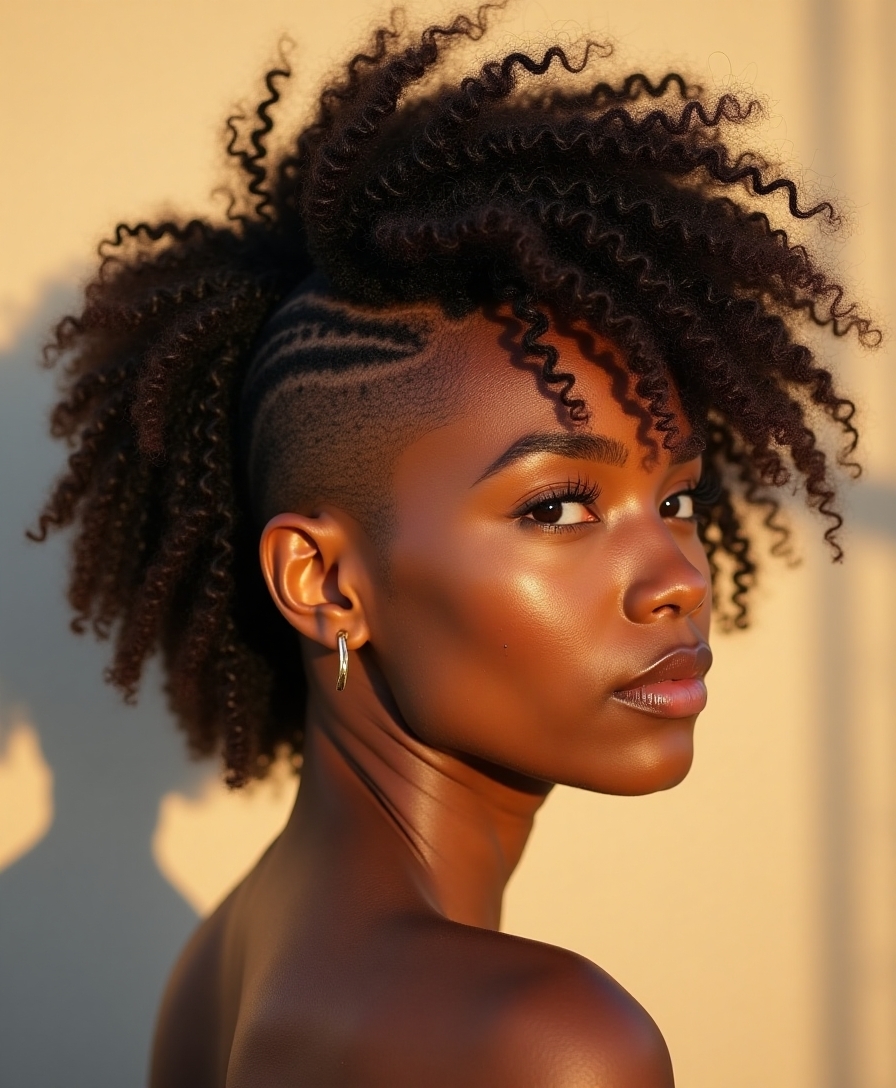
Short natural hair grows out into more options, not fewer, though the awkward middle stretch is real: too long to sit as a TWA, too short to hold most protective styles. That stage lasts a few months and passes.
Once there are four or five inches to work with, flat twists, small cornrows, and mini twists all become possible and let you leave the hair alone for a week at a time. Our protective styles guide covers the options, our cornrows page goes deeper on braided ones, and Brazilian wool styles offer a low-cost alternative to added hair.
- Braids and twists should never sting at the hairline; tension there is what thins edges permanently
- Take any protective style down before it starts locking at the root, usually inside six weeks
- Trim the ends during the grow-out, since keeping damaged ends slows nothing down
Who It Suits Best
A short natural cut suits anyone tired of wash days that consume an afternoon, anyone whose ends are damaged past repair, and anyone who has been quietly curious for a year and keeps not doing it. It suits dense hair particularly well, because density that feels like bulk on long hair turns into sculptural volume when it is short. It also suits people who like a routine that is the same every single morning.
It asks more of you if you dislike being looked at, since a short cut on a woman still draws comment. It asks more if you rely on hair to soften a strong jaw or a high forehead, though a taper adjusted for your face handles most of that. And it asks a real commitment to shape-ups, because short hair loses its line in weeks. Knowing that going in is the difference between loving the cut and blaming it.
The Length Was Never the Point
Almost everyone who cuts short says a version of the same thing afterward, which is that they did not expect to feel more like themselves. Some of that is the lightness and some of it is having nothing to hide behind, and both take about two weeks to settle into.
If you have been circling this, the low-commitment move is to book a consultation rather than a cut, and ask a stylist who works with your texture what a taper would look like on your head. You can decide after. But the fear people describe beforehand almost never matches what they say when it is done.
Next Up