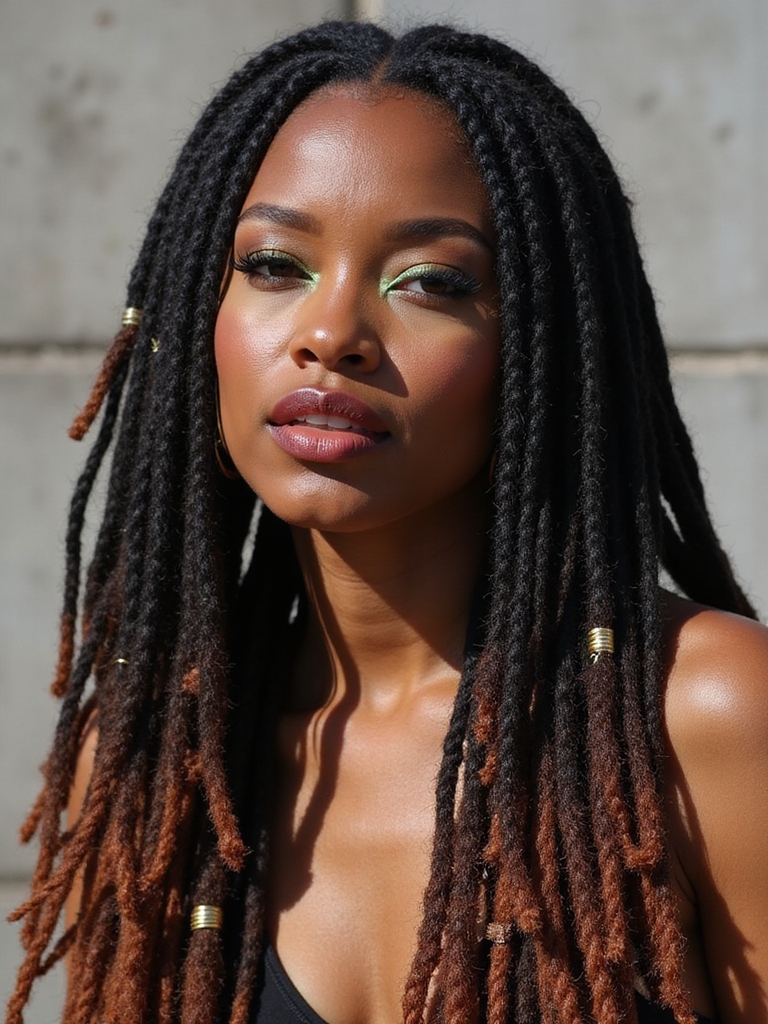
Cornrows aren’t a passing style. Braided flat to the scalp, they trace back thousands of years across Africa, carried through generations as protective styling, artistry, and identity all at once. Wearing them means wearing that history, whether the pattern chosen is a simple straight-back or an elaborate geometric design.
Nineteen patterns follow, along with how tension actually works, what a set really costs in time and money, and the care that keeps a set looking sharp for its full life.
Cornrows at a Glance
| Factor | Natural Hair Only | With Added Braiding Hair |
|---|---|---|
| Typical wear time | One to two weeks | Two to six weeks |
| Scalp feel | Lighter, gentler | More weight at the root |
| Best for | Shorter-term protective styling | Longer stretches of hair growth |
The Art and Heritage of Cornrows
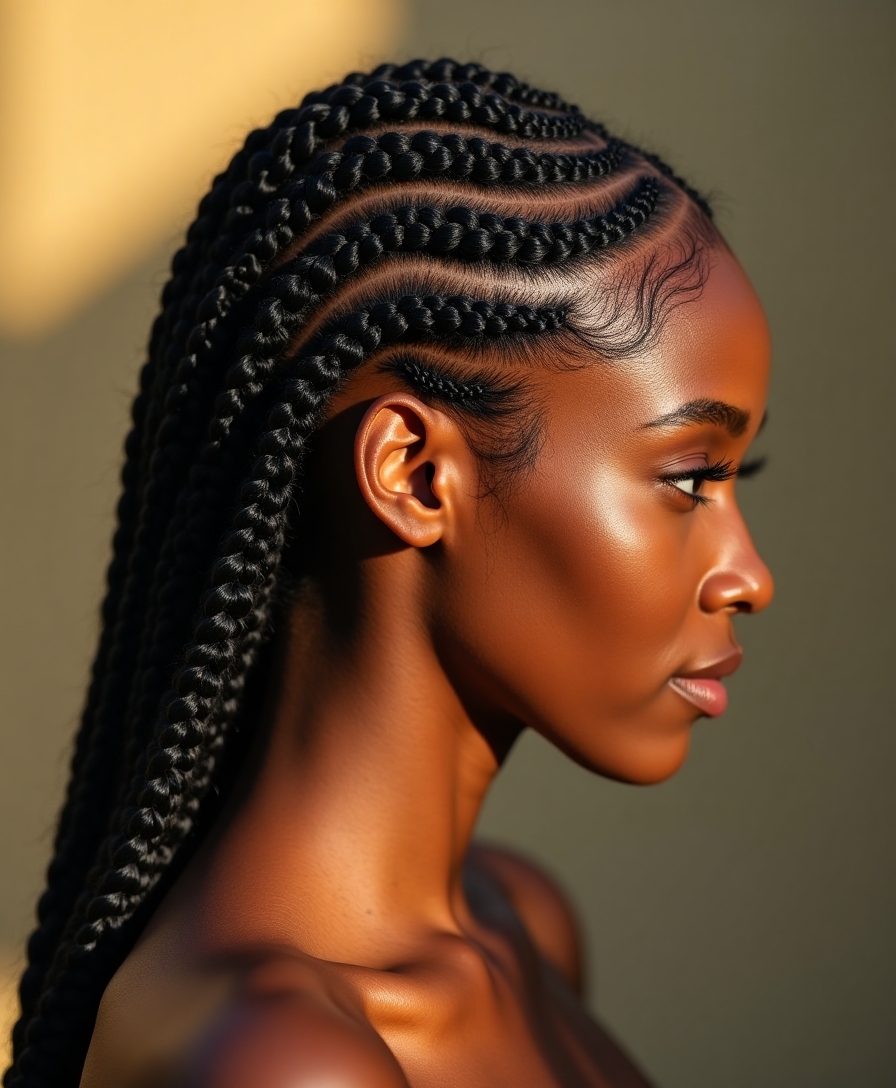
Cornrows have been braided across the African continent for thousands of years, historically used to signal community, age, and status long before the word ‘style’ entered the picture. That heritage isn’t decoration sitting on top of the technique; it’s the actual root of it.
Carried through the diaspora, cornrows became a way to protect textured hair while passing braiding skill down through generations, often taught within families, hand to hand, well before it ever became a salon service. A wider look at that lineage lives in the braids for Black hair guide.
Respecting where the style comes from is part of wearing it well, whatever pattern gets chosen.
Choosing a Pattern for Your Face
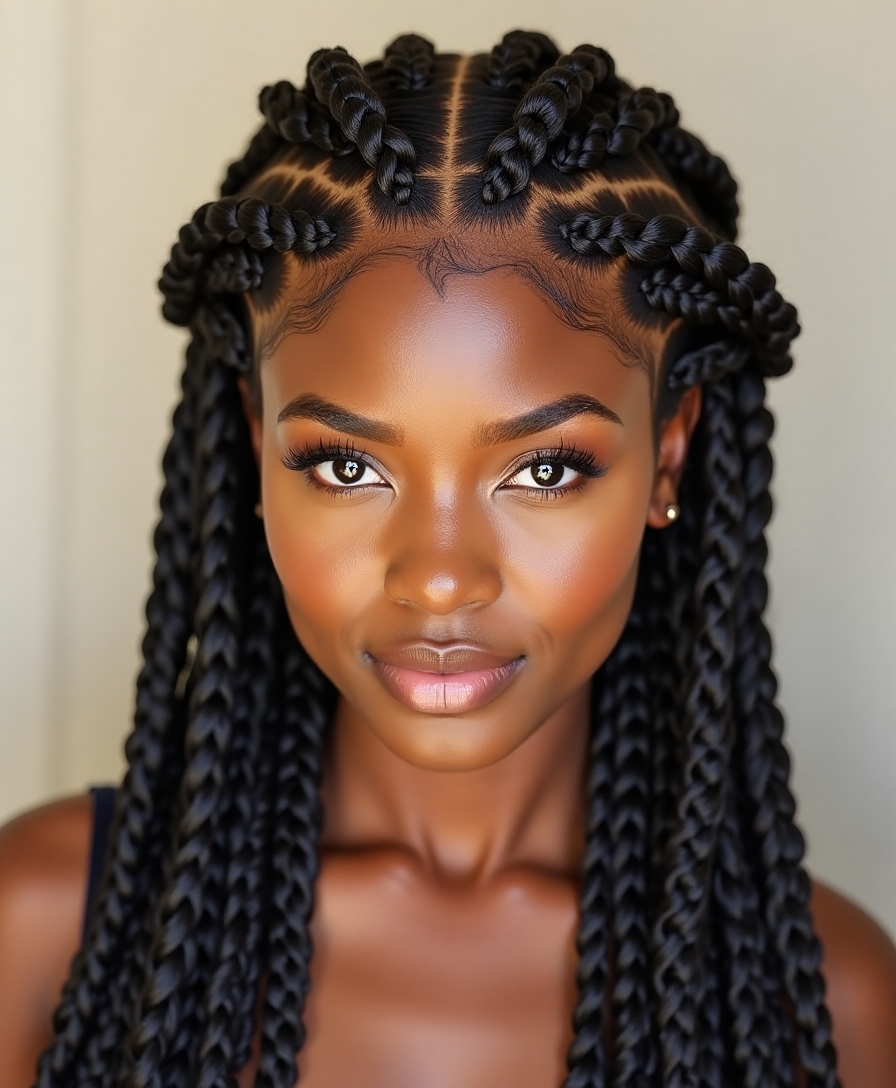
One advantage of cornrows most people overlook: the parting pattern itself can flatter a face shape, since the braider controls exactly where every line falls.
- Round faces tend to suit straight-back or lengthwise rows, which add visual length.
- Longer faces often do well with curved or diagonal patterns that add width.
- A side part or asymmetrical design can soften strong, symmetrical features on nearly any face.
The Braiding Technique and Tension
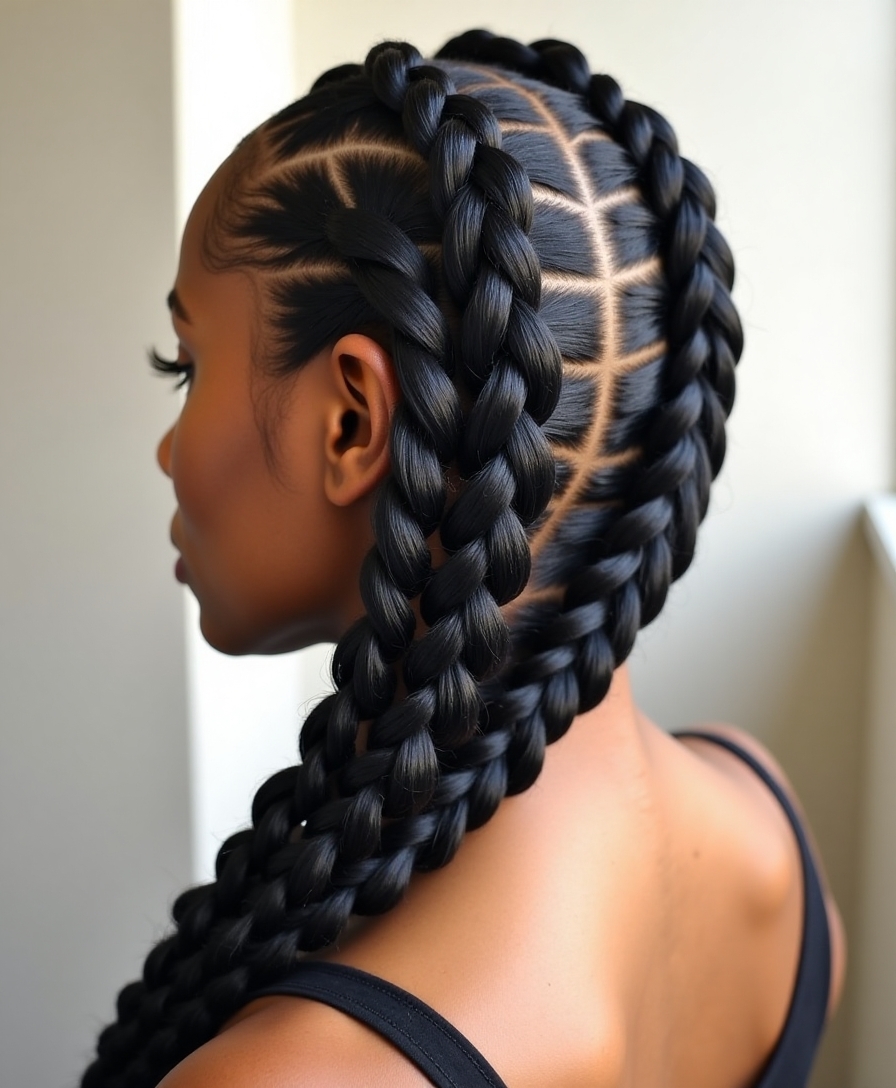
A cornrow is an underhand braid plaited flat against the scalp, picking up a little more hair with each pass so the finished row sits raised and even.
The One Rule That Actually Matters
Clean, consistent partings and even tension are what separate a set that lasts cleanly from one that frizzes within days. Tension is the detail worth paying the most attention to at the appointment itself.
Braids should feel secure, never painful. Stinging at the temples, pulling at the corners of the eyes, or bumps along the hairline are signs the tension needs adjusting immediately, not tolerating through the appointment.
Making Cornrows Last
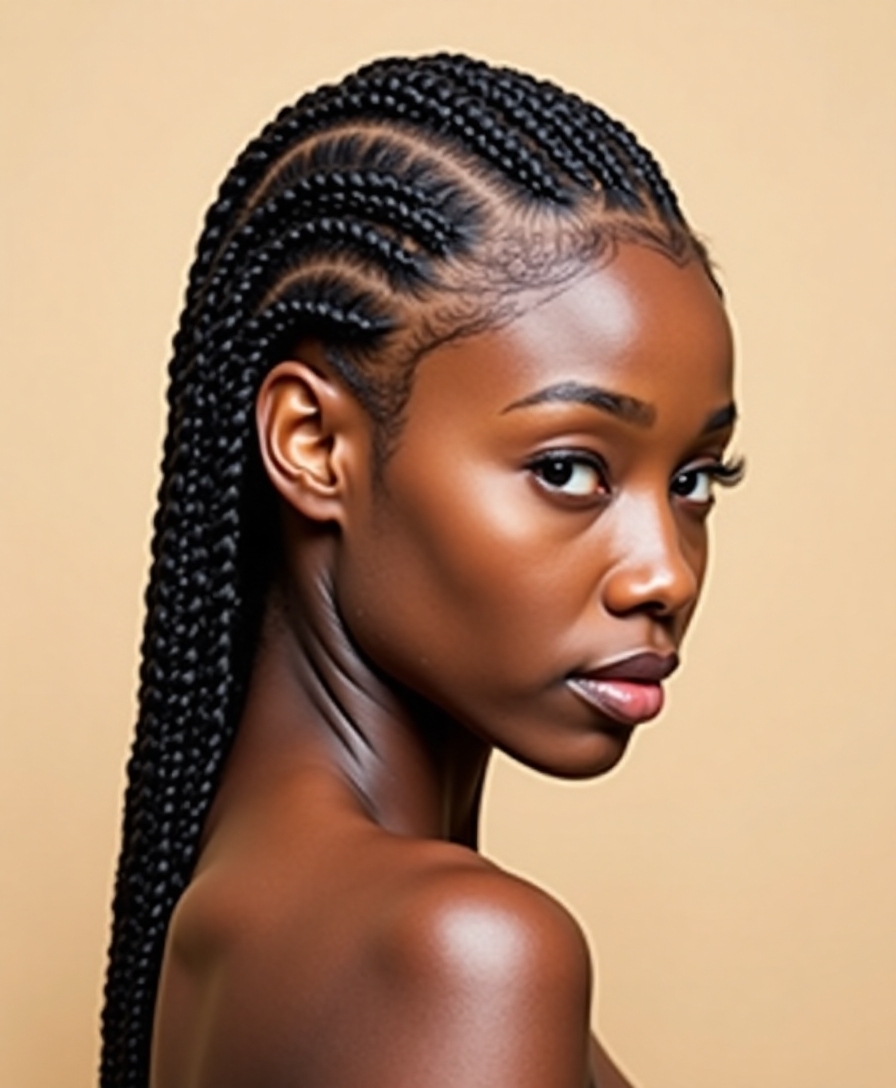
As a protective style, cornrows already do a lot of the work on their own, though a little nightly care keeps a set looking neat and the scalp comfortable for its full wear. The same nightly logic carries over to the twist hairstyles guide.
- A satin or silk scarf, or a satin pillowcase, cuts down on nighttime friction and frizz.
- Light scalp oil every few days prevents the dryness and itch that can build up underneath.
- Two weeks is a reasonable ceiling on natural hair; six weeks with added braiding hair, before the hair underneath needs a proper rest.
Classic Straight-Back Cornrows
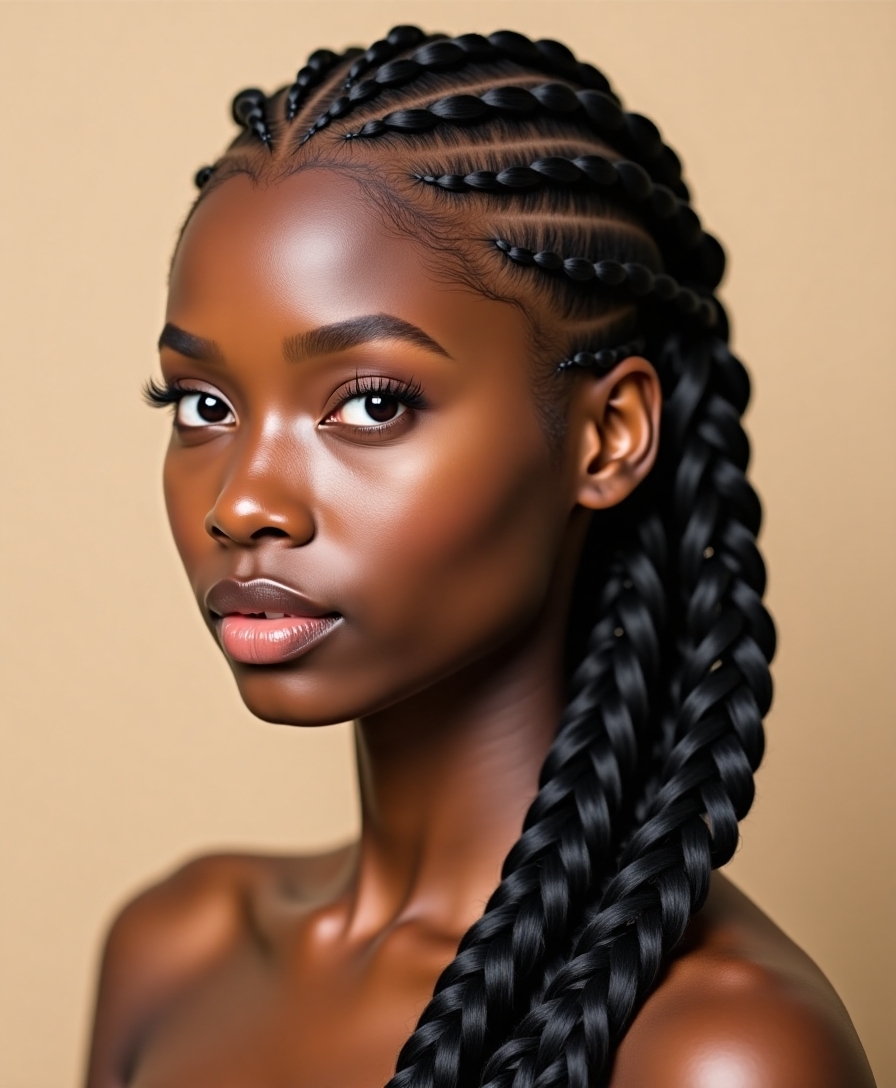
The straight-back is the foundation pattern: even rows running from the hairline straight back to the nape. Clean and adaptable, it’s usually the first pattern recommended for anyone new to the style.
- Appropriate for work, school, or nearly any setting without a second thought.
- Typically the quickest pattern to braid, which keeps the appointment shorter.
- A reliable base for gathering into a bun or ponytail later in the week.
“Expect the simplest patterns to also be the most budget-friendly, since braiding time is most of what a set actually costs.”
Zigzag Cornrows
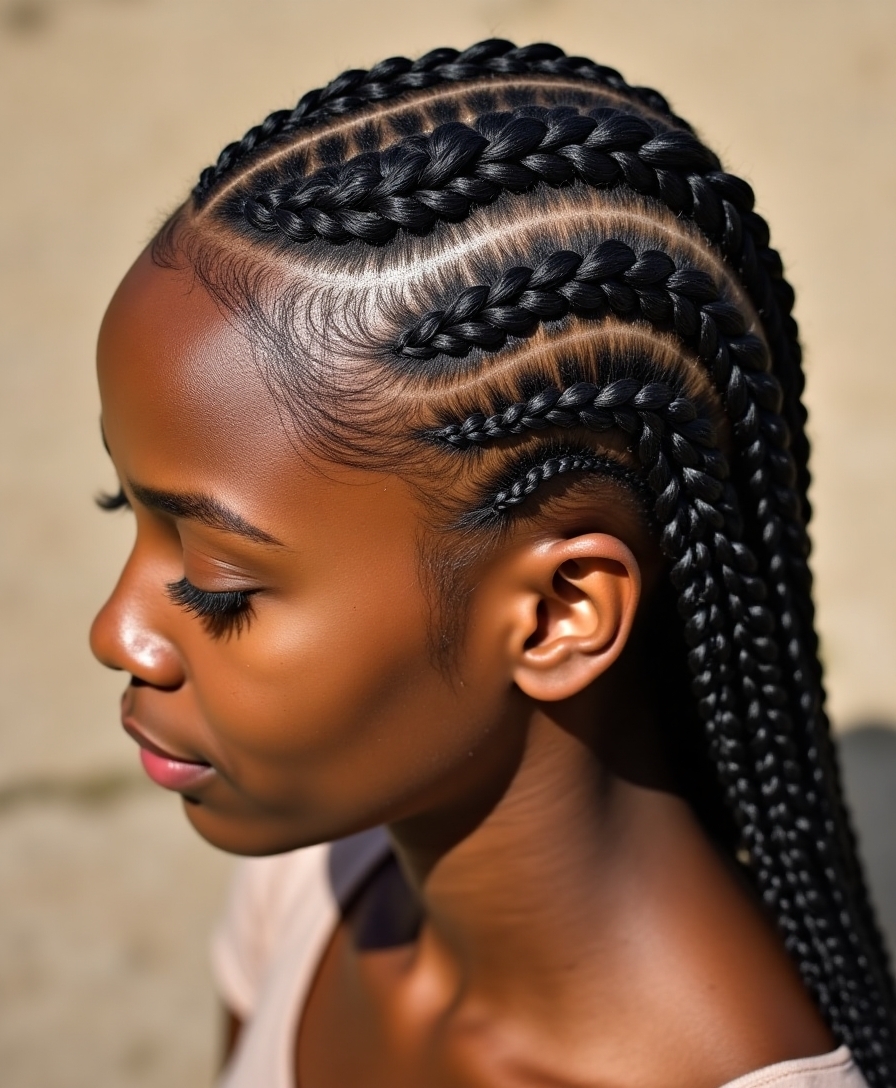
Zigzag cornrows trade straight partings for sharp, angled lines traveling back and forth across the scalp. The braiding technique stays the same; the artistry lives entirely in the parting.
Because the lines are planned rather than freehand, this pattern generally takes a braider with a steadier hand and a bit more time than a straight-back set.
- The angled partings add motion and a distinctly custom feel to the finished set.
- Worth confirming the exact design with a braider before the first row goes in.
- Just as protective as a straight-back pattern underneath the visual effect.
Cornrows With Beads
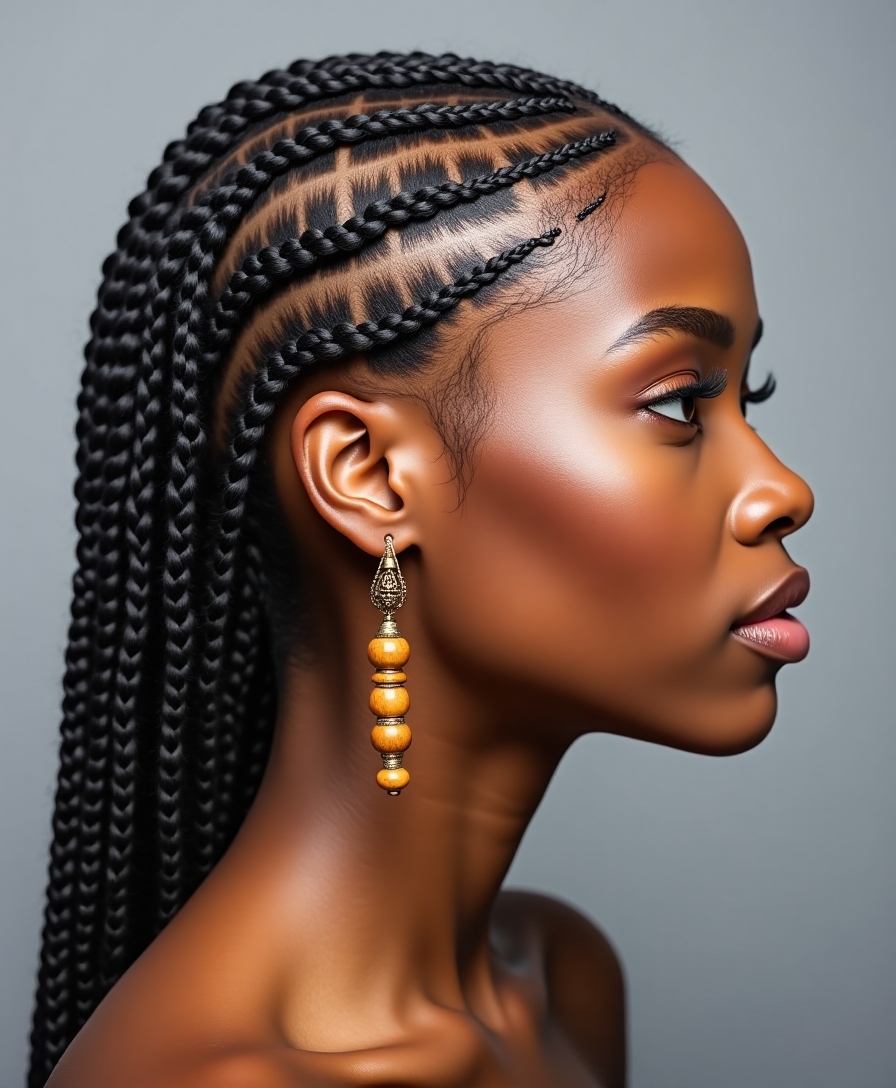
Threading beads onto the ends is a tradition in its own right, adding color, a bit of weight, and the sound they make when the hair moves. It’s especially common on children’s styles, though adults wear it just as well.
Bead size should match the braid it sits on, so it stays secure without dragging on the ends or the hairline. A bead clip helps keep them from sliding, particularly on finer or shorter ends.
Bold Geometric Cornrow Designs
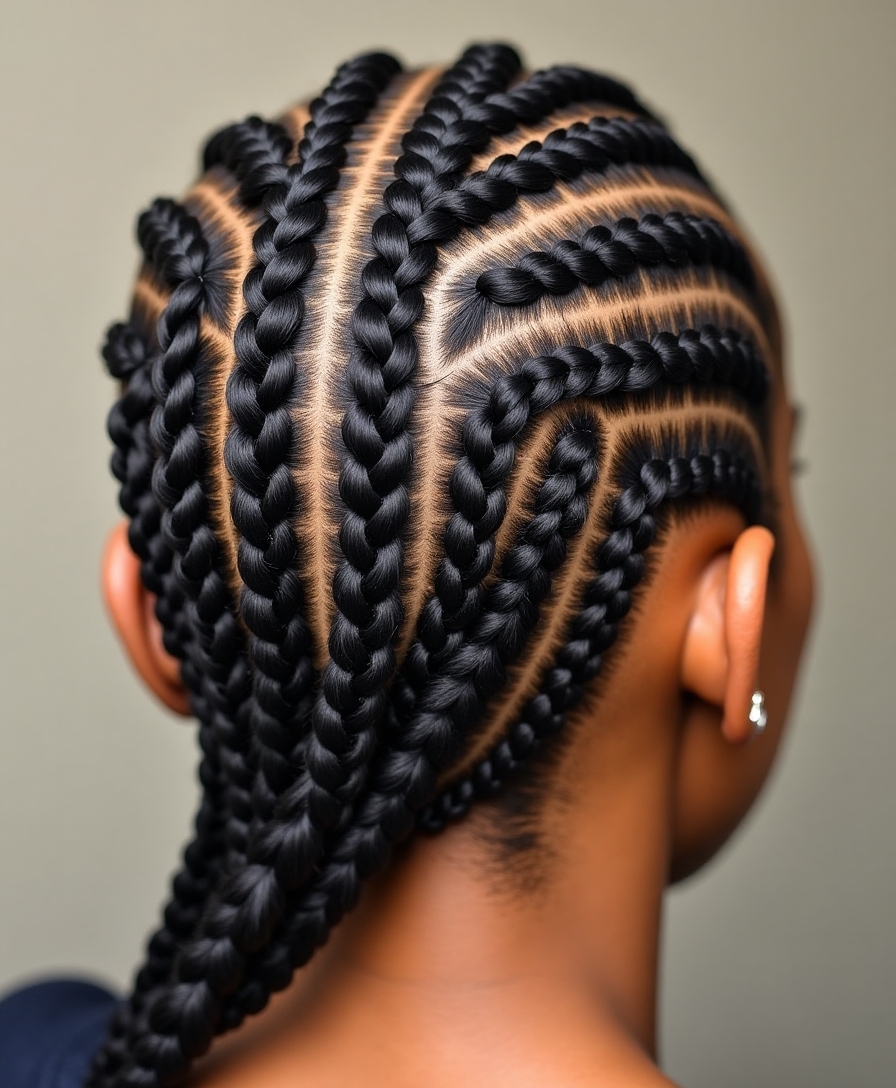
This is where cornrows turn into wearable art. Geometric designs combine curves, angles, and intricate partings into a fully planned layout across the whole head.
These sets reward finding an experienced braider and setting aside real time, since the entire design gets mapped before the first row is plaited.
- A fully custom pattern, unlikely to be duplicated exactly on anyone else.
- Expect to spend longer in the chair, and pay more, for the added artistry.
- A clear reference photo helps braider and client land on the same vision.
The Halo Cornrow
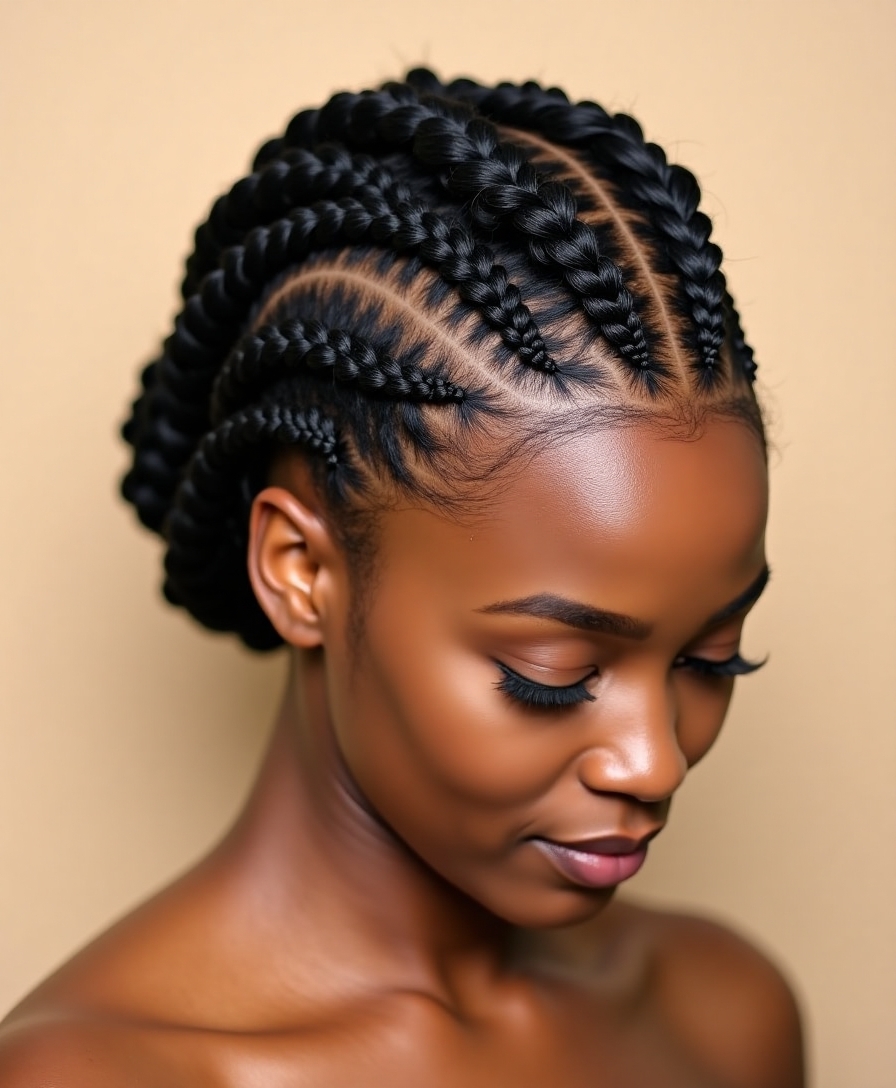
The halo pattern curves rows around the head in a circle, like a braided crown, often gathering the ends toward the center or into a low bun. It comes across romantic and formal at once, a common choice for weddings and events.
- The circular line frames the face softly from nearly every angle.
- Holds without a single piece falling loose across a full day of wear.
- Pairs well with a few beads or a small accessory tucked into the crown.
Cornrows With Color
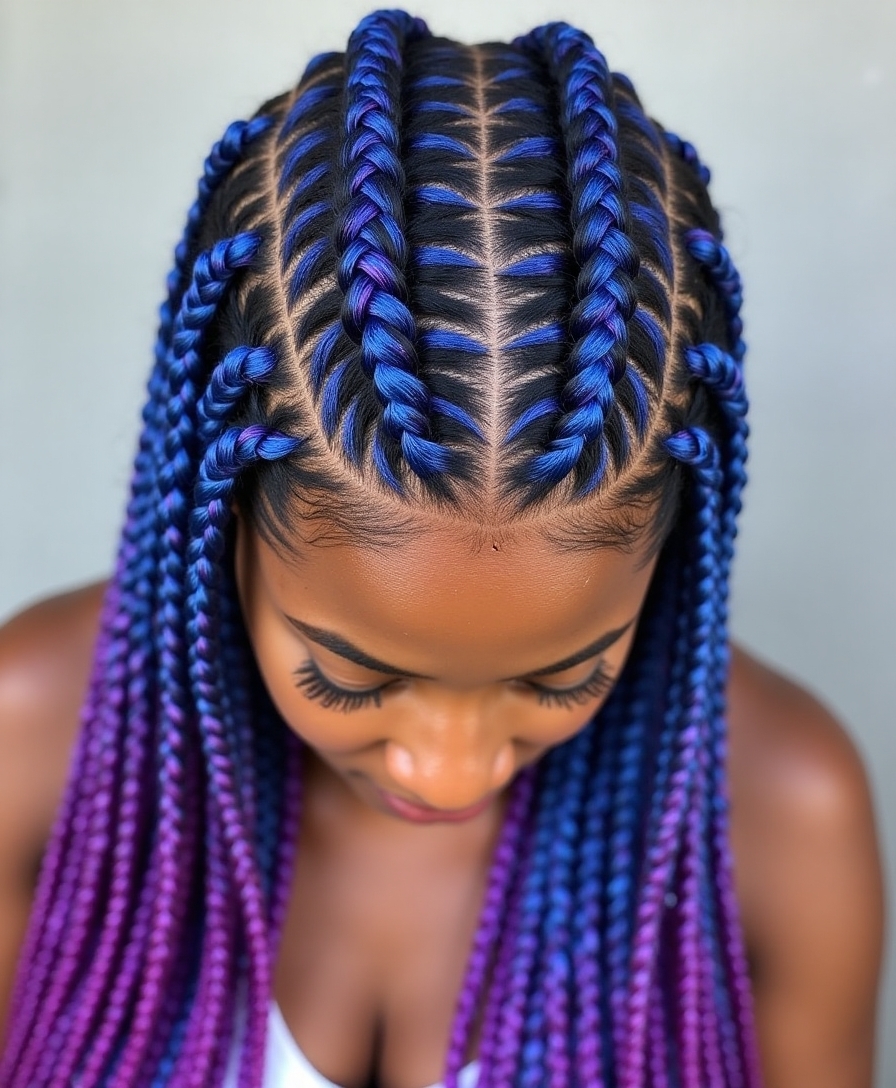
Adding color, usually through braiding hair in a different shade, makes a pattern stand out while leaving natural hair color completely untouched underneath.
That’s a meaningful part of the appeal: the color risk sits entirely in the extension hair, not the client’s own strands. A few highlighted rows work as a subtle option; a fully vivid shade works as a statement.
Quality braiding hair avoids a scratchy or dry feel against the scalp, and rinsing new synthetic hair in a little diluted vinegar beforehand can help with sensitive-scalp irritation.
Cornrows Into Box Braids
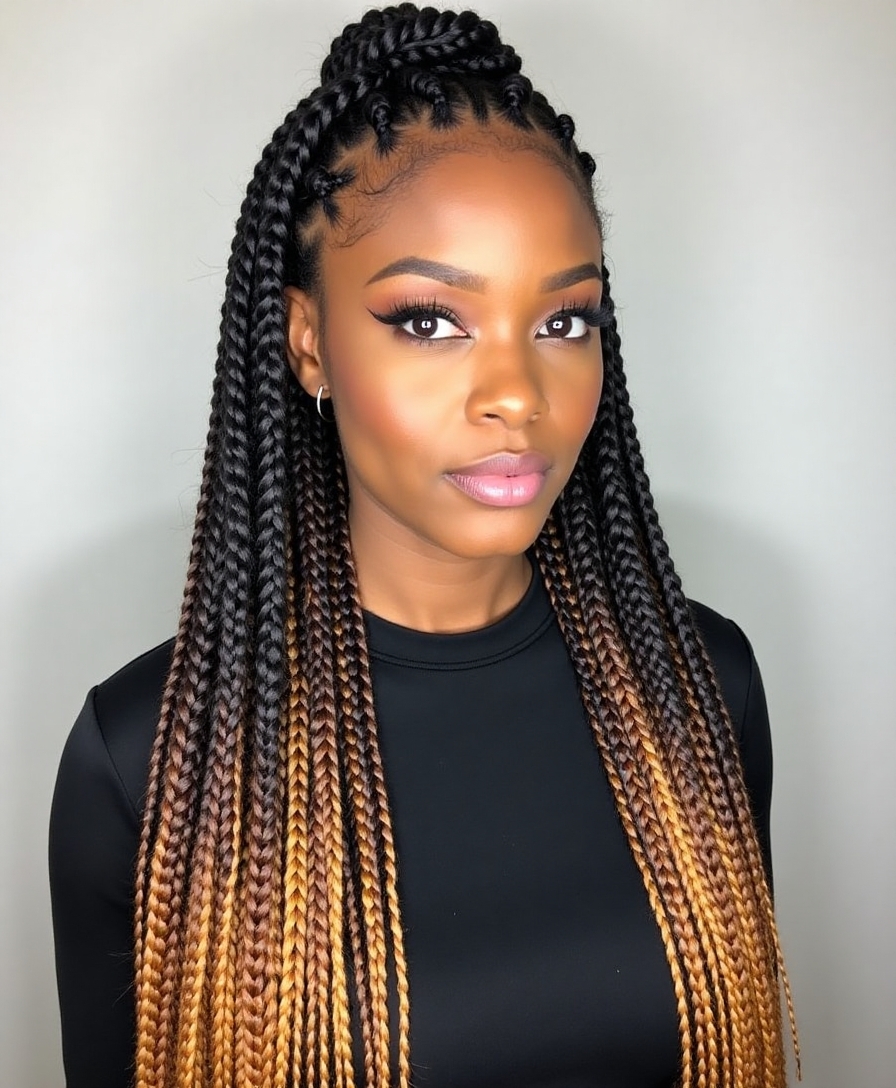
Braiding the crown in cornrows that transition into box braids below is a popular hybrid, pairing a sleek, patterned top with the length and movement of individual braids. The full box-braid side of that pairing lives in the box braids guide.
- A neat, cornrowed crown that flows into free-hanging box braids beneath it.
- Keeps the front flat and styled while leaving styling options open below.
- A practical middle ground for anyone wanting pattern up top and length below.
Asymmetrical Side Cornrows

Side-swept cornrows braid every row toward one side of the head, occasionally paired with a shaved or closely cropped opposite side, for a bold, modern line.
- All rows sweep in one direction for a strong, asymmetrical silhouette.
- Pairs well with a tapered or shaved side for added contrast.
- Keeps every protective benefit of the style while making a real visual statement.
Watch the Pull on One Side
Rows swept entirely toward one direction can concentrate tension unevenly along that hairline; it’s worth flagging to a braider if one side ever feels tighter than the other.
Fishbone Cornrow Patterns
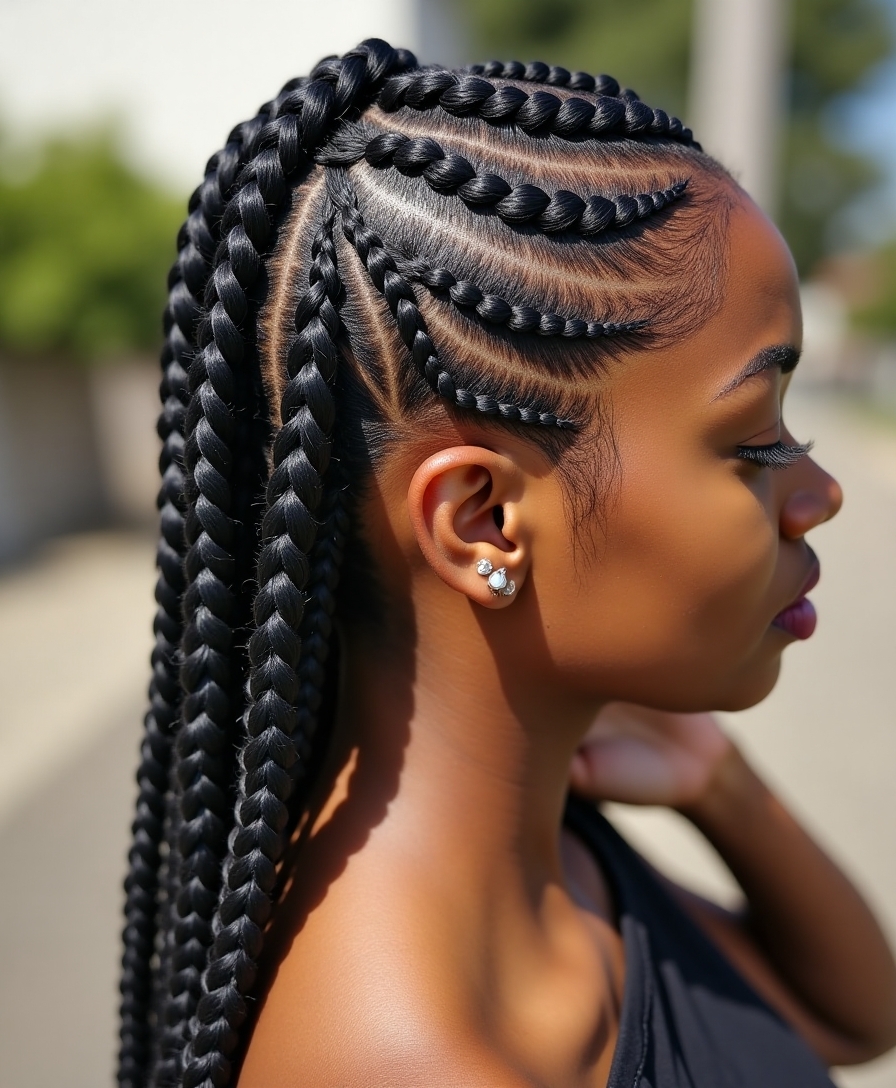
The fishbone pattern braids one central row down the head with smaller rows feeding into it from each side, so the finished design resembles the bones of a fish.
It reads as detailed and deliberate while still functioning as a practical protective style underneath the visual complexity.
- The feeding-in structure creates a clean, symmetrical centerpiece.
- Flattering on most face shapes, since it draws a strong vertical line.
- Holds neatly for the style’s full wear with simple nightly upkeep.
Cornrows With a Center Part
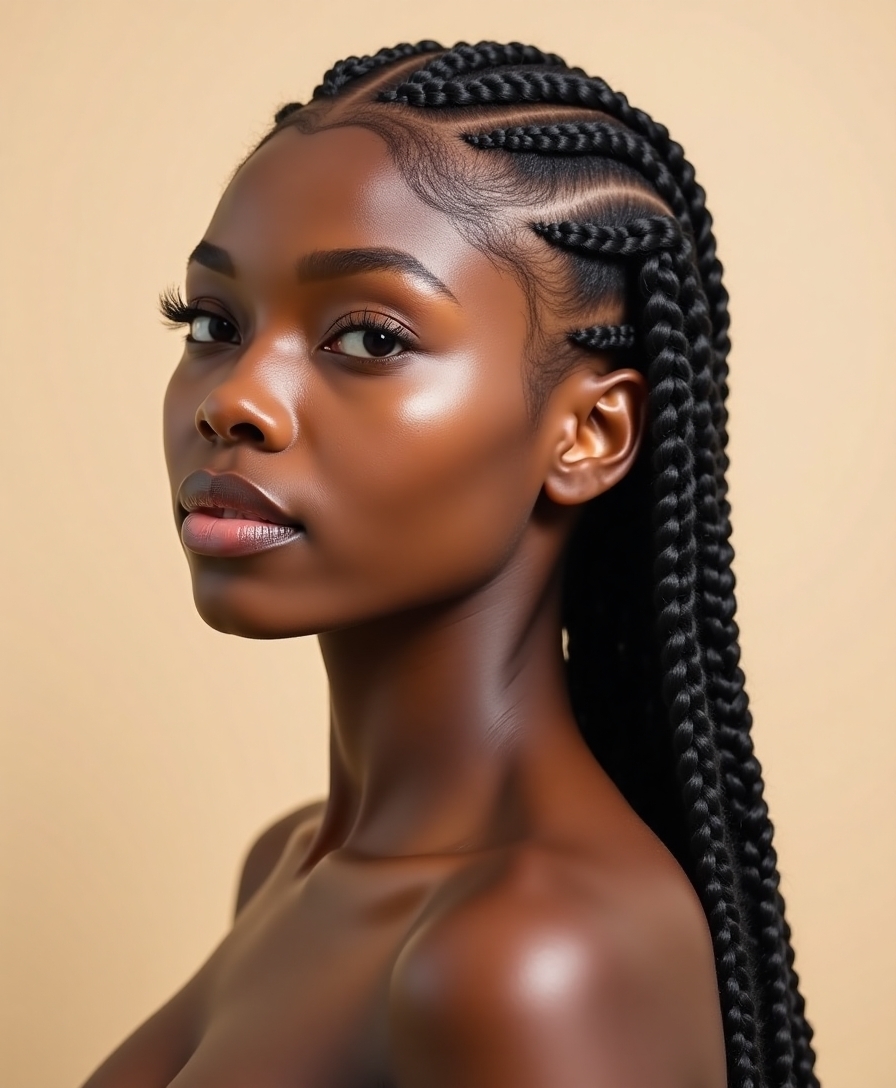
A clean center part splits the head into two mirrored sets of cornrows, a simple choice that reads balanced and easy to wear day to day.
The two halves can run straight-back, curved, or gather into buns or ponytails at the back, which keeps it versatile. A sharp, even center part is what actually makes the whole set look polished, so it’s worth the extra minute to get that line clean.
Crown Cornrows

Crown cornrows braid rows upward and wrap them around the head into a raised, crown-like shape, a style with genuine formal presence.
- Keeps hair completely up and off the neck, useful in heat or for long events.
- Formal enough on its own for a wedding or a milestone celebration.
- Holds its shape firmly for the full day without needing adjustment.
Sleek Cornrow Buns
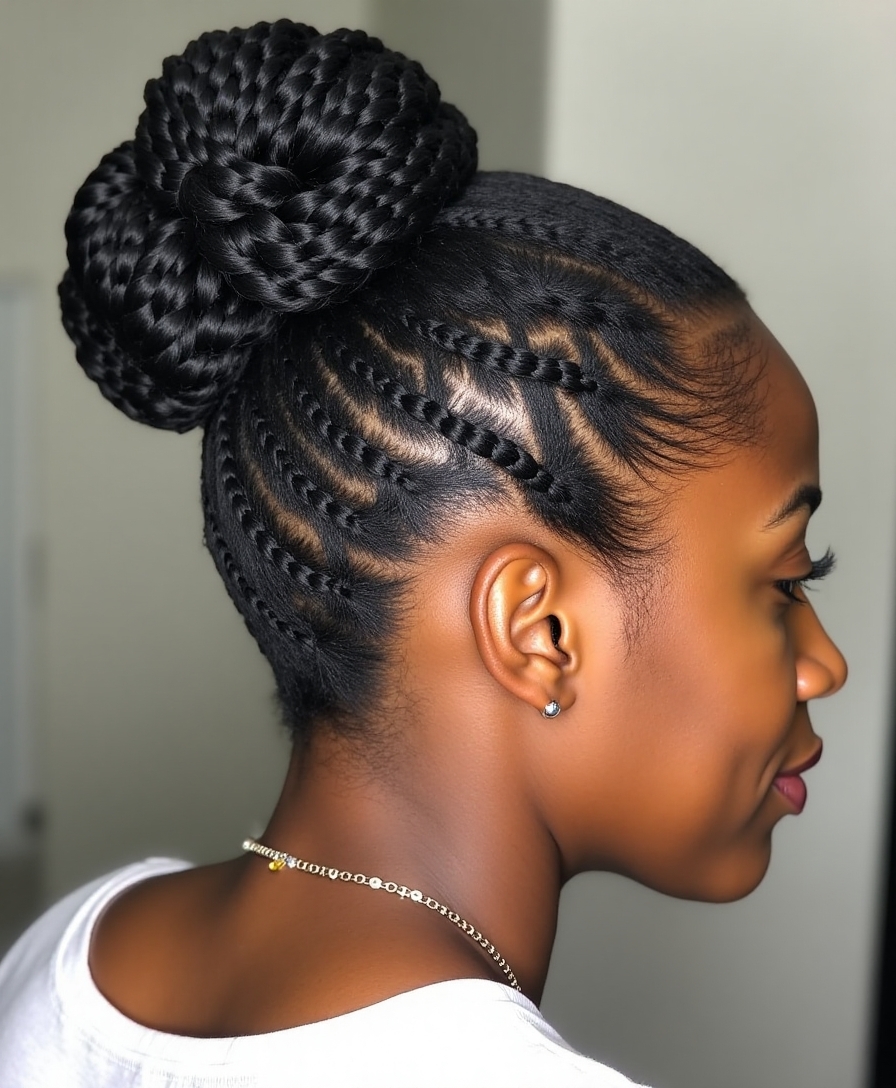
Gathering cornrows into a bun is a polished way to wear the pattern up, with the braided lines leading the eye smoothly into a neat knot at the crown or nape.
A Reliable Second-Week Style
Because the front is already braided flat, the finished bun looks intentional with very little added effort, which makes it a strong second-week option.
When the edges start to soften, gathering the rows into a bun hides any frizz and buys a few more days of wear before a fresh set is needed.
A few terms that come up when booking.
📖Feed-in
Braiding hair added gradually into the row as it’s plaited, for length or fullness without extra bulk at the root.
📖Underhand braid
The technique cornrows use, plaited flat against the scalp rather than hanging free.
The Cornrow Ponytail
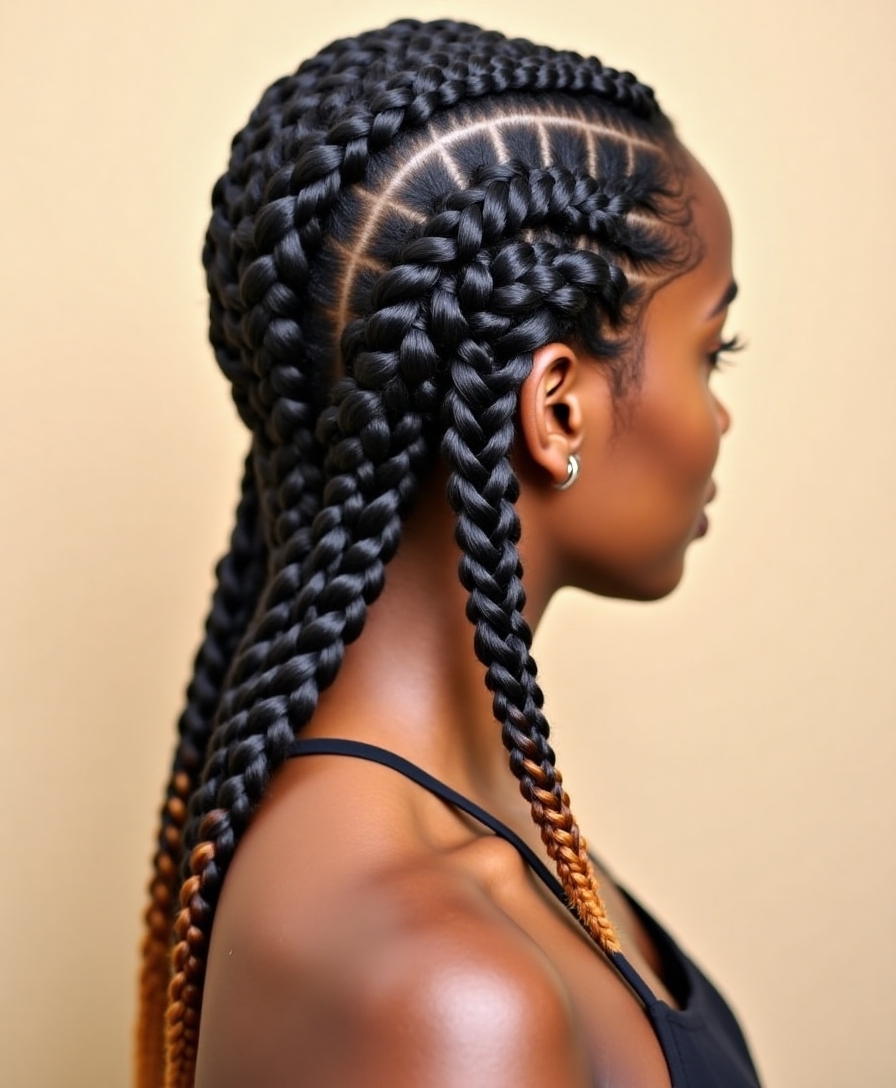
Cornrowing the sides and back so every row gathers into a high or low ponytail creates a sleek, pulled-back look without the scalp tension a tightly gelled ponytail usually demands.
Secure Without the Usual Tension
The braids do the holding on their own, which removes the need for an elastic pulling directly against delicate edges.
The ponytail itself can stay as natural hair or take added braiding hair for length, flexing from understated to dramatic depending on the day.
The Mohawk Cornrow
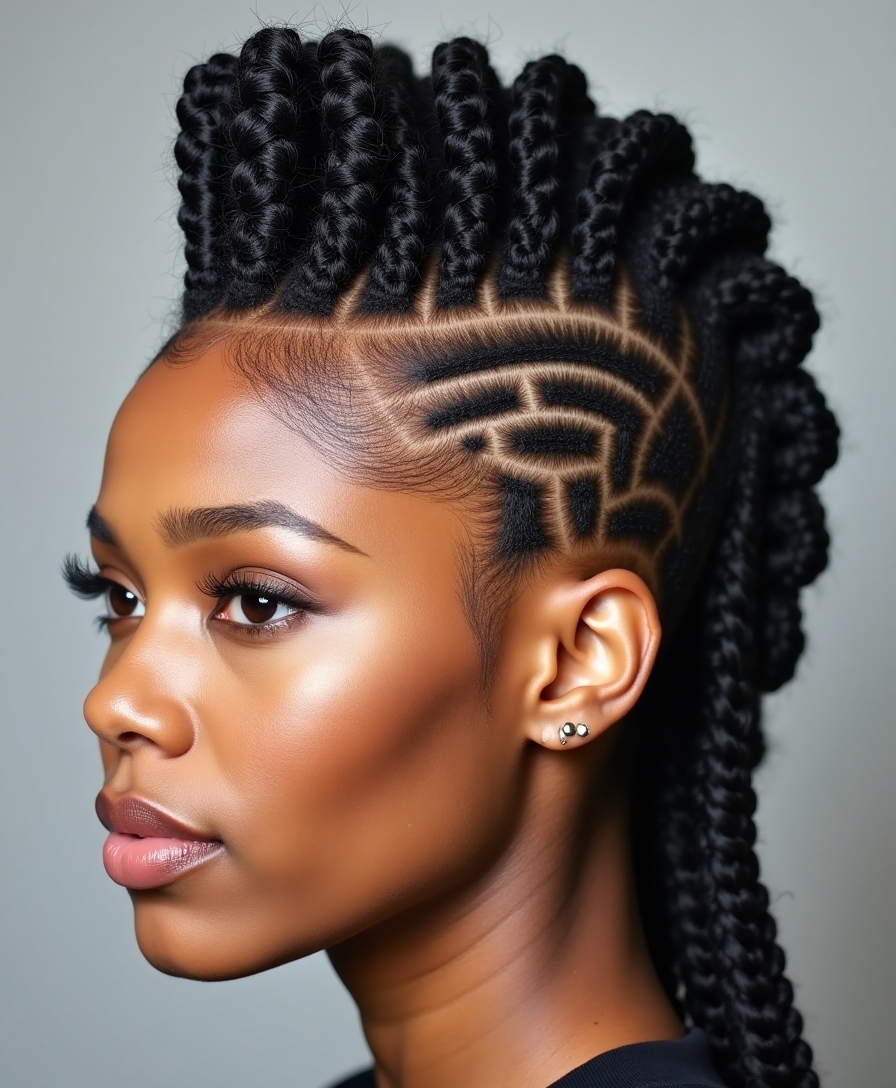
The cornrow mohawk braids the sides flat, usually angled toward the center, leaving a fuller strip of braids, curls, or a puff running down the middle for a bold, high-impact look.
- The flat braided sides make the center strip stand out dramatically.
- Fully reversible, since nothing gets shaved; the sides are braided, not cut.
- Protects the hair underneath the sides even while making a statement on top.
ℹ️Why It’s Comfortable
Because the rows themselves anchor the shape, a cornrow ponytail needs far less elastic tension at the base than a standard pulled-back style.
Finding Your Inspiration

With this many patterns possible, a clear reference photo does more for an appointment than almost anything else brought in, since cornrow designs get planned well in advance of the first row. A lower-manipulation alternative worth comparing lives in the mini twists guide.
A little structure to the reference photos makes the conversation faster and the result closer to expectations.
- Two or three photos that share hair length and density, not just the pattern.
- A direct question about what’s realistic for the time and budget available.
- Trusting an experienced braider’s read on what actually suits the hair in front of them.
What to Expect
Cornrows work best on coily, kinky, and natural textures, where the hair grips into the row and the style does its real job: protecting fragile strands while giving them real time to rest and grow. More on caring for that texture day to day lives in the natural hair braids guide.
A first appointment typically runs one to four hours depending on the size and number of rows, professionally priced in the neighborhood of $60 to $200; smaller, more numerous rows and elaborate designs both add meaningfully to the time in the chair, and the price tends to follow that time.
Cornrow Questions, Answered
?How long do cornrows actually last?
On natural hair alone, usually one to two weeks before the edges soften and frizz. With feed-in braiding hair added, a set can hold two to six weeks, though going past six weeks risks skipping the wash and rest the hair underneath needs.
?Is tension supposed to hurt?
A little tightness that eases within an hour or so is typical. Sharp pain, stinging at the temples, or bumps along the hairline are not, and are worth flagging to a braider on the spot.
?Can cornrows actually help hair grow?
The protective effect is really about retention rather than speed: keeping ends tucked away from daily manipulation and heat gives hair a real stretch of time to hold on to length it might otherwise lose to breakage.
A Tradition You Carry Forward
Whatever pattern gets chosen, cornrows offer something rare: a style that’s protective, creative, and rooted in a heritage thousands of years deep, all at the same time.
Worth bookmarking a favorite pattern or two here before the next appointment, so the conversation with a braider starts from a clear, specific reference.
Related Reads