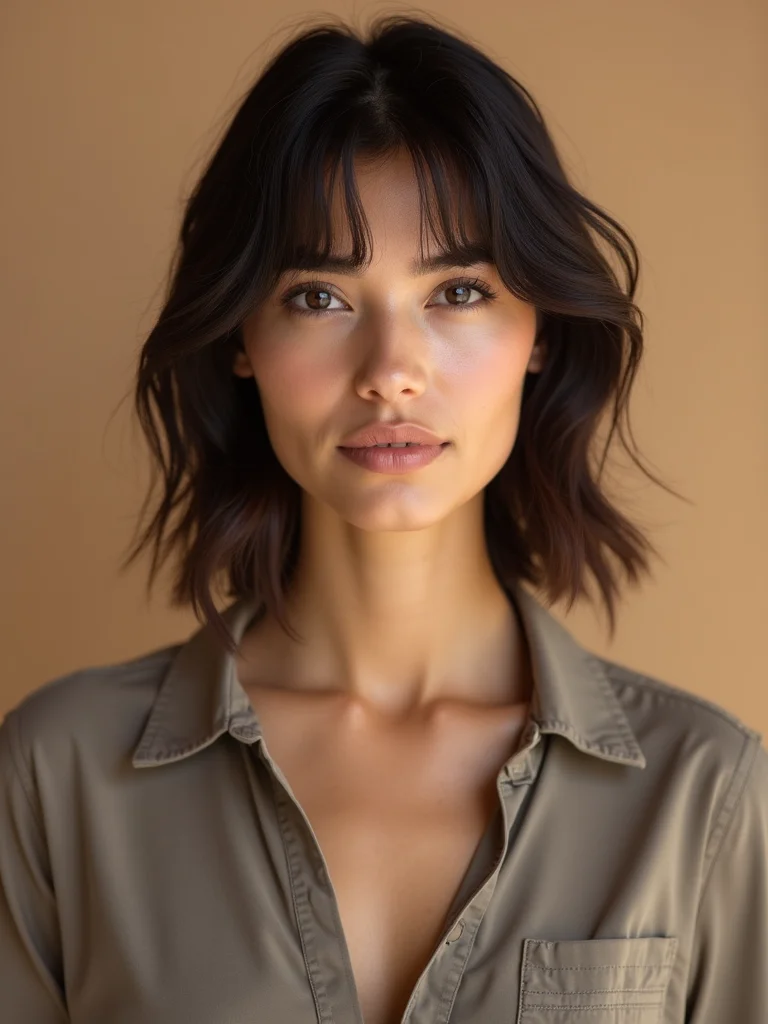
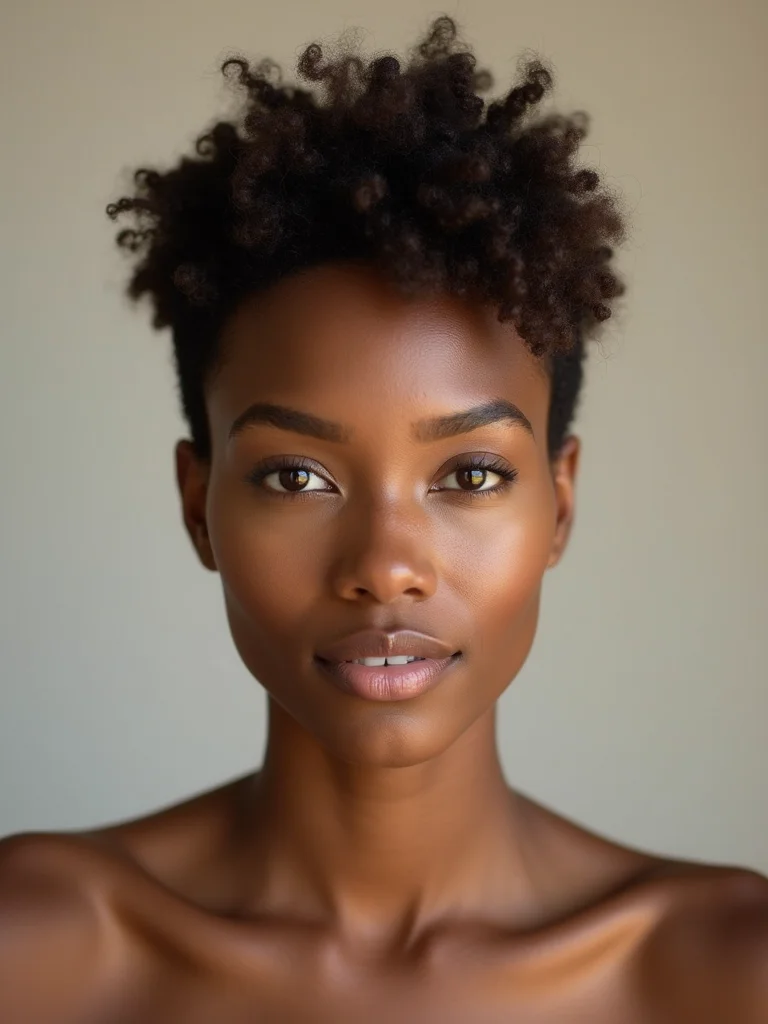
People think long layered hair with side bangs went out with the early 2000s. It did not. The harsh, gelled side-swept fringe of that era did, but the soft, modern version is among the most flattering fringes around, and it’s quietly become a salon staple again.
What makes this pairing work is the diagonal. Swept from a deeper part, it cuts a soft line across the face that flatters round and square shapes especially, blending straight into the surrounding face-framing pieces. The seven looks below cover the range, from barely-there wispy to full and swoopy, plus the honest upkeep and styling notes that go with each.
Side Bangs, Answered
What makes a modern side bang different? Softness. Today’s side bang is feathered and blended into the layers, not the stiff, gelled fringe of the 2000s. It sweeps gently across from a deeper part and melts into the face frame.
Who do side bangs flatter most? Round and square faces, because the diagonal sweep breaks up width and softens a strong jaw. They also suit anyone testing a fringe, since they grow out painlessly into long layers.
What is the one styling rule? A deeper part. The depth of the side part is what gives the bang its volume and keeps it sweeping across rather than falling flat into your eyes.
Face-Framing Long Layers With Side Bangs
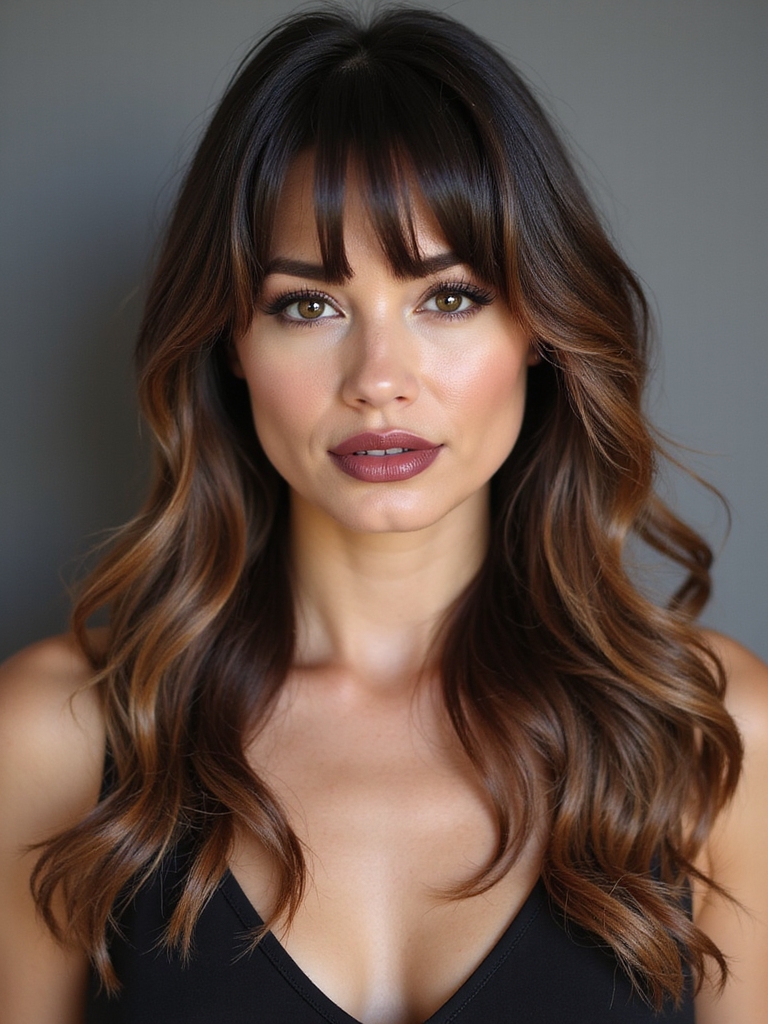
The classic version of this look connects the side bang straight into your face-framing layers, so there is no obvious start or stop to the fringe. The bang is simply the shortest piece of a continuous frame that sweeps from the forehead down past the cheekbones and jaw, wrapping the whole face in one soft line.
I suggest this version to almost anyone on the fence about a fringe, since it counts among the most flattering and the easiest to grow out. When the fringe is connected to the layers, sweeping it back on any given day lets it disappear into the frame entirely, so it never traps anyone the way a separate, blunt fringe can.
A hair tie is really all it takes to wear it as plain face-framing layers instead, which removes most of the fear from trying a fringe in the first place.
Ask your stylist to cut the bang as part of the face frame rather than a piece on top. A round brush sweeps it across as you dry. See more in our face-framing bangs guide.
Wispy Side Bangs on Long Layers
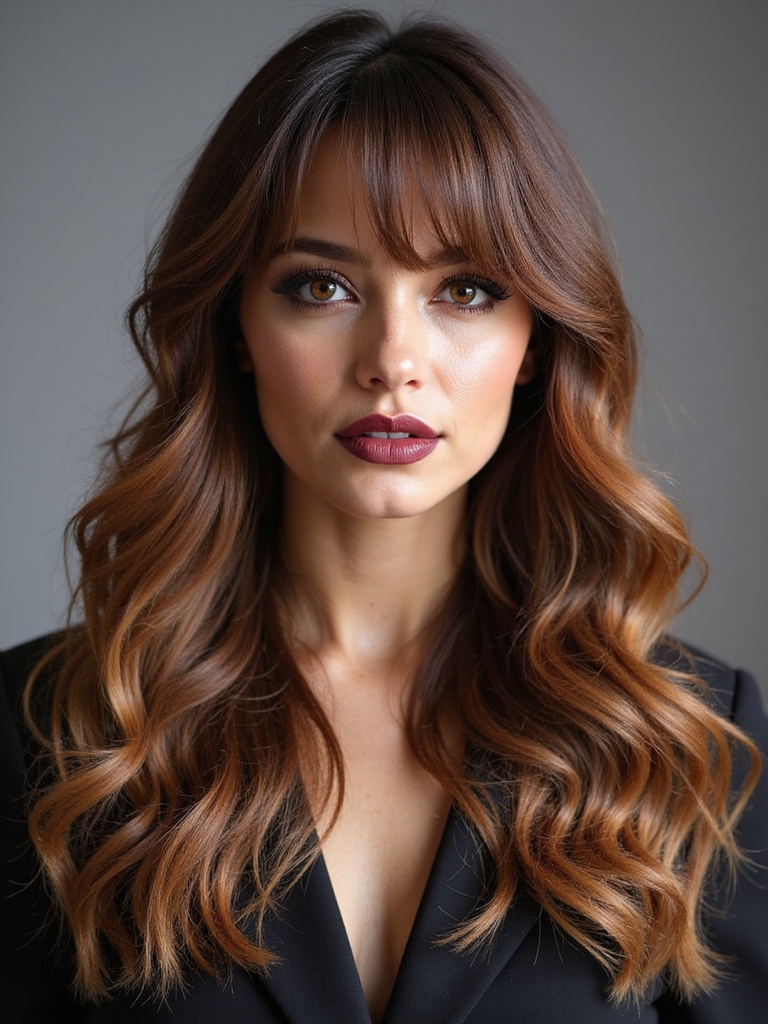
Wispy side bangs are the lightest way to wear the look, cut thin and feathered so they sweep across without any weight. Where a full side bang covers the forehead, the wispy version lets a little skin show through, which keeps the whole front soft and barely-there.
It suits anyone who finds a fuller fringe too heavy or too much commitment, and it’s the version most often recommended to someone nervous about the word ‘bangs’ in general, since a wispy side sweep is about as gentle an entry point as exists. There is almost nothing to grow out, and on a flat morning it tucks behind an ear and disappears entirely.
- Only a thin section sweeps across, so it stays airy.
- Lets a little forehead show for the softest effect.
- Flatters fine hair, which a dense fringe would only flatten.
| If you want | Ask for | Best for |
|---|---|---|
| Soft and barely-there | Wispy, feathered side bangs | Fine hair, fringe first-timers |
| Drama and volume | A full, swoopy side bang | Anyone who loves a styled look |
| Texture and edge | Piecey, shag-style side bangs | Hair worn undone and casual |
Swoopy, Voluminous Side Bangs
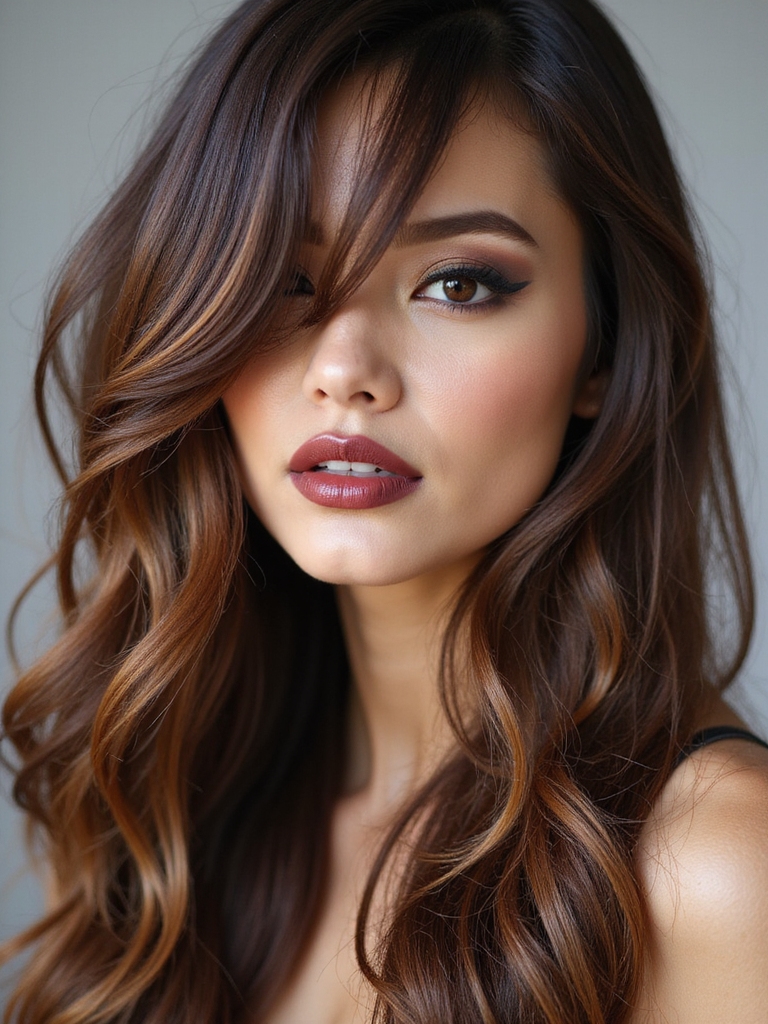
At the bolder end, a swoopy, voluminous side bang makes a real statement. The fringe is fuller and longer, swept dramatically across the forehead with body built in at the root, so it arcs over the face in a glamorous, almost retro curve. On long layered hair the effect is striking, the big swoop balancing all that length with volume at the front.
This one asks for a little styling. The drama comes from the lift, so a few minutes with a round brush building root volume are what turn a flat fringe into a proper swoop. Dry it from underneath, lifting at the root and curving the ends across the forehead, then set it with the cool shot. A light hairspray holds the volume without crisping the movement, and dusting a little dry shampoo near the roots brings the lift back on day two.
- A fuller, longer fringe swept across with built-in root volume.
- The big swoop balances long length with front volume.
- A round brush and root lift create the arc.
Feathered Layers With Side Bangs
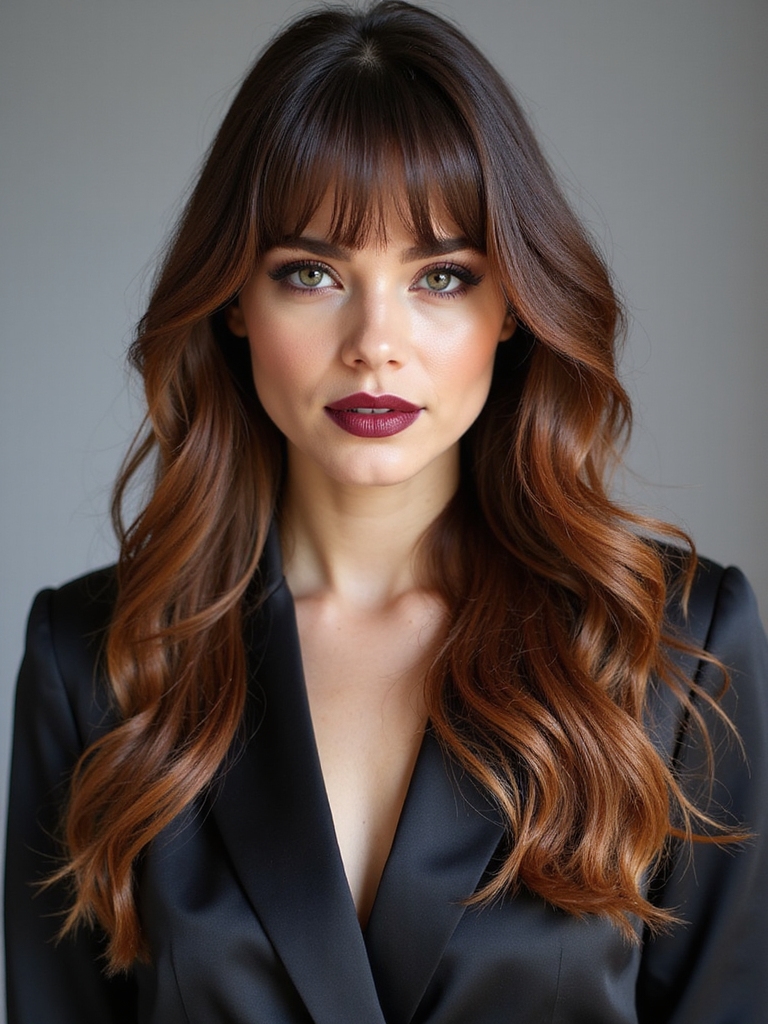
Pairing a side bang with feathered layers is the soft, retro-leaning take, all light movement and weightless ends. The layers are feathered to fine points down the lengths, and the side bang is feathered to match, so the fringe and the cut share the same airy, flowing character from forehead to ends.
It is a flattering, low-drama combination that suits straight and wavy hair especially, where the feathering shows off best. The side bang and the feathered layers move together as one soft frame.
This shape ranks among the kindest to grow out, too, since the feathered fringe simply lengthens into the layers around your face with no blunt edge to fight. Anyone with naturally fine or limp hair gets the most from it, because the feathering fakes movement that thicker, blunter cuts cannot.
- Feathered ends on both the fringe and the layers tie them together.
- Soft, weightless movement that suits straight and wavy hair.
- A light texture spray keeps the feathered pieces separated.
ℹ️How deep is deep enough?
Aim for roughly a 70/30 split rather than a near-even 60/40. Anything closer to the center reads more like a middle part with a stray piece than an actual side sweep, no matter how the fringe itself is cut.
Shag-Inspired Layers With Side Bangs
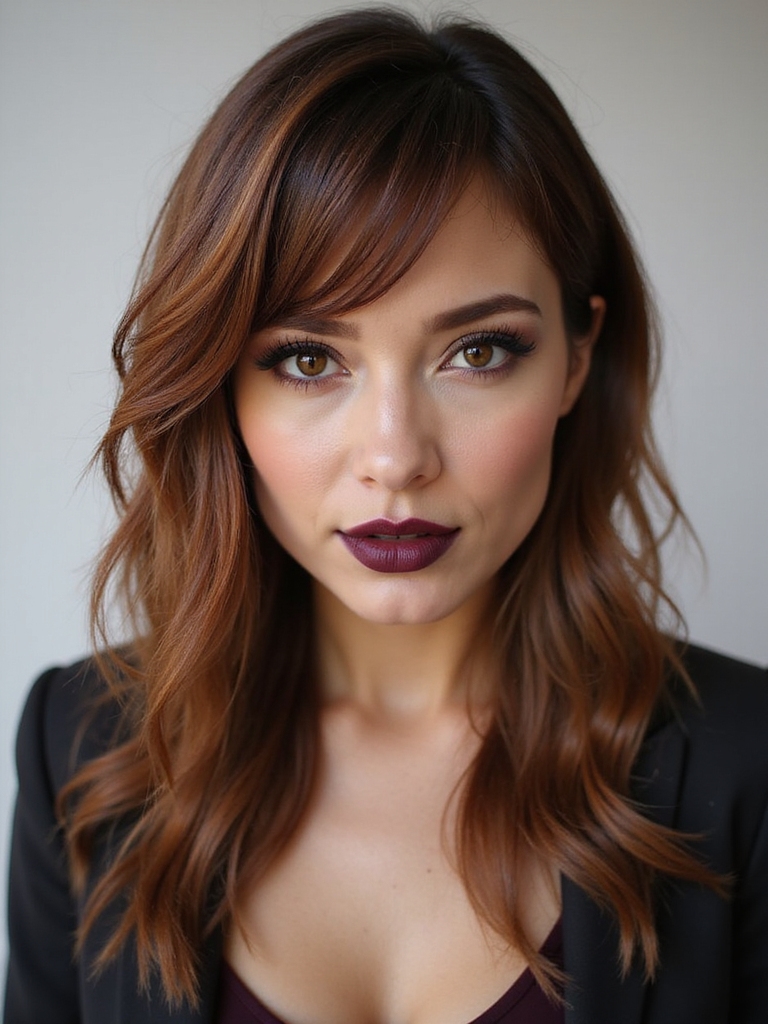
For texture and attitude, shag-inspired layers and a side bang are a cool, undone pairing. The shag stacks choppy layers from the crown down for volume, and the side bang is cut piecey and swept across to match, so the whole cut leans rock-and-roll rather than polished.
The side bang here is choppier than a soft, blended one, broken into separated pieces that echo the shag’s texture. Worn swept across, it adds an edge to the front while the layers carry the volume through the lengths.
A texture spray scrunched through dry hair brings out both the shag and the piecey fringe. Air-dry it. The more undone it looks, the better, and second-day hair often wears this version best of all, since the natural oils help the pieces separate even further.
This is the look for anyone who wants long layered hair with a little grit and none of the fuss, and it tends to hold its shape well between salon visits since the choppy layering already hides most of the regrowth.
Sleek Styling for Side Bangs and Layers
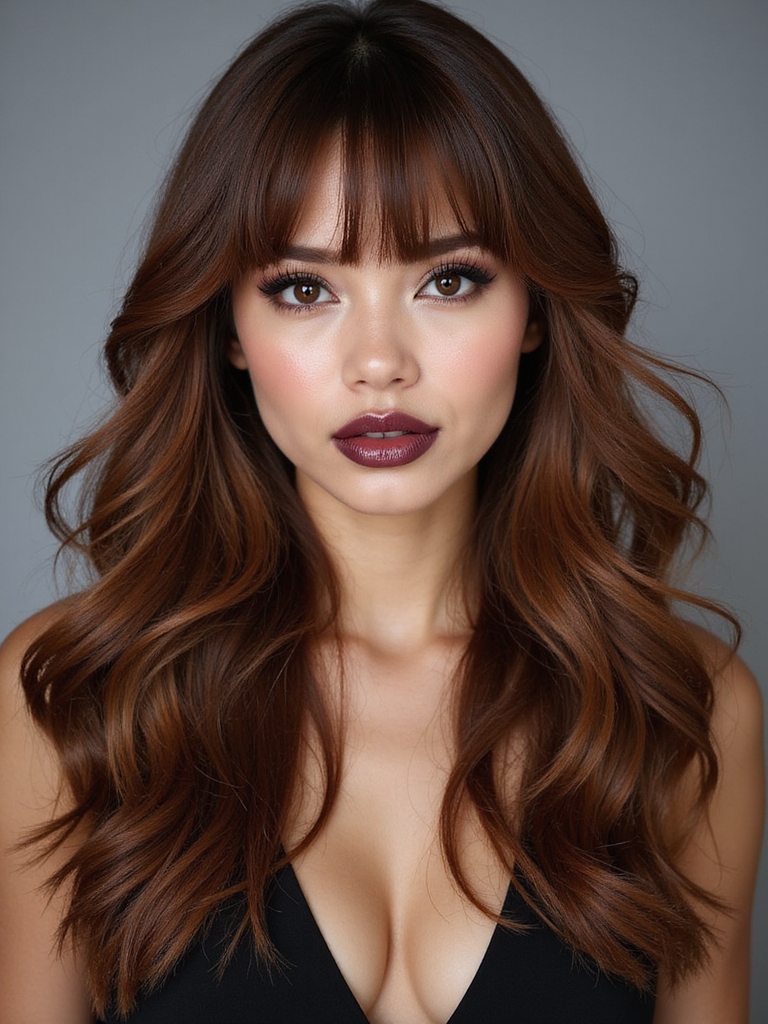
Side bangs do not have to be soft and undone. Styled sleek, they take long layered hair in a polished, glossy direction that feels grown-up and editorial. The fringe is blown smooth and swept cleanly across, the layers are blown out smooth beneath, and a little shine product carries the gloss.
Getting the smooth sweep
The trick to sleek side bangs is tension, and it’s the one thing clients underestimate every time. Drying the fringe with a round brush, pulling it taut across the forehead, is what gives it the smooth, controlled sweep rather than a soft bend.
A small amount of shine cream smoothed over the lengths finishes it, and a flat iron can tame any pieces that resist. Keep it to a pea-sized amount of product. Too much weighs the sweep down and undoes the lift you worked for. This version suits an event or an important day best, when polish matters more than texture, and it photographs beautifully because the clean sweep catches the light along the layers.
Heatless Styling for Side Bangs
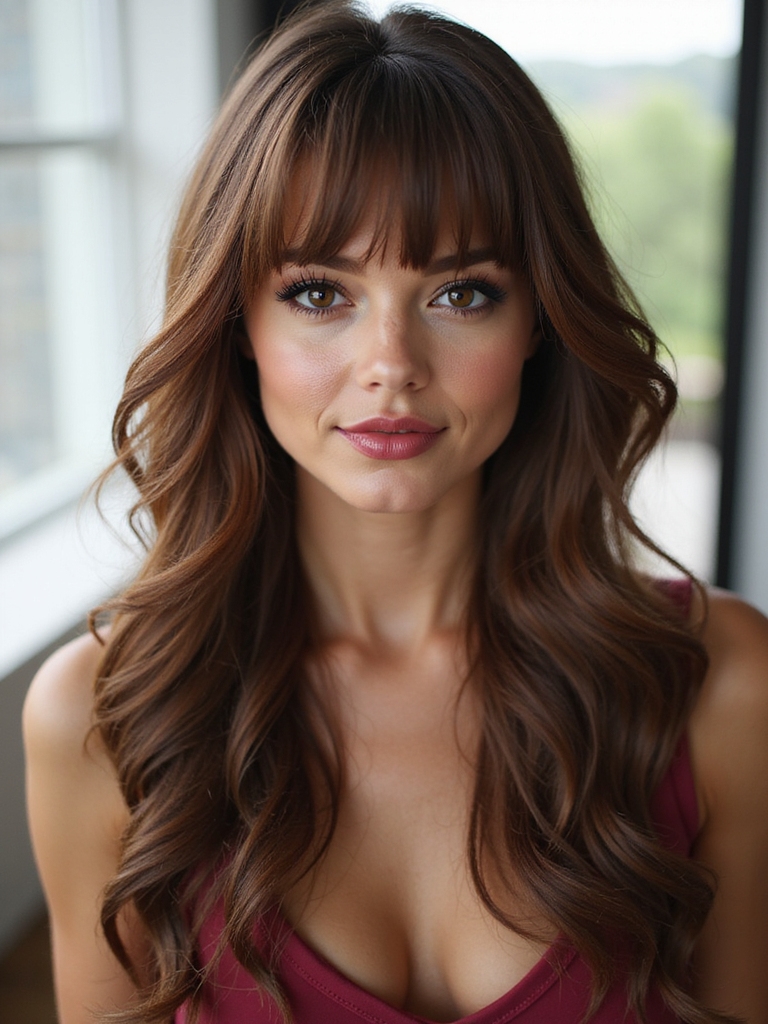
Heat isn’t required to shape a side bang. Set on a clip or a single velcro roller while damp, the fringe trains into its sweep with the hair’s own drying process doing the actual work. Split the damp fringe to your deeper part, sweep it across, and clip or roll it in place while getting ready with everything else, and by the time it’s removed the side bang already holds its shape.
For overnight, a single flat clip or a soft roller at the front holds the sweep through sleep, so the bang wakes up already trained into place with the layers settled softly around it, no hot tools and no morning effort involved.
- A clip or velcro roller on damp bangs trains the sweep with no heat.
- Set it to your deeper part so the volume builds on the heavier side.
- Air-dry the layers at the same time for a fully heatless finish.
Common Side-Bang Mistakes to Avoid
The biggest mistake with side bangs is parting them too shallow. The volume and the sweep both come from a deeper part, so a part set too close to the center leaves the fringe flopping into your eyes with no lift.
Set the part well to one side, and the heavier section gets the body that makes a side bang look intentional. The second pitfall is cutting them too short: a side bang should be long enough to sweep past the cheekbone and blend into your layers, since a short one sits stranded on the forehead and is far harder to grow out.
The third mistake is fighting a cowlick, and it’s the one I catch most often at the consultation, not after the cut. A strong growth pattern at the hairline will push a side bang the wrong way no matter how it’s dried, so point it out before the scissors come out and let the sweep get planned around it instead of against it.
Finally, do not over-style: a side bang wants soft movement, so a light texture spray and a quick round-brush sweep beat a stiff, hairsprayed arc every time. Compare other fringe styles in our long hair with bangs guide.
Long Layered Hair With Side Bangs Questions
?Are side bangs outdated?
Not the version people are actually cutting now. What’s dated is the memory of it, teased, sprayed, and set with a flat arc. Today’s take is feathered straight into the layers with no hard edge, which is why it reads current instead of like a throwback.
?What face shape do side bangs suit?
Most faces wear them well, but round and square shapes see the biggest change; the angled line cuts across the widest part of the face and takes the edge off a strong jaw. On long faces, keep the bang fuller and longer to add width at the cheekbones rather than length.
?How do I keep side bangs from falling in my eyes?
Beyond the part itself, two things help: a light-hold spray at the root before you sweep it across, and drying the fringe on a slight downward angle so gravity works with the sweep instead of against it. If it still drops by afternoon, the part usually needs to go a little deeper than it looks like it should.
?Will side bangs work with a cowlick?
They can, but only if cut to work with the growth pattern, not against it. Tell your stylist about any cowlick before they cut, so they can set the sweep in the direction your hair naturally falls rather than fighting it every morning.
?How often do side bangs need trimming?
Every few weeks keeps the sweep from creeping into your eyes, though a long, blended side bang stretches further than a short one because it melts into your layers as it grows. A fringe trim runs about $20 to $40, and many salons offer it free if you had the cut done there.
The Fringe That Came Back
The side bang earned its comeback by growing up. Gone is the stiff, gelled fringe of the 2000s, replaced by a soft, feathered sweep that blends into long layers and flatters the face with a gentle diagonal. From wispy and barely-there to full and swoopy, it adapts to almost any hair and any amount of effort.
So which sweep is yours, the soft and blended, the dramatic and voluminous, or the piecey and undone? Set a deeper part, keep it long enough to blend into your layers, and bring a photo to your stylist. The modern side bang is far more flattering, and far more forgiving, than its reputation suggests.
More to Try