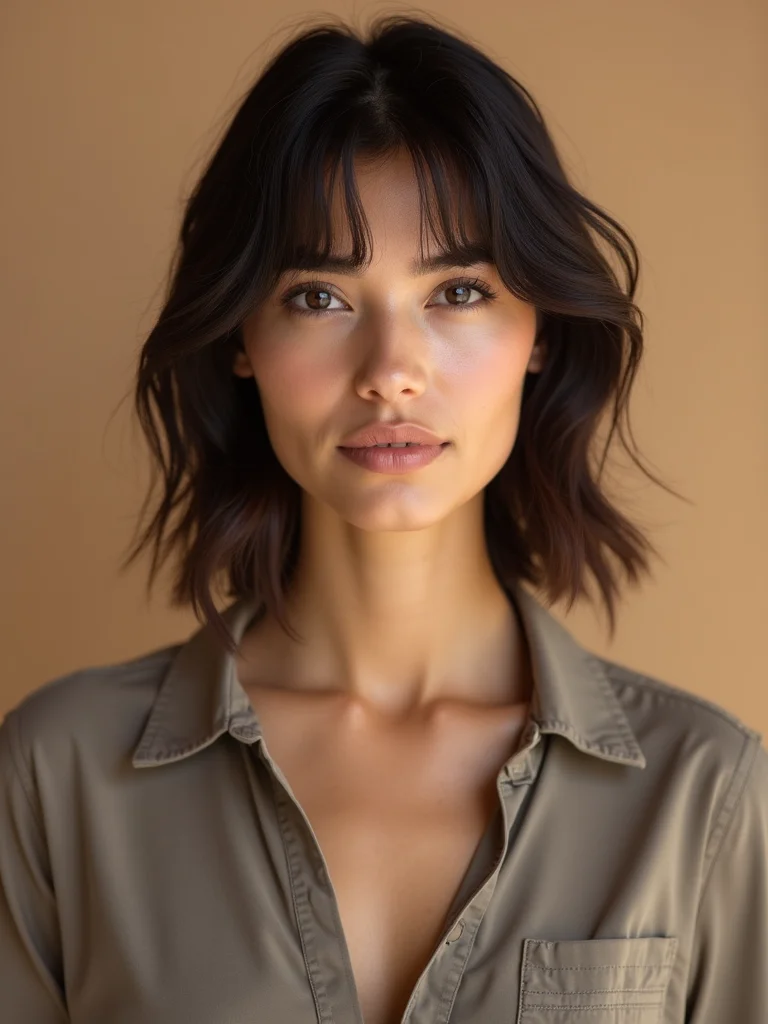
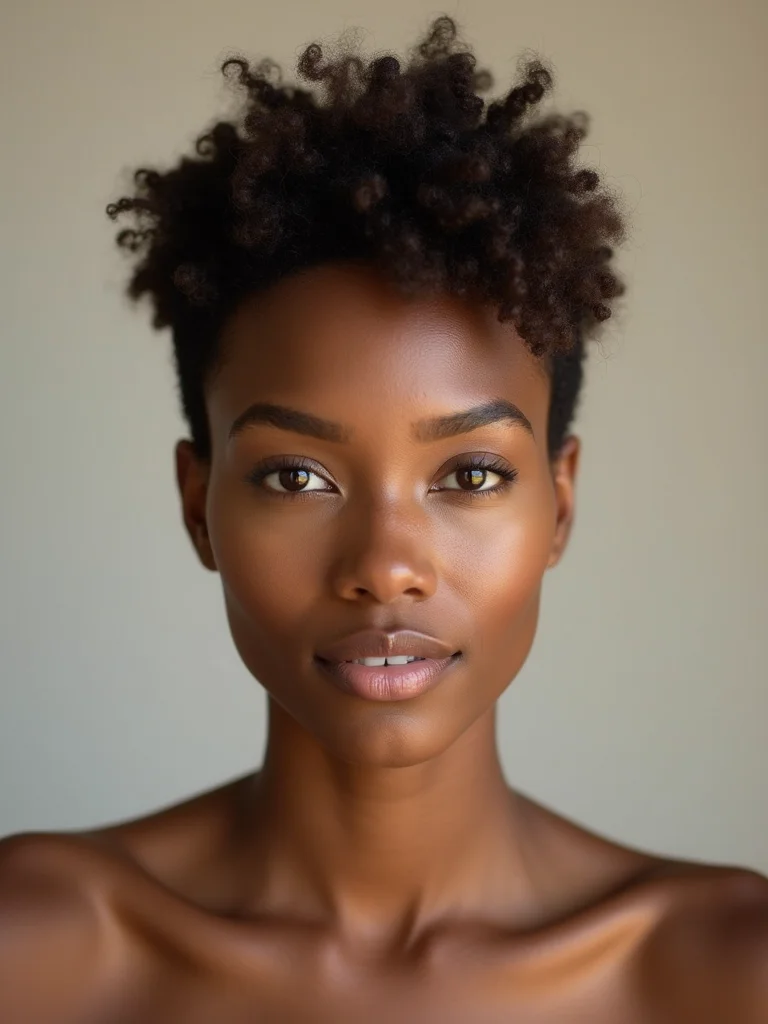
A center part splits, and within seconds two soft pieces settle against the cheekbones, framing the whole face in a single cut. That’s the entire mechanism behind curtain bangs: length untouched, face reshaped.
Ten versions follow, along with the trade-offs each one asks for and how the grow-out actually behaves over time.
Curtain Bangs, Quick Answers
What exactly are curtain bangs? A center-parted fringe cut to sweep away from the face on both sides, usually longest at the outer edges where it blends into the surrounding layers.
Do they suit every face shape? Nearly all of them, since the length and sweep can be tailored; a longer, more angled version works differently than a shorter, fuller one.
What’s the actual upkeep? Light. A quick trim every three to five weeks keeps the shape crisp, and daily styling is usually a couple of minutes with a round brush.
Soft, Wispy Curtain Bangs
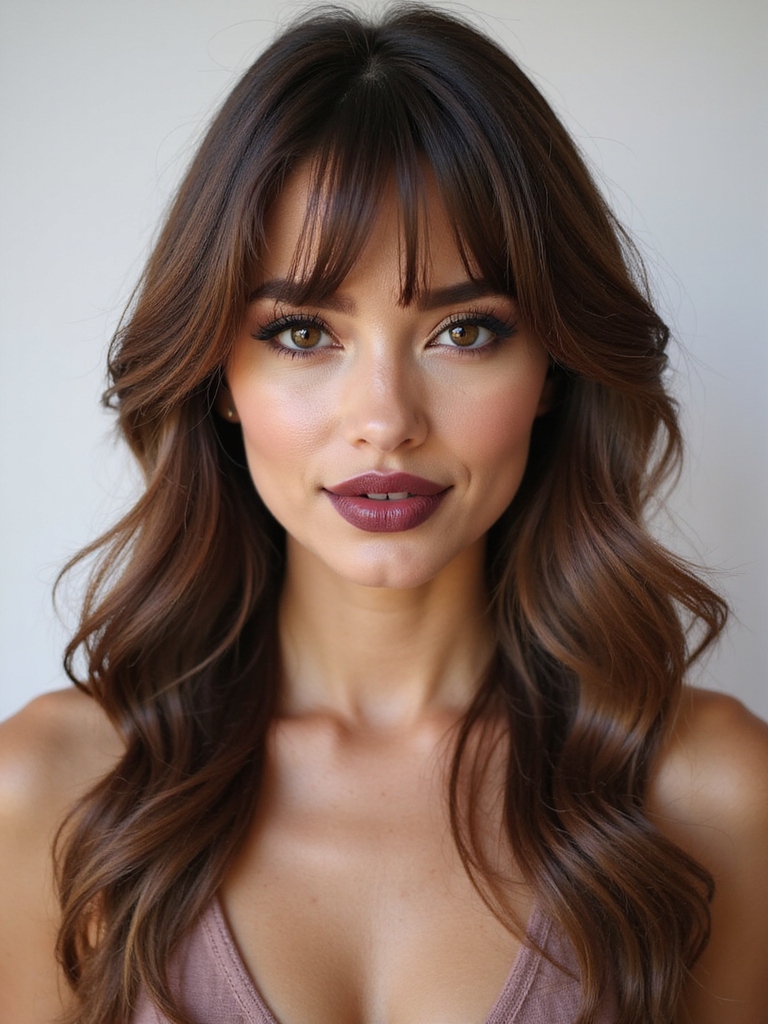
The wispy version is the gentlest entry point into curtain bangs. Rather than a solid fringe, the hair gets feathered and thinned so it falls in soft, see-through pieces that graze the brows without covering them. A softer, all-fringe take on this idea lives in the wispy curtain bangs guide. It’s often the version recommended first at a consultation, precisely because it’s the easiest to grow out or adjust if the shape needs tweaking later.
- Suits fine to medium hair especially well, where airy texture reads delicate rather than thin.
- A feathered, point-cut fringe tapers at the ends instead of sitting blunt, so nothing sits as one heavy block of hair.
- A reasonable first step for anyone bang-curious but not ready for something heavier or harder to grow out.
Voluminous Swoop With Crown Lift
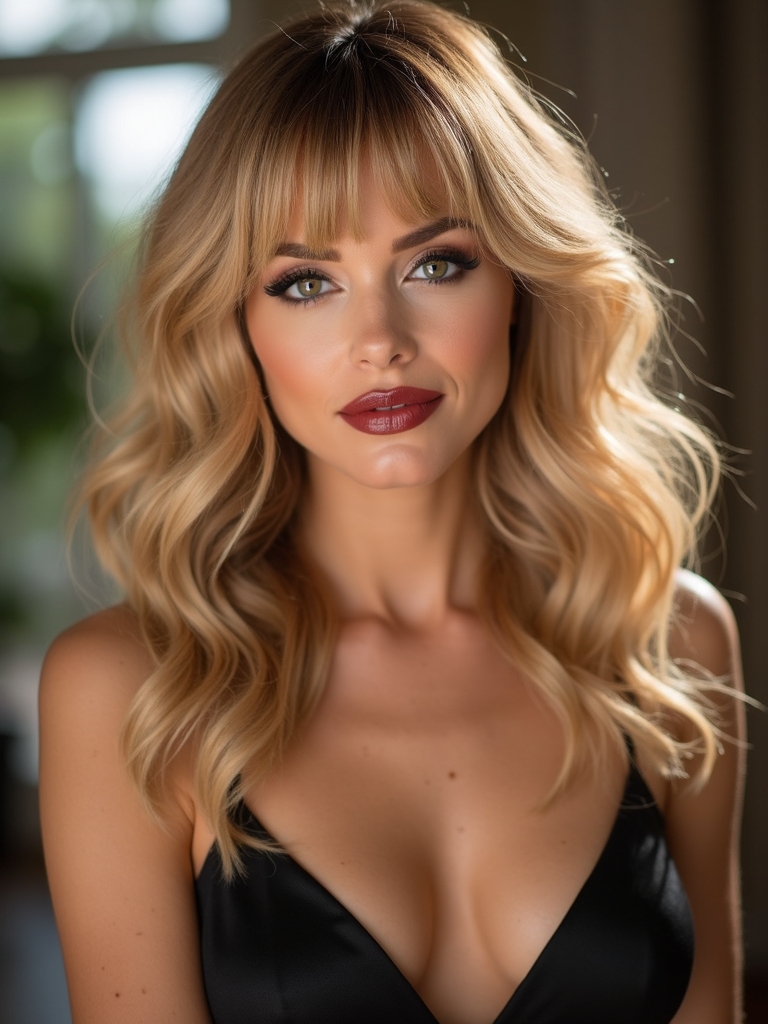
For a bigger, more dramatic take, the bangs get styled with real lift at the root so they swoop up and back in a soft wave.
The catch is that it needs more hair to work with than the wispy version, plus a bit more effort each morning, though the payoff is real movement across the top of the face. Fine, sparse hair can struggle to hold this shape without extra product, so it’s worth an honest conversation about density before committing to it. Thicker hair, on the other hand, tends to hold the lift for most of the day with barely any touch-up needed.
- A round brush dried against the part builds the lift on each side, working in sections rather than all at once.
- A little root powder or mousse keeps the swoop from collapsing by midday, especially on humid days.
- Best suited to medium-to-thick hair with enough natural body to hold the shape through a full day.
ℹ️Where the Look Comes From
This swooped, lifted shape borrows directly from ’70s styling, when root volume and a soft side sweep were the dominant fringe silhouette.
Curly Curtain Bangs
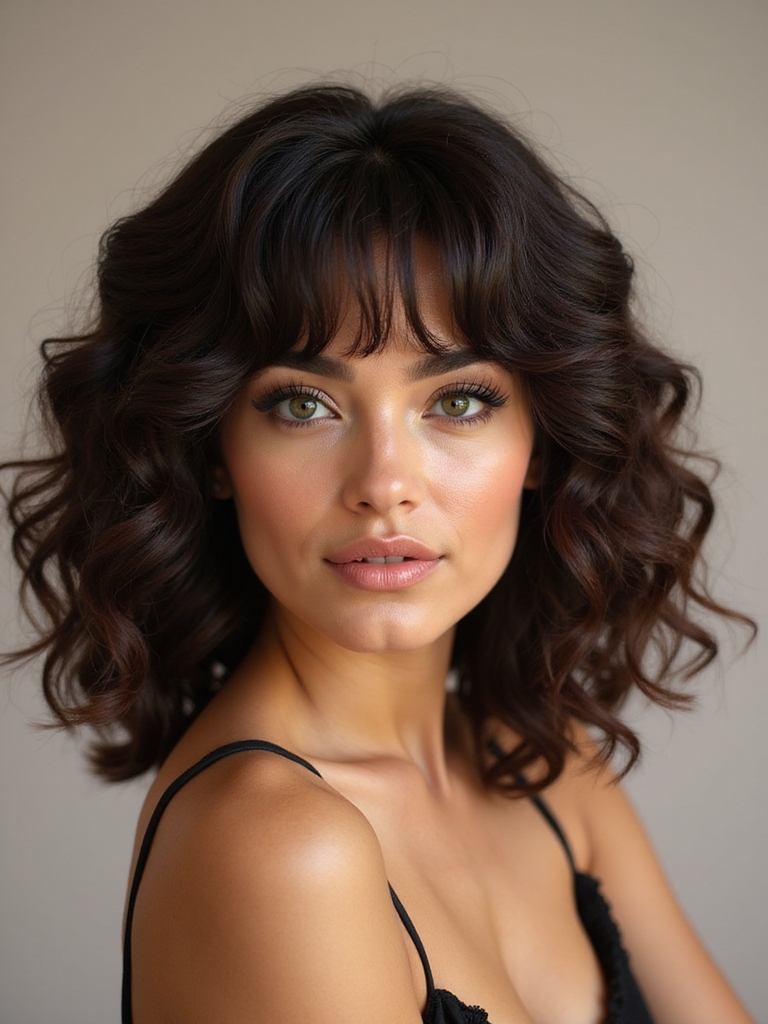
Curly hair takes to curtain bangs better than most people expect. The center part lets coils fall naturally to each side instead of fighting one direction, which sidesteps the usual struggle with fringe on curls.
A deeper look at curly fringe options lives in the curly bangs guide. Whether the texture runs toward loose S-waves or tighter coils, some version of the shape usually translates; only the exact placement and how much length gets left behind actually changes.
- Cutting dry lets a stylist see exactly where each coil lands once it springs up.
- Leaving them a touch longer than feels right accounts for shrinkage on drying.
- Widely considered one of the more curl-friendly fringe shapes available overall.
Shoulder Shag Curtain Fringe
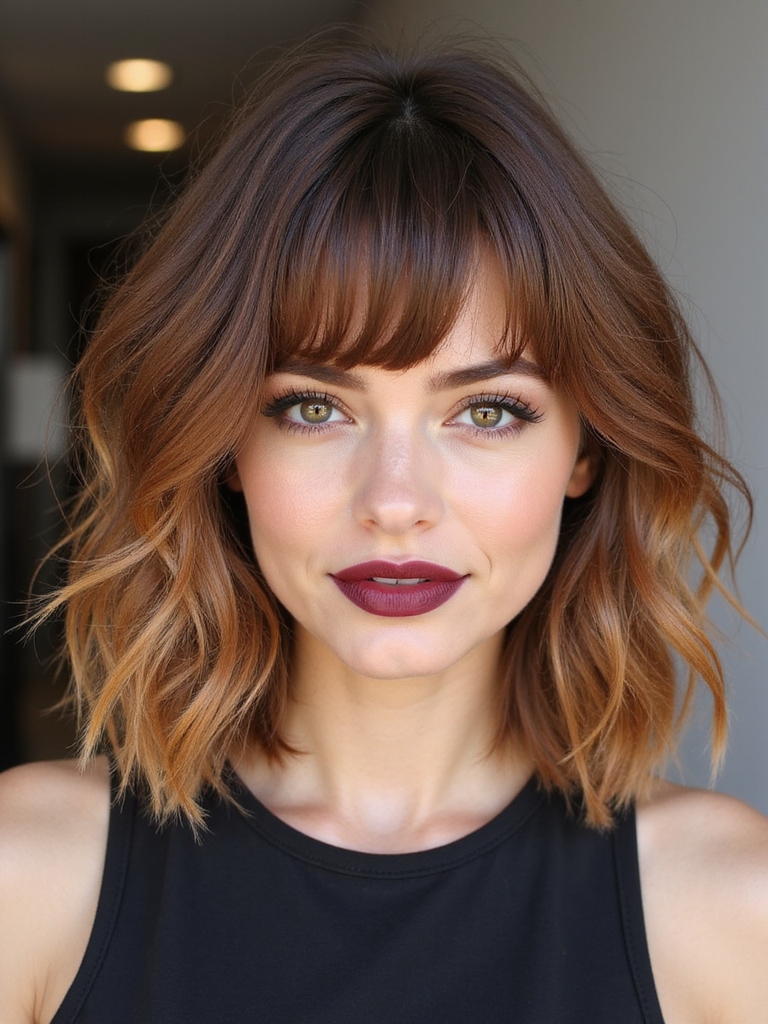
Curtain bangs and a shag cut pair naturally. On a shoulder-length, heavily layered shag, the fringe melts directly into the surrounding layers around the face, so there’s no hard line between bang and length. The two techniques rely on largely the same cutting logic, just applied at different points across the head.
- The bangs should blend into the surrounding face-framing layers rather than sit as a separate piece.
- A texture spray with a scrunch is typically all the daily styling it needs, since the shag underneath already provides most of the movement.
- Grows out unusually well, since everything around it is already layered and connected, with no single hard edge to eventually chase down at a future appointment.
Long Layers With Airy Bangs
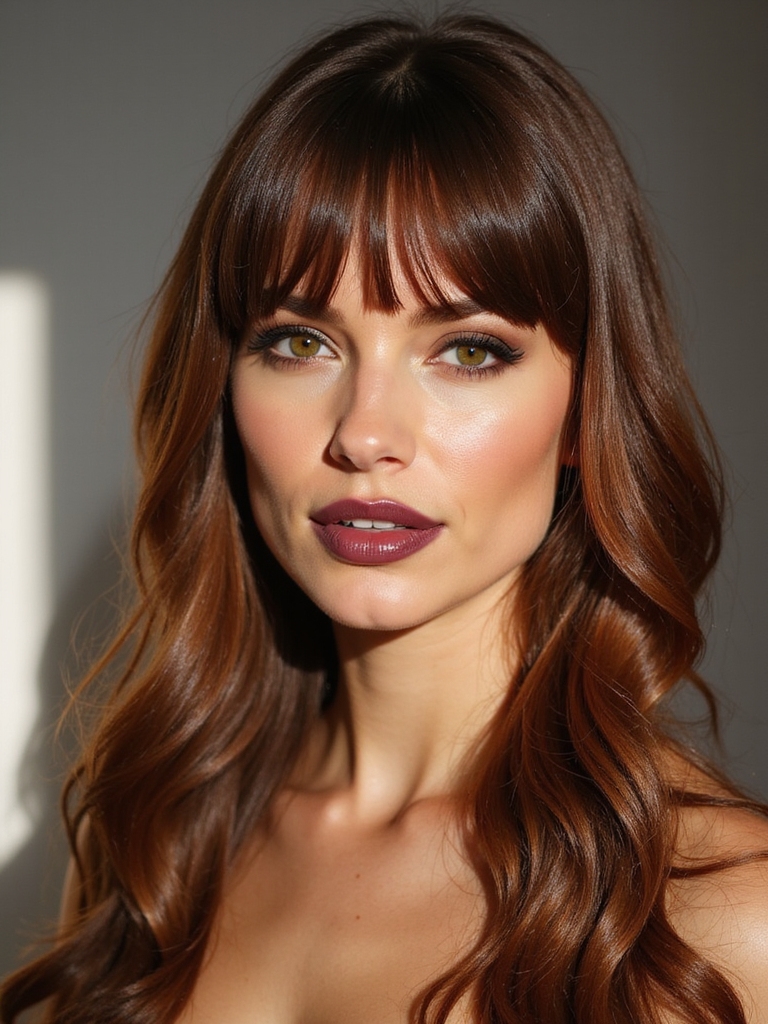
For long hair that isn’t ready to lose length, curtain bangs are one of the lowest-risk ways to refresh it. Added to long, flowing layers, an airy center fringe breaks up the length around the face without touching the overall shape. It’s a common choice for anyone who’s grown hair out for years and wants a change that doesn’t cost them any of that length.
- The longest length stays completely untouched, so the overall commitment stays low.
- The fringe gives one-length hair a focal point it otherwise lacks entirely.
- Blends into existing long layers with no awkward disconnect as it grows out over time.
Getting the blend right at the first cut.
1Point to the exact layers you want it to join
A stylist needs a specific reference, not just ‘blend it in.’
2Ask for the fringe cut slightly longer than expected
Extra length gives room to adjust the sweep over the following weeks.
Blunt Bob With a Feathered Curtain
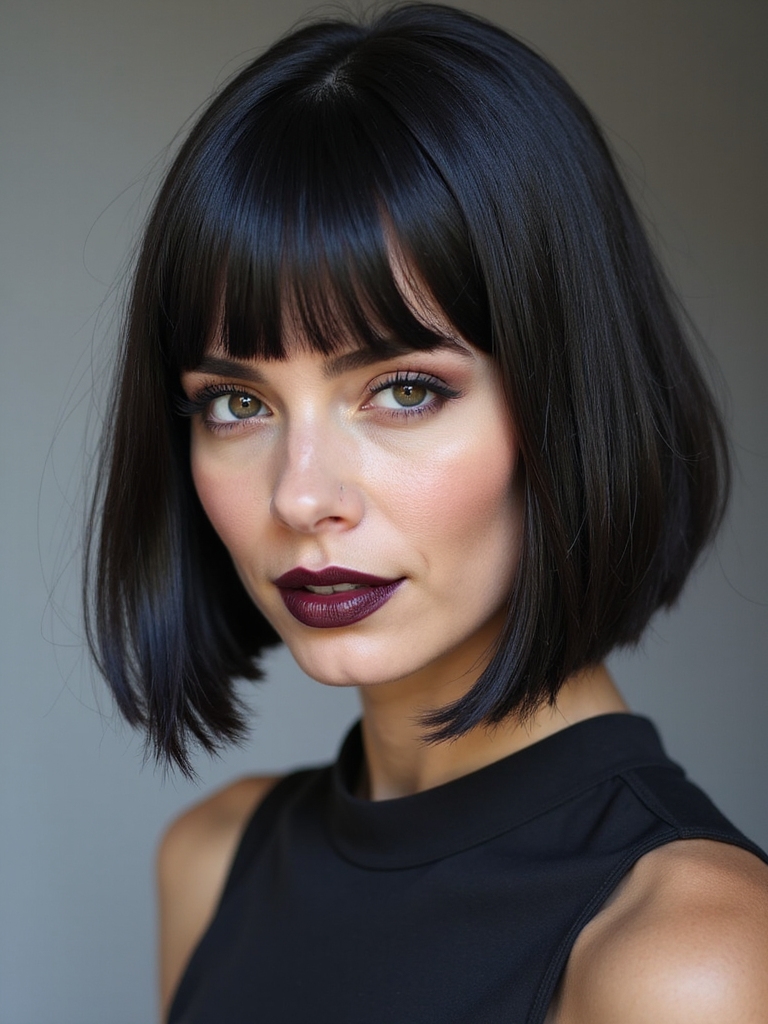
A blunt bob can read a little severe on its own, all straight lines and sharp edges. A feathered curtain fringe softens that geometry instantly, adding movement at the face while the crisp bottom line stays intact.
Where this pairing struggles is if the bangs get cut too blunt to match; keeping them feathered and soft against a sharp perimeter is the entire point of the contrast.
A stylist unfamiliar with the pairing sometimes defaults to a straight, heavy fringe out of habit, which flattens the effect the combination is supposed to create. Bringing a reference photo that specifically shows a blunt bob paired with a soft, feathered fringe helps avoid that mismatch before the cutting even starts.
Textured Lob With a Piecey Curtain
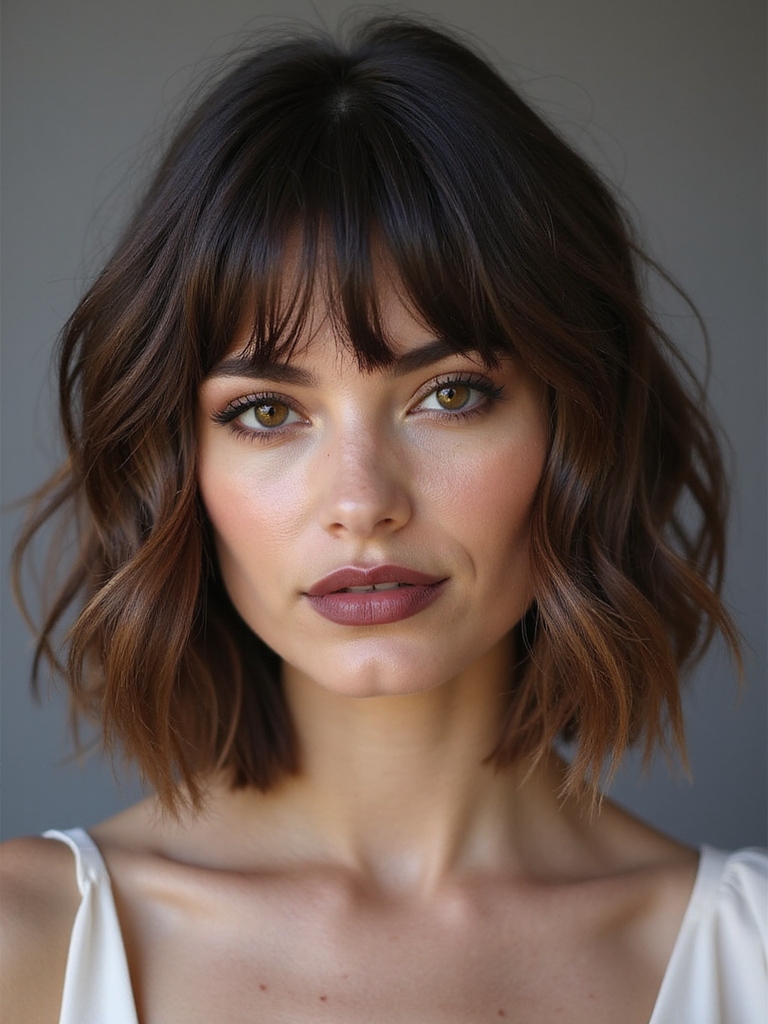
A lob, the longer bob grazing the collarbone, is an easy canvas for curtain bangs since it already carries movement. Adding a piecey, separated fringe builds an off-duty look that reads more put-together than the effort it actually takes. The two lengths naturally echo each other, so the fringe never feels like a separate add-on stitched onto the lob underneath it, even on the days it goes unstyled entirely.
Because both the cut and the fringe lean on texture, this pairing forgives a lot. A grown-out week or a skipped wash still tends to look intentional rather than unkempt.
- A matte texture paste worked through the ends keeps the piecey effect clearly visible.
- Plan on roughly $15 to $40 added to a regular cut for the fringe itself.
- Suits anyone who wants a visible refresh without much daily upkeep or a long list of new products to learn.
Center-Part Sleek Curtain Bangs
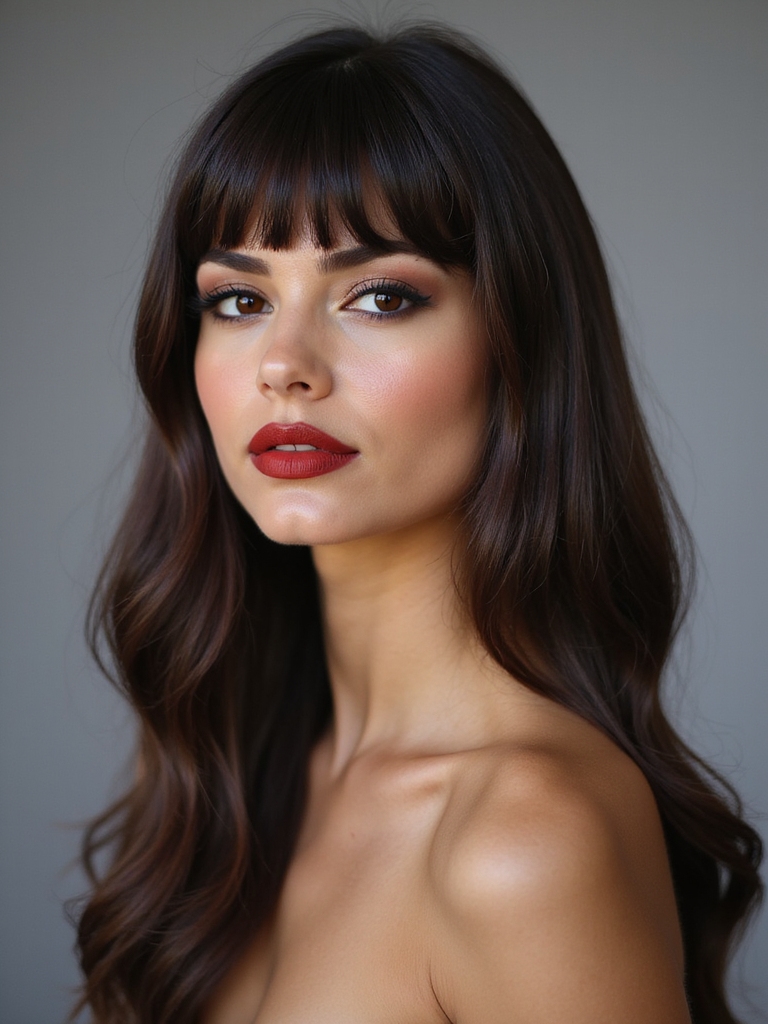
Not every curtain bang has to look tousled. The sleek version keeps a crisp center part and smooths each side into a glossy, controlled sweep for a more polished finish.
Where the Look Actually Lives
This look lives on shine and a clean line, which means it rewards healthy hair and a careful blow-dry more than the textured versions do. Damaged or overly porous ends tend to show through a look this smooth, so a glossing treatment beforehand can make a real visible difference.
The smoother the sweep, the more polished the whole result reads; a flat iron with a gentle bend at the ends usually finishes it, followed by a light-hold spray to keep flyaways from breaking the line.
One assumption about curtain bangs worth correcting.
❌ Myth: Curtain bangs only work if your hair is naturally straight.
✅ Reality: The center-part mechanism works on straight, wavy, and curly hair alike; the styling approach is what changes, not the eligibility.
❌ Myth: A sleek curtain fringe needs daily heat styling.
✅ Reality: On healthy hair, a smooth blow-dry can hold for two to three days before it needs a touch-up.
Side-Swept Curtain Bangs for Round and Heart Faces
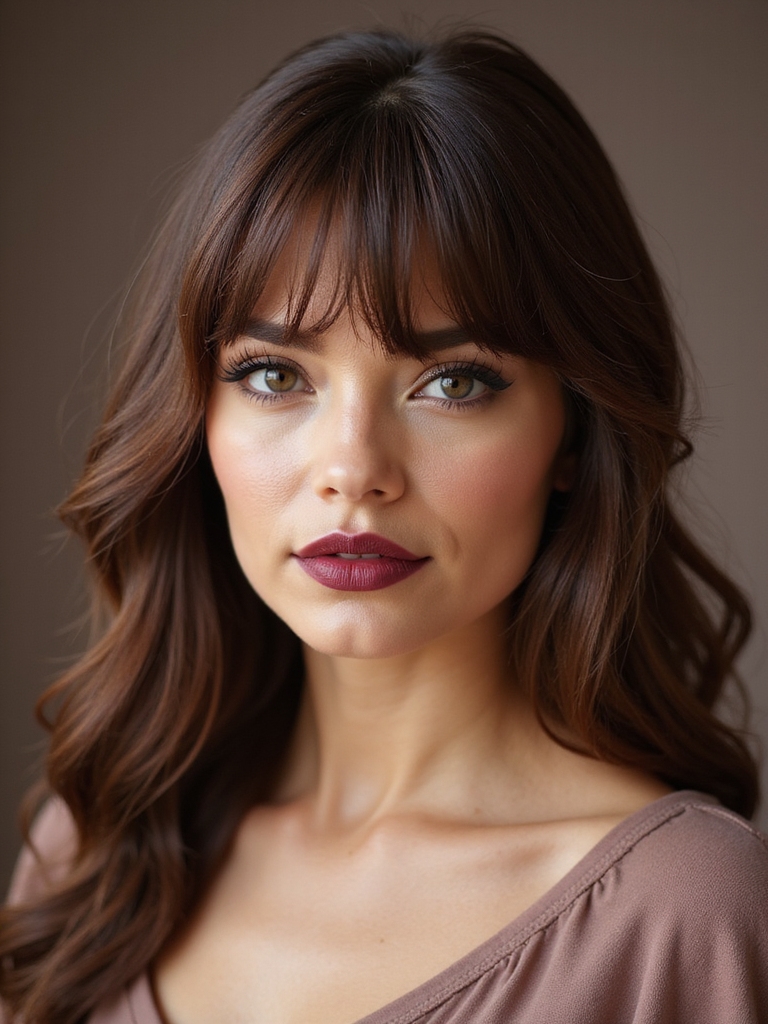
Pushing the sweep more toward one side turns curtain bangs into a genuine face-shaping tool, one of the more deliberate ways a haircut alone can adjust how a face reads. Longer, cheekbone-grazing pieces create a diagonal line that adds length to round faces and softens the wider forehead on a heart shape. The fuller side-swept version on its own lives in the side-swept bangs guide.
For a round face, keeping the bangs longer and angled outward draws the eye downward and lengthens the face. For a heart shape, a soft side sweep balances a narrower chin against a wider top. More on that specific pairing lives in the bangs for round face guide. Square faces tend to do well with this version too, since the diagonal line interrupts an otherwise strong, angular jawline and softens the corners without hiding the bone structure entirely.
The sweep itself can be adjusted at home with nothing more than a part and a brush, which makes this version more flexible day to day than it first appears.
Low-Maintenance Grow-Out
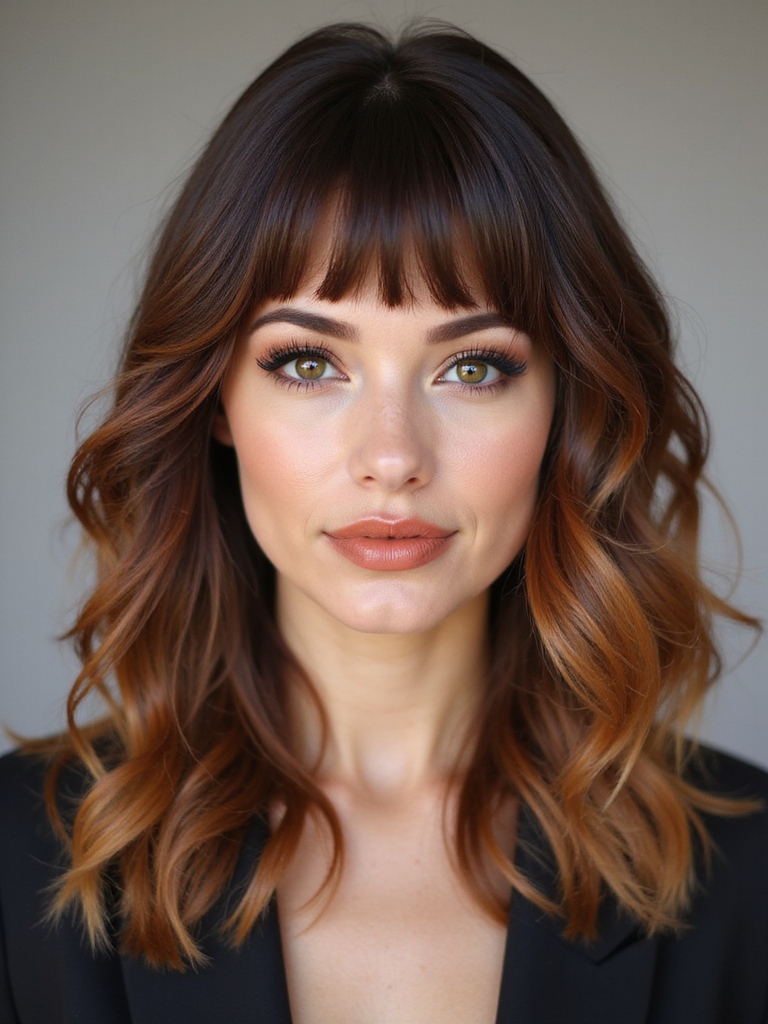
The best-kept secret about curtain bangs is how painlessly they grow out. Because the ends are already long and angled toward the surrounding layers, there’s no blunt stub stage the way a straight-across fringe produces. The longest version of that grow-out lives in the long curtain bangs guide.
No Blunt Stub Stage to Wait Out
They simply lengthen gradually into face-framing pieces, which means the time between trims can stretch considerably longer than other bang styles allow, sometimes doubling the interval a straight-across fringe would tolerate before it looked noticeably overdue.
It’s even possible to abandon the look entirely without an awkward in-between phase, a real point in its favor for anyone unsure about committing to bangs long-term.
Curtain Bangs Questions People Ask
?Do curtain bangs suit every face shape?
Yes, when the length and sweep are tailored specifically. Longer, angled pieces lengthen a round face, a soft side sweep balances a heart shape, and a center part suits oval and square faces equally well.
?How often do curtain bangs actually need a trim?
Roughly every three to five weeks to keep the shape crisp. The advantage is that stretching past that timeline doesn’t create an awkward phase the way a straight-across fringe eventually does.
?Will curtain bangs work on curly hair?
Generally, yes, as long as they’re cut dry rather than wet, which accounts for how much the curls will shrink once they’re fully dry.
?Can curtain bangs be added without cutting the rest of the hair?
In most cases, yes. The fringe can be cut as a standalone addition to an existing length, making it one of the lower-commitment refreshes available.
?What’s the actual difference between curtain bangs and a center-parted fringe that’s simply grown out?
Curtain bangs are deliberately shaped with a taper toward the outer edges from the start, so they blend into the layers by design. A grown-out center fringe reaches a similar point eventually, but without that built-in shaping.
A Small Change With a Big Payoff
For a cut that takes very little time in the chair, curtain bangs do a remarkable amount of work: framing the face, drawing attention to the eyes and cheekbones, and refreshing a look without sacrificing any length. Ten versions might feel like a lot to sort through, but most people land on an obvious favorite within the first two or three once length, face shape, and daily styling habits actually factor in.
Whether the choice lands on wispy and soft or voluminous and swooped, the shape adapts to the hair and face wearing it, and that flexibility is exactly why it stays one of the most consistently recommended fringe options available.
More Inspiration