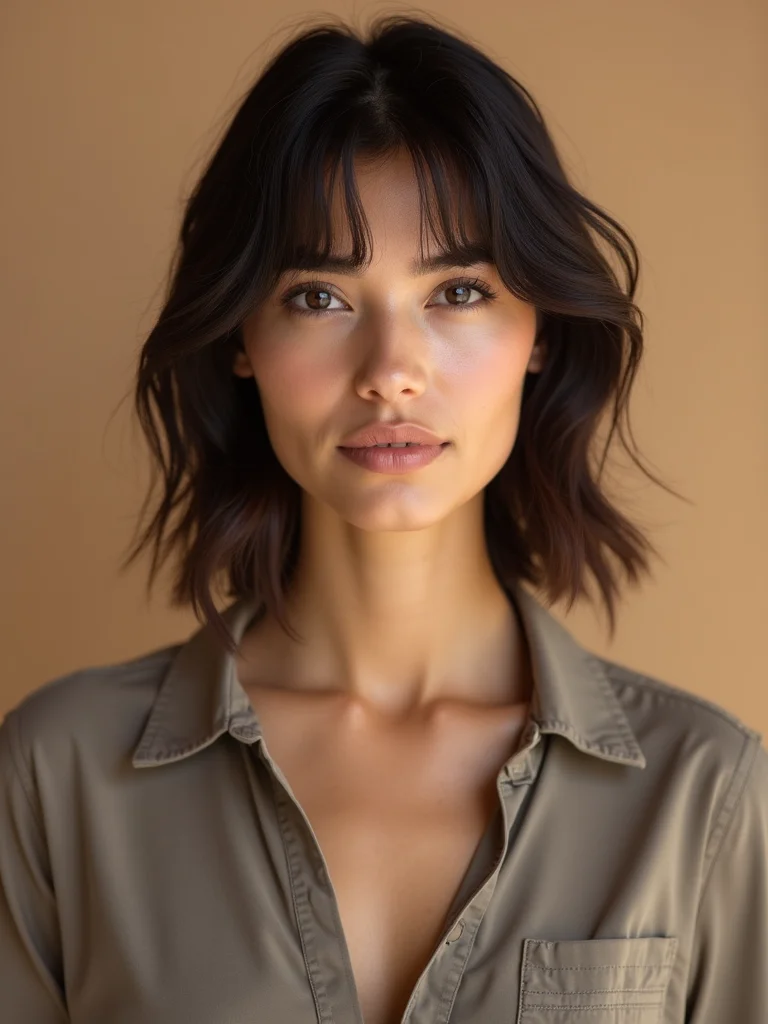
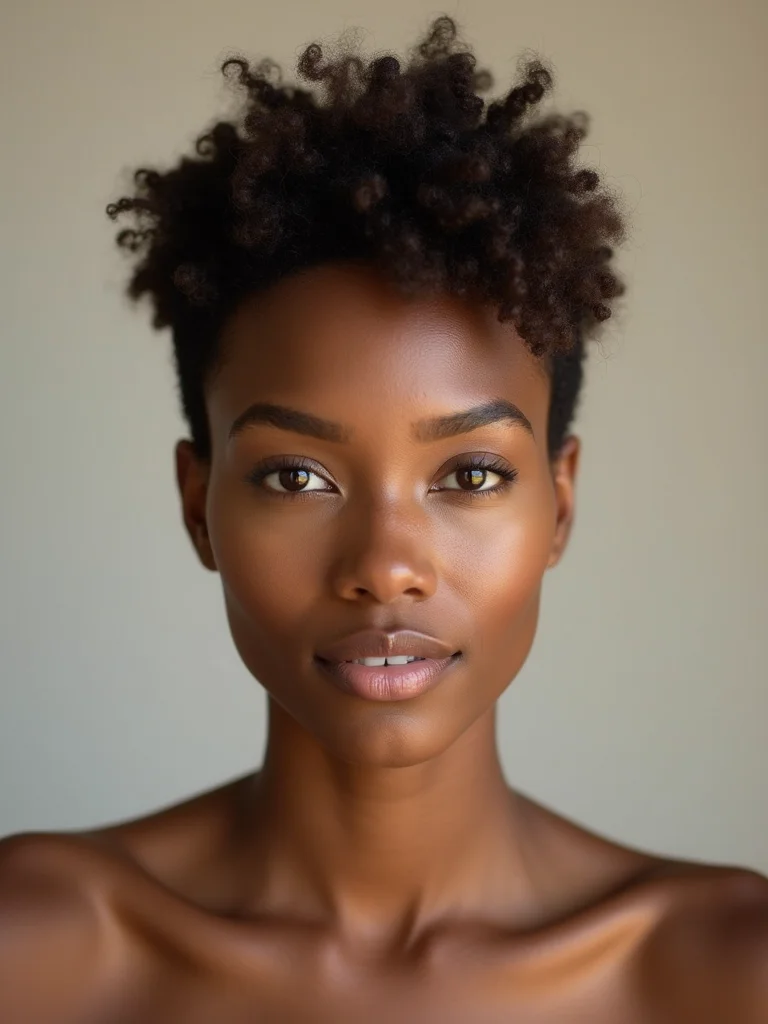
A full, blunt fringe and a wispy, see-through one sit at opposite ends of the same idea: both reshape how a bob frames the face, but almost nothing else about them is alike. One draws a heavy horizontal line that a longer face barely notices; the other barely touches the forehead and blends into soft pieces within a season of growing out.
The bob-and-bangs pairings below are organized by what each fringe is actually doing to the shape of the face above it.
Fringe Mechanics, at a Glance
- A full, blunt fringe draws a strong horizontal line; a wispy or airy one barely registers as coverage at all.
- Diagonal fringes (side-swept, arched) tend to flatter the widest range of face shapes.
- Curly bangs follow one non-negotiable rule: shaped dry, one curl at a time, never cut wet and stretched.
- A fringe almost always needs its own check-in before the bob does, often inside a month.
The Blunt Bob With a Full Fringe

A full fringe does one job better than any other: it lays a heavy, straight-across line right at the brow, and that line cuts a horizontal break across a longer face. Paired with a blunt bob’s own clean edge, the two lines echo each other into a graphic, high-impact shape.
The mechanism cuts both ways, though. On a round face, the same horizontal weight tends to close the face in, so this pairing is really built for straighter, denser hair and longer proportions. Plan on around $65 for the cut, and expect the fringe itself to need its own trim well before the bob does.

The Textured Bob With Wispy Bangs

Wispy bangs work by nearly disappearing. Cut fine and broken into separated pieces, they skim the brow without laying down a solid line anywhere, so they add softness without adding visible weight.
Why Wispy Bangs Forgive So Much
On a textured bob, that lightness matches the cut’s own loose, undone finish. Nothing about the pairing looks heavy or deliberate; it looks like hair that simply grew this way.
By week three or four, wispy pieces have usually drifted into the rest of the fringe well before any trim feels overdue, which is why this pairing suits anyone testing bangs for the first time.
The French Girl Bob With a Micro Fringe

A micro fringe sits high above the brow, well short of a classic full fringe, and the mechanism is confidence: it opens the whole face and pulls attention straight to the eyes, without covering anything up.
On a soft, undone French bob, that height looks deliberate. It suits even foreheads and features that can carry the exposure; on an uneven hairline or a strong widow’s peak, the same shortness draws attention to exactly the spot most people want to hide.
There’s no styling trick that softens a micro fringe cut wrong, so this one lives or dies on the initial cut. A rough dry with fingers is the entire routine once it’s right.
The A-Line Bob With Side-Swept Bangs

Side-swept bangs work on a diagonal instead of a straight line, and a diagonal is close to the most universally flattering thing a fringe can do: it softens a square jaw and narrows a round face at the same time, just by shifting the eye sideways across the face.
On an A-line bob, the sweep of the fringe echoes the cut’s own forward angle, so the two diagonals reinforce each other.
- Works on nearly every face shape without adjustment
- Blends into the longer front pieces as it grows, no hard line to maintain
- Sweep toward the deeper side of the part for the cleanest angle
A quick way to tell if side-swept bangs will sit well:
1Does your part naturally fall to one side rather than the center?
That’s the easiest starting point for a side-swept fringe.
2Do you have a cowlick right at the hairline?
A strong cowlick can fight a side sweep; flag it to your stylist first.
The Curly Bob With Curtain Bangs

Curtain bangs split at the middle and sweep outward in two even wings, so the face gets bracketed on both sides. On curly hair, that open shape leans on the natural pattern to do most of the framing work.
One rule overrides everything else here: curly bangs have to be shaped dry, one curl at a time, in the hair’s own pattern. Skip that step and the curl pulls up shorter than planned the moment it’s released from a wet, elongated state.
Refreshing them day to day just takes a small amount of water and curl cream, scrunched gently to wake the coils back up.
The Wavy Lob With Bottleneck Bangs

A bottleneck fringe frames rather than covers: it dips a little shorter at the center and lengthens quickly toward the sides, so it draws a soft curve past the cheekbones with barely any true forehead coverage.
On a wavy lob, that means most of what looks like a fringe is really just longer face-framing length, so the commitment is close to nothing. If the whole idea turns out to be the wrong call, a bottleneck shape blends back into the rest of the hair almost without a trace.
- Frames more than it covers, minimal forehead commitment
- Curl the center section back softly to keep the shape
- Grows out with almost no visible in-between stage
The Sleek Bob With Baby Bangs

Baby bangs sit cut high and short above the brow, well shorter than a micro fringe, which makes this the boldest pairing on the whole list. On a sleek, chin-length bob, the shortness looks entirely editorial, putting the eyes and bone structure fully on display.
- Best on even foreheads and balanced, symmetrical features
- Grows out slowly and visibly; there’s no quietly waiting it out
- A half-hearted, softened version of this fringe rarely looks intentional
A quick vocabulary check for the fringe terms in this guide:
📖Micro fringe
Cut high above the brow, shorter than a classic full fringe but longer than baby bangs.
📖Baby bangs
The shortest fringe on the spectrum, cut well above the brow line.
📖Bottleneck bangs
A fringe that’s shortest at the center and lengthens quickly toward the sides.
The Shaggy Bob With Piecey Bangs

Piecey bangs are point-cut into separated, broken sections that carry real texture. On a shaggy bob, the broken fringe flows straight into the choppy layers, keeping the whole cut speaking the same rough, undone language.
- Point-cut into separated sections, never left solid
- A little texture paste on dry hair keeps the pieces defined
- Hides an overdue trim better than almost any fringe on this list
The Inverted Bob With a Feathered Fringe
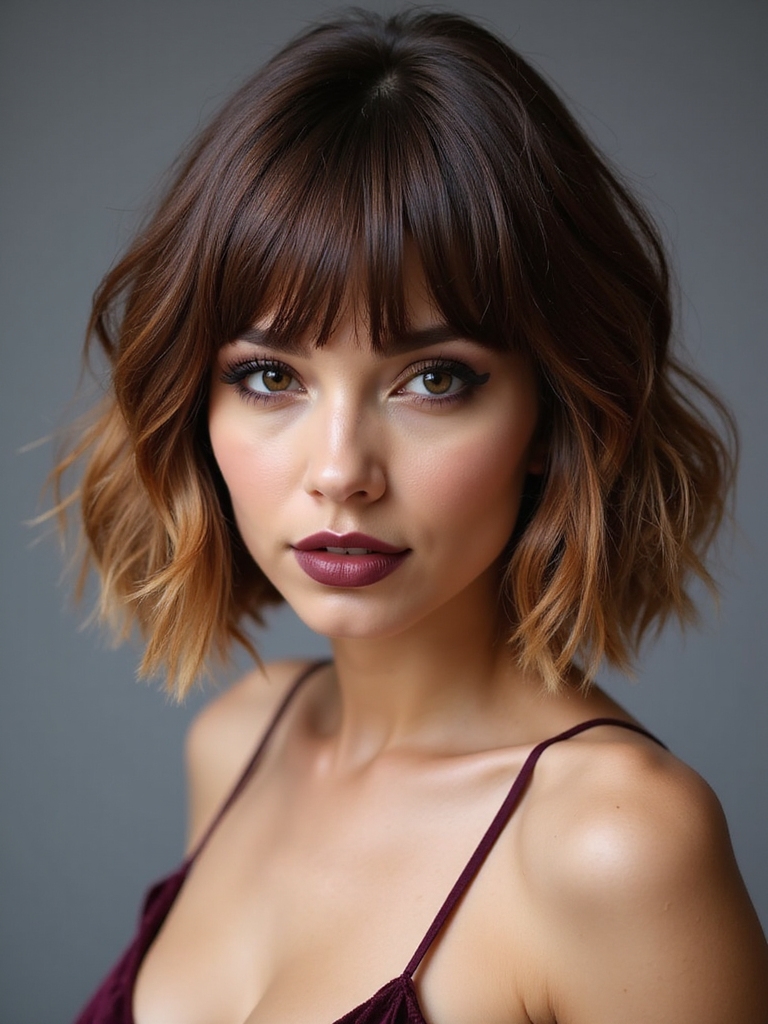
A feathered fringe is cut with soft, tapered ends that flick and separate, which gives it movement a blunt fringe simply doesn’t have.
That softness pairs naturally with an inverted bob’s built-in volume, bridging a structured cut and the face so the whole shape doesn’t look too sculpted. It suits longer, oval faces especially, where the soft pieces break up length gently.
A round brush feathers the ends outward while drying, and a light hand with product keeps the movement from collapsing flat.
The Layered Bob With Airy Bangs

Airy bangs leave deliberate gaps that let the forehead peek through, a fringe without the full weight or commitment of a solid one. On a layered bob, that gapped lightness matches the same softness already built into the rest of the cut.
- Best on rounder faces, where the gaps keep the forehead from closing in
- Fakes a little extra movement on fine hair
- Sits between a wispy fringe and a full one, most of the softness, little of the upkeep
The Asymmetrical Bob With a Bold Fringe

Here the fringe is asked to match the drama already built into the cut. An asymmetrical bob runs longer on one side by design, and a bold fringe, whether a strong sweep or a heavier brow-grazing line, pushes that same energy even further.
Letting the Fringe Follow the Angle
Angling the fringe to follow the longer side keeps the whole shape looking like one deliberate statement.
This is the pairing for someone who wants hair to be the first thing noticed in a room.
The Box Bob With Straight-Across Bangs

A box bob is built on sharp, geometric lines, and straight-across bangs add another clean horizontal to match it. Together the two lines make the most architectural, structured pairing on this whole list.
Precision is the entire point, which also makes this the highest-maintenance combination here: it needs straight, healthy hair and frequent trims, since any unevenness shows immediately on a line this exact. Plan on around $70 for the cut, before factoring in extra fringe-only visits.
- Best on longer or oval faces, where the horizontal balances proportions
- Needs straight, healthy hair to lie flat
- Any grow-out shows fast; plan on tighter trims than most pairings here
Keeping a box bob’s fringe geometric between trims:
1Section before drying
Clip the fringe away from the rest of the cut so it dries and sets on its own.
2Flat-iron in one pass
A single, deliberate pass keeps the line crisp without over-processing the ends.
3Finish on low heat
Switching the dryer down before the final pass keeps the line from relaxing back out of shape.
The Stacked Bob With a Side Fringe

A side fringe is the loosest, most casual cousin of a side-swept one: longer, less defined, and swept over to blend straight into the face-framing pieces.
On a stacked bob, it softens the structured volume built into the back with a relaxed, asymmetrical front. It’s about as low-key as a fringe gets, since it barely registers as bangs and grows out with almost no awkward stage to manage.
The Tousled Bob With Full, Soft Bangs

Full soft bangs borrow the coverage of a full fringe without the hard edge: cut with plenty of length across the brow, then styled with a little break so the line sits soft.
On a tousled bob, that softness keeps a technically full fringe from feeling severe, which makes this the full-fringe option for anyone who finds the blunt version too bold. The fullness still shortens and frames the face; the broken styling just keeps it approachable.
- Break the line up with fingers and a little texture, never a flat iron
- Frames like a full fringe, wears softer than one
- A good middle step for anyone unsure about going fully blunt
Before Going Full and Soft
This pairing still carries a full fringe’s upkeep underneath the soft styling, so budget for the same trim schedule a blunt fringe would need, even though the day-to-day look is far more forgiving.
The Jaw-Length Bob With an Arched Fringe

An arched fringe runs a touch longer at the outer corners and slightly shorter at the center, tracing the natural curve of the brow.
That subtle arch opens the eyes and softens the forehead without the weight of a flat fringe. On a jaw-length bob, it frames the face at its narrowest point and keeps the whole shape rounded.
- Blow-dry outward from the center with a round brush to set the arch
- Softer effect than a straight-across fringe at the same length
- A wearable middle ground between a full fringe and no fringe at all
Match the Mechanism, Not Just the Photo
One real pattern underneath every pairing above: each fringe is doing a specific job, whether that’s a heavy horizontal line, a soft diagonal, or barely any coverage at all, and the right choice depends on which job actually needs doing on a particular face.
Save whichever pairing matches the mechanism a face actually needs, and bring it to the next appointment instead of a screenshot with no context attached. For the transformation side of this decision, see our guide to bob cuts with bangs.
Hand-Picked for You