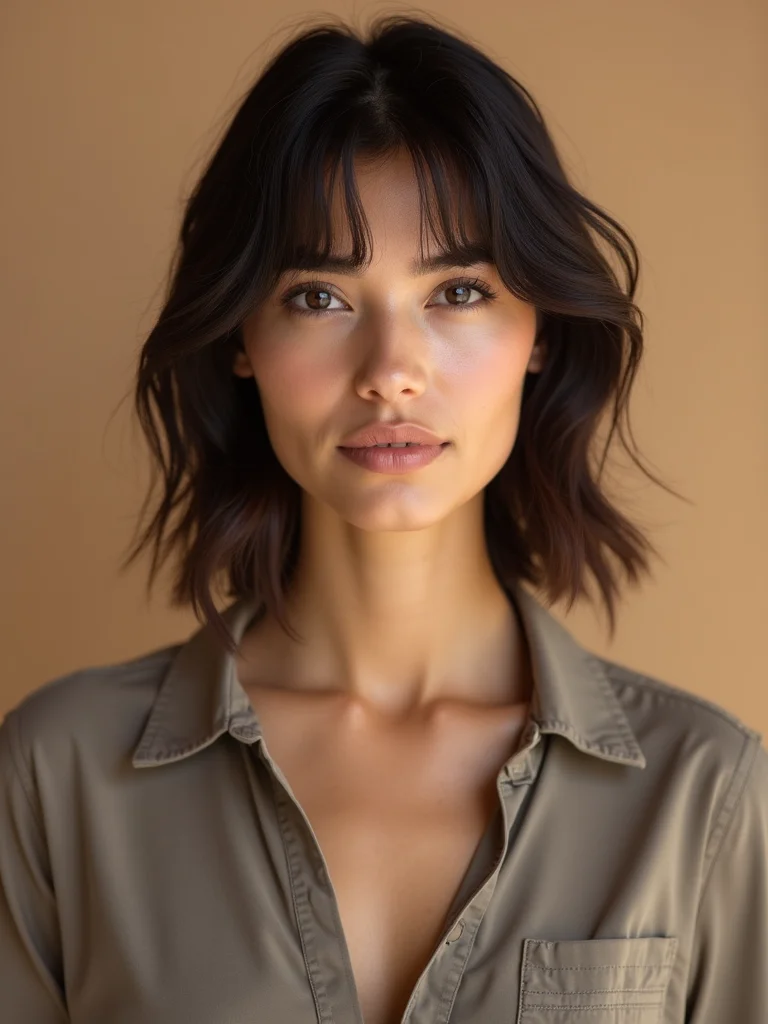
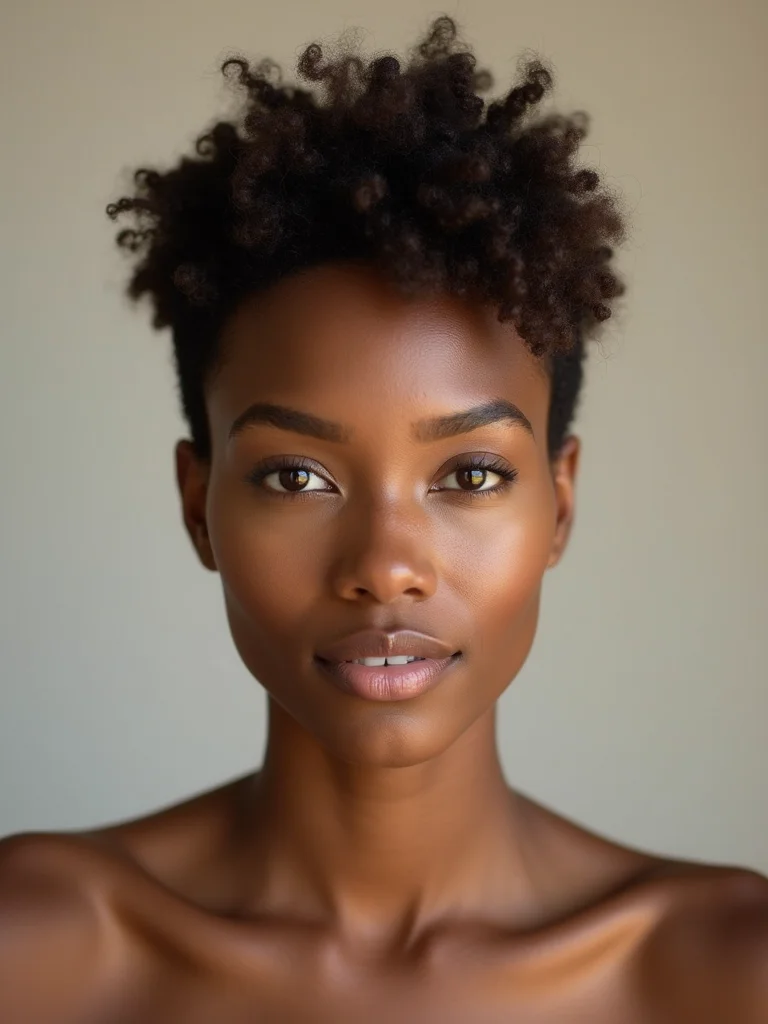
What turns a good layered cut into one that actually stops people mid-scroll? More often than not, it’s layered hair with bangs — the fringe added on top of the movement already built in.
The two elements do different jobs: layers put movement through the length, while the fringe gives the whole shape a focal point right at the face. Below are sixteen pairings across every texture, each with what it actually asks of your schedule.
Matching Bangs to Layers, Fast
Match the fringe to your tolerance for upkeep first: blunt and micro bangs want attention on a tight cycle, while curtain, wispy, and side-swept styles grow out softly and forgive a missed appointment.
Match it to texture second. Curly and coily bangs need a dry cut to land where the pattern actually falls, and fine hair does best with a shallow, airy fringe rather than a dense one.
Soft Face-Framing Layers With a Wispy Fringe
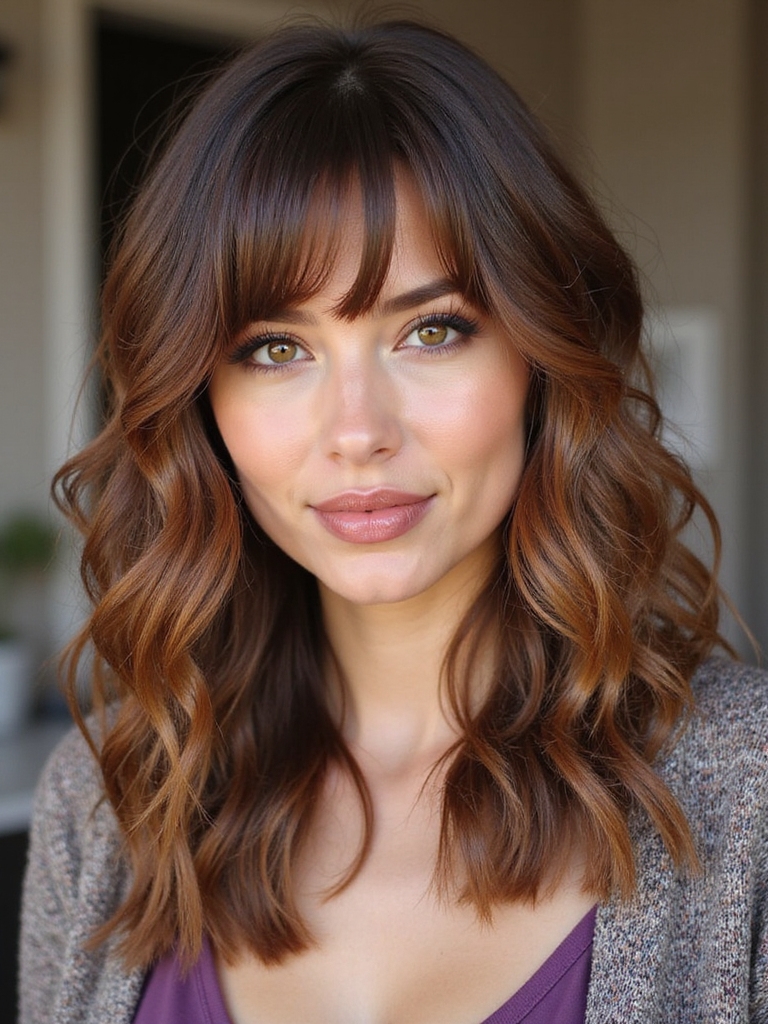
This is the softest pairing on the list: face-framing layers paired with a wispy, see-through fringe. The layers open up the face while the wispy fringe sits light on the forehead, so nothing about the front feels heavy or overdone.
- You’ll barely notice it as part of your morning routine once it’s cut.
- Best on fine to medium hair that goes flat under a denser fringe.
- A light texturizing spray on the fringe alone keeps it from clumping.
Long Layered Cut With Curtain Bangs
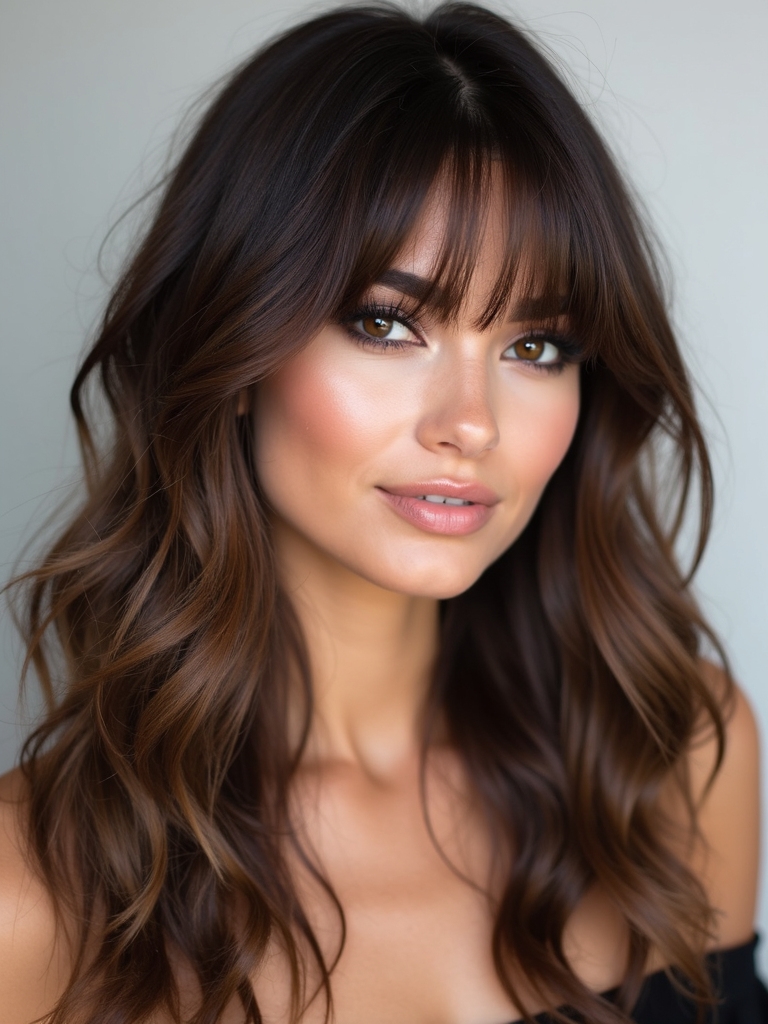
Long layers with curtain bangs pairs the length people are most reluctant to give up with a fringe that never actually threatens it. The center-parted bangs sweep softly to each side, echoing the movement already running through the layers below.
Expect the two to blend into one continuous shape, since the curtain fringe grows straight into the surrounding layers with no stranded stage in between.
A round brush sweeps the fringe back and out while drying; left alone, it settles into a slightly looser version of the same shape.
The best fringe pairing is the one you’ll actually keep up with, not the one that looked best in a photo.
Textured Shag With Piecey Bangs
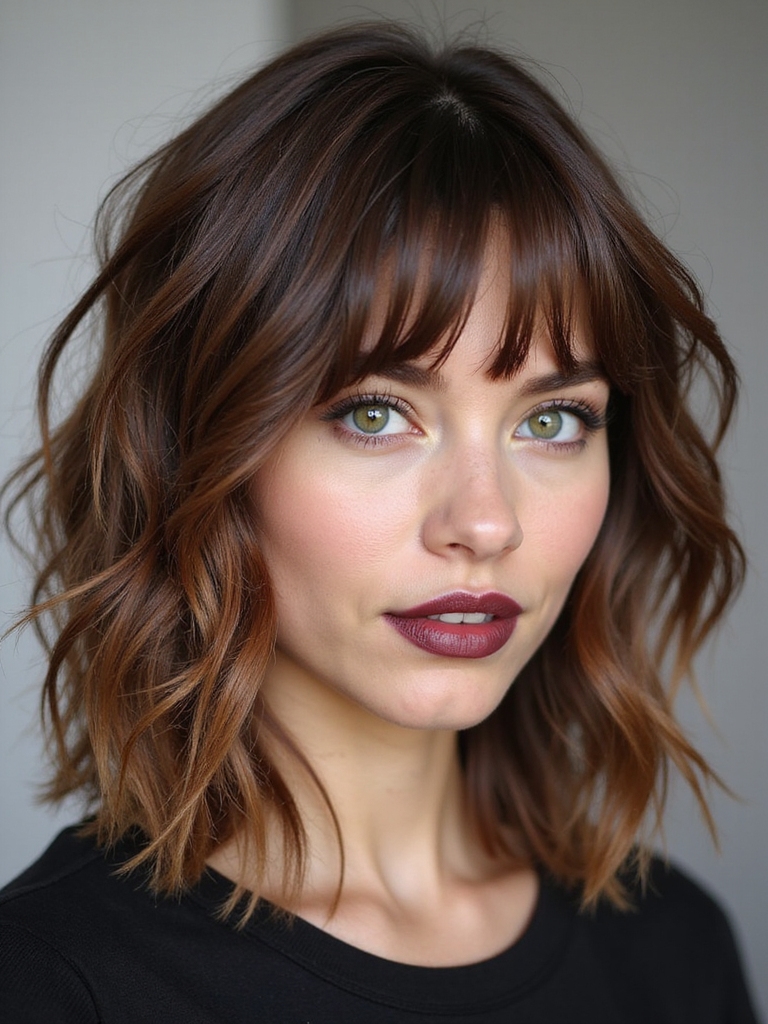
A textured shag with piecey bangs is the cool, undone pairing on this list. Heavy, choppy layers throughout meet a fringe broken into separated pieces, so the whole cut moves with the same rumpled, rock-leaning texture.
Nothing here is meant to look neat, and that’s the entire appeal. The piecey bangs amplify the shag’s energy, echoing the same broken texture already running through the layers.
Scrunching a texturizing product through damp hair, then skipping the round brush entirely, brings out both the fringe and the shag’s separation at once.
Blunt Bob With Feathered Micro Bangs
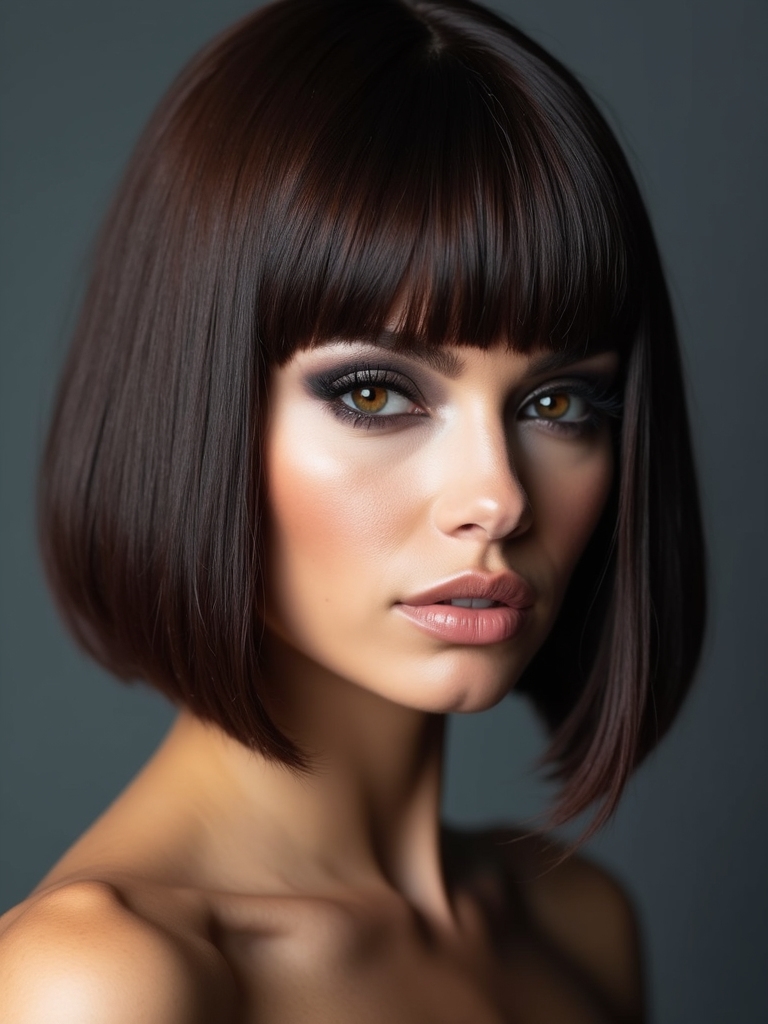
A blunt bob with feathered micro bangs is the boldest pairing here, a sharp, graphic fringe set high on the forehead over a clean, blunt line below. It’s fashion-forward and asks for real commitment in return.
Micro bangs show every bit of growth almost immediately, making this the highest-upkeep pairing on the list. Expect shaping visits on a tight, roughly two-week cycle, with a full layered cut and bangs typically running around $90 at a mid-range salon.
- Best on straight, thick hair that can hold a clean blunt line.
- Feathering the fringe softens the edge just enough to wear daily.
- Ask whether a quick fringe touch-up is included free between full cuts.
Wavy Lob With Side-Swept Bangs
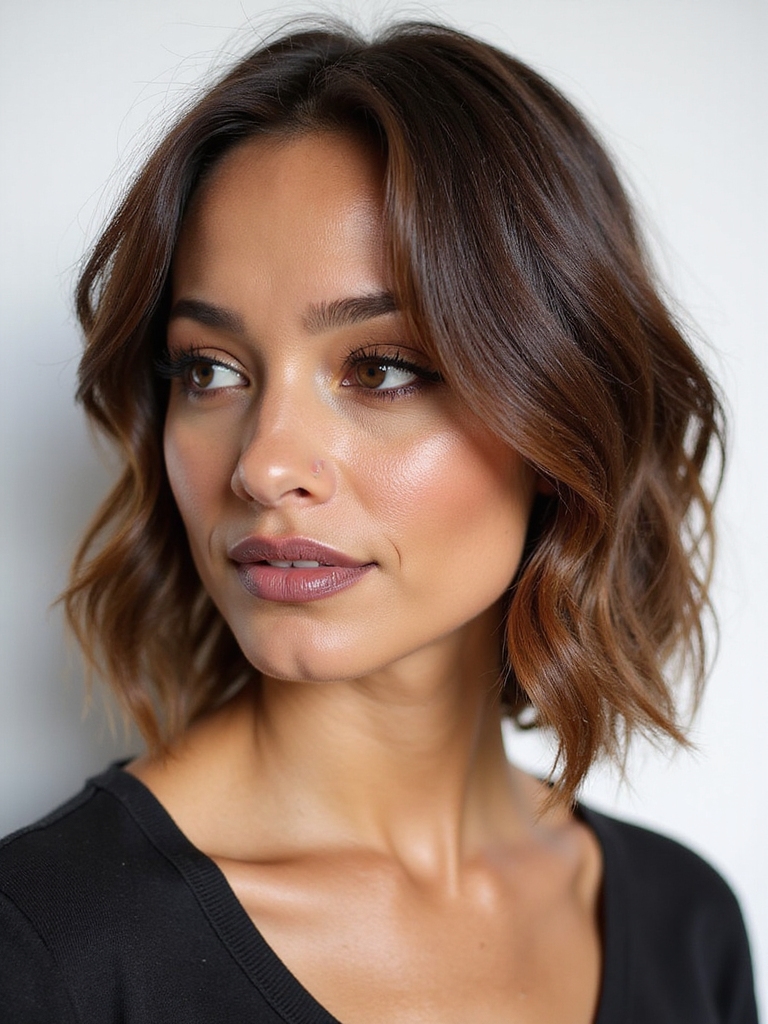
A wavy lob with side-swept bangs is the easy, flattering pairing on this list. The fringe sweeps across on a diagonal from a deep part, and the wavy lob carries that same angle down through the rest of the length.
Side-swept bangs flatter round and square faces especially well, tracing a slimming line across the forehead that a straight-across fringe can’t match. The natural wave handles most of the remaining styling on its own.
Layered Butterfly Cut With Soft Bangs
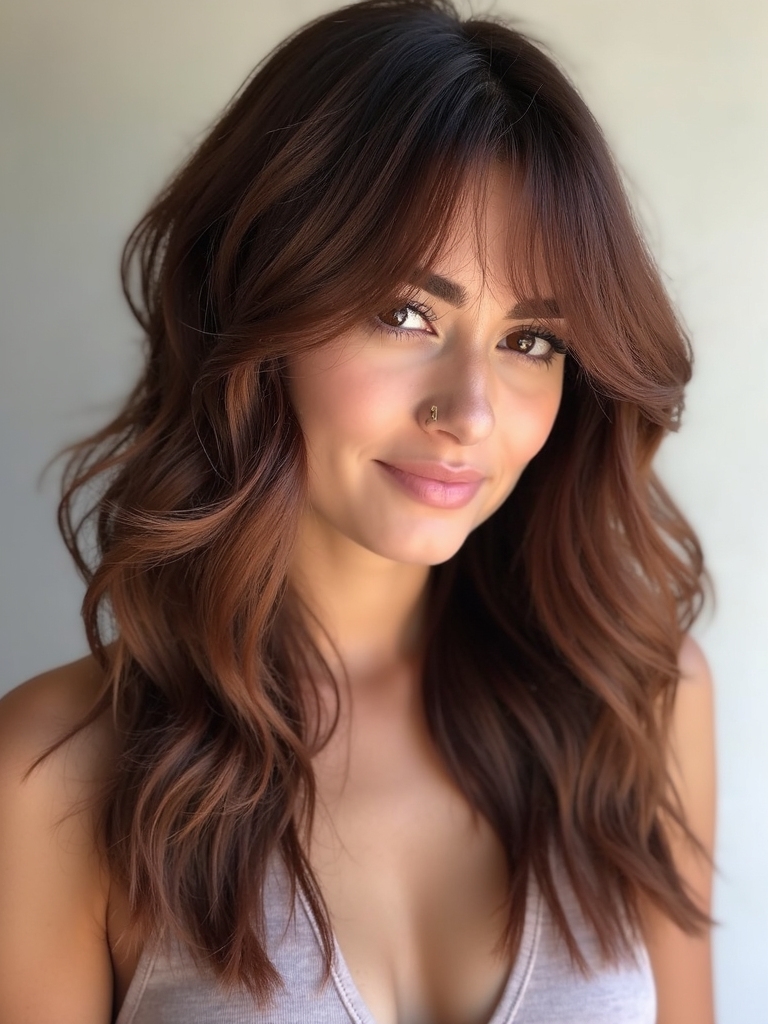
A layered butterfly cut with soft bangs pairs big, bouncy volume with a gentle fringe that never competes for attention. The butterfly layers stack a shorter top section over longer lengths for fullness up high, while the soft bangs keep the whole front from tipping into too much.
- Best on medium to long hair that wants volume without a major chop.
- Keep the bangs soft so they merge quietly with the layers framing the face.
- Diffusing or round-brushing the top layers upward builds the bounce.
“Ask for the part to sit slightly deeper than feels natural at first. A shallow part won’t give a side-swept fringe enough length to sweep properly across the forehead.”
Voluminous Layers With Full Soft Bangs
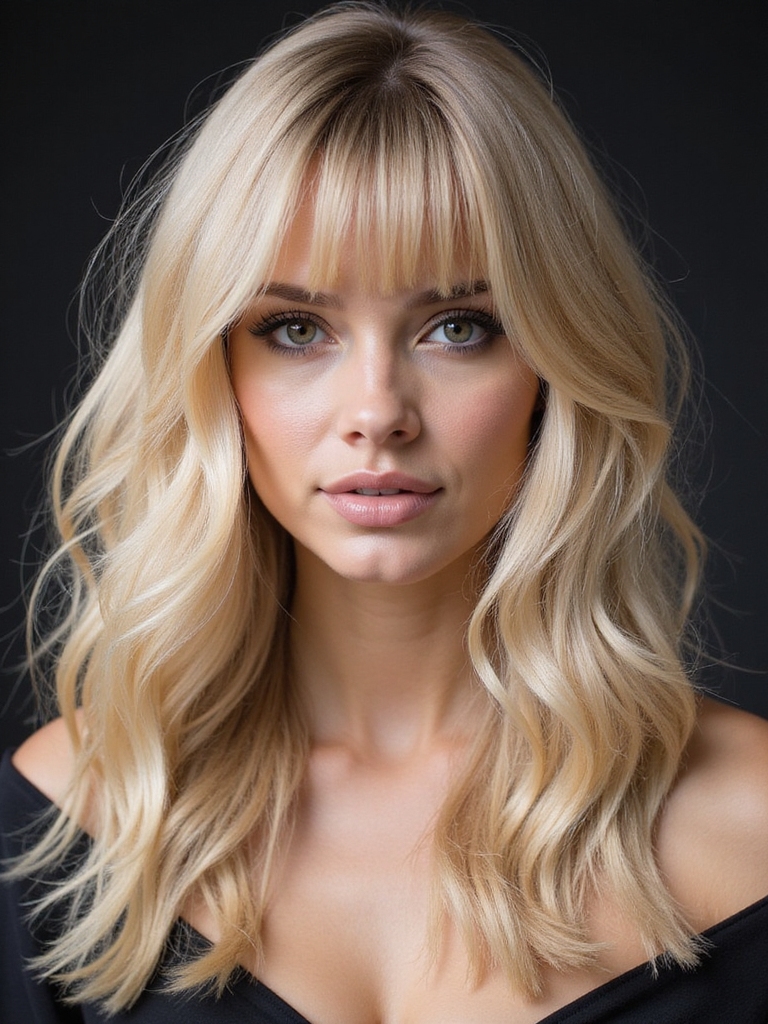
Voluminous layers with a full, soft fringe suit anyone who wants drama without stiffness. Heavy, bouncy layers meet a fuller bang that still falls soft, so the overall look reads big and glamorous, never sprayed into place.
Keeping a Full Fringe From Feeling Heavy
A full fringe needs some internal thinning to sweep softly, keeping its own movement rather than sitting as one solid block against the forehead.
A round brush builds volume in both the layers and the fringe during the same blow-dry, and a light-hold spray keeps that body through the day.
Curly Layers With Shaped Curly Bangs
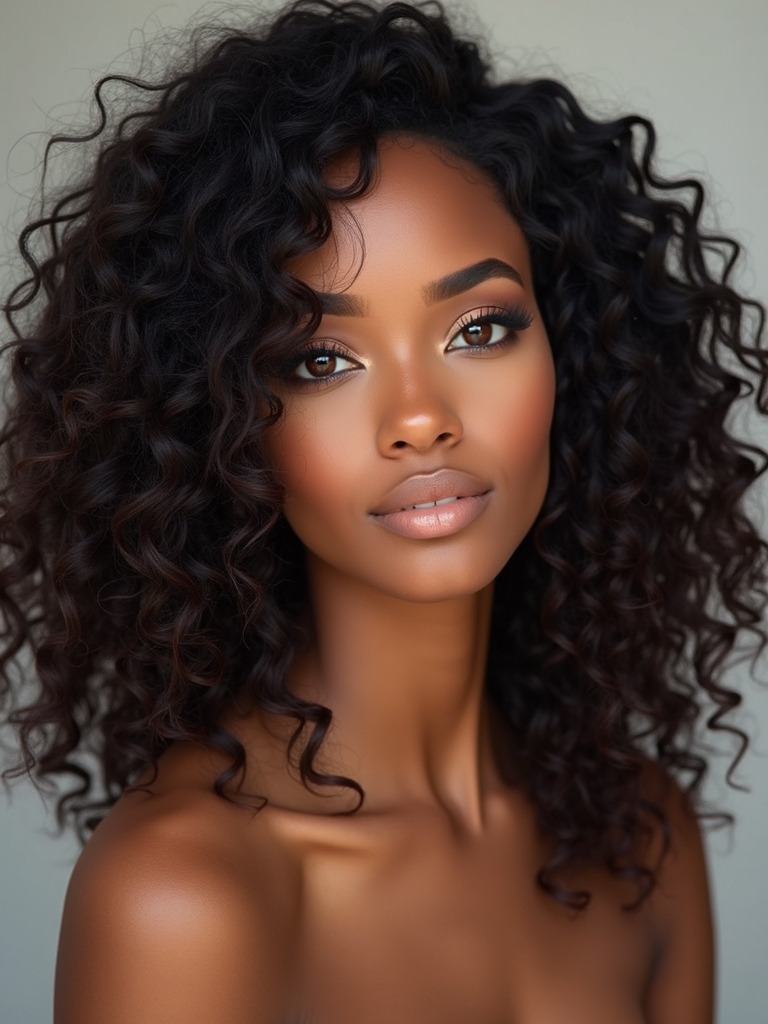
Curly hair wears bangs beautifully, and curly layers paired with a shaped curly fringe prove it. The layers give the curls room to spring, while the shaped fringe frames the face with the same defined texture carried down through the length.
The rule here matches any curly cut: shape the bangs dry, in the curl’s natural pattern, so each piece lands where it actually springs rather than where it sits stretched and wet.
Working a curl-defining cream through fully saturated hair before it starts drying keeps the fringe and the layers reading as one consistent texture.
Coily Layers With Tapered Bangs
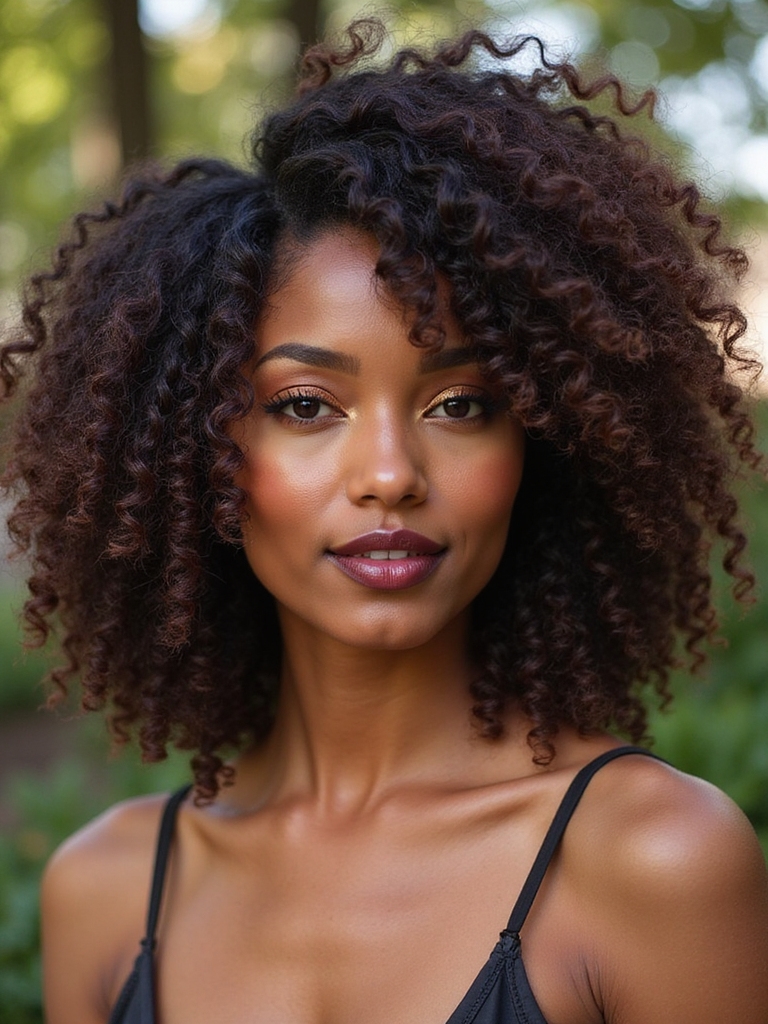
On coily, tightly textured hair, layered coils paired with tapered bangs celebrate the natural pattern. The layers lift bulk so individual coils can define themselves, while the tapered fringe frames the face, always combed and cut with its own direction of growth.
Like any coily cut, this one is shaped completely dry, in the pattern the hair actually falls in, so the tapered bangs land where the coils settle after shrinkage.
- Always cut dry, in the hair’s natural coil pattern.
- A tapered fringe blends softly into the layered shape around it.
- Refresh with water and a leave-in between wash days; protect at night with a satin bonnet or pillowcase.
A couple of terms worth knowing before this consultation:
📖Dry cut
Shaping curly hair after it’s already dry and styled, so a stylist can see the true curl pattern before cutting.
📖Shrinkage
The gap between a curl’s stretched-wet length and its resting length once dry; tighter patterns can pull up by a third or more.
Straight Layers With See-Through Bangs
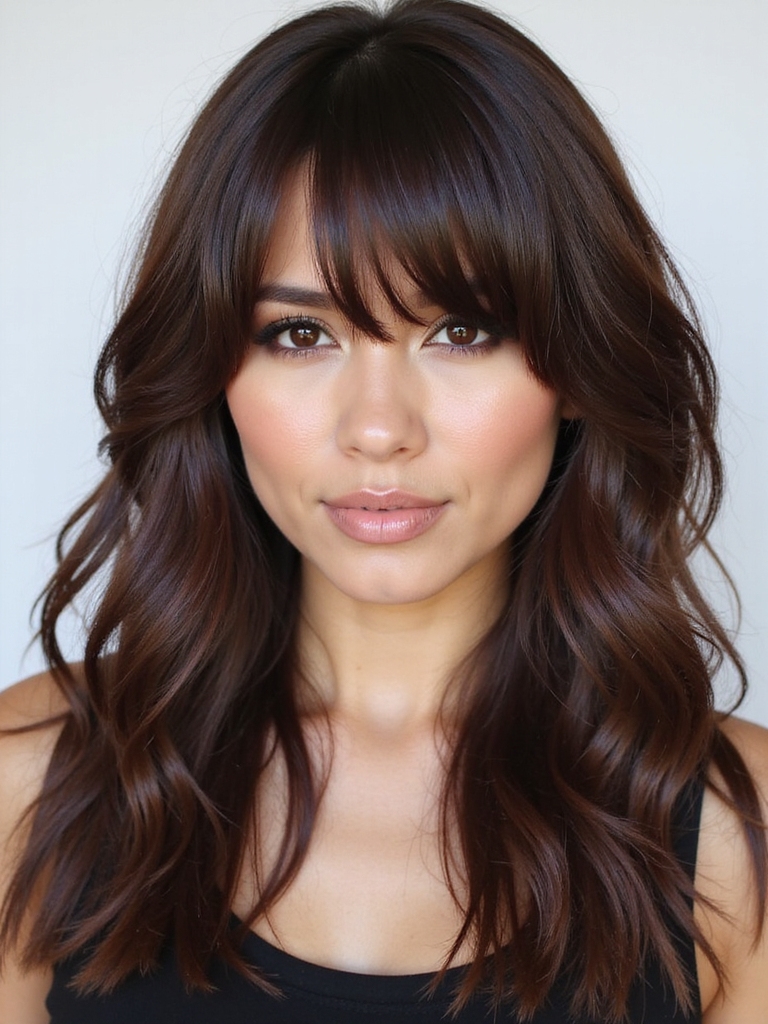
Straight layers with airy see-through bangs is a modern, low-weight pairing borrowed from Korean styling. The sheer fringe lets a little forehead show through, keeping the whole look light, while straight layers underneath stay sleek and easy to manage.
See-through bangs ask less of daily upkeep than a full blunt fringe, softening the face gently with a quiet, understated presence.
- Best on straight to lightly wavy hair that already lies smooth.
- A flat iron plus a small amount of shine product keeps the fringe sheer and glossy.
- Considerably less daily styling effort than a heavier blunt fringe.
Choppy Layers With Full Blunt Bangs
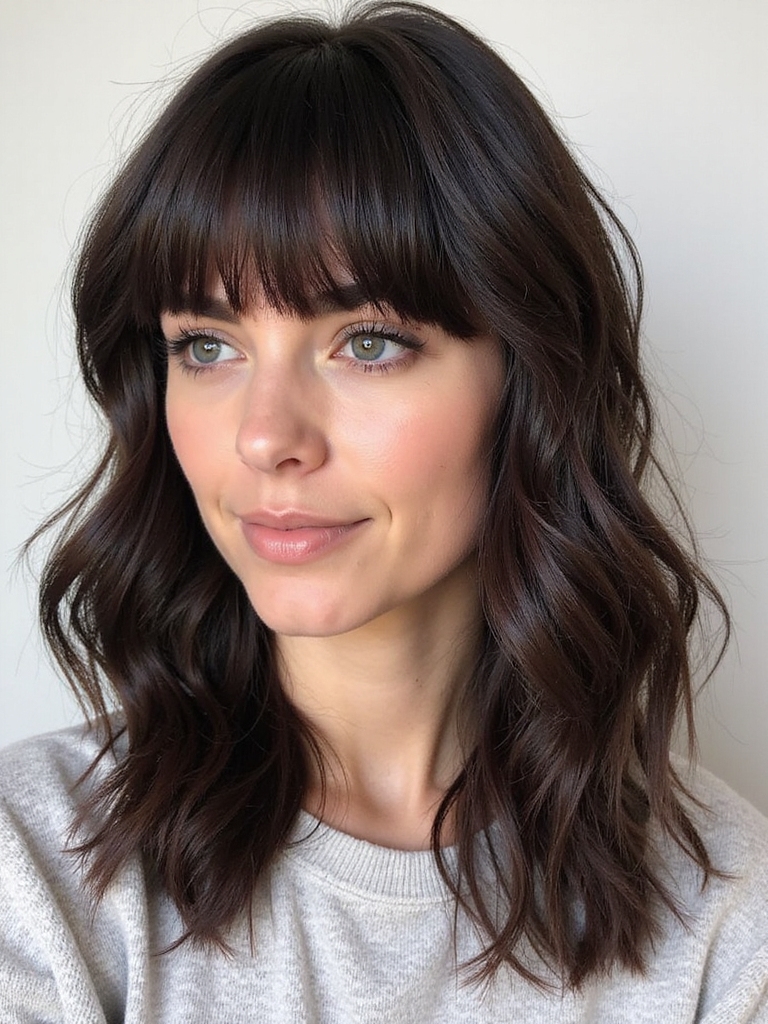
Choppy layers with a full blunt fringe set a heavy, graphic bang against piecey, moving lengths below it. The blunt fringe frames the eyes with one strong line, while the choppy layers break everything below it into separated, textured pieces.
Structure sits up front, movement carries everything below it, and that contrast is what keeps the whole shape from reading too severe. It suits anyone who wants a defined, graphic fringe without giving up texture through the rest of the length.
Layered Wolf Cut With a Tousled Fringe
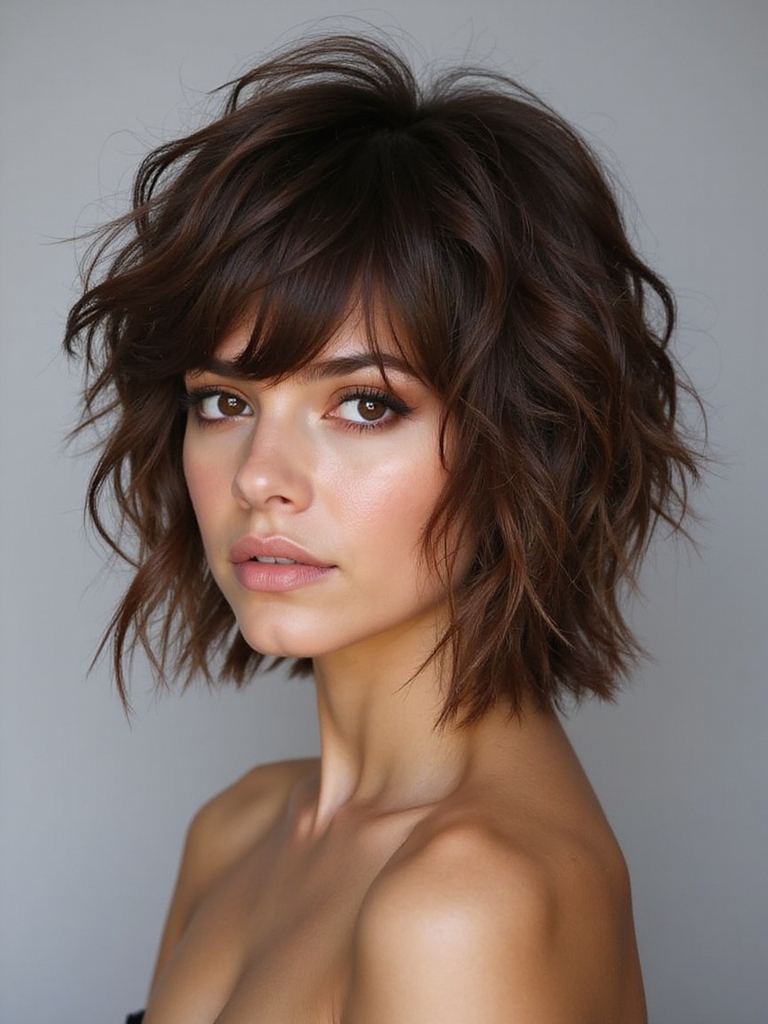
A layered wolf cut with a tousled fringe is the pairing with the most attitude on this list. Short, choppy layers crowd the crown, longer ragged ends fall below them, and a tousled, piecey fringe finishes the front.
Texture Over Polish
The whole shape reads young and a touch rebellious, with the fringe matching the undone energy already built into the wolf layers underneath.
Skipping a polished blow-dry entirely and letting the natural texture lead covers most of the routine here; a texturizing product worked in with fingers handles the rest.
Fine Hair Layers With Light, Lifted Bangs
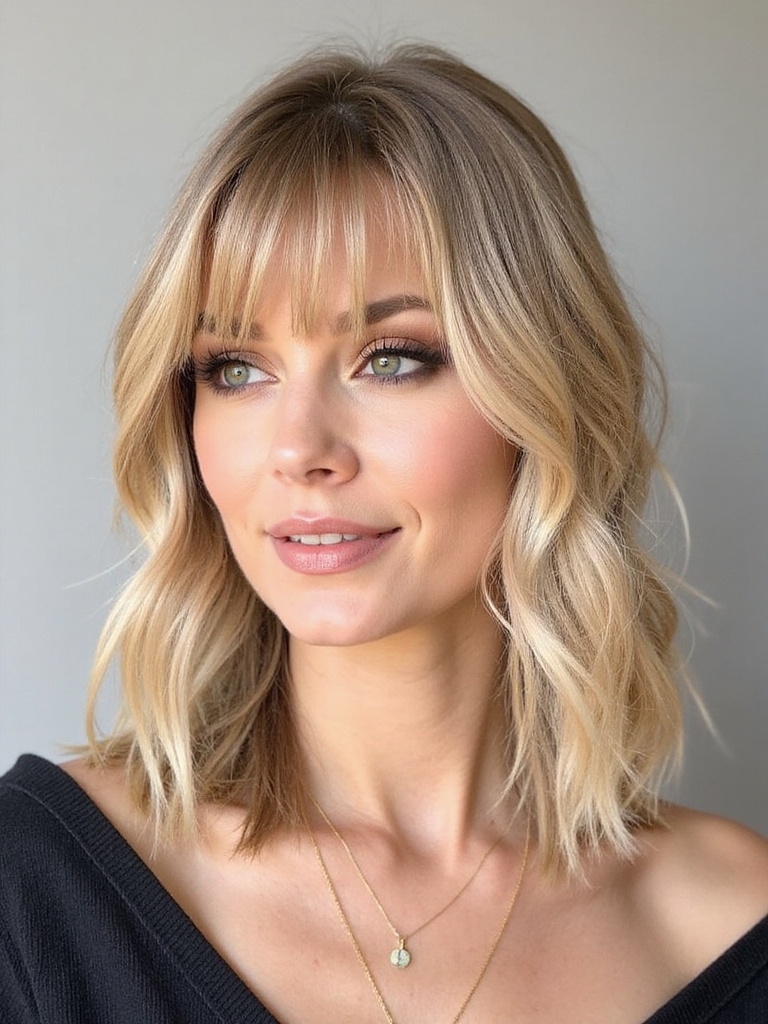
Fine hair and bangs work well together specifically when both stay light. Soft layers add lift through the cut, while a light, wispy fringe frames the face without pulling too much hair forward and thinning the rest of the crown to feed it.
The common trap on fine hair is a fringe cut too thick, which pulls density away from everywhere else on the head. Keeping the fringe shallow and airy avoids that trade-off entirely.
A root-lifting mousse and a round brush build body through the crown, and keeping products light overall stops the fine fringe from dragging flat by midday.
Thick Hair Layers With Debulked Bangs
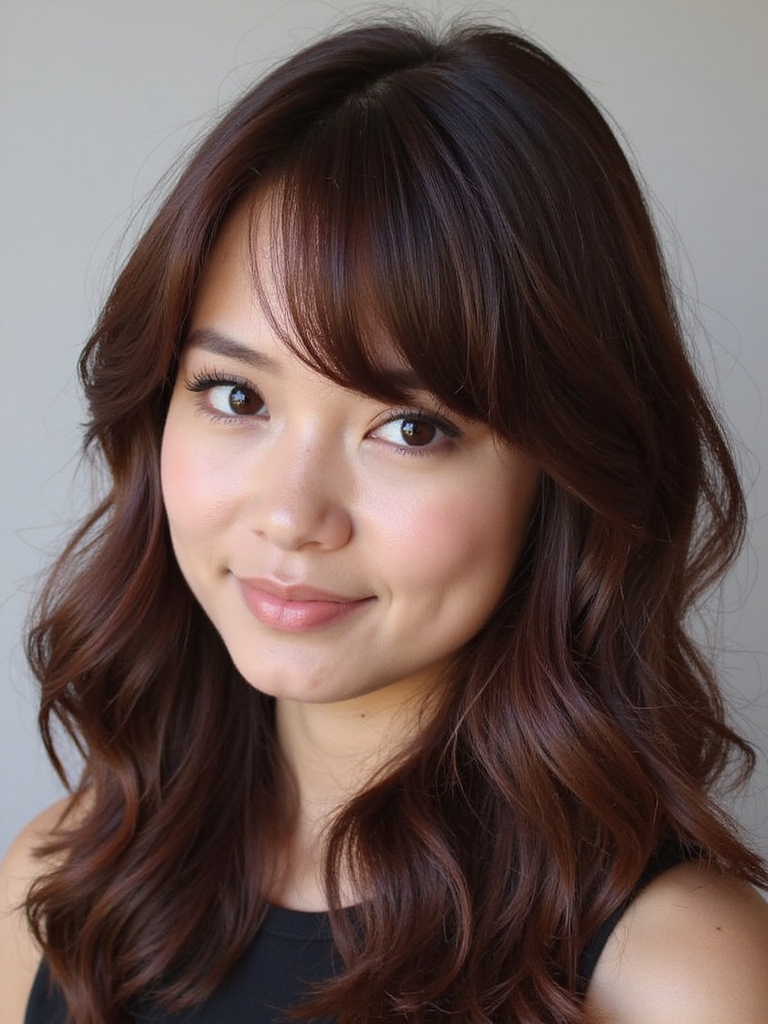
Thick hair can carry the boldest bangs on this list, but the fringe needs its own debulking to actually move. Layers strip weight out of the interior so the cut doesn’t blow out sideways, while the bangs get internally thinned to sweep softly.
Debulking the Fringe, Not Just the Layers
Done well, thick hair turns its natural density into an advantage: a full, dramatic fringe with real, built-in movement.
Pointing out exactly where the hair puffs most gives a stylist the clearest guide for where the internal weight needs to come out.
Grow-Out-Friendly Bangs With Easy Layers
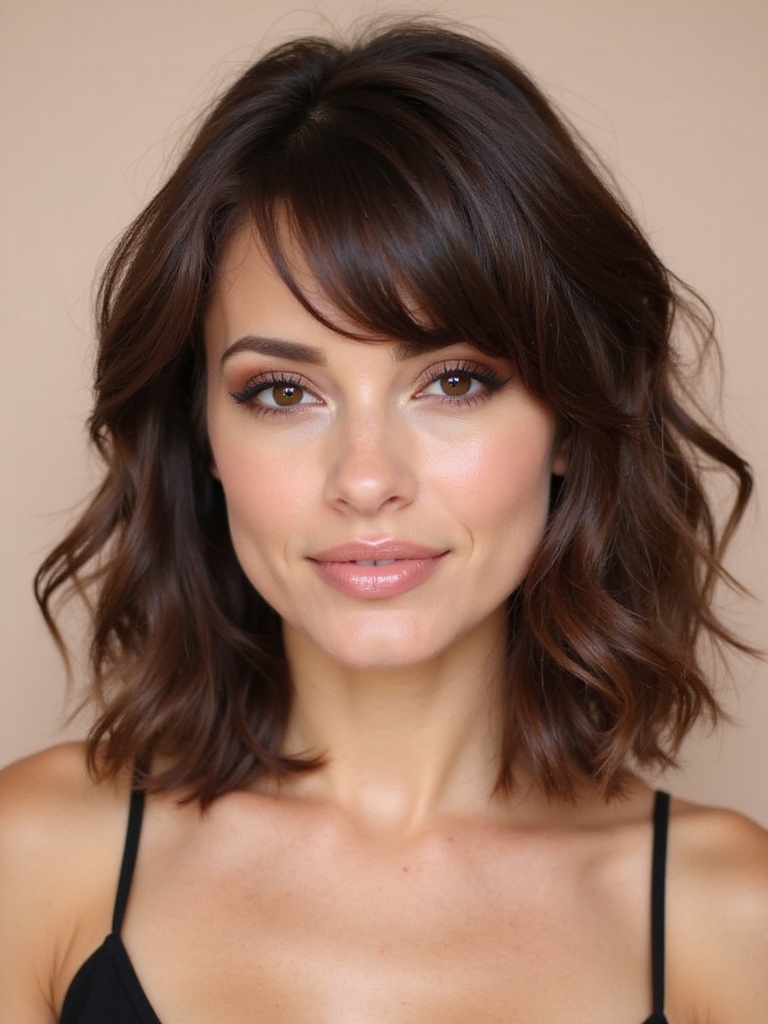
For anyone hesitant about commitment, grow-out-friendly bangs are the pairing worth asking for. Long, soft, layered bangs settle straight into the surrounding shape, skipping the awkward stranded stage most fringes go through.
This is the lowest-maintenance way to wear bangs on this entire list, since the fringe is long and soft enough to simply melt into the surrounding layers as it grows, with no constant reshaping required. It’s the version worth asking for if the idea of a strict trim schedule is what’s kept bangs off the table until now.
- The longest, lowest-commitment fringe option covered here.
- Blends into the layers with almost no visible grow-out stage.
- A solid choice for bangs without a strict trim calendar to follow.
👍Why Thick Hair Suits Bold Bangs
- +Enough natural density to hold a full, dramatic fringe shape
- +Internal thinning reads as intentional body, not thin ends
- +Handles heavier bang styles other textures can’t support
👎What It Actually Takes
- –Needs debulking in both the layers and the fringe, not just one
- –Skipping the internal thinning leaves a fringe that won’t move
- –Takes a stylist experienced with thick hair to get the balance right
Heatless Styling for Layers and Bangs
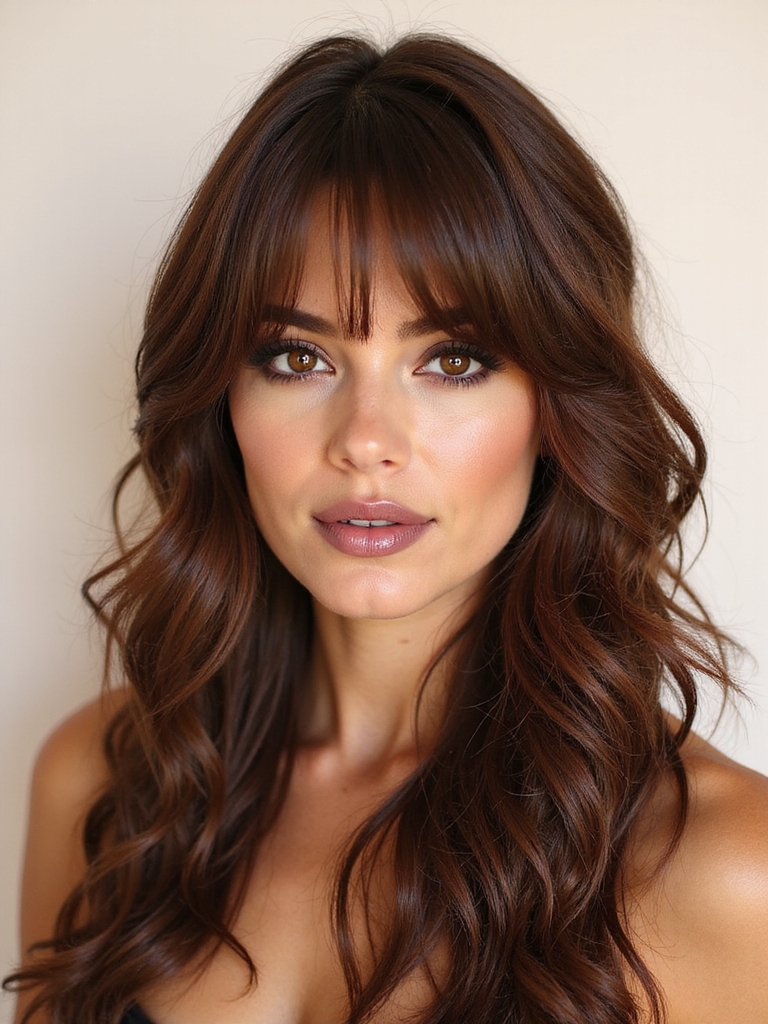
Hot tools aren’t required to style layers and bangs well, and heatless methods protect the hair overnight or during an air-dry. The goal stays the same either way: soft movement through the layers and a fringe that falls where it should, without any heat damage along the way.
- Clip the roots at the crown while air-drying to set lift without heat.
- Wrap damp bangs around a finger and pin them to set the sweep overnight.
- A small amount of mousse on wet hair gives the layers body as they air-dry.
Common Mistakes to Avoid
Choosing a fringe type before considering upkeep tolerance is the most common misstep. A blunt or micro bang looks striking in photos but demands attention on a schedule some people simply won’t keep, leading to a grown-out shape that flatters no one.
The second mistake is cutting bangs on wet hair when the surrounding cut is curly or coily. Skipping the dry-cut step for the fringe alone, even when the rest of the haircut is handled correctly, throws off the whole pairing once the curls spring back to their real length.
Pick the Pairing That Fits You
Layered hair with bangs is really sixteen different conversations between movement and a frame, each one tuned to a specific texture, length, and tolerance for upkeep. A wispy fringe over soft layers whispers; a blunt micro bang over a blunt bob shouts. Both are right for the right person.
Start from your own hair and routine rather than the prettiest photo, and bring that honest starting point to your next consultation.
More to Explore