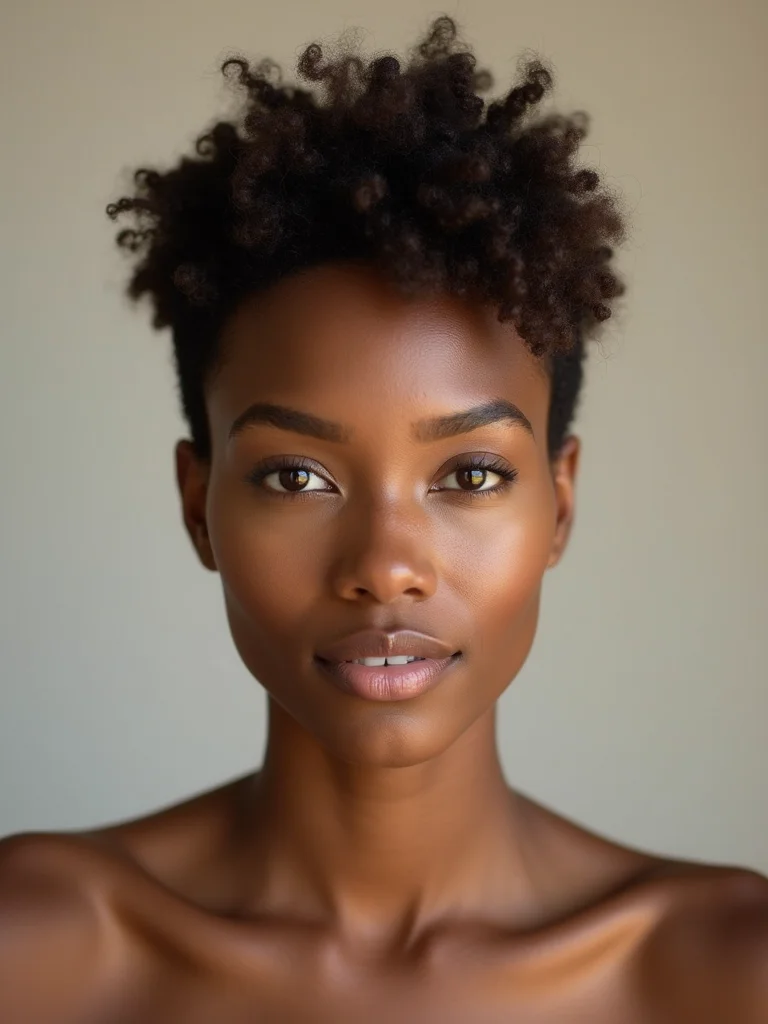
Six weeks after a fine-haired client’s first heavily layered cut, she stopped at the front desk to say her hair finally looked like hair again. Nothing had grown. The weight that was dragging her roots flat had simply been cut away. That’s the entire mechanism behind every look on this list: short layers don’t add hair, they remove the weight that was hiding the volume already there.
What follows covers eighteen ways to apply that idea, from specific cuts to the part tricks, products, and trim schedule that keep the lift from disappearing.
The Fine-Hair Volume Playbook
- Volume comes from removing weight at the crown, not from any product alone.
- The part line matters as much as the cut; switching sides can fake root lift instantly.
- Layers built for volume need trims on a tighter schedule than a one-length cut.
- A shape-up costs a bit less than the original cut, since it’s touch-up work on an existing shape.
How Removing Weight Creates Lift
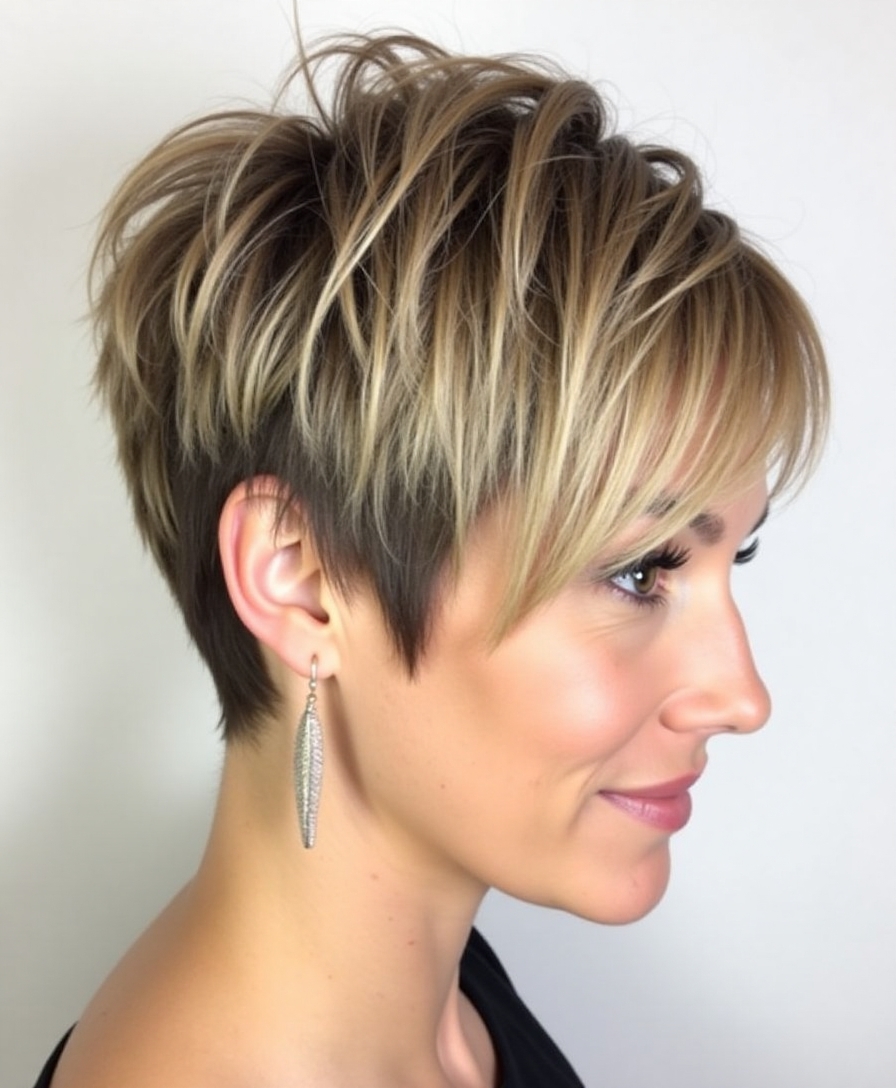
Long, one-length hair carries its own weight downward, pulling fine strands flat against the scalp, especially at the crown. Cut short layers into that same hair and the weight disappears along with the length, freeing the roots to stand up on their own.
- Less length pulling at the root means the hair can actually stand up
- Layers separate strands visually, so thin hair reads as more of it
- The crown lifts first, which is exactly where fine hair usually looks thinnest

Matching Layers to Your Face Shape
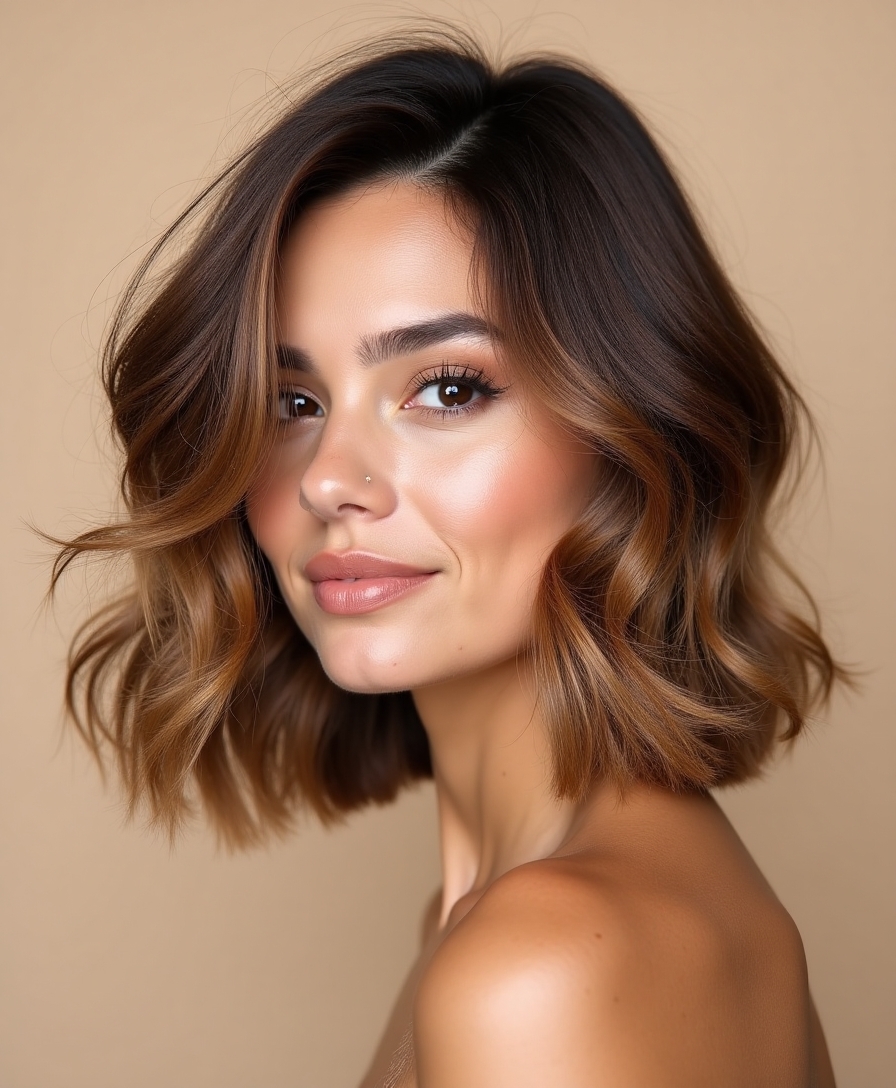
The same set of layers falls differently depending on the face underneath it. Placement matters as much as the layering itself.
Placement Over Chart
Round or full faces generally want height concentrated at the crown, with length kept past the chin to pull the eye vertically. Longer faces do better with width added through the sides.
Bringing a photo and naming exactly where the layers should start tells a stylist more than any face-shape chart could.
The Feathered Pixie
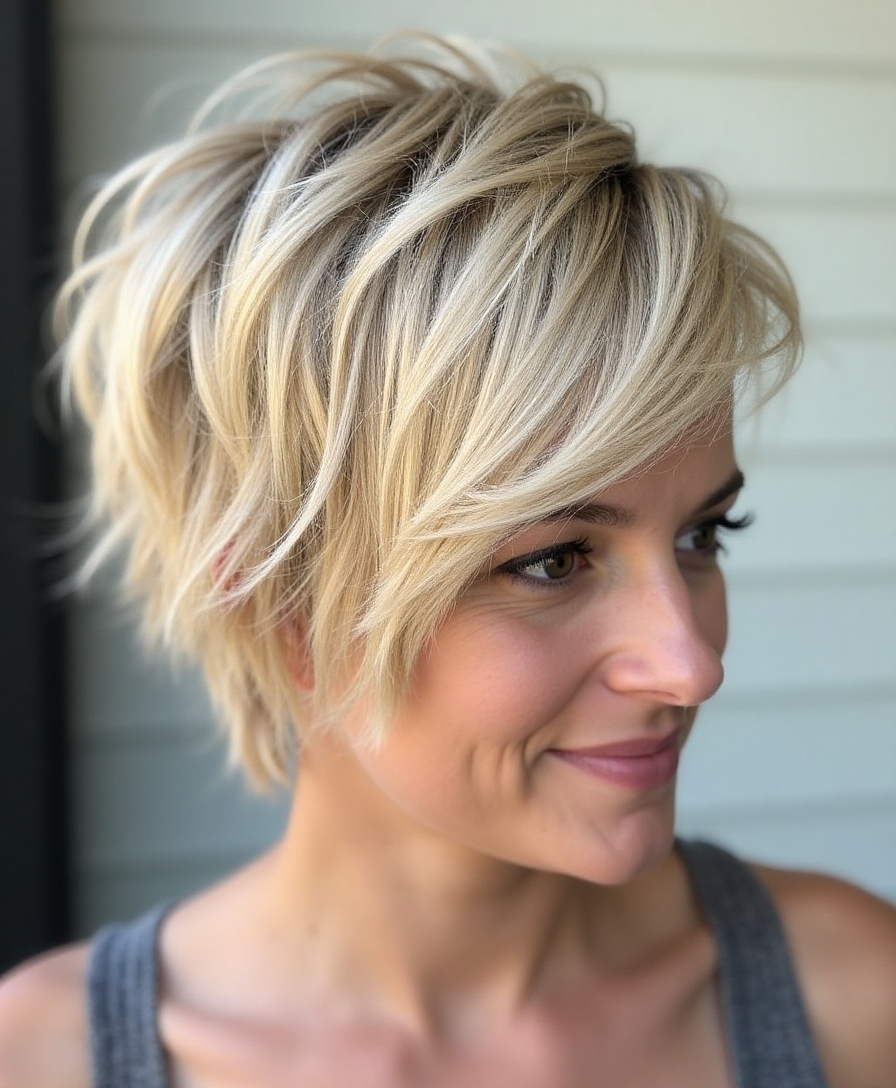
For the most dramatic volume change on this whole list, nothing beats cutting the length away entirely. There’s no weight left to fight. A feathered, layered crown stands up with a body fine hair rarely gets to show off.
It’s the boldest option and, once you’ve committed to it, close to the lowest-effort, since the cut itself does most of the volumizing.
- The single biggest volume payoff of any cut here
- Best suited to someone actually ready to go this short
- Needs little beyond a texture paste worked into the roots
The Graduated Bob
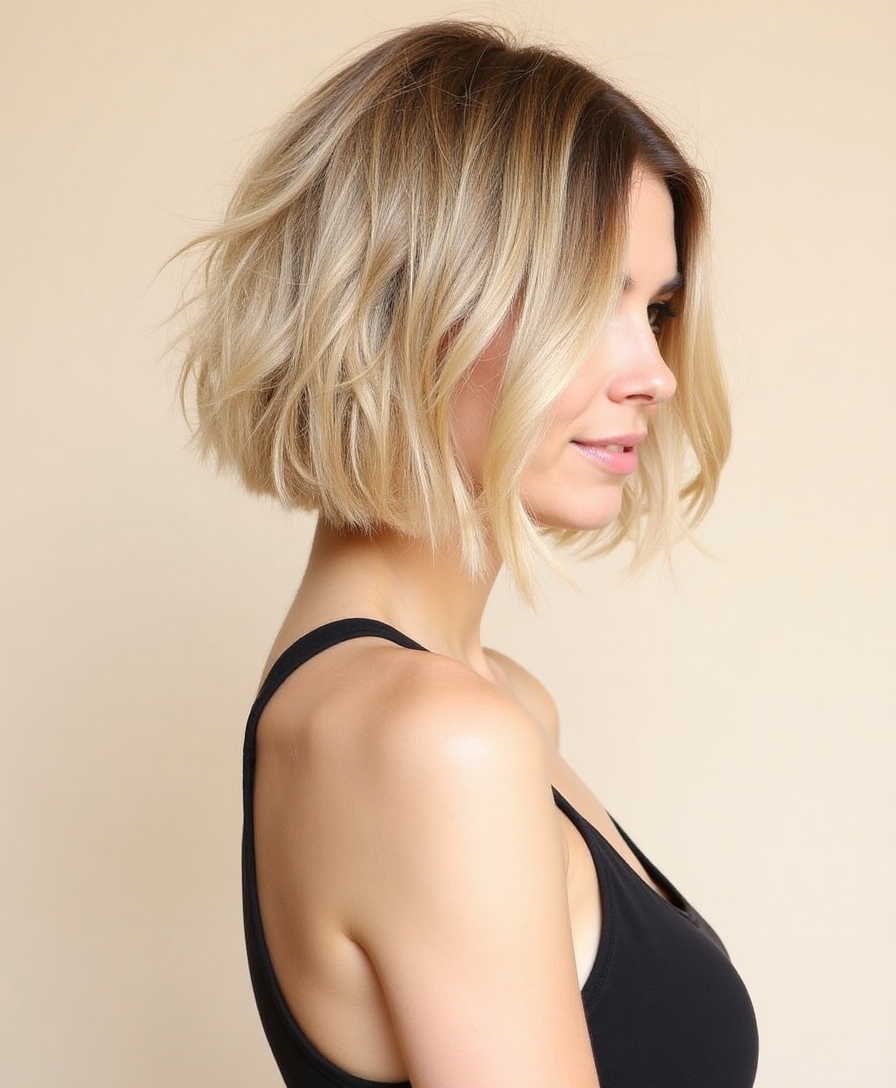
For fullness without giving up length, a graduated bob hides stacked interior layers underneath a blunt, dense-looking outline. The surface reads thick. The interior does the actual lifting. It’s the cut I suggest most to clients who love their length but hate how flat it’s gone. Our short layered bob guide has several close variations on this exact idea.
- The blunt perimeter keeps the ends looking dense and full
- Interior layering adds body without changing the visible outline
- A solid entry point for anyone easing into visibly layered shapes
💡A Free Trick Worth Trying First
Dry shampoo isn’t only for day-two hair. A light dusting at the roots on freshly washed hair adds grip that pure clean strands don’t have, which gives a blow-dry something to hold onto as you lift.
The Short Shag
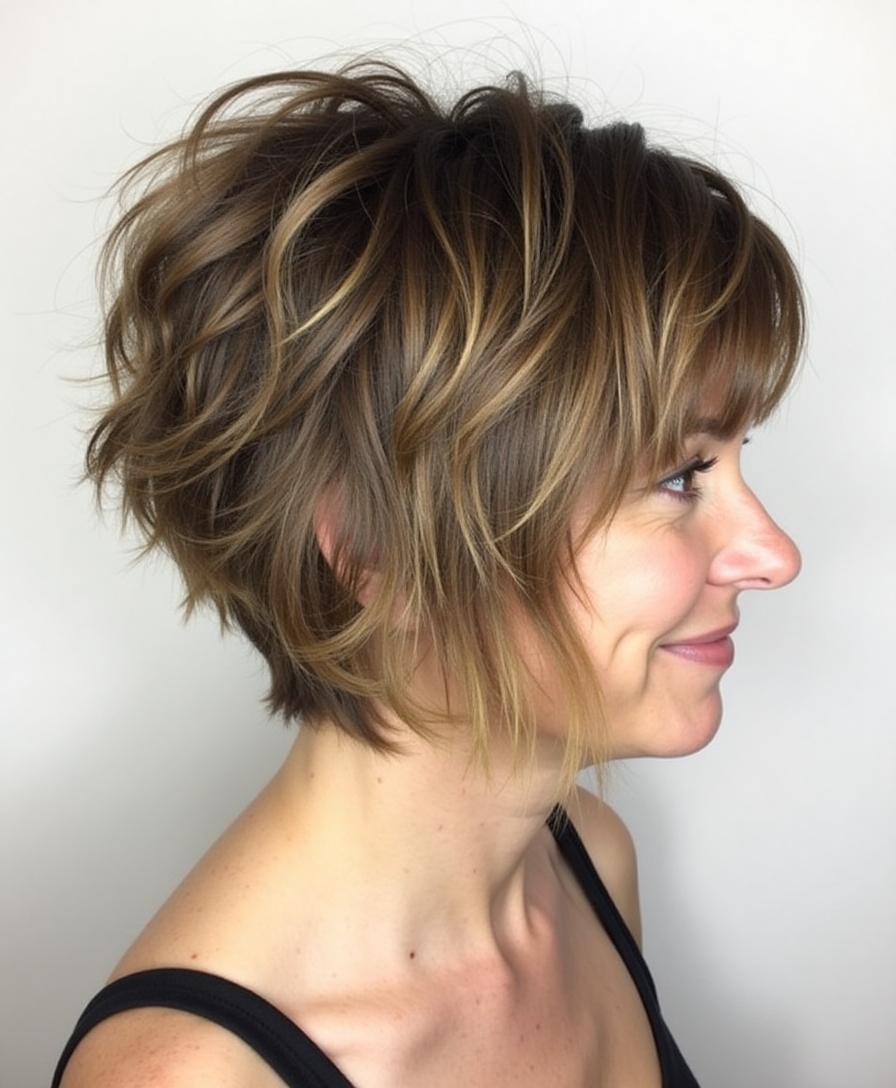
A short shag layers heavily through the middle. Soft, wispy ends finish it off, giving fine hair both volume and real movement at once.
The piece-y texture keeps it from ever looking limp, even on hair that goes flat by early afternoon.
It’s the cut for someone who wants the fullness layers provide with a finished look that stays a little undone. Best of all, it air-dries into shape most mornings.
The Side-Swept Part Trick
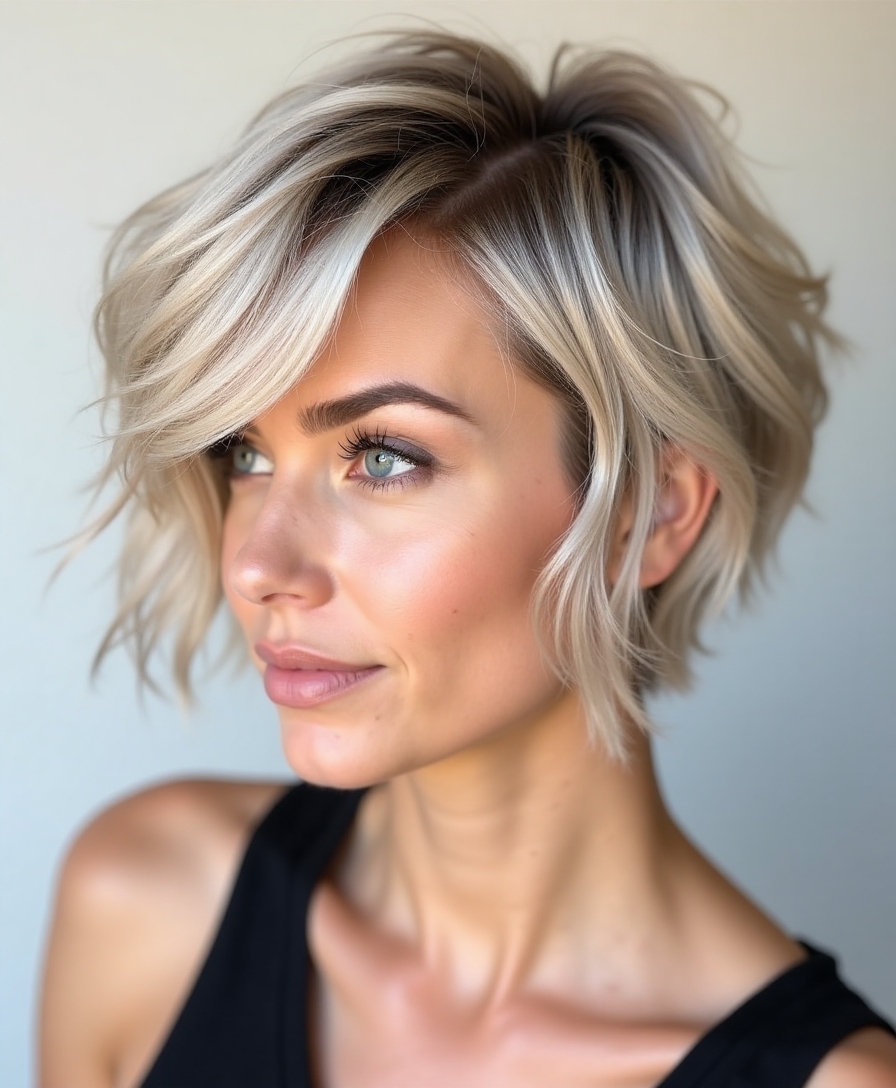
This is the least expensive volume trick available, and it costs nothing beyond a comb. Switching from a center part to a deep side part forces hair to lift and cross a new line.
By the second or third try, the move starts to feel automatic.
Parting against the hair’s natural fall, on the side it doesn’t want to sit, gives the most lift of all, since the roots have to prop themselves up to cross that line.
The Stacked Bob
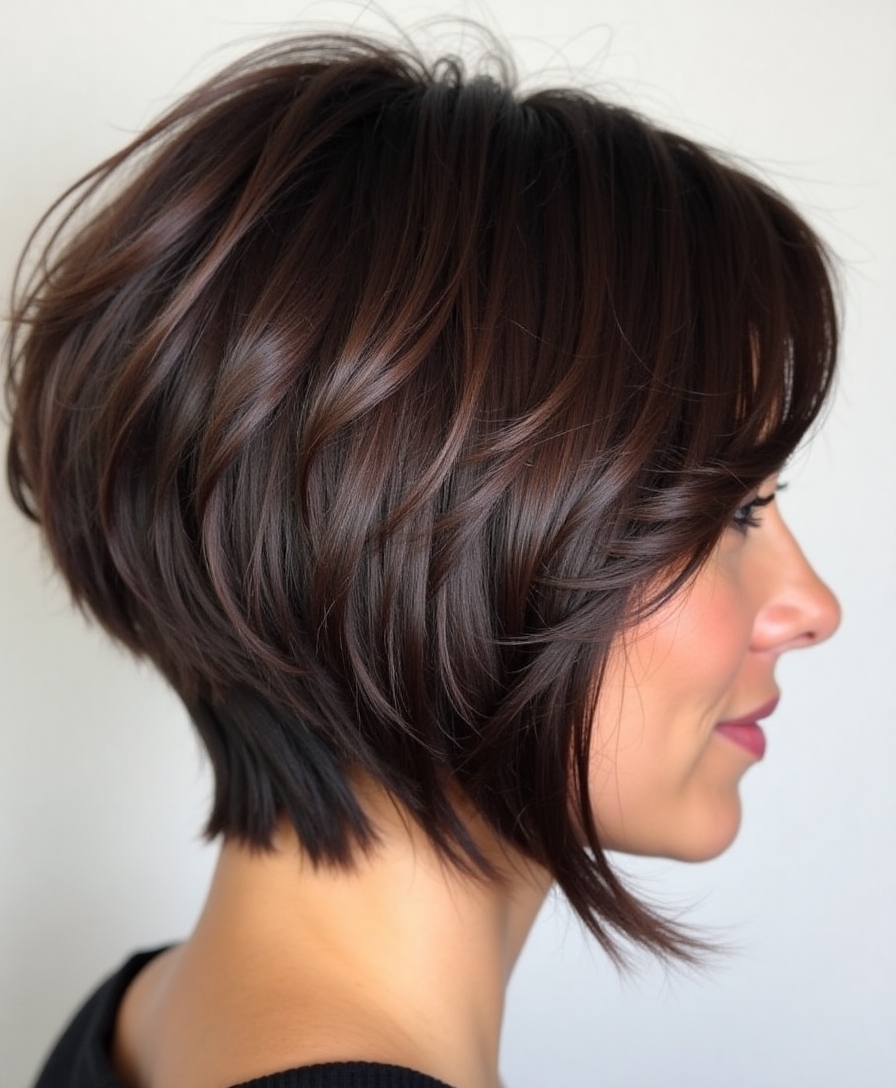
A graduated bob hides its body on the inside. A stacked bob shows it off instead, building visible layers up the back of the head into a rounded, cushioned shape.
- Creates standing volume right where flat, fine hair sags most
- Pairs well with a slightly longer front for a flattering overall shape
- The structure itself holds its lift better than a one-length bob would
Two thin-hair myths worth retiring.
❌ Myth: Thin hair should stay long to look like more.
✅ Reality: Length usually does the opposite: extra weight drags fine hair flatter the longer it grows.
❌ Myth: More layers always means more volume.
✅ Reality: Past a certain point, over-thinned ends actually collapse the lift a cut just built.
Choppy Layers for Movement

Where soft layers blend into one another, choppy layers separate the ends into distinct pieces, and that separation does real work on fine hair. Our choppy layered haircuts guide covers the technique in more depth.
Separation Only Works With a Little Product
Broken-up ends catch light individually, each piece registering on its own, which reads as more hair even though nothing was added.
Left completely bare, though, that same separation can start to look thin. A small amount of matte paste worked through the ends matters more here than on most other cuts.
The Asymmetrical Cut
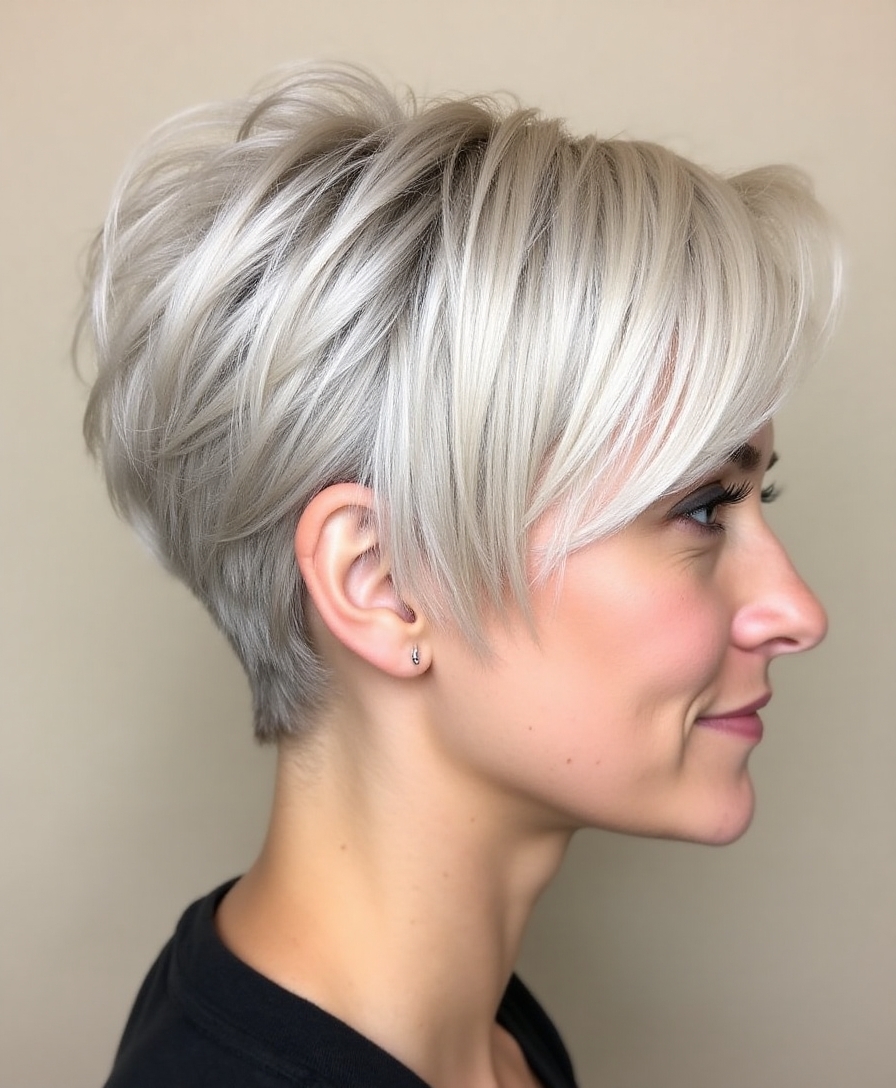
Leaving one side visibly longer than the other turns the length difference itself into a volume trick. The eye reads varied lengths as more dimension than a level cut provides.
- Uneven lengths add visual density without adding a single strand
- Sweeping volume toward the longer side amplifies the effect further
- Both sides need to stay on the same trim schedule, since the contrast is the entire point
Short Layers on Curls and Coils

Fine hair isn’t only straight. Short layers do real work for fine, loose curls and coils too, removing the weight that would otherwise stretch the curl pattern flat.
- Cutting dry, in the hair’s resting state, lets layers land on the real pattern
- Lighter hair lets each curl spring up and build height on its own
- Define with a leave-in and curl cream, then let it air-dry completely
The One-Minute Styling Routine

Once the cut itself is right, styling gets fast, and almost the entire routine centers on the roots.
On damp hair, work a volumizing mousse or root spray into the crown, then rough-dry with fingers or a round brush, lifting straight up at the roots as you go.
A quick blast of cool air locks the lift in place. Most mornings, the whole thing takes under a minute.
Where This Routine Falls Apart
Skip drying upside-down or lifting at the root and the same cut will fall flat by midday, no matter how good the layering is. The styling step isn’t optional; it’s half of what makes the cut work.
Products Built for Lift, Not Shine

Product choice can make or break volume on fine hair. The rule that matters most is light and matte over heavy and shiny.
The Short List That Actually Works
Anything rich or oily weighs fine hair straight back down, undoing whatever the cut built in the first place.
A lifting spray at the roots before drying, a matte texture paste for the ends, and dry shampoo to revive lift between washes covers nearly every situation this cut runs into.
Mistakes That Flatten Fine Hair

A good cut can still fall flat if the daily habits work against it. Heavy serums and oils marketed for shine are the biggest offenders. They coat fine hair and collapse every bit of lift the layers just built.
Over-conditioning at the roots and over-thinning the ends at the salon cause the same problem from different directions, leaving fine hair looking stringy and thin.
“Clients ask for extra thinning more than anything else, and I talk most of them out of it. Removing more from already-fine ends is usually the fastest way to undo the fullness a cut just built.”
Why the Trim Cycle Matters More Here

Short layers come with one real string attached. They need trims on a tighter schedule than almost any other cut to keep their lift.
I watch for the same tell in almost every client who’s overdue: they can’t quite say what’s changed, only that the cut feels tired. As the layers grow out, weight creeps back in, and the volume that made the cut worth getting starts disappearing before it’s obvious why.
Booking the next appointment before leaving the chair is a small habit that keeps the lift from ever having time to grow out unnoticed.
Tools That Build Volume

Building volume into short layers takes surprisingly few tools. The useful ones are about lift, not heat.
- A round brush to lift and bend the roots while drying
- A small, lightweight blow-dryer with a cool-shot button to set the lift
- Self-grip rollers, popped into the crown for ten minutes, for hands-free volume
Growing Out Short Layers
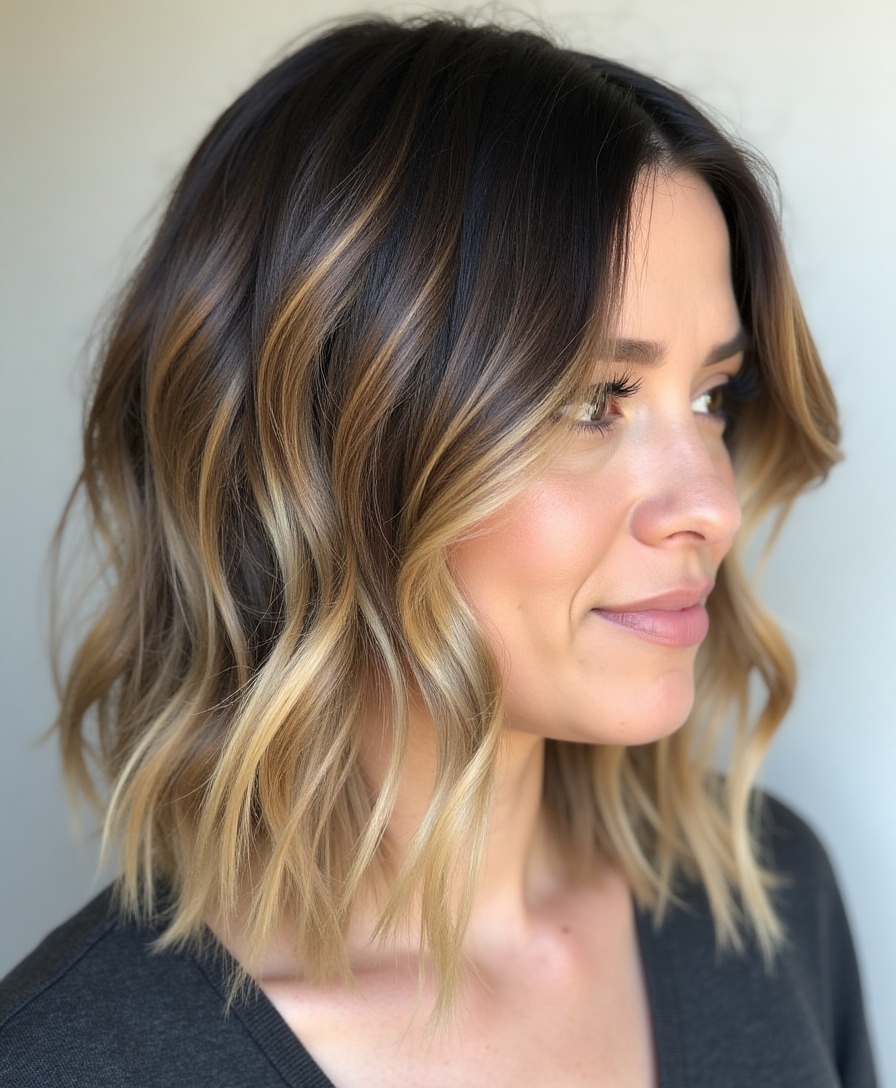
Growing out short layers takes active shaping. Left completely alone, layers grow at different rates and the whole cut goes shapeless, which is what makes a grow-out feel endless.
Continuing to see a stylist every six weeks or so, specifically to blend the layers into the growing length, keeps every in-between stage looking deliberate.
Seasonal Styling Adjustments

The cut itself doesn’t change with the seasons. A couple of small styling adjustments keep the volume holding up year-round.
- In humid months, lean on a stronger texture product and dry shampoo to fight droop
- In dry winter air, a tiny amount of oil on the ends alone controls static
- Keeping moisture on the ends and lift concentrated at the roots works in every season
What to Expect
A shape-up to maintain the lift usually costs a bit less than the original cut, often landing around $35 to $60 versus a full reshape from scratch. For more variations on this entire category, our modern short layered haircuts and feathered layered hairstyles guides go further.
The real trade-off is commitment more than money: this entire category of cuts depends on a trim schedule tighter than a one-length style asks for. Skip too many appointments and the volume disappears gradually, quietly enough that the shift is easy to miss until it’s mostly gone.
More Volume Comes From Less Hair
Every cut on this list works the same way underneath: removing weight lets whatever volume was already there finally show up. Our short layered hair guide covers the same idea across a wider range of lengths.
Match the specific shape to your face and your actual morning routine, keep the trim schedule, and lean on the root tricks and lighter products that hold what the cut built.
Favorites to Revisit