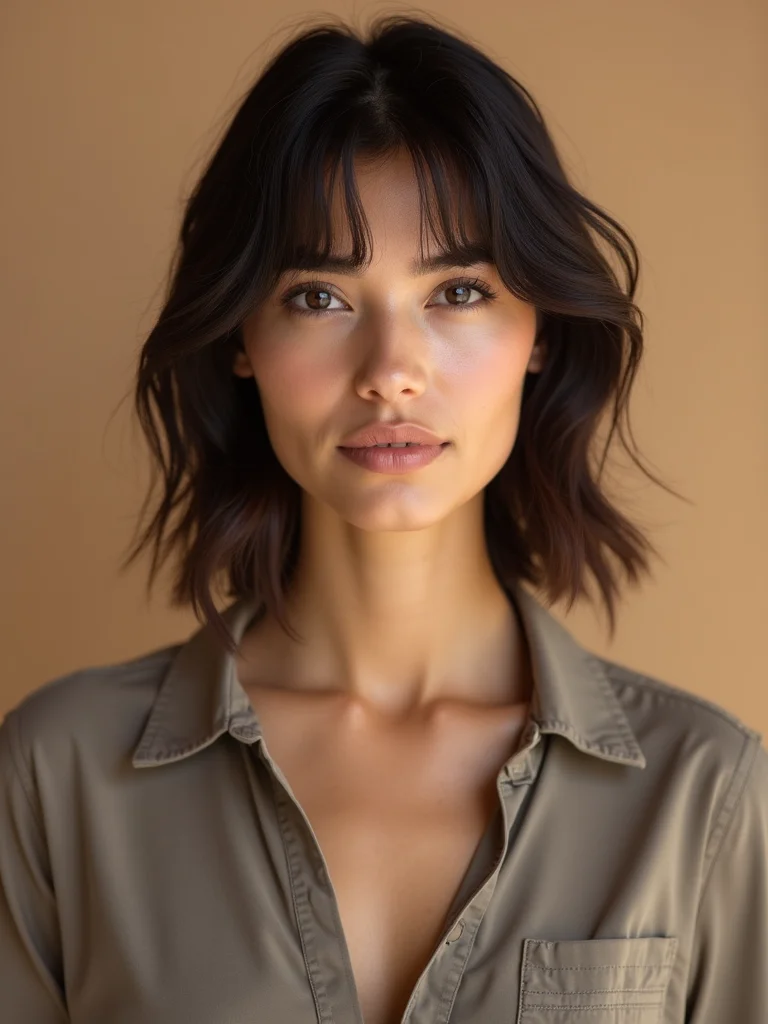
Run your fingers up through a good layered bob and you feel the difference right away: the weight lifts, the ends separate, and the whole thing springs with real bounce. That’s the nineties layered bob in a sentence, a bob with the heaviness cut out of it. Where the blunt bob is all about the line, the 90s layered bob is all about movement, the supermodel-era body that made the cut a decade icon.
These sixteen versions all start from the same idea, layers that add bounce, volume, and swing to a bob, then take it in different directions: flicked, shattered, tousled, sleek. For each you’ll get what the layering does and who it flatters, so you can match the amount of movement to your hair and your patience.
Why Layers Change Everything
- The layers are the point: they lift the roots, lighten the ends, and give a bob the movement a blunt cut can’t.
- Length runs from chin to collarbone, and the more layering you add, the closer it drifts toward a shag.
- Fine hair gains the look of volume; thick and curly hair gain relief from weight, so it flatters almost every texture.
The Staggered Supermodel Bob

This is the layered bob that defined the decade, the softly staggered shape the supermodels wore off duty. The layers are cut in gentle steps that get shorter toward the crown, so the hair falls in soft tiers that bounce as you move.
It’s the blueprint every other version here builds on. The staggering is subtle, more a feeling of body than a visible step, which is exactly what keeps it soft and blended.
- Best on straight or wavy hair that shows off the soft tiers.
- Ask for gentle, blended layers, not sharp steps, for the supermodel softness.
- A round-brush blow-dry brings the staggered body to life.
Flicked-Out Layered Ends

Take those layers and turn the ends outward and you get the flippy, upbeat version the era loved. The layering gives each end its own direction, so the flick lands lively and a little rebellious, every piece kicking its own way. Here’s how to wear it:
- Turn the ends out with a large barrel or a flat-iron twist at the tips.
- Keep the flick loose and imperfect, since a too-perfect curl looks dated.
- It suits jaw- to collarbone-length layered bobs with room to kick out.
“The flick works because the layers are already doing half the job. Don’t force every end the same way; let some kick out more than others, and the whole thing looks alive and unfussed.”
The Chunky Highlights Revival

Color is where a layered bob really shows off, since the layers give the color somewhere to catch. The nineties favored bold, contrasty highlights over blended ones, thick ribbons of lighter shade placed to flash as the layers move.
It’s a look swinging hard back into fashion, and the layering is what sells it. Place the brightest pieces around the face and let the layers scatter them through the shape, so the color moves like the hair does. Expect this color work to run around $120 to $180 with a gloss, and to hold its contrast for roughly 10 to 12 weeks before the regrowth line calls for a touch-up.
- Go bold and thick with the highlights for the true retro effect.
- Concentrated at the front and part, where the layers show them off.
- A gloss keeps the contrast crisp and stops it from ever going brassy.
A Tousled, Voluminous Bob

Dial the volume all the way up and the layered bob turns big and tousled, all body and undone texture. This one takes up space. The layers create the lift, and a little roughing-up turns that lift into full, cloud-like volume.
This is the version for the person who likes big hair. It lives on a rough-dry and a texture spray, and it forgives, even rewards, a bit of mess.
It flatters fuller and round faces especially, since the volume up top balances the width below. Fine hair gets the most dramatic before-and-after, going from flat to full with just the cut and a spritz of product.
Razor-Shattered Layers

For the airiest, most broken-up texture, a razor shatters the layers into fine, wispy points. The blade does it. The clean layered steps give way to separated pieces that move on their own, the softest, most weightless version of the cut, a cousin to the choppy bob.
It leans grungy and undone, and it’s a gift for thick hair that wants weight gone. On very fine hair it can tip into stringy territory, so it wants a careful hand and healthy ends that can carry the shattered finish.
- Removes weight and adds separation, ideal for heavy or thick hair.
- Reads deliberately undone and textured.
- Skip it on fragile or over-processed hair, which frays instead of shattering cleanly.
Feathered Layers Around the Face

The most flattering thing a layered bob can do is frame your face, and feathered front pieces are how the decade did it. The shortest layers sit at the front and sweep back, feathering softly along the cheekbones. To ask for it:
- Request feathered pieces starting at the cheekbone, sweeping back and away.
- Keep the ends soft and tapered for the true retro feathered effect.
- They highlight the eyes and cheekbones while the rest of the bob stays clean.
A Blunt Bob With Internal Lift

You don’t have to give up a clean line to get movement. Here’s the compromise. This version keeps a blunt perimeter but hides internal layers underneath, so the outside stays sharp while the inside adds root lift and bounce. The best of both worlds, if you cut it right:
- Ask for internal layers only, leaving the perimeter blunt and strong.
- The hidden layers lift the roots and stop the bob from sitting flat.
- It’s the smartest pick for fine hair that wants a sharp line and volume.
Internal layers are the trick nobody sees. The bob looks blunt and expensive from the outside, but underneath, those hidden layers are what give it all the lift.
The Collarbone Layered Lob

Drop the length to the collarbone and the layered bob becomes a layered lob, the most wearable, forgiving version of them all. The extra length gives the layers more room to move, and the shape ties back when you need it to.
It’s the length I point nervous first-timers toward, since it’s long enough to feel safe and it grows out gracefully, and wavy hair especially loves it, the layers handing the wave a shape to fall into without any of the puff.
The Rounded Blowout Bob

Blow a layered bob out over a round brush and you land on the rounded, bouncy shape that’s pure nineties glamour, full at the crown and curving under at the ends. It’s the polished, done version of the cut. To build it:
- Set the roots up and over a large round brush for crown volume.
- Curve the ends under as you dry for the rounded, tucked finish.
- A cool shot at the end locks in the bounce so it lasts all day.
🅰️Ends under
A rounded, polished blowout that curves in at the jaw for a done look.
🅱️Ends out
A flicked, playful finish that kicks the layers outward for retro energy.
The Center-Part Layered Bob

A middle part keeps a layered bob clean and balanced, letting the layers fall evenly on both sides of the face. It’s the understated way to wear the cut, all symmetry and calm, and it lets the layering speak for itself. A few notes:
- Suits balanced and round faces; can lengthen a long one.
- Let the front layers frame each side of the part evenly.
- Cleanest on hair that lies flat at the root without a stubborn cowlick.
A Side-Swept Layered Fringe

For more drama, add a side-swept fringe of shattered layers sweeping across the forehead. It breaks the symmetry, adds a diagonal line of movement, and gives a layered bob real attitude, part fringe, part face-framing. It’s the drama option.
Because the fringe grows straight out of the front layers, it softens naturally over time with no blunt bang stage waiting for you. That makes it a low-commitment way to try a fringe at all.
It flatters square and round faces, since the diagonal sweep breaks up a strong forehead or jaw. Coarse hair holds the sweep longest; finer hair may want a little product to keep it in place.
A Curly 90s Layered Bob

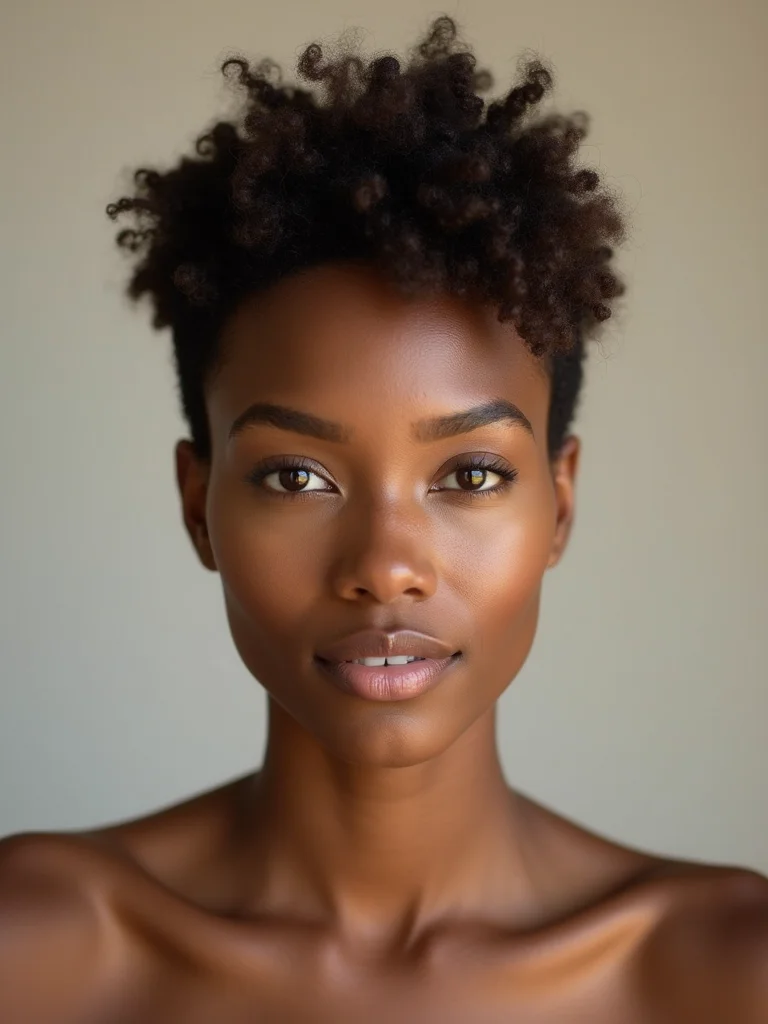
On curls and coils, layers turn a bob from a heavy dome into a springy, shaped bounce. Curls thrive on the shape. The layering gives each curl room to move and lift, freeing it from the stacked weight of a plain length, and gives a curly bob its rounded, lively silhouette.
Cutting the curl dry, in its own shape, is what lets the layers land in the right place. Skip that and the balance goes: too few layers pile into a triangle, too many wash out the curl’s definition, so it’s worth booking someone who cuts curls all the time.
- Shaped on dry curls so the layers fall where the coils land.
- Layered enough to lift, but not so much it loses curl definition.
- Kept hydrated so the layered ends stay springy and defined.
A wash-day routine for curly layers:
1Apply product to soaking-wet hair
so each curl clumps and the layers define instead of frizzing.
2Diffuse on low, cupping the ends upward
to encourage lift at the roots and spring in the layered ends.
The Shaggy Collarbone Bob

Push the layering heavier and longer and the bob crosses into shag territory, a shaggy bob with piecey, disconnected layers and a lot of texture. It brings serious drama. It’s the boldest, most textured version here, for anyone who wants maximum movement. To get it:
- Ask for heavier, more disconnected layers than a classic layered bob.
- Add a curtain or wispy fringe to complete the shaggy feel.
- Scrunch in some texture product and let it dry on its own to bring out the piecey ends.
A Sleek, Glossy Finish

Layers don’t have to mean texture. Blow a layered bob smooth and glossy and you get a polished, expensive-looking finish, with the layers adding subtle movement underneath a completely smooth surface.
Keeping the Shine
It’s the grown-up, dressed-up way to wear the cut, at home in an office or at an event. The layers keep it from looking flat, while the smooth finish keeps it looking done.
A smoothing cream before you dry and a drop of gloss serum after do the work, plus a flat-iron pass on the ends if your hair fights frizz. The smoother the surface, the more the layered movement underneath comes across as depth.
Wispy Face-Framing Strands

The finest, most delicate detail here is a few wispy strands left loose at the front, thinner and softer than full face-framing layers, and they fall along the face like a whisper, quietly breaking up the shape without ever committing to a full fringe.
It’s the subtlest way to soften a layered bob, and it’s for anyone after the tiniest touch of romance. The strands work on nearly every texture, curled loosely away from the face.
- Ask for a couple of fine pieces left longer at the front.
- Softer and thinner than feathered layers, for a barely-there frame.
- Curl them loosely back off the face for the gentlest effect.
The Everyday Layered Bob

Pared right back, the layered bob ranks among the lowest-fuss bob hairstyles you can live with day to day. The layers do the styling for you, so a good one falls into shape with a rough-dry and your fingers, no round brush or patience required.
This is the version most people actually wear, and its low upkeep is the quiet reason the cut endures. Wash, add a little product, air-dry, and the layers carry the shape.
- The lowest-effort styling: wash, product, air-dry, and go.
- A layered cut hides grow-out better than a blunt one.
- A quick refresh trim keeps the layers doing their job.
Who It Suits Best
The layered bob’s real gift is how many people it flatters. Fine hair gains the illusion of volume it can’t grow; thick and curly hair get relief from weight and a shape that finally moves. The only hair that has to be careful is very fine, fragile hair, where heavy layering can tip into stringy, so keep the layers restrained there.
Face shape is easy to tailor, since the length and the framing do the work. Chin-length and a center part balance rounder faces, while a collarbone length and a side-swept fringe flatter longer or square ones. Talk through your texture and your face before the cut, and the layers can be placed to suit almost anyone.
90s Layered Bob Questions, Answered
?What’s the difference between a layered bob and a blunt bob?
Weight. A blunt bob keeps all its thickness in one solid line, while a layered bob has some of that weight cut out through the inside, so it lifts, moves, and looks fuller. A layered bob flatters hair that feels heavy or flat; a blunt one suits hair that wants a sharp, graphic line.
?Will layers make my fine hair look thinner?
Not if they’re done right. Light, well-placed layers actually make fine hair look fuller by adding the impression of volume and separation. The mistake is over-layering, which can leave fine ends wispy, so ask for restraint and keep the perimeter fuller.
?How much length does a layered bob lose as it grows out?
Less than you’d think, since the layers soften rather than vanish. A layered bob grows out more gracefully than a blunt one, blending into a longer layered lob instead of going shapeless. Refresh the layers a couple of times as it grows to keep the movement.
?Can curly hair pull off a 90s layered bob?
Definitely, and it’s one of the best textures for it. Layers give curls room to spring and lift instead of piling into weight. The key is a cut shaped for your pattern and done dry, plus a little extra length banked in for shrinkage.
?How do I keep a layered bob looking fresh?
A refresh trim every seven to nine weeks keeps the layers crisp and the shape from blurring, a little less often than a blunt bob needs. Between cuts, a texture spray revives the movement, and a gloss keeps any color bright.
Give Your Bob Some Bounce
If a blunt bob has ever felt a little flat or heavy on you, the layered version is the fix. The same length, the same clean idea, but with the weight cut out so the whole thing lifts and moves, the difference between a bob that sits and one that swings.
Whichever version pulls at you, from a soft supermodel stagger to a full shaggy collarbone, bring a photo and tell your stylist how much movement you actually want. A little layering goes a long way, and you can always add more next time.
Related Reads