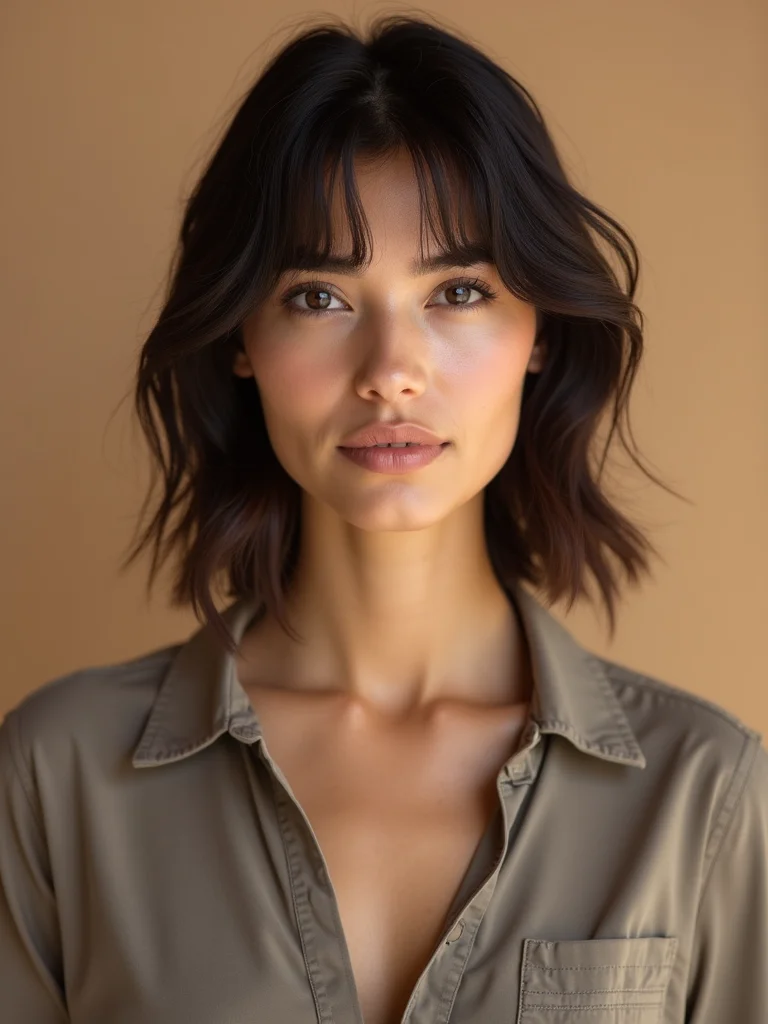
The long shag exists to solve one specific frustration: hair long enough to love but heavy enough to hang flat. Past the shoulders, one-length hair loses its shape and sits like a curtain, with nowhere to move. A long shag threads layers through that length so it swings, lifts, and frames the face, all without sacrificing the inches you spent years growing.
It’s also the most forgiving shag to live with, since there’s no short layer waiting to catch up as it grows. Below are sixteen long versions, from a feathered flick-back to a quiet, barely-there update. Each one comes with the person it flatters and a note on keeping the ends from thinning.
Long Shag, Quick Answers
Will a long shag make me lose length? Barely. The shaping happens through the inside, so the perimeter, and most of your length, stays put.
Is it hard to style? No. It’s built to air-dry with movement; mist on a little texture product, scrunch, and you’re done for most versions.
Who does it suit? Almost anyone with mid-back length or longer, though fine and wavy hair get the most obvious payoff.
The Feathered Flick-Back
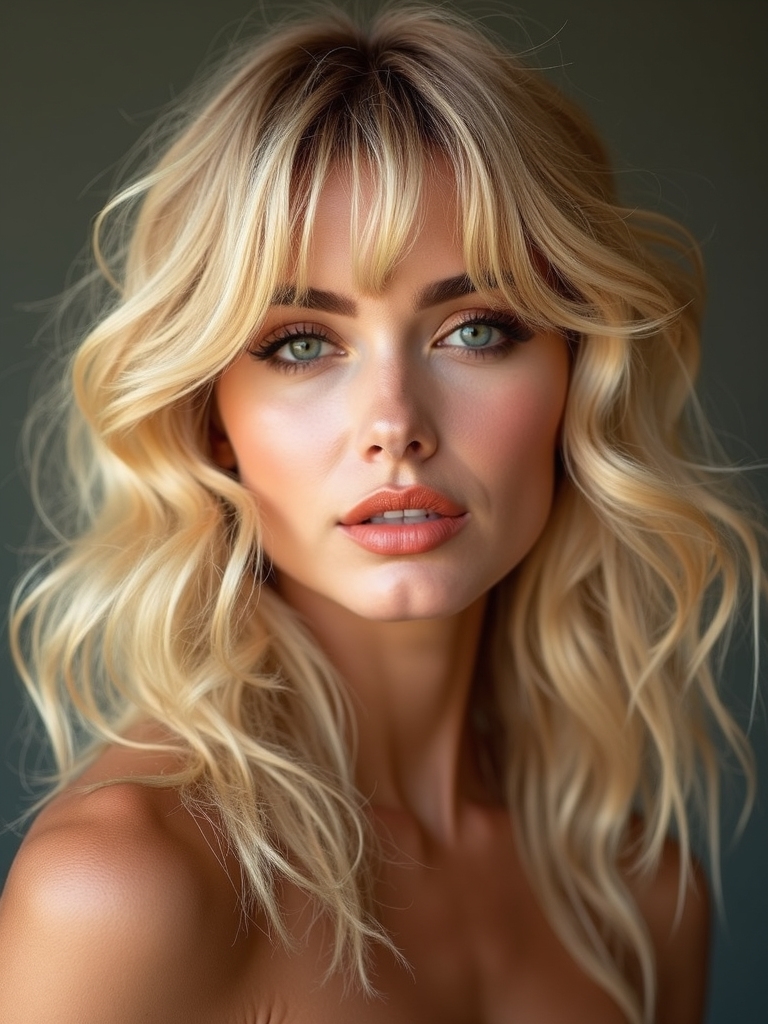
You know this one on sight. It’s the long shag everyone pictures: feathered layers cut to flick back and away from the face, so the whole shape frames your features and catches the light as you move. It’s the most recognizably retro version here, pure glamour with none of the grunge edge.
The flick comes from those face-framing layers, angled back and blow-dried out over a round brush. On long hair the effect stays soft and sweeping, never stiff, which is exactly what keeps it current.
It suits oval and heart faces beautifully, and it flatters most textures as long as the layers are feathered, with soft edges instead of a blunt line. Straight and wavy hair take it most easily; very curly hair gets a similar effect with shaping cut to the pattern.
The Boho Wavy Shag

Loosen the flick into undone waves and the long shag turns bohemian, all soft texture and worn-in movement. It’s the version that looks like you woke up at a festival, even if you actually woke up for a meeting.
The waves need the layers to give them somewhere to bend, so this leans on generous internal layering through the mid-lengths. A salt spray and a rough-dry bring out a natural bend; a wide-barrel wand fakes it on straighter hair.
It’s a favorite for wavy and loosely curly hair that already wants to move, and fine hair can wear it just as happily, provided the layering stays gentle enough to keep the ends full and stop the shape from thinning out toward the bottom.
👍Why it works
- +Reads relaxed and modern with almost no heat
- +Blends into a longer length without a harsh demarcation stage
- +Flatters wavy and curly textures naturally
👎Watch for
- –Can look undercooked if the layers are too subtle
- –Needs a texture product or the waves fall flat
- –Fine, fragile hair can wisp at the ends
Curtain Bangs With Extra Length
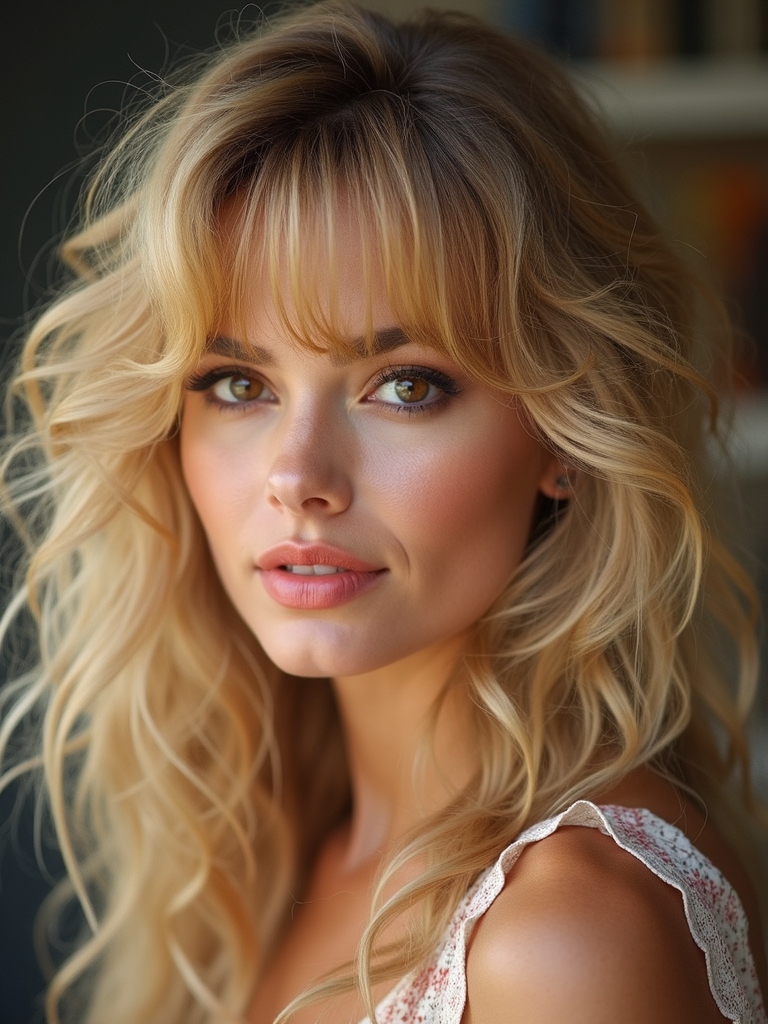
A long curtain fringe adds shag character with the least commitment, and without touching your length. The front pieces start around the cheekbone and lengthen into the layers, so they frame the face and then blend right into the rest — no short bang to manage. Here’s how to wear it long:
- Ask for the shortest fringe piece at the cheekbone, blending down past the jaw.
- Part it in the center and sweep each side back for the classic look.
- It grows out with zero awkwardness, since it’s already long to begin with.
Soft, Worn-In Waves
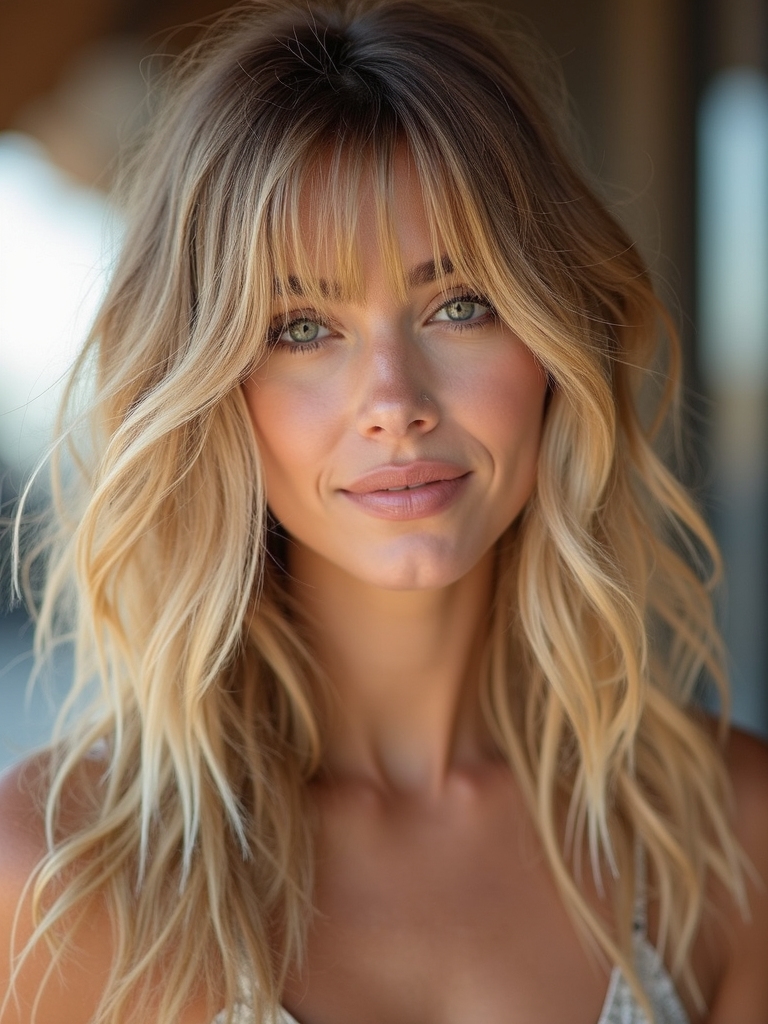
This is the quiet cousin of the boho shag: the same undone texture, dialed down to a gentle, everyday wave. It’s for the person who wants the long shag to look calm and easy, barely-there on purpose.
The layers here are softer and less piecey, so the waves flow together in one gentle movement, and a light mousse worked through damp hair before an air-dry is honestly the whole routine you need to bring them out.
- The most low-key long shag, good for work and everyday.
- Softer layering means gentler, flowing waves.
- Works on nearly every texture with minor product tweaks.
Sleek With Polished Ends

The long shag doesn’t have to look undone. Blow it out smooth, turn the layers under or softly out at the ends, and it reads polished and put-together, proof the cut works for a boardroom as easily as a festival.
The layers still give it movement, but a smoothing cream and a round-brush finish keep the surface glossy. The ends are where you set the mood: flicked out for retro, tucked under for sleek.
- Proves the long shag has a refined side too.
- A smoothing product plus a round-brush blow-dry does the work.
- Best on hair without heavy frizz, or paired with a gloss for shine.
A Voluminous Crown and Soft Fringe

Long hair can go flat at the top under its own weight, and this version fixes that with lift built into the crown. Shorter layers through the top add height and balance the length below, while a soft fringe frames the face and holds real structure. To build the volume:
- Have the stylist add shorter layers up top to lift the crown.
- Lift the roots with a round brush, drying them up and away.
- Keep the fringe soft so it frames without adding weight.
One Caution
Crown layers are great for volume, but tell the stylist to keep them long enough to blend into the rest. Cut too short, they can stick up as they grow and take months to settle back into the length.
Piecey Layers for Thick Hair

Thick, long hair carries a lot of weight, and without layers it can look like a solid block. Piecey layering breaks that up, removing bulk from underneath so the length falls and moves freely off the shoulders.
The key is thinning from underneath; layering the surface only makes thick hair expand outward. Done right, thick hair wears the long shag beautifully, with the kind of body most people would pay for.
- Removes weight so long, thick hair swings freely and stops sitting like a block.
- Ask for internal thinning, not surface layers, to avoid puffiness.
- Point-cut ends keep the perimeter from looking blunt and heavy.
An Airy Shag for Fine Hair

Fine hair and long length are usually a tricky pair, since the ends can look thin and stringy the longer they get. A long shag rescues them with a few light, well-placed layers that trick the eye into reading more thickness.
The trick is restraint. Take out too much and fine hair goes wispy, so the layers stay soft and mostly through the top, leaving the ends fuller. A volumizing spray at the roots and a rough-dry hold the body.
It’s a real confidence boost for fine-haired clients who want length without the limp, sparse look that plain long hair can fall into. Keep the trims regular so the ends stay healthy and thick.
A Curly Long Shag

Long curls have the opposite problem from fine hair: too much volume, often piling up into a triangle. Shaping layers give long curly hair somewhere to fall, letting the coils cascade downward and settle into their own weight.
As with any curly shag, this needs a dry cut: the stylist watches each curl settle into place before deciding where to cut. Built well, a long curly shag is all cascade and bounce; built wet, it risks shrinking short and losing the length you wanted.
Wavy With Face-Framing Tendrils

Tendrils are the fine, delicate pieces left loose at the very front, and on a wavy long shag they’re the detail that softens everything. They fall along the cheekbones and jaw, breaking up the face gently and adding a romantic, undone touch. To get them right:
- Ask for a few fine pieces left longer at the front, not a heavy fringe.
- Curl them loosely away from the face for the softest effect.
- Best on wavy or curly hair, where the tendrils hold a gentle bend.
A Long Shag With a Micro Fringe

Pairing a very short micro fringe with long length is the unexpected combination that turns heads. The contrast, all that length below a blunt, high fringe, is bold and a little editorial, and it drags a soft long shag firmly into cool territory.
It’s a commitment, since the fringe demands regular touch-ups to keep its shape, and it works best on average-height foreheads; a very tall forehead can throw off the balance. But on the right face, nothing else looks quite so current.
A quick gut-check before you go micro:
1Are you willing to trim the fringe twice a month?
If not, a longer curtain fringe gives a similar frame with far less upkeep.
2Is your forehead average to short?
A micro fringe suits you; on a very high forehead, a longer fringe balances better.
The Center-Parted Revival

A center part is the long shag’s most natural home, letting the layers fall symmetrically on either side of the face for that flowing, seventies-into-now look. It just works. Clean, balanced, and it shows off the feathering better than any other part could. A few notes:
- Flatters oval and heart faces; can lengthen a round face nicely.
- Pair it with long curtain pieces so the front doesn’t look severe.
- Retrain a stubborn side part by clipping it center while it dries.
Tousled With Razor Texture

For the airiest possible ends, a razor shaves the layers into whisper-fine tips, so a long shag looks feathery and weightless. It’s the most texture you can build into long hair, and it moves with barely any product.
The caveat is hair health: a razor belongs on sturdy, healthy hair and can rough up fine or fragile lengths. Ask for a fresh blade and a candid opinion, because razoring hair that can’t take it leaves the ends looking ragged and worn.
Highlighted for Dimension

Color and a long shag are made for each other, because dimension makes all that layering visible. Soft highlights or a balayage set near the hairline and down the mid-lengths catch the movement and give the cut depth a single flat shade never could.
You don’t need a dramatic change: a couple of pieces around the face lifted a shade or two is enough to make the layers read. Balayage on long hair runs around $150 to $220, and most people book a refresh roughly every 8 weeks to keep it holding its shape; a few foils up front cost far less and stretch further between visits. A gloss keeps long ends shiny, since shag texture can dull over length.
- Face-framing highlights light up the front layers.
- Balayage fades as it grows, leaving no sharp regrowth line.
- A gloss a few times a year keeps long ends from looking dull.
Highlights on a long shag aren’t about going lighter. They’re about giving all those layers something to catch the light on.
A Minimalist Long Shag

Not everyone wants obvious layers. The minimalist long shag adds just a few, placed only where the hair needs movement, so the change is subtle enough that friends might not clock exactly what’s different.
It’s the gateway version, ideal for anyone nervous about losing the security of long, one-length hair. A handful of long layers through the lengths and a whisper of face-framing wakes the shape up without touching the overall silhouette.
Because the change is small, it’s also the lowest-risk: if you decide you want more movement later, you can always go choppier. Starting quiet is never the wrong call.
The Grow-Out-Friendly Long Shag

Of every haircut I know, the long shag grows out the most gracefully. Because the layers are long and soft to begin with, there’s no short piece to wait on and no hard line to grow past, so it drifts from one good length to the next.
Stretching Time Between Cuts
That makes it the ideal cut if you’re growing your hair but can’t stand the flat, shapeless in-between stage. The shag gives you shape the whole way, so the grow-out feels planned, a phase you’re managing on purpose.
A refresh trim a couple of times a year keeps the layers doing their job, but you can stretch far longer than with a short cut. It’s the same idea behind our long shag breakdown: when you go in, ask specifically for the layers to be re-cut while the overall length stays put.
Long Shag Questions, Answered
?How much length will I actually lose with a long shag?
Very little, if you’re clear with your stylist. The shaping is done through internal layers, not off the bottom, so ask them to protect the perimeter. You gain movement and lose almost none of your length.
?Will a long shag look flat on fine hair?
Not if it’s cut with restraint. Light layering through the top builds the look of fullness, while over-thinning is what leaves fine hair wispy. Add a volumizing spray at the roots and rough-dry for lasting body.
?How do I keep a long shag from going stringy?
Two things: keep the layering fuller at the perimeter so the ends don’t thin, and get a refresh trim a couple of times a year to cut off any splits. Between visits, a weekly mask keeps long ends healthy enough to hold the shape.
Length and Movement, Together
The long shag is the rare cut that lets you have it both ways: the length you love and the shape you’ve been missing. Whether you go full feathered flick-back or barely-there minimalist, the layers are what turn heavy, flat hair into something that moves with you.
If you’ve been scared to touch your length, start small. Ask for a soft, long-layered version with a couple of soft pieces at the front, and see how much life a little shape adds. You can always go choppier next time, but I’d bet you won’t want to give up the movement once you have it.
Keep Reading