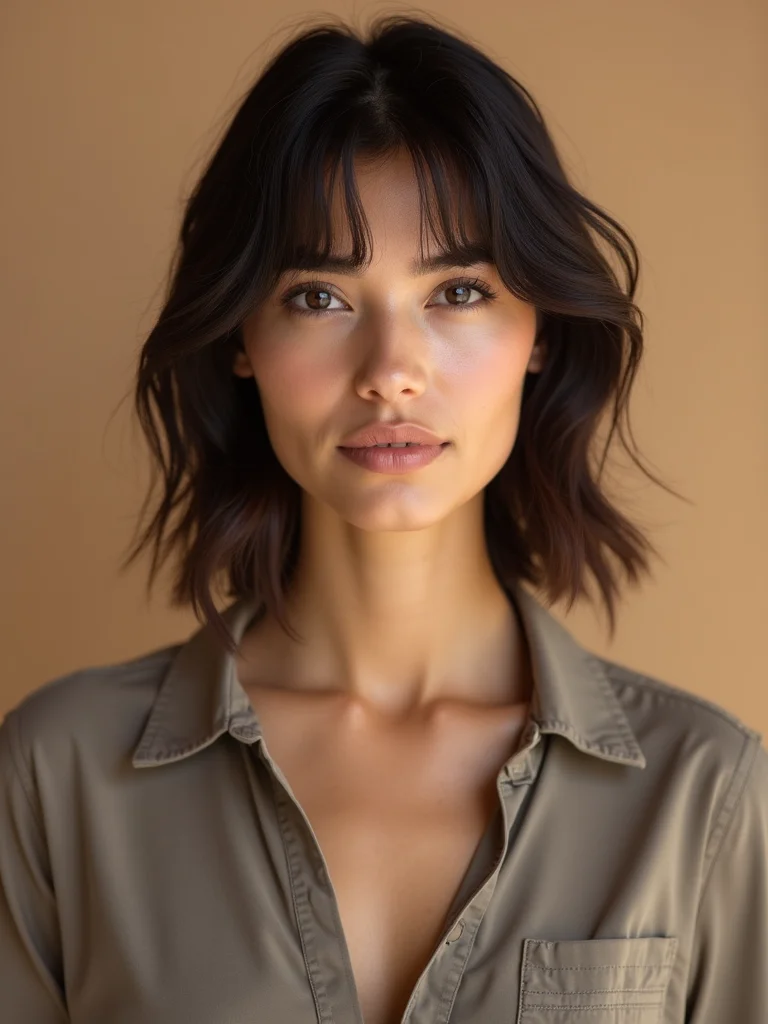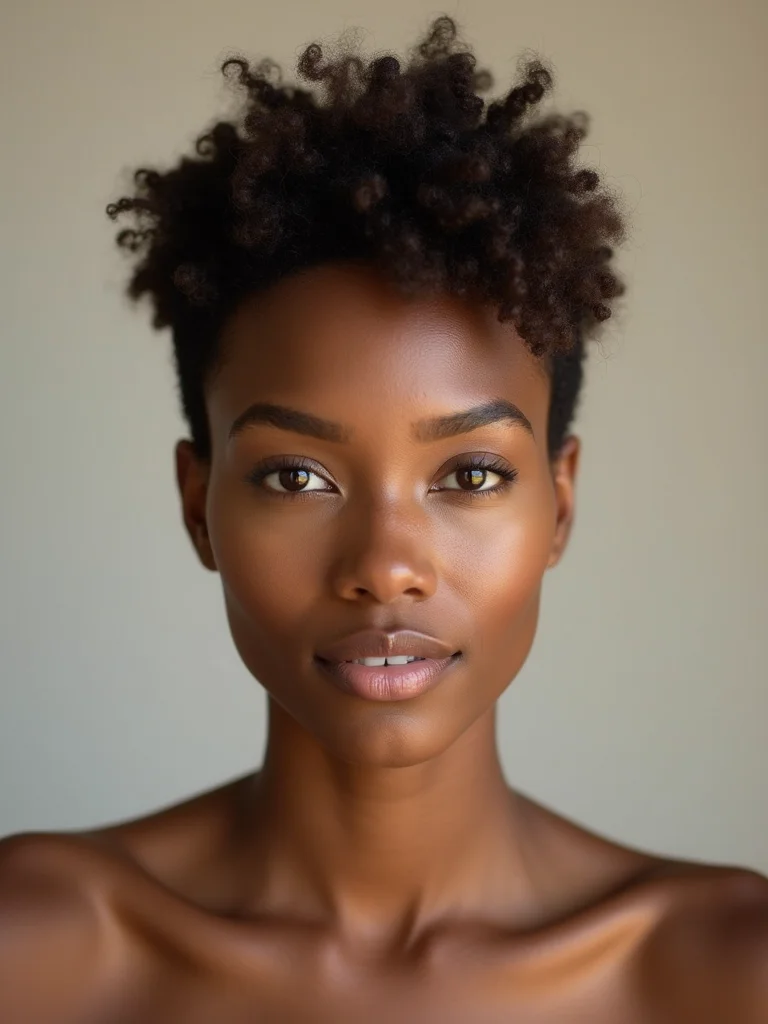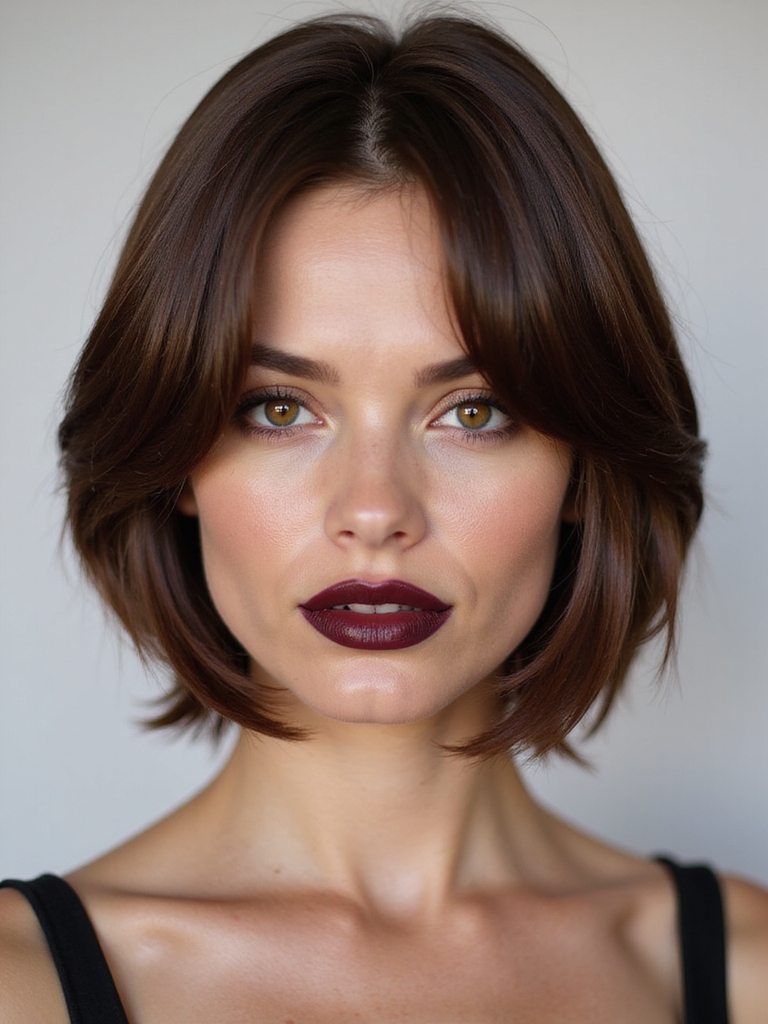
The bob never really left, but the nineties version is the one flooding every feed right now. It’s sharper and more deliberate than the soft, layered bobs of the last decade: think blunt lines, a hard part, and that glossy, expensive-looking finish. The 90s bob was built on precision, and precision is exactly what makes it look cool again, clean geometry in place of fuss.
What follows are sixteen versions of it, from the razor-blunt classic to the grungy, tousled off-duty take, plus the fringes, parts, and colors that define the era. For each you’ll get who it flatters and how to actually wear it, so you can find the bob that matches your face and your patience.
The 90s Bob, Up Front
The 90s bob lives or dies on the cut; the styling barely enters into it. A strong, blunt line at the jaw or chin is the whole foundation, so the consultation matters more than any product. It flatters most face shapes, but the length and part do the tailoring: chin-length and a center part for balance, jaw-length or a side part to reshape.
Straight and wavy hair wear the sleek versions most easily, while curly and coily textures get a rounder, fuller take that’s just as true to the era. Whatever your texture, plan on a trim every five to seven weeks, since a blunt shape shows grow-out faster than a layered one.
The Razor-Sharp Blunt Bob
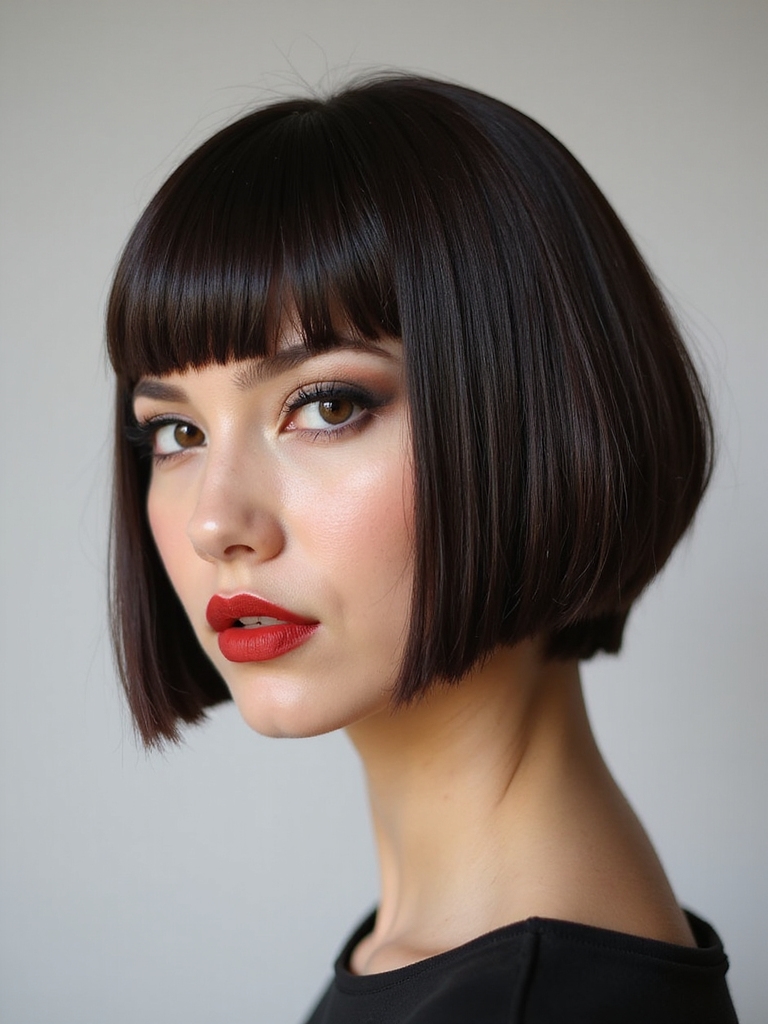
This is the bob the decade is named for: one clean length, cut in a hard, blunt line with zero layers to soften it. All the impact lives in that razor-sharp edge, and precision is non-negotiable, since there’s nowhere for a wobbly line to hide.
It’s boldest on straight hair, where the blunt line stays crisp, and it flatters strong features that can carry the geometry. Fine hair loves it too, since a blunt cut makes thin hair look denser and heavier than it really is.

A Chin-Grazing Layered Bob
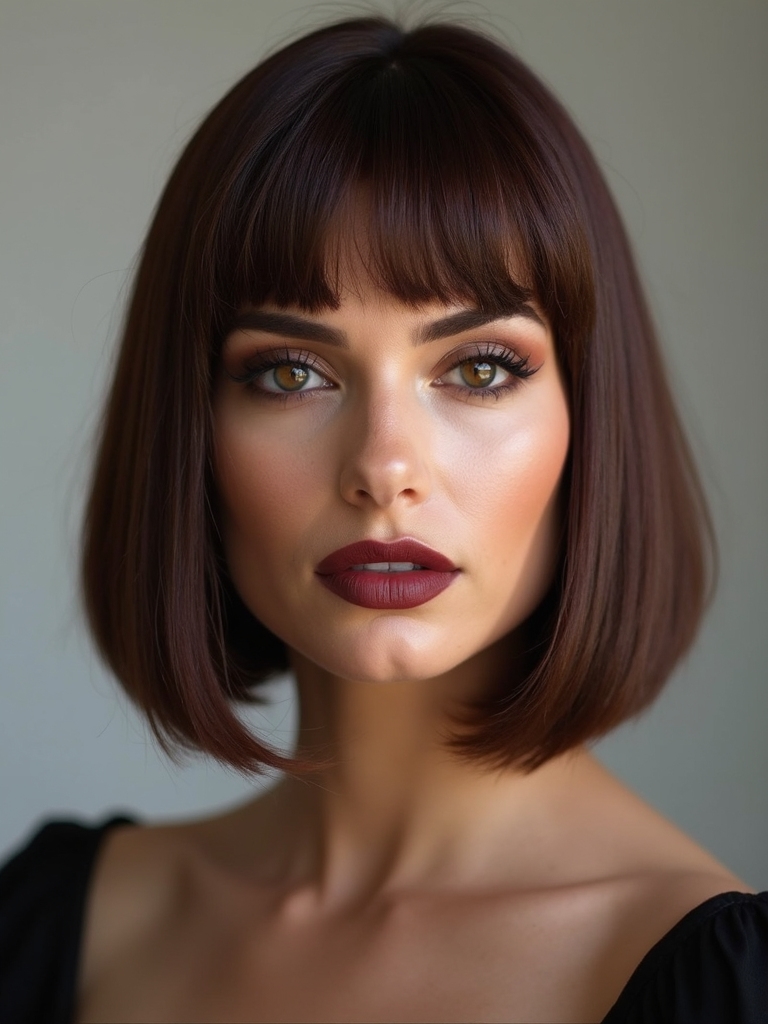
If the razor-blunt version feels too severe, a chin-grazing bob with a few soft layers is the wearable compromise, taking just enough weight out to add gentle movement so the whole shape looks modern and easy, nowhere near the stiff, helmet-like image people picture.
The layering here is subtle by design. Too much and you lose the clean 90s line; a little, cut into the ends and around the face, keeps the shape while letting it move.
It suits nearly everyone. That’s why it’s the version I cut most often. Wavy hair especially takes to it, since the layers give the wave somewhere to sit without puffing out.
Before You Layer
Ask for restraint. On a bob this short, heavy layering reads choppy fast and undercuts the clean line that makes it a 90s bob in the first place. A little movement is the goal, not a shag.
A Blunt Bob With a Fringe
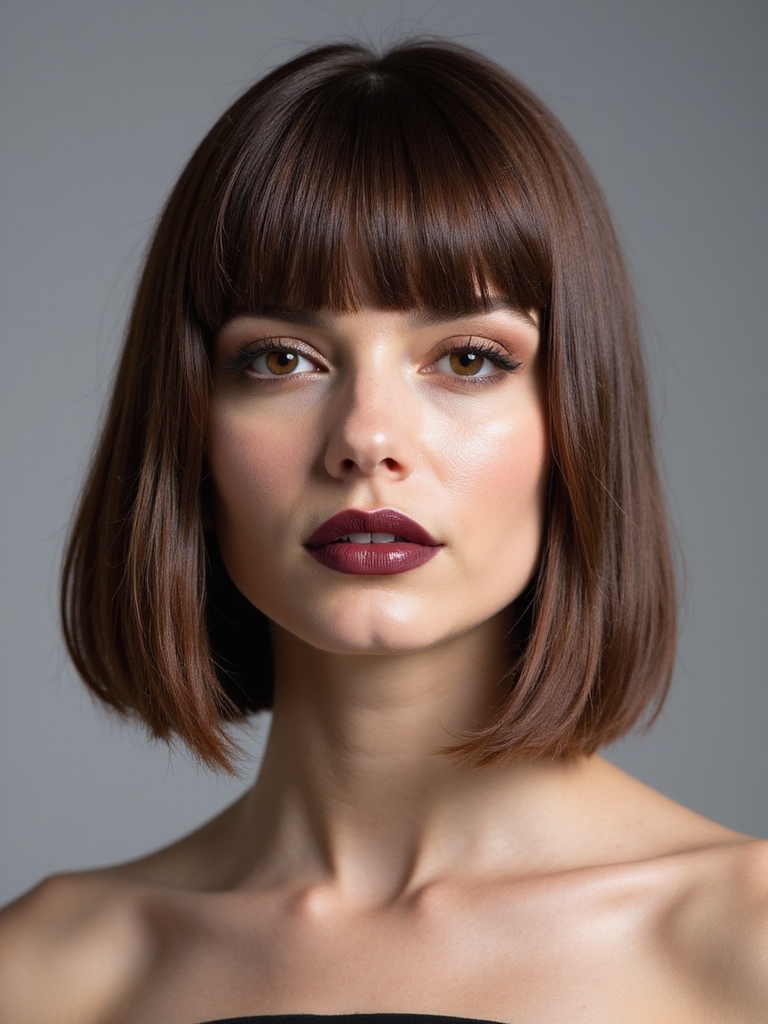
Add a fringe to a blunt bob and it goes from a haircut to a whole statement. The bang frames the eyes and doubles down on the graphic, deliberate mood of the cut, and a bob with bangs was everywhere in the era for exactly that reason. How to pick the fringe:
- A blunt, brow-skimming fringe for the boldest, most authentic 90s look.
- A wispy or curtain fringe if you want the shape without the full commitment.
- Factor in frequent fringe trims, since a blunt bang grows into your eyes fast.
The Glass Bob
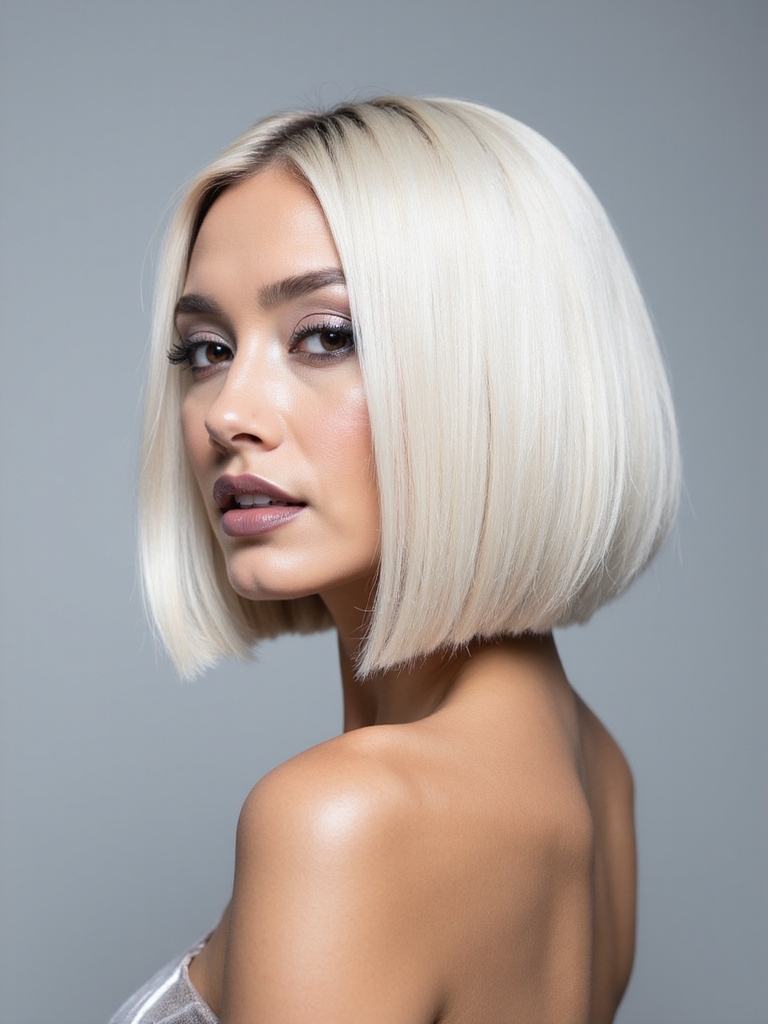
The glass bob is the polished, high-shine cousin: a blunt bob blow-dried mirror-smooth and parted clean down the center, so it catches the light like a sheet of glass. It’s the most expensive-looking version here, and the shine is the whole point. To get it:
- Start with a precise blunt cut, since the smoothness exposes any uneven line.
- Blow-dry it smooth over a round brush with a touch of smoothing cream for that glassy surface.
- Finish with a drop of gloss serum, and seal frizz-prone hair with a quick flat-iron pass.
Flipped-Out Ends
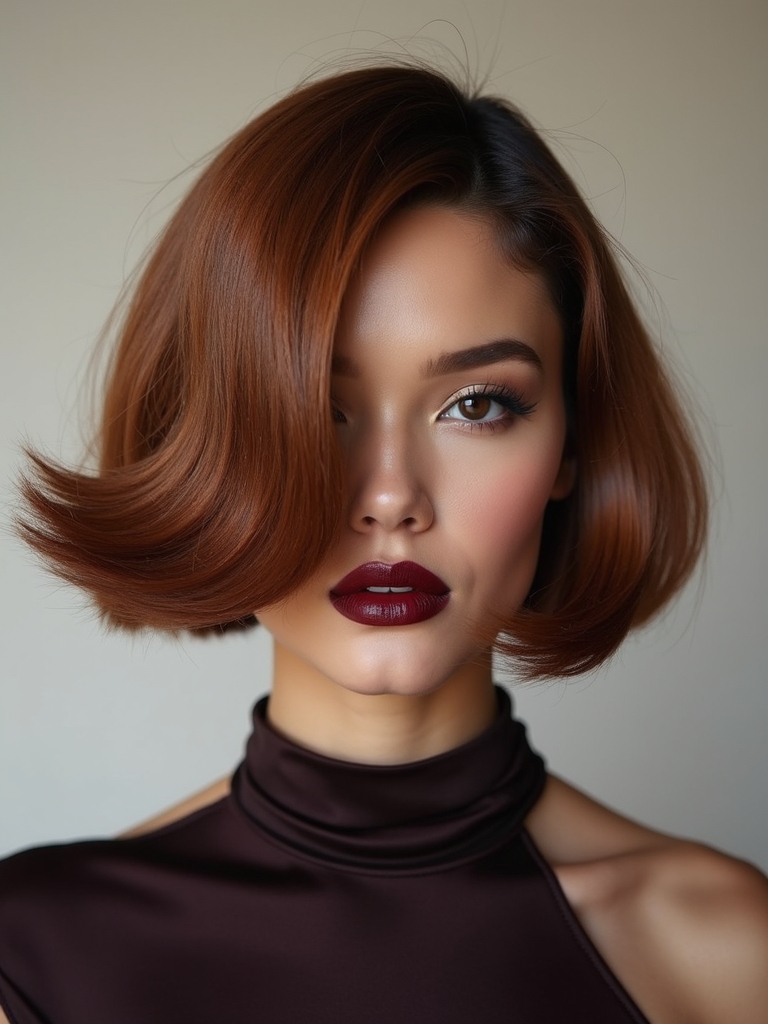
Nothing pins a bob to the nineties like ends that flip up and out — no tucking under here. It’s playful and a bit retro. The ends do the talking, and that finish turns a plain bob into something with personality.
Getting the Flip to Hold
The flip works best on a bob that hits at or just below the jaw, where the ends have room to kick out. Any longer and the flip drops; any shorter and it can look severe.
Roll the ends out over a round brush or a large flat iron, hold for a beat, and hit them with a cool shot to set. A little hairspray on the very ends keeps the flip up through the day.
Is the flip right for your bob?
1Does your bob hit at the jaw or just below?
Perfect flip territory, since the ends have room to kick out.
2Is it much longer than that?
The flip tends to drop; ask for the ends left blunt and tuck them under instead.
The Tousled, Off-Duty Bob
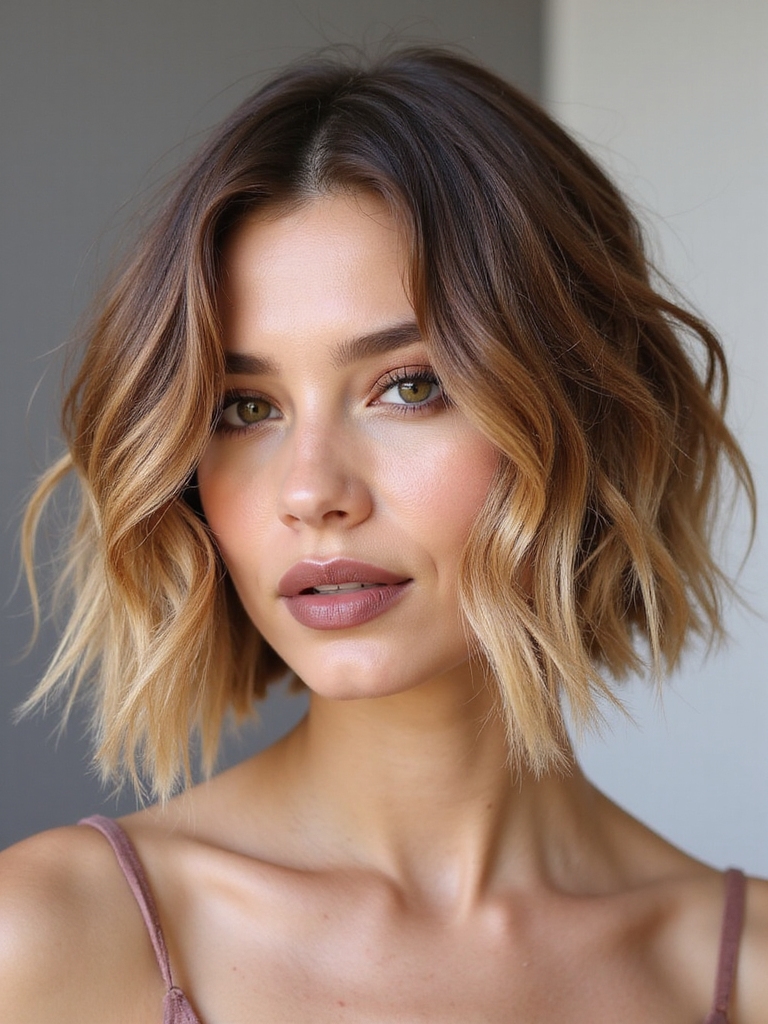
Not every 90s bob was polished. The grungier, off-duty version trades the glass finish for texture, all piecey ends and undone, slept-in body. Choose this one if the shape appeals but the mirror-smooth blowout maintenance doesn’t. A few ways to wear it:
- Rough-dry, then scrunch a texture spray from the mid-lengths down.
- Leave the part a little imperfect, since a too-neat part fights the undone mood.
- Best on hair with a natural wave or bend that adds to the texture.
The Middle-Part Minimalist Bob
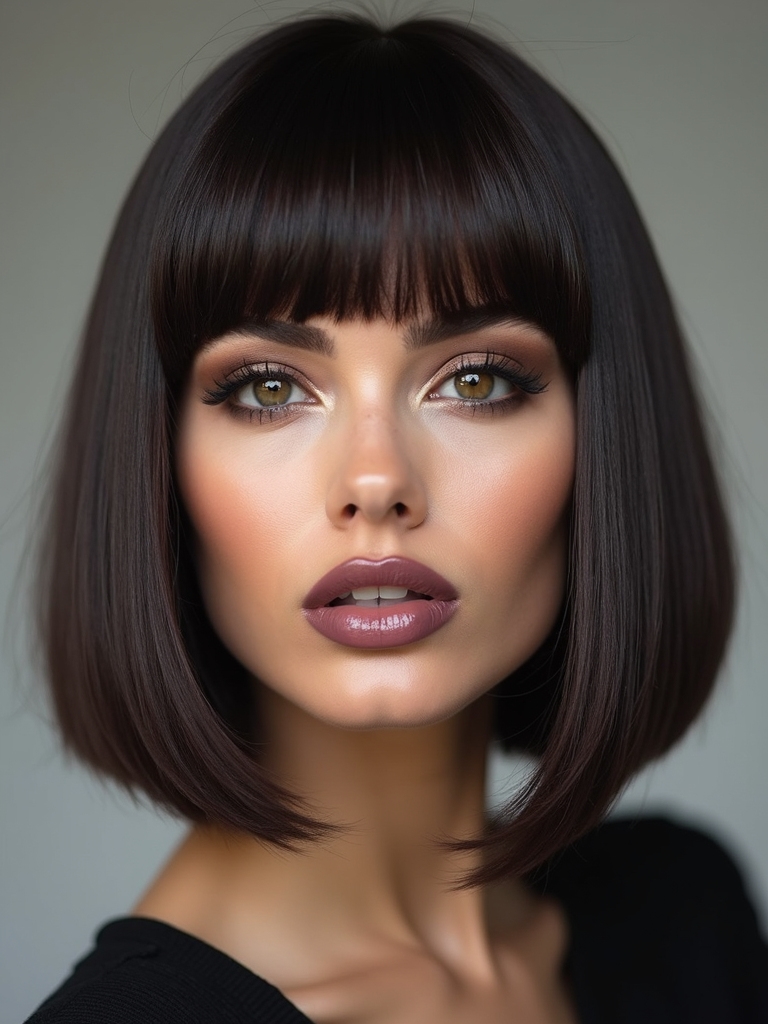
Strip a bob back to its essentials, one clean length, a dead-center part, no fringe or fuss, and you get the minimalist version that quietly defined the decade. It’s understated and modern, and it lets your face and the cut’s geometry do the talking.
The center part is doing more work than it looks. It splits the hair symmetrically and frames the face evenly, which feels calm and deliberate, but it’s least forgiving on longer faces, where it can add even more length.
- Cleanest on straight or lightly wavy hair that lies flat at the part.
- Balances round and heart faces; can over-lengthen a long one.
- Coax a stubborn side part toward the center by clipping it there as it dries.
The Deep Side-Part Power Bob
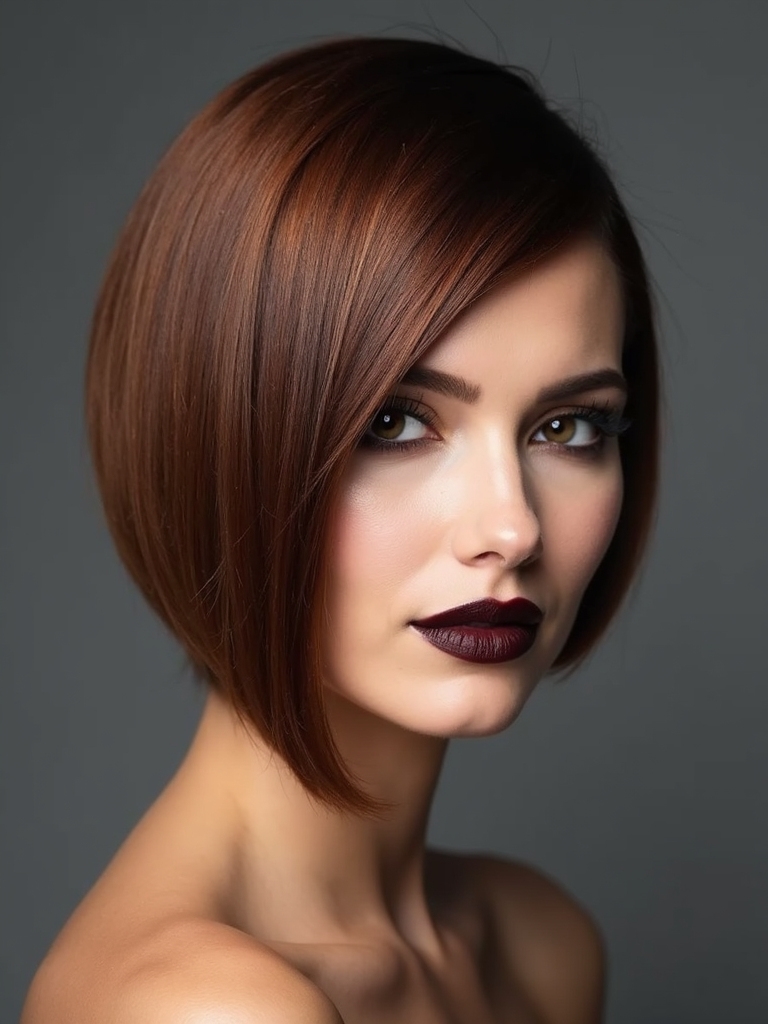
For a bob with more drama, a deep side part changes everything. It piles volume onto one side, sweeps a curtain of hair across the forehead, and gives even a blunt bob a sense of movement and polish. It’s the version that reads powerful and commanding. To wear it:
- Part deep, well past your natural line, for the boldest volume.
- Blow-dry the fuller side up and over for lift at the root.
- A chin-length bob takes the deep part especially well.
The Layered, Face-Framing Bob
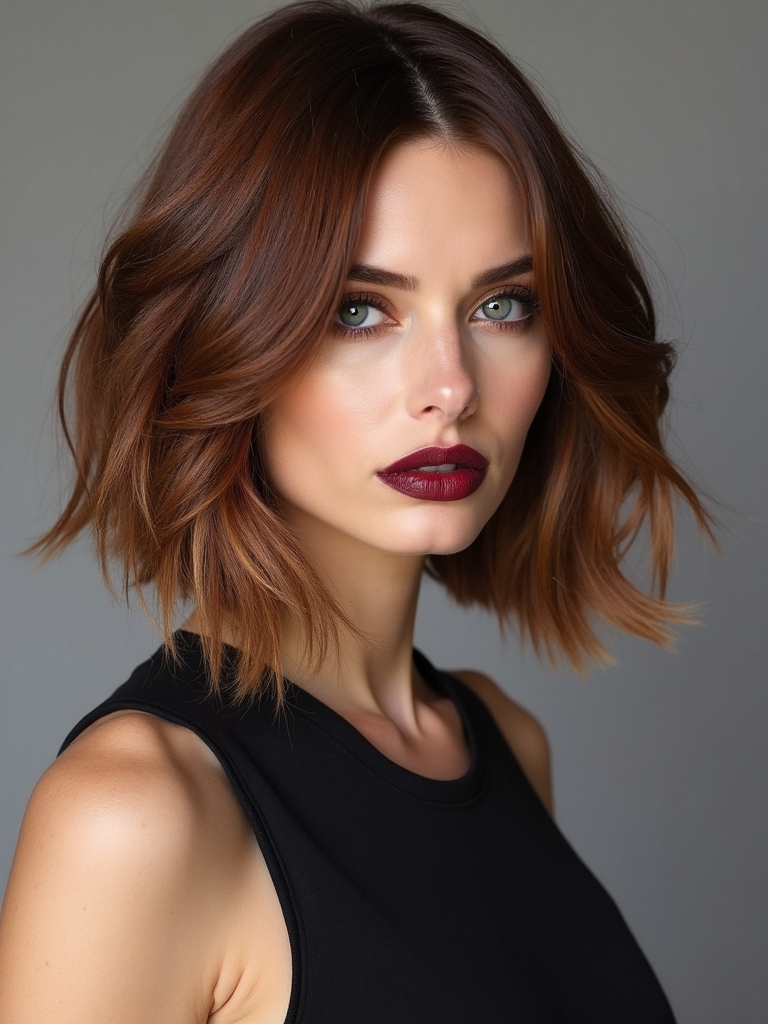
This version keeps the bob length but adds soft, face-framing layers up front, so the pieces around your face sweep and move while the rest stays clean. It’s the most flattering take when a strong jaw or cheekbone wants a little softening. How to ask for it:
- Request face-framing layers starting at the cheekbone or chin.
- Keep the back and sides blunt so the shape still reads as a bob.
- A layered bob like this grows out softly into longer framing.
💡A Framing Tip
Ask for the shortest face-framing piece to land where you want the eye drawn, usually the cheekbone. It’s a small instruction that decides whether the framing flatters or just falls in your face.
The Curly Bob Revival
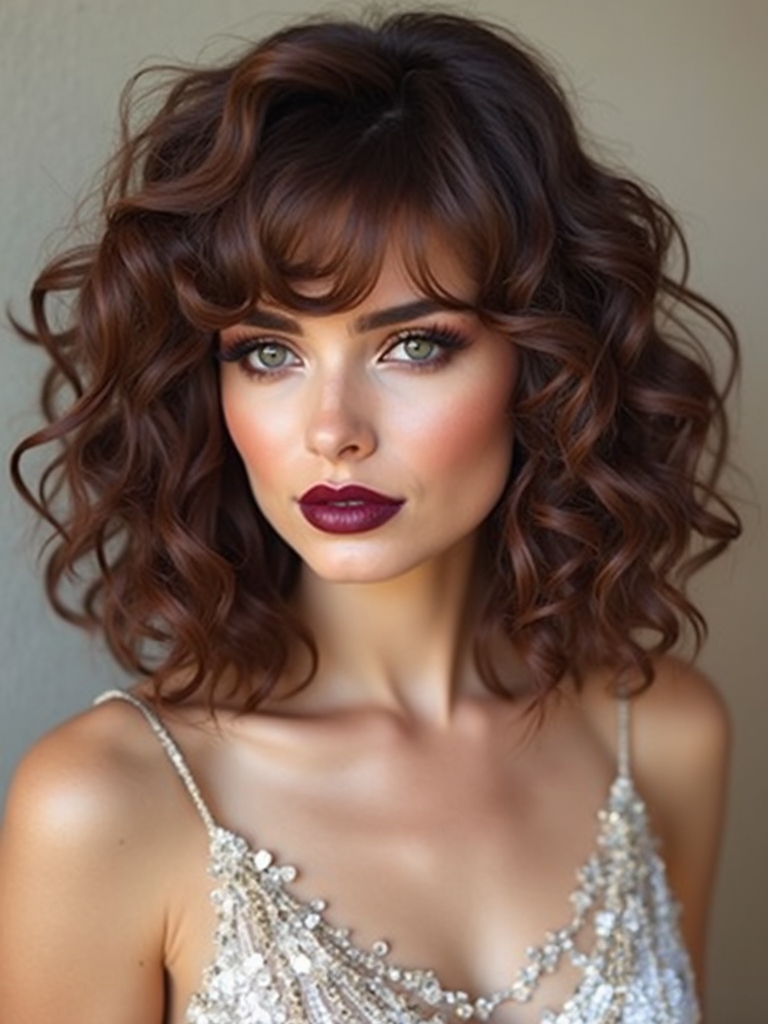
The 90s bob wasn’t only for straight hair. On curly and coily textures it becomes a rounded, full shape with natural body the sleek versions have to fake. Same shape, more bounce, and every bit as authentic to the era.
The secret is a stylist who cuts the curl in its dry, natural state, reading where each coil sits before a single length is set. Cut wet, a curly bob can spring up far shorter than planned and lose its balance, so this is a job for someone who works with your texture week in, week out.
Length matters more here than with straight hair, because curls spring up as they dry. Aim a little longer than your target so the finished shape lands where you want it, and keep the ends hydrated so the bob holds its round silhouette.
An Undone, Wavy Bob
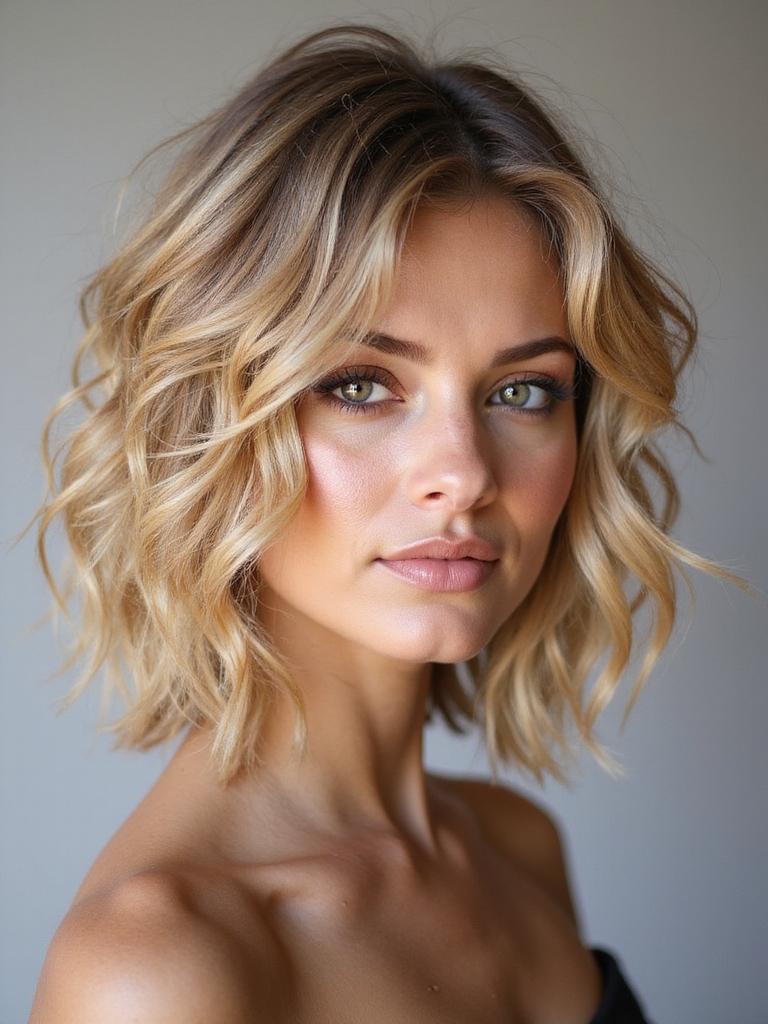
A natural wave and a bob are an easy match. The blunt length gives the wave weight and shape, so it settles into soft, undone body and skips the frizz entirely, the low-effort end of the 90s look.
This is the version for people who don’t want to fight their texture. Wash, work in a little wave-enhancing product, and walk away while it dries on its own — the bob does most of the styling for you.
“With a wavy bob, resist the urge to blow it out straight every day. The wave is what makes the shape look expensive and undone, so work with it and your whole routine drops to a few minutes.”
A Bob With Curtain Tendrils
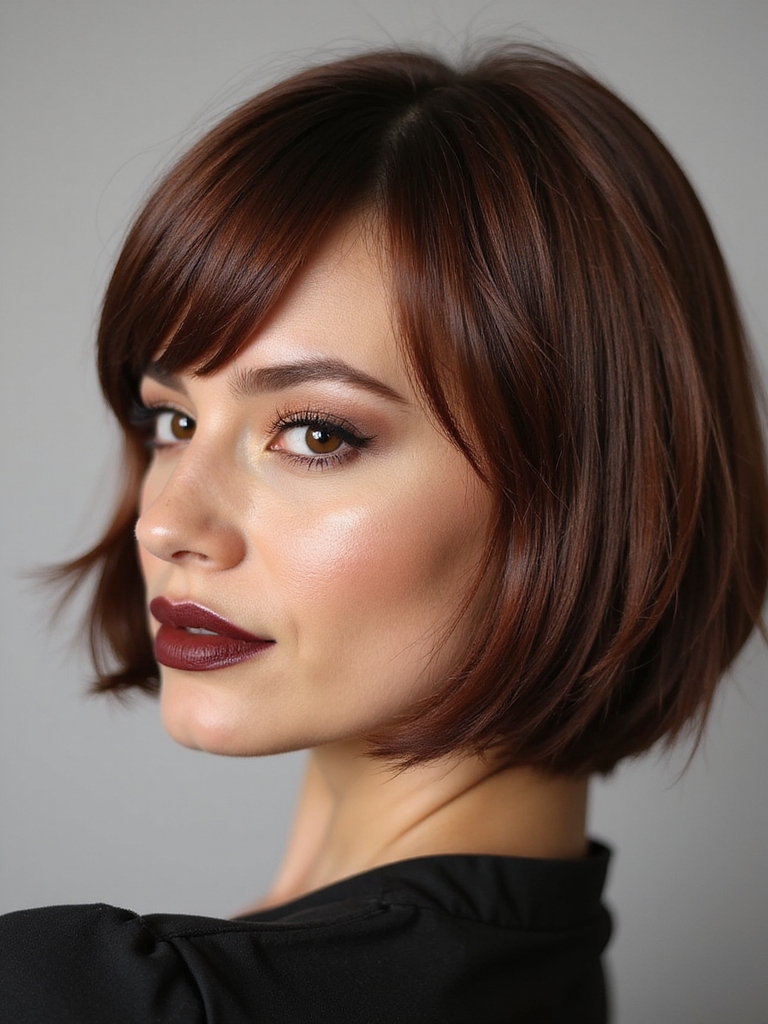
Leave a couple of longer, curtain-style pieces loose at the front of a clean bob and you soften the whole thing instantly. The tendrils fall along the cheekbones like a gentle frame, breaking up the blunt line without adding a full fringe. To pull it off:
- Ask for two fine pieces left longer at the center part.
- Wave them softly back off the face for the gentlest frame.
- Barely any commitment for a real change in how the bob frames your face.
The Jaw-Grazing Micro Bob
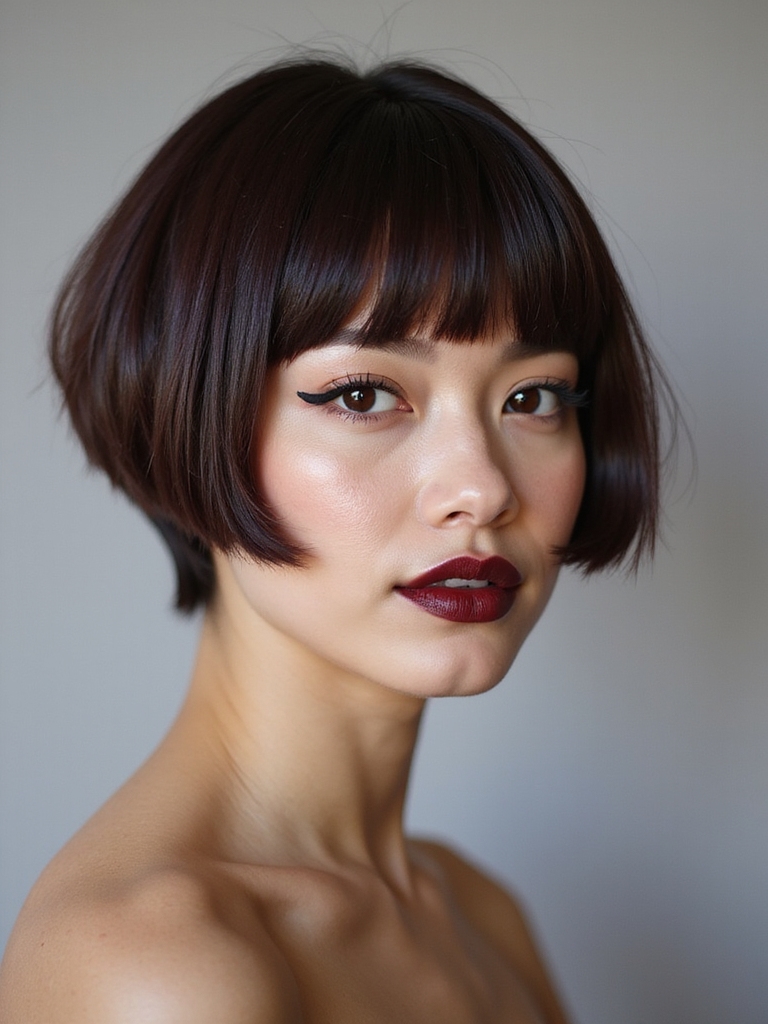
The micro bob crops the length up high, right at or above the jaw, for the boldest, most graphic version of the shape. It’s short, sharp, and full of attitude. It’s a lot of look, the bob for people who want maximum impact.
Is It Too Short for You?
Because it sits so high, it puts your jaw and neck fully on display. Slim necks and strong bone structure carry it best, and fine hair wears it beautifully, since the short blunt length looks dense and full.
The micro bob is a commitment, and it grows out through an awkward stage, so go in sure. If you love the idea but feel nervous, start at the jaw and drop to a longer bob first, then go shorter once you know you like it.
A Bob With Chunky Highlights
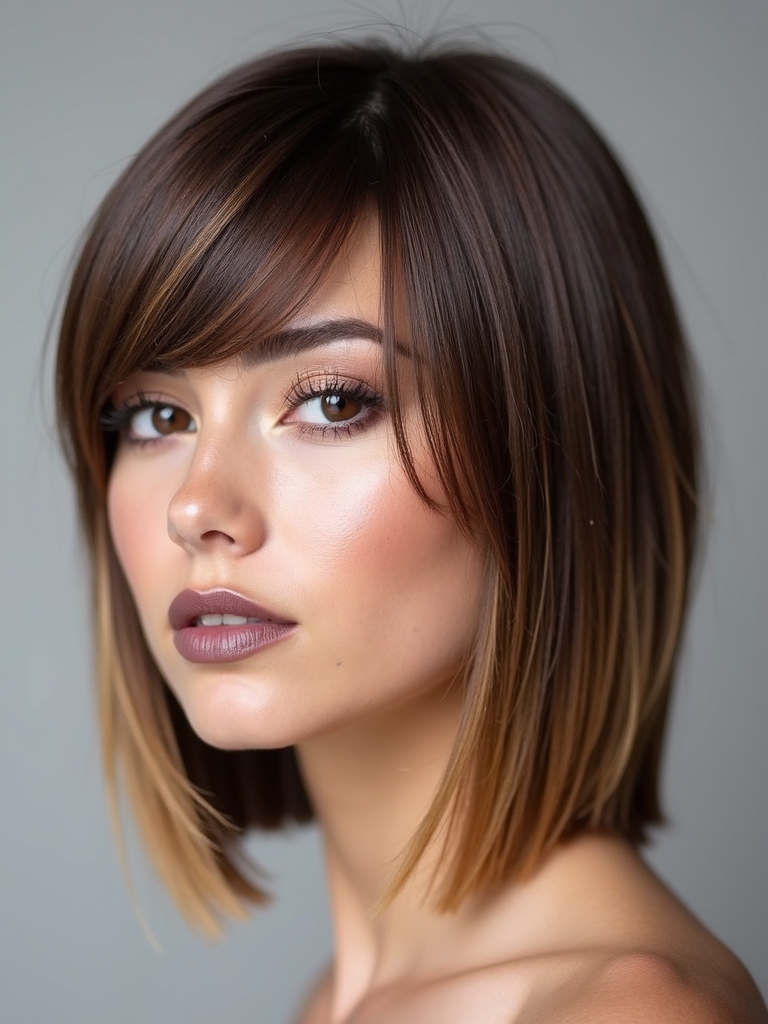
Color is where the 90s bob gets unapologetic. Forget the soft, blended highlights of recent years — the era loved chunky highlights, bold, high-contrast pieces that made no attempt to look natural.
It’s a look that’s swinging back around, and it’s a real statement on the right person. Placed around the face and at the part, chunky highlights draw the eye and lean fully into the decade, and a gloss keeps the contrast reading bold and saturated.
A Sleek Bob With Tucked Ends
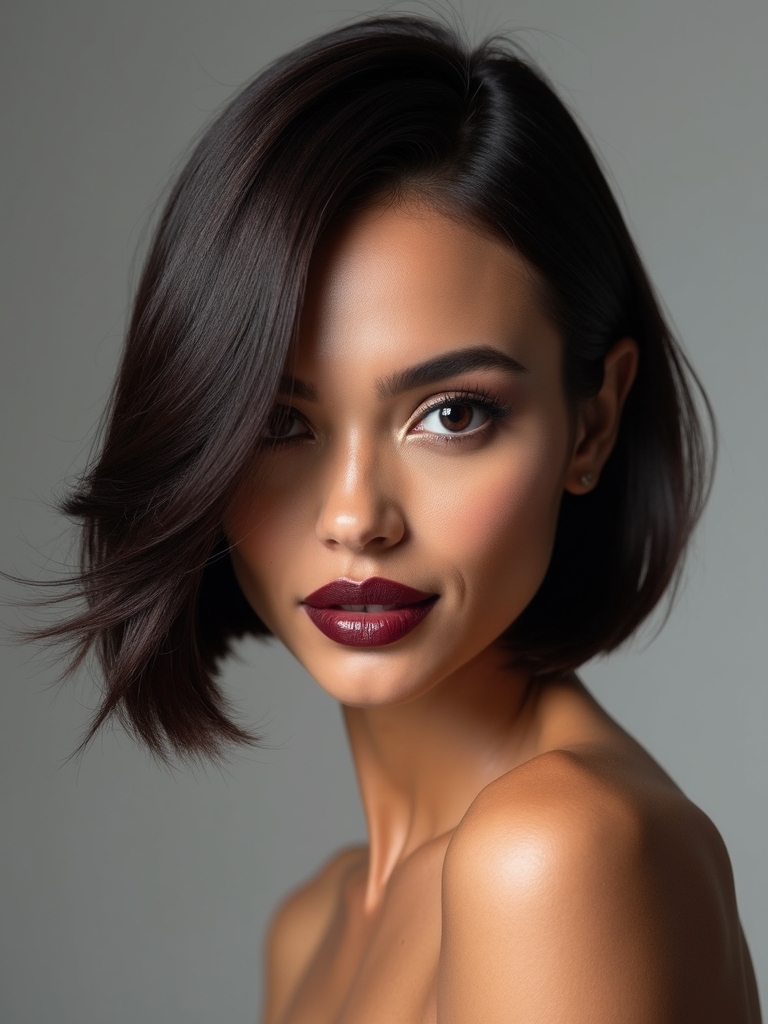
The opposite of the flip, tucking the ends under gives a bob a clean, quiet polish. It’s the grown-up finish. The length curves gently inward at the jaw, so the shape looks finished and neat, the version that looks professional and pulled-together.
It’s the most versatile styling of the bunch, equally at home in an office or out at night. To get it, round-brush the ends under as you dry or press them in with a flat iron, then run a little serum through to keep the tuck smooth and controlled.
A Low-Maintenance 90s Bob
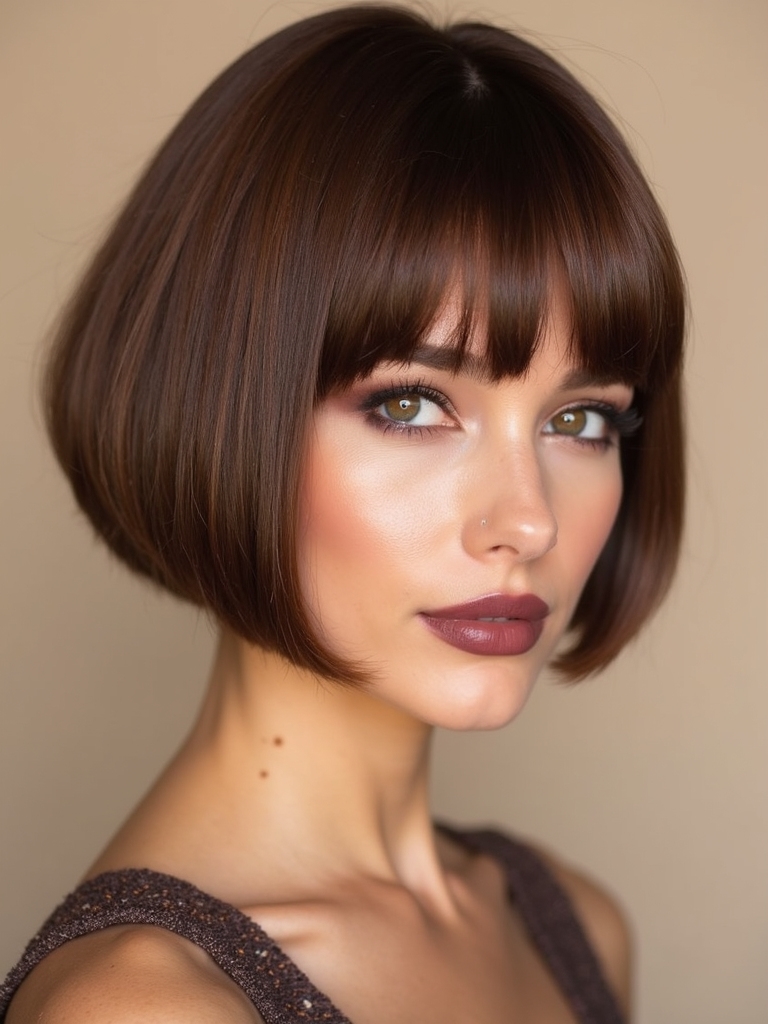
For all its polished reputation, a 90s bob can be fast to live with once the cut is right. A good blunt shape falls into place with minimal effort, which is the quiet secret behind its comeback. A realistic daily routine:
- Blast the crown with a diffuser for lift, then run a round brush through the ends.
- On non-wash days, a quick flat-iron pass on the ends revives the whole shape.
- A colored or glossed bob runs around $80 to $150 with the cut, and holds its look for weeks.
How to Get the Look
The single most important step is the consultation, because a 90s bob is all about the cut. Show up with a clear picture of the exact length and line you’re after, and use the era’s own vocabulary: blunt, one-length, a strong jaw or chin line, and whether you want a fringe or a part. Precision in the chair is what separates a sharp 90s bob from a generic bob haircut.
After that, the styling is simple. Decide sleek or textured, pick your part, and match the finish to your texture instead of fighting it. The bob rewards working with what your hair does naturally, which is exactly why it’s such a livable cut once you’ve dialed it in.
90s Bob Questions, Answered
?What length is a true 90s bob?
Most sit between the chin and the jaw, with the sharpest versions grazing the jaw exactly. The defining feature isn’t a precise length, though, it’s the blunt, one-length cut and a strong part. Anything much longer is really a lob instead.
?Will a 90s bob work on curly hair?
Absolutely. Curly and coily hair gives the bob a rounded, full shape that’s just as authentic to the era as the sleek version. Have the stylist work dry so they can see exactly how your curl pattern falls, and ask for a touch of extra length since shrinkage takes some back.
?How much upkeep does a blunt bob need?
More than a layered cut, since a blunt line shows grow-out quickly. Plan on a trim every five to seven weeks to keep the shape sharp, plus a quick round-brush or flat-iron pass on the ends most mornings to keep the line clean.
Sharp, Simple, and Back for Good
The 90s bob endures because it’s the rare cut that’s both bold and low-effort: all the impact sits in a clean line, so your hair does the work once the scissors are down. Whether you go razor-blunt or soft and tousled, the shape looks confident and modern without asking much of your mornings.
If you’ve been tempted, start with a chin-length version and a part that suits your face before you commit to the micro crop. It’s the easiest way to find out how much you’ll enjoy having a real haircut again, one with an actual shape instead of just length.
More Inspiration