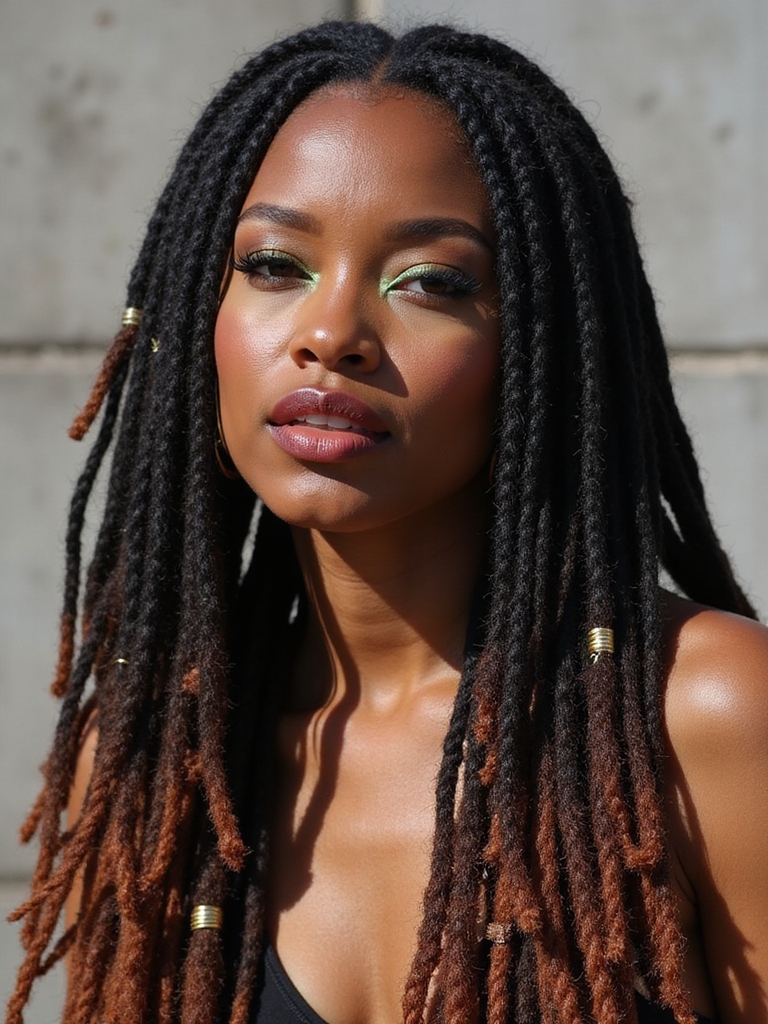
Curly hair spends most of its life being told what it should look like: smoother, sleeker, more controlled. These eighteen styles work the other direction, building on the curl pattern that’s already there instead of fighting it into something else.
Most need nothing more than a comb, a few pins, and hair that’s already had its wash-day routine. A handful lean on protective styling instead, for days the curls need a break entirely.
What Actually Makes These Styles Work
- Second-day or third-day curls hold styles better than freshly washed ones; the natural grip does real work.
- None of these need heat. Twisting, pinning, and wrapping do the shaping instead.
- A few pins or a soft tie usually beat elaborate technique for actually holding a style through a full day.
The Forgiving Curly Messy Bun

Nothing on this list forgives more than a curly messy bun, since the curls themselves fill in any unevenness a straight-haired version would show. Gather the hair loosely at the crown or nape, twist it once, and secure it; stray pieces only add to the look.
- Works high or low, on nearly any curl pattern
- Loose, springy strands read as styled, not undone
- Holds especially well on second-day curls
The Curly Half-Up, Half-Down

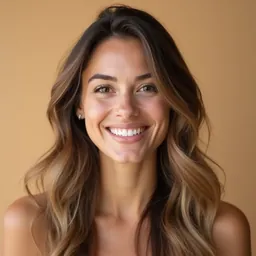
A half-up style keeps the top section pulled back while the rest of the curl pattern hangs free, which controls face-framing volume without hiding the length or texture underneath.
Gather the crown section, twist or braid it loosely, and pin it back. The lower curls need nothing else.
- Controls volume up top without covering the length
- Takes under a minute once the crown section is gathered
- Works on wash day and third-day curls alike
The Low Curly Ponytail

A low ponytail smooths curls back into one gathered shape at the nape, trading height and volume for a cleaner, more contained silhouette. It looks more polished than most curly styles on this list, which makes it a reasonable pick for a meeting or an interview.
- Sits at the nape rather than higher on the crown
- A wide-tooth comb or fingers work better here than a brush
- A silk or satin tie protects the hairline from breakage
The Overnight Pineapple

Keeping length off the pillow overnight is the entire job of a pineapple: a loose, high gathering point right at the crown, well clear of the neck and pillow surface.
A Style Built for Sleep, Not for Show
It isn’t really meant to be worn out during the day; the goal is waking up with the pattern intact instead of pressed flat on one side.
A soft scrunchie, tied loosely rather than tight, prevents the tension marks a regular elastic would leave by morning.
The Bohemian Braided Crown

A braided crown wraps one or two loose braids across the top of the head like a soft headband, framing the face while leaving the rest of the curls down.
Looser braids work better here than tight ones; the goal is a relaxed, woven look rather than a precise braid.
- One or two loose braids wrapped across the crown
- Pin ends underneath, out of sight, along the opposite side
- Leave the remaining length down for contrast against the braid
The Timeless Afro

A natural afro, picked out and worn at full volume, shows off coily and curly texture at its fullest; nothing about the style compresses it down or minimizes the coil pattern underneath.
A wide-tooth pick lifts the roots without disturbing individual coils, building height gradually, a little at each pass. Clients new to picking out an afro often go too fast the first time and flatten sections they just lifted.
It photographs well from every angle, since there’s no single best side the way there is with a directional style.
Protecting Curls Under Any Braid
Braiding curly hair too tightly at the root can pull on the hairline over time. Aim for enough tension to hold the shape, not so much that the scalp feels tight by the end of the day.
Loose, Undefined Curly Waves
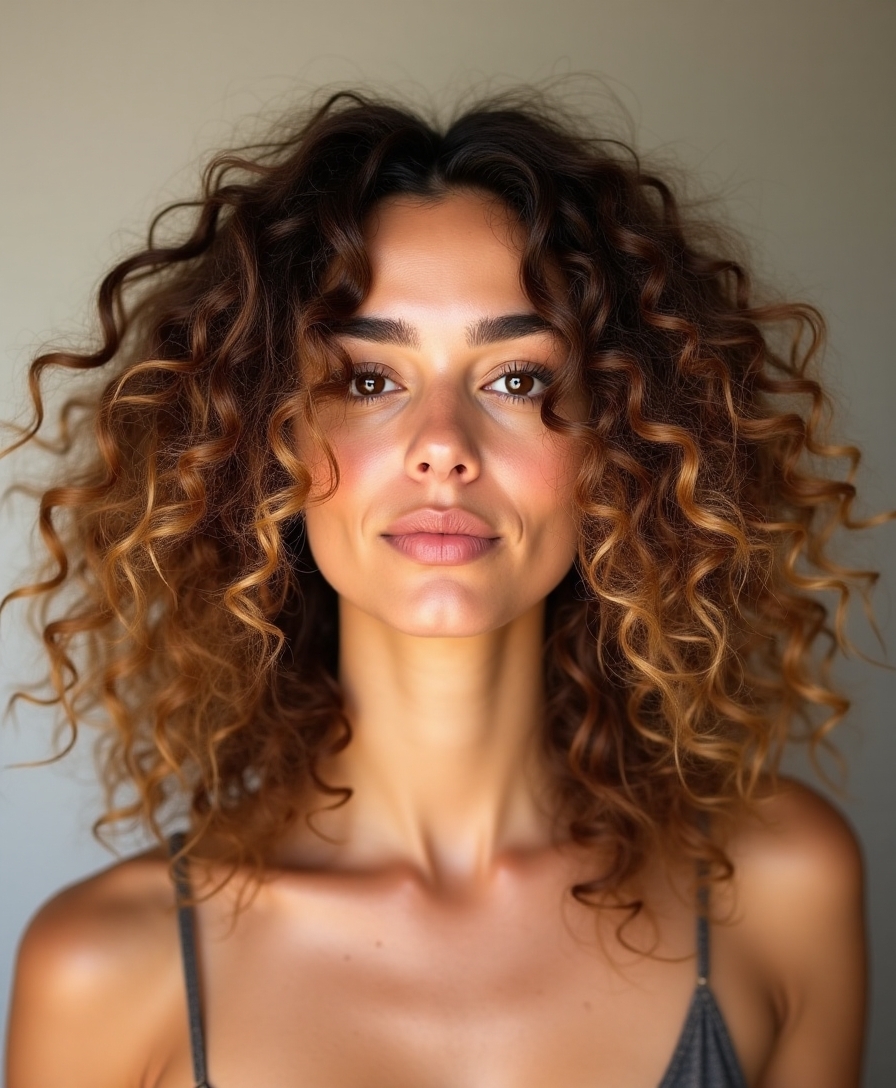
Loose waves sit somewhere between straight hair and a defined curl pattern, achieved by loosening a tighter curl pattern with product and drying technique.
Raking a small amount of cream through damp hair and letting it air-dry without disturbing the pattern usually gets there; over-touching wet curls is what breaks waves down into frizz instead.
Looser curl types that already sit close to a wave pattern take to this the fastest, with the least product needed to get there.
The High Curly Puff

Volume and density take center stage in a high puff, gathered into one round shape right at the crown.
Maximum Volume, Minimum Effort
Edge control along the hairline keeps the base clean, while the puff itself stays deliberately full and untouched.
It works as both an everyday style and a quick fix on days there isn’t time for anything more involved.
The Textured Top Knot

Where a bun sits smooth and a puff stays loose, a top knot lands in between: curls gathered high on the crown and twisted into a compact shape.
Twisting the gathered section before securing it gives the knot real structure; wrapping it flat alone won’t hold through a full day.
Days between wash sessions suit it best, since a little extra grip actually helps the twist hold its shape longer.
“Most stylists suggest securing a high puff with a fabric-wrapped elastic rather than a bare rubber band, since bare elastics catch and break curly strands at the base.”
Curly Space Buns

Splitting the hair down the middle and gathering each half into its own high bun is the whole technique; curly texture does the rest, turning a messy, looser version into something that looks intentional, not thrown-together.
- Part down the middle before gathering each side
- Loose, uneven buns suit curls better than tight, smooth ones
- A few curls left loose at the front soften the look
The Curly Faux Mohawk

A faux mohawk pulls the sides back and pins them under, leaving the center strip of curls standing up and untouched for a bold, graphic effect that doesn’t require cutting anything.
- Sides pinned back and under; center strip left alone
- Volume from the natural curl pattern does most of the work
- Fully reversible, since nothing about the cut itself changes
The Casual Curly Side Braid

A single braid swept over one shoulder needs only a loose three-strand plait, and curly texture keeps the braid looking full even when the technique itself is simple.
Pulling the edges of the finished braid slightly wider adds fullness and hides any unevenness in the plaiting, which matters more on a first attempt than a perfect braid would. A small amount of gel smoothed over any flyaways at the part gives the whole thing a slightly more finished edge without changing the relaxed feel of it.
ℹ️Why Curls Hold a Mohawk Shape So Well
The natural spring in curly and coily hair holds a raised center section upright without gel or heat the way straight hair would need. Pinning the sides is usually the only technical step involved.
The Romantic Twisted Updo

Sections of curls get twisted up and back toward the crown here, building visible dimension across the whole shape instead of one smooth surface.
- Twisted sections, not braided ones, keep the finished texture looser
- Pin each twist as it’s added, building toward the crown
- Curls springing loose from the twists only add to the effect
The Scarf Tie-Back

A scarf tied over the crown and knotted at the nape or front covers roots and adds color without touching the curl pattern underneath at all.
Some days call for zero manipulation at all, and a scarf gets there in under a minute while still looking finished. The scarf hairstyles guide has more wrap options beyond this one.
A silk or satin scarf specifically protects the hairline better than a cotton one, which can pull moisture from the curls along the edge where it sits.
The Relaxed Curly Bob

A curly bob keeps the natural pattern but cuts it to a shorter, chin-to-shoulder length, changing the overall shape without changing the texture itself.
Curls shrink noticeably once cut and dried, so the cutting has to account for that spring; a stretched or wet measurement alone leads to a shorter result than planned. The curly bob guide covers the dry-cutting method specifically.
It suits a wide span of curl patterns, though the exact proportions shift depending on how tight or loose the curl actually is. Plan on around $70 for a first cut with a stylist experienced in curl-specific cutting.
Accessorized Crown Twists

Two-strand twists worked across the crown and secured with clips, pins, or small accessories turn a simple protective technique into a real finished style, not just a maintenance step to get through.
Beads, cuffs, or decorative pins along the twists add personality without requiring any additional styling technique beyond the twisting itself.
- Two-strand twists across the crown, secured however works best
- Beads or cuffs slide onto individual twists for detail
- Doubles as a low-manipulation style between wash days
Choosing accessories for twisted styles:
🎯Metal cuffs
Add weight and a defined edge; work best on thicker twists
🎯Beads
Lighter and more playful; suit smaller, finer twists better
Classic Bouncy Ringlets

Defined, bouncy ringlets show off a tight, springy curl pattern at its most classic, each curl standing on its own instead of blurring into a looser wave.
A curl cream or gel applied to soaking-wet hair, followed by scrunching rather than brushing, keeps each individual ringlet intact through drying. Brushing curls at any stage of this process is the single fastest way to turn definition into frizz.
Beachy, Wind-Swept Curls

Beachy curls trade defined, uniform ringlets for a looser, more tousled texture, closer to what curls naturally do after a day outdoors than a freshly styled look.
A light texturizing spray on dry hair, worked in with fingers, gets there without needing any actual time at the beach. A brush at this stage undoes the whole effect.
- Looser and more undone than classic defined ringlets
- A texturizing spray adds grit without weighing curls down
- Fingers do the styling work; a brush would break up the texture
Curly Hairstyle Questions, Answered
?Do these styles work on both curly and coily hair, or just one type?
Most translate across the spectrum, though the exact proportions shift. Looser waves and low ponytails favor curlier patterns, while high puffs and afros show off coily texture particularly well.
?Is it better to style curly hair wet or dry?
It depends on the style. Definition-focused looks like ringlets need product applied while soaking wet; texture-focused looks like beachy waves or a faux mohawk work better once hair is fully dry.
?How do these hold up overnight compared to straight hair styles?
Generally better. Curly hair’s natural texture grips pins, twists, and buns more securely than straight hair does, so most of these styles hold overnight with barely any touch-up needed by morning.
?Which of these are considered protective styles, and which aren’t?
Twists, braids, and the scarf tie-back count as protective, since they limit daily manipulation of the strands. Styles like defined ringlets or beachy waves involve more direct handling and don’t offer the same benefit.
Work With the Curl You Have
Every style on this list starts from the pattern already growing out of the scalp instead of pushing it toward something it isn’t.
Pick whichever one matches today’s actual time and energy, not the one that photographs best in someone else’s hair.
Keep the Inspiration Going