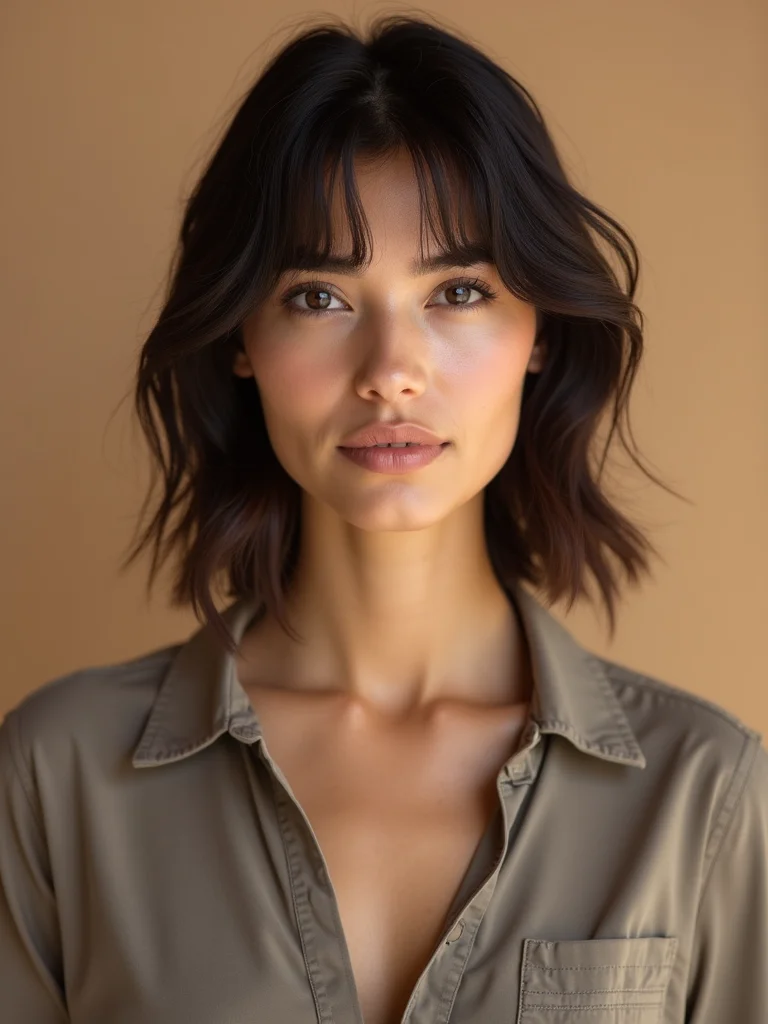
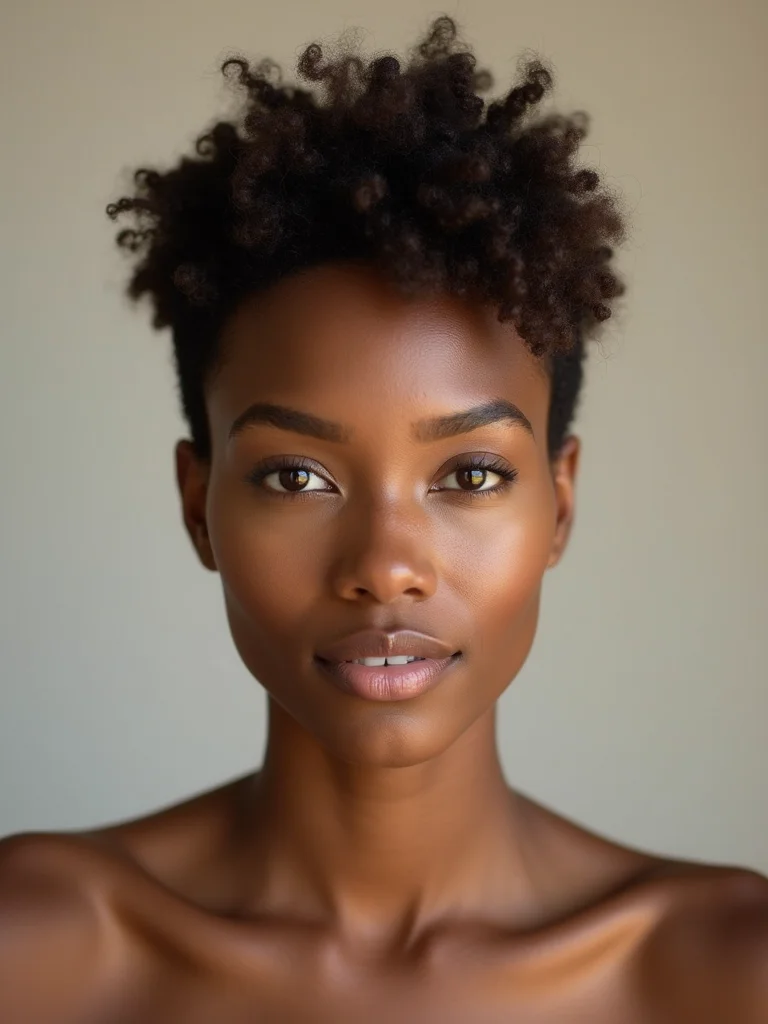
The biggest myth about layered curly hair is that layering means losing length or inviting frizz. Neither is true once the cut respects the pattern instead of fighting it. Left at one length, curls stack into a heavy triangle: flat on top, wide at the bottom, no matter how good the products are. Layering pulls weight out exactly where it piles up and adds lift exactly where it collapses.
The sixteen approaches below match a specific layering technique to a specific curl pattern and a specific problem, since a loose wave, a springy ringlet, and a tight coil each carry weight differently and need a different fix. Browse our full curly hairstyles collection for more ways to wear the texture.
Layering by Curl Pattern, at a Glance
| Curl Pattern | What Layering Solves | Cut Method |
|---|---|---|
| Loose waves | Flatness on top, weight without shape | A few long layers, blended lightly |
| Springy ringlets | Uneven bulk, lost curl definition | Dry cut, one ringlet at a time |
| Tight coils, kinky texture | Heavy triangle shape, no movement | Cut dry, working with shrinkage |
Layered Shapes for Loose Waves

Loose, wavy hair carries the gentlest curl pattern, so it asks for the gentlest layering. A few long, soft layers pull weight out through the lengths without disturbing the wave itself, so the hair keeps its motion at the ends.
By the third week past a cut, over-layered waves show their weak point: short, aggressive layers spring into a halo of flyaways that refuse to lie down, while a few long ones simply settle further. The lighter touch tends to win here.
A light mousse worked through damp hair, a scrunch, and an air-dry or a low diffuse setting covers the entire routine. The wave itself does most of the remaining work.
Soft Face-Framing Layers for Curls

Face-framing layers shape the curls around the face into a soft frame, the shortest pieces landing at the cheekbone and lengthening as they travel back. Few changes flatter curly hair this reliably, and few are easier to grow out later.
Getting the shortest piece right
Fine, loose curls show off this technique especially well: a handful of shorter pieces lifts right where the eye lands first and pulls attention up toward the face, without touching the length underneath at all.
Ask for the shortest piece to land right at the cheekbone line, no higher, and have it cut dry so it settles exactly where the curl actually springs. A little cream refreshes the front pieces between wash days.
Butterfly Layers to Boost Bounce

Butterfly layers blend two lengths at once, a shorter layer riding over longer hair underneath, so curls gain fullness up high while keeping their length below. It’s a curly route to real volume that skips a full chop.
Keeping the blend invisible
The top layer lifts, the underneath stays long, and a soft blend between the two keeps the whole thing reading as one cohesive cut. Medium-to-long curls that fall flat at the crown benefit most.
The shortest top layer should still land past the chin, or the blend gets difficult to disguise. Diffusing upside down pushes volume directly into that top section.
Where Butterfly Layers Go Wrong
Cut the top layer too short relative to the length underneath, and the blend shows as an obvious, visible step where a gradient should be. A stylist should check the shortest piece against the chin before cutting a single strand shorter.
Shaggy Layers for Easy Volume
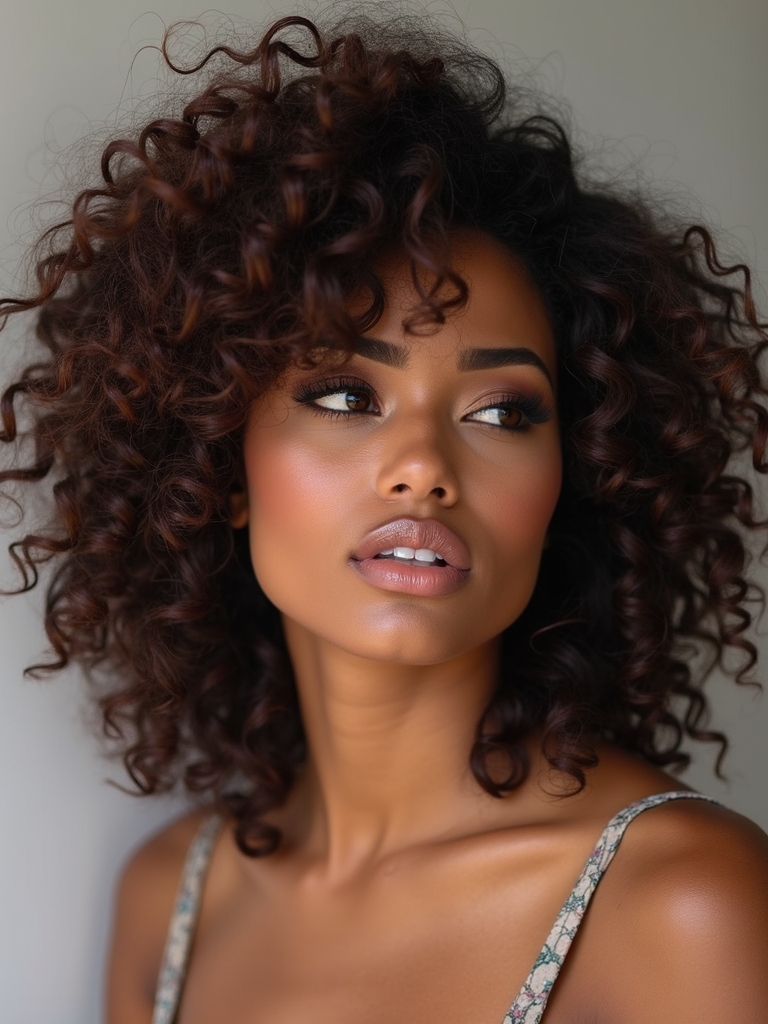
Shaggy layers stack texture from root to tip for easy, undone volume, the curly relative of the classic shag. Heavy layering throughout builds fullness and movement in one move, and a more relaxed styling routine tends to look even better.
Dense curls carry this kind of heavy layering best, since there’s enough hair underneath to support all that texture without thinning out. On finer curls, the same layering can read as sparse at lower density.
A curl cream scrunched in, then an air-dry left alone, is the whole styling plan. Brushing it out erases the texture the cut was built for, so finger-styling only.
Curly Wolf Cut for Edgy Texture

The curly wolf cut pushes the shag further: short, choppy layers up top paired with longer, ragged ends below, all texture and attitude. On curls, heavy internal layering builds real volume at the crown while the lengths keep their spring.
By month three, most short cuts start needing a trim. This one usually doesn’t: the choppiness simply blurs as it grows out, so the grow-out period stretches far longer than a cleaner, more structured cut allows.
A salt or texture spray scrunched through damp curls is enough to style it. Anyone chasing a statement cut with almost no daily upkeep should start here.
Round Layers for Balanced Fullness

Round layers follow the natural curve of the head, building even fullness all the way around so the hair neither collapses on top nor flares at the sides. Cut dry, they sculpt curly hair into a rounded, balanced silhouette, which is the shape most people picture when they imagine healthy, full curls.
- Requires a dry cut so the roundness follows the real, sprung curl pattern.
- Suits medium-density curls and classic ringlets especially well.
- A diffuser holds the round shape; brushing after drying flattens it fast.
Long Layers to Reduce Bulk and Add Movement

Long layers are the lightest-touch option for long curly hair: a handful of layers cut deep into the length pull weight out without sacrificing the length itself. The bulk that drags long curls down comes out from the inside.
Curls that feel heavy and lifeless by afternoon, or that settle into a triangle by lunch, usually point straight to this fix. There’s nowhere left for the weight to hide. Once it’s removed from within the length, the curls simply move again.
The ends stay full even as the interior lightens, since the layering happens well beneath the visible perimeter.
Crown Layers to Lift Flat Roots

Crown layers target one specific problem: flat, heavy roots right at the top of the head. Nothing else on this list is this targeted. A few shorter layers cut into the crown lift the curls exactly where they tend to collapse first.
Fine curls that sink by midday respond especially well to this targeted change, since the lift targets one small, precise area of the head. Our hairstyles for fine hair guide has more volume-focused ideas.
Clipping the roots up with a few duckbill clips while the hair dries sets that lift before a single product goes in. Keep the layers short enough to lift but long enough to still blend with the rest.
Curly Lob With Graduated Layers

A curly lob with graduated layers sits around the collarbone, with layering that builds shape gradually through the length. It ranks among the most versatile curly cuts available: long enough to pull back, short enough to feel current.
Why graduation beats a blunt line here
The graduation keeps the lob from sitting as one heavy block, so the curls stack with real dimension and movement. Wavy through tight curl patterns can all wear some version of this cut.
Graduated ends, kept consistently soft, are the detail that keeps the shape moving instead of sitting stiff. It air-dries well with just a curl cream worked through.
📋Before You Book a Curly Lob
- ✓Bring reference photos of curl texture, not just length.
- ✓Confirm the stylist cuts dry, in the natural pattern.
- ✓Ask where the graduation starts relative to your jawline.
V-Cut Layers for Defined Length

A V-cut layers the hair into a soft V shape at the back, longest through the center and shorter toward the sides. On long curls, it carves out a defined, elongating line and keeps the ends from reading blunt and heavy.
- Draws the eye downward, stretching the whole silhouette taller.
- Needs length past the shoulders to actually form the point.
- Cut dry so the point lands where the curls settle once fully sprung.
Spiral-Friendly Layers for Ringlets

Tight spiral curls and ringlets need layering that respects each individual coil. Spiral-friendly layers are cut curl by curl, so every ringlet keeps its full shape and the layers fall naturally between the spirals rather than through them.
Cut the wrong way, spirals lose definition and frizz right at the layered ends. Cut the right way, each ringlet springs back clean and separate, and the shape holds for weeks at a time.
- Precision work; book a stylist who specializes in curls specifically.
- A gel cast scrunched onto soaking-wet curls locks the spiral shape in place.
- Always cut dry, on hair in its natural, unstretched state.
Curly Bob With Airy Layering

A curly bob with airy layering keeps things short and light, the internal layers stopping the bob from turning into one round, heavy ball of curl. It’s a confident, low-length option that needs a careful hand: too blunt and it puffs outward, too heavily layered and it loses its shape entirely.
- Best on curls dense enough to hold a shorter shape without frizzing out.
- Cut dry to control precisely where the shape settles.
- A little water and cream refreshes it daily between wash days. For more short options, our short curly haircuts guide covers the range.
💡Testing Before You Commit Short
Ask for a slightly longer trial length first if going shorter feels risky. A curly bob can always be taken up again at the next visit, but length lost too soon takes months to grow back.
Coily Layers for Stretch and Shape

Coily and kinky-textured hair carries the tightest curl pattern and the most shrinkage, which makes stretch and shape the whole focus of layering it well. Removing bulk gives coils room to stretch and define, building a rounded shape that works with the natural pattern.
The cut has to happen dry, in the coil’s natural state, since shrinkage on tightly coiled hair can be dramatic, and a cut done on stretched hair almost always ends up shorter than planned once it springs back. A stylist experienced with this texture works with that shrinkage directly. Moisture matters most here: a leave-in first, then a cream or butter to seal, keeps the shape defined.
Layered Curls With Curtain Bangs

Curtain bangs added to a layered curly cut frame the face with a soft, center-parted fringe that blends directly into the surrounding layers. On curls, that fringe lengthens as it dries and sweeps back on its own, with none of the growing-out awkwardness a blunter bang creates.
Why the length always looks shorter after drying
It ranks among the most naturally flattering fringe options for curly hair, mostly because the fringe moves with the curl’s own spring. Cut it a curl or two longer than expected, since it will shrink upward once fully dry.
The center part is what lets the two sides sweep back symmetrically. That small detail is what keeps it looking finished.
Dry-Cut Layering for Precision

Nearly everything on this list comes back to one technique: the dry cut. Cutting curly hair dry, in its natural pattern, decides whether the finished cut springs into shape on its own or dries shorter and bulkier than anyone actually wanted.
When a stylist can see exactly where each curl sits before cutting it, they’re shaping the hair a client will actually wear day to day. A salon that insists on cutting curls wet, without ever checking the dry result, is worth a second thought.
- Ask directly whether the stylist cuts curls dry as standard practice.
- A dry cut takes longer than a wet one; budget extra time for the appointment.
- Bring hair in its normal, unstretched, air-dried state.
| Wet Cut | Dry Cut | |
|---|---|---|
| Sees true curl shape | No | Yes |
| Risk of over-shortening | Higher | Lower |
| Best for | Straight to loose waves | Springy to tight patterns |
Layers for Wash-and-Go Curls

The payoff for all this layering work is a real wash-and-go: product goes in, and the curls fall into shape with no diffusing marathon required. Balanced layering is what makes that possible, since the weight is already sorted out before any styling begins.
Leave-in and a gel or cream applied to soaking-wet hair, scrunched through, then air-dried or diffused, covers the entire routine. Scrunching out the resulting gel cast once fully dry finishes the look.
Curls that still need heavy styling to look intentional usually point to a layering problem more than a technique problem. Fixing the cut solves what the daily routine alone cannot.
How to Get the Look
Naming the specific curl pattern, loose wave, springy ringlet, or tight coil, alongside the actual problem, flat roots, heavy bottom, lost definition, gives a stylist a real plan, well beyond a single reference photo to guess from. A photo helps, but only alongside that description.
Plan on around $85 for a specialist dry cut in most markets, more in cities with a deep bench of curl-focused stylists. Curly layering tends to hold its shape for a long stretch between visits, since the pattern itself hides regrowth far better than a blunt, straight cut ever could.
Layered Curly Hair, Answered
?Will layering actually make my curls frizz more?
Not when it’s cut correctly. Frizz at the ends usually traces back to layers cut too short or cut on wet, stretched hair, well before layering itself becomes the cause. A dry cut that respects the curl pattern tends to reduce frizz by removing the bulk that fights the shape.
?Is heavy layering ever a bad idea on fine, thin curls?
Usually yes. A few soft, face-framing pieces do more for fine curls than heavy internal layering, which tends to leave the ends visibly thin. It’s density, more than the curl pattern itself, that decides how much layering the hair can carry; our layered curly haircuts guide has more fine-curl specific examples.
?Why doesn’t a new layered cut look right on the very first wash day?
The curl pattern needs a couple of full wash-and-style cycles to settle into its final resting length and shape. Day-of results are often stretched from the cutting process itself, so hold off judging the cut until the second or third wash at least.
?Does layering work the same way on natural coily hair as it does on looser curls?
The principle stays the same, but the execution differs. Coily and kinky hair needs the cut done dry to account for real shrinkage, while looser waves can sometimes tolerate a light trim on damp hair. Both still benefit from weight removed exactly where it collapses.
?Is a curly perm layered the same way as naturally curly hair?
Mostly, though a perm’s pattern can be more uniform than natural curls, so a stylist may layer slightly differently to avoid an overly rounded, wig-like shape. Describing the perm’s actual curl size helps more than assuming it behaves like natural texture.
The Pattern Decides the Cut
Every technique above solves the same basic equation from a different angle: pull weight out where curls pile up, add lift where they collapse, and let the pattern spring into whatever shape it’s built for. A loose wave, a defined ringlet, and a tight coil each ask for a different version of that same idea.
Whichever approach fits, a stylist who cuts dry and works with the actual curl pattern is the detail that separates a cut that lasts from one that needs fixing the moment it grows out. Our curly layered hair guide covers more variations on the same idea.
More Inspiration