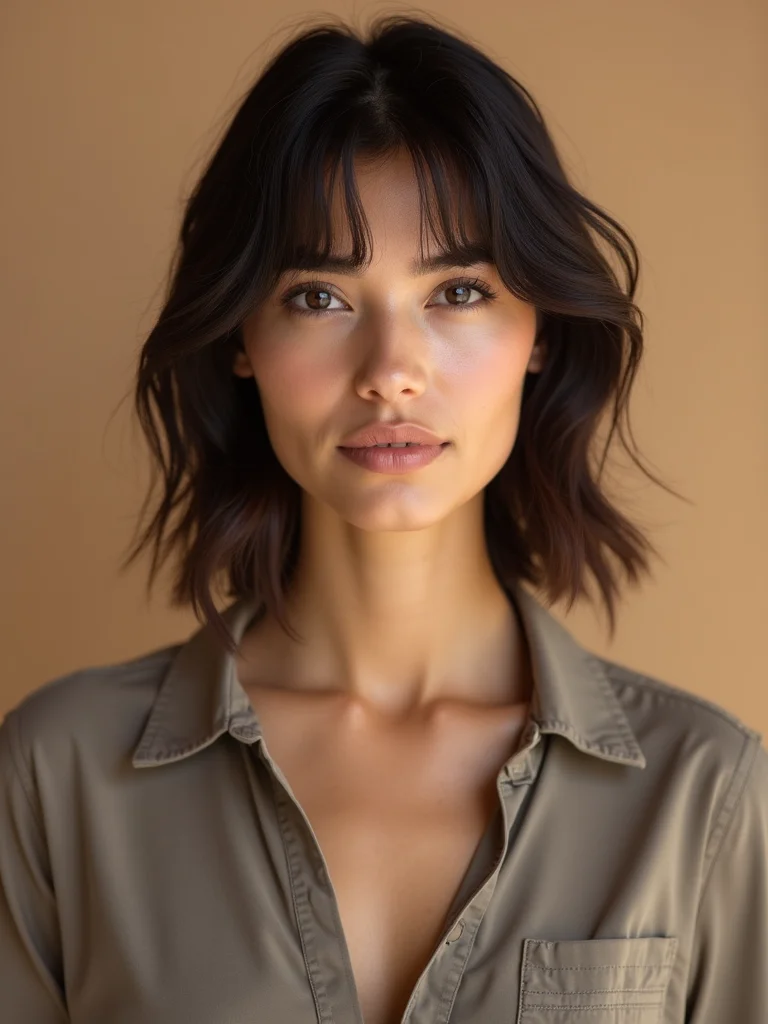
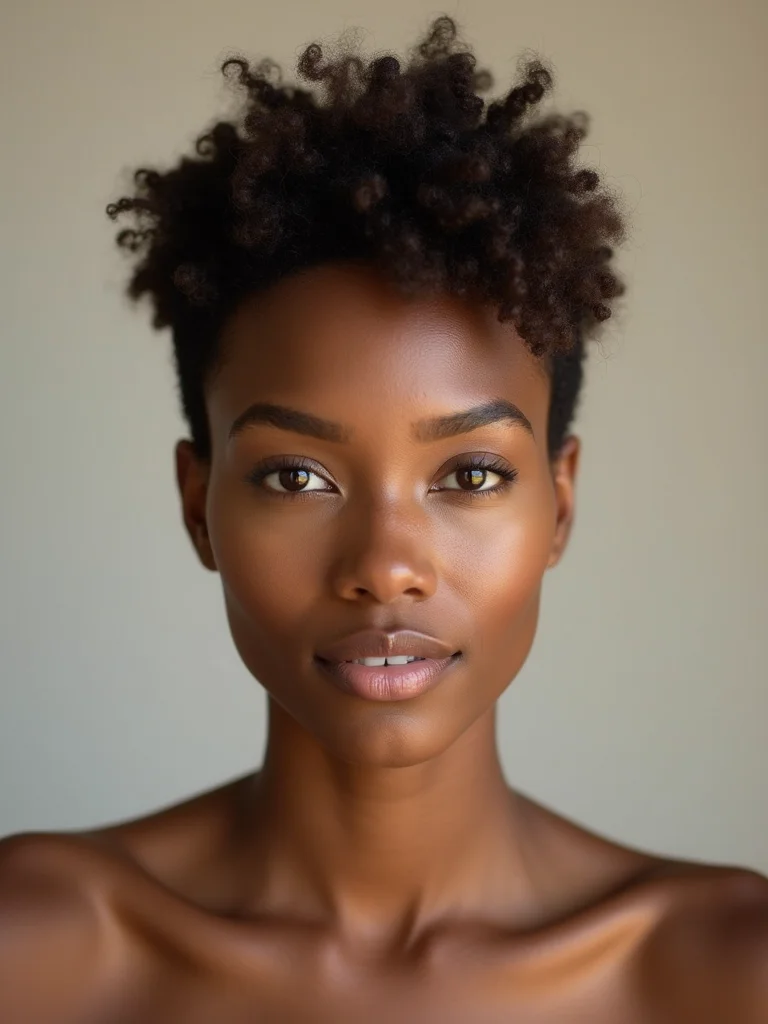
Long pixie cuts can go two ways in the mirror: sleek enough for a boardroom, or roughed-up enough for a Friday night, all from the exact same cut. Length on top makes the split personality possible. Enough hair stays up top to smooth flat or tousle into chaos, while the sides and back stay short and low-effort.
Sixteen versions of that range follow below, from glassy and polished to shaved and defiant, each with the specific product and habit that gets you there, plus the mistakes worth skipping along the way.
The Range in Brief
- The same long pixie looks elegant smoothed straight and turns edgy roughed up, so one cut covers both moods.
- Length stays on top while the sides and back stay short, which is what keeps the style so versatile.
- The perimeter grows out faster than the top does, so upkeep tends to focus on the back and sides.
Tousled Long Pixie

A tousled long pixie sits firmly on the casual end of the range, the top roughed into an undone shape that looks deliberate even though it reads accidental. A pea-size amount of matte clay worked through with fingertips, no brush needed, is the entire method: lift the roots, separate a few pieces, and stop before it looks combed.
This is the lowest-effort version in the lineup. A slightly uneven finish only adds to the look here, which makes it the easiest choice on a morning that allows two minutes, not twenty.
Sleek Side-Swept Long Pixie

A sleek side-swept long pixie sits at the opposite end from tousled texture: the top blow-dried smooth and swept to one side, the fringe tapering across the forehead into a polished, grown-up finish good for an office or a formal evening.
- Smoothing cream on damp hair, followed by a flat iron on the top section, builds the glossy sweep.
- A fine-tooth comb sets the part before the blow-dryer starts.
- Plan on this taking about five minutes once the routine is familiar.
Choppy Long Pixie

Choppy texture turns a long pixie rebellious. Uneven, jagged lengths turn the top into sharp, separated pieces, giving the cut visible motion even standing still. For more choppy detail on shorter versions, choppy pixie cut goes further.
- Work a small amount of clay between fingertips before pulling pieces apart at the tips.
- Pull the sharpest sections forward so they catch the light.
- Skip anything that smooths or weighs the pieces down.
Off-Center Part Long Pixie

Shifting the part well off-center adds drama to a long pixie in seconds, no new haircut required. Push the part deeper than usual and the long top piles onto one side, building volume and a strong diagonal line.
- Blow-dry the roots against the part’s new direction first for lasting lift.
- A deeper part looks more dramatic; a subtle shift keeps it office-safe.
- Switching the part to the opposite side gives the same cut a new silhouette.
Feathered Crown Long Pixie

Feathering and lifting the crown pushes a long pixie toward soft elegance, building airy volume right where the head is roundest. The crown layers get cut light and lifted at the root, so the top floats with body while the sides stay close.
Expect this version to flatter rounder face shapes especially well, since the added height up top adds visual length. A volumizing mousse at the roots plus a soft round-brush lift is the full routine.
Where This Goes Wrong
Overdoing the crown height on a narrow face can look top-heavy fast. Keep the lift concentrated at the very front third of the crown, not spread across the whole top.
Razor-Cut Long Pixie

A razor-cut long pixie holds a rare balance: weightless and soft to the touch, yet crisp enough in shape to still look deliberate.
Best Suited to Healthy Hair
Where scissors leave a blunter edge, the razor carves each tip into tapered, textured points, giving the top a light, feathery movement that still holds its definition through the day.
This technique suits healthy, straight-to-wavy hair best. The one real caution is condition. A razor can rough up strands that are already fragile or damaged, so it’s worth a direct conversation with a stylist about which tool fits the hair in front of them.
Curly Long Pixie

Curls bring their own built-in texture to a long pixie, springing into shape on top while tapered sides keep the whole silhouette contained. The extra length up top gives coils room to actually form and fall, rather than knotting into the tight, round shape a very short crop often produces on curly hair.
Cutting curls this way depends entirely on a stylist who understands the pattern. Expect the cut to be shaped to the curl itself, sides tapered gently so the curly top keeps a clean frame around the face. More curl-specific detail lives at curly pixie hairstyles.
“Mention hair texture before the shears come out, alongside whatever look is pinned to a board. A razor-cut edge behaves differently on fine, thick, or coarse strands.”
Micro-Bangs Long Pixie

Pairing a short micro fringe with sleek, elongated sides makes one of the boldest versions of a long pixie. The tiny blunt fringe sits high on the forehead while the sides stay long and smooth, and that contrast between cropped bangs and sleek length is exactly the point.
The Trade-Off Worth Knowing
This one leans firmly toward the edgy side, and it flatters balanced, oval faces especially well. The micro fringe needs the most frequent attention of any bang length here, since even a little growth changes the whole proportion of the face.
Micro bangs work best for someone who truly enjoys the upkeep and doesn’t mind revisiting the salon often. Browse fringe options at long pixie cut with bangs.
Side-Shaved Long Pixie

Shaving one side adds instant edge to a long pixie, though kept subtle it can stay surprisingly polished. A discreet, closely tapered panel removes weight and draws a clean, asymmetric line while the long top stays full.
- A barely-there taper looks understated; a full clipper-guard shave looks bold.
- The shaved panel can hide under the long top or show, depending on how it’s styled that day.
- Regrowth on the shaved section shows up sooner than anywhere else on the head.
Which micro-fringe reality fits you?
1I don’t mind a trim every few weeks just for the bangs
This cut rewards you; the fringe stays sharp and the proportion holds.
2I want to touch my hair as little as possible
Consider a longer fringe instead; a micro-bang grows out fast and changes the whole look.
Grown-Out Long Pixie

A long pixie is, by nature, already a grown-out pixie worn on purpose, and pushing it further as it lengthens keeps that same relaxed, in-between charm going. Extra length softens the cut and starts edging it toward shag or crop-to-bob territory, which can become its own phase worth living in for a while.
The trick to an easy grow-out is layering at every stage, so the lengthening top keeps falling in deliberate, airy pieces as it grows. A skilled stylist trims to reshape the grow-out along the way, which is what keeps each stage looking like a deliberate choice.
The look holds up on its own. A texture spray keeps the lengthening top from going limp between visits, and worn this way, the grow-out becomes its own style worth keeping. For the shape it eventually lands on, pixie bob haircut shows where it can end up.
Deep Side-Part Long Pixie

A deep side part paired with a glossy sweep makes the most glamorous, old-Hollywood version of a long pixie. Part the hair low on one side and sweep the long top across in a smooth, shining wave for a look that feels dressed-up and a little vintage.
- This is the version built for a special occasion, not a Tuesday morning.
- A shine serum plus a soft wave through the swept length carries the polished, lacquered finish.
- The deeper the part, the more dramatic the sweep looks.
📋Keeping a Grow-Out on Track
- ✓Book a reshape appointment before the ends start looking stringy, not after.
- ✓Ask for layering as part of the reshape, to keep movement through the lengthening top.
- ✓Add a leave-in or light oil once the ends get long enough to dry out.
Piecey Bangs Long Pixie

A razored, piecey fringe sits right on the line between soft and sharp, which is what makes it such a versatile bang for a long pixie. Slicing the bangs into separated, feathery pieces frames the eyes without the weight of a blunt fringe.
Soft Movement, Not a Hard Line
Worn swept to the side or straight down, the fringe softens the whole cut while still keeping a textured edge. It grows out kindly too, since the feathered ends simply lengthen into the rest of the top without leaving an awkward line.
This is the fringe for anyone who wants movement in their bangs more than a graphic, geometric statement. A little texture cream on dry ends keeps the pieces separated through the day.
Understated Taper Long Pixie

For understated elegance, a clean taper is really all a long pixie needs. The back and sides get tapered gently and precisely while the top stays long and simple, giving the whole cut a refined, classic finish with none of the edge of a shave or a chop.
This version flatters almost any face and suits almost any setting, which makes it the safest, most versatile choice on this list. The beauty sits in the cut itself more than the styling, so it asks for little beyond a smooth of cream and a tuck behind the ears.
- Works well as a first long pixie, before committing to anything bolder.
- Needs the least daily styling time of any version here.
- Holds up well between salon visits since there’s no sharp line to grow out awkwardly.
Wet-Look Long Pixie

A wet-look finish takes a long pixie to its glossiest extreme, hair slicked back with shine for an editorial, just-out-of-the-shower effect. A strong gel or a wet-look pomade combed through the top and back gets it there, leaving the hair smooth, dark, and gleaming.
- This is purely a styling finish, so the same haircut can go wet-look one night and tousled the next.
- A little extra gel at the hairline keeps flyaways from breaking the sleek effect.
- Works especially well for an event or a night out.
Color-Blocked Long Pixie

Color pushes a long pixie firmly toward edgy, and bold color-blocking suits its sharp shape better than almost any other cut. Setting one block of color against another, a bright panel beside a dark base, plays directly off the angles of the cut.
Because a pixie is so short, color experiments cost less and change faster than they would on long hair, which makes it an easier canvas for trying something bold. A block that feels too risky on long hair often feels playful and low-stakes on a pixie.
- Keep the color placement deliberate, following an existing part or panel line.
- Plan on a touch-up sooner than a single, all-over color, since block edges show regrowth fastest.
- A gloss between full color visits keeps the contrast looking fresh.
Soft Undercut Long Pixie

A soft undercut is the quiet way to add edge to a long pixie without anything dramatic showing on the surface. A gently graduated short section gets tucked under the long top and blended softly, removing some weight and lifting the top while staying mostly hidden.
- Debulks thick hair without changing the visible silhouette at all.
- Reveal it by tucking hair behind the ear, or keep it fully hidden.
- Growing it out takes a little patience, since any undercut needs a few sessions to blend back in.
Common Mistakes to Avoid
The most common mistake with a long pixie is treating styling as an afterthought. Because the cut is so short and visible, the finish does most of the work of pushing it elegant or edgy, and skipping it usually just leaves the shape looking flat.
The second mistake is ignoring the perimeter. The back and sides grow out faster than the top does, so the shape softens at the neckline weeks before the top needs any attention. A reshape usually runs around $45, which is worth planning for on its own schedule, separate from a full color visit.
Long Pixie Cuts, Answered
?What actually separates a long pixie from a regular short pixie?
Length on top is the whole difference. A regular pixie keeps everything short all over, while a long pixie leaves enough length up top to smooth flat, sweep to the side, or rough up into texture. The sides and back stay just as short as any other pixie.
?Does texture change which version of this cut looks best?
By a wide margin. Curl pattern needs that extra length on top just to form and fall the way it’s supposed to, so the cutting method shifts for coils and waves. Straight hair has the most flexibility, since almost any finish on this list, sleek, tousled, or razored, shows up clearly on a smooth surface.
?How long does it take a long pixie to grow into a bob?
Most people notice a shift toward bob territory somewhere around six months to a year, depending on how fast hair grows and how much shaping happens along the way. Regular trims during that stretch keep the in-between stage looking like a deliberate style choice.
A Cut That Refuses to Pick a Side
The real magic of a long pixie is that it never fully commits to one mood. Smooth and swept, it comes across as pure elegance. Choppy and shaved, it lands as pure edge. Either mood is available anytime. Few haircuts offer that kind of range in such a low-maintenance package.
Think about which mood fits most days, then start there; the styling habits are what flip the same cut between the two. Bring a reference photo to a stylist experienced with short hair, and a long pixie will hand back both elegance and edge in a single shape. The wider range of pixie lengths lives at pixie cut styles.
Worth a Look