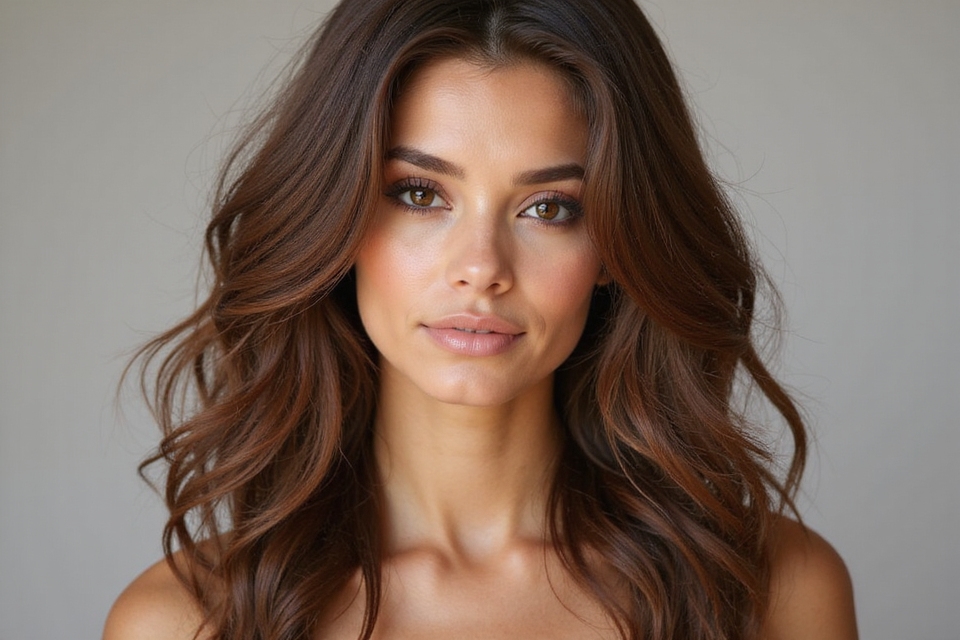
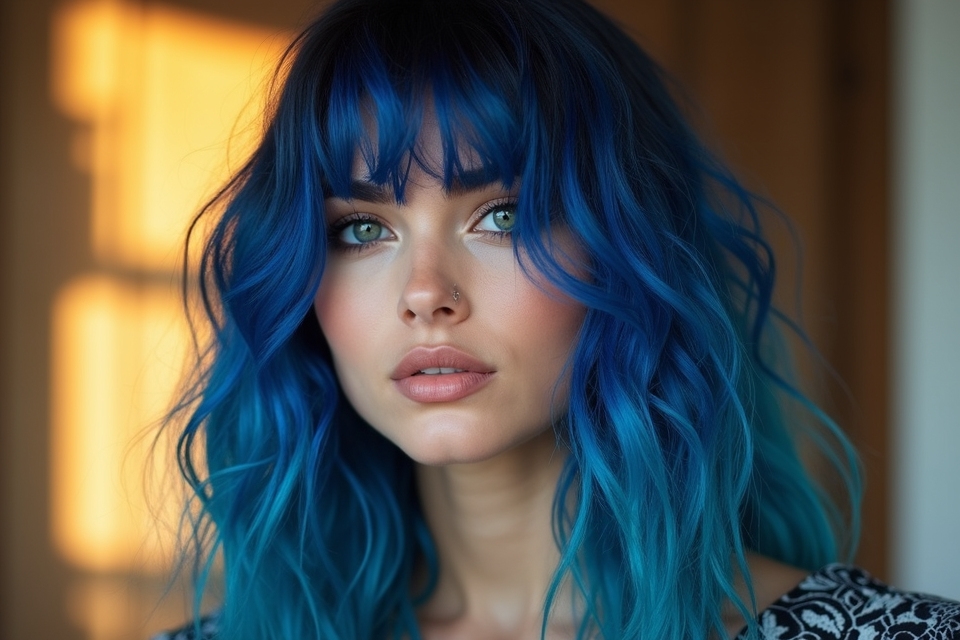
No color combination turns heads like black and blonde. It’s the highest-contrast pairing in the book, light against dark with nothing in between, and depending on how it’s placed it can whisper or shout. That range is the whole reason it never goes out of style.
The trick is that black-and-blonde is not one look but dozens, from a soft, sun-sketched balayage to a graphic, split-down-the-middle statement. The placement decides everything: how bold it reads, how much upkeep it demands, and who it flatters. Here are nineteen black-and-blonde ideas across every level of drama, with how each is done and what it asks of you, so you can find the contrast that fits.
Before You Go Two-Tone
- Black-and-blonde ranges from soft and blended to bold and graphic; placement sets the drama.
- Getting blonde next to black means lifting hair light, so a skilled colorist matters.
- It’s a real commitment: expect $150 and up for the service and ongoing toning and root work.
- Bond-building and moisture are non-negotiable, since the blonde sections are the fragile ones.
The Soft Balayage Blend
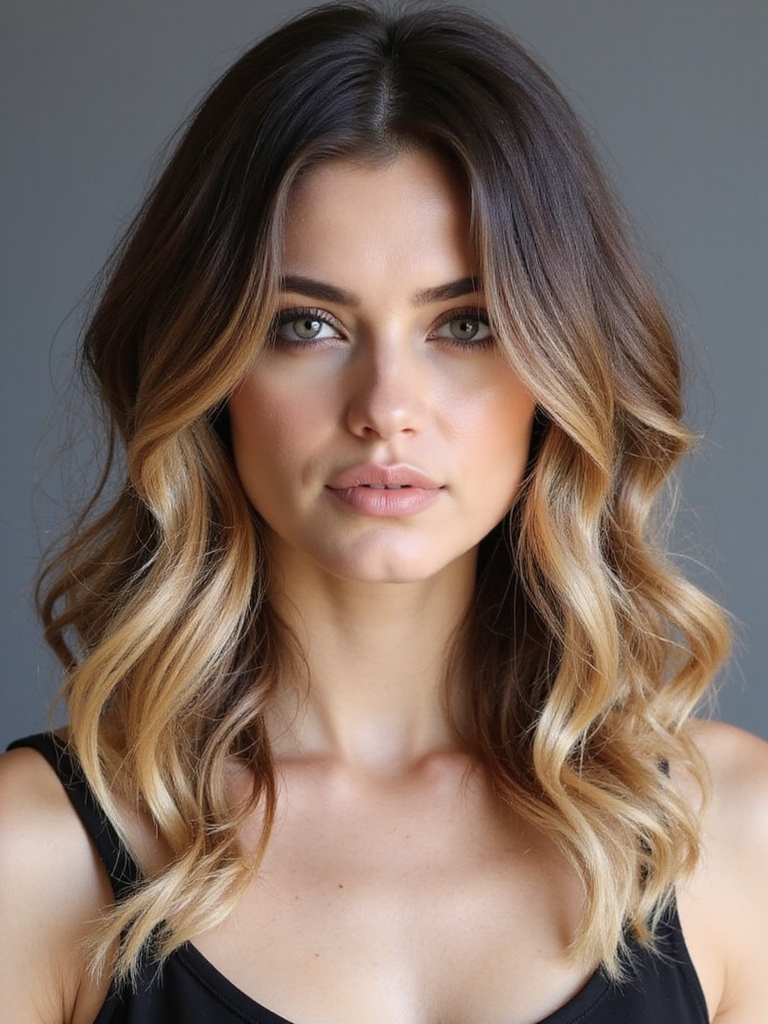
The gentlest way into black-and-blonde is a hand-painted balayage, with blonde swept softly through a black base so the two melt into one smooth blend. It’s the low-commitment version, since the painted-on placement grows out without a harsh line. How it works:
- Blonde is freehand-painted starting a few inches below the root.
- The soft grow-out means fewer root touch-ups than all-over color.
- It’s the most natural, sun-kissed take on the contrast.
The Shadow Root
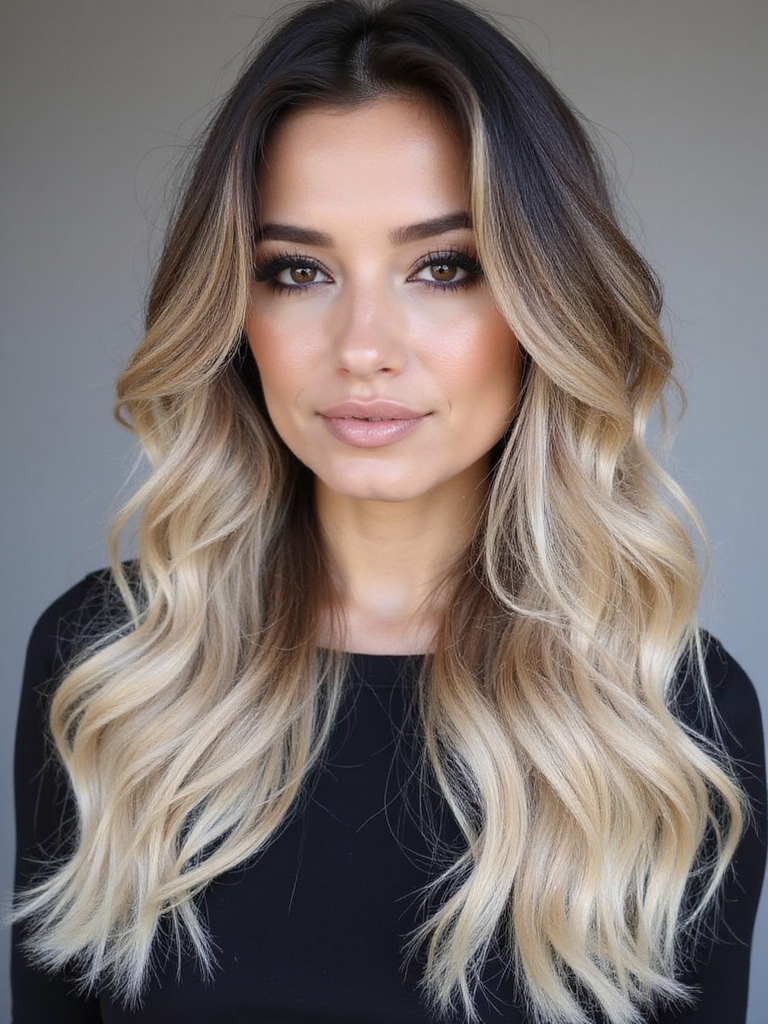
A shadow root flips the usual approach, keeping the roots deep black and letting the color fade into blonde further down, so the dark base grounds the brightness above. It’s the smartest choice for anyone who wants blonde without the constant root upkeep. Why it’s clever:
- The black root is deliberate, so grow-out looks intentional for months.
- It softens the contrast into a gradient, easing the hard split away.
- It stretches your salon visits way out, which saves money over time.
Bold Blonde Highlights
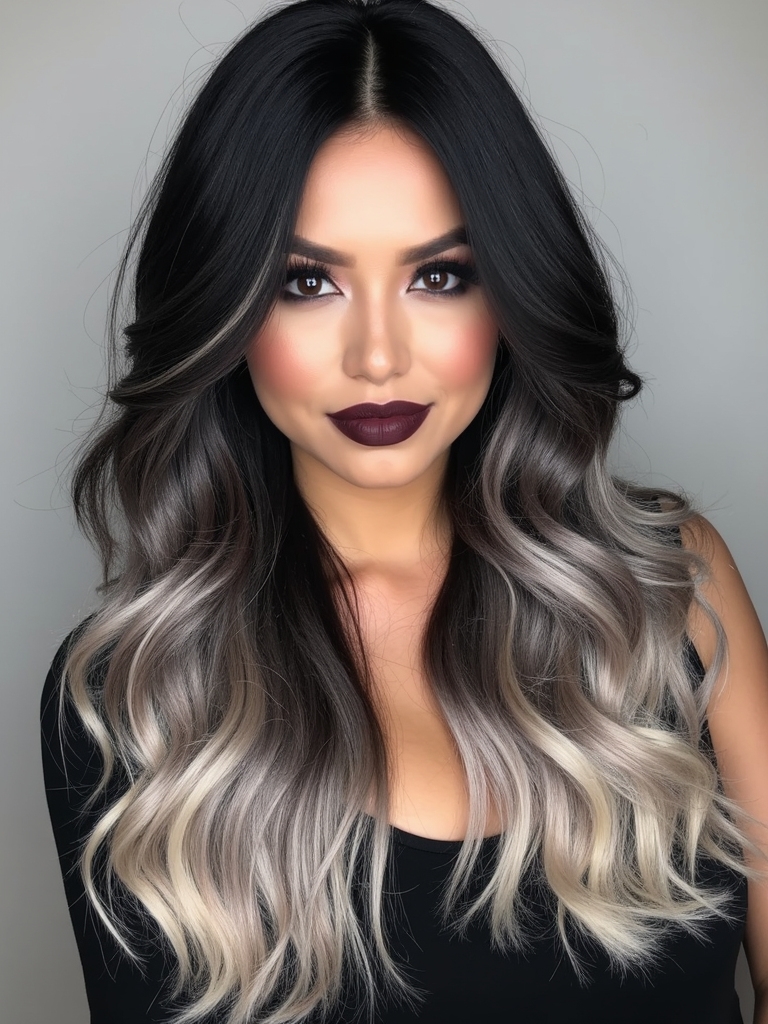
For real drama, chunky blonde highlights streaked through black hair bring back that bold, high-contrast Y2K energy that’s everywhere again. These aren’t subtle baby lights. They’re thick, deliberate ribbons of blonde meant to be seen.
The placement is the whole statement, with wide sections lifted bright against the dark base for maximum pop. Face-framing pieces make the contrast even more striking, drawing light right to your features.
This one commits you to upkeep, since bright blonde against black shows regrowth fast and needs toning to stay clean. Budget for a refresh every couple of months, and lean on the bond-builder to keep those lifted pieces strong.
The Ombre Fade
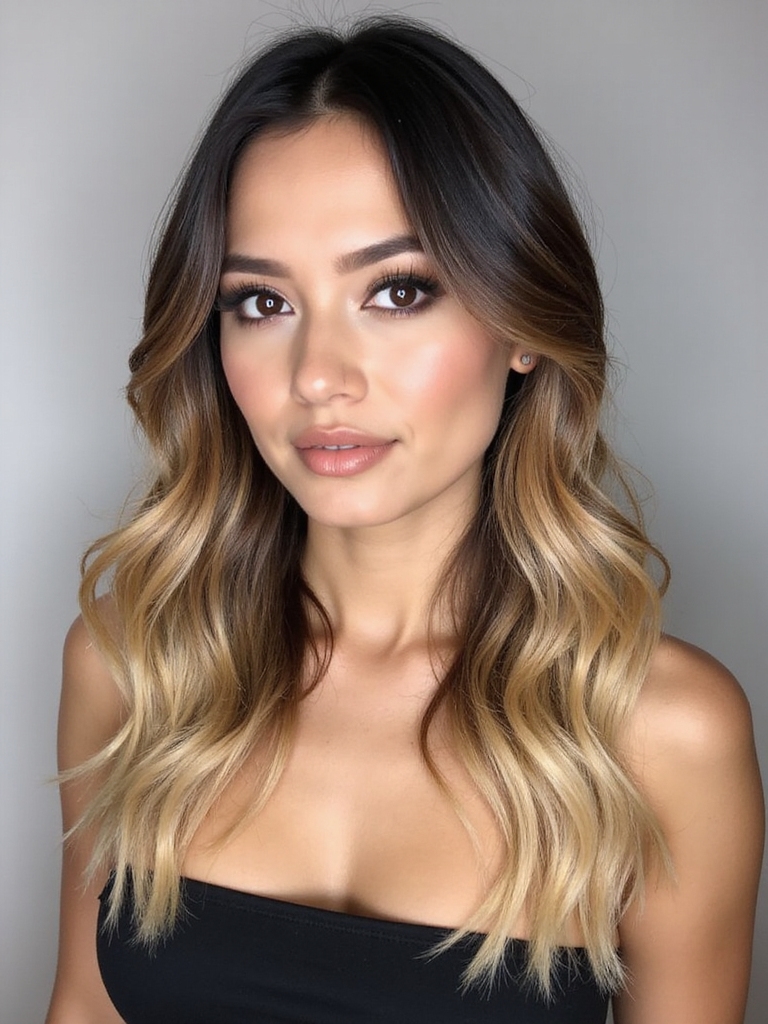
An ombre keeps the top black and fades it into blonde toward the ends, giving you a vertical gradient that’s dramatic without a hard line. It shows off length beautifully. It photographs like a dream.
Because the color lives in the lower half, the roots stay low-maintenance while the ends carry the brightness. A few notes:
- The dark-to-light fade flatters and elongates long hair especially.
- Roots stay black, so grow-out is slow and forgiving.
- Style it in loose waves so the gradient really shows off.
The Hidden Peekaboo
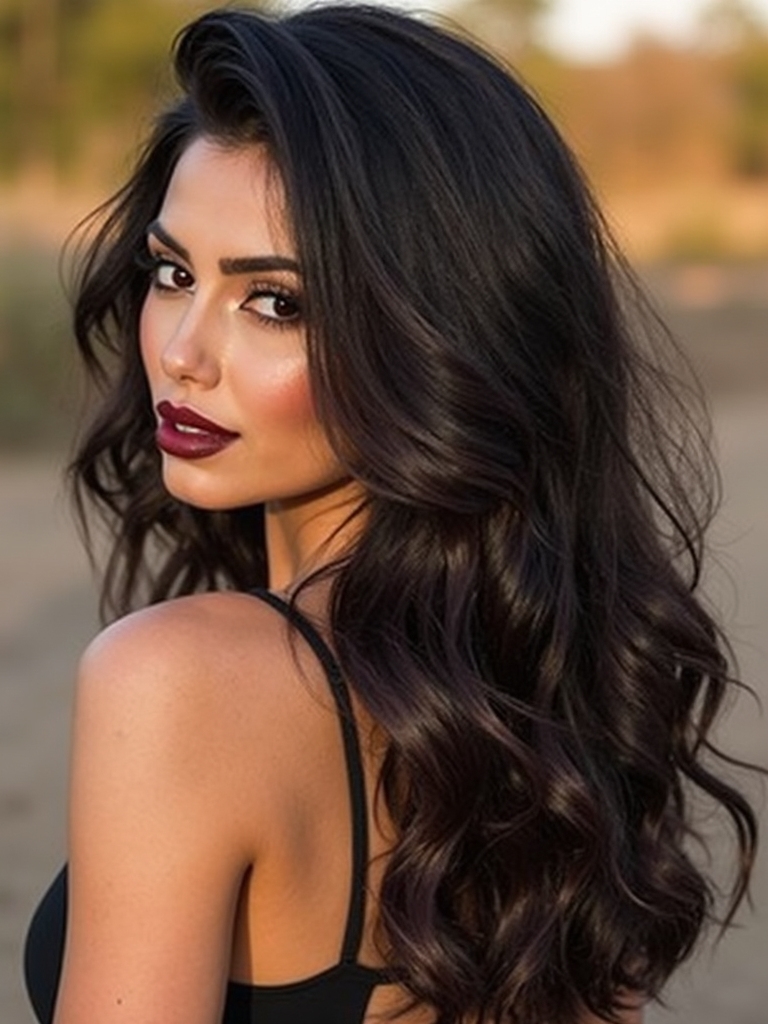
A peekaboo hides blonde underneath a black top layer, so the color only flashes when you move, tuck your hair, or throw it up. It’s the sneaky, playful take, a two-tone you can keep entirely to yourself on the days you want it hidden. Why people love it:
- The blonde stays hidden until you want it seen, flashing with movement.
- It’s office-friendly, since the top layer reads all black.
- Less of your hair is lifted, so it’s gentler and cheaper to maintain.
Graphic Color-Blocking
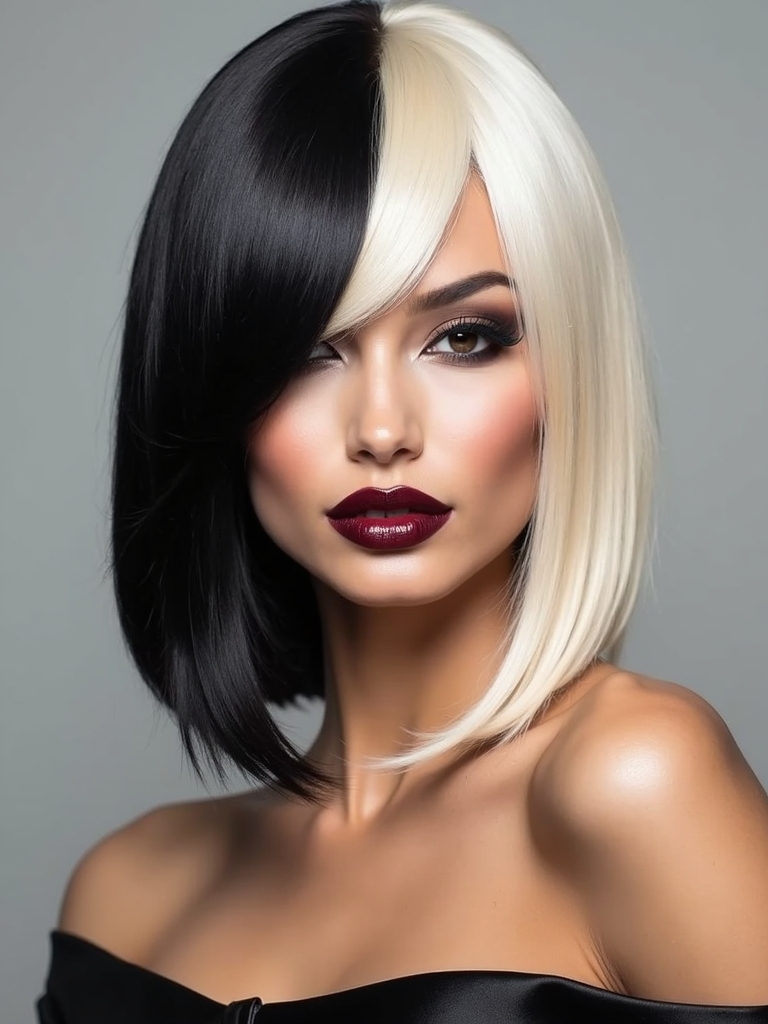
Color-blocking places solid sections of black and blonde right next to each other with no blending, for a graphic, editorial look that’s pure art direction. Think a blonde front against a black back, or split panels that make a bold geometric statement. The lines are crisp on purpose.
The hard lines are the whole point, so precision placement matters and a skilled colorist is essential. Few color techniques announce themselves quite this unapologetically.
It’s a committed look that shows regrowth clearly and needs upkeep to keep the blocks crisp. But if the goal is the loudest color in the room, nothing beats it.
Face-Framing Money Pieces
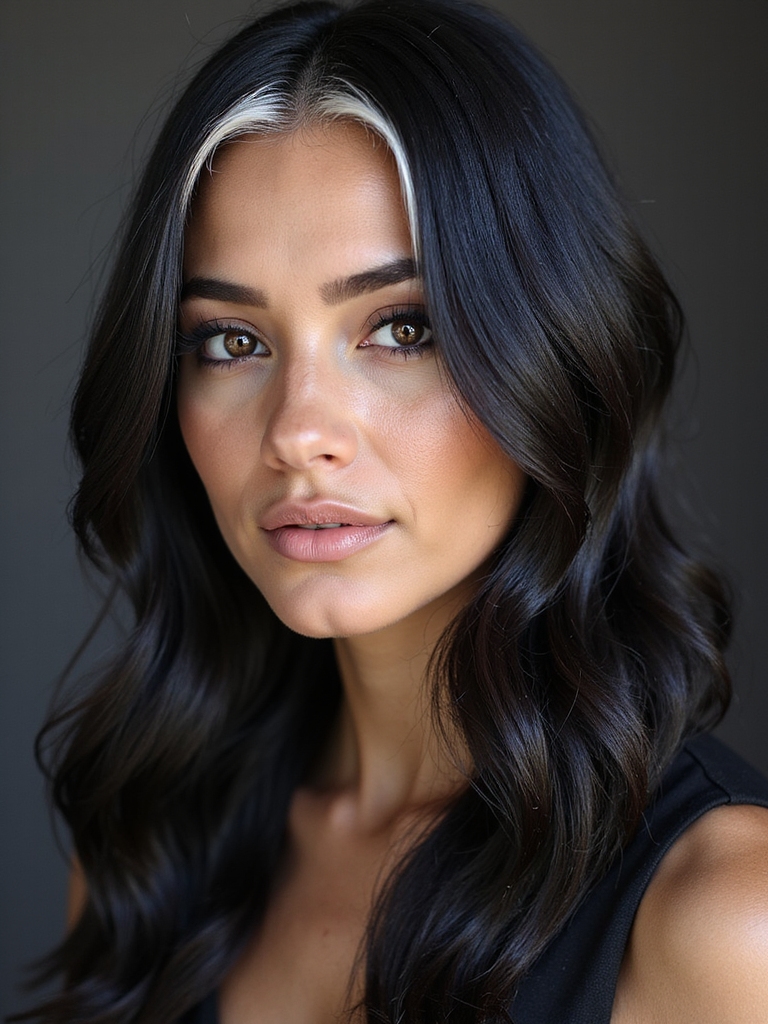
The money piece puts bright blonde right at the front, framing your face against an otherwise black head of hair. It’s the most flattering placement there is, since the light draws attention straight to your features and brightens your complexion. A little lift, a big payoff.
It’s a small amount of lift for a big payoff, which makes it a smart first step into black-and-blonde. What to know:
- The blonde front pieces brighten the face and frame it beautifully.
- Only the front is lifted, so it’s lower-cost and lower-damage.
- It suits every length and pairs with any of the other placements here.
The Melted Gradient
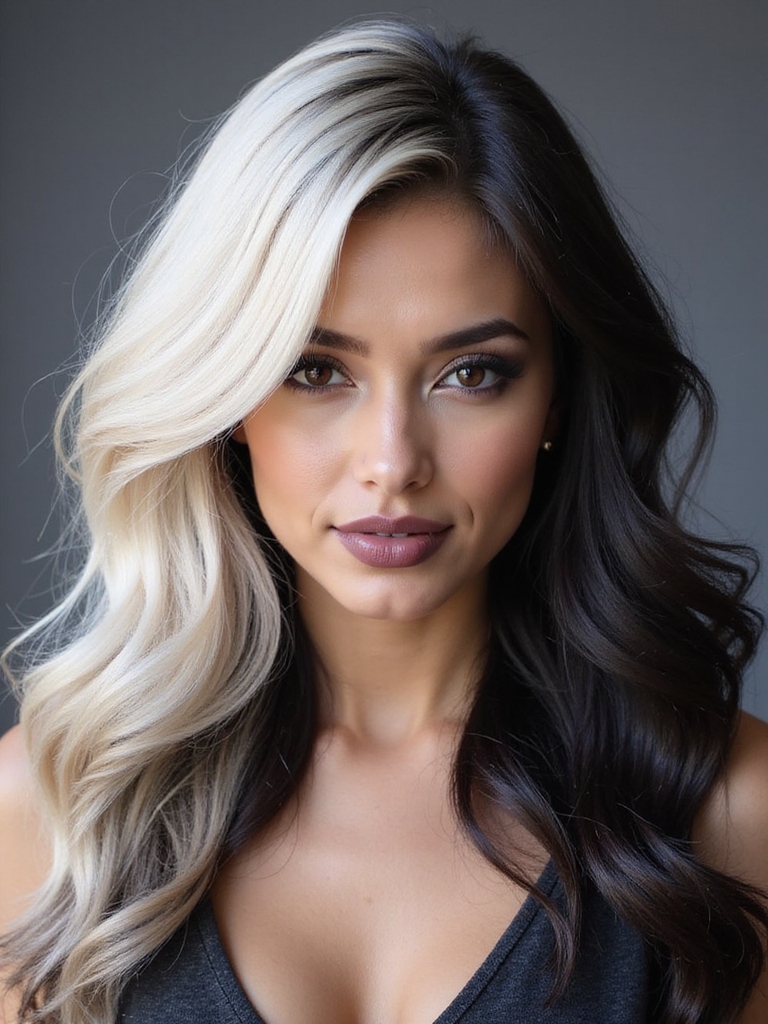
A gradient blends black through every step into blonde so smoothly that the eye can’t find the border between them. It’s the softest, most polished way to wear high contrast, trading hard edges for a slow, painterly transition. How it’s built:
- The colorist melts the tones so the shift looks gradual and natural.
- It’s more forgiving on grow-out than a hard block or line.
- It reads expensive and modern, the opposite of a harsh two-tone.
Alternating Panels

Alternating thick ribbons of black and blonde down the whole head creates a striped, high-drama effect that’s bold from every angle. It’s a step beyond highlights, with the two colors trading off in wide, deliberate sections. Why it stands out:
- The alternating ribbons keep the contrast going all over, not just up front.
- It’s dramatic and eye-catching, especially in a sleek, straight style.
- It needs a precise colorist and regular upkeep to stay crisp.
The Half-and-Half Split
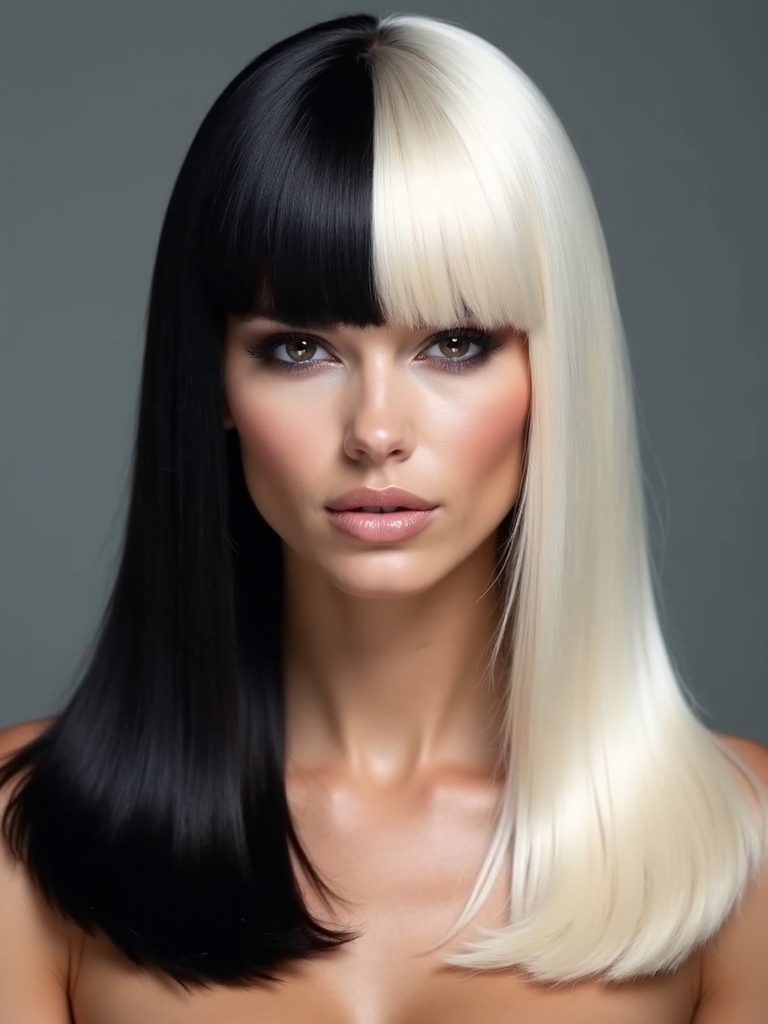
The boldest statement here splits the head straight down the middle: one side black, one side blonde. It’s the ultimate high-contrast, look-at-me color, and conversations start whether you’re ready for them or not. What it demands:
- A clean center split with one side fully lifted to blonde.
- It’s maximum drama and not remotely subtle, so commit fully.
- Upkeep is serious, since the blonde half needs constant toning and care.
🅰️Blended
Balayage, ombre, or a gradient melts the two tones together for a soft, low-upkeep contrast.
🅱️Graphic
Color-blocking, stripes, or a half-and-half split keeps the line sharp for maximum drama.
Frosted Tips
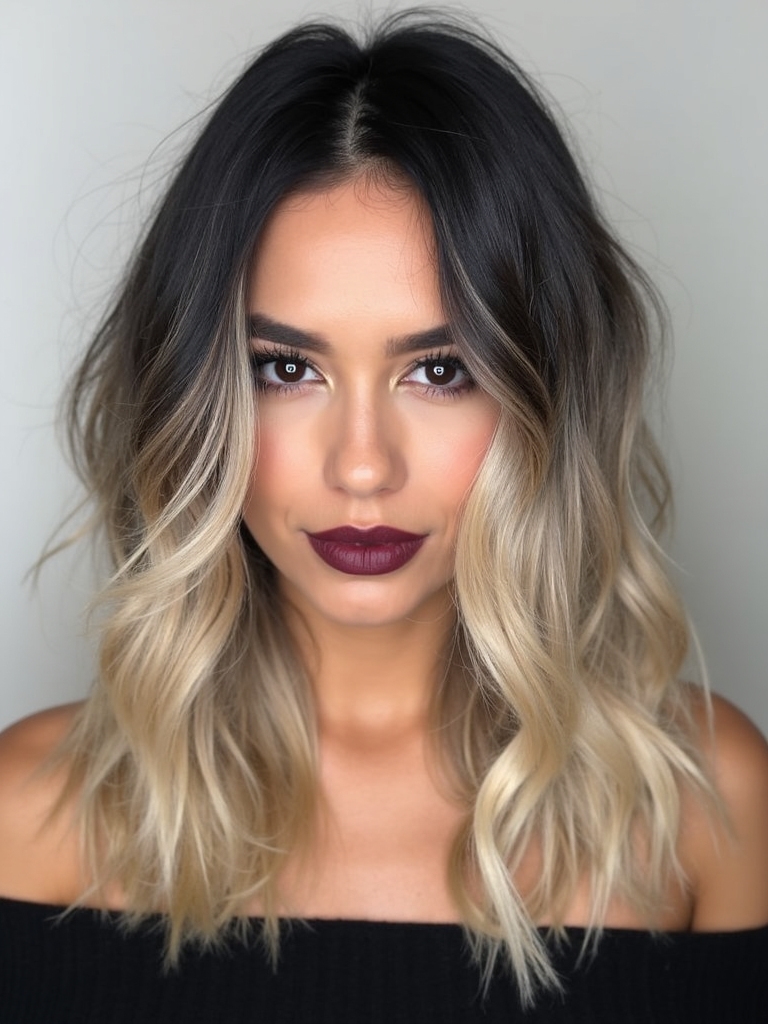
Frosted tips lift just the very ends of black hair to a cool, frosty blonde, for a modern, edgy finish that reads especially cool on short cuts and textured styles. It’s a contained, low-commitment way to try the contrast.
Because only the tips are lifted, the damage and upkeep stay minimal, and the look grows out easily with a trim. A few pointers:
- Only the ends are lifted, keeping it low-damage and low-cost.
- It reads best on cropped cuts, spiky styles, and textured shapes.
- A cool toner keeps the frost icy and clean between visits.
Two-Toned Braids
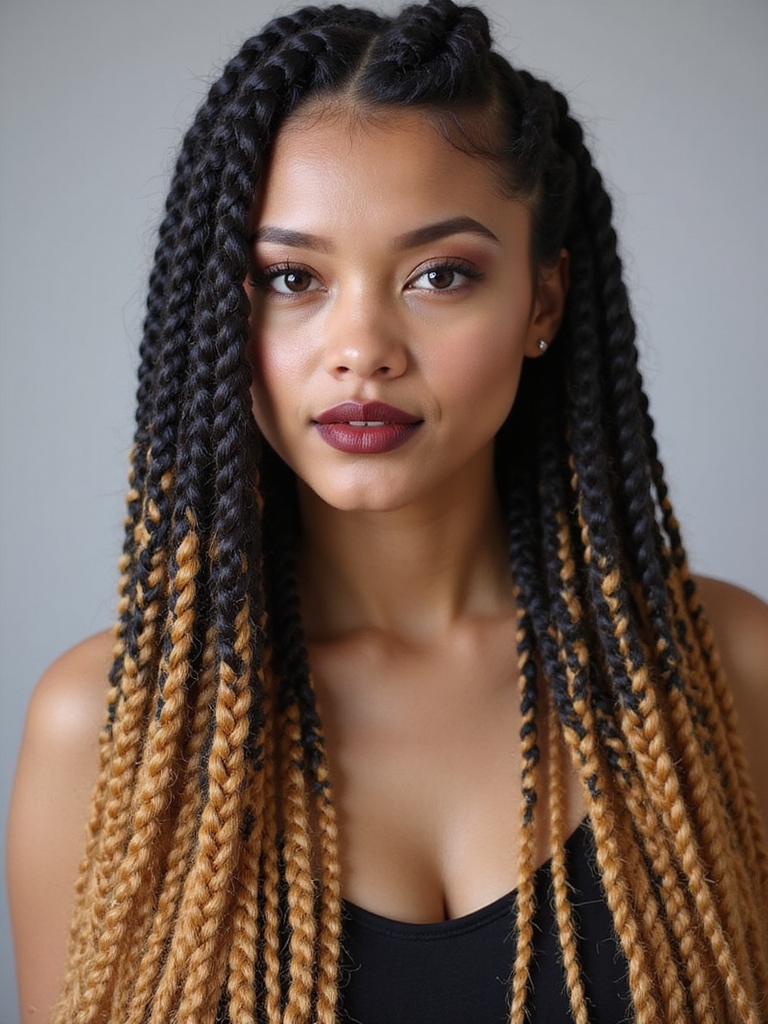
Black-and-blonde really comes alive in braids, where the two colors twist together to show off the contrast in a way loose hair can’t. Whether it’s your natural hair or braided extensions, the interlocking tones make the pattern pop, and it doubles as a protective style.
For braided styles, using pre-colored extensions is a smart way to get the contrast without lifting your own hair at all. Keep it comfortable:
- Colored braiding hair delivers the contrast with zero damage to yours.
- Keep braids snug but never tight to protect your edges and hairline.
- The twisting tones make cornrows, box braids, and knotless braids shine.
A few color terms to bring to your consultation:
📖Lift
Lightening dark hair to a paler shade; getting to blonde from black takes the most lift.
📖Toner
A color applied after lifting to neutralize brass and set the exact shade of blonde.
📖Bond-builder
A treatment that protects the hair’s structure during lightening, essential for going blonde.
The Icy Ashy Blonde Version
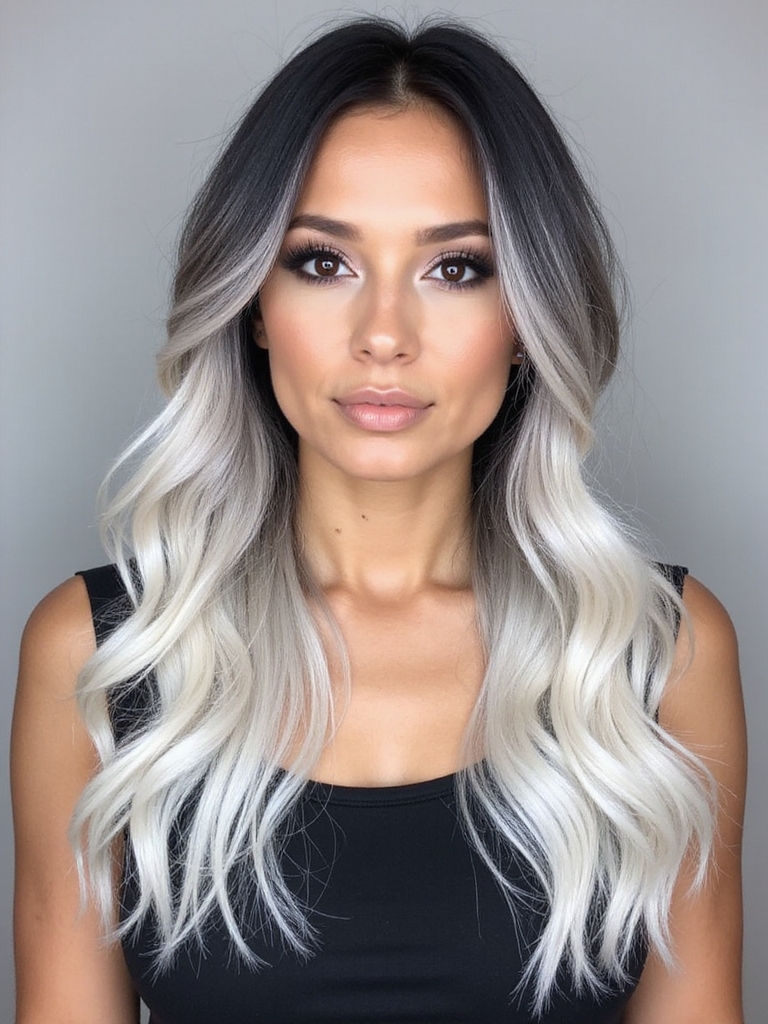
Not all blonde is warm, and pairing black with a cool, ashy blonde gives the whole look a sharper, more modern edge. The steely, silver-leaning blonde makes the contrast feel icy and high-fashion, all cool tones. How to keep it that way:
- Ask for a steely, ashy blonde with no gold in it at all.
- A purple or blue toner fights the brass that wants to creep back in.
- See the ashy blonde guide for keeping the tone crisp.
The Dip-Dye Ends
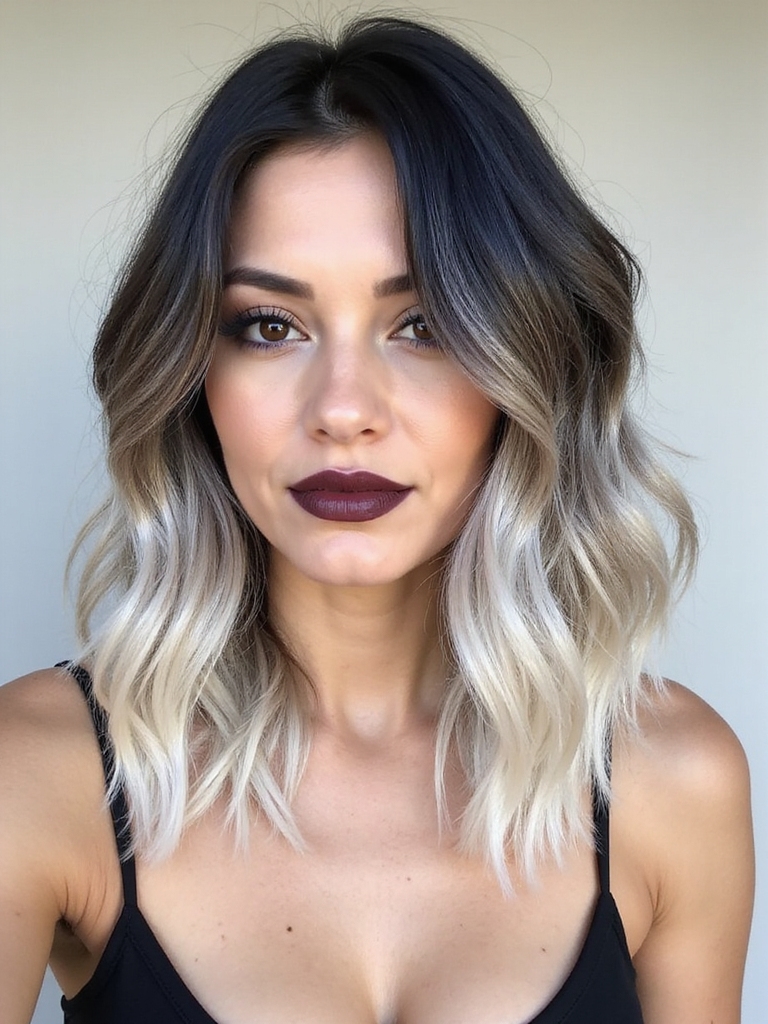
A dip-dye takes black hair and dips the last few inches into blonde with a defined, deliberate line for a bolder finish. It’s playful and eye-catching, and it keeps the color contained to the ends where it’s easy to change or trim off. Why it works:
- The defined line is the whole look, so it’s bolder than an ombre.
- Color stays on the ends, keeping roots and upkeep low.
- It’s easy to change your mind, since the blonde can be trimmed away.
The assumptions that catch people off guard mid-appointment:
❌ Myth: Myth: you can go from black to blonde in one appointment.
✅ Reality: Lifting dark hair to a clean blonde safely often takes several sessions; rushing it is how hair ends up brassy or damaged.
❌ Myth: Myth: black-and-blonde is low-maintenance because the roots are dark.
✅ Reality: A shadow root helps, but the blonde sections still need regular toning and a full moisture routine to stay healthy and bright.
The Streaked Underlayer
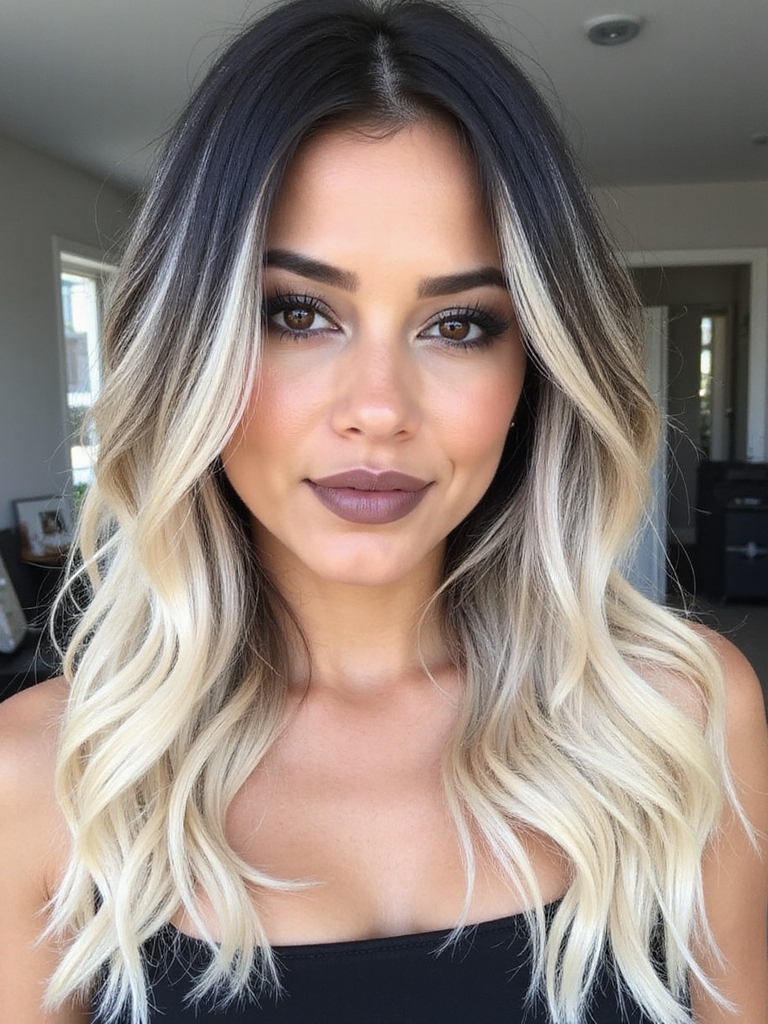
A streaked underlayer runs blonde through the bottom section of the hair, so the contrast shows in flashes underneath the black top and teases the color out. It’s a middle ground between a hidden peekaboo and full highlights, giving you visible pops without a full commitment.
The streaks catch the light when your hair moves or when you wear it half-up, so the contrast reveals itself gradually. It’s a versatile, wearable way to bring the two tones together.
Because only the underlayer is lifted, it’s easier on the hair and the wallet than all-over color. It’s a smart pick for testing how much contrast you actually want before going bolder.
The Zebra Effect
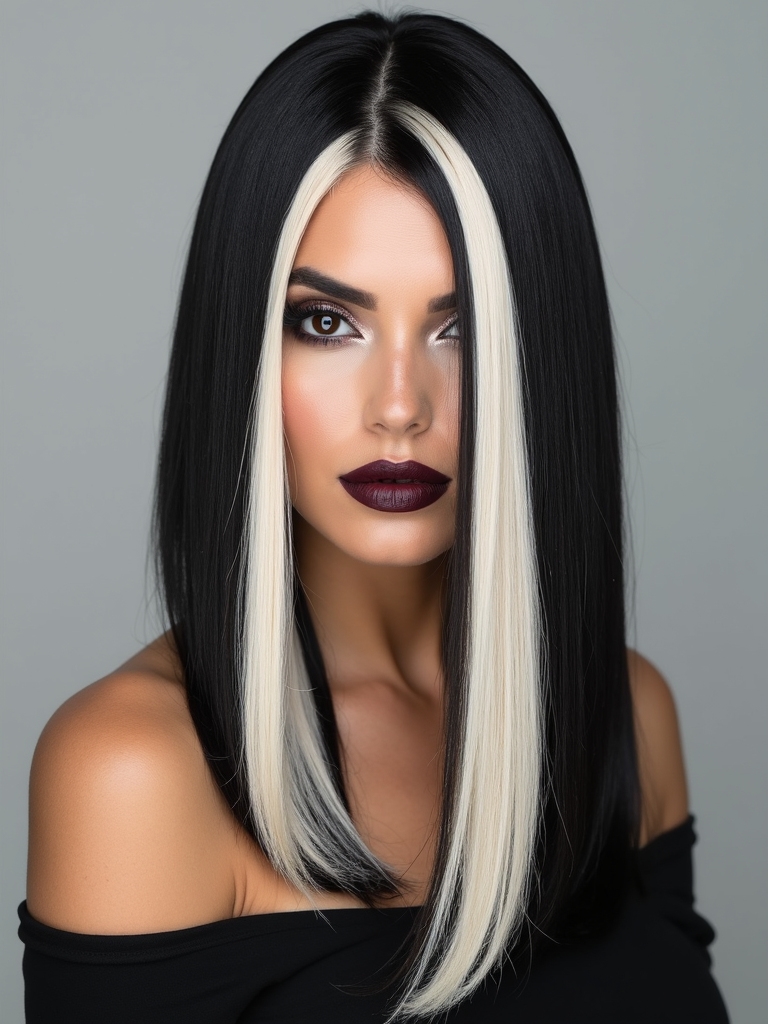
The zebra effect goes all-in on stripes, with thin, alternating bands of black and blonde running through the hair for a wild, high-fashion pattern. It’s the most daring, editorial version of the contrast. The runway loves it right now. What to expect:
- Thin alternating stripes create the graphic zebra pattern all over.
- It’s a statement-and-a-half, so it’s for the truly fearless.
- It demands a skilled colorist and serious upkeep to stay sharp.
Black and blonde is the boldest contrast there is, so the only wrong way to wear it is halfway. Commit to the placement and the upkeep, and it pays you back.
The Black-and-Blonde Pixie
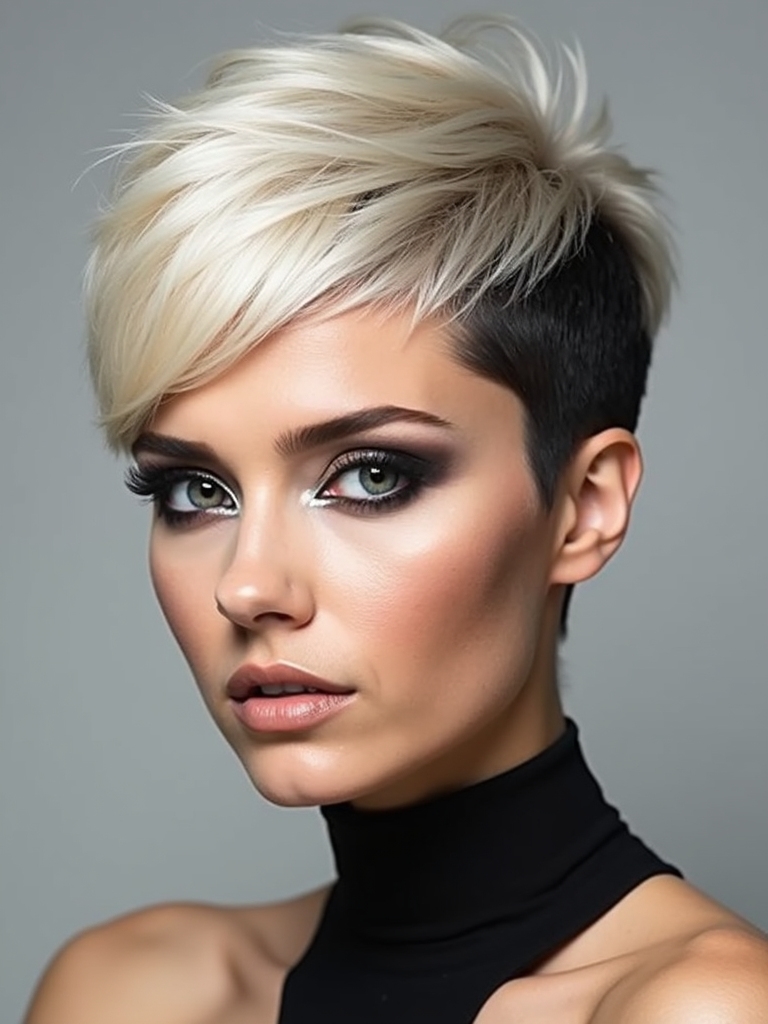
On a pixie, black-and-blonde turns architectural, with the contrast carving out the shape and making every angle of the cut pop. A blonde top over black sides, or a split down the crop, looks bold and modern on short hair. Short hair loves this trick.
For Short Hair
The short length is actually the perfect canvas for high contrast, since there’s less hair to lift and less length to keep healthy through the color. It’s the lowest-damage way to wear a truly dramatic two-tone.
Style it with a little texture paste to show off the color placement, and keep the blonde toned. See the pixie options if you’re choosing a crop to color.
The Two-Tone Mullet
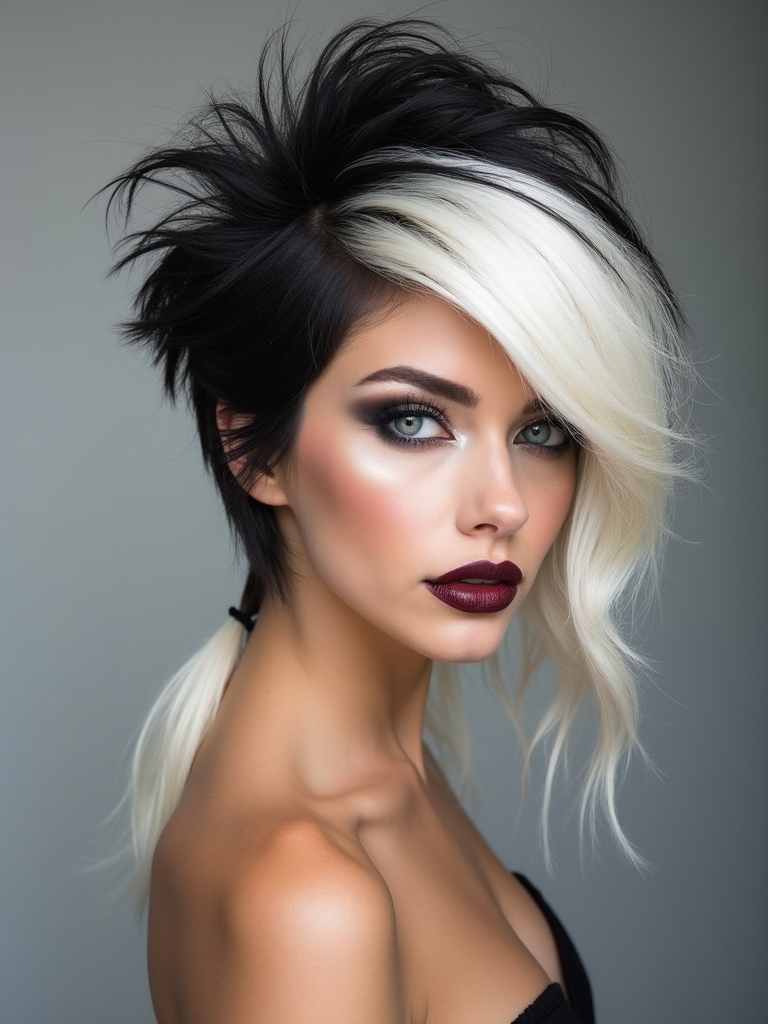
Put black-and-blonde on a modern mullet and you get peak rebellious, rock-and-roll energy, with the contrast amplifying the cut’s already-bold shape. A blonde top fading to black length, or streaks through the shag, leans all the way into the edge.
The color and the cut feed off each other here, both loud, both unapologetic, for a look that’s all swagger. It’s the version for anyone whose whole vibe is turned up to eleven.
It’s a high-maintenance commitment on both fronts, cut and color, but the payoff is a look nobody else will be wearing. Pair it with the wolf cut energy for more shaggy inspiration.
Cascading Two-Tone Waves
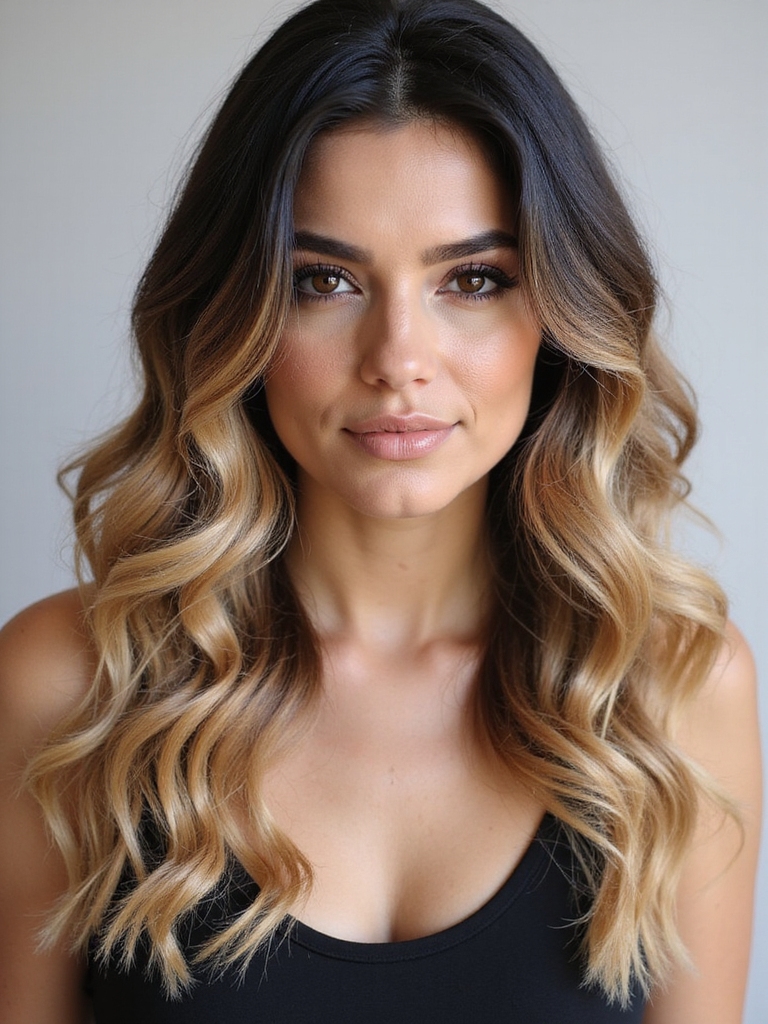
Long, cascading waves are the ultimate showcase for black-and-blonde, since the movement lets both colors ripple and catch the light as they fall. Whatever placement you chose, waves show it off at its best, with the contrast swirling through every bend. The movement does the work.
This isn’t a separate technique so much as the way to style any two-tone color for maximum impact. A curling iron or a wand set in loose, uniform waves makes the colors dance.
Finish with a shine spray so both tones gleam, and the light does the rest. It’s the styling move that makes any black-and-blonde look twice as expensive.
Who Black-and-Blonde Suits Best
The honest truth is that black-and-blonde flatters almost everyone, because the contrast itself is the draw and the placement can be tuned to you. If you want it to brighten your face, a money piece or face-framing blonde does the work; if you want drama, color-blocking and the half-and-half split deliver; if you want low commitment, a peekaboo, dip-dye, or shadow root keeps the upkeep gentle.
Cool complexions tend to love an ashy blonde against black, while warmer skin glows next to a softer, golden blonde, so talk tone with your colorist.
Where it asks for honesty is the maintenance, because getting blonde to sit next to black means lifting hair light, and lifted hair is fragile. Expect a bond-building and moisture routine to be part of your life, a purple or blue toner to keep the blonde from going brassy, and a root or gloss refresh every couple of months to keep the contrast crisp.
Budget for the service, which starts around $150 and climbs with complexity, and be patient, since getting dark hair to a clean blonde can take more than one session. Respect the upkeep and the contrast rewards you with one of the boldest, most striking looks there is.
Black-and-Blonde Questions
?How much does black-and-blonde hair cost?
Expect to start around $150 and climb from there, since getting blonde next to black means lifting hair light, which is time-consuming and skilled work. A full two-tone session can run three or four hours in the chair.
Bold placements like color-blocking or a half-and-half split cost more than a small money piece or a few frosted tips. On top of the initial service, budget for toning and root or gloss refreshes every couple of months to keep the contrast clean.
?Is black-and-blonde hair damaging?
The blonde sections are the fragile part, since lifting dark hair to blonde is the most demanding thing you can ask of it. A good colorist uses a bond-builder during the process to protect the hair, and afterward a moisture and bond-repair routine is essential. Lower-commitment placements like a peekaboo, dip-dye, or money piece lift far less hair, so they’re much gentler than an all-over two-tone.
?Can I get black-and-blonde without damaging my hair?
Yes, by choosing a placement that lifts less of it. A hidden peekaboo, frosted tips, a money piece, or two-toned braids with pre-colored extensions all give you the contrast while sparing most of your hair. Braided styles are especially gentle, since colored braiding hair delivers the look with no lift to your own strands at all. Keep any braids snug but never tight to protect your edges.
?How do I keep the blonde from turning brassy?
Toner is the answer. A cool, ashy blonde against black will always want to drift warm and brassy over time, so a purple or blue toning shampoo used once or twice a week keeps it neutral between salon visits. A professional gloss every couple of months resets the tone completely. Keeping heat and sun exposure down also slows the brass, since both speed up the fade.
?Which black-and-blonde placement is best for beginners?
Start with a money piece or a shadow root. A money piece brightens your face with just a couple of lifted front sections, so it’s low-cost, low-damage, and easy to blend away later if you change your mind. A shadow root keeps your roots dark and your upkeep slow. Both let you test-drive the contrast before committing to something bolder like color-blocking or a full split.
Find Your Contrast
From a whisper-soft balayage to a straight-down-the-middle split, black-and-blonde covers more ground than any other color combination, and that’s exactly why it endures. The contrast is always striking; what changes is how loud you want it and how much upkeep you’re willing to give. Somewhere on that spectrum, from a hidden peekaboo to a full zebra, sits the placement built for your actual life.
So start with how much drama you’re after and how much maintenance you can realistically commit to, then find the placement that matches, and bring a clear photo to a colorist who’s confident with lift. Go in knowing the blonde will need toning and care, and it’ll reward you for it.
Where to Next