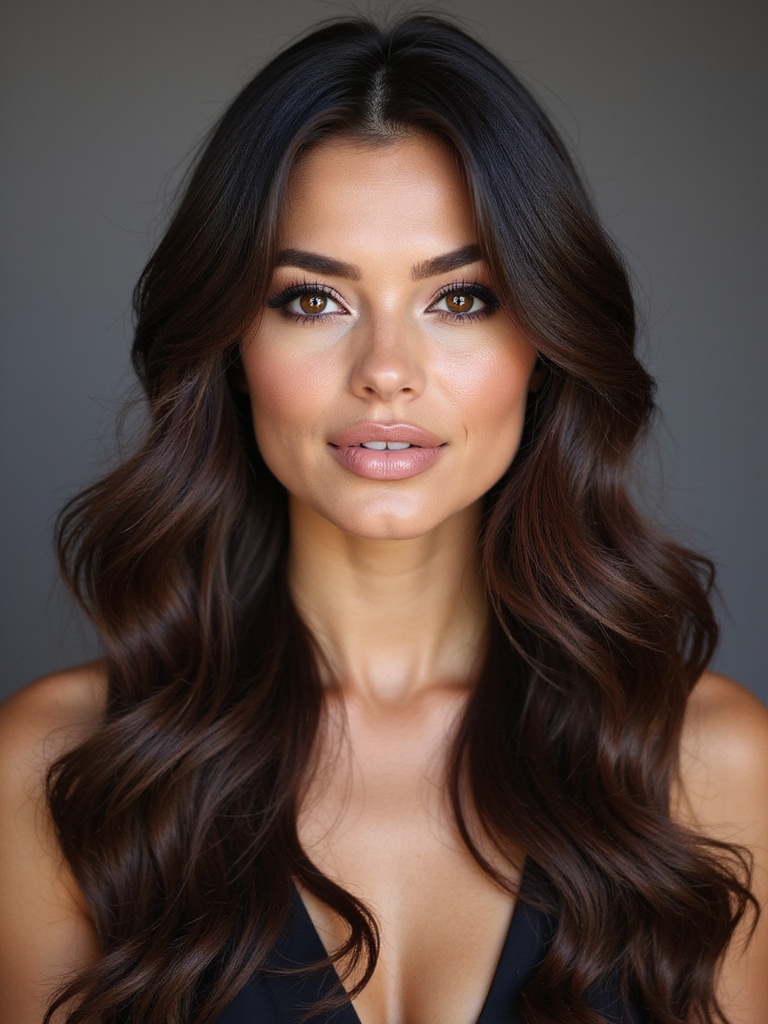
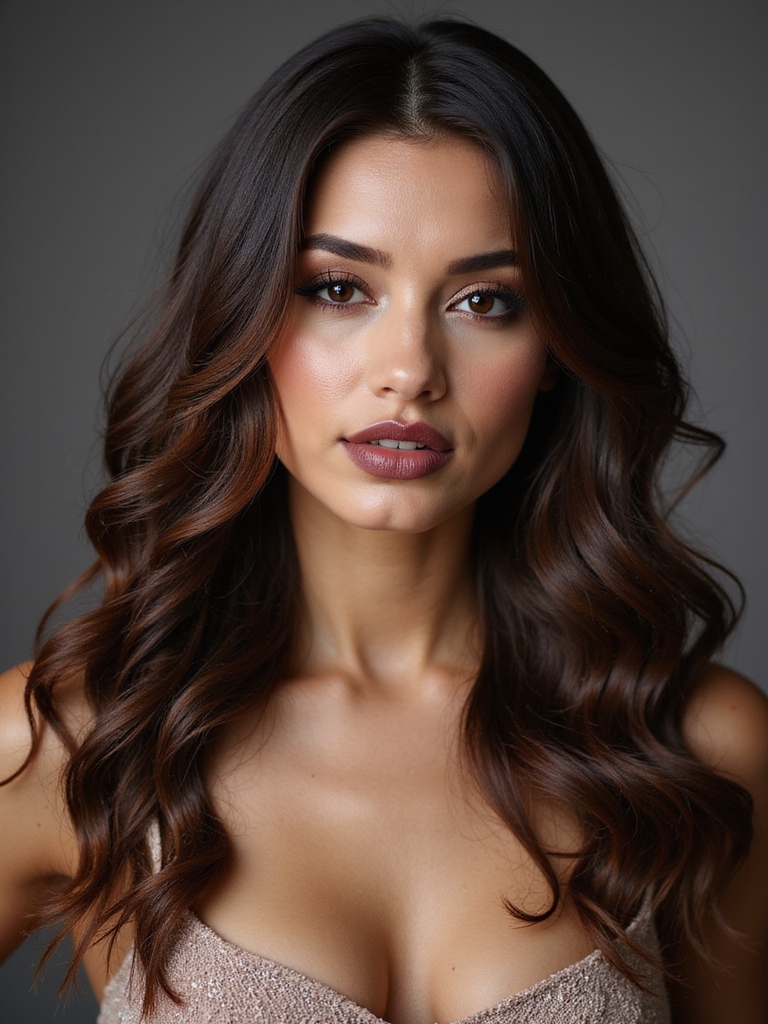
Gold jewelry or silver, which one actually looks better against the skin? That’s the whole test. Warm undertones glow more against gold, cool undertones look better in silver, and neutral undertones can wear either without complaint.
Most pros map a color’s undertone to a client’s skin before ever discussing shade name or technique, since the same brunette color that lights up one complexion can flatten another. Sixteen winter brunette colors below, each one tagged with the undertone it actually flatters, so you can skip straight to the camp your skin falls into rather than scrolling past shades that were never going to work on you.
Undertone Questions, Answered Fast
How do I find my undertone fast? Hold gold and silver jewelry against the skin in daylight and see which one the complexion prefers; whichever looks like it belongs there points to your camp. The wrist-vein version of this test works for some people and not others, so treat the jewelry comparison as the reliable one.
What if I’ve never colored my hair before? Start with something low on this list’s commitment scale, like a gloss or a couple of pieces at the hairline, instead of a full-head technique on the first visit.
Do I need to match my undertone exactly? No. Undertone points toward warm, cool, or neutral shades broadly; a colorist still adjusts the exact tone to specific coloring at the consultation.
Soft Caramel Face-Framing for Warm Undertones

Warm undertones, the ones that glow more against gold jewelry and read green in the veins, tend to light up next to caramel, and a few soft pieces placed only at the face deliver that warmth exactly where a complexion needs it most.
Confirming Warmth Before Going Further
Kept close to the base color, these pieces avoid the stripe effect a bolder highlight can create. The warmth concentrates near the hairline, brightening the face while the rest of the brunette stays a shade or two deeper.
Caramel is also the most forgiving warm shade to start on, because it sits close enough to most brunette bases that a grow-out never announces itself. That matters more than it sounds. A color you can walk away from without booking a correction is a completely different commitment from one that holds you to a schedule.
Cool Ash Balayage for Silver-Leaning Skin

Cool undertones, the ones that flatter silver over gold, generally do better with an ash-toned balayage than a warm caramel one, since ash strips the gold out of the highlight and keeps the dimension in the same cool family as the skin. The ash brown hair palette shares that same cool, muted undertone. Roughly how a colorist approaches it:
- Paint the balayage in a muted, ash-leaning shade rather than a traditional honey tone.
- Keep the placement soft and hand-painted, so the color grows out with no hard line.
- Refresh the toner on a seasonal schedule to stop the ash drifting warm.
Subtle Cool Copper for Muted Warmth

Copper usually reads as a warm color, but a muted, low-saturation version can work for a cool-to-neutral complexion that still wants a hint of it, especially kept fine rather than bold and orange.
The trick is restraint. A concentrated copper would clash with cooler skin, but scattered as a whisper through brunette, it adds interest without committing to a fully warm palette.
- Best tested with a strand or two before committing to a full placement.
- Suits someone who wants to experiment past a strictly cool palette.
- Fades gently toward the base brown instead of going brassy, as long as the copper stays muted.
ℹ️Where the Vein Test Falls Short
Two honest limits on the wrist trick. First, light: fluorescent and warm indoor bulbs shift how both skin and veins read, so any version of this test belongs in daylight near a window, never under salon bulbs alone. Second, and more important, the vein test is simply unreliable on deep and rich skin tones, where veins often aren’t legible enough to call either way.
That is a limitation of the test, not of the skin. On deeper complexions colorists lean on the jewelry comparison instead, or skip the shortcuts entirely and hold actual swatches against the jaw in daylight, which is the more accurate method at any depth.
Deep Chocolate With Babylights for Any Undertone

A handful of techniques sit outside the warm-or-cool decision entirely, and a deep chocolate brown hair base with fine babylights is one of them. The base stays neutral enough to flatter warm, cool, and neutral skin alike, while the babylights simply add light without pushing the color toward either extreme.
- One of the few techniques a colorist can recommend without asking about undertone first.
- Ultra-fine pieces keep the effect subtle regardless of skin tone.
- A safe starting point for anyone still unsure which category they fall into.
Warm Face-Framing Dimension for Gold-Leaning Skin

Here is the part nobody explains at the consultation: warm dimension reads completely differently at conversational distance than it does in the chair. Three feet from your own reflection you see individual honey-toned strands sitting against the darker base, and the whole thing can feel like it wasn’t worth the appointment.
How Much Warmth Actually Shows
From across a room those separate strands stop being strands. They melt into one soft glow along the hairline, and that glow is the entire point, because it is what everyone other than you actually sees. Colorists know the pattern well. Clients push for more warmth while still in the chair, then report back by the weekend that it landed exactly right.
So judge this one in a mirror you can step back from, at arm’s length or further, not the hand mirror passed to you at the bowl. If it reads obvious from six feet away, it is too much, and that is the only measurement that matters here.
A Cool-Toned Gloss for Silver-Leaning Brunettes

Sometimes the undertone fix isn’t new highlights at all, just a cool-toned gloss that resets a brunette that’s drifted warm since the last appointment.
A cool glaze deposits a clean, silver-adjacent tone and adds shine in about thirty minutes, correcting brassiness without lightening a single strand.
- Works well between bigger appointments as a low-cost refresh.
- Suits cool-undertone brunettes whose color has warmed unintentionally from sun or product buildup.
- Priced around $50 on its own, which is why it works as a between-visit habit rather than an event.
Caramel Ribbons for Warm, Golden Skin

Caramel ribbons, wider and more visible than babylights, suit warm undertones especially well, since the gold running through the caramel echoes the gold already flattering the skin.
Ribbons Versus Babylights
A handful of fine, warm ribbons woven through the mid-lengths give the brunette a gentle glow that catches light without ever announcing itself as a full highlight job.
This placement suits someone who has already confirmed a warm undertone and wants to lean further into it, not someone still testing the waters.
Not sure which camp a shade actually belongs to?
🎯Skin looks better in gold jewelry, veins lean green
Lean toward caramel, chestnut, golden, or auburn tones.
🎯Skin looks better in silver jewelry, veins lean blue
Lean toward ash, cool copper, smoky plum, or a cool-toned gloss.
Chestnut With a Rosewood Twist for In-Between Skin

Rosewood adds a soft, dusty pink undertone to a chestnut brown hair base, which makes this one of the few warm techniques that also flatters a complexion that tested closer to neutral.
The rosewood keeps the chestnut from looking flat while staying subtle enough that it only shows clearly in direct light, which is what makes it forgiving of a skin tone that doesn’t fall cleanly into warm or cool.
- A reasonable pick for anyone who tested neutral but wants a warmer-leaning color.
- The rosy cast comes across as sophistication, more than an obvious pink statement.
- Suits medium to dark bases especially well, since the rosewood shows as a glow, not a wash.
Warm Depth Without Any Lift

For a warm undertone that wants richness rather than brightness, soft, warm lowlights add depth without lightening a single strand, working underneath the base color instead of on top of it.
Because nothing lifts, the color grows out invisibly and the change stays entirely in the shadows of the hair rather than the surface. The brown looks fuller and more expensive with no highlight to maintain.
It fits a warm undertone confirmed through the jewelry or vein test, on someone who doesn’t want the upkeep that comes with lighter pieces.
Sable Brown With Copper Veining for Rich Warmth

A deep sable brown base laced with thin copper brown hair veins suits warm undertones that want richness with a hint of visible color, rather than an all-over lighter effect. Roughly how it comes together:
- Set a deep, soft sable brown as the dominant base.
- Lace in fine copper threads for warmth that only shows in direct light.
- Keep the veining thin enough that it comes across as shimmer, not stripes.
- Finish with a gloss to tie the sable and copper into one tone.
📋Is Sable-and-Copper the Right Call?
- ✓The undertone test pointed clearly toward warm, not neutral or cool.
- ✓The goal is visible richness, not an obvious highlight pattern.
- ✓A full color appointment fits the budget and schedule, not just a touch-up.
Espresso With a Hidden Caramel Layer

An espresso base with a caramel layer underneath works for nearly any undertone, because the color that actually shows day to day is the neutral-leaning espresso, not the caramel.
The warmth only appears when the hair moves or gets tucked behind an ear, which makes this a reasonable pick even when the test pointed cool but a hint of warm color still appeals.
Smoky Plum for Cool, Jewel-Toned Skin

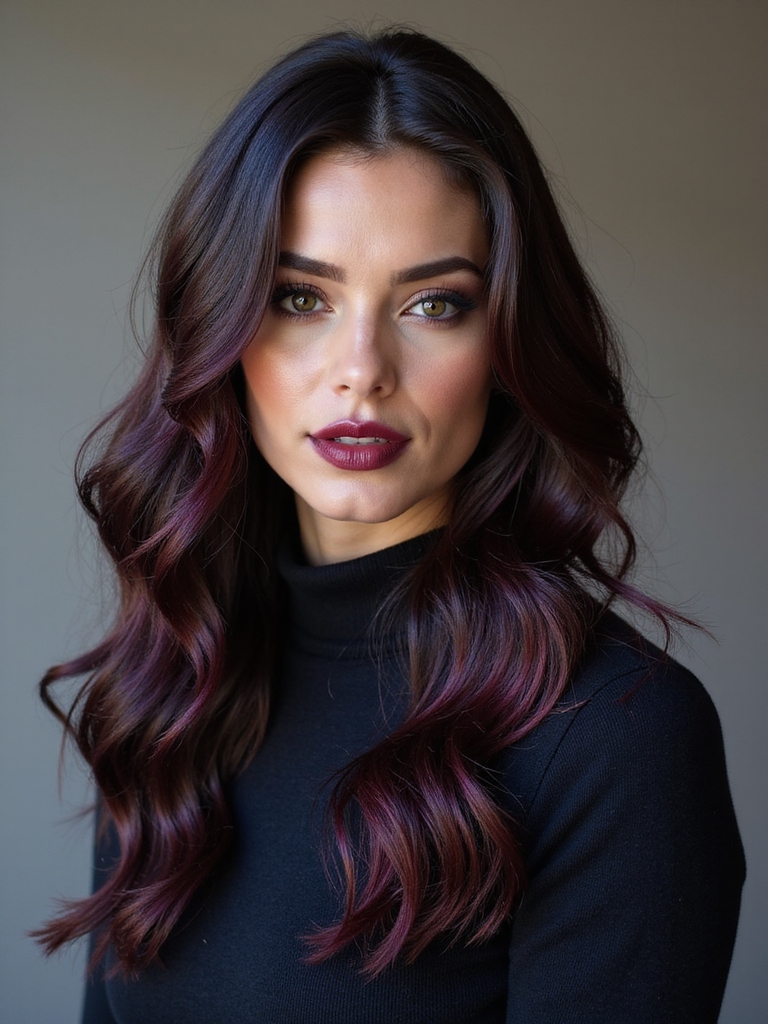
Cool undertones that want more than a standard ash tone can look toward smoky plum, a muted, jewel-adjacent color that comes across as a deep, interesting brown rather than an obvious fashion color.
Why Desaturation Matters Here
The muted quality is what keeps it wearable. A bright plum would clash with most workplaces and most cool skin; a smoky, desaturated version sits quietly under dark brown until the light catches it.
This is a solid option for a cool-undertone brunette who has already worn ash tones and wants a next step without leaving the cool family.
Bronde Balayage for the Lightest Warm Touch

Bronde, the space between brown and blonde, gives a warm undertone its lightest possible touch of dimension, warming gently toward the ends without lifting the whole head.
Because the brightness gathers at the ends and the root stays deep, it grows out slowly and stays wearable for months. It suits a warm-undertone brunette who wants a hint of lightness for winter without becoming a full blonde.
A few terms that come up during an undertone consultation:
📖Warm undertone
Skin that leans yellow or golden, usually flatters gold jewelry and caramel, golden, or auburn hair tones.
📖Cool undertone
Skin that leans pink or blue, usually flatters silver jewelry and ash, cool copper, or plum-adjacent tones.
📖Neutral undertone
Skin that doesn’t lean strongly warm or cool, usually flatters both metals and a wide range of hair colors.
📖Bronde
A blended shade between brown and blonde, often used for the lightest possible warm dimension.
Golden Face-Lighters for Maximum Warmth, Minimal Color

If everything above still feels like too much, this is the floor of the whole list: two golden pieces at the front, nothing else touched. Face-lighters exist for the person who wants to find out whether warmth suits her before paying for a decision she has to live with for months.
The economics are what turn it into a real test instead of a token gesture. Two pieces take a fraction of a foil appointment and are priced accordingly, and since the lightened hair sits only at the front, changing your mind means one snip at your next trim rather than a correction service. Very little at stake, real information bought.
The information itself is refreshingly binary. Hold that front section against your jaw in daylight: your skin either lifts or it goes flat. That single answer tells you whether the caramel ribbons and sable brown further up this page are worth booking at all, or whether your complexion has been asking for the cool camp the whole time.
Glossy Chocolate With an Auburn Undertone

A glossy chocolate base with auburn hair tones woven through the color itself, not through highlights, is a single-shade way to add warmth for a gold-leaning complexion.
There’s no lightening involved at all. The auburn lives inside the chocolate, showing as a red-brown glow when light catches the hair rather than as a separate highlighted section.
- A low-maintenance option since there’s no grow-out line to manage.
- Suits a warm undertone that wants richness without any lighter pieces.
- The gloss is what activates the auburn, so skipping it leaves the color looking flatter than intended.
A Neutral Mocha Base for a True Middle Ground
For anyone whose jewelry test and vein test actually point in different directions, a straight mocha brown, neither warm caramel-leaning nor cool ash-leaning, sidesteps the decision entirely by staying in the true middle of the color wheel.
It’s less a statement technique than a safe, flattering base a colorist can layer warmer or cooler tones onto later, once a client has lived with the color and has a clearer sense of which direction actually suits her.
Winter Brunette Color Questions, Answered
?How accurate is the gold-versus-silver jewelry test really?
It’s a quick, informal guide rather than a guarantee. Most pros use it as a starting point in a consultation, then check it against the veins on the wrist and how past colors have looked, before recommending an exact shade.
?Can my undertone change between seasons?
The underlying undertone stays the same year-round, but a summer tan can temporarily make skin look warmer than it actually is. Testing in winter, without a tan influencing the result, tends to give a more accurate read.
?What happens if I pick the wrong undertone category?
The color usually looks slightly off rather than disastrous. A cool ash on warm skin can look a bit gray, and a warm caramel on cool skin can look a bit brassy. A toner adjustment afterward usually corrects it without starting over.
?Is a neutral undertone actually common, or mostly a default answer?
It’s a real, common result, not just a fallback answer. A meaningful share of clients test close to neutral, part of why techniques like chocolate babylights and an espresso base stay popular regardless of the broader warm-cool conversation.
Test Before You Commit
Sixteen shades sorted by undertone still come down to one test: gold or silver, which one actually looks better against the skin. The categories above cover warm, cool, and neutral results; whichever camp a client lands in narrows the list considerably before a colorist even discusses exact shade.
Try the smallest version of whichever category fits first: a gloss, a couple of pieces at the hairline, or a hidden peekaboo layer. Commit to a full-head technique only once that smaller version confirms the color actually flatters.
More to Explore