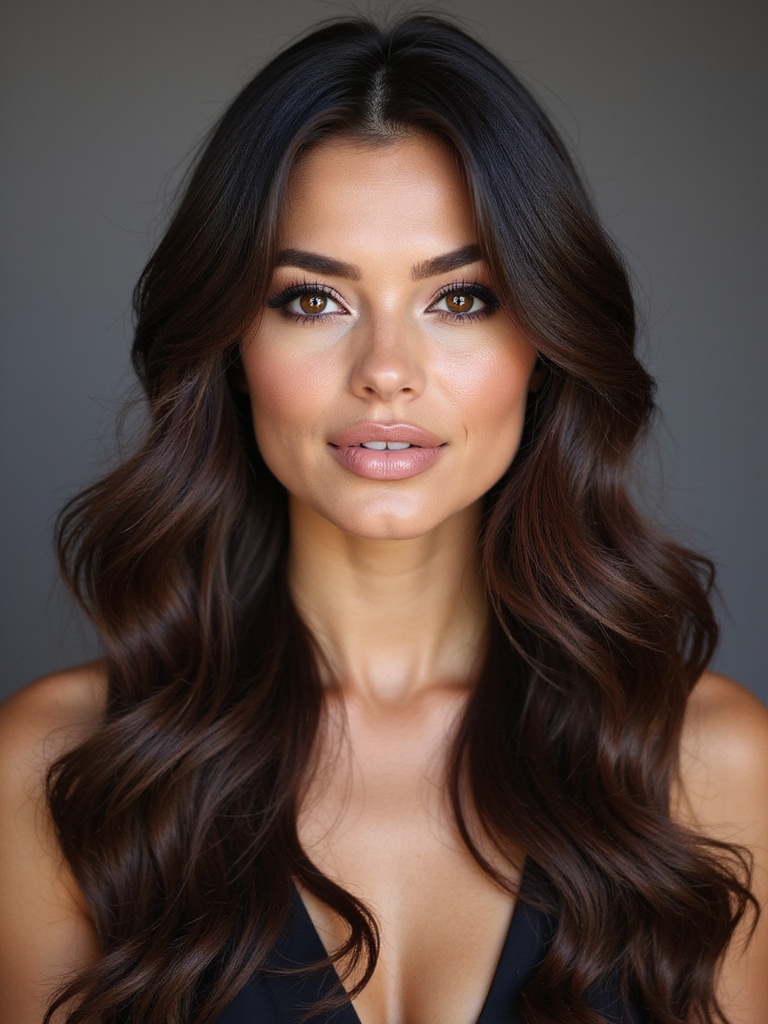
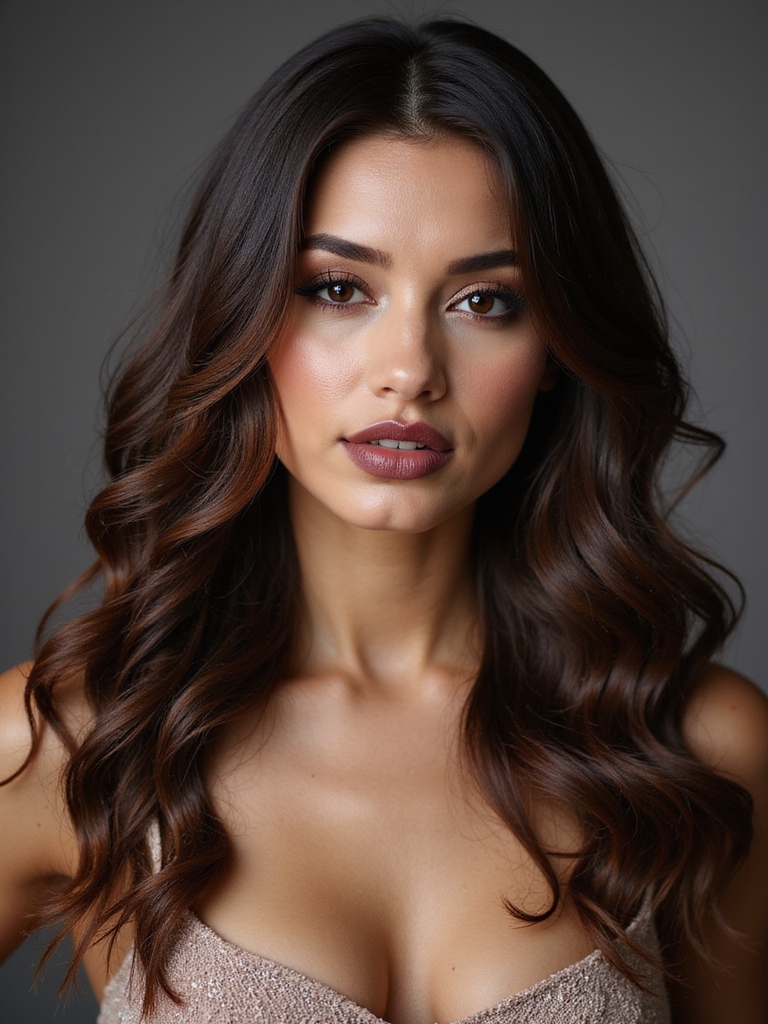
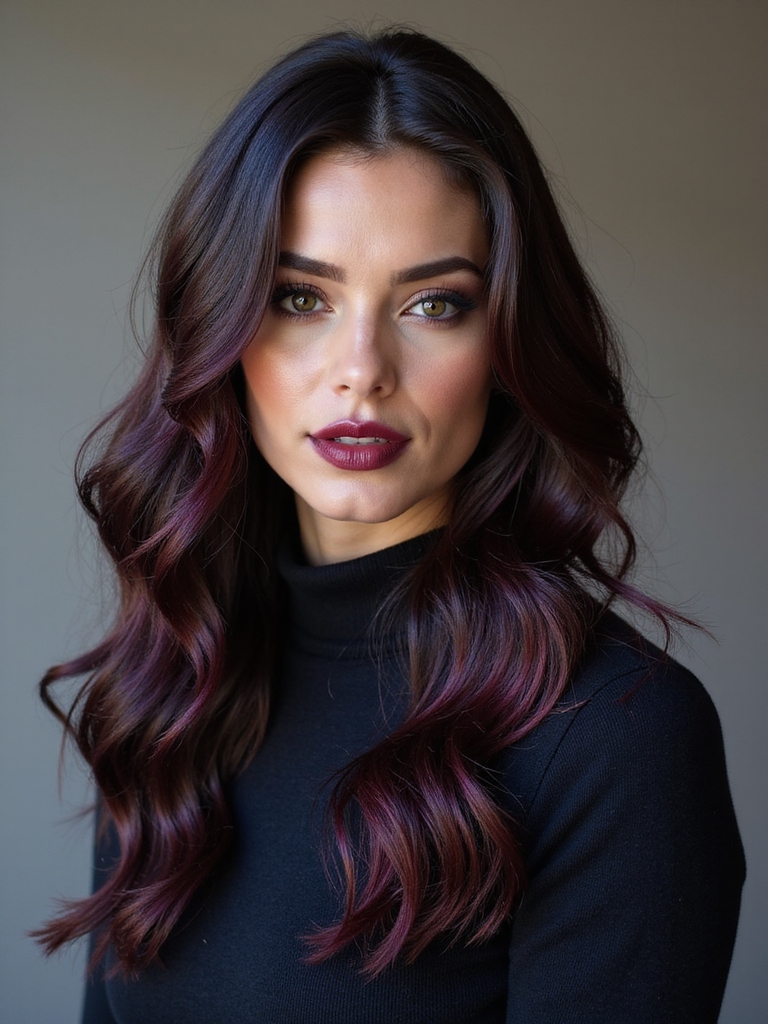
People think dark hair is the boring, play-it-safe choice, and they could not be more wrong. The best dark winter shades are not flat at all; they carry a hidden jewel tone, a violet, a blue, an aubergine, a burgundy, that you only catch when the light moves. From across the room it reads as a rich dark; up close it has a secret.
That hidden color is also how you match a dark shade to your skin, which is the part most people miss. A blue-black flatters cool skin while a coppered mahogany warms up a sallow complexion, and getting that right is the difference between dark hair that drains you and dark hair that makes you glow. Here are fifteen jewel-deep winter shades and exactly who each one suits.
Jewel-Dark Winter Color: Quick Answers
What is a jewel-toned dark? A deep shade with a hidden color woven in, like blue, violet, or burgundy. It looks dark from afar but flashes a rich tone in the light, which keeps it from looking flat.
How do I match a dark shade to my skin? Cool skin glows with blue, violet, and ash-based darks; warm skin needs mahogany, copper, or auburn-flashed darks so the color does not drain your face.
Do these wash you out? Only if the undertone fights your skin. Matched right, a jewel-dark adds warmth or coolness back to your complexion rather than taking it away.
Glossy Espresso for Cool Skin Tones

Espresso with a whisper of blue-black is the cool-skinned person’s perfect dark, because the cool undertone brightens pink and neutral complexions instead of warming them up. A glossy finish makes it shine like dark glass, and a subtle balayage keeps it from looking like one solid panel. In my chair, it is the deep shade I hand to clients who want dark with no warmth in it at all.
- Cool and neutral undertones carry this best; warm browns tend to look muddy here.
- A high-gloss finish is what gives espresso its glassy shine.
- The blue cast stops it fading to a dull, dusty brown.
Deep Aubergine, a Jewel-Toned Dark

Aubergine is the jewel-dark at its most regal, a deep brown-black with a rich eggplant-purple woven through it. Indoors it looks like a sophisticated near-black, then catches the light and flashes that unmistakable purple depth, which is what makes it feel expensive and a little mysterious.
The purple undertone flatters cool and olive skin especially, lending a glow that a plain brown cannot. It is bold without being a fashion color, so it works for the office while still being the most interesting head of hair in the room. I have watched aubergine stop a client mid-sentence the first time she saw it flash purple in the mirror.
Pick your jewel-dark by the undertone that flatters your skin:
🎯Cool or pink skin
Blue-black, navy-tinted black, or icy ash brown. Cool undertones brighten your complexion instead of warming it.
🎯Olive or neutral skin
Aubergine, smoky violet, or violet-black. The purple family flatters olive depth beautifully.
🎯Warm or golden skin
Mahogany, auburn-flashed chestnut, or midnight brown with caramel. Warmth keeps your face from looking drained.
Glossy Chocolate Brunette With Dimension

If jewel tones feel like a lot, a glossy chocolate brunette is the crowd-pleaser that still has richness and shine. Built with subtle dimension so it is never flat, it is the warm, edible dark that suits the most people and the most occasions. Here is how it comes together.
- Set a rich chocolate base with a touch of warmth.
- Add fine, low-contrast dimension so it catches light.
- Finish with a gloss for that glassy, melted-chocolate shine.
- Warm and neutral undertones pull the most out of its edible depth.
Navy-Tinted Black for High Contrast

A true black tinted with navy is the high-drama jewel-dark, the kind you see backstage at fashion shows. The deep navy undertone gives black a cool, inky glow and stops it falling flat or dusty, so against pale winter skin the contrast is sharp and modern. It is a statement, and a striking one on the right person.
- Best on cool, fair-to-deep skin where the contrast is sharpest.
- The navy tint keeps black from going dull as it catches light.
- Black is the hardest color to remove, so commit with care.
ℹ️Why Hidden Tones Matter
A plain black or brown fades toward a dull, dusty version of itself as it loses pigment. A jewel-dark woven with blue, violet, or burgundy holds its glossy, light-catching quality far longer, because that hidden tone is what reflects the light. It is the reason a jewel-dark looks expensive while a flat dye looks cheap.
Smoky Violet Face-Framing Balayage

A smoky violet balayage is the way to get the jewel effect concentrated where it shows most, around the face. Painted into a dark base, the muted violet pieces catch the light at your cheekbones, so the color frames and brightens your features without committing your whole head to a purple-dark.
Because the violet is smoky and muted rather than bright, it stays sophisticated and wearable. It melts into the dark base with no harsh line, which keeps the grow-out soft and the look grown-up.
Cool and neutral undertones wear this beautifully, and it is a clever first step if you are curious about jewel-darks but not ready to go all in. The face-framing placement gives you the effect for a fraction of the commitment.
Midnight Brown With Caramel Lowlights
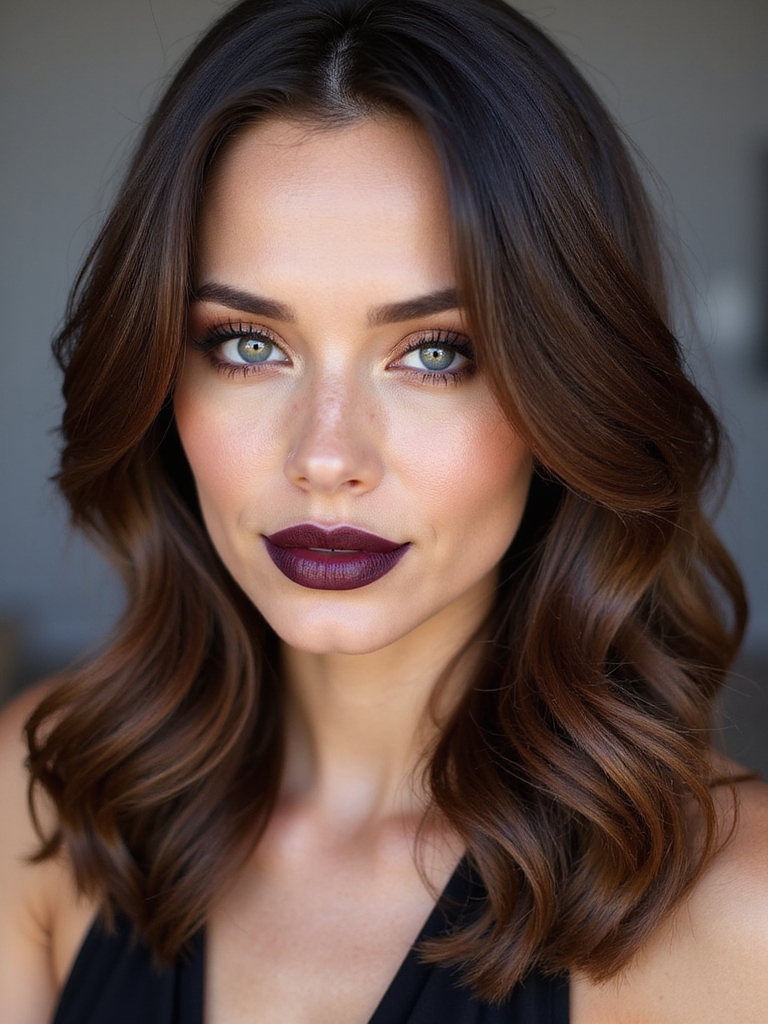
Midnight brown is the darkest a brown can go before it becomes black, and caramel woven through keeps it from feeling severe. The near-black depth brings the winter drama, while the caramel pieces add warmth and a little glow for skin that needs it. Building it goes like this.
- Take the base to a deep, near-black midnight brown.
- Weave caramel pieces through, concentrated toward the face.
- Keep the caramel sparse so the look stays dark, not highlighted.
- Gloss to blend the two and add shine.
When a client says she wants dark but is scared it will be boring, I show her aubergine or burgundy noir. The look on her face when she sees it flash color in the light is the best part of my job. Dark is never boring; flat is boring.
Warm Mahogany With Coppery Shine

Mahogany is the warm-skinned answer to all the cool jewel-darks, a deep red-brown with a coppery shimmer that flatters golden and olive complexions. Where a cool dark drains warm skin, mahogany feeds it, lending a healthy glow even under flat winter light. Here is the gist.
- Set a deep mahogany base with a red-brown richness.
- Layer a coppery gloss over it for warmth and shine.
- Best for warm and golden skin that cool darks leave looking grey.
- A color-depositing conditioner keeps the warmth from washing out.
Ash-Toned Dark Brown for Neutralizing Brass

Some people’s dark hair turns brassy and orange no matter what, and an ashy dark brown is the fix. The ash undertone neutralizes warmth, so the color stays cool and clean instead of pulling red or orange, which is exactly what cool-skinned people who hate brass are after.
This is the most corrective jewel-dark, designed to counteract a tendency rather than add a flash of color. The payoff is dark hair that holds its cool, true tone through the season instead of warming up between washes.
- Neutralizes the brass that plagues some dark and color-treated hair.
- A blue or purple wash keeps the ash true between visits.
- Best for cool skin that warm tones make look ruddy.
💡Keep the Tone True
Jewel-darks live and die by their hidden undertone, and that tone fades first. A toning wash matched to your shade, purple for violet and ash darks, blue for cool browns, and a wine-toned conditioner for burgundy, replaces what the showers strip and keeps the secret color alive between salon visits.
Burgundy Noir: Black From Afar

Burgundy noir is the jewel-dark with the best party trick: it looks like a deep black across a room, then reveals a warm burgundy glow the second the light hits it. That hidden warmth makes it more flattering than a true black on a wider range of skin, since the wine undertone softens the harshness.
It is the dark shade for people who want the drama of black but find it too cold or severe against their face. The burgundy warms the whole thing just enough to keep your complexion looking alive.
Reds and burgundies fade faster than other tones, so a wine-toned conditioner keeps the noir from slipping to a plain dark brown. That small upkeep step is what holds the hidden glow.
Espresso With Face-Framing Babylights

Babylights are the finest, most delicate highlights there are, and on an espresso base they add the gentlest brightness right around the face. The effect is barely-there, just a soft luminosity at the front that lifts your features without breaking the deep, rich espresso anywhere else. It is dark color with a quiet glow.
This is the subtlest way to keep dark hair from looking heavy near your face. Because the babylights are so fine and close in tone, they never read as stripes, just a soft halo of light around your complexion.
- Babylights add face-framing brightness without obvious highlights.
- Keeps a deep espresso from looking flat or heavy at the front.
- A gloss every so often keeps the espresso glassy and the babylights soft.
Dark Chestnut With Auburn Flashes

Dark chestnut with auburn flashes is the cozy, autumn-into-winter jewel-dark, a warm brown that throws red-gold sparks in the sun. The chestnut base keeps it grounded and deep, while the auburn flashes give it a lit-from-within warmth that warm and neutral undertones carry particularly well.
The Warmest Jewel-Dark
The auburn here is woven in subtly, more a flicker than a stripe, so the overall impression stays dark and rich. It is the kind of color people compliment without being able to name exactly what makes it special.
This shade suits warm complexions that want depth and warmth together. It is rich enough for deep winter yet warm enough to keep your face from looking drained on the greyest days.
Cool Understated Brown

Not every jewel-dark has to shimmer; a cool, understated brown is the quietly sophisticated option for people who want dark hair that simply looks polished and expensive. It is a clean, neutral-to-cool brown with no flashy undertone, the dark equivalent of a well-cut black blazer. It just looks right.
- A clean, cool brown built for cool and neutral undertones specifically.
- Reads polished and quiet rather than dramatic or bold.
- Low fuss, since there is no special undertone to maintain.
Violet-Black With Iridescent Depth

Violet-black is the moodiest jewel-dark, a true black shot through with a cool violet that gives an almost iridescent, oil-slick shimmer in the light. Where a plain black can go dusty, the violet keeps it glossy and alive, with a depth that shifts as you move. It is the most editorial dark on this list.
- The violet tint gives black an iridescent, glossy depth.
- Best on cool skin where the violet undertone flatters most.
- A purple-toning wash keeps the violet from fading out of the black.
Deep Walnut With a Soft Balayage

Deep walnut is a cool, sophisticated brown, and a soft balayage gives it movement without any obvious lightness. The painted pieces sit just a touch lighter than the walnut base, so they add a low-contrast dimension that catches the light and keeps the depth from going flat. Building it looks like this.
- Set a cool, deep walnut-brown base.
- Paint a soft, low-contrast balayage only a shade or two lighter.
- Keep the contrast minimal so it stays a dark, not a highlight.
- Grows out softly with no hard regrowth line to chase.
Icy Ash-Infused Dark Brown

Icy ash-infused dark brown is the coolest brown on the spectrum, a deep base shot through with a frosty, almost silvery ash that feels modern and a little frozen. It is the jewel-dark for people who love cool tones and want their brown to lean as far from warm as it can without becoming grey. Against pale winter skin it looks luminous and sharp.
- The icy ash gives dark brown a cool, frosted modern edge.
- Best on cool, fair skin that warm browns overwhelm.
- Needs a toning wash to keep the ash from warming up.
Who Jewel-Dark Color Suits Best
The whole game with dark winter color is matching the hidden undertone to your skin, so start there. If your skin is cool, pink, or olive, the blue, violet, aubergine, and ash-based darks will brighten you, while warm and golden skin wants mahogany, copper, auburn, or caramel woven in so the depth does not drain your face.
When you are unsure, the simplest test is to hold a cool and a warm dark swatch up to your face in daylight and watch which one lifts you.
Beyond skin tone, think about commitment, since the deepest darks like blue-black and violet-black are beautiful but the hardest to reverse. A deposit-only or demi-permanent formula lets you test a jewel-dark for a few weeks before going permanent. A gloss runs roughly $50-90 and takes about thirty minutes in the chair, while a full dark with dimension lands around $130-200 and an hour or two. My clients who ease in this way almost never regret it.
Anyone still narrowing things down might find the broader winter shade breakdown useful, a look at deeper, more intense options worth pulling up, or lean toward the ashier lookbook if jewel tones feel like too much.
Dark Is Never Boring
The myth that dark hair is the safe, dull choice falls apart the moment you see a jewel-dark catch the light. Aubergine, violet-black, burgundy noir, and their cousins prove that deep color can be the most dimensional, expensive-looking thing on your head, with a hidden tone that makes it uniquely yours.
Match the undertone to your skin, decide how bold you want the secret color to be, and let the gloss do the rest. The right jewel-dark will not just survive winter; it will look its absolute best in exactly the low, flat light the season is famous for.
More to Try