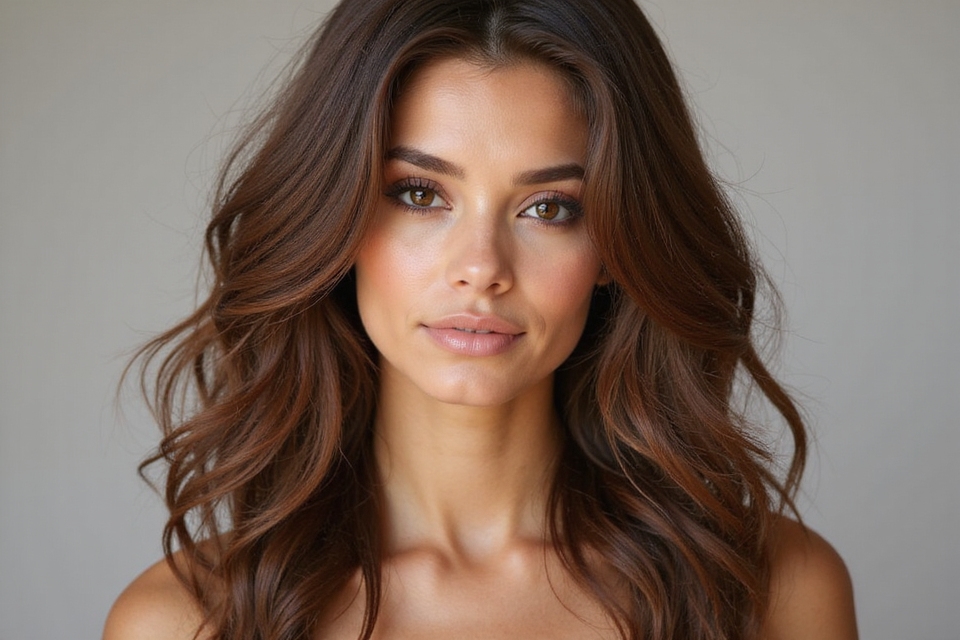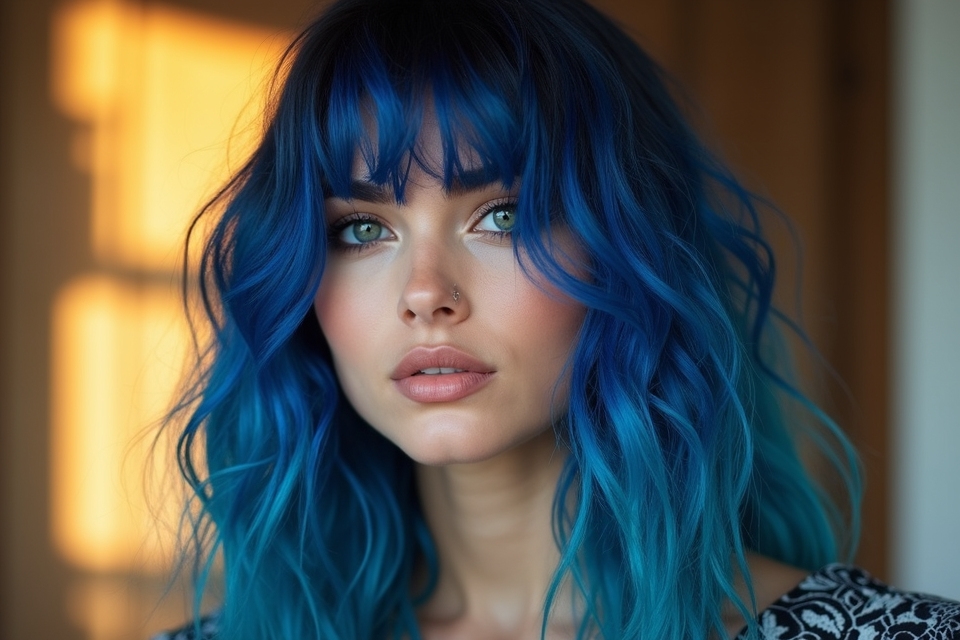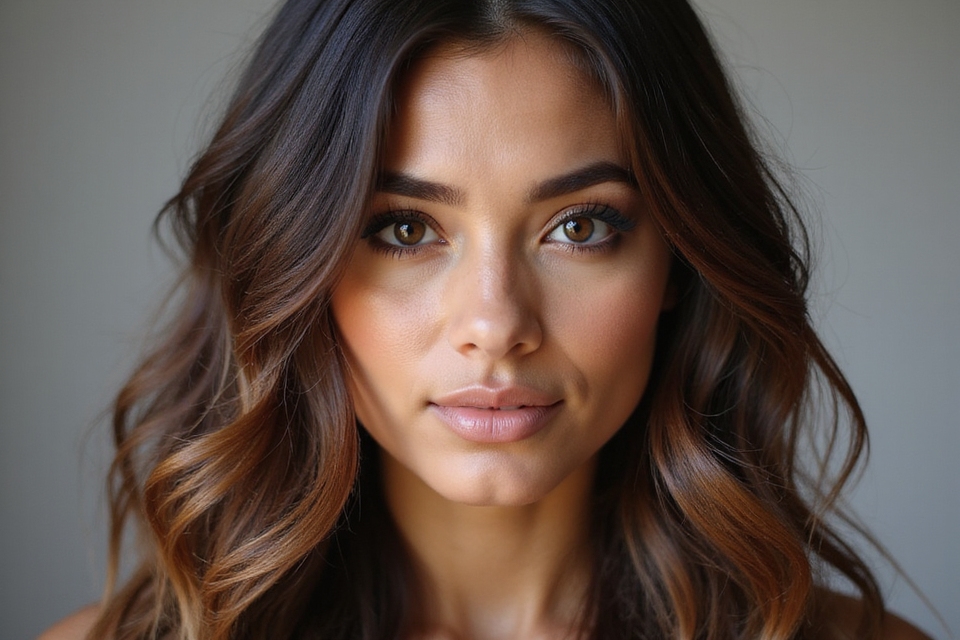
The myth goes that balayage only works for people already willing to go blonde. It doesn’t hold up. Hand-painted onto the surface and kept off the root, the color grows out softly and looks like sunlight rather than a foil pattern, and that same softness works just as well staying inside the brown family as it does pushing toward blonde.
Nineteen tones follow below, from warm caramel and copper through cool ash and mushroom, sorted by how much they lift and how much upkeep each one actually asks for.
Sorting the Nineteen by Effort
| Direction | Example Tones | Upkeep |
|---|---|---|
| Warm, close to base | Caramel, honey, toffee | Lowest |
| Cool, close to base | Ash, mushroom, mahogany | Low, needs toning |
| High-contrast lift | Icy blonde, espresso-to-blonde | Highest |
Classic Caramel Balayage

Caramel is the tone dark brown carries most easily of all the options here, since it sits only a few shades above most dark bases to begin with.
Painted through just the lengths and kept off the root, it comes across as warm, golden light rather than a stripe. That closeness to the starting shade is exactly what lets it melt instead of streak.
The warmth already present in most brown hair echoes the caramel tone, so the two blend with almost no visible seam. It’s a safe starting point for a first balayage, sitting in the same family as caramel brown hair worn all over.
Subtle Honey Tones

Honey sits a touch lighter and softer than caramel, giving dark brown a warm glow that comes across more like brightness than a color change.
Bright, but Hard to Pin Down as Colored
Kept subtle, it can pass as a gentle, natural lift rather than something deliberately colored, which is exactly the appeal for anyone who wants brighter hair nobody quite clocks as dyed.
Because honey stays close to the base shade, the grow-out stays soft, stretching comfortably between salon visits without an obvious demarcation line ever showing up.
Ash Brown Accents

For dimension without any added warmth, ash-brown balayage cools the whole effect down. The smoky pieces add real depth and movement while staying anti-brassy by design.
It suits cooler, more neutral undertones specifically, and it does need a little toning maintenance to hold that cool cast, since warmth tends to creep back in as any cool color fades.
- Smoky, cool-toned pieces add depth without warmth
- Best suited to cool or neutral undertones
- A toning treatment keeps the cast from drifting warm over time
Golden Sun-Kissed Ends

Concentrating warm, golden tone toward just the ends mimics how the sun naturally lightens hair over a season outdoors. The root and mid-lengths stay deep while brightness shows up exactly where sunlight would actually hit.
The result looks soft and grounded rather than artificial, since it’s copying a pattern hair already does on its own. It’s likely the most natural-looking placement in this whole roundup.
Copper Balayage Highlights

Copper balayage brings a fiery, red-orange glow into dark brown, catching light in a way flat color simply can’t.
It comes across bolder than caramel while the deep base keeps it grounded rather than costume-like, bringing real character to what would otherwise be a plain brown.
Like most warm reds, copper fades faster than a neutral tone would, so a copper-tinted conditioner between visits helps hold the glow. It sits a notch warmer than a full head of copper brown hair.
Icy Blonde Overtones

The boldest option in this whole list pushes the painted pieces toward a cool, icy blonde for maximum contrast against the dark root underneath.
It’s the version that draws the most attention across a room, and the trade-off is real: lifting dark brown that light takes careful, patient work, plus regular toning to stay cool rather than sliding brassy. A full session for this level of lift commonly runs $200 or more, depending on how much hair needs lightening.
- High contrast between a dark root and icy, lifted pieces
- The most dramatic, most photographed option here
- Highest upkeep of the whole roundup, with regular lifting and toning
Chocolate Swirl Balayage

Swirling slightly lighter chocolate tones through a dark brown base keeps the whole effect inside the brown family rather than reaching for anything brighter.
The dimension feels rich and quiet, built entirely from depth and warmth rather than actual brightness. It’s the lowest-commitment way here to add real movement to dark brown.
- Lighter chocolate tones layered over a dark brown base
- Adds visible movement without lifting toward brighter shades
- Pairs naturally with a full chocolate brown hair base color
Espresso Balayage Depth

Here the balayage technique adds depth rather than light, weaving the darkest espresso tones through an already-dark base for a glossy, dimensional richness that shows up more as a feeling than a visible color shift. It’s the rare balayage option that needs no lifting at all, which keeps very dark hair from ever reading as one flat, solid block.
- Darkest espresso tones woven through an already-dark base
- Adds glossy dimension without any actual lightening
- Keeps dense, dark hair from reading flat under bright light
Mocha Melt Effect

A mocha melt blends warm coffee-and-chocolate tones together so smoothly that no visible seam shows up anywhere in the transition. The balanced tone lands warm without tipping into loud, and the whole thing grows out with next to nothing left to chase or touch up.
- Coffee-and-chocolate tones blended with no visible line
- Grows out cleanly, with no obvious regrowth to manage
- A balanced warmth that suits a wide range of skin tones
🅰️Espresso Depth
Darkest tones woven in for dimension you feel more than see. Zero lifting, zero upkeep beyond normal color care.
🅱️Icy Blonde Overtones
High-contrast lifted pieces against the dark root. Dramatic, but regular toning and touch-ups are part of the deal.
Cinnamon Spiced Waves

Cinnamon balayage brings a warm, spicy red-brown glow into dark brown, one that comes alive specifically on waves rather than sitting flat on straight lengths.
Each bend in the hair catches the spiced tone differently, building a cozy, autumnal dimension. Straight hair benefits from a loose wave set specifically to bring the color to life the same way.
Soft Chestnut Layers

Chestnut balayage brings a soft, reddish warmth that shows up especially well on a layered cut, since movement through the layers lets each painted piece catch light differently.
Why Layers Show This Tone Off Best
The red stays quiet here, more of a warm glint than an actual statement, offering a refined way to build dimension while staying close to the original dark base.
Layers are what actually control how visible this tone shows day to day. It sits comfortably beside a full chestnut brown hair color for anyone considering the all-over version instead.
A few balayage terms worth knowing before booking:
📖Balayage
French for ‘sweeping’; a freehand painting technique rather than foils, which is what gives it a soft, grown-in edge.
📖Root Melt
Blending the natural or base color into the painted pieces right at the root, so there’s no visible line.
📖Toner
A translucent color rinse applied after lifting to fine-tune the exact shade and neutralize unwanted warmth or brass.
A Whisper of Rose Gold

A faint rose-gold balayage threads a soft, pinkish warmth through dark brown for something that feels quietly modern rather than loud.
From a distance it simply looks like a warm brown; up close, the pink catches the light just enough to register as a whisper rather than a bold statement.
Because rose gold sits on the lighter, warmer end of the spectrum, the painted pieces do need some real lifting plus a tinted gloss to hold the tone. Budget for a refresh roughly every couple of months to keep the pink from fading toward plain blonde.
Bronde Fusion Hues

Bronde sits precisely between brown and blonde, and painted onto dark brown it lifts the whole thing into a soft, sunny middle ground rather than committing fully to either direction. The deep root keeps it wearable day to day, while the bronde lengths do the work of catching light.
- A brown-blonde middle ground, brighter than caramel alone
- Real, noticeable lift without going fully blonde
- The deep root keeps the overall grow-out soft and forgiving
👍What Bronde Gets Right
- +More noticeable than a subtle caramel or honey tone
- +Deep root keeps the grow-out forgiving
- +Works on a wide range of skin tones
👎What It Asks in Return
- –Needs more lifting than tones that stay closer to the base
- –Upkeep sits between subtle balayage and full blonde
- –Can drift warm or brassy without occasional toning
Warm Maple Dimensions

Maple balayage blends golden and reddish-brown tones together for a warm, autumnal dimension that lands rich rather than flashy.
It lands somewhere between caramel and chestnut, carrying a syrupy warmth that’s entirely its own. Requests for this specific tone tend to spike the moment the weather turns, though it holds up well across every season.
Dark Cherry Infusion

A dark cherry balayage threads deep red-violet tones through dark brown for a rich, jewel-toned warmth, closer to red wine than actual fire. It’s a striking choice for real red depth without lifting the hair light at all, sitting a shade cooler than a full dark auburn hair color.
- Deep red-violet tones woven through an already-dark base
- Reads cooler and more grounded than copper
- Delivers real red depth with little to no lifting required
💡Testing Red Tones Before Committing
A semi-permanent gloss over a small section shows roughly how a red-violet tone will read against a specific dark base, without the full commitment of a lightened balayage.
Espresso to Blonde Gradient

This is the single most dramatic gradient in the whole roundup, running from the darkest espresso at the root all the way to soft blonde at the ends.
The Boldest Gradient Here, and the Most Upkeep
The long melt covers the full spectrum of brown in between, so while the overall contrast lands bold, the transition itself stays smooth rather than choppy.
It’s a high-impact, high-upkeep look at that, since the blonde ends need real lifting and ongoing toning to stay clean. Bond-building treatments and a purple toning shampoo both earn their place in this specific routine.
Delicate Toffee Touches

Toffee balayage adds a soft, buttery warmth that sits right between caramel and honey, more of a subtle glow than an actual highlight.
The effect stays understated throughout, offering a deeply flattering, low-key way to bring warmth into dark brown without looking like an obvious color change.
Because it sits so close to the base shade, the grow-out stays soft and the upkeep minimal, which makes this the tone worth reaching for when someone wants a change but truly dislikes maintenance.
Cool Mushroom Shades

Mushroom balayage blends cool, taupe-grey browns through the base for a smoky, sophisticated dimension, close to the cool-toned cousin of caramel. It has become something of a go-to for anyone chasing brown with an editorial, anti-brassy edge, though it does need occasional toning to hold that taupe cast as it fades.
- Cool, taupe-grey browns woven through for smoky depth
- Reads editorial and muted, with zero added warmth
- Needs periodic toning to keep the cool finish from drifting
Mahogany Blend Balayage

Mahogany balayage weaves a cool, red-violet brown through the base for a rich, refined depth, closer to a deep brown with a wine-red glow than anything overtly red.
Wine-Red Depth Without the Lift
It sits cooler than copper and more grounded than cherry, with a red tone that comes across sophisticated rather than loud. Waves show off that wine-red glow especially well as they catch the light.
It adds real dimension without any lifting involved, which keeps the whole thing low-maintenance despite how rich it looks in photos.
Dark Brown Balayage Questions Worth Asking
?Does balayage actually show up clearly on hair this dark, or does it just disappear?
It shows, though how much depends entirely on tone choice. Warm, close-to-base options like caramel or toffee stay subtle, almost like natural light. Anything pushed toward blonde or a cool ash shows up far more visibly, since the contrast against the dark root carries most of the visual weight.
?How much lifting does dark brown hair typically need before balayage can be applied?
It varies by target tone. Warm, close shades like caramel or chocolate often need minimal lifting, since they sit near the natural base already. Cooler or much lighter targets, like icy blonde, usually require multiple lightening sessions spaced out to protect the hair’s condition along the way.
?Can balayage be added gradually instead of all in one appointment?
Yes, and for bigger jumps in tone, that’s often the safer route. Building lift across two or three sessions, spaced weeks apart, protects hair condition better than pushing for maximum brightness in a single visit.
?Is balayage a good option for hair that’s already colored or previously highlighted?
Often yes, since balayage blends more forgivingly with previous color work than a fresh foil pattern would. A consultation still matters here, since a colorist needs to see the existing tone and condition before mapping out where new pieces should go.
?What’s the actual difference between balayage and traditional highlights?
Highlights use foils to isolate sections for a more uniform, consistent lift throughout. Balayage is hand-painted freehand directly onto the surface of the hair, which produces a softer, more graduated result and a noticeably easier grow-out since the color was never applied all the way to the root.
The Root Carries the Grow-Out; the Tone Is the Real Choice
Every version above works off the same mechanic: a deep root that hides the grow-out, and a painted tone that decides how much warmth, coolness, or brightness actually shows. Picking the tone is really the only decision that matters once balayage itself is the technique.
Bring a couple of these photos to a consultation and ask specifically how much lifting each one would take on your current base. That single question does more to set expectations than any single photo ever could on its own.
More to Explore