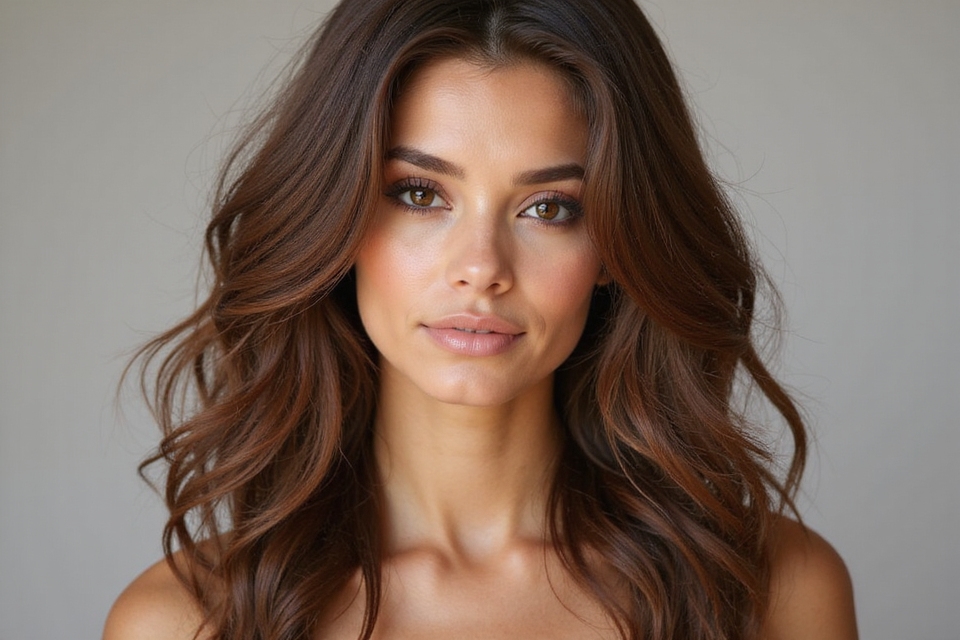
What if the most flattering brown isn’t the darkest or the lightest, but the one with a little red hiding underneath? That’s chestnut brown hair: warmed by a genuine reddish undertone, close enough to natural to wear anywhere, warm enough to actually glow.
Twenty chestnut looks follow, from a simple all-over color to bold red-leaning and icy-cool variations, sorted by technique and how much upkeep each one actually asks for.
Chestnut, Fast Facts
- Chestnut sits between brown and auburn, with a genuine reddish undertone running through it.
- Warmer, golden-leaning versions tend to suit warm undertones; ashy, cool-toned chestnut suits cooler skin.
- Most chestnut needs only modest lift on dark hair, keeping it a lower-commitment red-brown option.
- Like any warm color, it drifts toward brass without a regular toning routine.
Classic Chestnut Brown All Over

A single, all-over chestnut color skips placement technique entirely, relying on the shade itself to carry the whole look. It’s the version most people picture first when they hear the word chestnut.
- The most straightforward chestnut service, usually a single color application.
- Works on nearly any starting base with minimal lift required.
- The catch is upkeep: an all-over color shows regrowth faster than any placement technique would.
Sun-Kissed Chestnut Highlights

Chestnut highlights add lighter, reddish-brown pieces through a deeper chestnut base, catching light without ever fully lightening the hair.
Where the Lift Actually Happens
The lift happens only in the highlighted sections, which keeps the base doing most of the visual work while the highlights add movement on top of it.
This technique reads as dimension rather than a full color change, so it suits anyone who wants brightness without committing to a lighter overall shade.
Chestnut Brown Balayage

Hand-painted balayage threads chestnut tones through the hair with no hard line, so the color grows out gently, with no fixed touch-up schedule to chase.
- The freehand technique concentrates warmth toward the ends, where it shows most.
- Grows out considerably more forgivingly than a foiled or all-over service.
- A dependable choice for real dimension without frequent salon time.
Deep Chestnut Ombre

A dark-root chestnut ombre keeps the darkest color at the root and fades into warmer chestnut through the length, building real contrast without touching the whole head.
Where this struggles is on very short hair; the fade needs enough length for the gradient to actually read as continuous.
The best ombre results come from a colorist willing to blend the transition zone slowly, with real patience at the midpoint.
Chestnut Brown With Caramel Lowlights

Golden caramel lowlights woven through chestnut add depth from underneath, deepening the color more than brightening it. A close cousin of this pairing lives in golden brown hair.
- Works well on chestnut that’s started reading a little flat or one-dimensional.
- Adds richness without any additional lifting or lightening involved.
- Looks like dimension up close, solid chestnut color from a distance.
Ashy Chestnut for a Cooler Take

Cooling chestnut down with smoky, ashy tones mutes the natural red undertone, landing somewhere between a classic chestnut and a true cool brown. The full cool-brown family lives in ash brown hair.
The catch is upkeep: cool tones fade fastest of any chestnut variation, drifting warm again without a toning gloss on a fairly tight cycle.
Ultra-Fine Chestnut Babylights

Babylights bring the finest, most delicate version of chestnut dimension: ultra-thin pieces woven so closely together they glow, never showing as distinct streaks.
The fine weave means regrowth stays nearly invisible, which keeps this the lowest-upkeep technique in this entire roundup.
The trade-off is time: the fine sectioning takes noticeably longer to apply than broader highlighting does, so plan for a longer appointment.
Chestnut on Soft, Wavy Hair

On waves, chestnut catches light with every bend, breaking a single tone into visible bands of warm and slightly deeper color as the hair moves.
The wave pattern does real work here, showing off dimension that would sit flatter and quieter on straight hair.
Dark Chestnut Roots With Lighter Tips

Keeping the roots a deeper chestnut while the tips lift lighter builds contrast that’s concentrated exactly where it shows most: the ends.
The deep root keeps regrowth soft and low-maintenance, since the darkest part of the color sits closest to what’s already growing in naturally.
This pairing suits long hair especially well, giving the eye somewhere to travel from root to tip.
ℹ️Worth Noting
The lighter the tips get lifted, the more frequently they’ll need a toning refresh to stay clear of brass, regardless of how low-maintenance the root itself is.
Blonde Accents on a Chestnut Base

A few warm blonde pieces lifted into a chestnut base add brightness right where they’re placed, without shifting the overall color identity away from brown. A warmer relative of this base color is honey brown hair.
The blonde stays warm enough to blend smoothly, so the accents read as brightened chestnut throughout.
- Best concentrated around the face, where brightness does the most visible work.
- Needs more frequent toning than a plain chestnut, since blonde pieces fade faster.
- A strong option for a change without a full color commitment.
Multidimensional Chestnut Layers
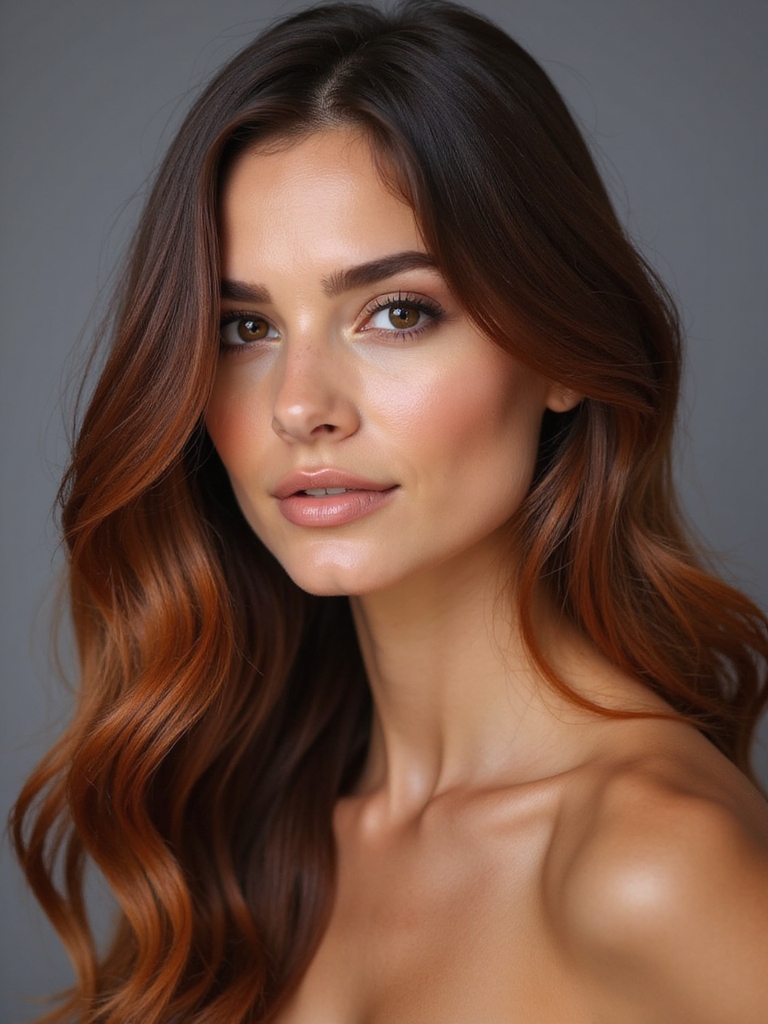
Layering several warm tones, from deep chestnut to caramel to a touch of auburn, builds a multidimensional result no single shade could produce alone.
The effect depends on genuine technique more than any one product; a colorist has to place each tone with real intention, avoiding a muddy blend.
- Comes across as noticeably rich in person, more so than most single-process colors.
- Requires a skilled hand; a rushed version can look muddy more than dimensional.
- Holds interest longer than a flat color, since there’s more than one tone to notice.
🅰️Two-Tone Chestnut
Simpler to maintain, one clear base plus one accent tone.
🅱️Multidimensional Chestnut
More visual depth, but needs a more experienced colorist to place well.
A Low-Contrast Chestnut Sombre

A sombre softens the usual ombre transition into something far more gradual, so the shift from root to end barely registers as a change at all.
It’s the most forgiving version of dimensional chestnut on this list, growing out with barely a line to manage.
Cool-Toned Chestnut Brown

A cooler chestnut pulls the red undertone back and leans the whole color toward a more neutral, sophisticated brown, without losing the depth that makes chestnut distinct from a plain brown.
- Suits cooler complexions especially well, where a warmer chestnut can occasionally look too golden.
- Comes across as more polished and editorial than the warmer, redder versions do.
- Needs consistent toning to keep the cool cast from warming back up between visits.
Chestnut on Natural Curls and Coils

Chestnut on curly and coily hair catches light differently at every twist, giving the color more visible dimension than it would ever show on straight strands.
Curly and coily hair also runs more porous and more fragile, so any lifting toward chestnut should happen slowly, with real attention to moisture throughout.
- A bond-building treatment paired with deep conditioning protects the curl pattern through the process.
- Working with a colorist experienced in textured hair matters more here than the shade choice itself.
- Brightness placed at the ends shows chestnut’s dimension off exactly where curl definition lives.
Glossy Chestnut Shown Off by Layers

Layers add the movement that lets chestnut actually show its dimension, breaking up what would otherwise be one flat, heavy block of color. A deeper cousin of this base color is covered in chocolate brown hair.
The cut and the color actually work together here: layers create the movement, and the chestnut tone catches light differently at every layer’s edge.
This pairing suits medium to long hair especially well, where there’s enough length for the layers to build real visible motion.
Chestnut Deepened With Auburn

Adding auburn pieces to chestnut pushes the color further into red territory, deepening the warmth without fully leaving brown behind.
The result carries genuine richness, especially under warm or dim lighting, where the red undertone glows brightest and barely reads as brown.
- A strong pick when chestnut alone feels right but the red could use more presence.
- The auburn pieces fade slightly faster than the surrounding chestnut, so plan on a bit more toning.
- Suits deeper skin tones especially well, where the red reads richer rather than harsh.
Frosted Tips on a Warm Chestnut Base

Cooler, lighter tips against a warm chestnut base create real contrast in temperature as well as depth: the ends look noticeably cooler than the root.
It’s an unusual pairing that reads as intentional, since the cool-warm contrast is clearly a deliberate styling choice.
- Best on hair with enough length for the cooler section to actually register.
- The frosted section needs separate toning attention from the warmer base.
- A distinctive option when a single, uniform temperature of brown feels too plain.
Chestnut That Leans Fully Into Red

Some chestnut leans so far into red that it edges toward auburn territory outright, the brown almost secondary to the warmth on top of it.
How Far Into Red Is Too Far?
There’s no fixed line between chestnut and auburn; it’s a spectrum, and where a specific color lands depends on how much red pigment a colorist builds in relative to the brown base.
Anyone drawn to this end of the spectrum should bring a clear reference photo, since the word chestnut alone can mean very different things depending on how red-leaning the colorist’s own definition runs.
Getting the red level right at the consultation.
1Bring two reference photos
One at the level of red desired, one showing a shade that’s too red, to bracket the target clearly.
2Ask for a strand test on the reddest option
Red tones can shift unexpectedly depending on the hair’s existing pigment.
3Confirm the toning plan before booking
Red-leaning chestnut needs a specific toning schedule discussed upfront, not decided after the fact.
A Glossy Chestnut Bob

A sharp, structured bob shows chestnut off at its most polished, the clean shape putting the color itself front and center with nothing to distract from it.
- Blunt edges display a rich chestnut tone more cleanly than layered ends would.
- The shorter length also means chestnut regrowth becomes noticeable somewhat faster.
- A strong pairing for a low-effort daily style with a high-impact color.
Chestnut Flowing Down Long Hair

Long hair gives chestnut real room to show gradual variation, since even a single-process color rarely looks perfectly flat across that much length. More long-hair color pairings live in mocha brown hair.
Natural light and movement reveal subtle shifts in tone that shorter styles simply don’t have enough length to display.
The trade-off is straightforward: more hair means more product and more time at every color appointment, though the visual payoff scales right along with it.
How to Get the Look
Two details matter most at a chestnut consultation, more than the specific technique chosen. First: how much red should show, stated as a clear preference upfront.
Second: current hair condition and history. Previously colored or heat-damaged hair changes how evenly chestnut takes, so mentioning that upfront saves a second appointment spent correcting an uneven result. A partial service typically runs $120 to $200 and takes around two hours; a full-head color runs longer and costs more.
Chestnut Brown Hair, Answered
?What’s the actual difference between chestnut and auburn?
Chestnut is fundamentally brown with red woven through it; auburn is closer to fundamentally red with brown underneath. The two overlap heavily in the middle of the spectrum, which is why a specific chestnut can look nearly identical to a specific auburn depending on how each colorist defines the terms.
?Does chestnut brown fade differently than a plain brown?
Yes. The red component fades faster than the brown base does, so chestnut tends to drift toward a flatter, less dimensional brown over time, unlike a plain brown, which lightens more evenly.
?Can I go chestnut if my hair is already color-treated?
Usually yes, though the result depends on what’s already on the hair. A strand test is worth requesting specifically if the previous color was noticeably lighter or contained visible ash, since both can shift how the new chestnut tone actually develops.
The Brown With Warmth Built In
Chestnut earns its place between plain brown and full auburn by carrying just enough red to feel alive without asking for the upkeep a true red color demands.
Bring a reference photo that shows the exact level of warmth wanted, and let a colorist confirm whether the current base can reach it in one visit or needs a bit more time to get there.
Next Up