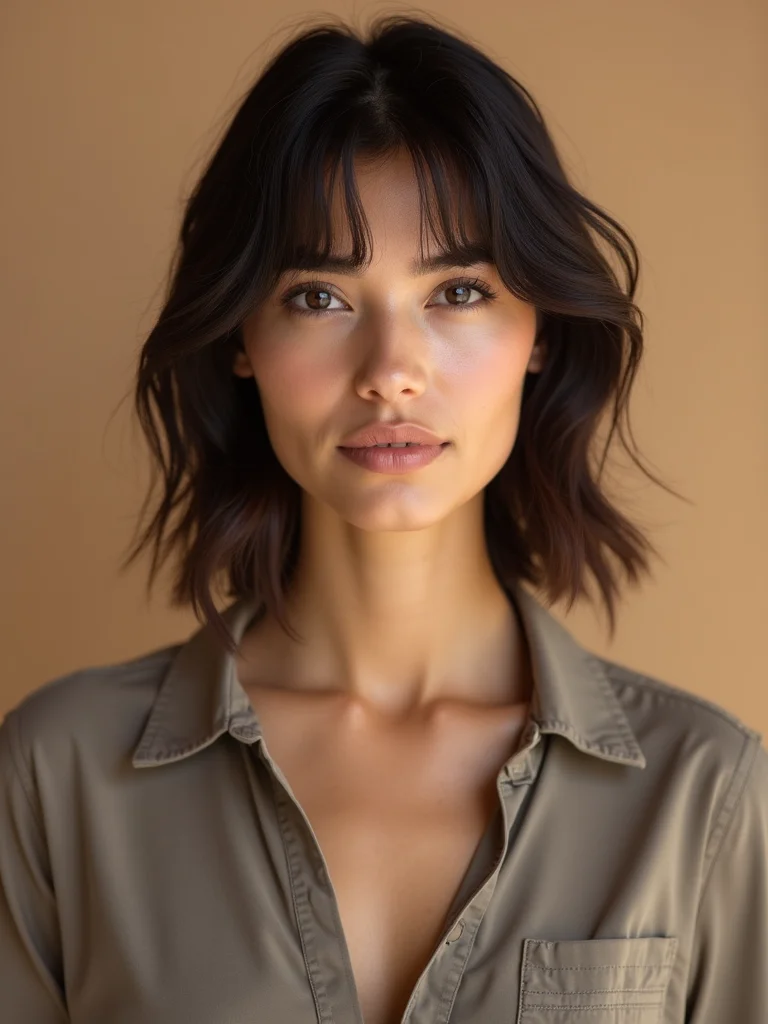
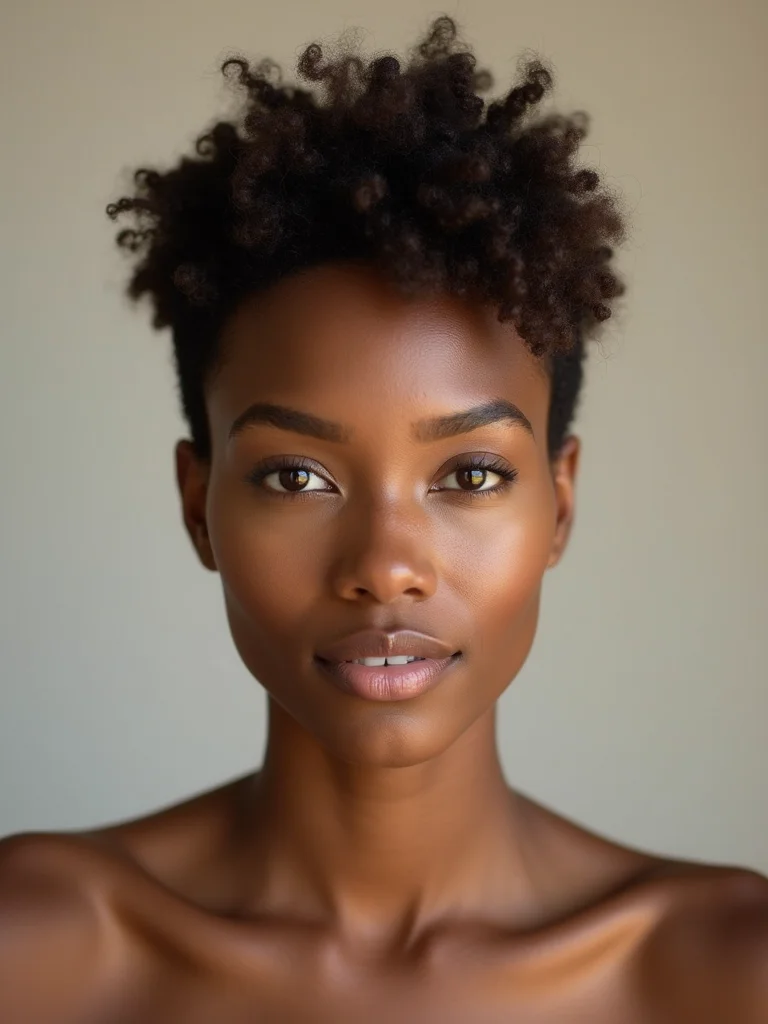
Curtain bangs have a reputation for needing length to sweep properly, the kind of soft, center-parted fringe assumed to belong on hair past the shoulders. Short curtain bangs prove otherwise.
Cut short and paired with a crop, lob, or pixie, the same fringe reads sharper and more deliberate. Fifteen versions follow, from a micro mod fringe to coily curtains, plus the maintenance routine most guides skip entirely.
Short Curtain Bangs, Quick Answers
What makes a curtain bang “short”? It sits higher and ends shorter than the classic version, grazing the cheekbones or brows well above the jaw, cut specifically to frame a short style up close.
Do they suit round faces? Yes, especially side-swept versions, which build a diagonal line that visually lengthens the face.
How much upkeep do they need? Less than a blunt fringe, more than no bangs at all; most versions need attention roughly monthly.
Micro Bangs With a Mod Edge
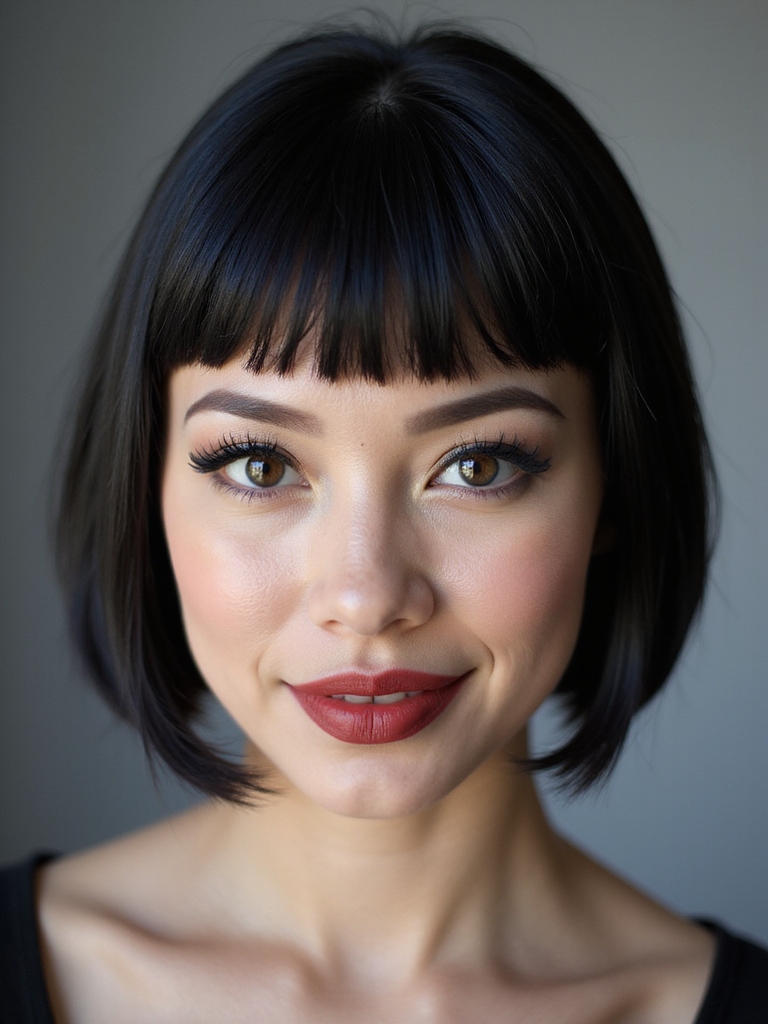
Micro curtain bangs take the soft fringe shape and crop it short, ending well above the brows for a graphic, sixties-inspired edge. Center-parted but cut high, they frame the eyes sharply while keeping the signature outward sweep.
This is the boldest version here, built for someone chasing a fashion-forward, retro-leaning look.
- Ask for the cut point above the brow bone, not at it.
- Works best on hair with enough texture to hold the outward line.
- Book in for a trim right around two weeks to keep the length graphic.
Feathered Fringe on a Shaggy Lob
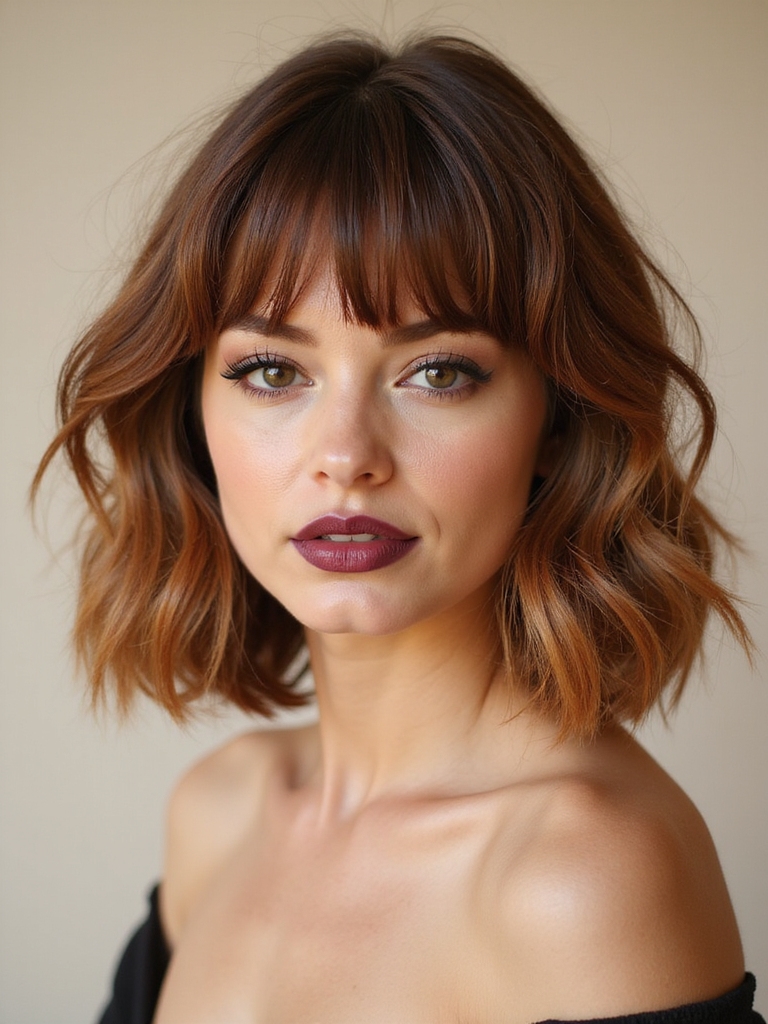
A soft, feathered curtain fringe pairs naturally with a shaggy lob, the wispy ends blending straight into the layers for a relaxed, single-shape finish.
Why It Blends So Easily
The feathering keeps the edges soft and airy, so fringe and layer blend into one soft edge together.
As the fringe grows, it folds into the lob’s face-framing pieces early, well before an awkward stage would show up.
A Cheekbone-Grazing Sweep
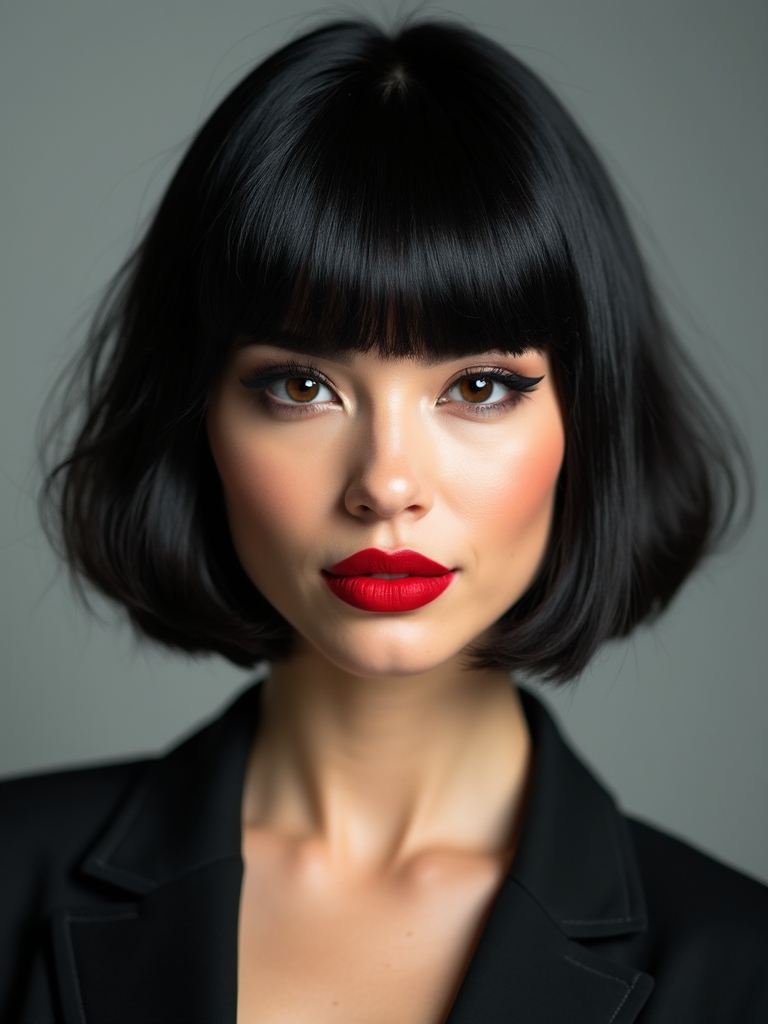
The cheekbone-grazing length is the safest short curtain bang to start with, landing right where most faces photograph best. It’s also the length most stylists reach for first when a client asks for curtains but isn’t sure how short to go.
It suits nearly any short cut underneath, and because the length sits mid-way between micro and longer curtains, it grows out without an awkward transition stage.
- Lands at or just below the cheekbone line.
- Works with straight, wavy, and loosely curled textures alike.
- The lowest-risk length for a first curtain-bang cut.
👍What Works
- +Grows out into the lob’s layers with no hard line
- +Low daily styling, just a round brush and a few minutes
👎What to Watch
- –Needs the lob’s layers cut fresh to keep blending
- –Fine hair can look thin if the fringe is cut too sparse
Curly Bangs, Cut for Texture
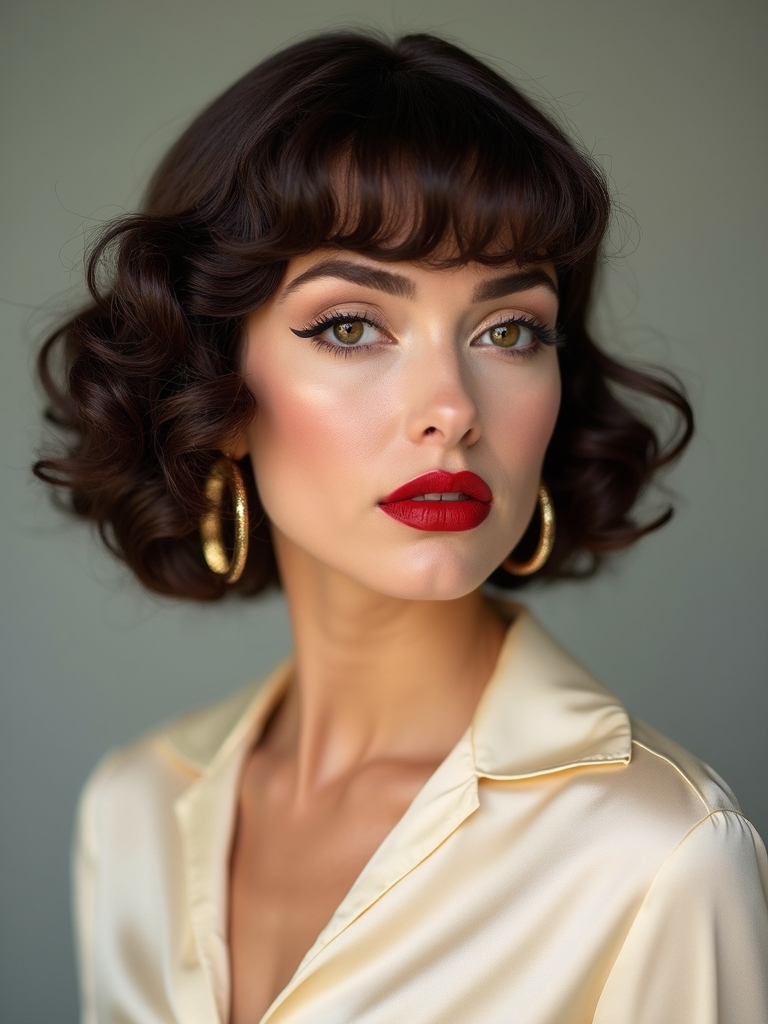
Curly hair takes to short curtains beautifully once they’re cut with the texture in mind: a center-parted section of curls that springs toward each cheek as it dries, framing the face with real bounce. Getting there takes a specific approach, one worth understanding before the appointment.
- Cut dry and slightly longer than the target length; curls shrink as they spring up.
- Refresh daily with a light spritz of water and a curl cream.
- Expect more shrinkage on tighter curl patterns; ask your stylist to account for it.
Wispy Baby Bangs on a Pixie
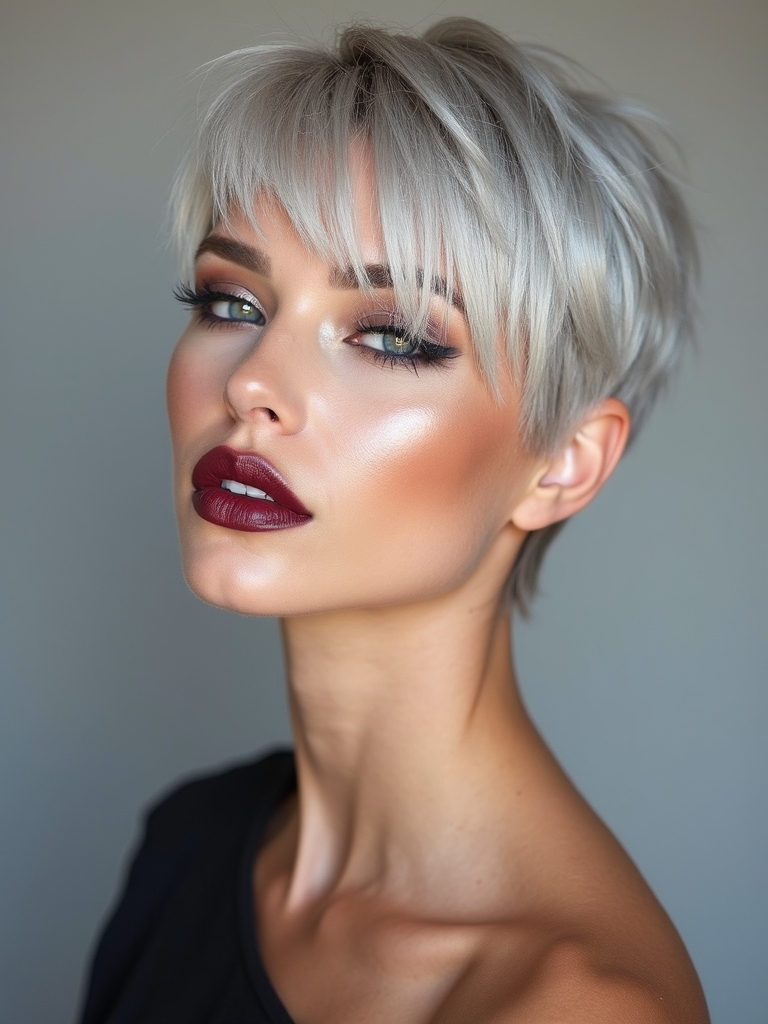
On a pixie, wispy baby curtain bangs stay delicate and modern: a thin, see-through fringe parted softly down the center and kept short.
They add the gentlest possible frame to a crop, which suits fine hair especially well since there’s no dense block of fringe to look sparse against the scalp.
- Ask for a thin, feathered section at the front.
- Style with a quick rough-dry; nothing more is needed most days.
- Best on fine to medium texture; thick hair reads heavier even when thinned.
Two assumptions worth correcting before you book:
❌ Myth: Curly bangs always look shorter than promised.
✅ Reality: Only if they’re cut wet or at the promised finished length. Cut dry, with shrinkage built in, they land where planned.
❌ Myth: Curly fringe needs constant restyling.
✅ Reality: A quick water-and-cream refresh most mornings is usually the whole routine.
A Blunt Bob With a Split Fringe
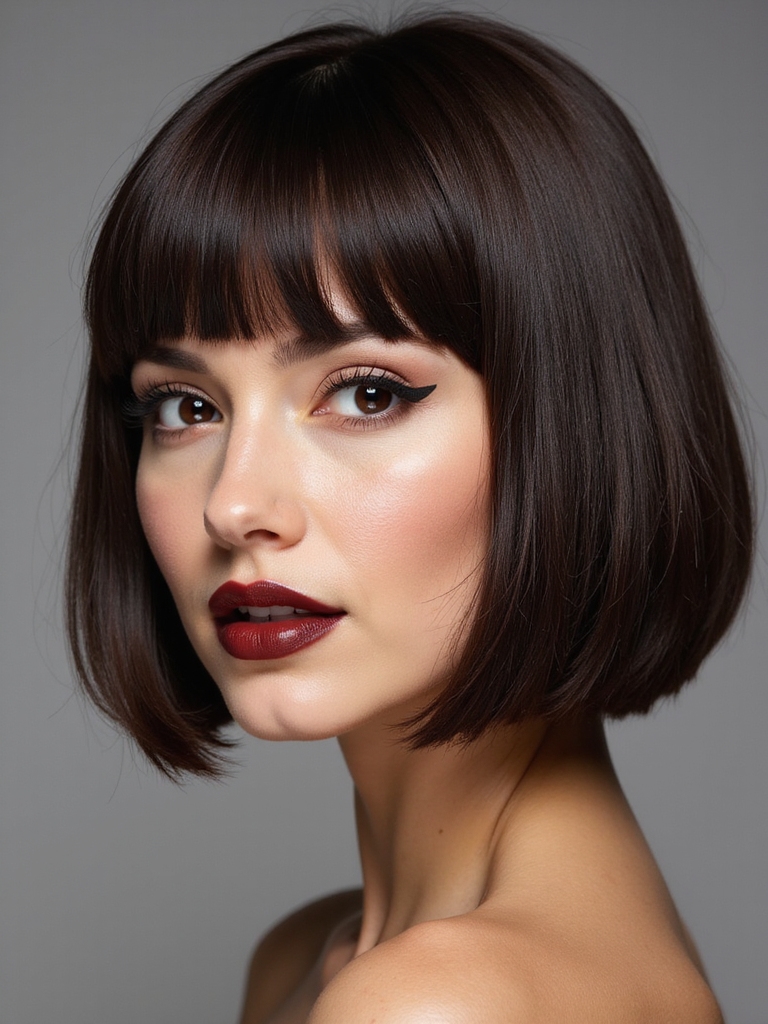
Pairing a sharp, blunt bob with a short, center-split mini fringe puts two opposite textures side by side on purpose.
The clean bob line and the split fringe balance each other: the fringe softens the bluntness up front, while the bob keeps the overall shape graphic.
It suits balanced and longer face shapes especially well, since the split adds width right at the temples where a longer face benefits from it most.
Tousled Waves, Center-Parted
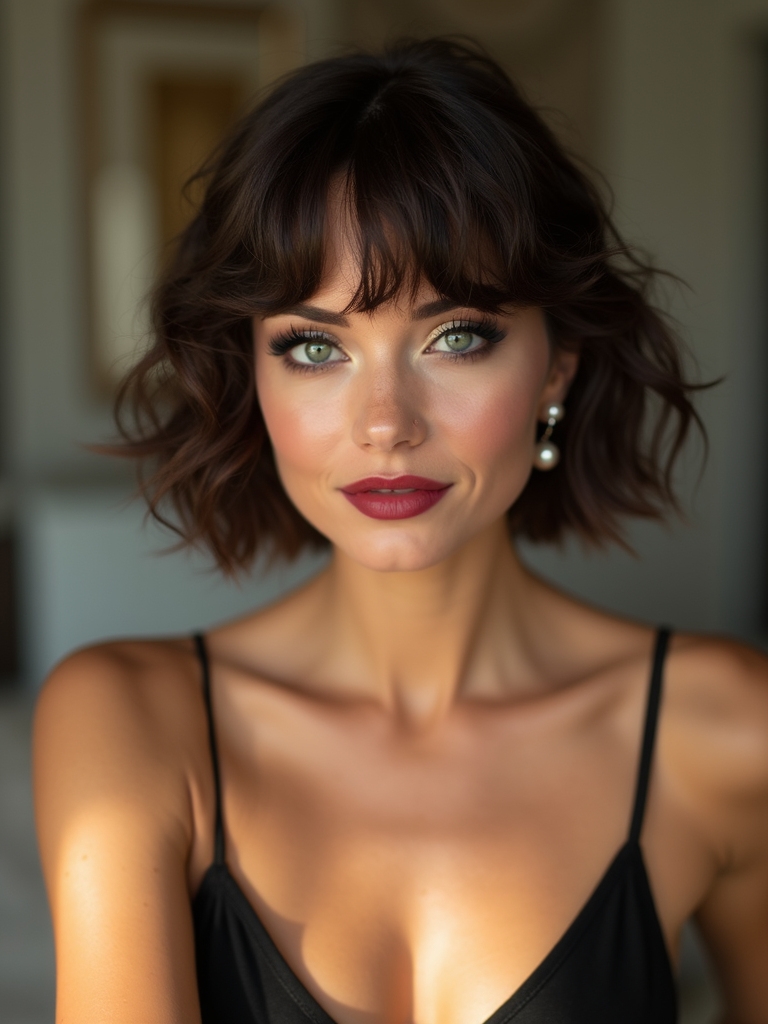
Tousled waves with a short, center-parted curtain fringe create a soft, undone look built entirely around movement, the kind that reads relaxed even on a day with zero styling effort behind it.
- Best on naturally wavy texture; straight hair needs a wand to fake the same softness.
- Refresh with a light sea-salt spray, worked in with fingers.
- The waves and the fringe should echo the same texture.
A Wolf Cut With Micro Bangs
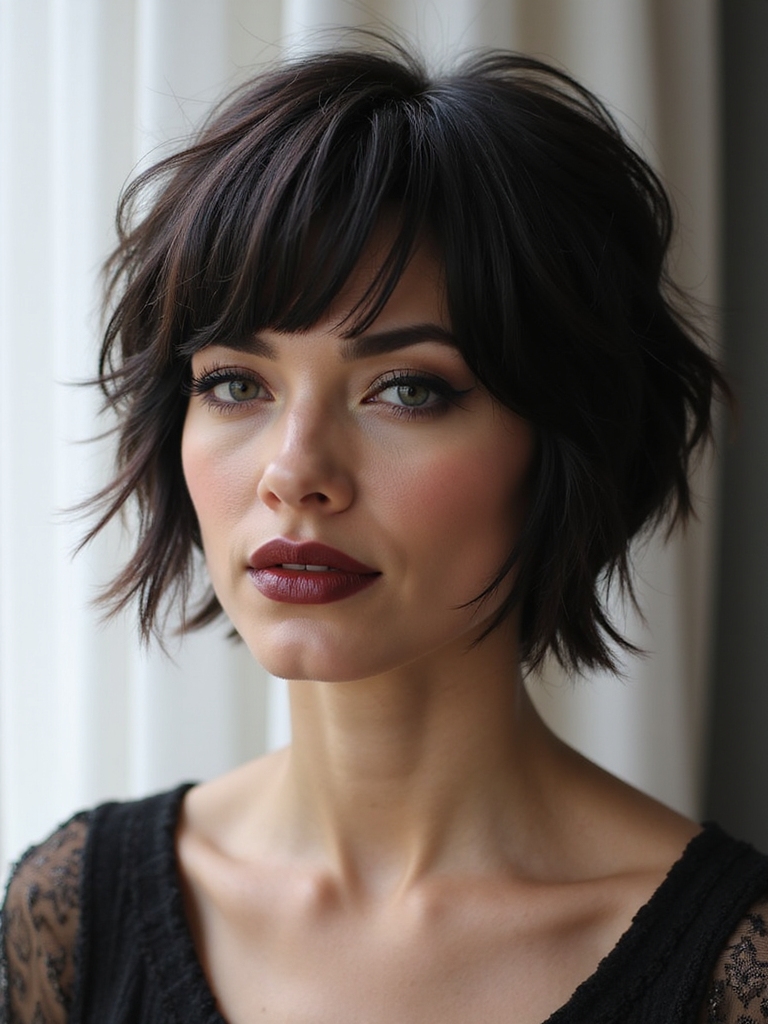
A layered wolf cut with micro curtain bangs is the edgiest pairing on this list, built for maximum texture and attitude.
Who It Suits
The choppy, disconnected wolf layers meet a short, center-split fringe up front, and the micro curtains keep that front section from reading unfinished.
It needs more upkeep than most versions here, since both the layers and the fringe are short enough to grow out of shape at the same time. For the fuller cut on its own, see the wolf cut roundup.
Texture Mismatch
A sleek, straight fringe on wavy lengths reads as two different haircuts glued together. If the waves are natural, let the fringe air-dry with the same texture instead of flat-ironing it separately.
Retro Flipped Ends
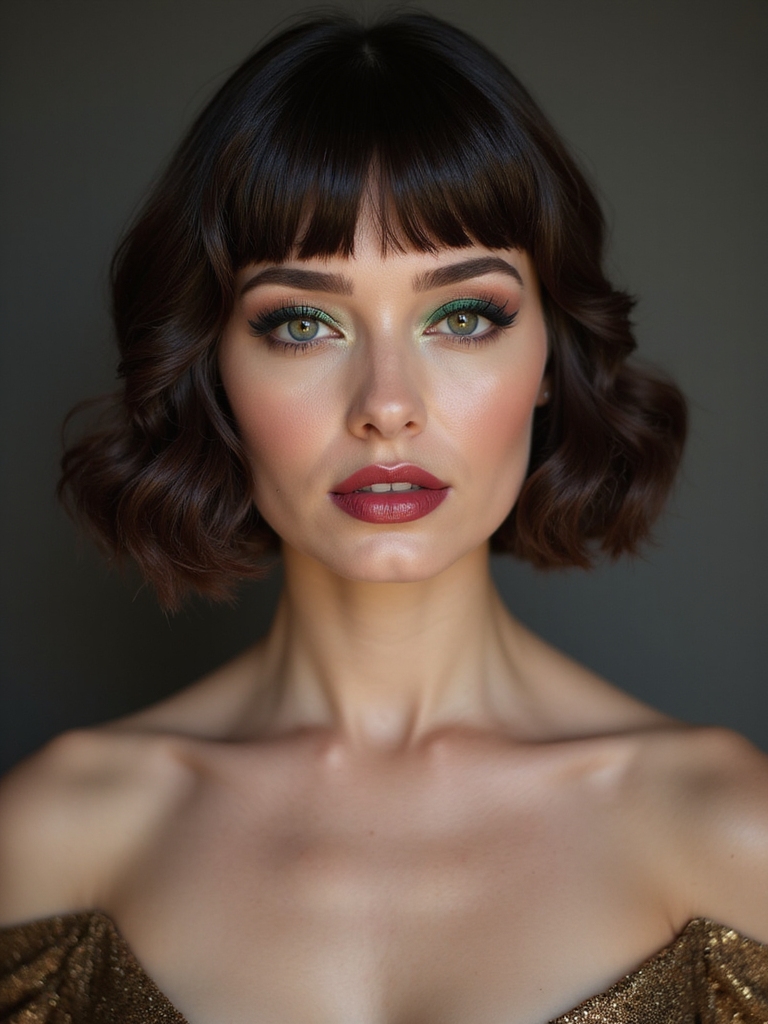
Flipped ends and a short curtain fringe borrow directly from a seventies silhouette, playful and full of movement.
Getting the Flip
The ends flick outward for that retro bounce while the center-split bangs frame the face, sharing the same easy, vintage-leaning spirit.
It suits a lob or a collarbone-length cut best, since there needs to be enough length at the ends to actually flip.
Airy Bangs for Fine Hair
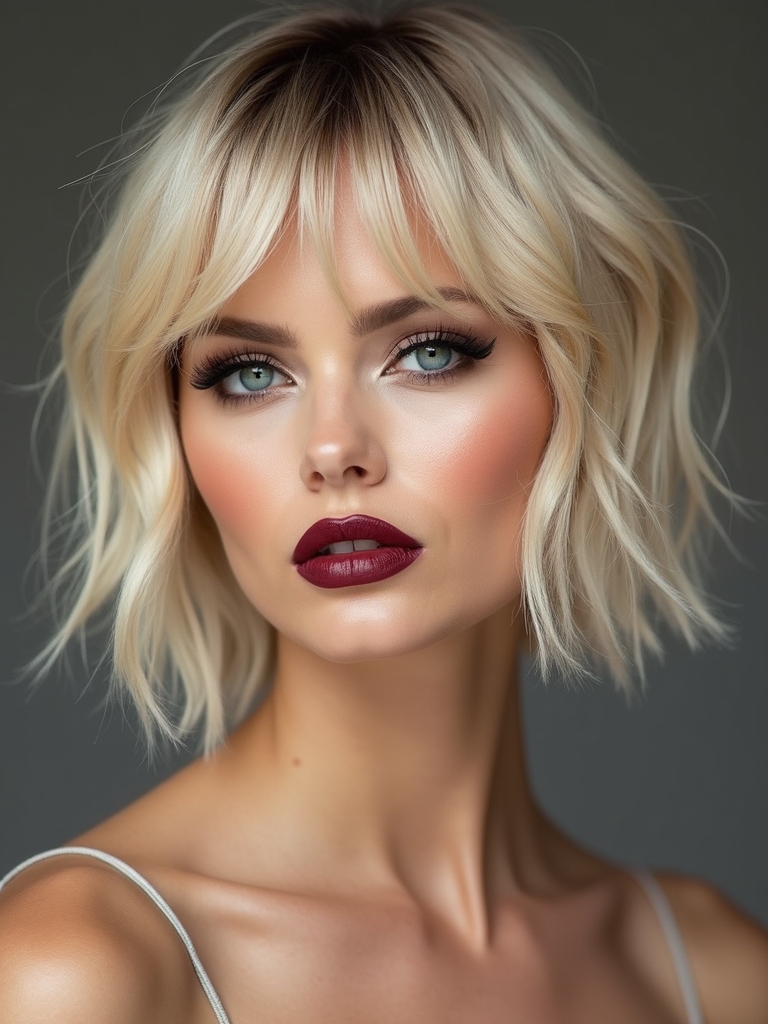
Fine hair does best with airy, piecey short curtains cut thin and feathered so they never read sparse against the scalp.
Keeping Fine Bangs Full
A light, separated fringe adds the impression of a frame without exposing much scalp underneath, which makes fine hair look fuller at the front specifically.
The trick is taking an actually thin section and keeping the ends piecey, so the bangs look deliberately light.
A Shag Mullet With a Split Fringe
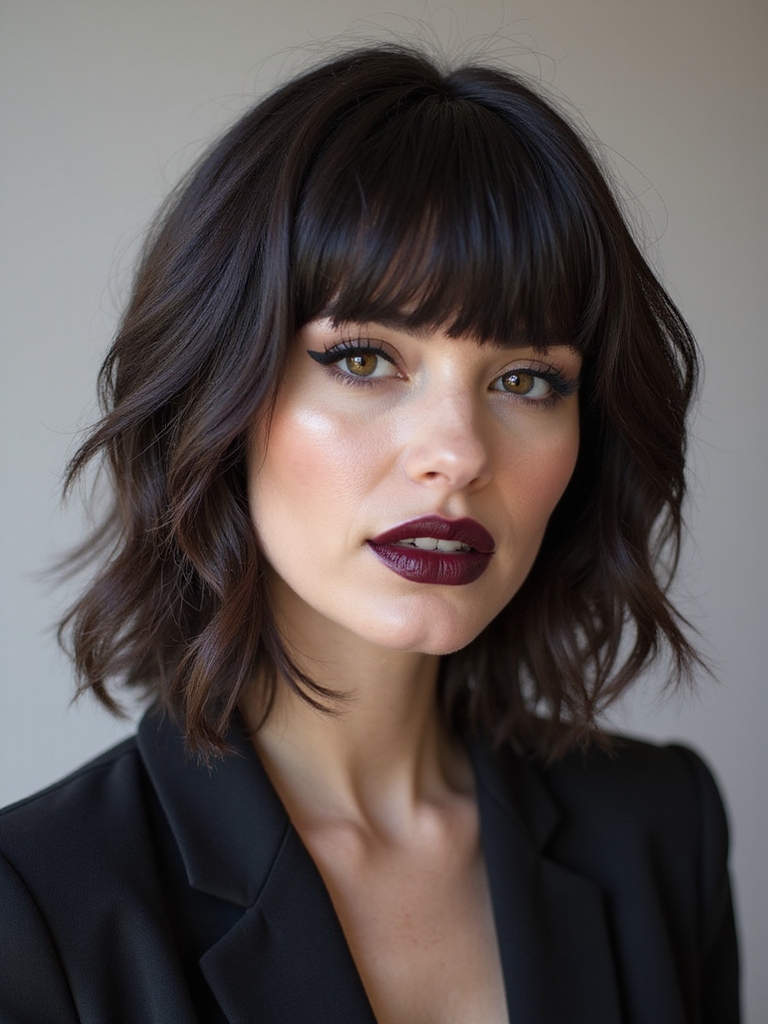
A shag mullet with a short, split curtain fringe is the boldest, most fashion-forward pairing here, all texture and disconnection on purpose.
The mullet’s shape and the split fringe make a strong statement together, and the fringe softens the mullet’s edge just enough to stay wearable outside a styled shoot. Our shag mullet guide covers the base cut in more depth.
- Expect regular trims; both the mullet layers and the fringe grow fast out of shape.
- Style with a matte paste through the lengths for texture, not shine.
- Best suited to someone comfortable being noticed.
A Voluminous Blowout Finish
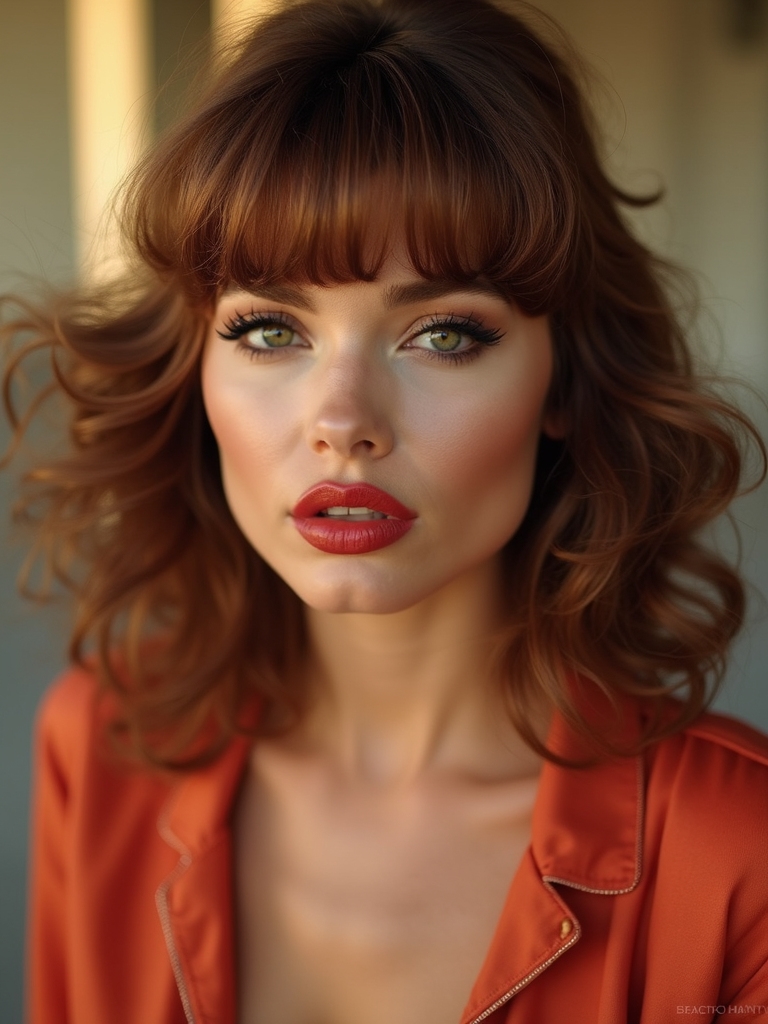
For a more polished result, a voluminous blowout paired with mini curtain bangs reads as put-together.
Building the Volume
The bouncy, blown-out lengths and the soft, short curtains work together the way a salon finish usually does, with the fringe keeping the whole look from feeling overdone.
It suits an event or simply a day someone wants a more finished version of their usual short cut.
Coily Bangs Framing Cheekbones
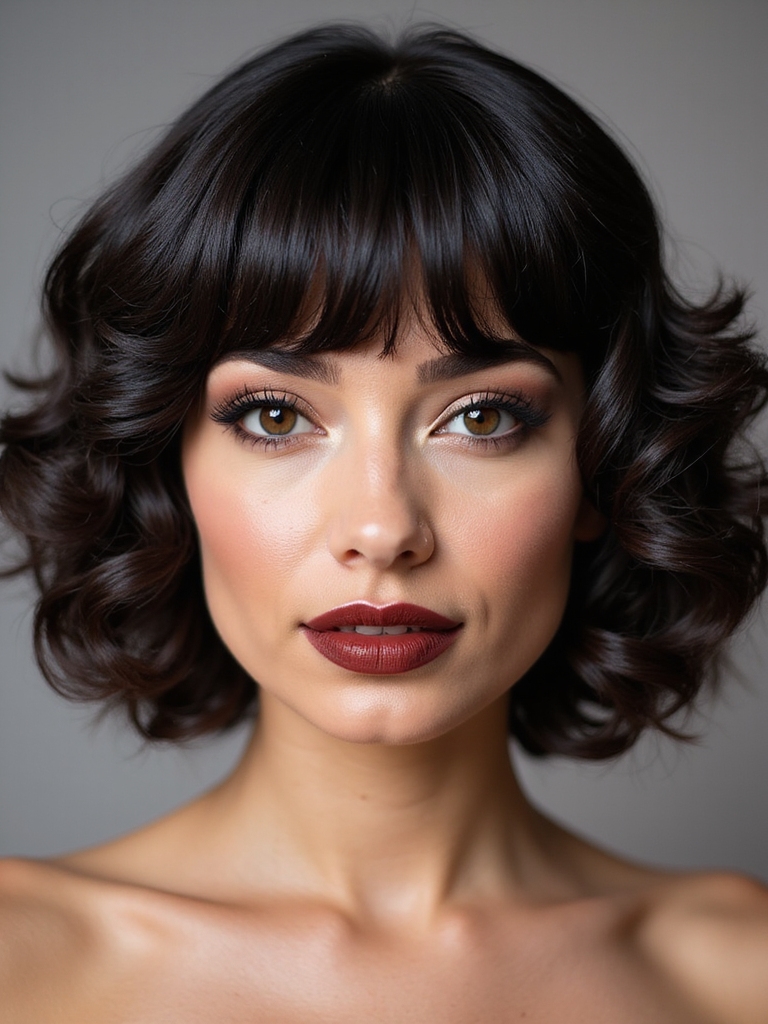
Coily hair makes striking short curtains once they’re sculpted to the natural pattern.
Shaping Coily Curtains
A center-parted section of coils, shaped to spring toward each cheekbone, frames the face with full, defined texture unique to the coil pattern itself.
Cutting it dry, in its natural coiled state, matters most here: it’s the only way to see where the curls actually land once they spring up to their resting length.
| Routine | Time | Result |
|---|---|---|
| Full round-brush set | 15-20 min | Maximum bounce, holds through evening |
| Quick diffuse + finger-lift roots | 5 min | Softer volume, casual finish |
Side-Swept, for Round Faces
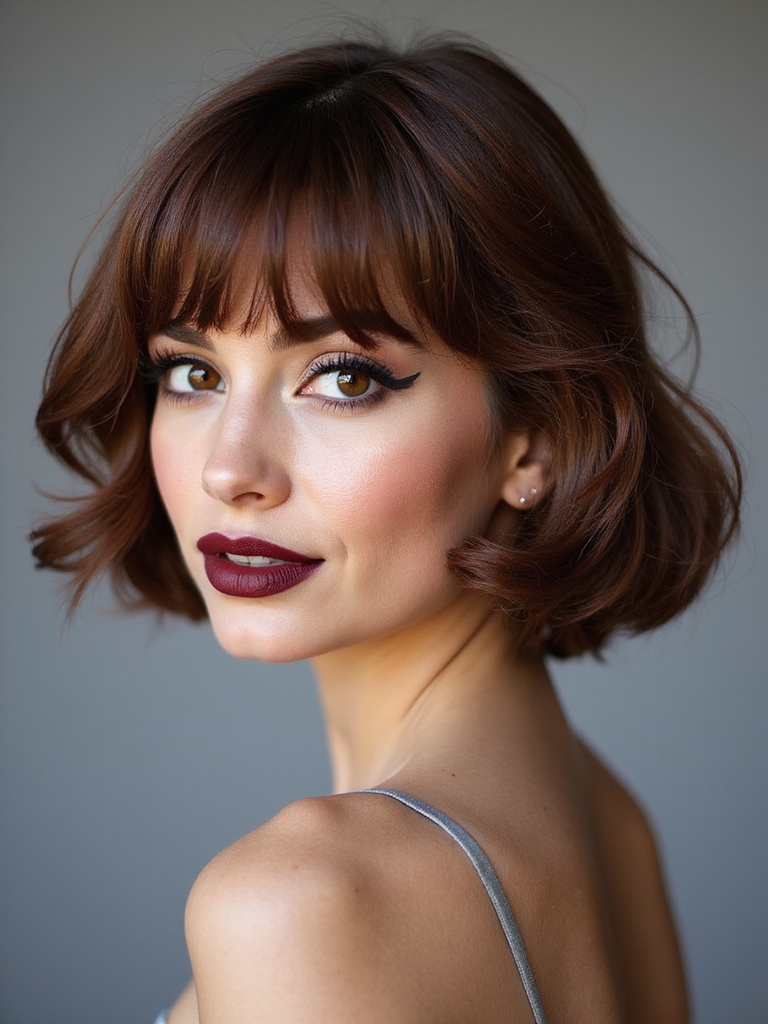
Round faces have a real advantage with side-swept short curtains: sweeping the fringe to one side, with the heavier weight set off-center, creates a diagonal line across the forehead that visually lengthens and slims the face, drawing the eye up and out.
- Sweep to one side deliberately, on purpose.
- Keep the heavier section on the side you part toward.
- Dry the heavier side across with a round brush for hold.
A Textured Lob, Choppy and Mini
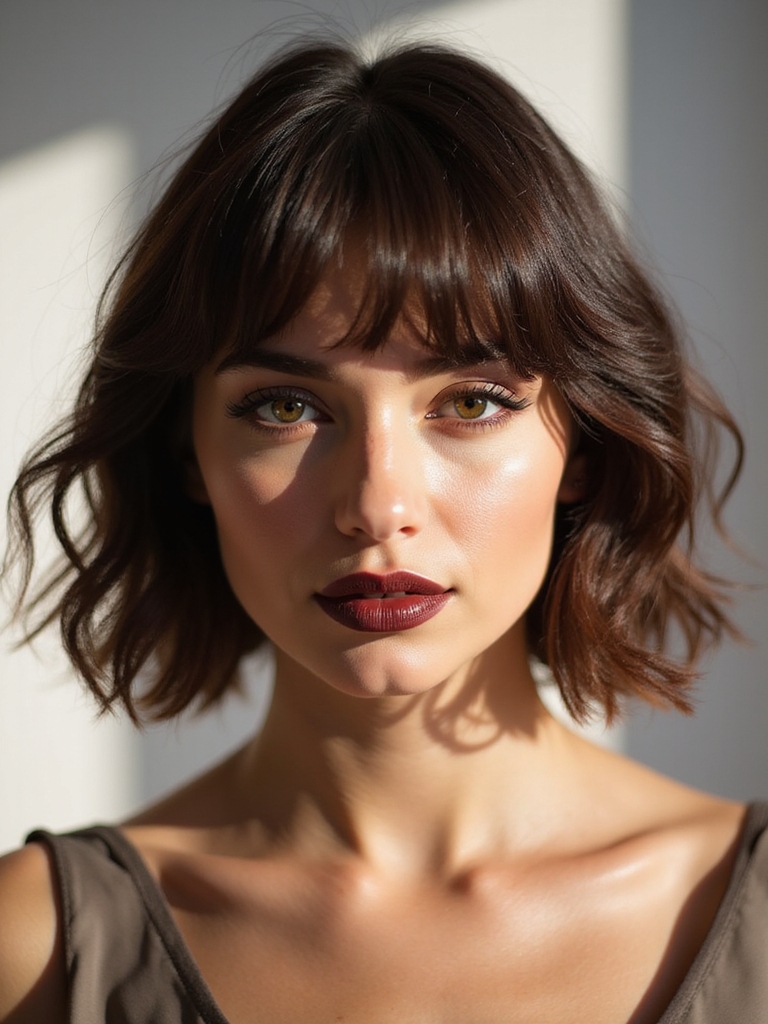
A textured lob with choppy mini curtain bangs pairs a layered lob with a short, deliberately rough-edged fringe for a finish that reads modern.
The choppy fringe matches the lob’s own texture, so the whole look feels like one continuous idea.
It suits someone who wants short curtains with more grit than the softer, feathered versions covered earlier. Our layered curtain bangs page has more texture-forward pairings like this one.
Maintenance & Care
Short curtain bangs are the most grow-out-friendly fringe on this list, but grow-out-friendly doesn’t mean maintenance-free. Micro versions need a trim close to the two-week mark; cheekbone-grazing and wispier versions can usually stretch closer to a month.
Day to day, the routine is short: a quick blow-dry with a round brush to set the sweep, and a light dusting of dry shampoo right where the fringe meets the hairline, since bangs pick up forehead oil faster than longer lengths do.
On cost, most salons trim bangs free between full cuts. Paying for a standalone bang trim runs on the cheaper end of any salon service, usually $10 to $20 a visit. Our curtain bangs on short hair and face-framing curtain bangs guides cover longer variations if the short length ever grows out further than planned.
Short Curtain Bangs, Answered
?Do short curtain bangs work if I have a cowlick at the hairline?
Usually yes, though the cowlick needs to be pointed out at the consultation. A stylist can cut around the growth pattern or use it to add natural movement to the sweep, working with it every morning.
?How short can curtain bangs get before they just read as a full fringe?
Once the center gets cut shorter than the sides taper down to, the shape starts reading as a full fringe. The center-split, longer-at-the-outside taper is what makes a curtain bang a curtain bang at any length.
?Can short curtain bangs be grown out into a longer version later?
Yes, and it’s one of the easier fringe transitions. Curtains already sweep away from the face as they grow, so the awkward stage is shorter than growing out a blunt fringe of the same starting length.
?Do short curtain bangs need a different part than the rest of the hair?
Not necessarily. Most versions here work with a center part carried straight through the fringe, though a side-swept variation can sit on its own deeper part if the rest of the hair is parted elsewhere.
?What face shapes should avoid short curtain bangs entirely?
Very few. The center-split, outward sweep adjusts easily with small tweaks to length and how heavily one side is weighted, so it flatters most face shapes rather than just one or two.
The Easiest Fringe on Short Hair
Short curtain bangs prove length was never the requirement for a soft, face-framing fringe. Cropped to graze the cheekbones or higher, they frame nearly every short cut and grow out more gracefully than a blunt fringe.
Whether the pick is micro and mod, wispy and soft, or coily and sculpted, the version that works is the one cut for the actual texture underneath it, not just the photo it’s copied from.
Worth a Look