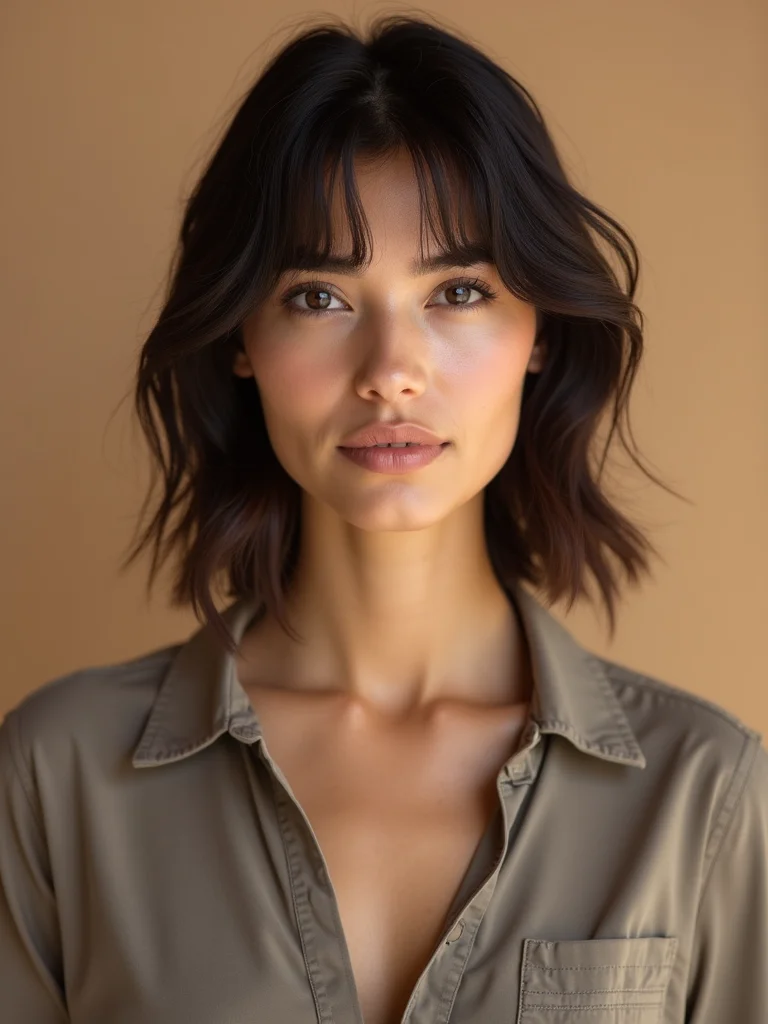
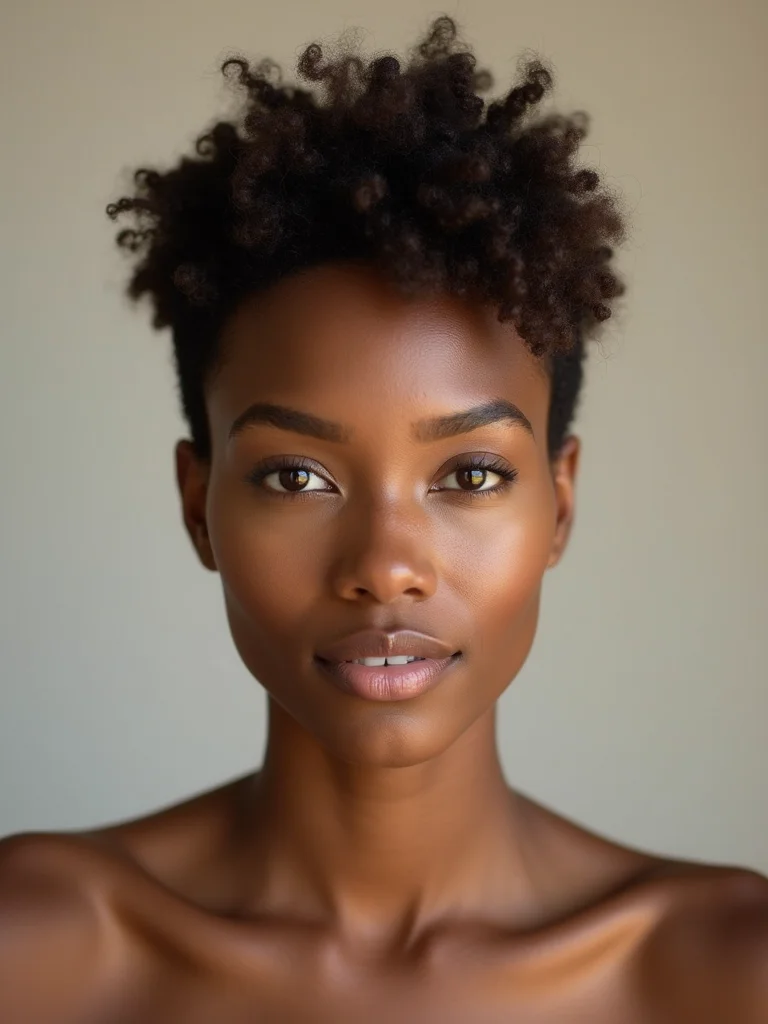
What actually finishes a short cut: the length, the layers, or the fringe sitting in front of it? On short hair, it’s usually the fringe. Curtain bangs on short hair split attention away from a sharp haircut and give the eye somewhere soft to land first.
Fifteen cuts follow, from a classic bob to a grown-out pixie, each paired with the specific curtain-bang treatment that suits it. Texture, face shape, and how much daily styling you actually want to do all shift which version fits.
Before You Book: Three Real Questions
Will curtain bangs work with my specific short cut? In nearly every case, yes. The center-split, sweep-back shape adapts to bobs, lobs, and pixies; only the length of the sides changes how it reads.
Does my hair texture change how it’s cut? Yes, meaningfully. Fine hair needs feathering for volume, thick hair needs weight removed, and curly hair gets cut fully dry so the spring is already built in.
How often will I need a trim? Plan on a trim close to once a month. Short fringes reach eye level faster than long ones, so they need tidying sooner than a longer style would.
How Different Short Haircuts Wear Curtain Bangs
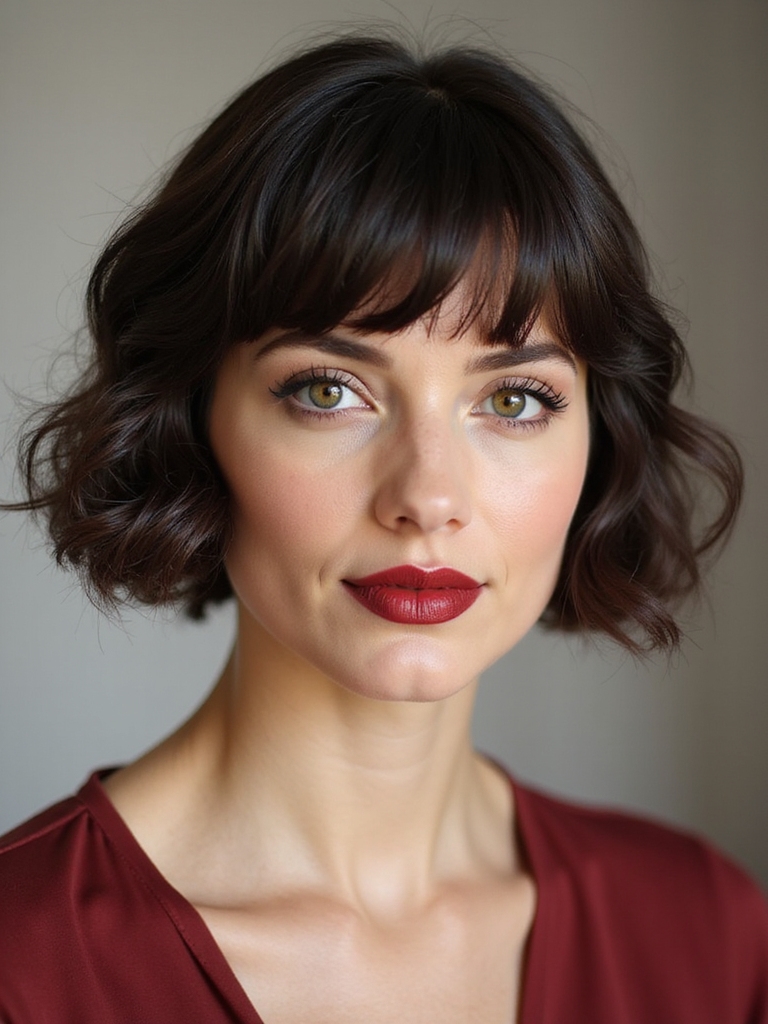
Short cuts sit close to the face, which means every line shows. A curtain fringe adds one soft, adjustable shape right where the eye lands first, and it can be set higher to open the eyes or lower to add length. Face shape barely limits it; only the placement of the shortest point changes.
- Adjustable center point suits round, square, heart, and oval faces
- Softens the hard edges of a precise bob or pixie
- Lengthens right alongside the surrounding layers, with no separate grow-out stage
Classic Bob With a Soft Curtain Fringe
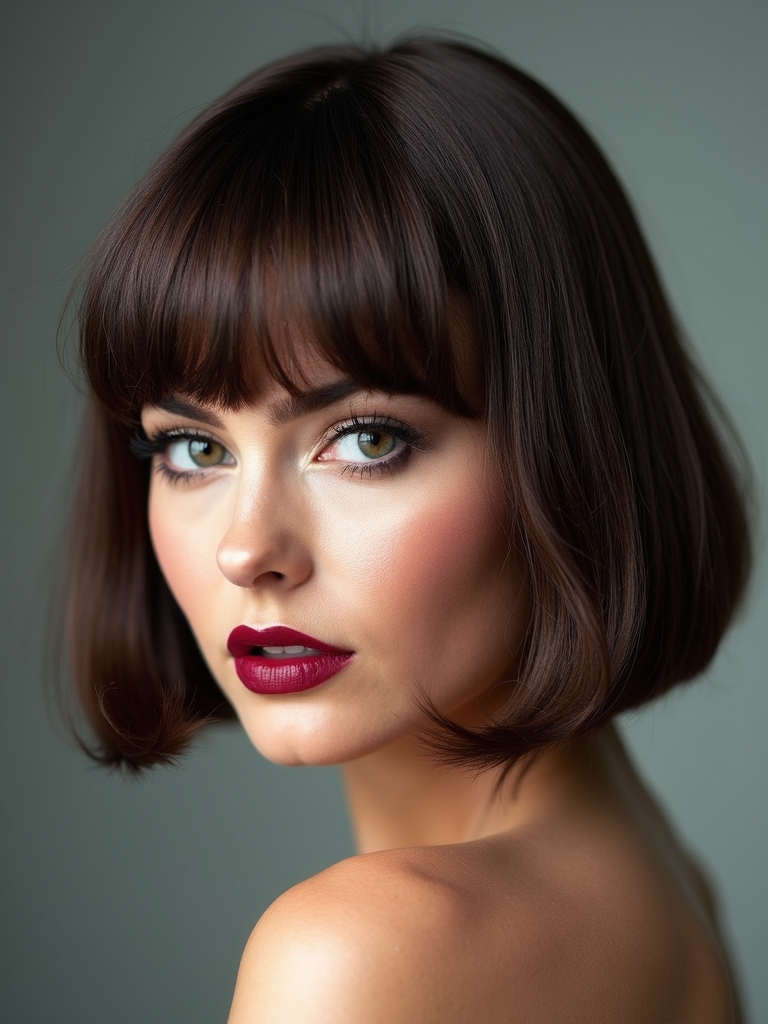
A chin-length bob is the shape most people picture when they hear curtain bangs, and it earns that reputation. The clean line of the bob gives the fringe a tidy frame to sit against, and the center split breaks up an otherwise blunt silhouette.
Ask for the fringe to feather into the front sections of the bob rather than sitting as its own block. That single request changes how the whole thing reads, blending the shortest pieces into the cut instead of stacking them on top of it.
The shortest strands land at the cheekbone, the longest blend into the jawline. Between the two, the fringe has room to sweep either direction depending on how it’s dried.
Shaggy Bob With Piecey Curtain Bangs
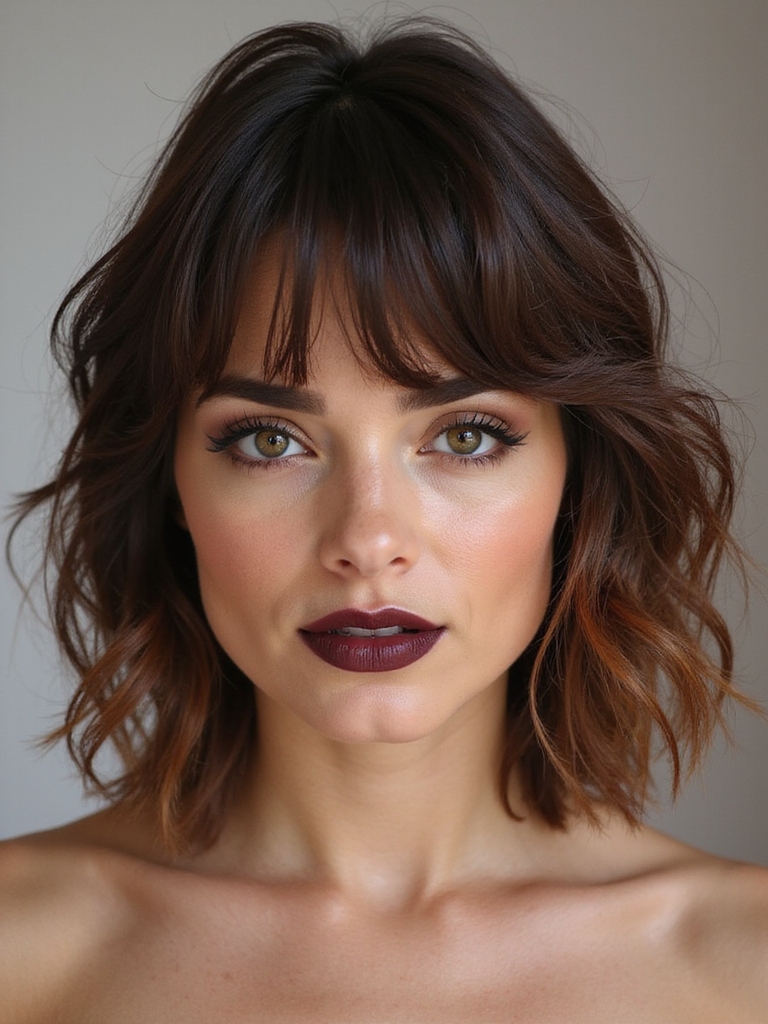
A shaggy bob trades the bob’s clean lines for choppy, stacked layers, and a piecey curtain fringe fits that looser energy better than a smooth one would.
The bangs get sliced into separated strands of uneven length rather than cut as one solid piece. That slicing lets the fringe fall in loose sections instead of a single sweep, so it moves the same way the shag does.
Texturizing runs through the whole bob, not just the front, so the fringe reads as part of the design instead of an afterthought stitched onto a heavier cut.
👍Where This Combination Shines
- +Instantly softens a precise, blunt bob
- +Works with round, oval, and square face shapes
- +Looks finished with almost no daily effort
👎What to Ask About First
- –A too-blunt fringe can look severe rather than soft
- –Shows regrowth at the temples before it shows anywhere else
- –Needs a diffuser or round brush on frizz-prone days
French Bob With a Center-Split Fringe
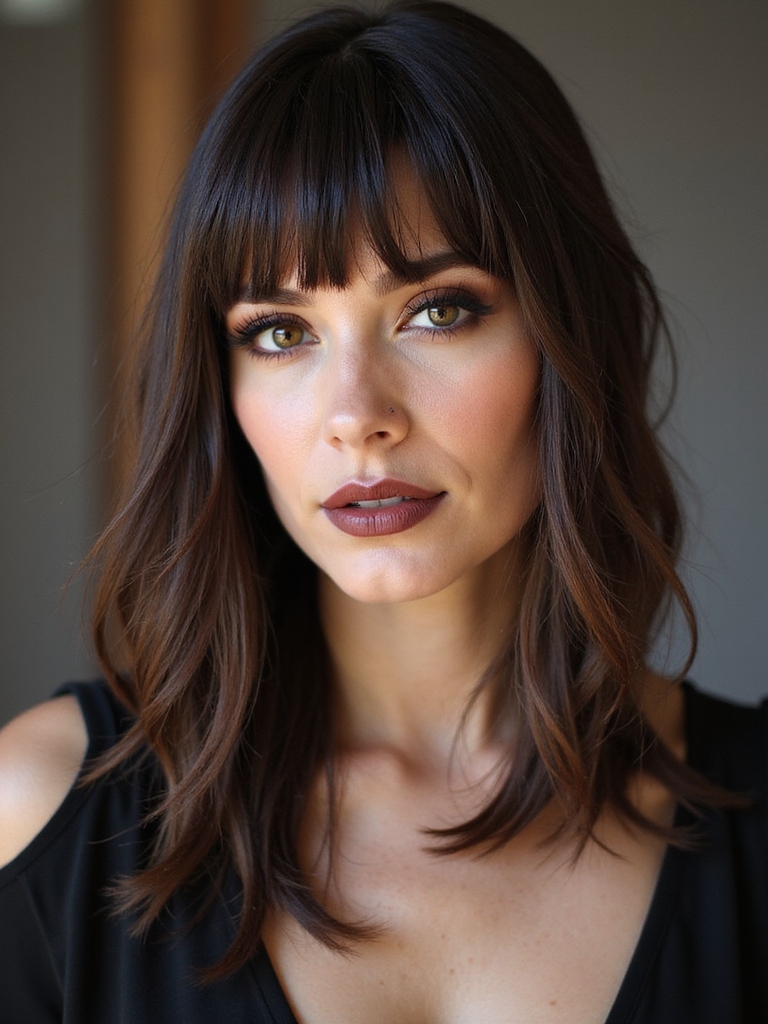
A french bob with bangs sits shorter and a touch more tousled than a standard bob, and the curtain fringe follows that same relaxed logic.
Deliberately Undone, Not Careless
Kept slightly imperfect on purpose, the bangs split down the middle and sweep just past the eyes rather than sitting in a stiff, symmetrical line. Precision here would fight the whole point of the cut.
This pairing tends to read a little older than its actual maintenance level suggests. In practice it needs less daily styling than a polished, blunt version.
Wavy Lob With Curtain Layers That Move
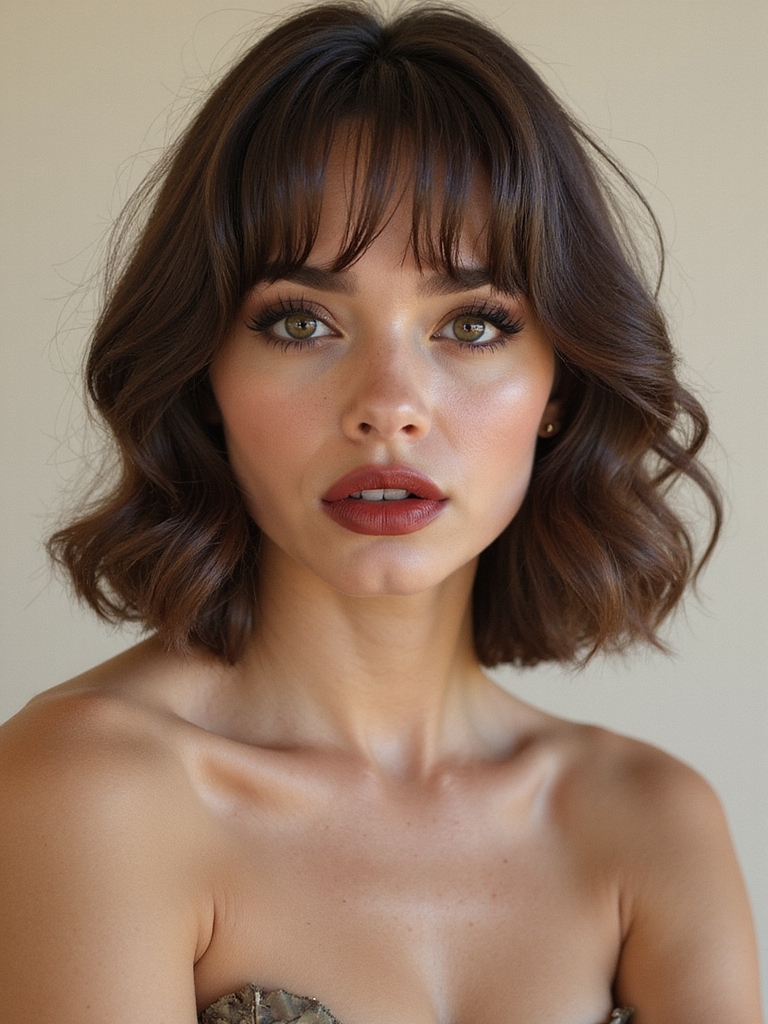
On a wavy lob, the natural bend of the hair carries the curtain layers along instead of fighting them, so the fringe looks like part of the wave pattern rather than a cut piece stuck on top. The two textures share the same loose, moving quality, which is exactly why the pairing gets requested so often.
- Airy, feathered ends lift with the wave instead of hanging flat
- The fringe connects straight into the lob’s face-framing layers
- Shortest strands sit at the cheekbone, longer pieces settle into the length
Curly Bob With a Diffused Curtain Fringe
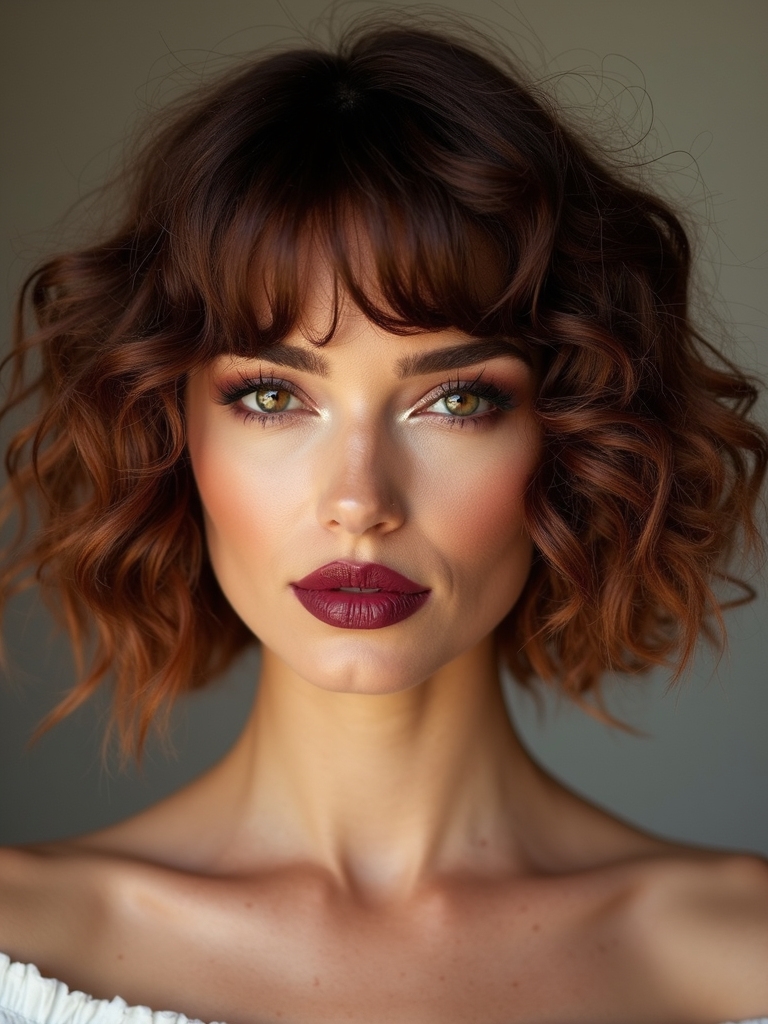
On a curly bob, curtain bangs need one non-negotiable rule: they get cut fully dry, curl by curl, never wet.
Why Dry-Cutting Isn’t Optional Here
Curls draw up as they dry, sometimes by a significant amount, so a wet cut almost always lands shorter than planned once it springs back into shape.
A stylist who regularly works with curls builds the fringe curl by curl, checking where each one lands before moving to the next, rather than cutting a straight line and hoping the curls cooperate.
Match the fringe treatment to your wave pattern:
🎯Loose, barely-there waves
A soft feather-cut leaves the fringe loose instead of stiff and structured
🎯Defined, springy waves
Piecier layering stops the fringe from clumping into one section
🎯Mixed texture, straighter at the crown
A slightly longer length gives more room to blend the two textures
Textured Pixie With a Grown-Out Fringe
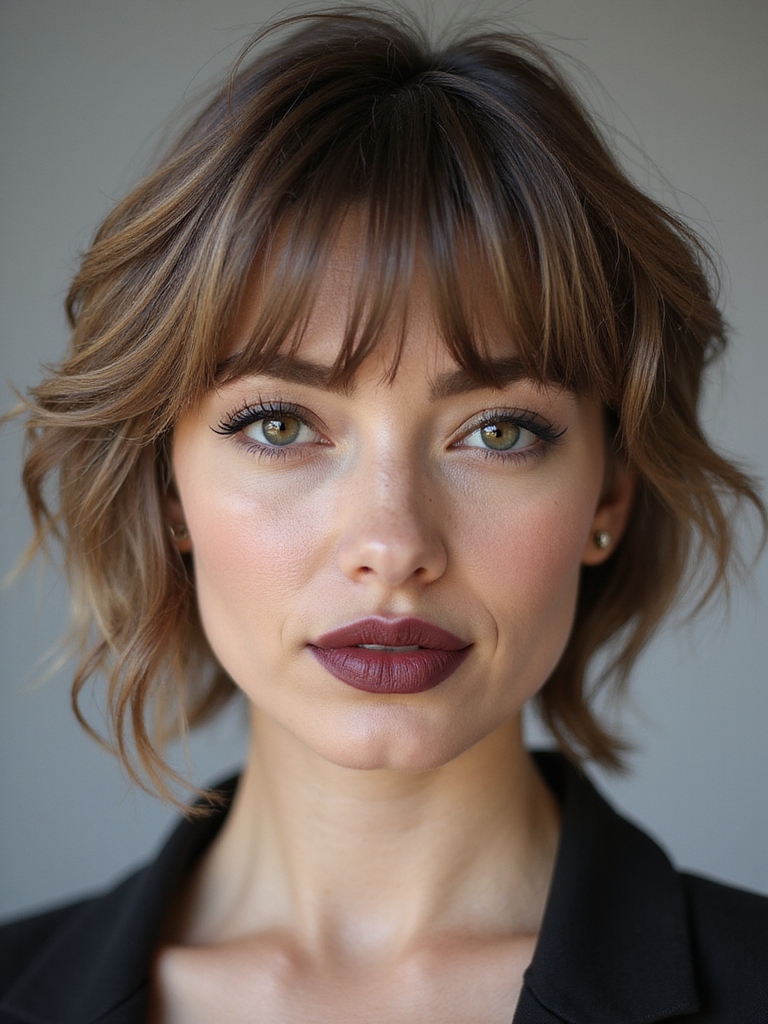
Curtain bangs aren’t limited to bobs. On a textured pixie cut, a longer, grown-out fringe softens the cropped shape and gives it a frame the base cut wouldn’t otherwise have. It’s also a solid transitional stage for anyone tired of a pixie but not ready to commit to a full grow-out.
- Back and sides stay short and textured throughout
- Front sections grow long enough to part and sweep
- Doubles as a low-drama way to grow a pixie out
Pixie-Bob Hybrid With Feathered Bangs
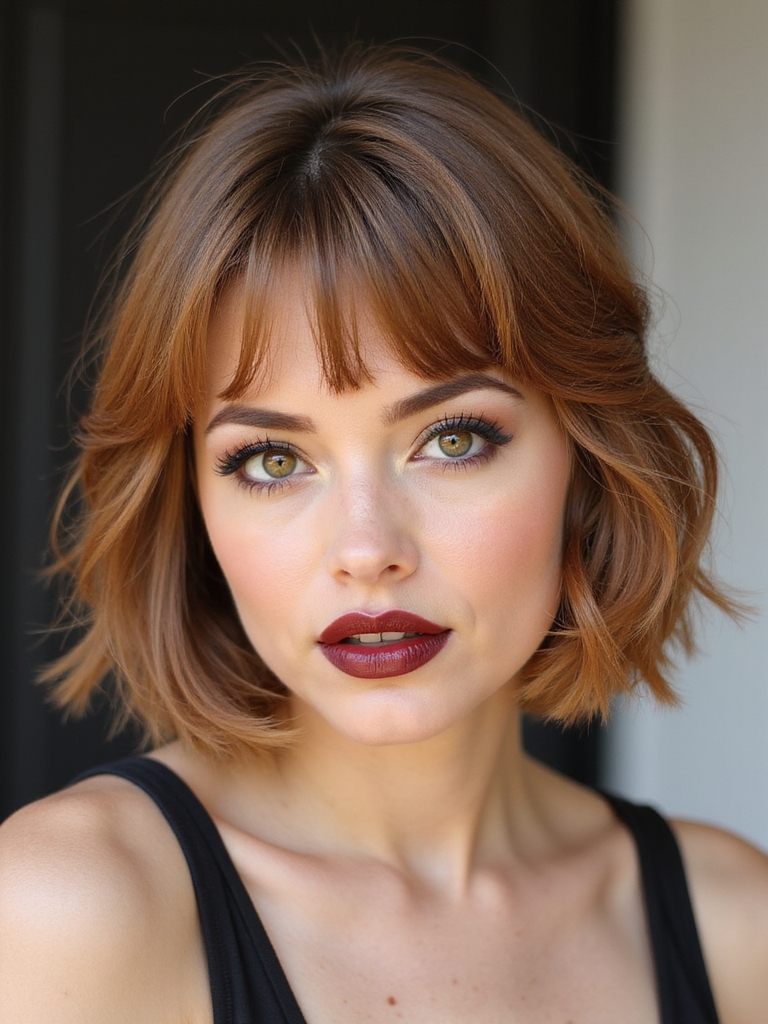
This hybrid keeps the back short and pixie-like while letting the front reach the jaw, which gives feathered curtain bangs exactly the length they need to form a real sweep instead of a stub.
Feathering ties the two lengths together at the transition point. Without it, the jump from cropped back to longer front can look like two separate haircuts sharing one head. Ask specifically for the feathering to extend an inch or two past the jawline so the blend has room to work.
Fine Hair Gets a Volume Boost
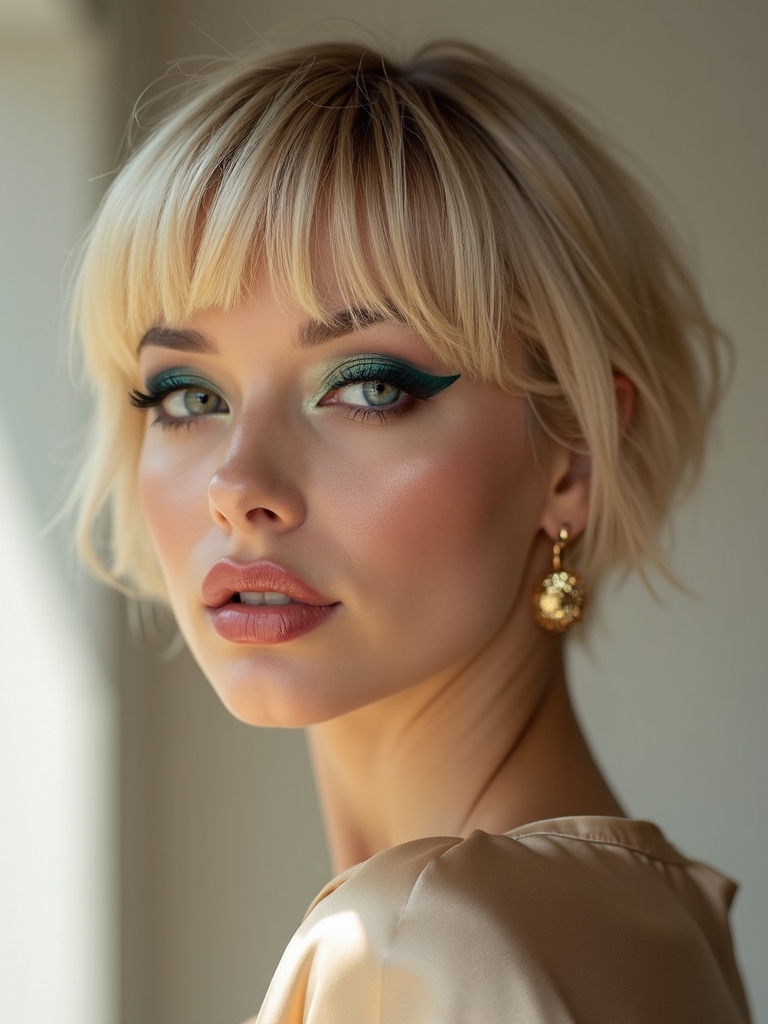
Fine, short hair and curtain bangs pair better than most people expect, mainly because the fringe can be built to fake density it doesn’t naturally have.
Layering does the actual work. A curtain fringe feathered and lifted right at the root adds height exactly where fine hair tends to go flat first.
A blunt, heavy fringe does the opposite here. It hangs in one solid piece and draws attention to how little hair is actually holding it up.
Thick Hair Loses Its Bulk Up Front
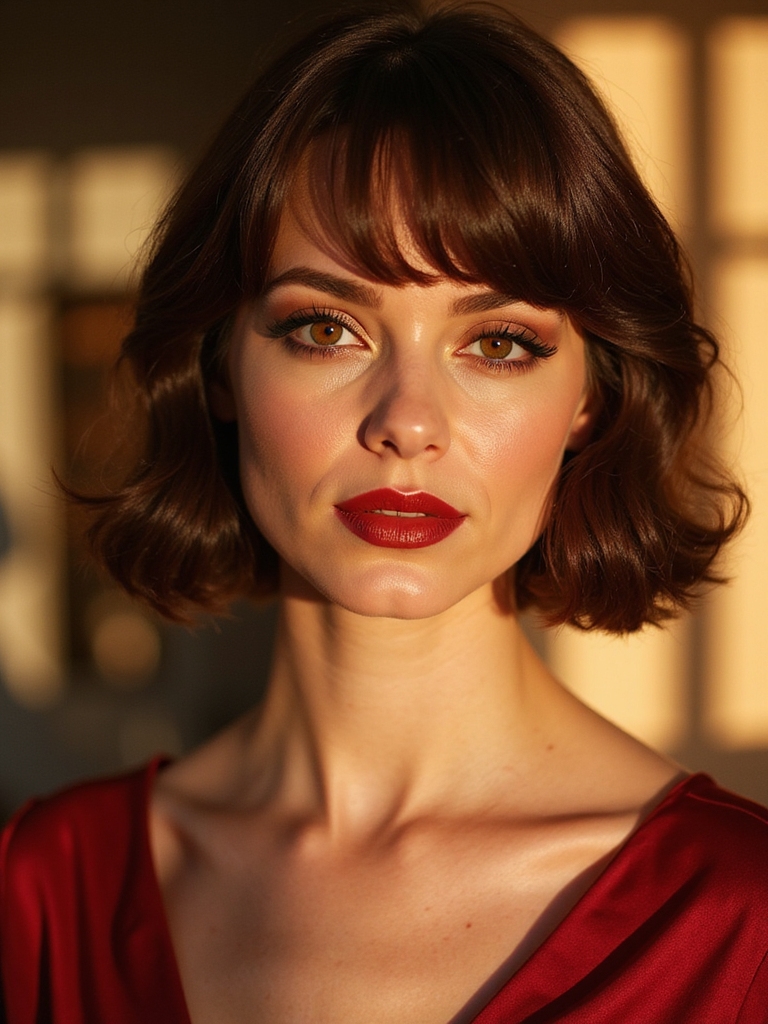
Thick hair runs into the opposite problem, and curtain bangs help by removing weight rather than adding it.
Debulking, Not Shortening
Left too heavy, a curtain fringe on thick hair sits like a solid block instead of a soft sweep. Internal thinning through both the fringe and the surrounding layers fixes that without changing the outer shape.
This is one of the more common in-chair adjustments on thick fringes that arrive too dense: the outline stays, the inside gets lighter.
Two assumptions fine-haired clients bring into the chair:
❌ Myth: Myth: any fringe will look thin on fine hair.
✅ Reality: Fact: a feathered, root-lifted fringe adds visible volume; it’s the blunt, unlayered version that looks sparse.
❌ Myth: Myth: fine hair can’t hold a curtain shape.
✅ Reality: Fact: it holds the sweep just fine once the weight is thinned; the issue is usually too much bulk, not too little.
Softening a Round Face on Short Hair
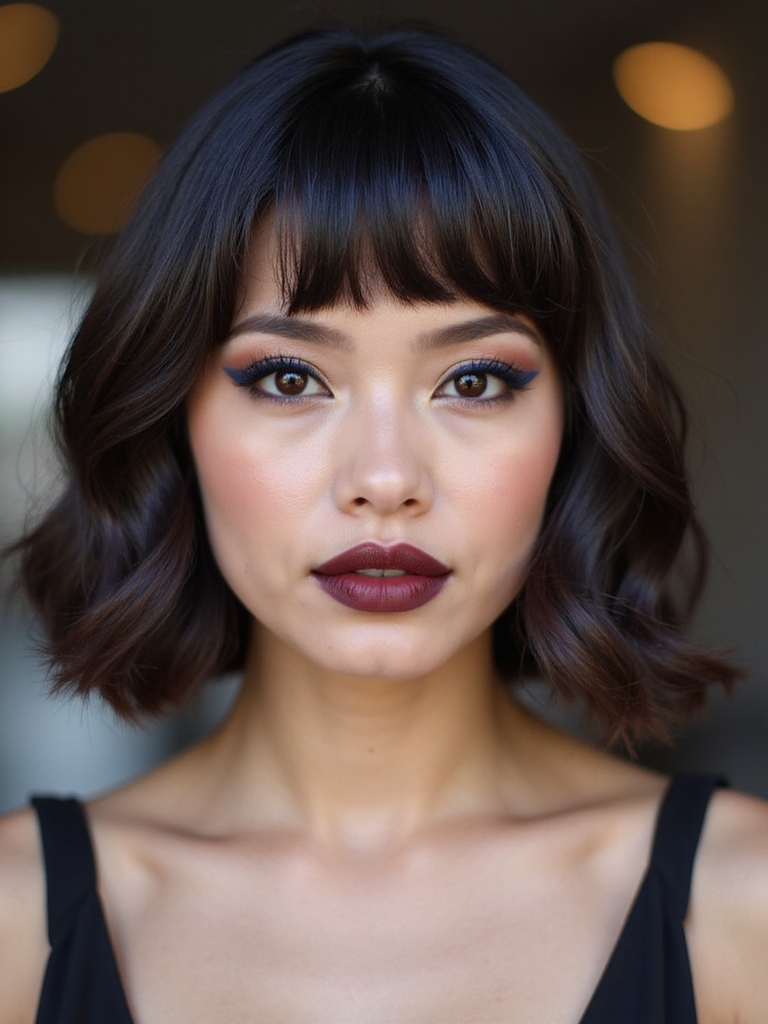
For a round face specifically, a soft split curtain fringe draws a vertical line down the center while the two halves sweep back on a diagonal, both working to counter the width a short cut can expose. Short hair makes that width more noticeable to begin with, so the fringe carries more visual weight here than it would on longer lengths.
- Center split adds length, not just decoration
- Setting the shortest point lower drags the eye downward
- Diagonal sweep softens width more than a straight-across fringe would
Balancing Heart and Square Face Shapes
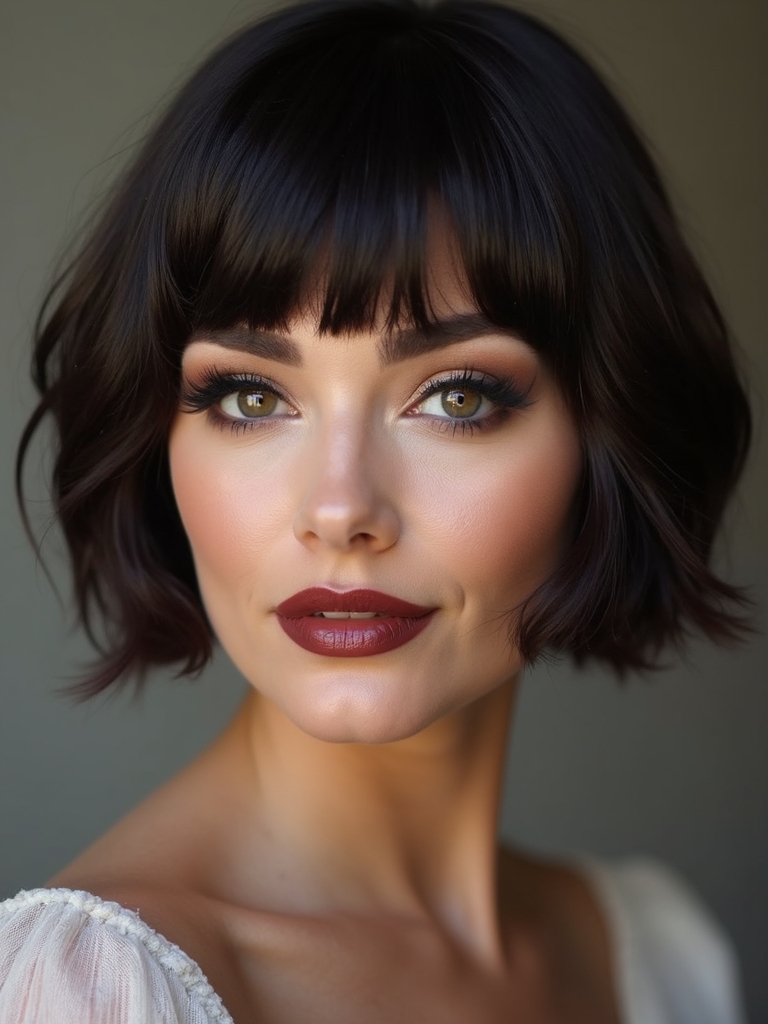
Curtain bangs solve two very different problems on heart and square faces, and on short hair the effect shows up immediately since there’s less length elsewhere to distract from it.
Same Fringe, Different Placement
A heart-shaped face runs wide at the forehead and narrows toward the chin, so the fringe pieces sweep inward to soften that width up top.
A square face asks for the opposite emphasis. The soft curve of a swept fringe counters a strong jaw and forehead, adding roundness where the face is otherwise angular.
💡Where to Set the Shortest Point
For a round face specifically, ask for the shortest piece to land around the cheekbone rather than higher near the brow. The lower placement adds visible length instead of drawing a horizontal line straight across the widest part of the face.
Heatless Shaping With Clips and a Blow-Dryer
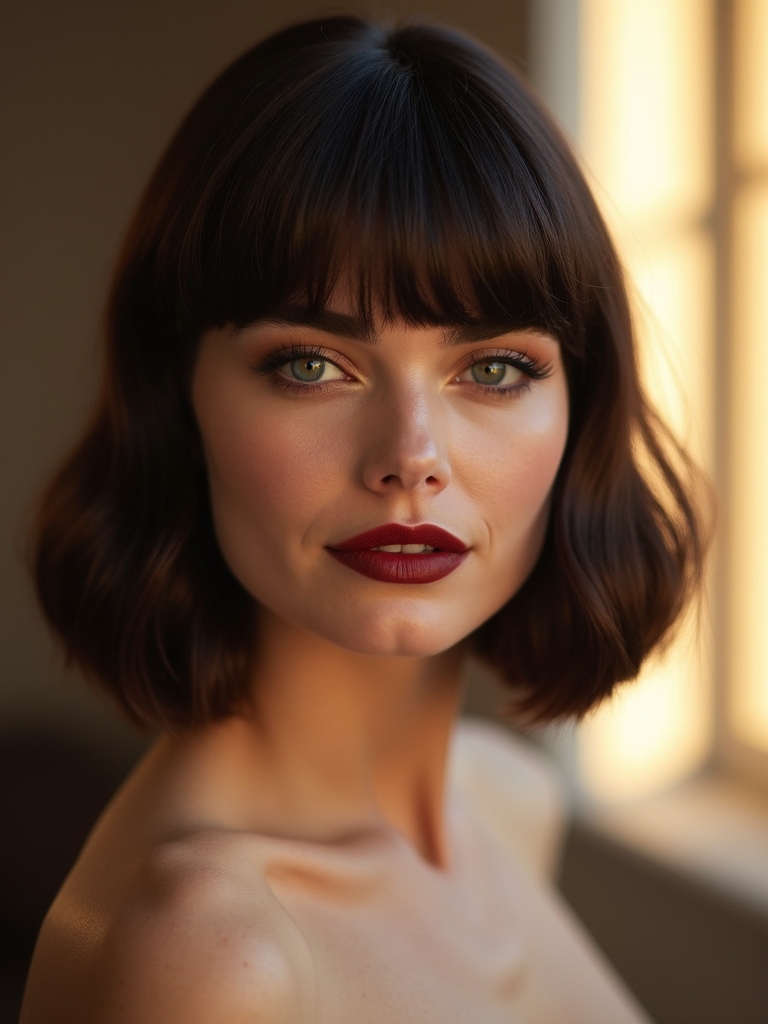
Short curtain bangs set fast, which makes them one of the easier fringes to shape without a hot tool.
Comb the damp fringe into its center part, sweep each side back toward the ears, and pin it flat with a clip or a soft headband while it dries. The sweep sets into that position on its own.
For more bend, wrap the damp fringe loosely around a large roller or a finger and hold it for a few minutes before releasing. Either method skips the flat iron entirely.
The Short Product Kit That Actually Helps
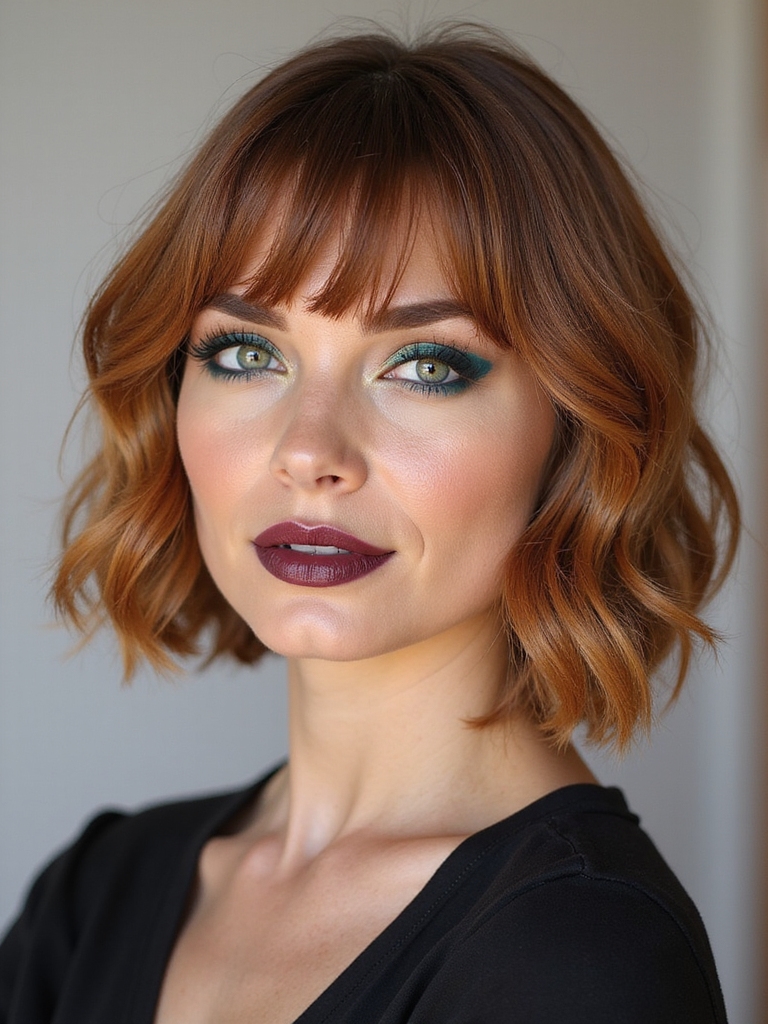
A fringe this small gets overwhelmed fast, so the product list stays short on purpose.
A lightweight texture spray handles most days: a light mist adds grip and separation without weight, and it revives the sweep on second-day hair without a full restyle.
For a piecey, grown-in finish, a small amount of matte texture paste worked between the fingertips before touching the fringe pulls strands apart instead of clumping them.
Trimming and Growing Out Short Curtain Bangs
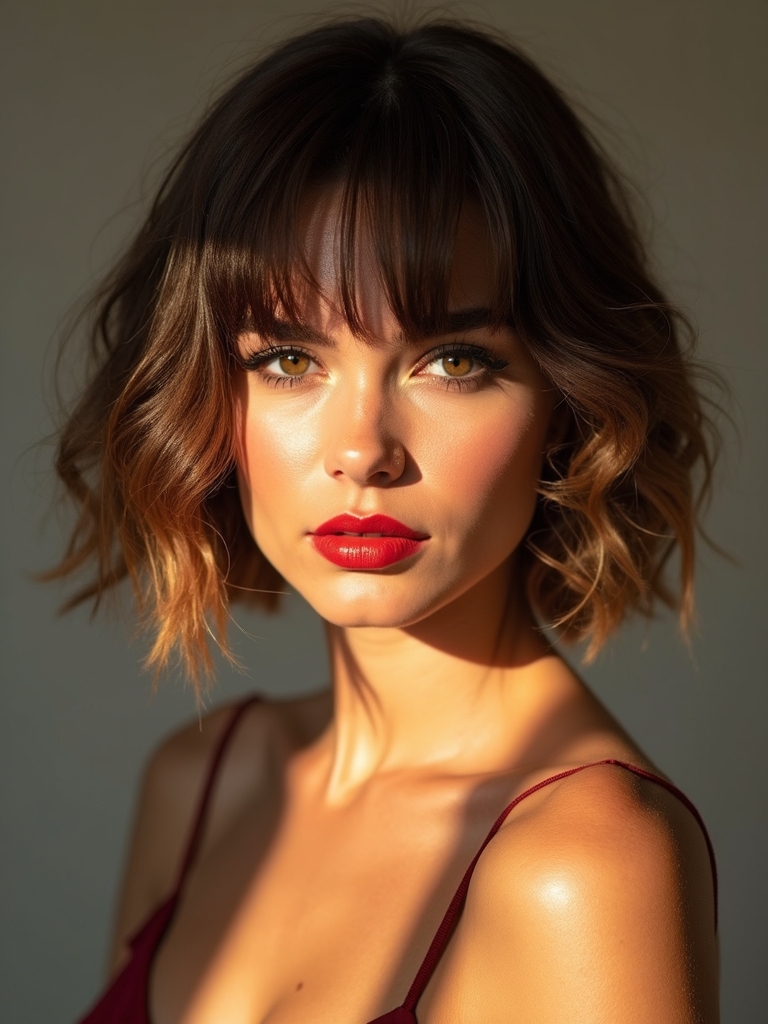
Short curtain bangs reach eye level faster than long ones. There’s simply less length between the cut and your eyelashes before they start blocking vision.
Most people plan on a trim roughly every five to six weeks to keep that length where it was set. It’s a fast add-on to a regular cut, and priced as one: expect $15 to $30 on top of a standard trim at most salons.
- Ask for a dry trim so the finished length is accurate
- Bring the fringe back to its dried, styled position before cutting
- Book slightly early if a special event lands near the six-week mark
Short Hair and Curtain Bangs, Answered
?Can curtain bangs work on a very short pixie?
Yes, but the front section needs to grow past the rest of the pixie first. Most stylists leave two to three inches of extra length up front during the initial cut, then shape the sweep once that length is long enough to part and fall properly.
?What happens if my curly bangs are cut wet by mistake?
They’ll spring up shorter than planned once dry, sometimes dramatically so on tighter curl patterns. There’s no quick fix beyond waiting for regrowth, which is why a dry, curl-by-curl cut matters more here than almost any other fringe decision.
?Do curtain bangs make a short cut look wider?
No, generally the opposite. The center split and diagonal sweep both draw the eye vertically rather than horizontally, which tends to add the impression of length on faces where width is already the more noticeable feature.
The Fringe Grows With the Cut, Not Against It
Curtain bangs on short hair hold up because the pairing solves two things at once: the fringe softens a precise cut, and the short length keeps the fringe from ever feeling separate from the rest of the style.
Whichever version fits, texture and face shape decide the specifics; the center-split, sweep-back shape stays the same. Describe how short you want the center point to fall, and everything else follows from that one decision.
Don’t Miss These