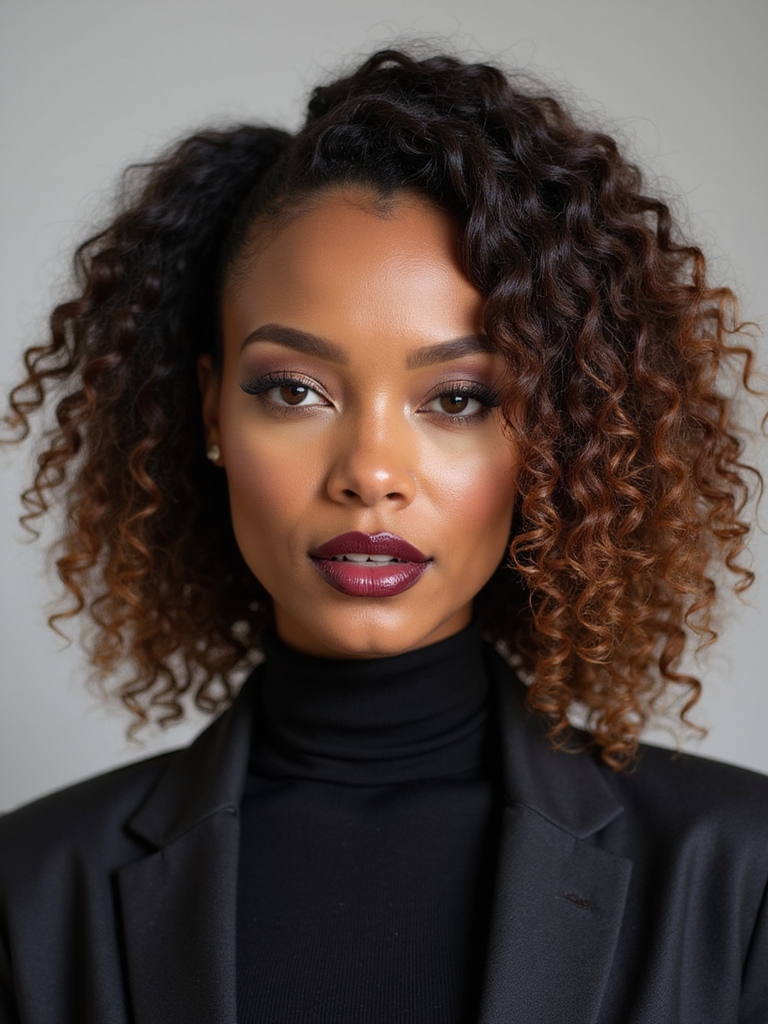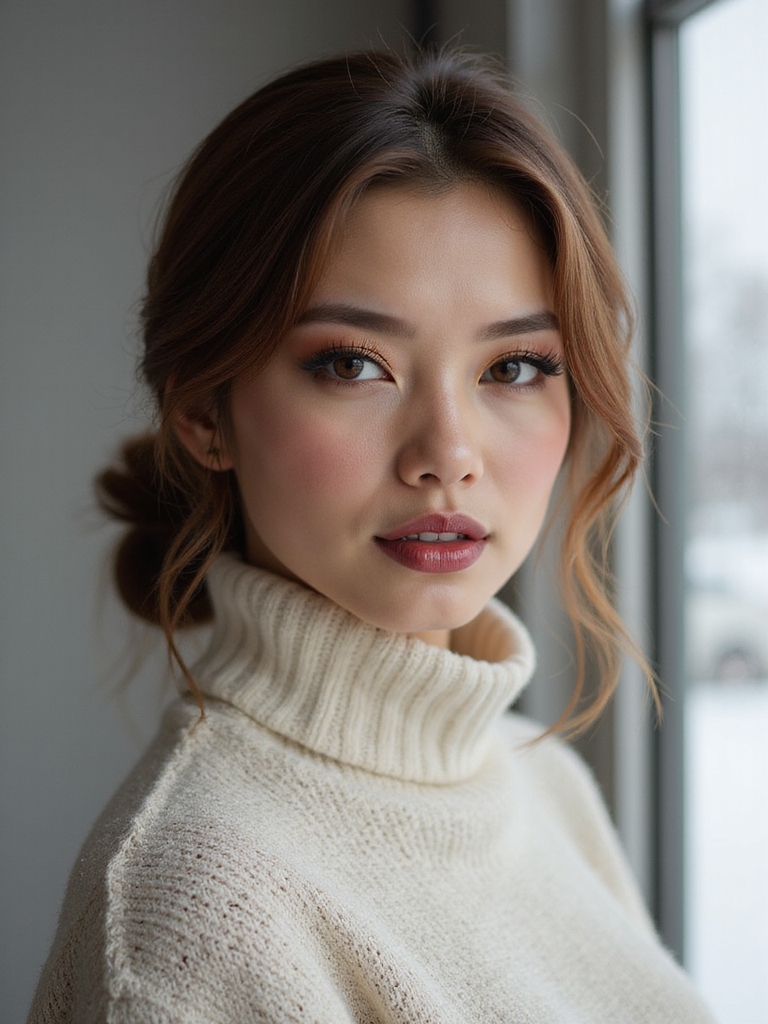
What actually survives a commute through wind, a hat, and freezing temperatures? Not much that takes more than five minutes, and definitely nothing that depends on hair staying perfectly dry.
Fifteen styles follow, each built around one winter-specific problem: static, hat hair, wind, or simply not wanting to touch cold water before 7 a.m. The winter hat hairstyles guide covers more hat-specific options if that’s the main issue.
Match the Problem to the Style
| Winter Problem | Best Fix | Time Needed |
|---|---|---|
| Hat hair flattening the crown | Textured high ponytail or sock bun | Under 3 minutes |
| Static from dry indoor air | Low knot ponytail, kept smooth | 2 minutes |
| Wind undoing loose styles | Braided headband or fishtail | 3 to 5 minutes |
Quick Low Bun to Hide Winter Frizz

A low bun tucks flyaways and static-charged pieces into one contained shape, which matters more in winter than any other season since dry indoor air makes hair harder to smooth out.
Gather low at the nape, twist once, and secure; the whole thing takes under a minute and holds through a scarf, a hood, or a full day indoors.
- Contains static and flyaways in one motion
- Sits low enough to work under a hood or scarf
- Holds through a full day with minimal touch-ups
Textured High Ponytail With a Scarf

A high ponytail keeps hair fully off the neck and collar, which matters once scarves and heavy coats enter the daily rotation.
Tying a thin scarf around the base covers the elastic and adds a small styling detail that a plain ponytail wouldn’t have on its own. Roughing up the ponytail slightly at the crown before tying it off gives the whole style a little extra lift that a smooth, flat version wouldn’t carry through the day.
Sleek Wrapped Low Pony for Hat Days

A sleek, wrapped low ponytail smooths everything down before a hat goes on, so there’s less volume for the hat to crush and less to fix once it comes back off.
- Smooths hair flat before a hat compresses it further
- Wrapping a strand around the elastic hides it completely
- Minimal texture means minimal hat-hair afterward
Messy High Knot With Face-Framing Tendrils

A high knot gathers everything up loosely, leaving a couple of shorter pieces out at the front to soften the style before a hat or hood covers the rest. The looseness is what makes it forgiving; a tightly wound knot shows every flyaway, while a loose one absorbs them.
- Loosely twisted, not pulled tight against the scalp
- A few shorter face pieces left out on purpose
- Forgiving of a rushed, imperfect twist
Before Wrapping Wet or Damp Hair
Wrapping hair while it’s still damp and then trapping it under a hat can leave the shape looking flat and slightly dented once it dries. Let hair dry most of the way before wrapping and covering it.
Easy Side Braid That Won’t Tangle

A simple three-strand braid worn to one side keeps hair contained and away from a scarf’s rough texture, which is where most winter tangling actually starts.
The catch is tightness: braided too loose, wind can still work strands free; too tight, and it pulls at the scalp under a hat all day.
- Keeps hair away from scarf fabric that catches and tangles
- A medium-tight braid balances hold against comfort
- Works on dry or slightly damp hair
Braided Headband for Windy Walks

A single braid swept across the crown and pinned like a headband holds up against wind in a way that loose styles simply can’t. Wind can lift and tangle a loose style within a block; a pinned braid stays put for the whole commute.
- One braid pinned across the crown, not a full braid down the back
- Holds shape through wind better than any loose style here
- Doubles as a way to hide unwashed roots along the part
👍Why This Beats Wearing Hair Down
- +Far less tangling from scarf and coat friction
- +Stays contained through wind without restyling
- +Takes under two minutes once the technique is familiar
👎Where It Falls Short
- –Leaves a slight crease once undone later
- –Less volume than a style worn loose
- –Needs slightly damp hair to braid smoothly
Half-Up Twist to Save Your Collar

A half-up twist keeps hair off a coat collar without committing to a full updo, which matters once wool and rough fabric start catching and pulling at loose strands.
One Twist, Less Collar Friction
Grab the top section, twist it once, and pin. The lower length stays down, so the style still reads casual rather than formal.
Where this struggles is on very fine hair, where the twist can slip loose without a small claw clip to anchor it in place.
Low Twisted Chignon for Busy Mornings

A twisted chignon rolls the length up into a tidy, low shape that reads more polished than a plain bun for roughly the same amount of effort.
It looks more involved than it actually is once the basic twist-and-pin motion is familiar, closer to a two-minute habit than a real styling project.
- A tidy, rolled shape rather than a simple gathered bun
- Sits low enough to work comfortably under a coat hood
- Looks more polished than the actual effort it takes
Quick Sock Bun for Instant Volume

A sock bun uses a rolled fabric donut shape to build height and volume that flat winter hair often loses under a hat.
Wrap the ponytail around the donut shape, tuck the ends under, and pin; the structure underneath is what gives the finished bun its rounded, full shape.
It works especially well on days hair has gone flat from static or indoor heating, since the donut adds back volume that product alone often can’t.
Two assumptions worth dropping about winter updos:
❌ Myth: Myth: a polished style takes longer than a messy one.
✅ Reality: Fact: a twisted chignon often takes less time than a deliberately tousled style, since there’s no texturizing step involved.
❌ Myth: Myth: buns and knots always flatten under a hat.
✅ Reality: Fact: a low, close-to-the-head style like a chignon actually survives a hat better than volume-based styles do.
Wet-Look Slick-Back for Snowy Commutes

A wet-look slick-back embraces the moisture a snowy commute usually fights against, using a strong gel to press hair flat and shiny on purpose.
It’s a two-minute style with a professionally polished result, and it holds up better in snow and light rain than any style relying on volume or texture. A fine-tooth comb pulls the gel through evenly, which matters more here than in almost any other style on this list, since every strand shows.
Loose Fishtail for Scarf Weather

A fishtail braid uses two sections instead of three, crossing small pieces from each side rather than braiding in the traditional three-strand pattern.
Two Sections, Not Three
Kept loose rather than tight, it pairs naturally with scarf weather, since a looser braid moves with a scarf’s bulk instead of fighting against it.
The catch is time: a fishtail takes longer to braid than a standard three-strand, even though the finished result looks more intricate for roughly the same skill level.
Mini Space Buns for Cold-Day Charm

Two small buns set high on either side bring a playful note to an otherwise practical winter routine, without sacrificing the coverage a hat or hood needs.
Playful, but Still Practical Under a Hat
Part down the middle, gather each side, twist into a small bun, and pin. The whole thing takes about three minutes once the parting is even.
Small buns like this sit close enough to the head to survive a hat without much crushing, unlike taller or looser styles.
Simple Knot Ponytail to Beat Static

A low knot ponytail keeps styling minimal while still controlling the flyaways and static that dry winter air tends to cause.
The catch with static specifically is that brushing alone often makes it worse; a small amount of leave-in product calms strands before they ever get pulled into the ponytail.
- Minimal styling, maximum static control
- A leave-in product before brushing helps more than brushing alone
- Works on damp or fully dry hair
Wide Headband Tuck for Warm Ears

A wide, stretchy headband covers the ears completely while hair gets tucked up and under it, combining warmth and styling in one single move.
Warmth and Styling in One Move
It hides unwashed or unstyled hair entirely, which makes it one of the fastest options on this list for a rushed morning.
Where this struggles is on very short hair, which may not have enough length to tuck under the band cleanly.
| Cause | Fix |
|---|---|
| Dry indoor heating | A humidifier in the bedroom overnight |
| Synthetic hat or scarf fabric | Switch to natural fibers like wool or cotton |
| Over-brushing dry hair | A leave-in product before brushing, not after |
Undone Beachy Waves From Second-Day Hair

Hair that’s already a day past washing holds a loose, undone wave better than freshly washed hair does, since the natural oils add grip clean hair doesn’t have yet. That grip is what keeps the wave pattern from sliding straight within a few hours the way it might on fresh strands.
- Grip from natural oils holds a loose wave pattern better
- A light texturizing spray revives waves that have gone flat overnight
- One of the few styles on this list that improves with slightly unwashed hair
How to Get the Look
None of these fifteen styles need a stylist or a special appointment; they’re built around basic techniques, a handful of bobby pins, and whatever hair is doing that particular morning.
A small styling kit covers nearly all of them: a set of pins, two or three soft hair ties, a small tin of styling paste, and a travel-size dry shampoo. Buying all four new runs around $25 total, and none of it needs replacing more than once or twice a winter.
Easy Winter Hairstyle Questions, Answered
?Do any of these styles work well under a heavy winter hat?
Low, close-to-the-head styles like the wrapped ponytail, chignon, and headband tuck hold up best under a hat. Taller or more voluminous styles tend to get crushed and need more repair once the hat comes off.
?How do I stop static from ruining a style halfway through the day?
Timing matters more than product choice: work anti-static formulas in before the style goes up, since trying to smooth flyaways down mid-day rarely holds. Swapping a synthetic hat liner for a natural-fiber one also cuts static noticeably.
?Is it better to style hair wet or dry in cold weather?
Dry, generally. Stepping outside with wet hair in freezing temperatures isn’t just uncomfortable; it can also stress the hair shaft. Most of these styles work fine on fully dry or slightly damp hair.
?Which of these styles actually get better with unwashed hair?
The beachy waves and the braided styles both hold their shape longer on hair that’s gone a day without washing. Fresh strands are simply too slippery for either style to grip properly right out of the shower.
?What’s the fastest option on this list for a truly rushed morning?
The headband tuck and the low bun both take under a minute and need no brushing or precise sectioning, making them the two fastest options here by a clear margin.
Winter Rewards the Simple Styles
Every style here solves a specific winter problem: static, hat compression, wind, or scarf friction, rather than chasing a look that has nothing to do with the season.
Start with whichever problem actually shows up most mornings, and build the routine around solving that first.
More Inspiration