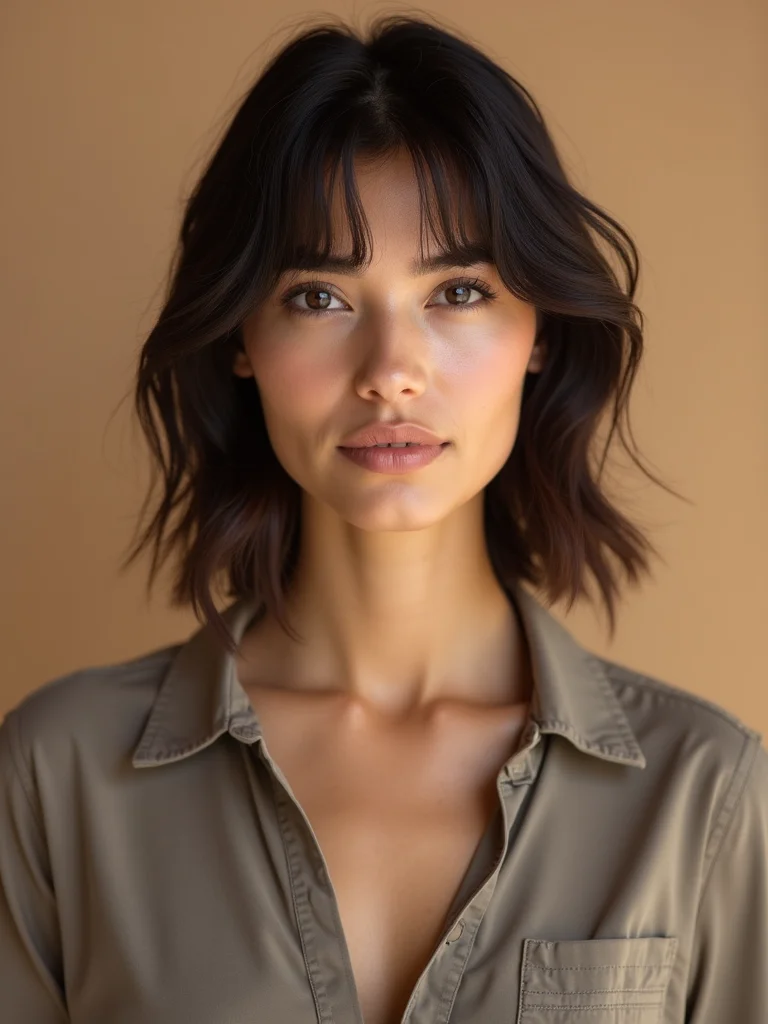
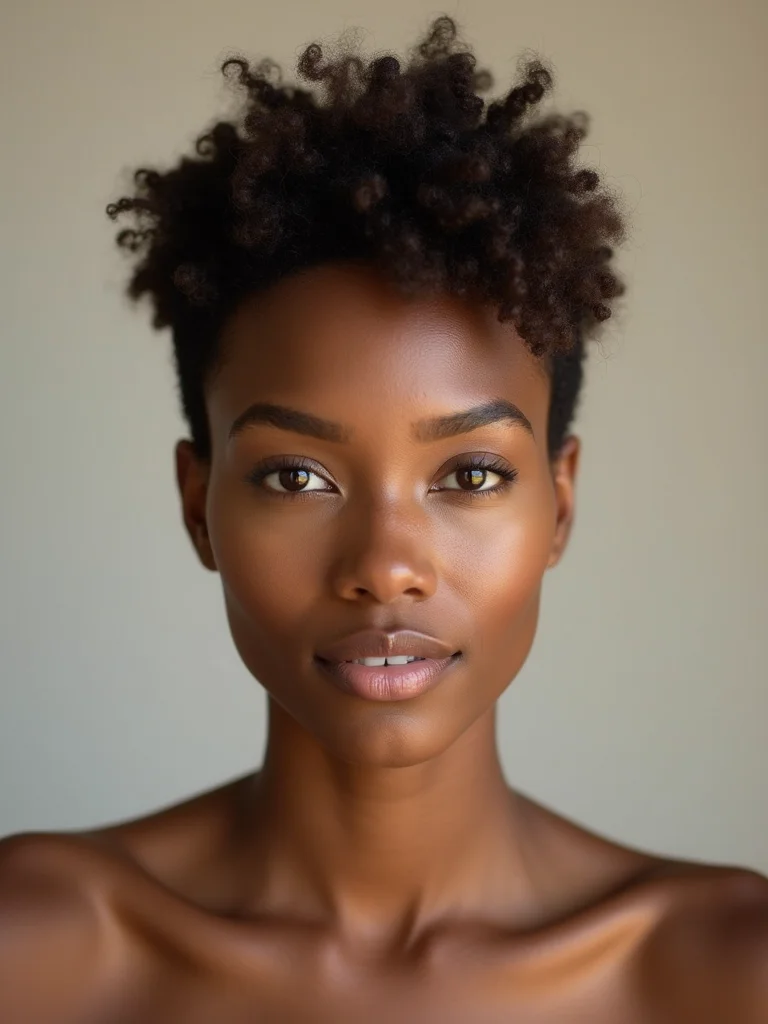
A chin bob lands at one very specific spot: right where the jaw curves. Not the shoulders, not the collarbone. That single inch of placement is what makes this length behave so differently from a longer lob. You’ll notice it immediately in photos, since there’s no extra hair to soften the line or distract from the actual shape of the cut underneath.
Twelve versions follow, from sleek and blunt to curly and fringed, along with what a trim actually costs, how the schedule works, and how to match the cut to your face shape. It sits alongside other bob hairstyles as one of the more face-focused options in that family.
Chin Bob, Fast Facts
- The length sits right at the jawline, the single most face-framing point on the head.
- Straight, wavy, curly, and coily hair all wear this length well; the cutting technique is what shifts.
- This length blurs faster than a longer bob simply because there’s less of it to grow before the line softens.
- A blunt perimeter looks formal and polished; a piecey, textured one feels casual.
Sleek One-Length Chin Bob

A blunt, one-length chin bob keeps every strand the same length, which is what builds that clean, unbroken line and shows off shine better than most other bob shapes here. A perimeter this precise leaves nowhere for a rough cut angle to hide, so it tends to photograph unusually well.
Expect this version to demand the most from your blow-dry routine. Any unevenness in the finish shows up fast on a line with nowhere to hide.
- A smoothing balm on damp hair sets up the flattest possible base before drying.
- A flat-iron pass on fully dry hair removes any last bend in the line.
- The sharpest look on this list, and the one that reveals a rushed finish fastest.

Soft Blunt Bob With Airy Ends
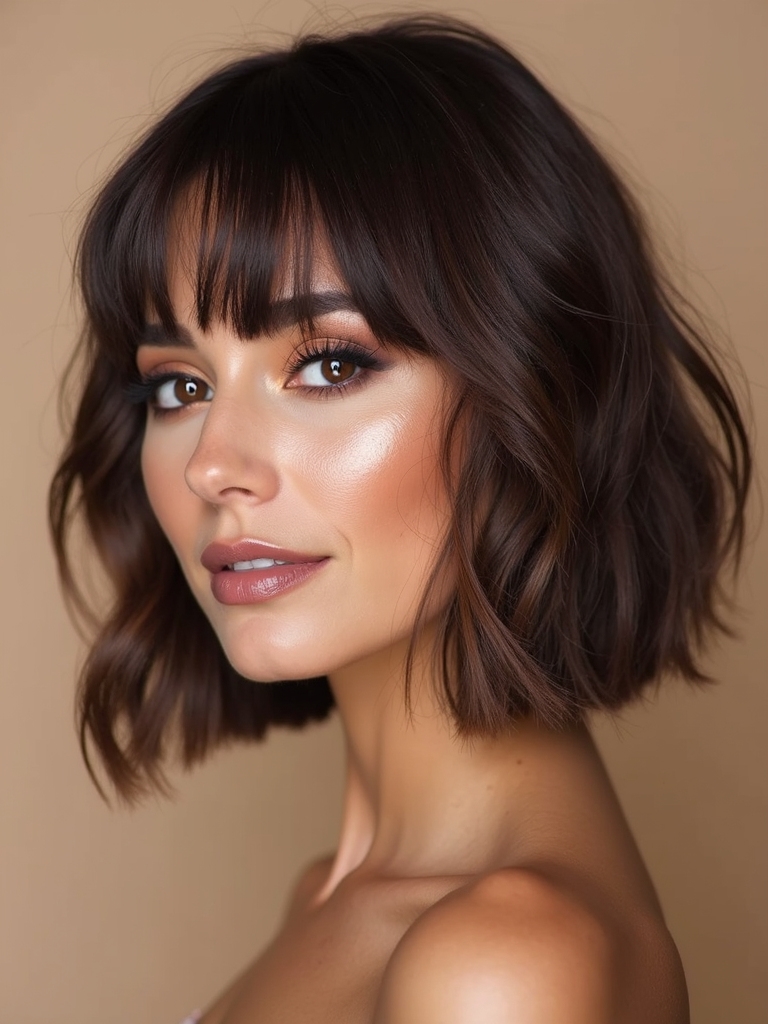
A soft blunt bob keeps the overall blunt line but breaks up the very ends with point-cutting, trading some sharpness for a softer, airier finish.
Why Point-Cutting Changes the Whole Feel
That small amount of texture at the ends keeps the cut from reading severe. It lets the ends move naturally, breaking up what would otherwise sit like one solid block, and it shows up most on second-day hair.
It’s a strong middle ground for anyone who likes the polish of a blunt bob but wants more forgiveness in daily styling.
Textured Chin Bob for Natural Waves
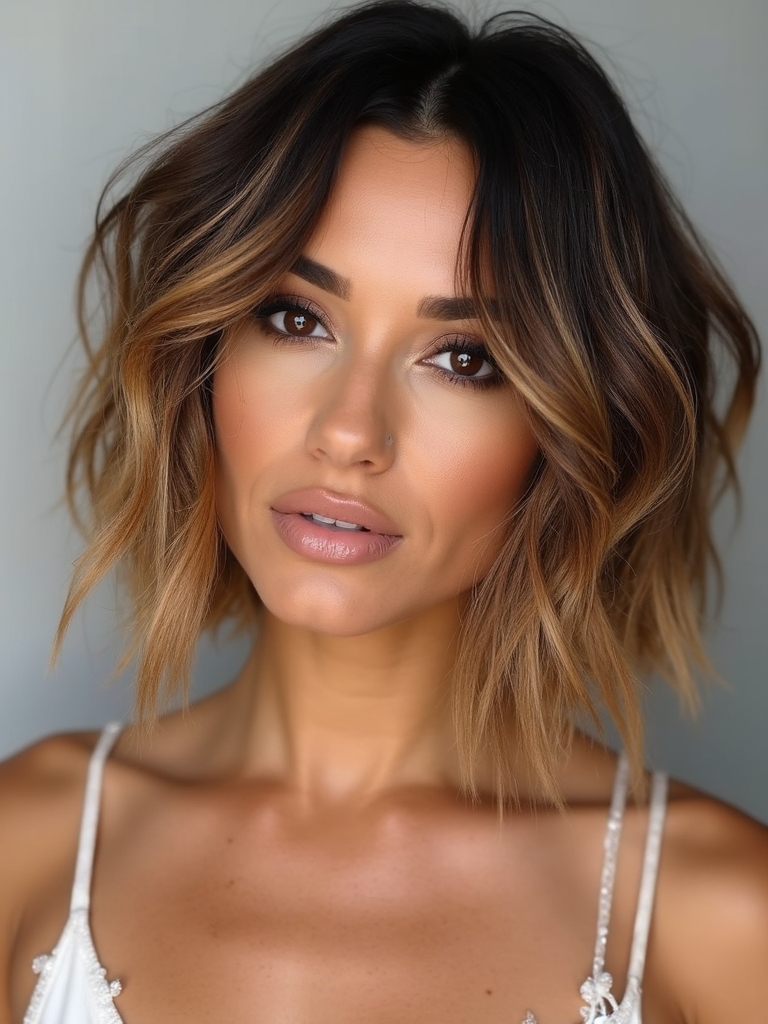
Internal texturizing lets a chin bob work with natural waves, so the cut settles into shape as it air-dries and never needs a brush to force it there. It’s the same principle behind a textured bob at any length: let the pattern do the shaping. This one just does it in a smaller frame, close to the jaw.
- Ask specifically for point-cutting at the ends; thinning shears alone won’t build the same movement.
- Expect the cut to look noticeably different wet versus fully dry.
- A texture cream worked into damp hair enhances the wave pattern the cut is already built around.
Getting a wave-friendly cut right at the appointment.
1Come in with dry, unstyled hair
A stylist needs to see how the wave actually falls before cutting into it.
2Ask for point-cutting at the ends specifically
This is what lets the layers move instead of sitting stiff.
3Request a dry finish check before you leave
The cut should already look good once it’s air-dried, before any blow-dryer ever gets involved.
Curly Chin-Length Bob With Shape
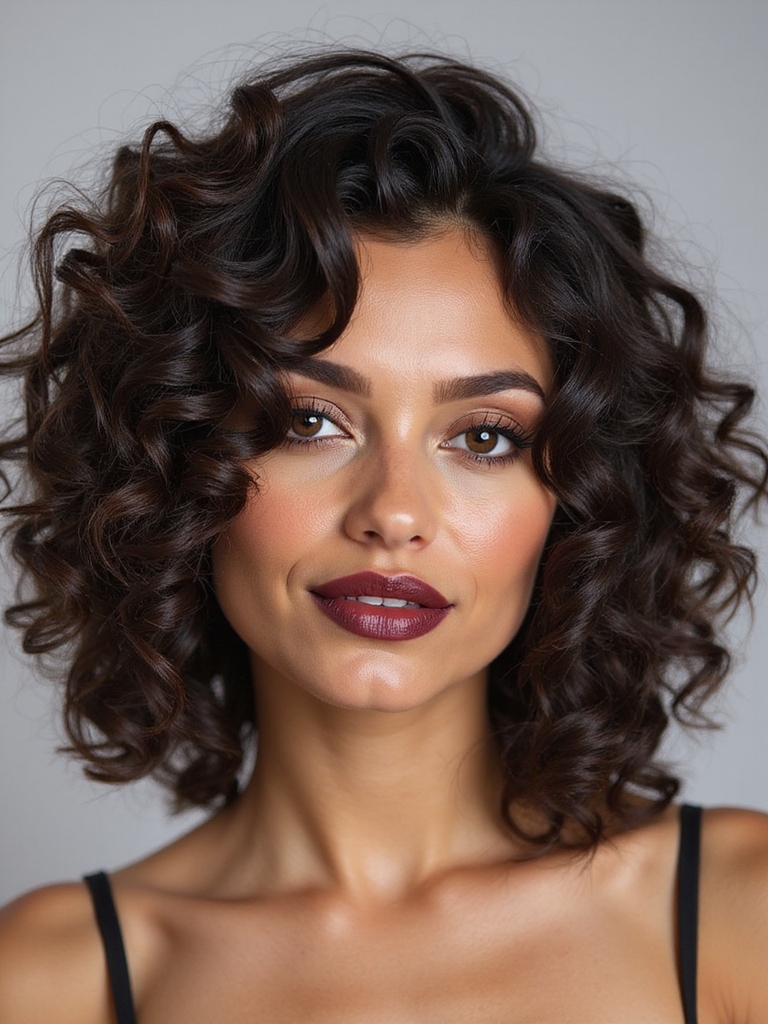
On curly hair, a chin bob needs real attention to how the curl pattern actually falls once it’s fully dry. Cutting to the stretched, wet length is the single most common way this length goes wrong on curls, and it’s the detail worth asking about before booking.
Shrinkage during the cut itself is normal, and a stylist experienced with curls accounts for it by cutting slightly longer than the eventual dry result appears to need. Looser waves that don’t shrink as dramatically can borrow the same logic from a wavy bob, with a smaller allowance built in. Either way, the shape should get a final check once it’s fully dry before you leave the chair, since wet curls can look misleading.
French-Girl Bob With a Fringe
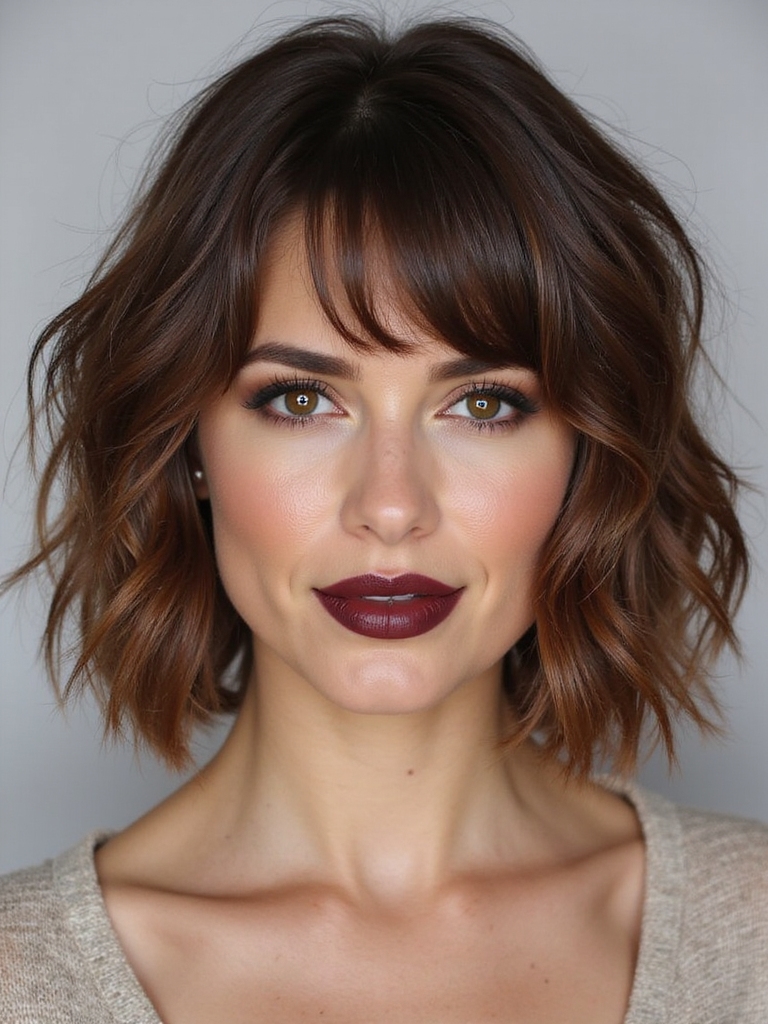
Pairing a chin bob with a soft, undone fringe brings in a slightly imperfect quality reminiscent of the Italian bob. The fringe frames the eyes directly, which shifts where attention lands on the whole face.
This is the one version here where the fringe carries more of the visual weight than the perimeter itself.
- Works best cut just past the eyebrow rather than shorter.
- A light texturizing spray keeps the fringe from looking too polished or set.
- Plan on a separate fringe trim every few weeks, well ahead of the rest of the cut’s own schedule.
Before Committing to a Fringe
A fringe adds its own upkeep on top of the cut itself, since it grows into the eyes noticeably faster than the rest of the shape does.
Center-Part Blunt Jaw Bob
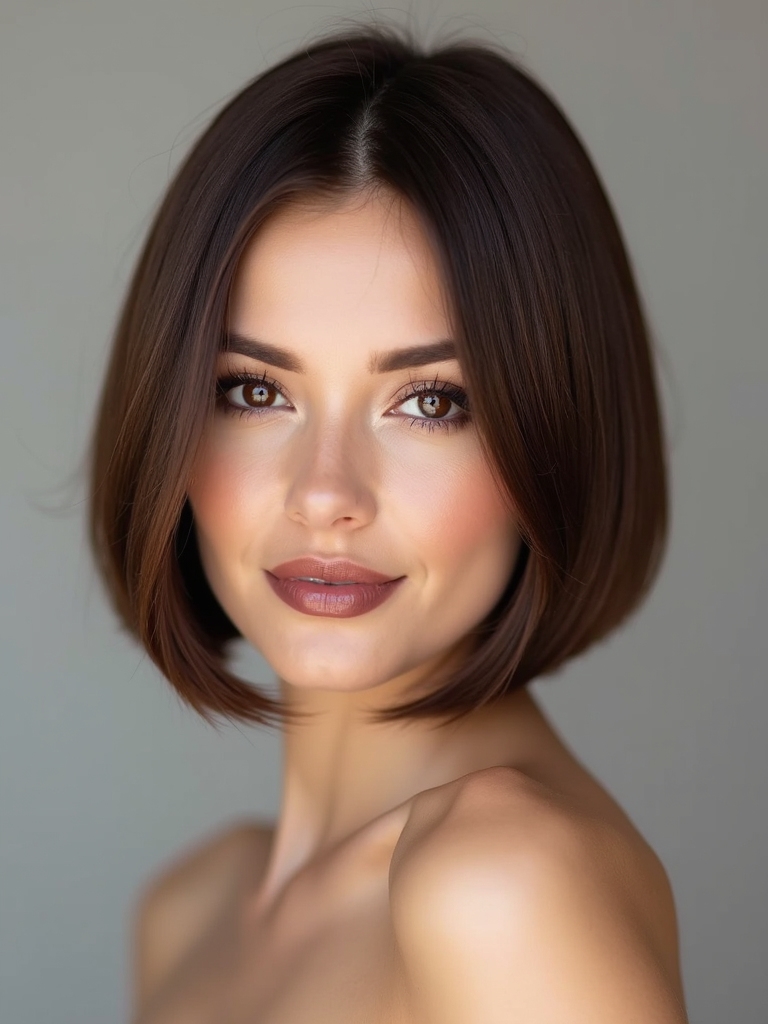
A center part splits a blunt jaw bob into two even halves, building a balanced look that reads polished with almost no daily effort. Symmetry alone carries the look, with minimal product or heat needed.
Suits oval and evenly proportioned face shapes especially well, similar in spirit to an A-line bob but without the graduated angle building toward the front. Rounder face shapes can still wear it; the part just needs to sit slightly forward of dead center to add length visually.
- Depends on a strong, consistent center part; a part that wanders undoes the balance.
- Pairs naturally with a straight, sleek finish rather than heavy waves.
- One of the quickest cuts here to style on a rushed morning.
Deep Side-Parted Bob for Instant Lift

A deep side part on a chin bob adds root volume almost automatically, since the deeper parting lifts hair away from the scalp on the fuller side. Fine hair benefits most, since it rarely holds lift any other way without heat and product stacked on top.
- Works especially well when hair runs fine and struggles to hold volume otherwise.
- A round brush at the root reinforces the lift the part sets up.
- The whole look changes depending on which side carries the part.
Angled Chin Bob for Sharp Definition
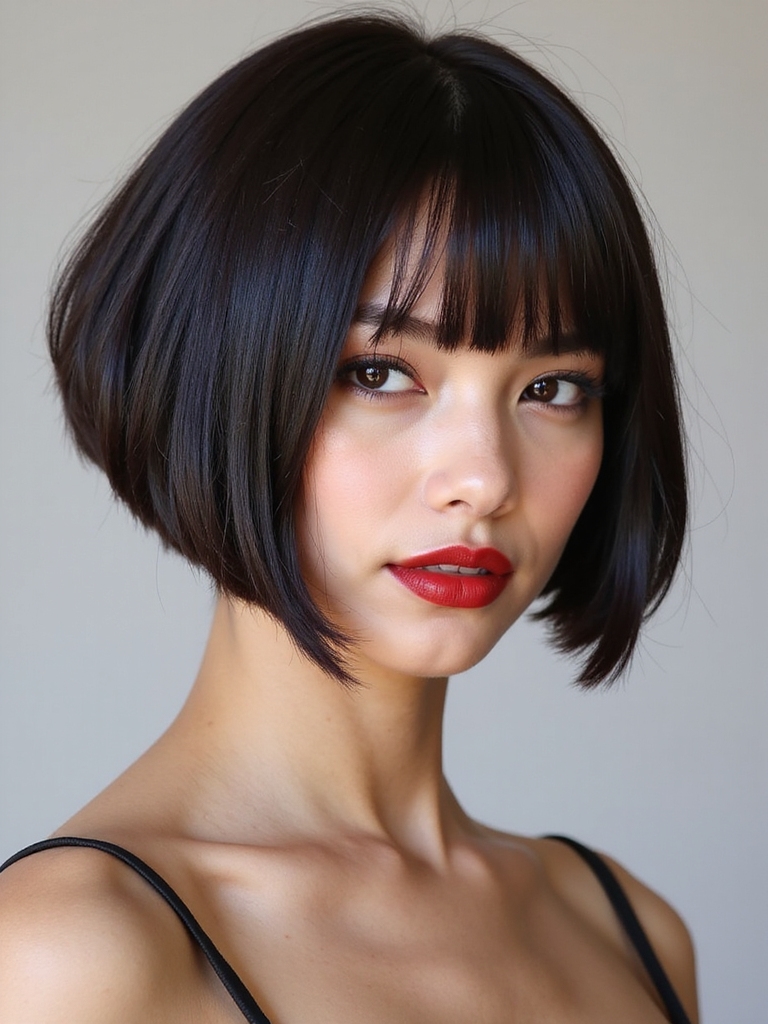
An angled chin bob runs shorter in back, building toward more length at the front, so the two sides form a deliberate diagonal, breaking away from one even line running all the way around.
That diagonal pulls the eye forward and down. It’s a small structural choice with an outsized effect on how the whole face shape comes across next to a level-cut bob.
- A steeper angle reads more graphic and dramatic; a gentle one stays close to a level cut.
- A blunt edge at the front keeps the diagonal crisp instead of soft.
- Best styled sleek and straight, since heavy waves tend to blur a line this deliberate.
Layered Chin Bob for Fine Hair
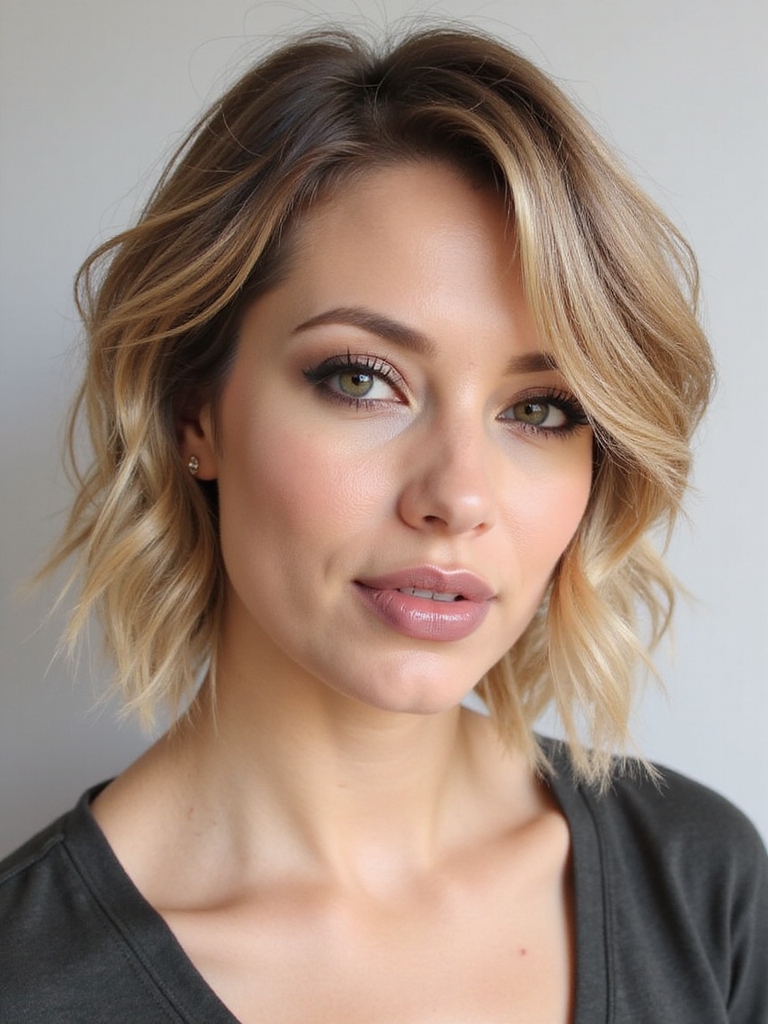
Light internal layers inside a chin bob build the illusion of thickness where the strands run fine, giving the ends somewhere to lift so they stop hanging flat under their own weight. Kept subtle, the layering reads as added density, even though the individual strands stay just as fine. A stylist working with finer hair usually stays high on the head with the layering and leaves the perimeter untouched, so the outer line still looks deliberate.
- Internal layers add movement without shortening the visible perimeter length.
- A volumizing mousse on damp roots reinforces that same lift.
- Best kept light; over-thinning already-fine hair tends to backfire fast.
Debulked Chin Bob for Thick Hair
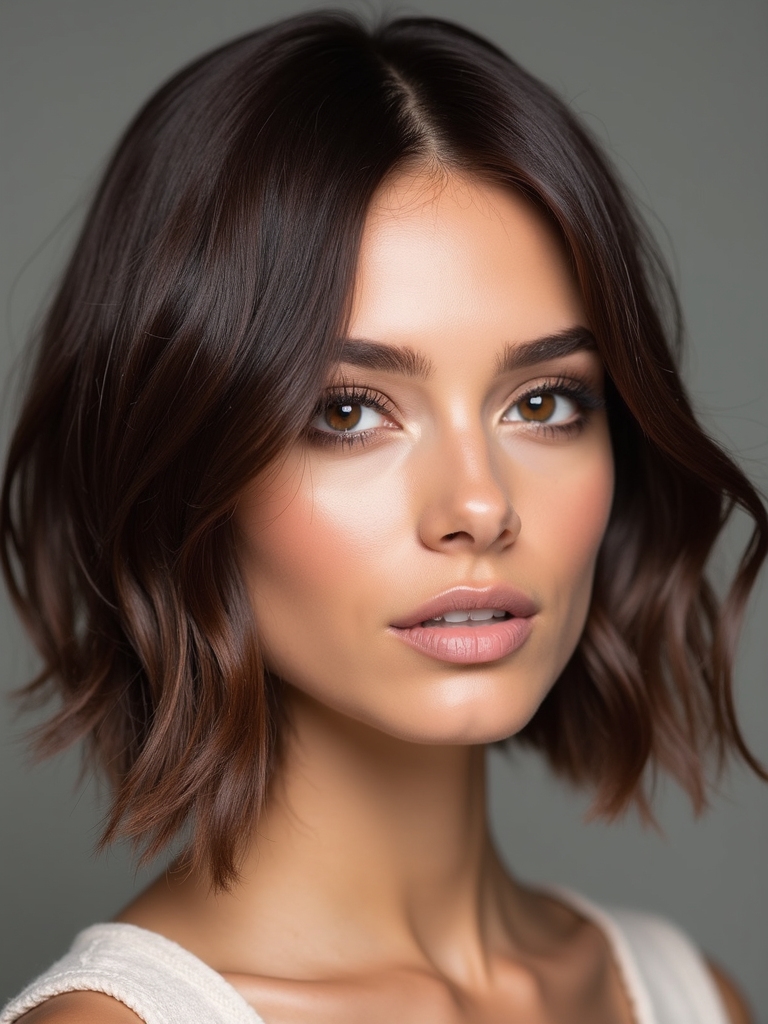
Thick hair calls for internal thinning on a chin bob to avoid a triangular, heavy silhouette, even while the outer perimeter stays blunt and defined. Skip the thinning and the shape tends to widen at the jaw exactly where it should taper.
- Internal layers remove bulk without touching the visible outer shape.
- A blunt perimeter keeps the ends looking dense despite the thinning underneath.
- Budget more chair time here than a simple one-length trim usually takes.
One assumption about fine hair and layers worth correcting.
❌ Myth: Layers always thin out fine hair further.
✅ Reality: Short, targeted internal layers actually build the appearance of density; it’s over-thinning throughout the whole head that causes the thinning look.
❌ Myth: A blunt cut is always the safer choice for fine hair.
✅ Reality: A blunt line can look flat on very fine hair with nothing to break up the weight along the ends.
Low-Maintenance Textured Air-Dry Bob
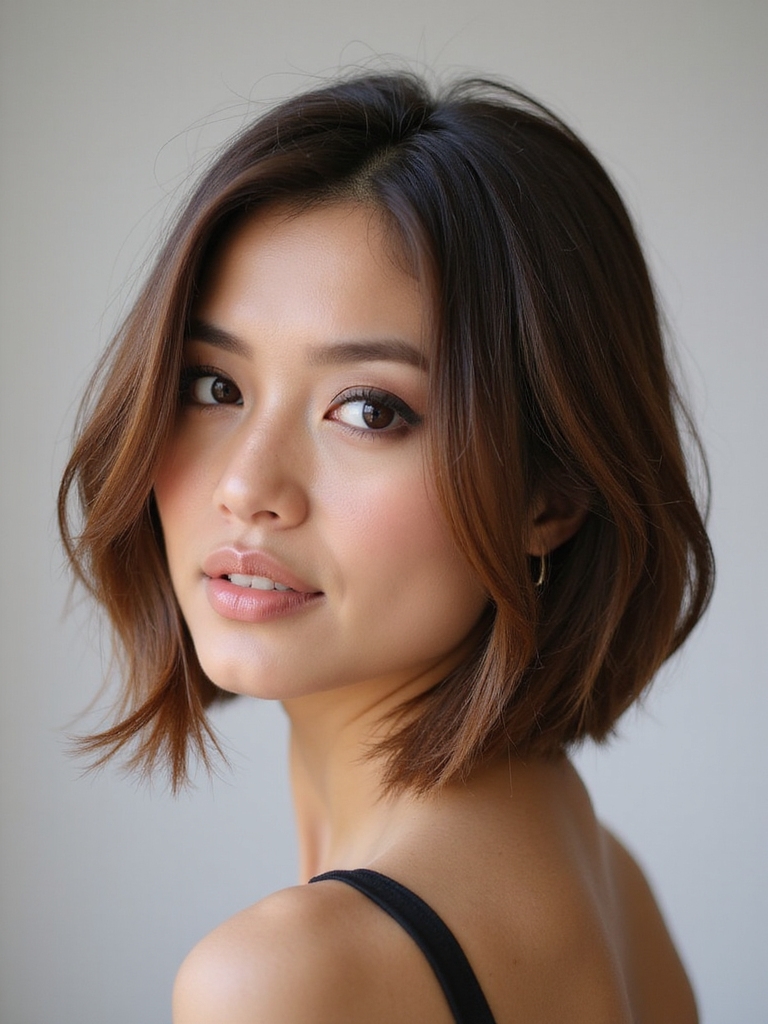
This version of the chin bob is cut specifically to look intentional air-dried, skipping the daily blow-dry routine that most bobs still ask for.
Built for Air-Drying, Not a Round Brush
The cut relies on internal texturizing that works with whatever the hair does naturally. No fighting it into a smooth, styled shape every single morning.
A texturizing cream scrunched through damp hair is often the only product this cut actually needs to look finished.
Chin Bob Care Routine for Lasting Shine
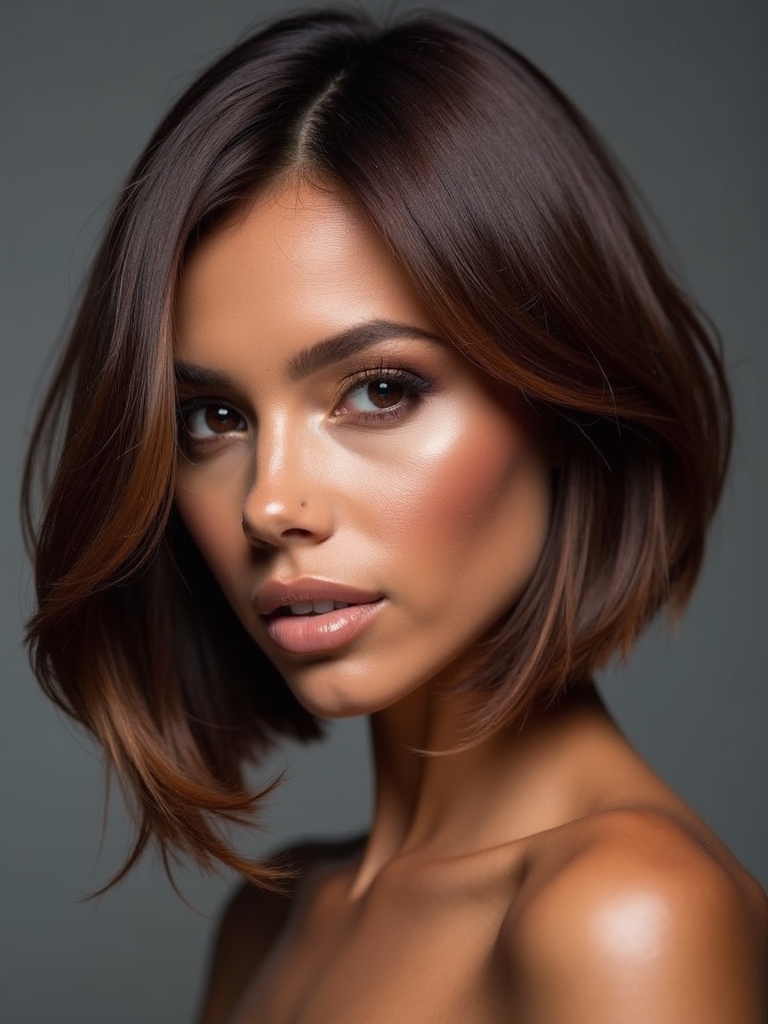
A short, consistent care routine keeps a chin bob’s line looking as sharp as the day it was cut, for considerably longer than skipping it would.
The Routine That Actually Protects the Line
A sulfate-free shampoo protects shine and any color underneath, and a silk or satin pillowcase cuts down on the overnight friction that roughens ends. That matters more on a blunt line than on almost any other cut, since fraying shows immediately.
A trim on this schedule usually runs about $45 at most salons, roughly half what a full color service costs, and it’s typically due about every five weeks on a chin bob specifically, closer together than a longer bob usually needs.
Common Mistakes to Avoid
The most common misstep is cutting this length on wet, unstretched curly or wavy hair without accounting for shrinkage. That leaves the dry result shorter than intended, sometimes by a noticeable margin.
The second is skipping a trim schedule matched to the cut’s own growth pattern. A chin bob blurs its line faster than a longer style does, so waiting until it looks obviously overgrown means losing the shape for weeks before the next appointment.
Chin-Length Bob Questions, Answered
?Will a chin-length bob work on naturally curly hair?
Yes, though the cutting approach matters more than usual. A stylist needs to assess how much the curl shrinks once fully dry, since a shape that looks right wet can end up shorter than planned.
?How fast does a chin bob grow out compared with a longer bob?
It blurs sooner simply because there’s less length to begin with. A trim that would go unnoticed on a longer bob shows up within a couple of weeks on a shape this precise.
?Can I still put a chin bob in a small ponytail or half-up style?
A short, tight ponytail becomes possible once the hair reaches full chin length, though clips, a headband, or wearing it down tend to work better at this length overall.
?Does a chin bob suit thick hair, or does it get too heavy?
It suits thick hair well once it’s properly thinned. Skip that step and a chin bob on very thick hair can take on a triangular, bottom-heavy shape.
?What’s the real difference between a chin bob and a lob?
Mostly length and how much face-framing effect it creates. A lob sits at or below the shoulders as a longer, more versatile cut, while a chin bob sits right at the jaw and puts far more focus on the face.
A Length That Frames, Not Fights
The chin-length bob earns its place because of where it sits: right at the curve of the jaw, framing the face directly at the exact point where it matters most.
Whichever version fits your texture and face shape best, it might be worth bringing a couple of reference photos to your next appointment so a stylist can adjust the exact placement to you specifically.
Related Reads