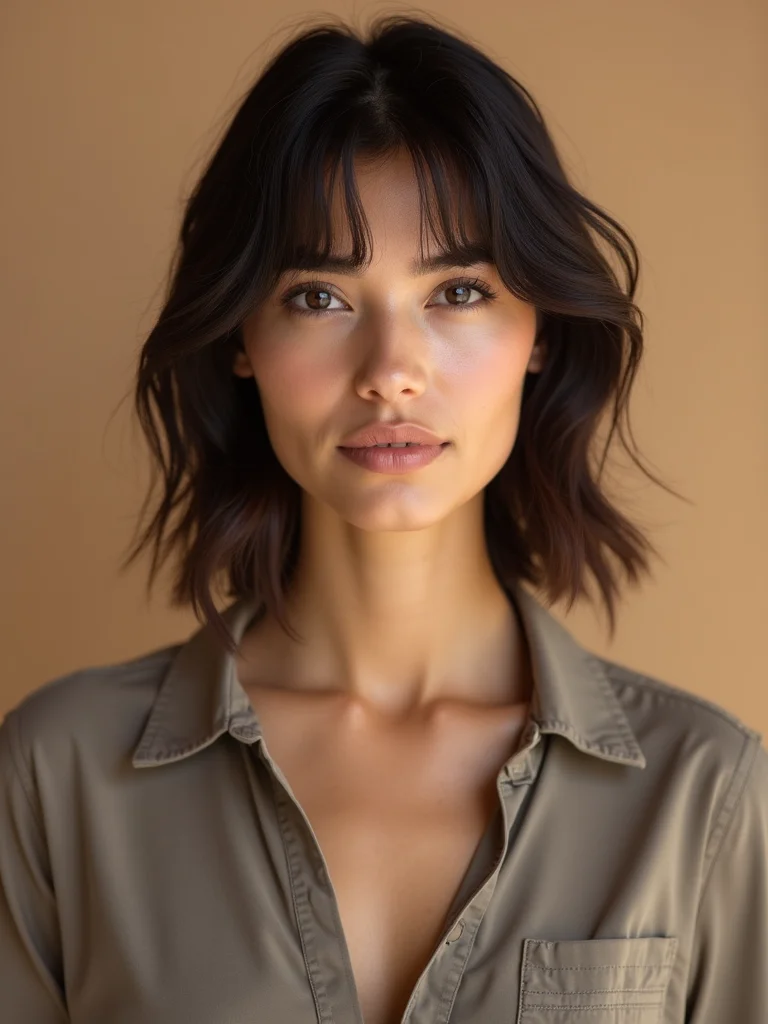
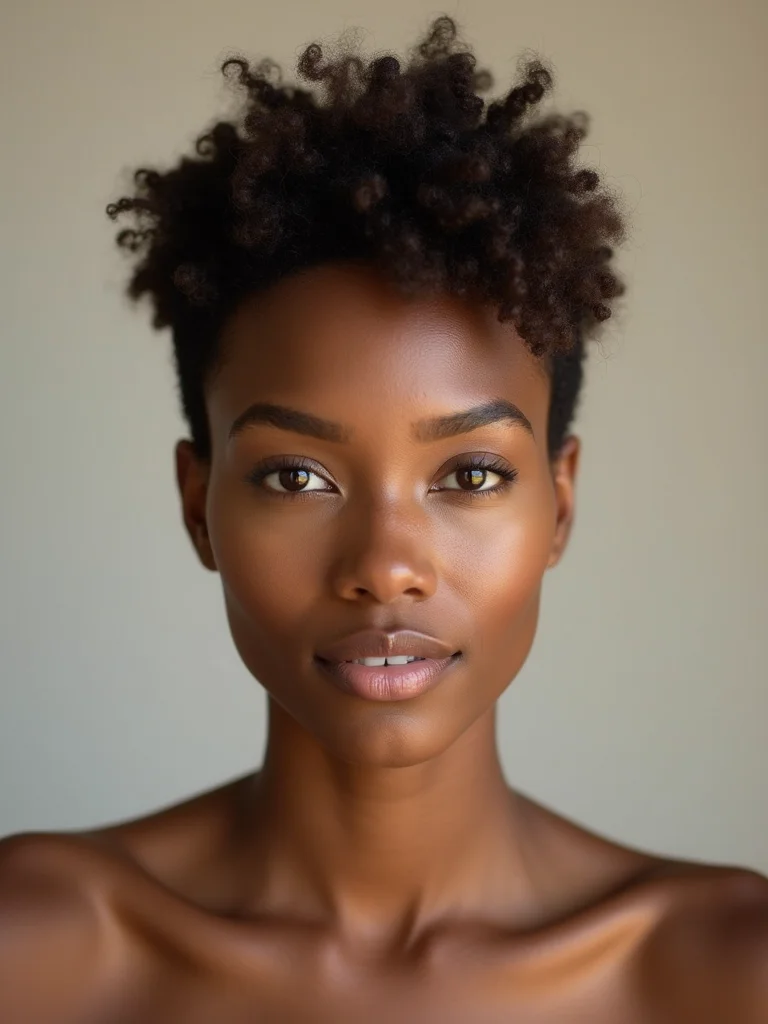
Search Italian bob on Pinterest right now and the same handful of photos repeats across a dozen boards: chin-length, blunt, polished to a near-mirror shine. It’s quiet confidence, a simple shape that photographs as expensive without a single flashy element.
Sixteen versions follow below, from a sleek glossy chin to soft sea-salt waves to rich espresso and copper color, with the honest upkeep spelled out for every single one.
Italian Bob, Quickly
| Length | Who It Suits | Upkeep |
|---|---|---|
| Chin-length, blunt | Straight or lightly wavy hair | Frequent trims to hold the line |
| Collarbone, tousled | Anyone wanting more forgiveness | Stretches further between visits |
| Curly, chin-to-jaw | Curly and coily textures | Needs a dry cut for shape |
The Glossy, Chin-Length Classic

The defining version of this cut is a blunt line skimming the chin, polished to a near-mirror shine. It’s understated luxury: one clean length, blown out smooth, that shows off healthy hair more than any complicated shape ever could.
Where This Struggles
The catch is that the whole look rests on shine and a precise line, which means every split end shows and any frizz becomes visible immediately. It suits straight or lightly wavy hair best, where the blunt edge stays crisp without extra effort.
Getting the gloss asks for a scalp-to-ends blow-dry with a paddle brush, a flat-iron pass on the top layer only, and a weightless oil worked through just the ends. Very curly or textured hair tends to fight this specific version more than it works with it.

A Softer, Collarbone-Length Take

If a sharp chin-length cut feels like too much commitment, the collarbone version eases the intensity. Worn a little longer and gently tousled, it keeps the shape’s simplicity while giving enough length to tuck back or tie up.
- A texture spray scrunched into damp hair gives soft, undone, piecey movement.
- Grows out with noticeably less drama than a sharp, chin-length version.
- The most versatile length here for anyone not ready to fully commit to short.
Blunt at the Edge, Soft in Motion

The best version of this cut looks blunt and sharp at the perimeter while still moving softly when you turn your head. A skilled stylist keeps the ends clean and heavy but works in subtle internal movement, so the shape actually swings when you move.
That balance, a sharp line paired with soft motion, is what separates a modern take from a stiff, dated one. Ask specifically for a blunt perimeter with light internal texturizing.
Where this struggles is on very fine hair without enough density to support both the blunt weight and the internal movement. A stylist may need to adjust the technique for thinner strands.
A Side Part for Instant Elegance
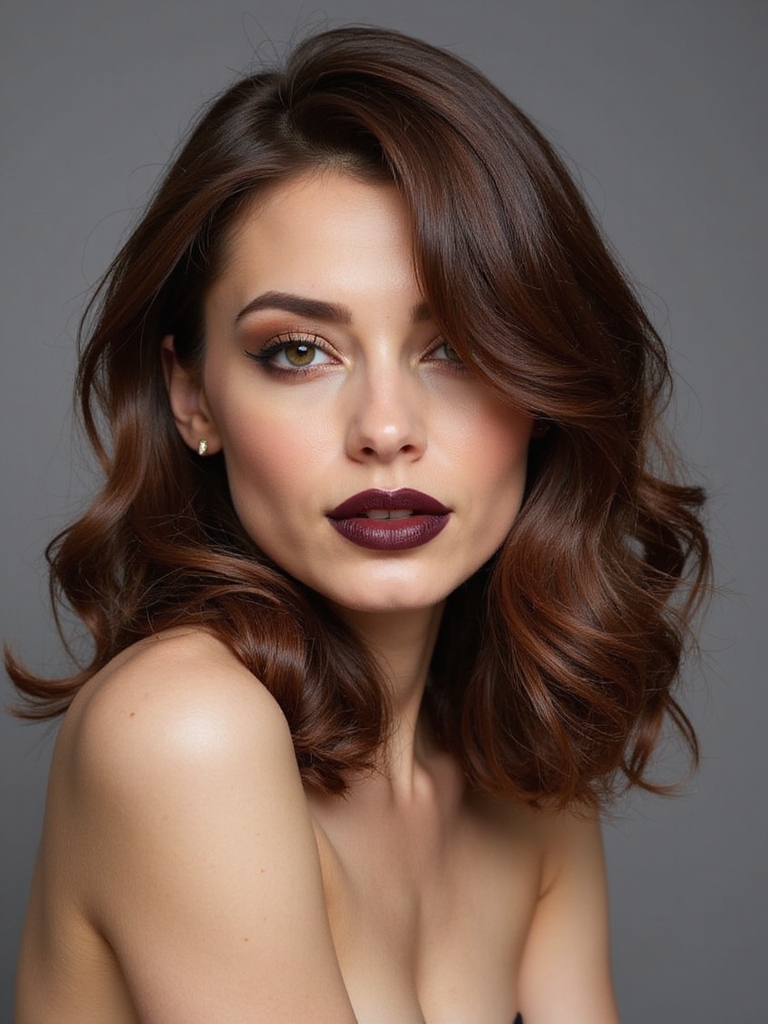
Switching the part to the side gives the shape instant elegance and a touch of old-world glamour. A deep side part adds volume at the root and a soft, sweeping line across the forehead.
When This Part Works Best
It flatters by adding asymmetry, which softens a round face and balances stronger features. Setting the part while hair is damp helps it hold through the day without constant adjusting.
The catch: a deep side part needs resetting almost daily on very straight, slippery hair, since it doesn’t hold overnight the way a center part does.
Two things people assume about this cut that aren’t quite true:
❌ Myth: It only works on thick hair.
✅ Reality: Thinner hair actually holds the blunt line more crisply; thick hair often needs weight removed underneath first.
❌ Myth: It requires completely straight hair.
✅ Reality: A slight, natural bend blends into the shape fine. Only very tight curl patterns need a real adjustment to the cut.
A Minimalist, Center-Parted Version

For the most pared-back take, a center part paired with a jaw-grazing length comes across clean, cool, and quietly architectural. The symmetry and the blunt line together create a frame that looks entirely deliberate.
This version flatters oval and heart-shaped faces especially, since the symmetry and jaw-length line balance the features well. Where it struggles is on faces with strong asymmetry already, since a dead-center part draws attention straight to it.
A Sculpted, Curly Version

Curly hair wears this cut with real presence, the curls sculpting into a rounded, chin-to-jaw shape instead of falling flat. A cut that works with the curl pattern, section by section, is what makes this version succeed.
- Most curl specialists cut this shape while hair is completely dry, so each spiral is visible exactly where it settles and shrinkage gets factored in.
- A chin-to-jaw length keeps curly versions full and balanced instead of ballooning too round.
- A leave-in conditioner worked through with a curl cream keeps the shape defined between wash days.
The No-Blowout, Air-Dried Version

The lowest-effort way to wear this cut is air-dried with sea-salt texture, and it looks convincingly good on anyone with a natural bend.
Where This Falls Short
Scrunching a sea-salt spray into damp hair and letting it dry gives soft, beachy movement that feels completely relaxed. It skips the blowout entirely, which is the whole appeal for anyone who dislikes daily styling.
Pin-straight hair without any natural texture won’t hold this look unassisted. A light texturizing spray or a few loose overnight braids can fake the bend if your hair doesn’t do it naturally.
Sleek and Swept to One Side

One of the more polished ways to wear this cut is smoothed flat with one side swept back, a small move that comes across deliberate, without any fuss. It shows off the jawline and the clean cut in one motion.
How Long This Actually Takes
It’s quick: smooth the hair with a flat-iron pass and a light serum, tuck one side firmly behind the ear, and add an earring to draw the eye toward the asymmetry.
Where it struggles is on hair too short to tuck securely. Anyone with a very short version of this cut may need a small pin to hold the tucked side in place through the day.
A precise line and healthy shine do more for this cut than any amount of product ever will.
Micro-Layers for Fine Hair

Fine hair can absolutely carry this shape with one small adjustment: a few invisible micro-layers that add airy body without breaking the blunt line. The result keeps the clean silhouette while giving fine strands the lift they usually lack.
- Ask specifically for subtle micro-layers, not standard layering, to keep the perimeter reading blunt.
- A blunt baseline underneath makes fine hair look thicker than it is.
- A little mousse at the roots plus a round-brush pass while drying builds volume that actually lasts.
Internal Debulking for Thick Hair

Thick hair can wear a striking version of this cut too, but the weight needs managing so it doesn’t balloon into a triangle shape. Internal debulking removes weight from underneath while keeping the outer line blunt and clean, so the cut lies smooth against the head.
- Ask specifically for internal debulking, not just thinning shears throughout, to keep the perimeter intact.
- Best on thick, dense hair that would otherwise sit too wide at the jaw.
- A smoothing blow-dry and a light serum keep heavier hair sleek through the day.
👍What Makes This Cut Worth It
- +Reads expensive with very little styling effort once cut correctly.
- +Works across most face shapes with small length or part adjustments.
- +A precise cut does most of the work, so daily styling stays fast.
👎What It Actually Asks of You
- –Regrowth shows quickly on a blunt, short version.
- –Relies on healthy ends; damage is hard to hide on this shape.
- –Not a low-commitment cut if you want to grow it out later.
Paired With Blunt Micro Bangs

For a bolder, more editorial take, pairing this cut with blunt micro bangs cut high and straight across makes a real statement. The short, sharp fringe and the clean bob together read confident and modern.
- Best suited to anyone truly ready for the upkeep a micro fringe demands.
- Flatters oval and heart faces with a balanced forehead especially well.
- The fringe needs cleanup on a much tighter schedule than the rest of the shape, since even a little growth changes its proportions.
Curtain Bangs With a Middle Part

The softest, most romantic way to add a fringe to this cut is feathered curtain bangs with a middle part. The fringe parts in the center and sweeps to either side, framing the face without the full commitment of a blunt fringe.
Why This Pairing Is So Forgiving
This combination grows out gracefully, since curtain bangs melt into the longer pieces around them rather than needing their own precise trim schedule. It softens the structured shape and draws the eye toward the eyes.
Style with a round-barrel brush, sweeping each side away from center, and a touch of texture keeps the ends from looking too polished. Where it struggles is on very fine hair, where the fringe can look thin without some added layering.
A Deep Espresso Color

Color does half the work in making this cut look expensive, and a deep espresso brown is the most classic route. That rich, glossy dark brown shows off the blunt line and the mirror shine, and the depth flatters most complexions.
Espresso is also one of the lower-maintenance color choices here, since it sits close to most natural dark bases.
- A glossy espresso reads rich without reading dyed.
- Dark regrowth blends softly, with no harsh line to manage between visits.
- A clear gloss on a level-appropriate schedule keeps the mirror shine from dulling.
📋Before You Book This Color
- ✓Bring a photo of the exact depth you want, not just the word ‘espresso’ or ‘copper.’
- ✓Ask how it will look against your natural regrowth color, not just fresh out of the chair.
- ✓Confirm the gloss or toning schedule before you commit, so the upkeep isn’t a surprise.
Caramel Ribbons at the Face

To warm up this cut without a full color change, a few sunlit caramel ribbons around the face do the job. Painted softly through the front pieces, the ribbons brighten the complexion and add dimension to the blunt line.
Painting just the front pieces this way typically runs under $120 at most salons, noticeably less than a full balayage service, since a colorist is touching a fraction of your head.
- Brightens the face with comparatively little upkeep.
- Grows out softly with no harsh regrowth line, since the placement sits away from the root.
- Best on medium-to-dark brown bases for the clearest sun-kissed contrast.
A Soft, Rooted Blonde

A cool, soft blonde version of this cut feels fresh and a little Scandinavian. Worn blunt and slightly undone, a softly grown-out blonde keeps the look low-maintenance while the clean cut keeps it sharp.
- A rooted approach keeps upkeep lower and the grow-out considerably easier than an all-over blonde.
- Suits cool and neutral complexions best.
- A purple shampoo in rotation, plus a periodic gloss, keeps the blonde from sliding warm.
A Warm Copper Glaze

Copper has taken over the color conversation lately, and glazed over this cut, it looks rich in a way flat copper rarely does. My inverted bob hairstyles guide covers a sharper shape if this softer one isn’t quite right.
- A glossy copper glaze makes the blunt shape catch light differently than a matte color would.
- Copper fades faster than most shades, so a depositing copper conditioner earns a permanent spot in the shower.
- Cool washes plus a periodic gloss keep the tone from dulling toward a flat penny color.
Italian Bob Questions, Answered Plainly
?What exactly makes a bob ‘Italian’?
It’s less a strict rule and more a look: a blunt, healthy perimeter cut anywhere from the chin to the collarbone, finished with a high-shine, glossy blowout. The simplicity and the shine do more work than any complicated cutting technique.
?Does this cut work on curly or wavy hair?
Yes, with adjustments. Curly versions are usually cut dry so the stylist can see exactly how each curl falls, and wavy hair often gets a lighter blowout that leaves more natural texture in place. A gentle detangling routine between visits helps either texture hold the shape.
?How is this different from a regular blunt bob?
Mostly styling and finish. A regular blunt bob can be worn tousled, wavy, or undone, while this specific take leans hard on gloss, a precise line, and an intentionally simple, undecorated shape. The name really points to a finish and attitude more than a distinct cutting method.
?Which face shapes does it flatter least?
Very round faces sometimes find the chin-length version adds width right at the jaw, since the blunt line lands at the widest point of the face. A slightly longer, collarbone-grazing length, or a deep side part, usually solves it by breaking up that horizontal line.
?Can I try this cut without going shorter first?
Often, yes. Many stylists can shape existing long hair into a collarbone-length version in a single appointment, usually under two hours, since it’s more about the blunt line and internal shaping than starting completely from scratch.
A Simple Shape That Asks for Real Upkeep
What makes this cut look simple in photos is exactly what makes it demanding in real life: a precise, blunt line and healthy, glossy hair. Sixteen versions here cover most textures, face shapes, and commitment levels, from a razor-sharp chin bob to a soft, sea-salt wave.
Bring reference photos in your actual texture, tell your stylist plainly how much upkeep you’re willing to sign up for, and this cut will do far more for your face than its simplicity suggests.
Don’t Miss These