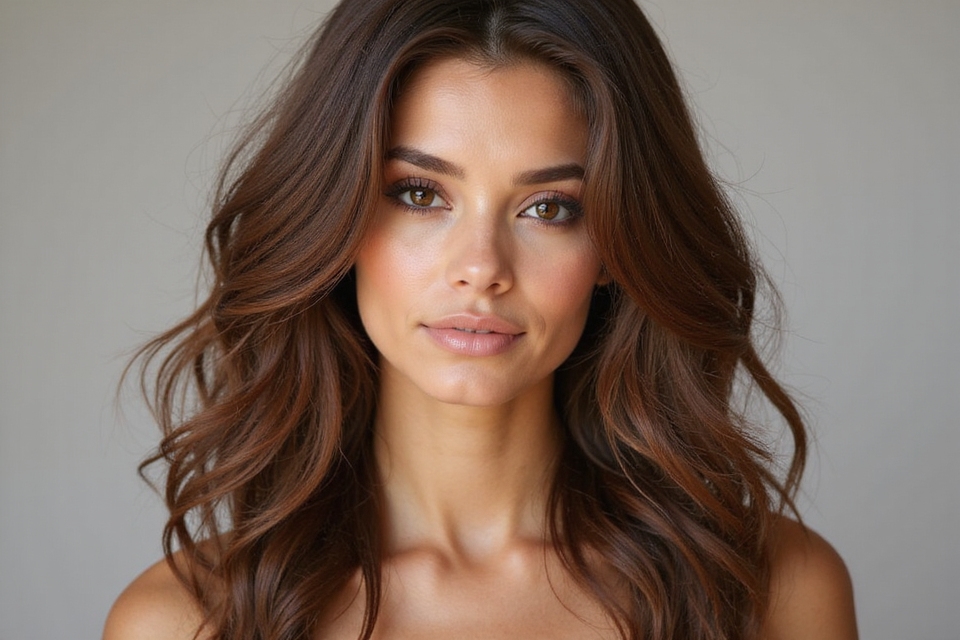
Under office lighting, a certain kind of brown hair looks like nothing more than rich, glossy chocolate. Step outside at golden hour and the same head suddenly reveals a hidden layer of cherry-red glowing underneath, like the color was waiting for better light to show itself. That’s cherry chocolate hair, and the shift between the two states is the entire reason people fall for it.
Seventeen versions follow below, from a whisper of red barely visible indoors to bold, high-contrast cherry gradients, sorted by how much of that red you actually want other people to see.
Cherry Chocolate, Explained Fast
Cherry chocolate is a deep brown carrying a red flush that surfaces mainly in strong light. Because the base sits dark already, it usually shows up on brown hair with little or no lifting required, which keeps the commitment lower than most red-family colors.
The catch is upkeep on the red itself: cherry tones fade faster than the brown around them, so cool washing and a tinted conditioner are what keep the glow from drifting back to plain brown between visits.
Classic Cherry Chocolate Ombre

An ombre is one of the clearest ways to show both sides of this color, fading a chocolate root into richer cherry tones toward the ends. The red mostly waits for direct light to actually show itself.
That shift between chocolate and cherry as you move through a room is the entire appeal, and an ombre puts it on full display down the length of the hair.
- The chocolate root keeps regrowth soft and upkeep manageable.
- The cherry ends carry the color and catch the most light.
- A gloss on the ends refreshes the glow faster than recoloring the whole head would.
Deep Red and Chocolate Balayage

A balayage paints deep cherry-red through a chocolate base by hand, adding dimension exactly where a colorist decides it belongs on that particular head.
Why Painted Cherry Reads Natural
Because the root stays chocolate, the grow-out is remarkably forgiving, with no line to chase between visits. The painted red catches light through the lengths in a way that reads woven-in, never simply applied.
On most brown bases, this needs little to no pre-lightening, which keeps the hair healthier and the whole process lower-commitment than most red placements.
Dark Chocolate With Cherry Highlights

Want to test cherry before committing your whole head? Highlights are the low-risk way in. Fine, vivid red pieces get woven through dark chocolate so they flash as the hair moves, melting in as dimension against such a deep base rather than sitting as obvious streaks.
- Only the highlighted sections carry red, so a change of mind stays contained.
- The rest of the hair stays its natural chocolate the entire time.
- A dependable first step before deciding whether to go further.
🅰️Highlights
Contained, easy to reverse, a smaller commitment overall.
🅱️Balayage
More woven-in dimension, still low-commitment, slightly more coverage.
Cherry Dip-Dye on a Chocolate Base

A dip-dye plunges just the ends into vivid cherry-red against a chocolate base, with a far more defined line than a soft ombre gives you.
Where the two colors meet, the contrast is bold and clearly deliberate. Leaning into that visible line is what makes this version actually work.
Because all the red lives on the ends, trimming it away later is a genuine, practical option if the look ever stops fitting.
Burgundy Cherry Chocolate Blend

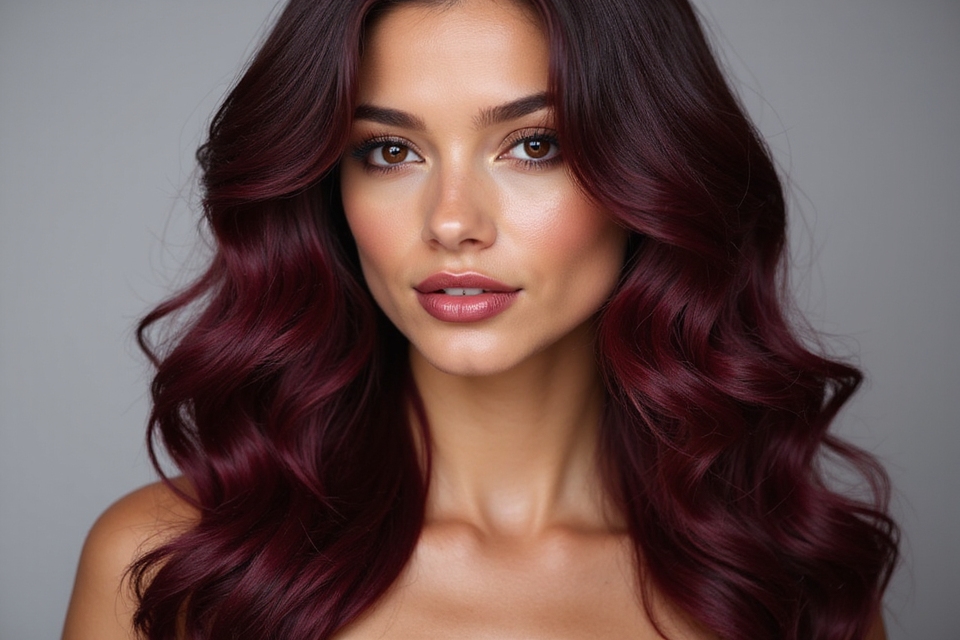
Blending burgundy into cherry chocolate pulls the red toward something deeper and more wine-like, layering brown, cherry, and wine together into one rich result.
When You Want More Wine Than Cherry
The wine grounds the cherry, so the whole combination reads sophisticated rather than simply bright. It’s the version built for candlelight more than daylight.
If this direction appeals more than a straight cherry, burgundy hair goes further into the wine end of the spectrum on its own.
Subtle Hints of Cherry on Dark Chocolate

For the most natural take, just a whisper of cherry warms dark chocolate from within. The red stays barely there, surfacing only in strong light and sinking back into the brown the rest of the time.
- A sensible starting point for a first-timer, since there’s almost nothing to grow out or regret.
- Stays workplace-friendly, since the red rarely shows under indoor lighting.
- Reads as a deeper, more interesting chocolate more than an obvious red.
ℹ️Worth Knowing
The catch with any subtle placement is patience at the appointment; getting the red faint enough to stay hidden indoors takes a more careful hand than a bold, all-over application does.
Rich Cherry Chocolate Melt

A melt blends chocolate and cherry so smoothly there’s no line anywhere, just a gradual shift from deep brown into glowing red. Because the transition is this soft, the color still looks intentional at every stage of growing out.
- The most blended way to wear this combination, with no hard contrast anywhere.
- Grows out gently, since there’s no sharp line waiting to give it away.
- Reads expensive largely because of how gradual the shift actually is.
Mahogany Cherry Chocolate Fusion

If a bright cherry feels too sweet, mahogany is the fix. Fused into cherry chocolate, it layers a cool, red-brown depth right alongside the red itself.
The mahogany adds a smoky, grown-up edge the cherry doesn’t have on its own, landing somewhere between moody and warm without fully committing to either.
- A moodier, more autumnal cousin of a straightforward bright cherry.
- Suits anyone who wants real depth in the color more than obvious pop.
- The added mahogany tone typically needs no extra lift beyond the cherry itself.
Soft Cherry Babylights on Chocolate

The real difference between babylights and regular highlights is density. Babylights use ultra-fine pieces woven close enough together that they glow softly instead of reading as distinct streaks.
The trade-off is time in the chair: weaving that many fine sections simply takes longer than broader highlighting does, so budget accordingly for the appointment length.
- The grow-out stays nearly impossible to spot, given how fine the placement is.
- Keeps the cherry as a quiet glow rather than a loud statement.
- A strong pick when the goal is red that nobody can quite name.
One assumption about babylights worth correcting.
❌ Myth: Myth: Babylights are basically the same as highlights, just smaller.
✅ Reality: Fact: The density is what actually differs; babylights use far more, far finer sections, which is what creates the soft glow, never the streaked look of regular highlights.
❌ Myth: Myth: Fine placement means it fades faster.
✅ Reality: Fact: The opposite tends to be true, since fine, blended pieces show fading less obviously than broad, solid sections do.
Espresso and Cherry Swirl

Swirling deep espresso with cherry produces a dark, glossy, almost jewel-toned chocolate at the richest end of this entire family. The espresso supplies near-black depth while the cherry glows through it.
The tone visibly shifts between coffee and red as the light changes, and the effect depends heavily on healthy, shiny hair, since shine is what makes the cherry actually flash.
- On dull or damaged hair, the effect flattens out noticeably.
- This one rewards healthy, well-conditioned strands more than almost any other version here.
- Pairs naturally with a high-gloss finishing treatment for maximum shine.
Cherry Chocolate With Caramel Accents

A few warm caramel accents lift cherry chocolate with golden brightness, balancing the deep red against a sunlit warmth it wouldn’t otherwise have. The caramel keeps the whole combination from reading too dark or one-note, echoing the warm-cool tension explored in copper brown hair.
- The warmest take in this entire roundup, closer to autumn than any other version.
- Adds a second temperature to the mix, well beyond single-note.
- Works especially well for anyone who finds a straight cool cherry a little too heavy.
Quick gut check: which accent fits your cherry chocolate?
1You want warmth and brightness added in.
Caramel accents, covered here.
2You want the cherry pushed cooler and moodier instead.
Look at the plum or mahogany versions further down.
Intense Cherry Chocolate Gradient
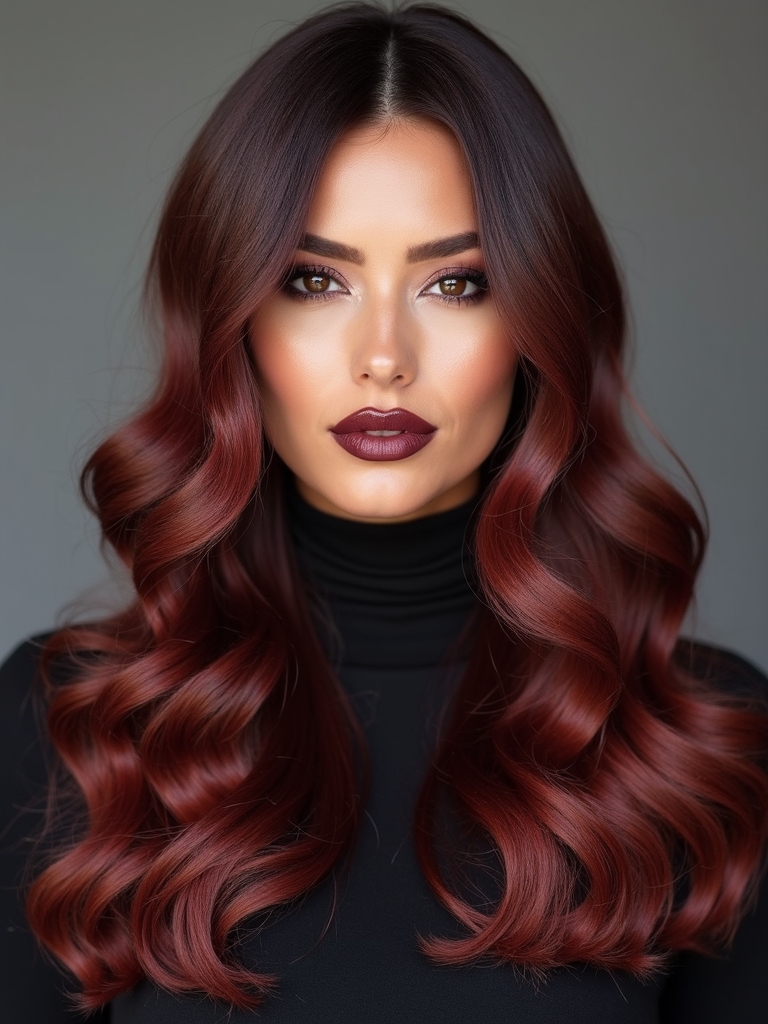
An intense gradient runs from a deep chocolate root all the way to bold, vivid cherry, built for maximum contrast and drama. The wide tonal range shows off length and movement in a way subtler placements simply can’t.
- The boldest, most high-contrast version of this color, full stop.
- The deep root keeps regrowth manageable even with such vivid ends.
- The ends fade first and need the most consistent tinted care to stay bright.
Dark Mocha With Cherry Ends

Dark mocha with cherry ends pairs a balanced coffee-brown root with bright cherry tips, letting the mocha ground the whole look while the cherry draws the eye down the length.
A Warmer, Lower-Upkeep Gradient
The deeper root keeps upkeep manageable, since the part of the hair that grows fastest stays at its natural depth. Whatever pigment needs refreshing sits at the ends.
It’s a softer cousin of the bold gradient above, with the mocha keeping things noticeably warmer and easier to live with than a deep espresso base would be.
Cherry Chocolate With Plum Undertones

Plum undertones push cherry chocolate cooler and more purple, landing on a deep, gem-like richness with a genuine violet edge. The plum and cherry together feel moody and a little luxurious. For an even deeper cool-red option, see wine red hair.
- A step further into the cool, dramatic end of this color family.
- Suits cooler undertones best, where the purple stays true and doesn’t muddy.
- Looks almost black in low light until the purple-red catches something brighter.
Light Cherry on Chocolate Brown

A lighter cherry on a chocolate base keeps the red brighter and more playful, glowing visibly through the brown in almost any light.
For Cherry You Can Actually See
This is the version for anyone who wants people to actually notice the red, well beyond catching it by accident in good light.
Because the cherry sits lighter and clearer, it usually needs a touch of lift on dark hair, which asks for somewhat more commitment than a deeper, more hidden cherry does.
Bold Cherry Highlights on Deep Brown

Where the softer highlight placement earlier keeps things contained, this is the loud version. Bold cherry pieces flash clearly through deep brown with every movement, contrast sharp enough that nobody mistakes it for ordinary dimension.
There’s no confusing this for natural variation, and that’s precisely the point of choosing it. For the boldest version of red without any brown at all, cherry red hair goes all the way there.
Because the pieces run brighter and bolder, plan on toning more often than the subtler versions above require; bright red simply drops out faster than a deep, woven-in cherry does.
Cherry Cola Chocolate Mix

Cherry cola is the deepest, richest version of this color family: a dark brown-red with a glossy, jewel-toned depth, named for the drink it resembles. It turns both the cherry and the chocolate up together for maximum richness. Anyone who wants that same depth pushed fully into red should look at dark burgundy hair.
- The pick when real drama matters more than a low-upkeep routine.
- Rewards healthy, glossy hair especially, since shine is what sells the depth.
- About half the visible upkeep of a bright, high-contrast gradient, since the base stays this dark throughout.
Maintenance & Care
Cherry fades faster than the chocolate surrounding it, since red pigment molecules are larger and sit closer to the surface of the strand. Cool washing and a tinted conditioner between salon visits are what keep the glow from quietly drifting back to plain brown.
A gloss refresh belongs on a regular calendar, booked before the red visibly fades rather than after. Catching it early keeps the color looking intentional the whole time.
What to Expect at the Appointment
For most people, going cherry chocolate on brown hair is a gentle, single-application process with little to no bleach involved, so the visit runs a couple of hours rather than most of a day.
A brighter, lighter cherry or a high-contrast gradient costs meaningfully more than the subtler placements above, often landing around $180 total, roughly the same investment as a full balayage service. Ask for a strand test first if your hair has been colored before, since old color can grab red unevenly.
Cherry Chocolate Hair, Answered
?What exactly is cherry chocolate hair?
A deep brown carrying a red glow woven through it, one that stays hidden in soft indoor light and flashes visibly the moment direct sun or bright light hits it. It ranges from a barely-there red hint to bold, high-contrast cherry gradients.
?Does cherry chocolate hair need bleach?
Usually very little. Because it sits on a deep brown base already, most versions show up with a single color application and minimal lifting. The brighter, lighter cherry placements are the exception, since those actually need some lift to show clearly.
?How is cherry chocolate different from a plain burgundy?
Burgundy leans uniformly toward wine across the whole head, while cherry chocolate keeps a visible brown identity that the red only interrupts in certain light. Think of cherry chocolate as brown with a secret, and burgundy as a color that owns the red outright.
?Will cherry chocolate hair stain my pillow or clothes?
In the first few washes, some rinse-out is normal and expected, similar to any fresh red-family color. After that initial settling period, a properly toned cherry chocolate shouldn’t transfer noticeably onto fabric under normal conditions.
Deep Brown With a Sweet Secret
Cherry chocolate is the brown that hides something warmer underneath, staying quiet indoors and glowing the moment real light finds it. It flatters widely, shows up on dark hair without much lifting, and looks considerably more interesting than a plain, flat brown ever could.
Bookmark whichever depth of cherry caught your eye, lean cooler with plum or warmer with caramel if you want to adjust it, and bring the photo to your next appointment along with how much red you actually want other people to notice.
Next Up