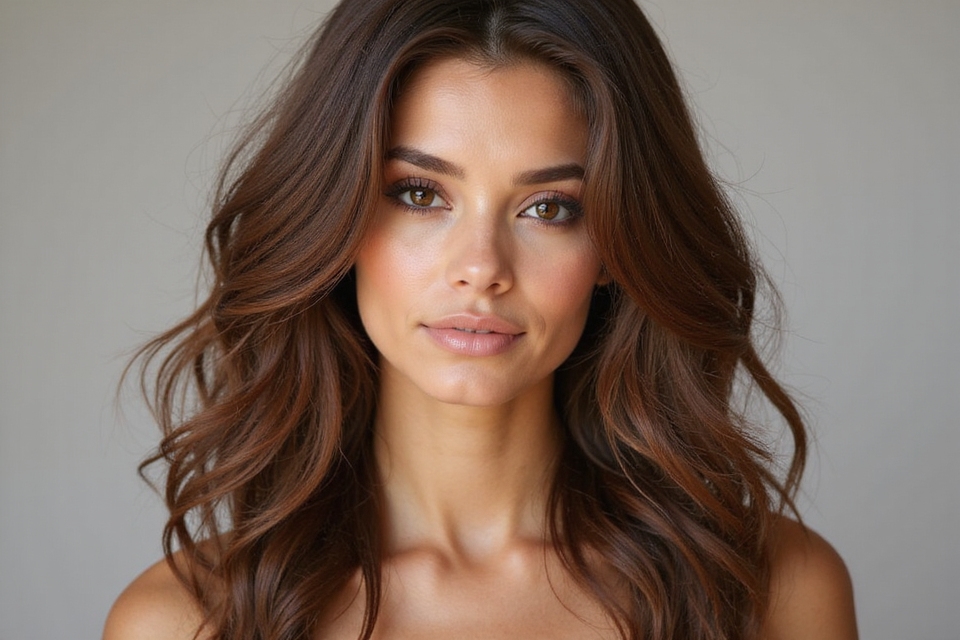
Auburn hair is the color that turns to bronze in lamplight and flares red in the sun. It is the deep, warm red-brown that sits between true red and brown, and that dual nature is what makes it look so natural on so many people.
Auburn is not a single shade but a whole family, from near-black mahogany to soft strawberry, and finding your spot in it is what makes the color look made for you. Below are 25 versions across every depth, undertone, and finish, with who each suits. For the brightest, most copper-lit end, the auburn copper guide goes deeper.
Auburn, In Short
- Auburn is a warm red-brown that spans from deep mahogany to light strawberry, so there’s a version for nearly everyone.
- Deeper, cooler auburns suit cool undertones; brighter, golden ones suit warm skin, with rich shades flattering deep complexions.
- It carries red pigment, which fades warm, so a depositing gloss every few weeks keeps it from going dull.
Classic Auburn Waves
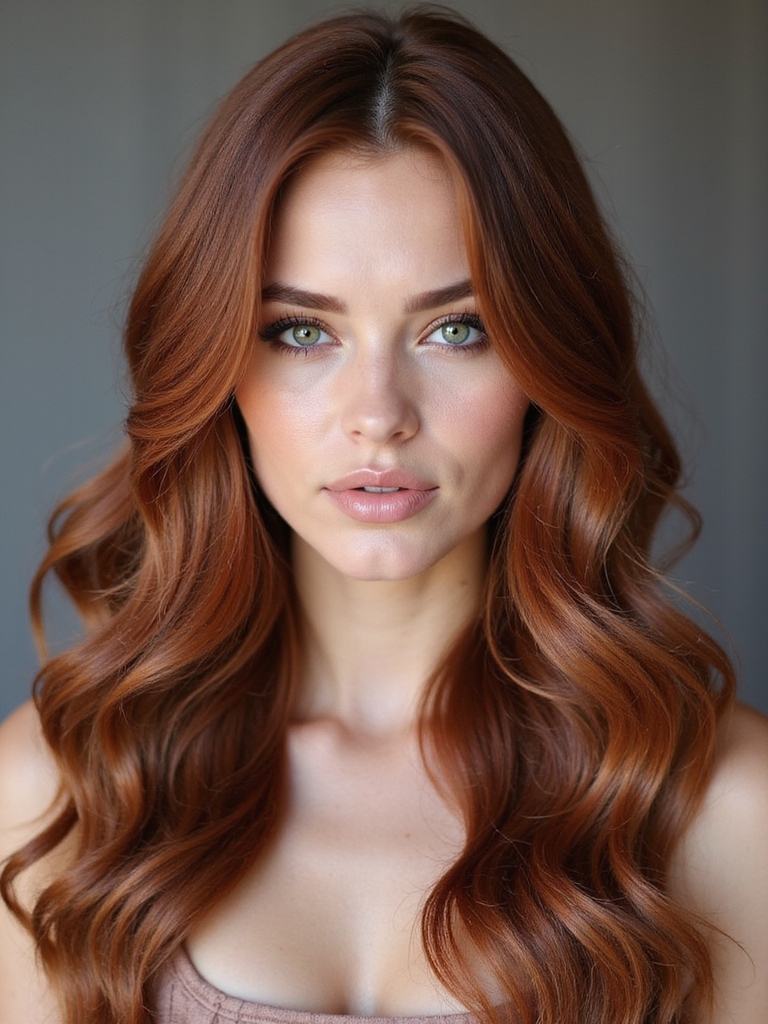
Start with the shade that made auburn famous: a warm, medium red-brown worn on soft waves. It’s the version most people picture, and the movement of the waves is what really sells it, because bend and light are how auburn shows off its shifting tones.
This is the everywoman auburn, the one that suits the widest range of skin and hair. Wear it here first, then push warmer or deeper once you know you love it.
- A balanced red-brown that flatters most undertones.
- Waves make the warm tones shift and catch the light.
- The safest, most natural-looking place to start.

Copper Auburn Highlights

Thread brighter copper pieces through an auburn base and the whole color lifts. The highlights add flashes of fire where the light hits, giving a solid auburn the dimension it can otherwise lack. It glows sunnier and more alive without a full change.
It’s a low-commitment way to warm things up, and it edges toward the brighter auburn copper look while keeping a grounded, brown-based root that’s easy to maintain.
Deep Mahogany Auburn

At the dark, cool end sits mahogany auburn, a dark red-brown carrying a cool, plum-tinged undertone that looks rich and a little glossy. It’s the most sophisticated version, the one that looks expensive on straight, shiny hair. Why it works so well:
- The cool, purple-red base echoes cool and neutral undertones best in natural light.
- Its depth hides regrowth and fade better than a bright auburn.
- It suits deep skin especially richly; see dark auburn for more.
Sun-Kissed Auburn Balayage

Balayage takes auburn from flat to dimensional. Hand-painting lighter, warmer pieces through a deeper base builds a sun-caught glow, as if the color had faded naturally in summer light. It’s the modern way to wear the shade.
The painted approach also keeps upkeep low, since the darker root grows out with no harsh line and only the lengths need refreshing. That makes it one of the easier reds to live with.
It’s the pick for richness with movement over one solid block of color. The dimension does a lot of flattering work around the face.
An Auburn Ombre

Ombre melts a deep root down into brighter, warmer ends, and on auburn the gradient glows like embers toward the tips. It’s bolder than balayage, with a clearer shift from dark to light down the length.
The deep root means the color grows out gracefully, so you can go months without a root touch-up. Only the bright ends carry the fade, and those are quick to gloss back to life.
It’s a striking pick for long hair especially, where there’s room for the gradient to travel and really show.
Dark Auburn Roots
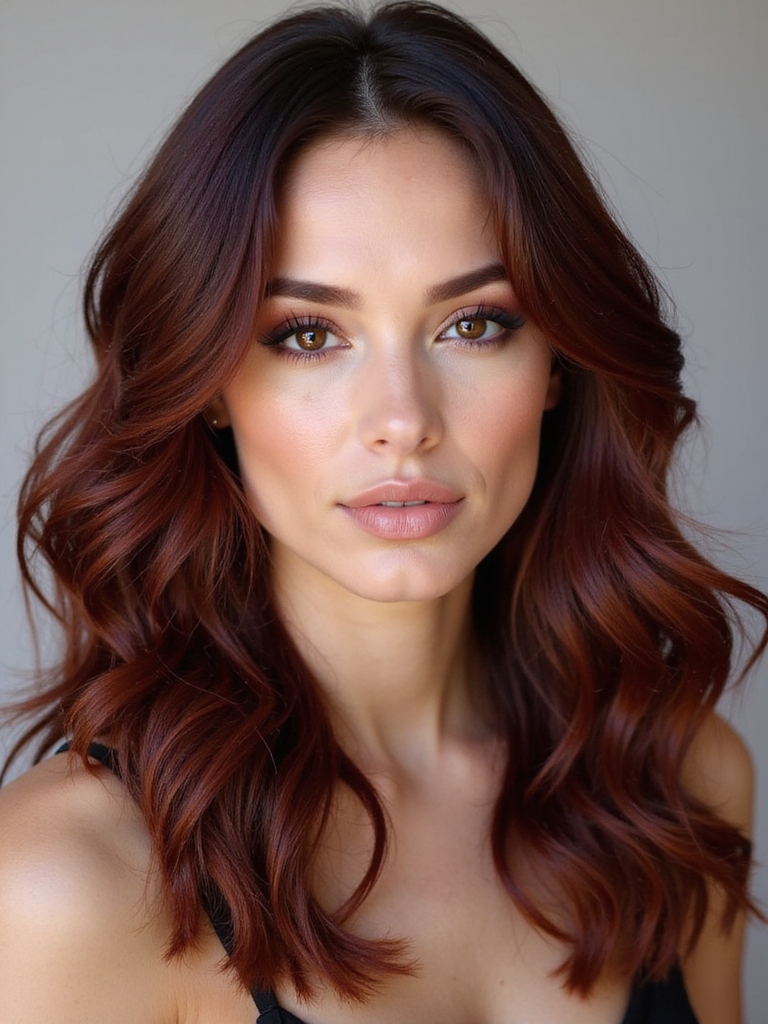
A deliberately darker root is a colorist’s trick that makes auburn look both richer and lower-maintenance. Keeping the base a shade or two deeper than the lengths grounds the whole color and lets your natural regrowth blend in quietly as it grows.
It also adds a natural-looking depth, since real hair is almost always darker at the root. The effect looks intentional and expensive, and it buys you far longer between salon visits.
| Shade | Leans | Suits |
|---|---|---|
| Mahogany / burgundy | Deep, cool | Cool and neutral undertones, deep skin |
| Classic / cinnamon | Warm, mid | Most undertones, olive and warm skin |
| Strawberry / golden | Light, warm | Fair, warm complexions |
Cinnamon Auburn on Curls
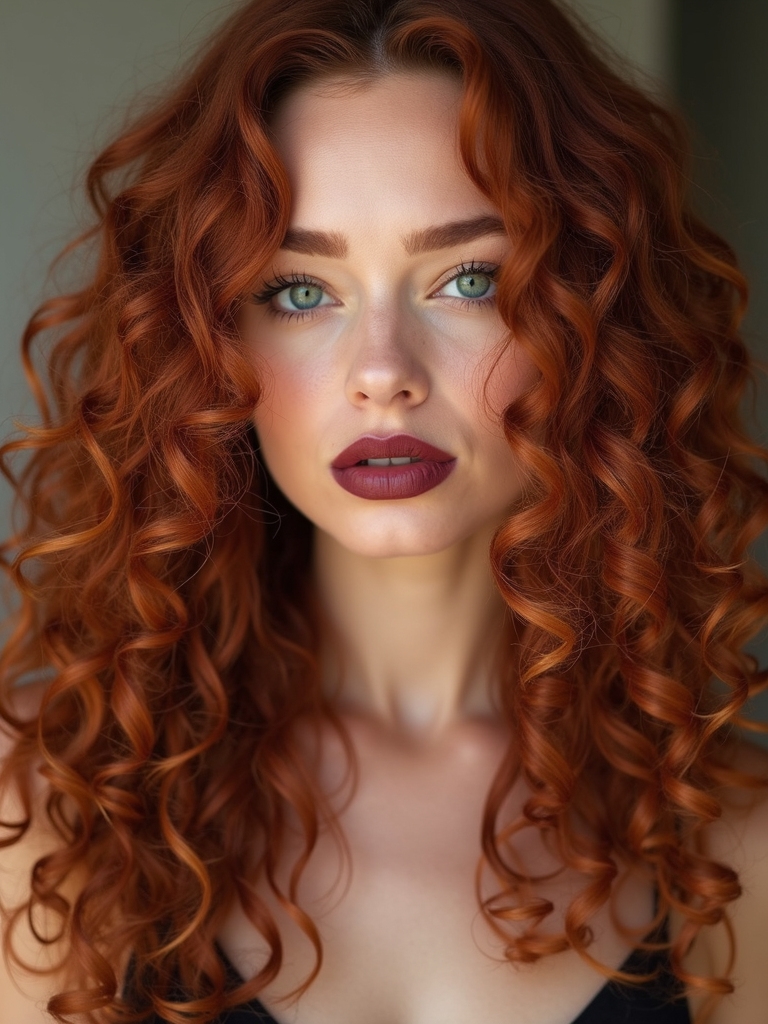
Cinnamon auburn is a warm, spicy mid-red that comes alive on curls, where every coil turns to catch the light and flash a different facet of the color. Warm texture and warm color are a natural pairing. How to keep it happy:
- Cut and color with your curl pattern in mind so the shade falls evenly.
- Colored curls run dry, so deep-condition often and wash gently.
- The spicy warmth sits especially well against deep and olive skin tones.
Subtle Auburn Lowlights
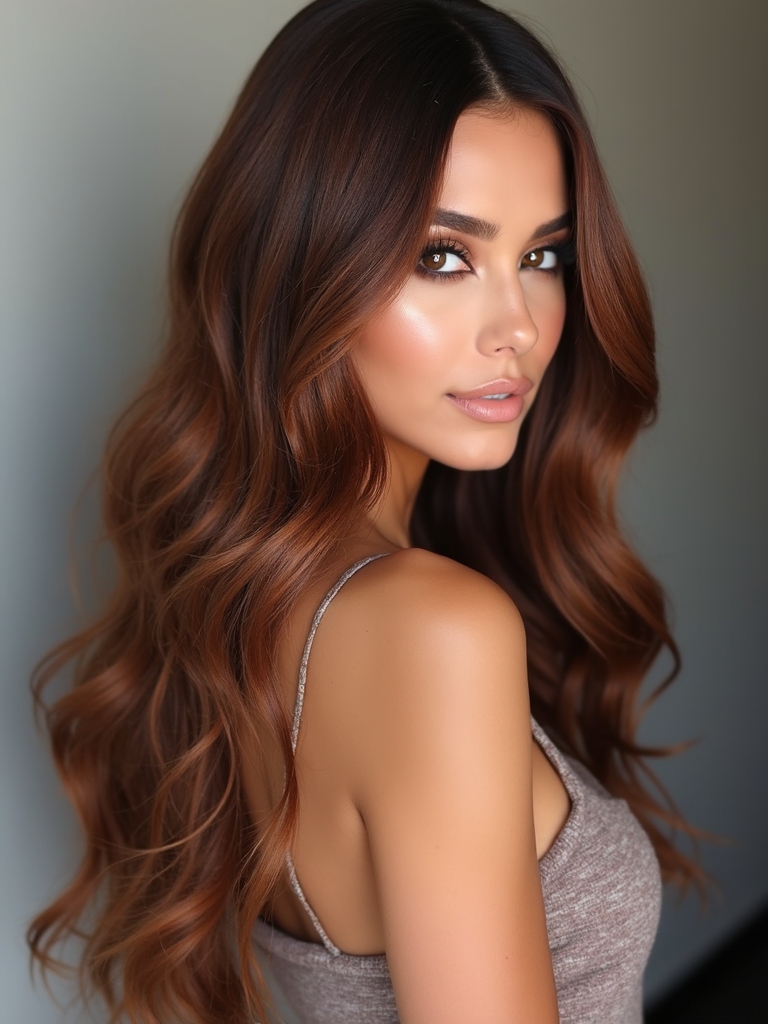
Lowlights are the quiet counterpart to highlights, weaving deeper red-brown pieces back into the color for extra depth. On auburn they add a shadowy richness that keeps the shade from looking flat or one-note.
They’re especially useful on a color that’s been over-lightened or gone too uniform, restoring the natural-looking variation real hair has. A few deeper pieces give the whole thing a pricier, more polished finish.
Think of them as the grounding tone: highlights lift, lowlights deepen, and auburn usually wants a little of both to look its richest.
Two words that come up a lot with auburn:
📖Auburn
A warm red-brown that sits between red and brown, holding pigment from both. Depth and warmth vary widely across the family.
📖Lowlights
Deeper pieces woven back in for depth and richness, the opposite of highlights, used to keep a color from looking flat.
Strawberry Auburn

At the light, golden end lives strawberry auburn, a soft blend of red, gold, and blonde that’s gentle and pretty. It’s the most delicate version, sweet more than bold, and it sits particularly well on fair, warm complexions.
It could pass for a natural childhood red grown up, which is why it looks so believable. Anyone drawn to a lighter, warmer take on red will find it an easy sell, and it sits close to a soft ginger on the spectrum.
A Metallic Auburn Sheen

Metallic auburn is less a new shade than a finish, an ultra-glossy, almost reflective sheen laid over a rich auburn base. It looks high-fashion and modern, all mirror-shine and depth. What gives it that look:
- A glaze or gloss treatment seals the cuticle for maximum reflection.
- It needs healthy, smooth hair, since shine shows off condition.
- Straight, sleek styling shows the metallic effect at its best.
Golden Auburn Reflections

Golden auburn warms the classic shade with a hit of honey, so the hair catches a soft golden light. It’s softer and sunnier than a red-based auburn, and warm, golden skin tones pick up that honeyed glow most.
For Warm Undertones
The gold pieces act almost like natural highlights, lifting the face and brightening the whole color. It’s a great choice for anyone who finds pure red a touch too strong but still wants warmth.
Think of it as auburn with the lights turned up, warm and glowing and all-round sunny.
👍Why auburn wins
- +Warms and flatters nearly every complexion at the right depth.
- +Reads natural, since red-brown is a real hair color.
- +Endlessly adjustable, from sheer blush to vivid red.
👎What to weigh
- –Red pigment fades faster than brown, so it needs upkeep.
- –Regrowth shows on the boldest, brightest shades.
- –Lightening for the brighter versions can dry the hair.
Auburn on a Bob
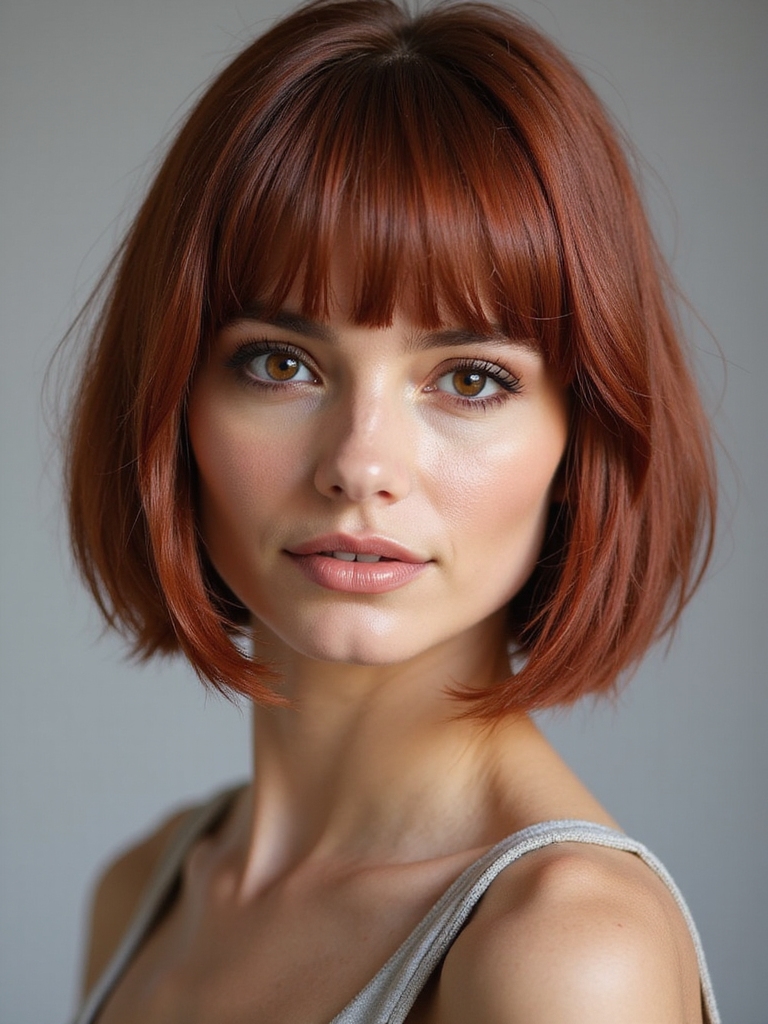
Put auburn on a sharp bob and the color turns graphic. A blunt line and a rich red-brown together look modern and deliberate, the clean shape showing off the glossy color and the color warming up the clean shape. They flatter each other.
It’s a low-fuss pairing, too, since less length means less color to keep bright and less to fade. A quick gloss keeps a short auburn glowing with minimal effort.
- A blunt bob shows off auburn’s shine along the clean edge.
- Less length means the fast red fade is easier to stay ahead of.
- Deeper auburns look especially crisp and expensive on a bob.
Jewel-Toned Cherry Auburn
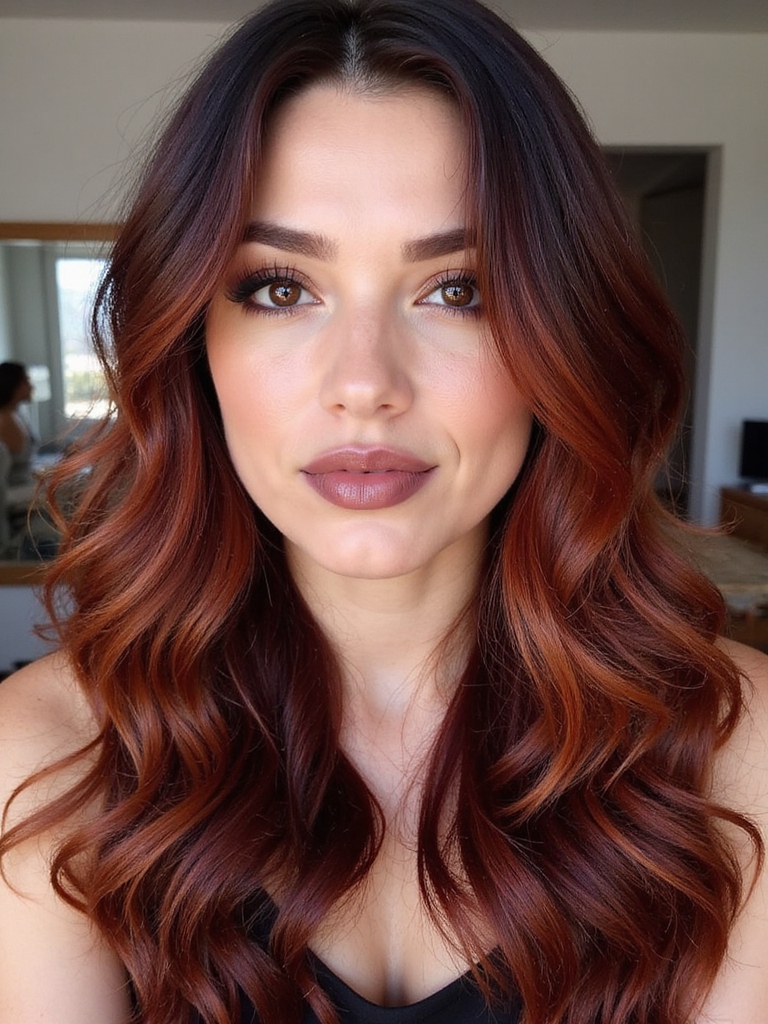
Cherry auburn pushes toward a bright, jewel-toned red with a cool, almost pinkish cast. It’s bolder and more saturated than a classic auburn, the pick when you want the red loud and unmissable. It makes a real statement.
That vividness comes with upkeep, since the brightest reds fade the fastest of all, but the payoff is a glossy, gem-like color that stops people in their tracks. Cool and neutral undertones carry the cool-pink cast especially well.
- A saturated, cool-leaning red for maximum impact.
- The brightest, most vivid shades fade quickest, so plan the upkeep.
- Cool and neutral skin tones pick up the pinkish cast most naturally.
Muted Rustic Auburn
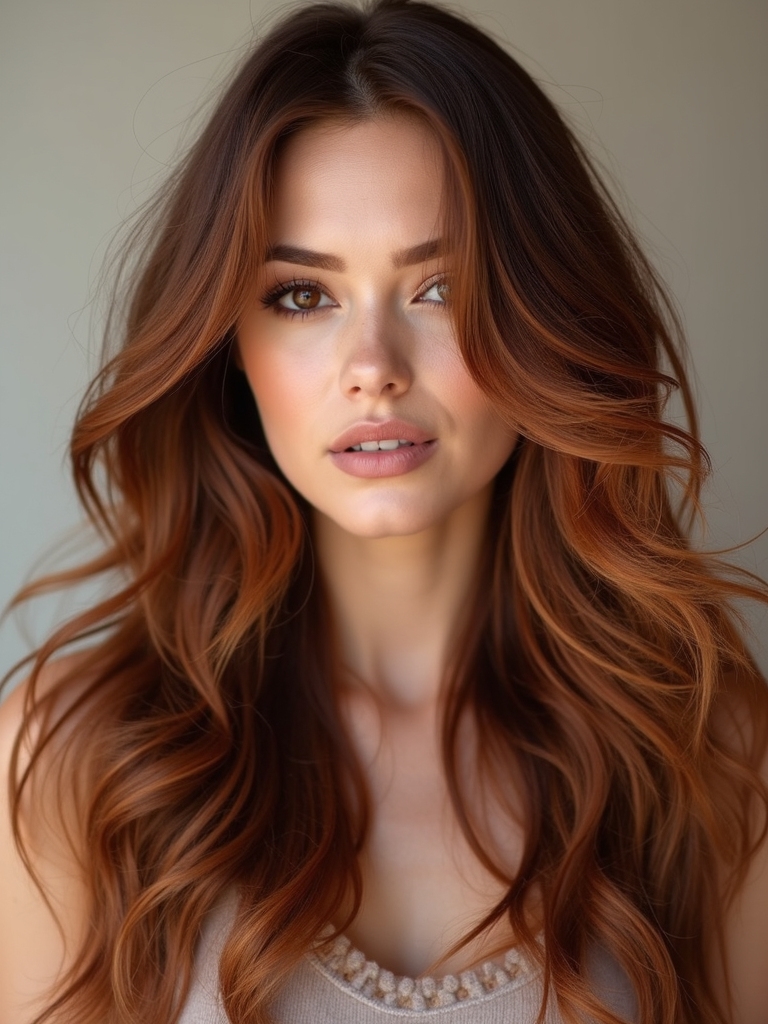
Rustic auburn dials the saturation down for an earthy, muted red-brown that looks weathered and natural. It’s the anti-statement auburn, soft and understated, the shade that looks like you were simply born with it, no salon involved at all. Why it appeals:
- The muted, earthy tone looks understated and worn-in.
- Lower saturation means fade is far less obvious as it happens, so upkeep stretches longer.
- It’s for warmth-seekers who would rather skip a bold, bright red altogether.
Statement Auburn Streaks

Not ready to color all your hair? Bold auburn streaks, chunky face-framing pieces or a few thick ribbons of warmth, give a hit of the color without full commitment. They’re a modern, playful way in.
A Low-Commitment Pop
Placed around the face, they brighten the complexion and add a pop of warmth right where it’s seen most. It’s the trial-run approach with more drama than a subtle highlight.
They also grow out easily and let you test auburn against your skin before deciding whether to go all in. Low risk, high visibility.
The Softest Auburn Blush
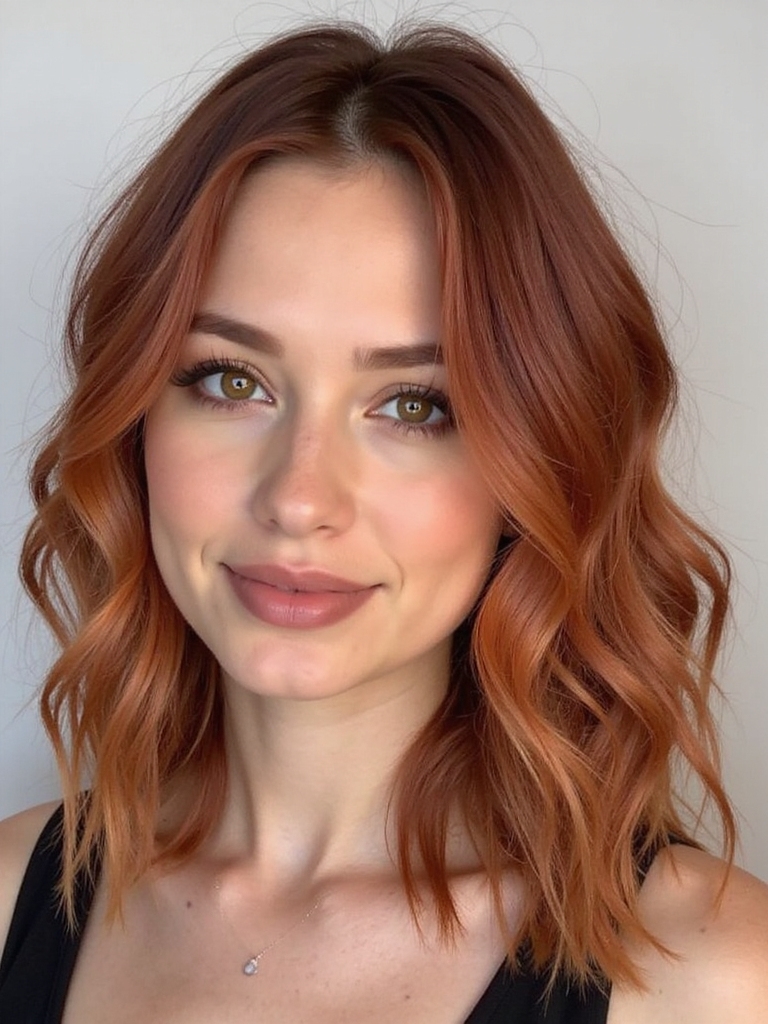
Auburn blush is the faintest possible wash of the color, a sheer veil of warmth laid over your natural base. It’s the most natural, low-key version there is, adding a glow you’d struggle to name.
For the Red-Curious
It’s ideal for anyone nervous about red, since it just warms what you already have. On brown hair it adds a red sheen in the sun; on blonde it turns soft rose-gold.
Because it’s so sheer, it grows out with no line and needs almost no upkeep. The gentlest toe in the auburn water.
Auburn With Chocolate Accents

Weaving deep chocolate brown through auburn grounds the red and adds a delicious richness. The brown pieces deepen the overall color and make the warm auburn tones read even warmer by contrast. It’s cozy and dimensional.
This blend is a smart pick for natural brunettes easing into red, since keeping plenty of brown makes the change feel gradual and believable. It also lowers the upkeep, because brown holds far better than red.
The result is a warm, edible-looking color, all chocolate and cinnamon, that suits warm and neutral undertones beautifully.
Fiery Auburn Flicks

Fiery auburn flicks scatter bright copper-red pieces through a deeper base for pops of flame that flash as the hair moves. It’s a bolder cousin of the copper highlight, with more heat and more contrast.
The bright flicks catch the light dramatically, giving the color real energy and movement. Against a deep auburn base, they land like literal sparks of fire scattered through the hair.
It’s for the auburn-lover who wants vivid and alive over quiet, without committing the whole head to a bright, high-upkeep red.
Auburn and Blonde Dimension
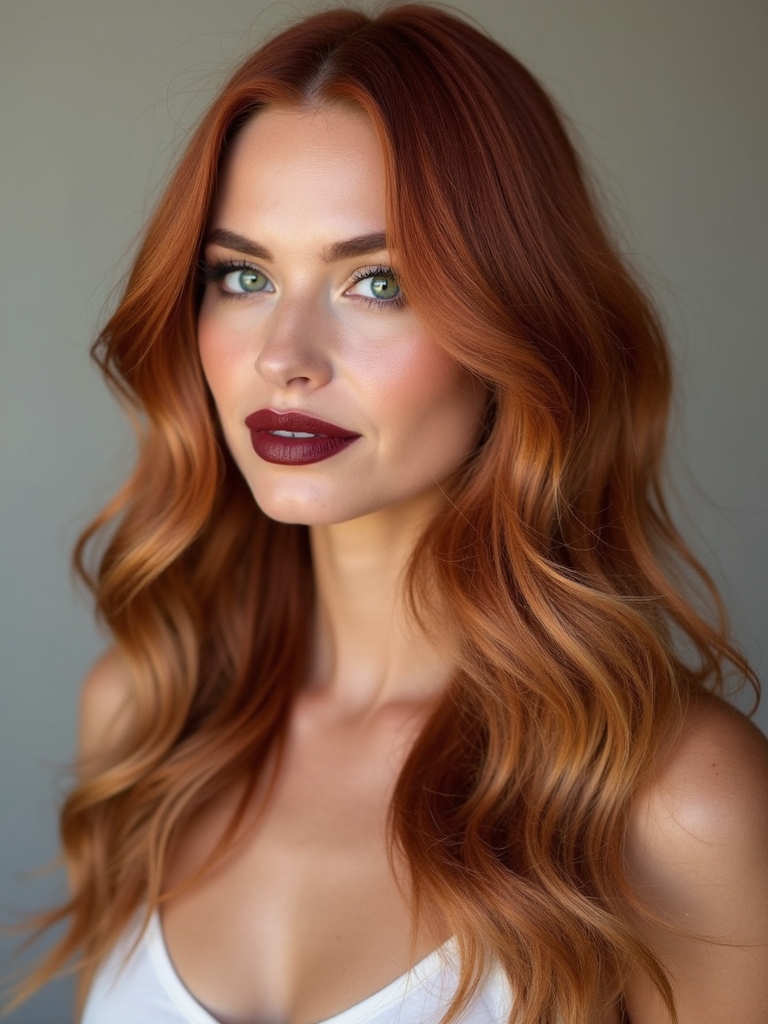
Warm blonde pieces woven through auburn lift and brighten the color, adding light where a solid red can feel heavy. The blonde has to stay warm, golden rather than ashy, so it melts into the auburn cleanly.
Done right, it’s a soft, sun-lit effect that looks expensive and dimensional, close to a warm blonde shot through with red. It’s a lovely way to keep auburn from ever looking flat.
- Warm, golden blonde melts into auburn; ashy blonde would clash.
- The lighter pieces brighten the face and add dimension.
- It’s a softer, sunnier take than a solid auburn.
Auburn Babylights

Babylights are the finest highlights a colorist can place, and through auburn they add a whisper of brightness so delicate it looks entirely natural. Each is tiny, so the effect is a soft glow rather than visible stripes. Why choose them:
- Ultra-fine pieces add subtle brightness with no obvious highlight line.
- They grow out gently, stretching the time between appointments.
- They keep auburn looking sun-touched and natural, never processed.
Layered Auburn Volume

Layers are how a rich auburn avoids ever looking like a flat block. Cutting movement into the hair breaks the color into shifting planes of light and shadow, so a deep red-brown turns dimensional instead of heavy. The shape gives the warmth somewhere to travel.
Layers also keep a rich, dark auburn from looking heavy or helmet-like, adding lightness and body. On long or medium hair, it’s the cut that makes the color look its liveliest.
- Movement reveals every tonal shift in the color.
- Layers stop a deep auburn from looking flat or heavy.
- The ends catch the brightest warmth where the light lands.
An Auburn Burgundy Blend

Melt auburn into a deep burgundy and you get a luxurious, wine-dark red that’s dramatic and cool. The warm auburn keeps the burgundy from going too purple, while the burgundy gives the auburn a rich, moody depth. How it comes together:
- A warm auburn base blended into a deep wine-red for drama.
- The auburn warmth keeps the burgundy from tipping too cool or purple.
- It sits especially well on cool undertones and looks striking on deep skin.
Refreshing a fading auburn at home:
1Deposit, don’t strip
Swap one weekly wash for a color-depositing conditioner in a warm red tone to top the pigment back up.
2Gloss and seal
Every few weeks, use an at-home gloss or book a salon one to reset the shine and even out the tone.
The Warm Auburn Glow
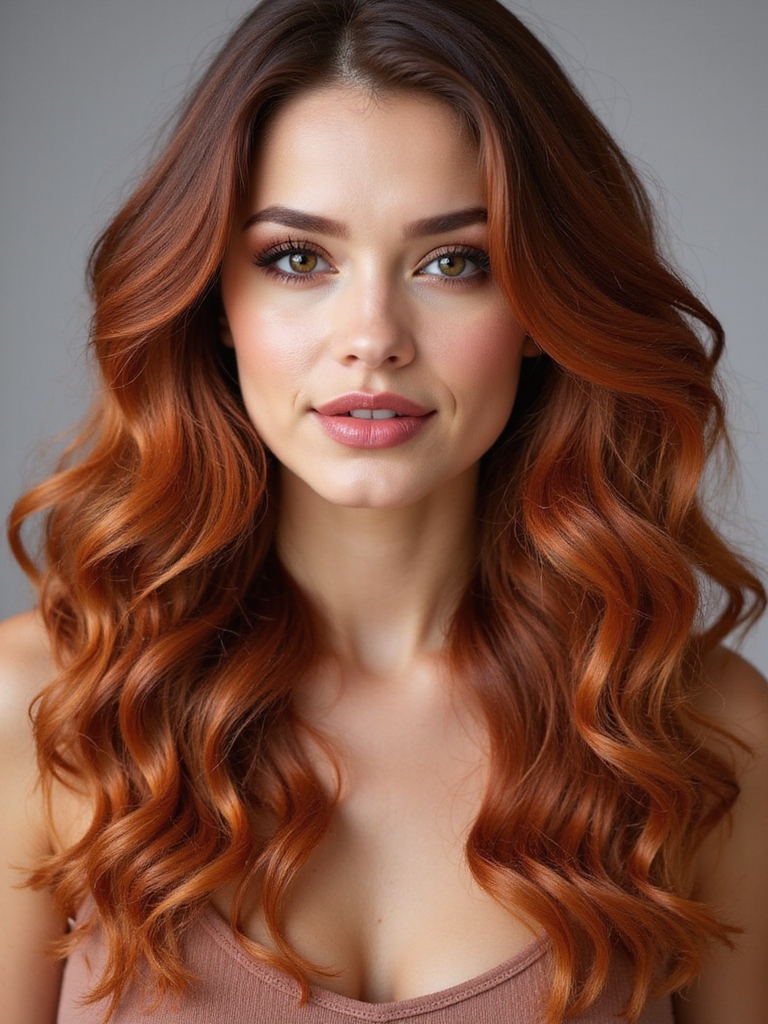
This is auburn turned up to its warmest, glowiest self, a rich red-brown lit from within with copper and gold. It’s the shade that makes the whole face look warmer, almost as if the hair is casting a soft light on the skin. Why people love it:
- Maximum warmth and glow for a lit-from-within look.
- It flatters and warms the complexion like a soft light.
- It’s the crowd-pleaser: rich, radiant, and widely flattering.
Auburn on a Pixie
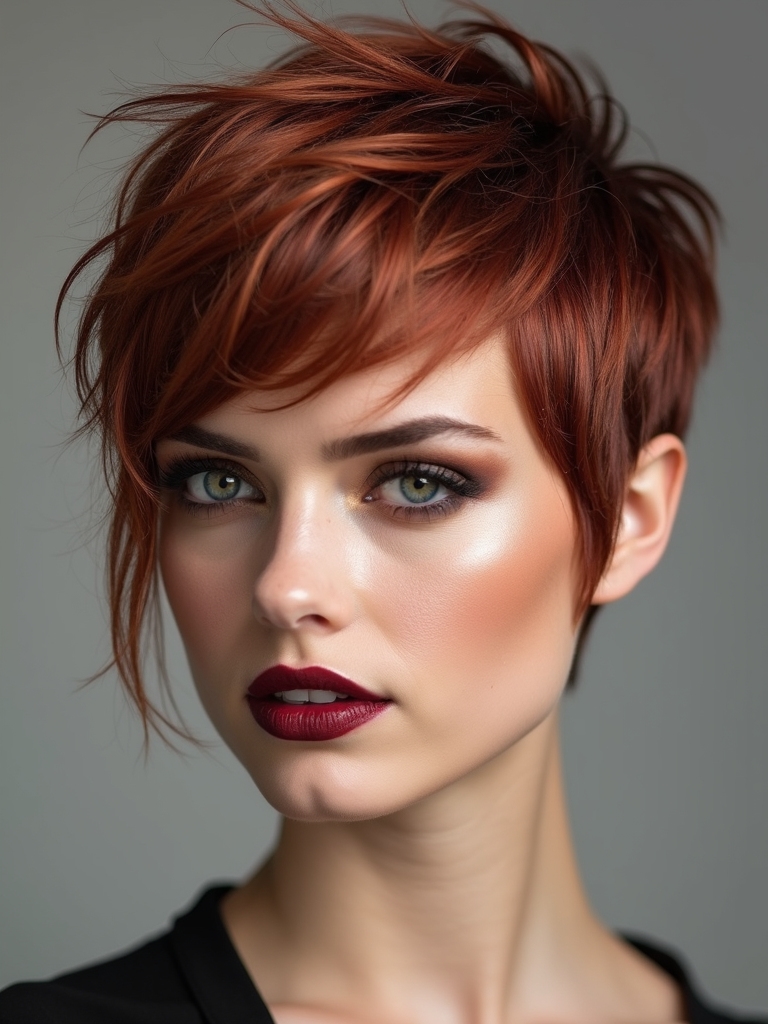
On a pixie, auburn becomes a full statement. The short, sharp shape puts the rich color front and center, and the two together land bold and modern, all warmth and edge in one. Short hair holds nothing back.
It’s also the most practical way to wear a fast-fading red, since a crop is quick and cheap to gloss and refresh. You get the drama of a bright red with a fraction of the upkeep.
- The short shape makes the warm color the whole statement.
- Less hair means the red fade is far easier to keep up with.
- Rich, deep auburns look especially sharp on a crop.
Bold Auburn Red

At the far end, auburn pushes into its most vivid, unmistakable red, all the warmth of auburn cranked to full saturation. It’s the boldest version, the one that comes across as a true red first and a brown second. What to expect:
- Maximum saturation for a bright, head-turning red.
- The most upkeep of any auburn, since bright red fades fastest.
- For the fullest red-family range, see red hair too.
Styling Tips
Whatever depth of auburn you land on, the enemy is fade. Red pigment washes out warmer and duller than any other family, so the single best habit is a color-depositing conditioner or gloss used at home to top up the tone, plus washing less and in cool water with sulfate-free products. A salon gloss every six weeks resets the richness, a refresh that takes about an hour and usually runs around $40.
For shine, which is what makes auburn read expensive, finish with a smoothing serum and a cool blast from the dryer to flatten the cuticle. Protect the color from sun and heat, both of which speed the fade, and deep-condition regularly, since colored hair runs dry. Keep it rich and glossy, and auburn rewards you with a color that seems to change with the light.
Auburn Hair Questions
?What skin tones does auburn hair suit?
Nearly all of them, at the right depth. Warm and golden skin glows with brighter, golden auburns and strawberry; cool skin looks best in deeper mahogany and burgundy auburns; and rich, deep auburns flatter deep complexions beautifully. The color is so adjustable that the real question is which auburn, not whether.
?Why does auburn hair fade so fast?
Because red dyes sit differently in the hair than brown ones: the pigment is bulkier and doesn’t anchor as deeply, so it rinses away sooner and the color drifts warm and dull as it goes. The fix is topping up the tone with a color-depositing conditioner or gloss, washing less in cool water, and avoiding sulfates that strip the color.
?Can I go auburn without damaging my hair?
Often, yes. On brown or darker hair, a deep auburn deposits with little or no lightening, so there’s minimal damage. The brighter, lighter auburns, like strawberry or vivid red, need some lift and so ask for more care. Choosing a depth close to your natural level keeps the process gentle.
Find Your Auburn
Auburn isn’t a single color you either suit or don’t; it’s a whole spectrum, and somewhere on it, between deep mahogany and soft strawberry, sits a warm red-brown pitched exactly at your skin and your nerve. Matching the depth and undertone to your own coloring matters more than trying to replicate any one specific photo.
So bring photos, talk depth and warmth with a colorist, and be honest about the upkeep, because auburn asks for a little to stay rich. Get that right, and you’ll wear a color that turns bronze in the lamplight and catches fire in the sun.
More Inspiration