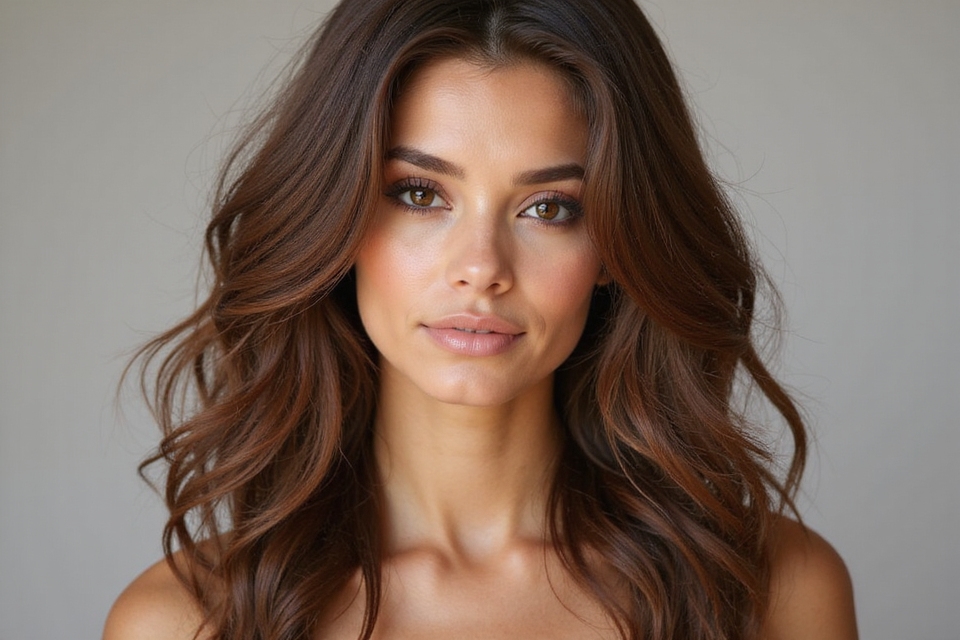
In a dim salon light, truly deep burgundy hair can pass for black. Step outside and the same head catches the sun as pure wine-red, glowing where a flat brown never would. That range is the whole appeal: a jewel tone that sits in the sweet spot between natural brown and a bright, committed red.
Twenty-five burgundy hair ideas follow, from soft balayage and root melts to saturated all-over wine and high-contrast streaks, sorted by depth, technique, and how much lift each one actually asks of your hair.
What Burgundy Actually Requires
- Deep burgundy shows up on dark hair with little to no pre-lightening, keeping it low-commitment.
- Warm, copper-leaning burgundy tends to suit warmer undertones; violet and smoky versions lean cooler.
- Soft placements (balayage, melts, peekaboos) stay lower-maintenance than an all-over saturated wine.
- Like every red-family color, burgundy fades faster than brown or blonde; cool washing slows it down.
- A tinted conditioner between salon visits keeps the wine from turning dull or brassy.
Classic Burgundy Ombre

A burgundy ombre fades from a darker root into rich wine-red ends, building depth and movement while keeping the color grounded. It’s the easiest on-ramp into burgundy for most people, since the gradient shows the shade off without committing the whole head to it.
- The dark root keeps regrowth soft, so touch-ups stay infrequent.
- Brightness concentrates at the ends, exactly where it catches the most light.
- A gloss on the ends every few weeks keeps the red from fading first where it shows most.
Deep Red Burgundy Balayage

Hand-painted burgundy balayage threads wine tones through the hair with no hard line, so the root stays dark and the grow-out stays forgiving. Reach for this version when dimension matters more than even, all-over saturation.
- Painted placement means no harsh demarcation to chase between appointments.
- Works with little to no pre-lightening on the painted sections themselves.
- One of the lowest-upkeep ways to wear real movement in the color.
Burgundy and Black Blend

Blending burgundy with black builds a dramatic wine that flashes against a near-black base, glowing hardest in low light. The black grounds the burgundy, and by contrast the red comes across even more jewel-toned than it would alone.
- Best on hair that already sits dark, since the lift required is minimal.
- Cooler, more neutral undertones tend to carry this contrast the most cleanly.
- The drama comes entirely from the pairing itself, with no extra lightening required.
Subtle Burgundy Highlights

Subtle burgundy highlights weave fine wine-red pieces through a darker base, adding color that only shows in certain light. They look professional at a desk and richer the second the sun catches them, which makes this the workplace-safe way to test burgundy before committing further.
By week three, most people either love the flash of color enough to go deeper, or decide the subtlety was exactly right and never touch it again.
- A smart first move for anyone honestly unsure about red.
- The fine placement grows out softly, without an obvious line.
- Deepening the look later just means adding more pieces on top of what’s already there.
Burgundy Root Melt

A root melt blends a deep root smoothly into burgundy lengths with no visible line, so the shift looks like it happened gradually on its own rather than at a single appointment.
That gradual transition is also what makes the grow-out painless. Months can pass between touch-ups since there’s no sharp regrowth band giving the color away.
- Works across nearly any burgundy depth, from light to near-black.
- The blend does the styling work; little else is needed to look intentional.
- A dependable choice when the goal is forgetting about your roots for a while.
A few terms worth knowing before a burgundy consultation.
📖Root melt
A gradual color blend from the natural root into the target shade, built to hide the line between them entirely.
📖Pre-lightening
Lifting the hair before applying color, required when the target shade is brighter than the hair can otherwise absorb.
📖Demarcation line
The visible edge where new growth meets color; soft techniques like balayage and melts are prized for minimizing it.
Rich Burgundy Babylights

Burgundy babylights are the finest, most delicate version of this color: ultra-thin wine-red pieces woven through the hair for the softest possible wash of red, more glow than statement.
- The weave melts in completely, never sitting as separate visible pieces.
- Regrowth barely shows, keeping this the lowest-upkeep burgundy technique here.
- A gloss between full appointments stretches the time between visits further.
Light Burgundy for a Soft Touch

A lighter burgundy trades the deepest tones for a brighter, more approachable red-purple, applied as a full color change across the whole head. It works well for anyone who finds the darkest wine too dramatic for daily life. For an even brighter red-family alternative, browse auburn hair.
- Usually needs some lift on dark hair before the lighter tone shows clearly.
- Fades faster than deep burgundy, so plan on more frequent refresh visits.
- The shifting warm-cool glow changes noticeably depending on the light around you.
Burgundy and Ash Brown Fusion

Fusing burgundy with cool ash brown builds a modern shade that balances warmth against coolness in the same head of hair.
Why Cool Brown Makes Burgundy Wearable
The ash brown tones the burgundy down, which widens who the color suits and makes it feel more grown-up than a straight, saturated wine would.
The two tones build genuine dimension together, each one still visible within the blend. Anyone drawn to burgundy but wary of looking too bold usually lands here first.
💡Pairing Note
Ash brown and burgundy sit close enough in depth that a colorist can shift the ratio toward more brown or more wine at your next visit, without starting the color over.
Deep Burgundy Curls

Burgundy and curls make a striking pair, since every coil catches light differently and reveals another facet of the wine underneath. On curly hair the color looks more dimensional than it does on straight strands, adding real drama to the natural movement.
Curly hair is more porous, so it takes pigment fast and can fade unevenly without care. Gentle coloring, a bond-building treatment, and regular moisture keep the color even and the curl pattern intact through the process.
Burgundy Pixie Cut

A burgundy pixie is bold by design: rich wine tone plus a sharp, short cut makes a confident, unmissable statement. The depth of the color actually sharpens the lines of the cut, so the two choices reinforce each other.
Short hair also happens to be the cheapest length to keep in a fashion color, simply because there’s less of it to refresh at every appointment.
- The saturated wine shows cleanly against a short, structured shape.
- Fewer inches mean faster, less expensive touch-ups.
- A strong pick for anyone who loves bold color but dreads the upkeep bill.
Violet-Toned Burgundy Waves

Violet-toned burgundy pushes the wine cooler and more purple, landing closer to an almost-plum finish. On waves, that violet depth shifts between red and purple as the hair moves, which is most of the appeal.
It usually needs a little lift on dark hair before the purple shows clearly, so it asks for a touch more commitment than a straightforward deep wine does. Ask your colorist to test the violet tone on a single strand first, since it can shift warmer or cooler than expected depending on your base.
Burgundy Underlayer Peekaboo

A peekaboo hides rich red beneath the top layer of hair, so it only flashes when you move or pin your hair up. It’s a playful way to wear a bold wine with a built-in element of surprise.
Bold Color on Your Own Terms
Because the top layer stays your natural color, this technique is far more office-friendly than an all-over wine. You control when it’s visible and when it isn’t.
It’s also one of the lowest-commitment ways to try bold color; growing it out or cutting it off never means undoing work across the whole head.
Fiery Burgundy With Copper Accents

Adding warm copper accents to burgundy builds a multi-tonal red that visibly glows. The copper lifts and brightens the deep base, threading a sunlit warmth through the wine.
This pairing tends to suit warmer, golden undertones best and reads rich and autumnal, the kind of shade that feels built for the season rather than borrowed from it.
The copper pieces need a touch of lift to show clearly, which means slightly more upkeep than a flat, uniform wine. A related warm option lives in the copper brown hair guide.
| Pairing | Lift Needed | Upkeep |
|---|---|---|
| Burgundy + black | Minimal | Low |
| Burgundy + copper | Some, for the copper pieces | Moderate |
| Burgundy + platinum | Significant | High |
Burgundy Balayage on Brown Hair

Burgundy balayage on a brown base blends unusually well, since burgundy and brown merge into each other on their own instead of reading as two separate shades.
On darker brown, it typically needs little to no pre-lightening, which keeps it a lower-commitment option than most bright reds.
- Looks like warm brown dimension up close, burgundy from a distance.
- A dependable entry point for a brunette curious about red but not ready to commit fully.
- Low or no lift keeps the hair noticeably healthier through the process.
Burgundy Money Piece Highlights

A money piece places bright wine around the sections that frame your face, drawing the eye and warming up the complexion without touching the rest of the head.
Because only a handful of face-framing pieces carry the color, the visual impact stays high while the actual lightening stays minimal, and the grow-out is gentle by design.
- All the impact of burgundy concentrated in exactly the spot that flatters most.
- A practical choice for anyone who wants color without coloring their whole head.
- Grows out softly enough to stretch appointments further apart than most placements.
Chocolate and Burgundy Melt

Melting chocolate brown into burgundy builds a smooth blend of warm brown and deep wine with no hard line between them. The chocolate keeps the look grounded and office-appropriate, while the burgundy supplies a richness the brown alone couldn’t reach. For an even darker take on this pairing, see dark burgundy hair.
- Low-lift on most dark hair, since both tones sit close in depth.
- A dependable, everyday-wearable take on the wine-and-brown combination.
- The chocolate base is exactly what keeps this office-appropriate.
Matte Burgundy All Over

A matte, all-over burgundy is deep, even, and fully saturated, with a soft, low-shine finish that reads modern. All the dimension here comes from the depth of the wine itself, no placement technique involved.
- Often needs no bleach at all on hair that’s already dark.
- The boldest, most committed way to wear this color at full strength.
- A weekly tinted conditioner keeps the saturation from fading unevenly.
Burgundy Bob

A burgundy bob pairs the wine tone with a sharp, structured cut, landing somewhere between classic and edgy. Blunt edges show the color off cleanly, with no layers breaking up the saturation, so the whole shape looks deliberate.
- Shorter length means less hair to refresh at every appointment.
- The clean line and the bold color visibly reinforce each other.
- A polished pick when you want a statement without much daily styling.
Burgundy With Platinum Streaks

Adding platinum streaks to burgundy builds a high-contrast, fashion-forward look where icy white cuts hard against the deep red. This one isn’t trying to be subtle. If platinum feels like too much upkeep, cherry red hair delivers similar drama with a simpler process.
- The platinum needs serious lift, the heaviest of anything in this roundup.
- Go in expecting real upkeep and a genuine commitment to the maintenance schedule.
- Best attempted on hair that’s healthy enough to handle that much lightening.
Smoky Burgundy Hair

Smoky burgundy mutes the wine with a hazy, grayed-off quality, for a sophisticated, quiet finish.
The Grown-Up, Muted Version
That muted depth tends to suit cooler, more neutral undertones especially, where a fully saturated wine might feel like too much. It’s the editorial, toned-down cousin of a bold burgundy.
Because the smoke comes from a cool toner layered over the wine, expect to refresh the toning on a regular basis; the cool cast fades before the red underneath does.
👍What Makes This Version Work
- +Looks sophisticated, never costume-like.
- +Suits cooler undertones that a saturated wine can overwhelm.
- +Pairs easily with minimal makeup for an everyday look.
👎What It Asks in Return
- –The toner needs refreshing more often than the base color does.
- –Can look dull if the toning is allowed to fully fade out.
- –Less dramatic than a straight, saturated burgundy.
Burgundy on Natural Afro-Textured Hair

Burgundy looks strikingly rich on natural, afro-textured hair, where the wine glows against the density and shape of the coils and catches light across every curl.
Coily and tightly textured hair is more fragile and more porous, so it absorbs pigment quickly and can dry out fast if the process is rushed, especially around the ends where the hair is oldest.
Gentle coloring, a bond-building treatment, and steady moisture keep both the curl pattern and the color intact. Working with a colorist experienced specifically in textured hair matters more here than the shade choice itself.
Subdued Burgundy for a Casual Look

A subdued burgundy keeps the wine character soft and understated, closer to a rich, dark red-brown than a bold statement.
Everyday Wine-Red
That restraint is exactly what makes it easy to wear anywhere, from the office to the school run, with just enough red to catch the light when the sun hits it directly.
Because it stays close to a natural depth level, it needs little to no lift on dark hair and grows out about as gently as this color gets.
Burgundy Highlights on Chestnut Hair

Burgundy highlights on a warm chestnut base build an autumnal blend of red-brown and wine, where the burgundy deepens the chestnut and merges directly into its warmth.
The two tones blend closely enough that only a small amount of lift is needed, and the result photographs warmer than either shade would alone. If you’d rather skip the chestnut base entirely, wine red hair covers the deeper, all-over version.
Burgundy Mohawk Inspiration

For the boldest possible statement, burgundy on a mohawk or shaved-side style is about as committed as color choices get. The wine adds drama to a cut that already demands attention.
- The shaved sides mean noticeably less hair to keep in fashion color.
- Pairs a bold cut with a bold shade for maximum visual impact.
- Surprisingly manageable to maintain, since so little surface area needs refreshing.
Burgundy With Subtle Gold Tints

Adding subtle gold tints to burgundy warms and brightens the wine with a luminous shimmer that catches differently depending on the light.
Warm, Luminous, and Multi-Tonal
This pairing tends to suit warmer, golden undertones and looks especially rich in late-afternoon light, the kind of shade that seems lit from within.
The gold needs a touch of lift to show clearly, so plan on slightly more upkeep than a flat, uniform wine. The payoff is genuine warmth most single-tone burgundies don’t have.
What to Expect at the Appointment
For most people, going burgundy on dark hair is quick and gentle: a single dye application with no bleach, done in a couple of hours. Plan on around $100 for a straightforward, single-application burgundy; brighter, violet, or platinum-streaked versions take longer and cost more, since they need lift first.
Ask for a strand test if you’re unsure how your hair will take the color, especially if it’s already been colored or highlighted. Expect some rinse-out in the first few washes; that’s normal and not a sign the color didn’t take.
Burgundy Hair, Answered
?Does burgundy hair need bleach?
Often not. Deep, dark wine tones show up well on already-dark hair, so most brunettes can go burgundy in a single application with no pre-lightening. Brighter, violet, or fiery versions need a lighter base first to show their true tone.
?Why does burgundy fade faster than my natural color?
Red and wine pigment molecules are larger than most other tones and sit closer to the surface of the strand, so they wash out faster. Deep burgundy tends to fade gracefully though, softening toward brown rather than turning brassy the way lighter reds often do.
?Can I go burgundy without damaging hair that’s already colored?
Usually yes, as long as you’re going darker or staying close to your current depth. The risk climbs specifically with brighter, violet, or platinum-paired versions, since those need extra lift on top of whatever processing your hair has already been through.
?Which burgundy shade actually suits me?
Match the undertone before the specific shade: warmer, golden skin generally pulls toward copper-leaning burgundy, while cooler or neutral skin tends to suit violet or smoky versions better. A photo checked against your skin in daylight beats any shade name a colorist could give you over the phone.
?How do I keep burgundy from turning brassy?
Wash with cool water and a color-safe, sulfate-free shampoo, and use a tinted conditioner between full color visits to refresh the tone. Heat styling without protection speeds up fading more than almost anything else in the routine.
The One Thing Burgundy Actually Needs
Every version above comes down to the same formula: enough depth to look rich, undertone-matched warmth or coolness to look intentional, and a cool-water, color-safe routine to keep it from fading toward brass.
Bookmark whichever placement or depth caught your attention, then bring it to a consultation and let a colorist tell you honestly how much lift your specific hair actually needs before you commit.
More to Browse