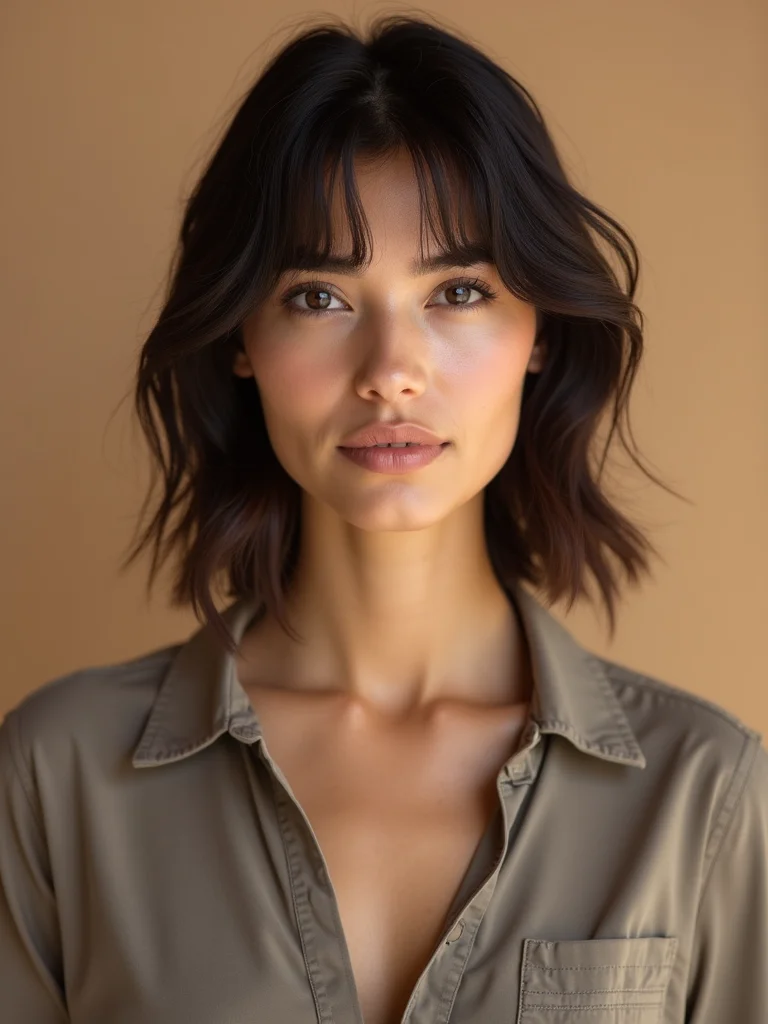
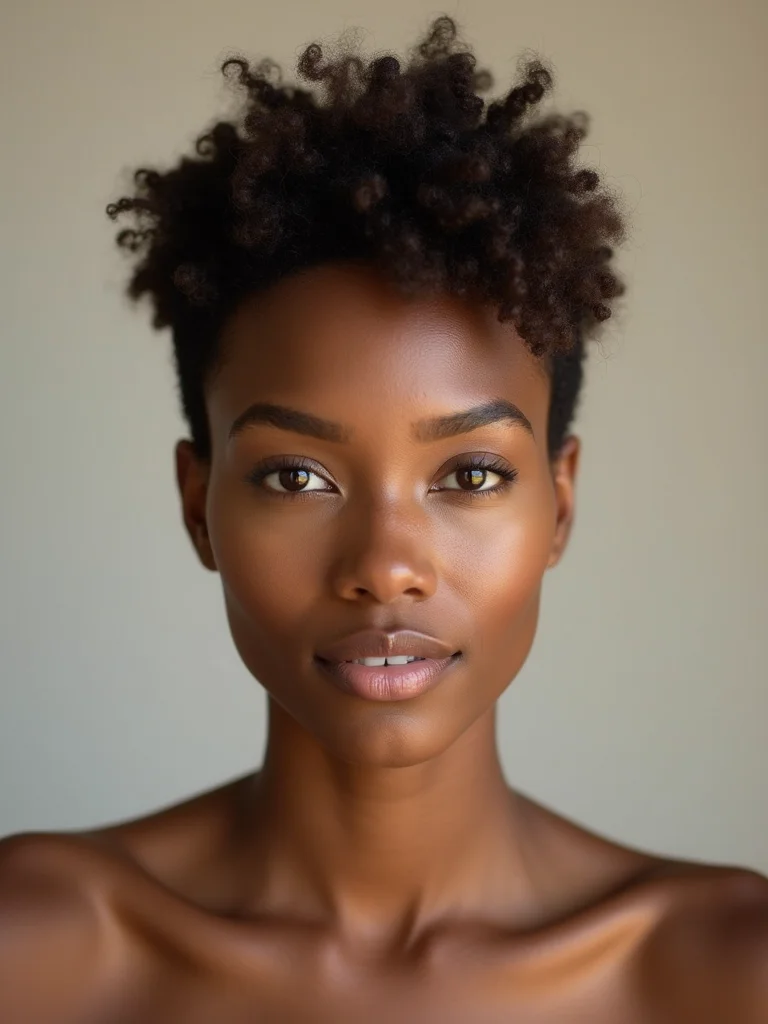
Nobody actually gets one haircut when they get a pixie. They get a bangs decision, a nape decision, a texture decision, and a color decision, and any one of those can be changed without touching the other three.
That is worth knowing before booking, because the transformations that get saved most are rarely about length at all. A short pixie can be adjusted in four independent places, and what follows is sixteen of them, with the size of the commitment named for each.
Four Dials, Not One Haircut
- Bangs are the cheapest thing here to change your mind about. Bangs grow back into the rest of your hair without anyone needing to fix anything, which makes them the boldest-looking change with the shortest road back.
- The nape is the most permanent of the four. Graded down gradually it forgives you; taken to the skin it leaves a step that no stylist can shortcut, only wait out.
- Cut texture and color are reversible in a season. A razored finish grows out, a platinum tone can be filled back down, and neither one changes the shape you are living with.
A Razor-Textured Pixie With Long Bangs
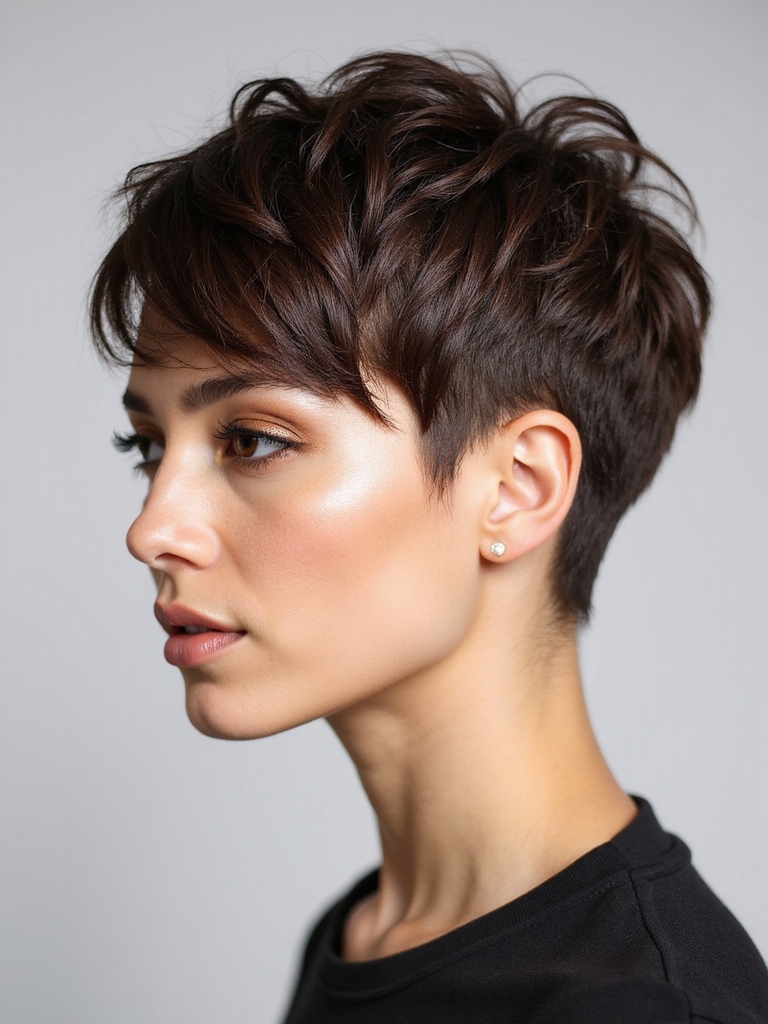
Long at the front, short everywhere else, is the configuration I book more than most, and the reason clients give is always practical. Long bangs mean there is always something to hide behind on a day the cut feels too exposing.
Razoring the front is what stops it looking blunt against a short back. The blade thins each strand along its length, so the front breaks into pieces that fall across the brow, and no single shelf ever forms.
Where this struggles is on very fine hair. Razored ends on fine strands cannot hold their own weight and separate into visible gaps by the afternoon. Our best pixie hairstyles roundup has softer options.

The Tousled, Textured Pixie
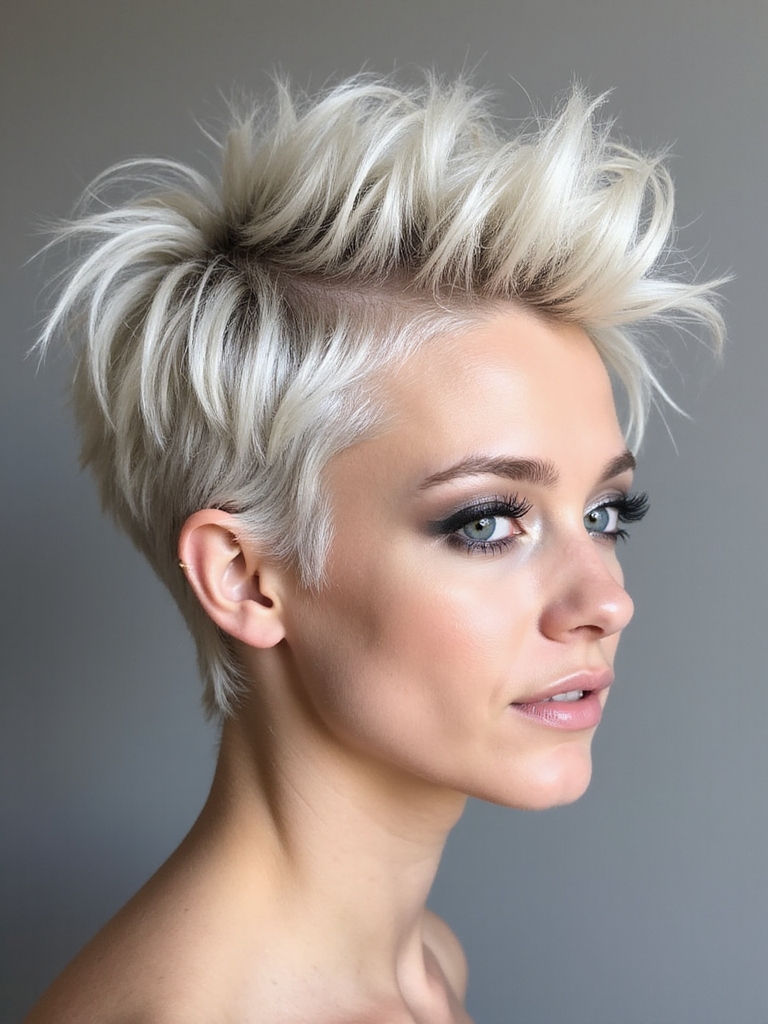
This is the version most people actually wear once the novelty of the cut wears off. Everything is roughly the same length, the layering all sits inside where nothing shows, and the finish is done with hands in about ninety seconds.
- Ask for internal texture with the outline left clean, since the shape lives in the perimeter
- Work product through dry hair from the roots outward, then stop before it looks finished
- The one to choose if your calendar is the reason you have avoided short hair
A Long Pixie With Micro Bangs
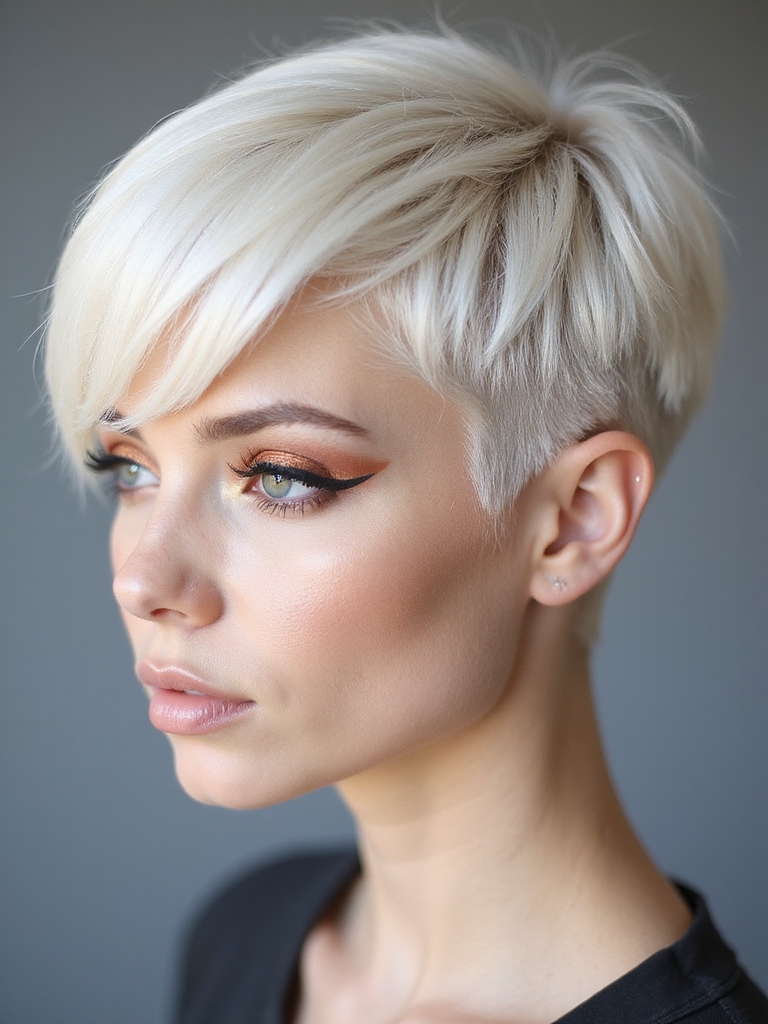
Micro bangs sit well above the brow and put the entire eye area on display, which is why the same cut looks confident on one person and startling on another.
Why It Needs Length Behind It
The pairing with a longer pixie is deliberate. Length at the sides and back gives the eye somewhere else to go, and without it micro bangs on an ultra-short crop tip into severe.
It changes faster than anything else you could ask for. At roughly half an inch a month it clears the brow by month three or four, and it can be worn swept to one side from around month six. Short, as commitments go.
How much of your face do you want on display?
1All of it, and I want people to notice
Micro bangs with a longer pixie behind them. Maximum exposure, maximum statement, and it grows into something softer within three or four months if you change your mind.
2I want the cut without the spotlight
Side-swept bangs over a tousled crop. The diagonal softens everything, and there is always a piece to move forward on a day you feel exposed.
The Undercut Pixie and Its Contrast
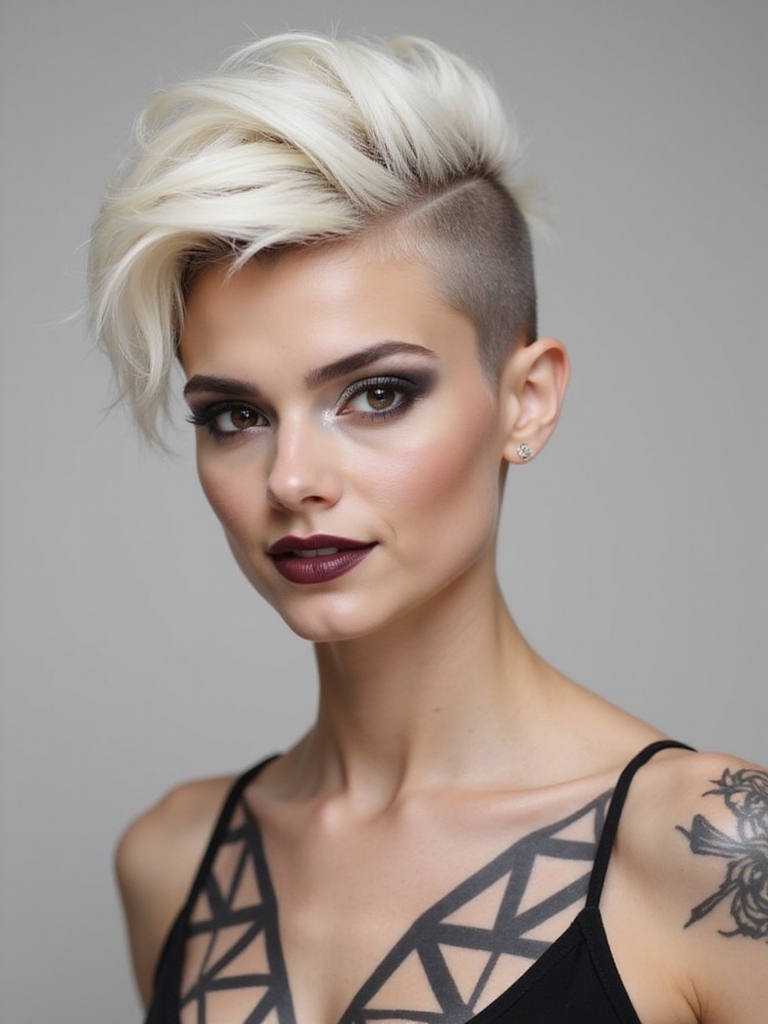
Shaving the sides and back removes every competing shape, so whatever is left on top becomes the entire haircut. The contrast is the design, and it is the loudest thing you can do with two inches of hair.
It is also the one change on this list that cannot be walked back. Buzzed hair regrows at its own pace, and the step where it meets the length takes several months to disguise on any texture.
- A low undercut hidden beneath the top length gives you the effect with an exit route
- The buzzed panel wants a clipper pass every couple of weeks to stay crisp
- Ask your stylist to describe month three specifically before agreeing to a high one
Soft Side-Swept Bangs
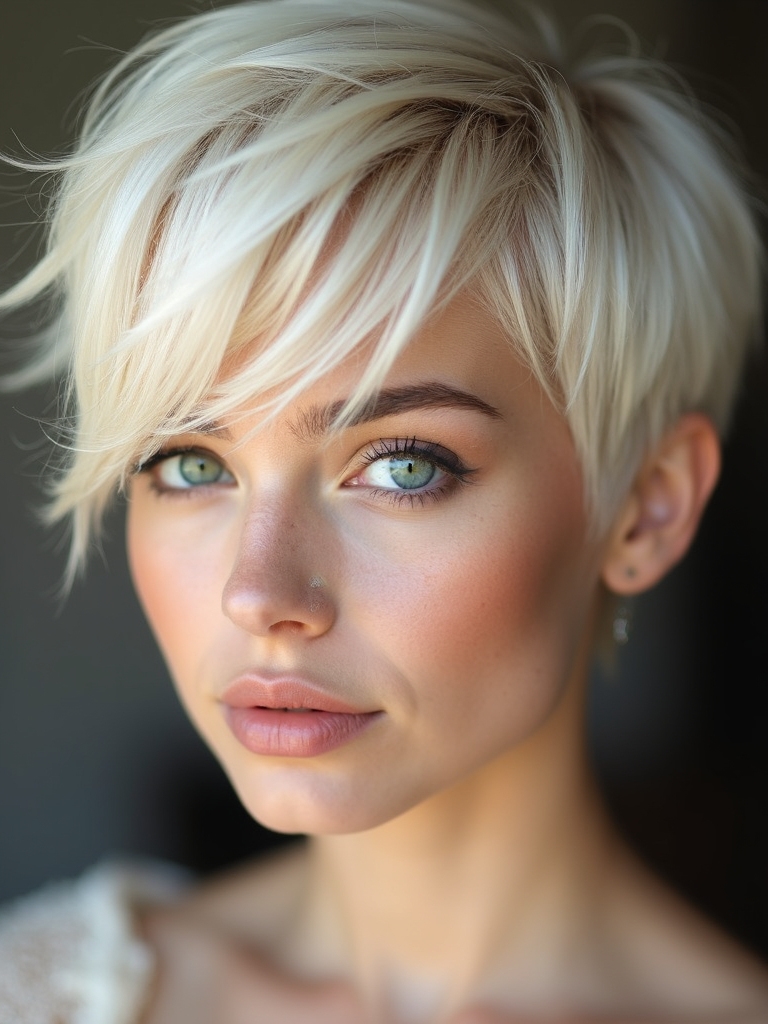
This is the gentlest configuration available, and it suits more faces than most, because a diagonal across the forehead breaks up width without demanding anything of your bone structure. It also happens to be where every other front on this page ends up eventually, which makes it the safe default when you are unsure.
- Have the shortest point cut at the brow and lengthened toward the opposite cheekbone
- Dry it across with a small round brush before touching anything else
- Cut it dry so the sweep is checked in the direction it will actually fall
The Curly Pixie
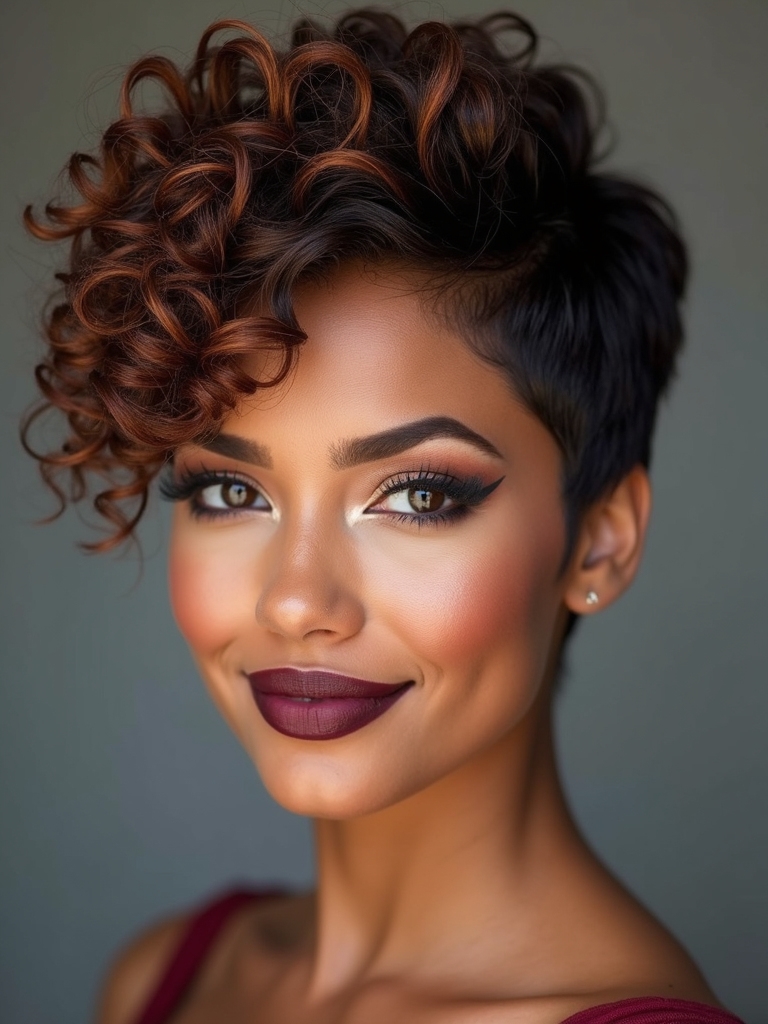
Curls arrive at pixie length already finished. Each one ends in a point and stands away from the head on its own, so the stylist is not building anything, only deciding what to leave. That is a very different job, and plenty of stylists who cut beautiful straight pixies are not the person for it. Our curly pixie guide covers pattern-specific shaping.
- Curl is the one variable you did not choose, so it sets the terms rather than taking instruction, since a curl pattern is not a styling choice
- Ask what the cut looks like at four months, when the curls have loosened downward under weight
- This is the version to test with a wig or a photo app first, because there is no undoing it
The Sleek, Sculpted Pixie
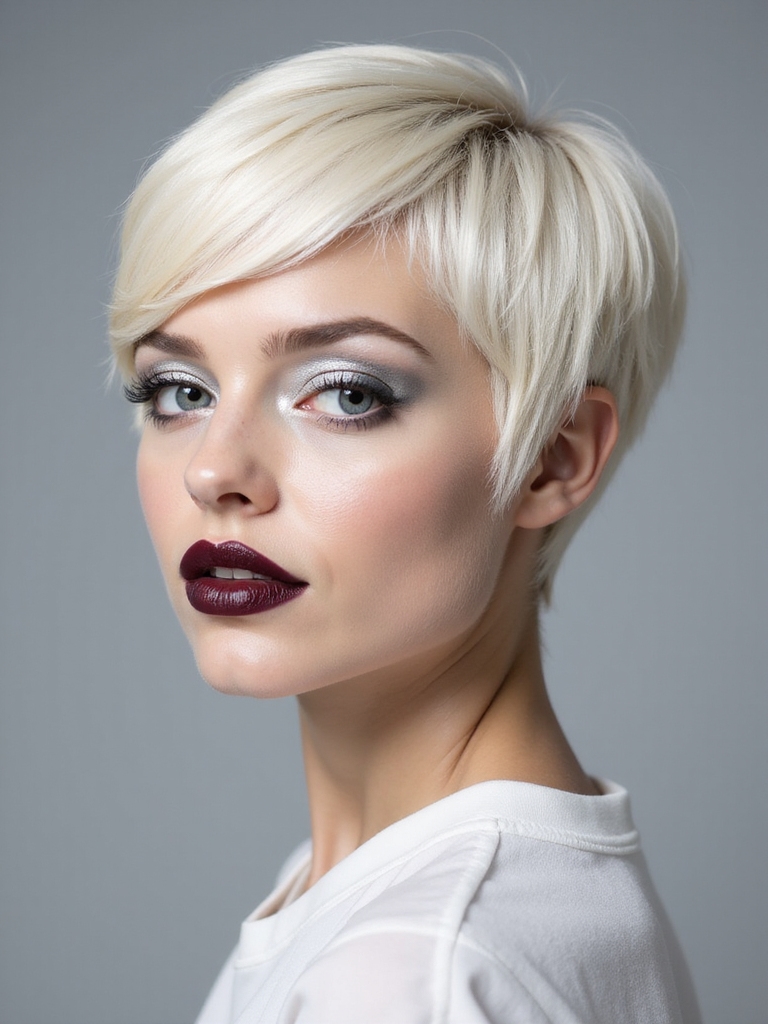
Sleek is where most home attempts fall apart, because there is no weight anywhere to hold hair down. Every strand is short enough to lift, and any product heavy enough to stop that also flattens the shape.
Sleek Comes From the Dryer
The solution lives in the dryer. Hair dried flat against the head with a nozzle and cooled in position stays where it was put, and a shine serum afterward is doing gloss only.
It suits strong bone structure and rewards a precise cut. On a shape with any unevenness, sleek styling exposes exactly where the line wanders.
The Asymmetrical, Sharp-Edged Pixie
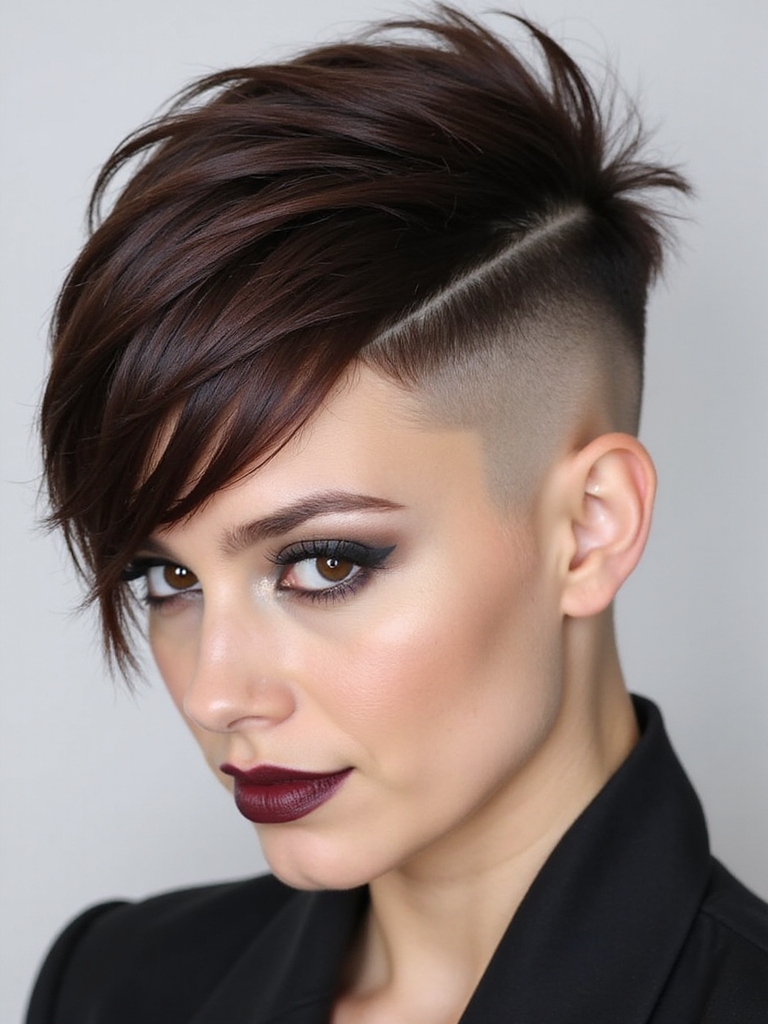
Cutting one side noticeably shorter throws the whole shape off balance on purpose, and the resulting diagonal is what makes a short cut look designed instead of merely short.
It also buys time between appointments. A symmetrical crop looks unkempt the moment it grows unevenly; an asymmetrical one was never symmetrical to begin with. Our asymmetrical pixie guide covers the angles.
- Go further than feels comfortable, because a cautious angle just looks like a wobble
- The longer side should fall toward your dominant part for the sweep to work
- It grows out more gracefully than a symmetrical crop does
Ordering a sleek finish so it survives the walk home
1Dry it flat, with a nozzle
Point the airflow down the way the hair lies, section by section, and keep the dryer moving. Heat sets direction; product cannot fix hair that was dried standing up.
2Cool it before you touch it
Thirty seconds of cool air per section, then hands off. Skipping this step is the single most common reason a morning finish is gone by lunch.
Feathered, Wispy Layers
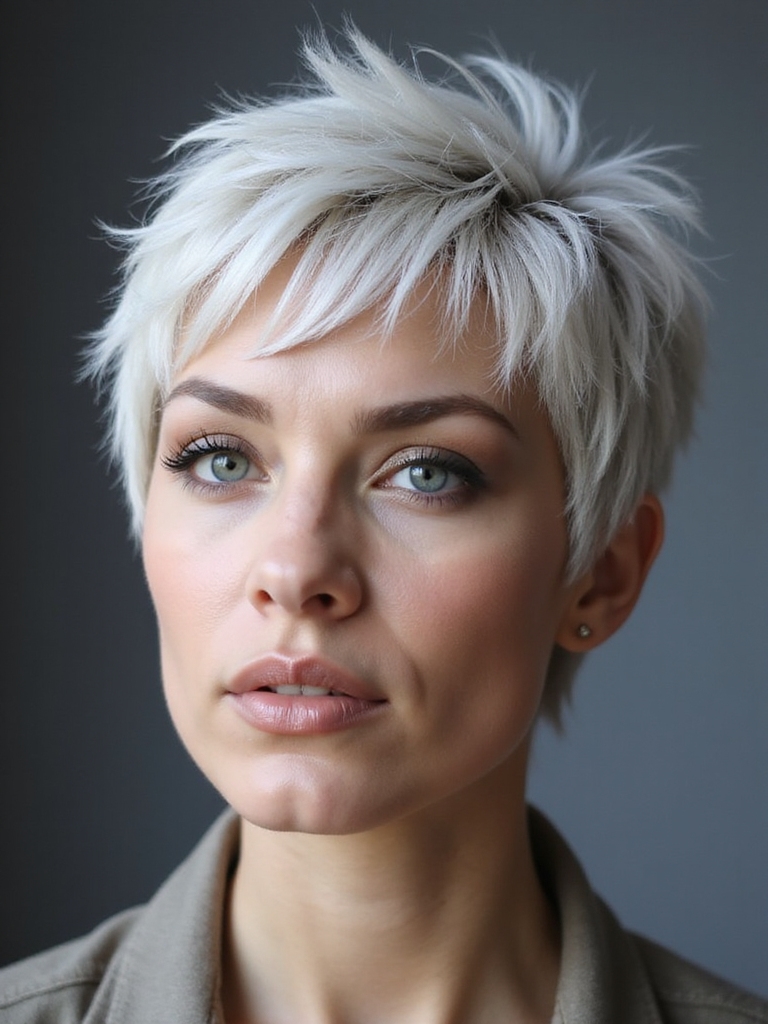
Feathering is a finish laid over a shape, worked into the ends of whatever cut is underneath. Each piece is tapered so it stops at a slightly different point, which turns a hard perimeter into a soft haze.
On medium and coarse hair it is the difference between a crop and a proper pixie. On fine hair it wants restraint, since tapering the last half inch of an already thin strand leaves very little behind.
The Grown-Out Pixie-Bob

Somewhere around month five a pixie stops being a pixie and becomes something with a name of its own. Shaped deliberately at that stage, with weight taken out of the sides and the nape kept close, it is a good haircut in its own right, not a waiting room. Our growing out a pixie guide plans the whole route.
- Book a shaping visit at the point it starts bothering you, not after
- Ask for weight removed from the sides so the shape stays close to the head, never triangular
- Keep the nape short deliberately; letting everything grow at once is what creates the mullet stage
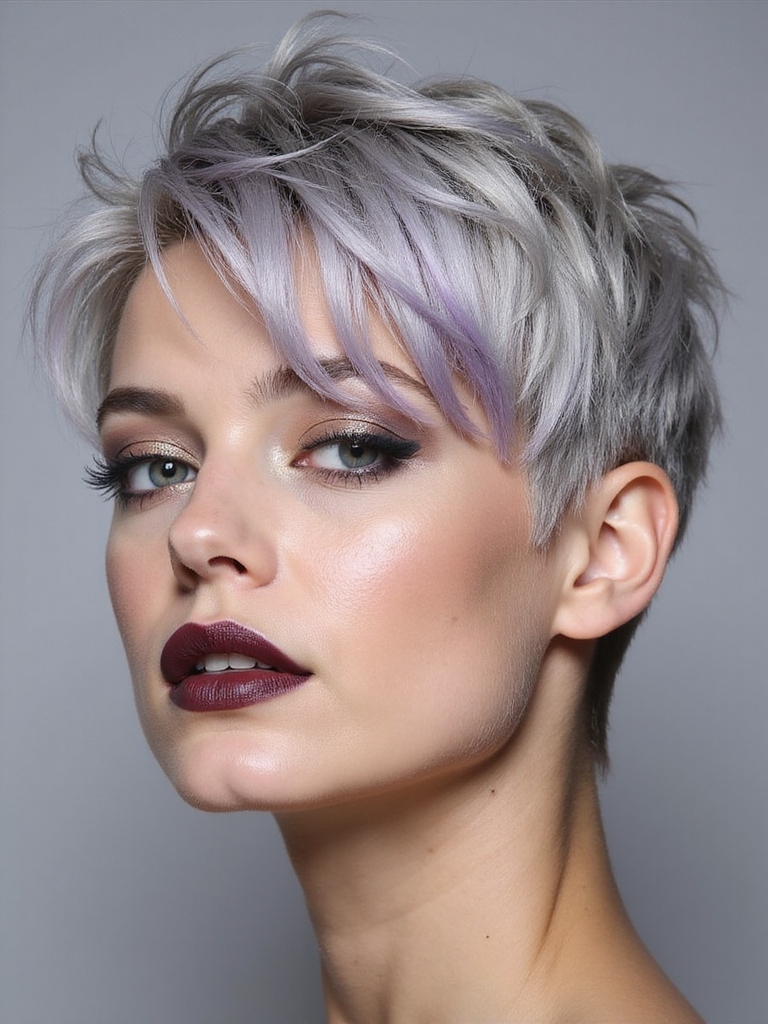
The Icy Platinum Pixie

Near-white hair turns a pixie into a graphic object, because every cut edge catches light and the texture stops being subtle. It is also the least painful route to platinum I know of, since you are paying for and damaging a fraction of the hair a long-haired client is.
- Color reverses more easily than anything else here, since a toner can bring you back down in one visit
- The real commitment is the calendar rather than the color, with roots showing early
- A purple-toned shampoo once a week is enough; more will push the tone lilac
The Shaggy Pixie

A shag pixie moves weight around rather than removing it: crown pieces come up, the nape and the hair over the ears stay longer, and the head stops sitting as one neat cap. This is where I send clients who loved the idea of a pixie and disliked how tidy the result was. Our edgy pixie guide covers the bolder end.
- Ask for crown layers with the nape and sideburn area left slightly longer
- A salt spray on damp hair sets the separation before anything else goes on
- It hides grow-out better than a sculpted shape can
A Gradually Tapered Nape

The nape is where a pixie is judged from behind, and it has three settings: left long enough to touch the collar, tapered gradually, or clipped to the skin.
The gradual taper is the middle setting and the one most people settle on. It softens as it grows and leaves no line behind, which means the difference between week two and week six is a matter of degree rather than a visible problem.
- A taper blurs after about three weeks, which is when the shape starts to soften
- Gradual grading is scissor work, so no clippers come near you
- This is the choice that decides how much a barber has to be involved in your life
Which nape setting fits your life?
🎯Tapered
Softens as it grows, needs no clippers, and looks deliberate from week one through week six. The default for most people, and the easiest to change later.
🎯Clipped to the skin
Sharpest possible finish and the coolest to wear in summer. Needs a barber every two weeks and commits you to several months of blending if you stop.
Bold Contrasting Color Panels
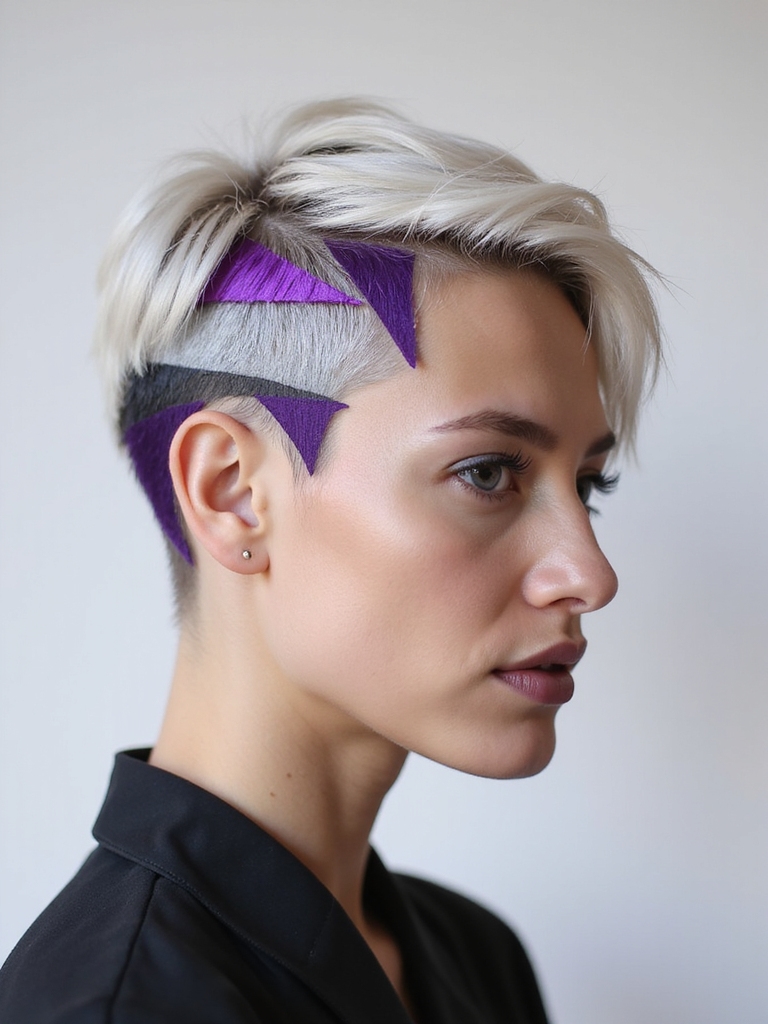
Placing a block of contrasting color in one section, usually the bangs or a panel above the ear, is a short-hair specialty. On long hair a panel disappears into movement; on a pixie it stays exactly where it was put and reads as a design decision.
Placement matters more than the shade. A panel that follows the direction the hair falls stays visible; one placed against that direction disappears the moment the hair is styled.
- Fringe panels show constantly; panels above the ear show only when hair is pushed back
- Semi-permanent color on a small section is the lowest-risk way to try this
- Ask for the panel to be cut into the shape afterward so its edge follows the cut
Styling Tricks for the Grow-Out
There is one predictable failure point in every pixie, and it is width. Somewhere in month two the hair over the ears outgrows the top and starts pushing sideways, and more people abandon the cut at that moment than ever regretted the original chop.
Week Seven Is the Hard Part
The mechanical fix is tucking. Hair pushed behind the ear and secured with two small pins removes the width that makes the stage look awkward, and the shape looks deliberate again.
The other fix costs about $30 and twenty minutes: have the sides taken down and nothing else touched. Your length keeps coming while the silhouette goes back to where you liked it.
🅰️Ask for a photo of their own work
Portfolio images on hair your texture and length tell you more than any consultation will. A stylist who cuts short hair often will have plenty.
🅱️Ask what they would change about your photo
The answer separates someone adapting the cut to your head from someone copying an image. Both are common; only one of them ends well.
Texture, Shine, Lift, and Hold

Short hair needs four things from products and rarely more: texture to separate, lift at the root, hold to keep it there, and shine because matte short hair can look dusty in flat light.
One product almost never delivers two of those. A volumizing powder at the roots handles lift, a clay or paste handles texture and hold together, and a drop of serum on the fingertips handles shine at the very end. Building that order is worth more than any single upgrade.
How to Get the Look
Bring photographs of the back and the sides, not the front. The front view of a pixie tells a stylist about your bangs and almost nothing about the nape, the taper, or how much weight was taken from above the ears, which is where the actual cut lives. Two or three images from behind change the conversation completely.
Then name the four dials out loud: bangs length, nape setting, how much texture you want in the ends, and whether color is part of this appointment or a later one. Saying you want a pixie leaves every one of those to be guessed. Naming them takes thirty seconds and is the difference between the cut in the photograph and the cut your stylist does most often. A shape-up every four to five weeks keeps all four holding their position.
Short Pixie Questions
?How long does a pixie actually take to grow out?
About eighteen months to shoulder length at average growth, and roughly five months to reach a wearable pixie-bob. The second number is the useful one, because most people who regret the cut regret it in weeks two through eight and are fine by month five, especially if they book a shaping visit rather than letting everything grow at once.
?Does a pixie suit round faces?
It does, with height. Volume at the crown and close sides lengthens the face, which is the same principle behind any flattering short shape. What works less well on a round face is an even, all-over crop with equal volume at the ears, since that widens exactly where width already sits.
?Is a pixie cheaper to maintain than long hair?
Cheaper in product and considerably more expensive in appointments. Product lasts months at this length, and color costs a fraction of what it does on long hair. But a pixie needs a shape-up roughly every month, where long hair can go a season, and over a year that reverses the arithmetic entirely.
?Can fine hair carry a pixie?
Fine hair is one of the best candidates, which surprises people. Short hair does not have to fight its own weight, so fine strands stand up at this length in a way they never manage long. Keep the layering interior and light, skip the razor, and let a volumizing powder at the roots do the rest.
?What should I do if I hate it after the first week?
Wait until after the second wash before deciding anything. A salon blow-dry sets a pixie in a shape you cannot reproduce, and the cut you actually own is the one you see once you have styled it yourself twice. If it is still wrong at that point, a stylist can usually adjust the bangs or the sides in a short appointment without waiting for growth.
Four Decisions, Sixteen Outcomes
Looking back across these, the versions that land as dramatic transformations are usually one setting turned hard while the other three stayed put. Platinum on a soft tousled crop. Micro bangs on an otherwise ordinary long pixie. An undercut under a shape that would have been unremarkable without it.
Which means the useful question is not how short to go. It is which single dial you want turned, and whether you are prepared for how long that particular one takes to turn back. Start with the bangs if you are unsure, since it is the only one that resets itself.
More to Explore