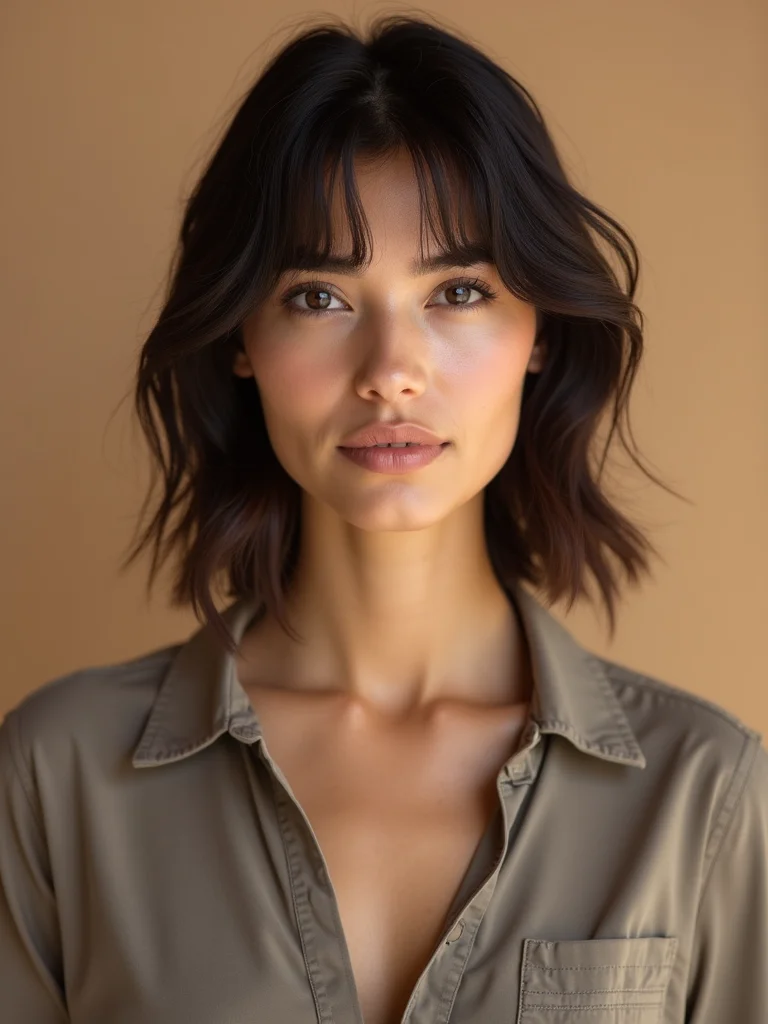
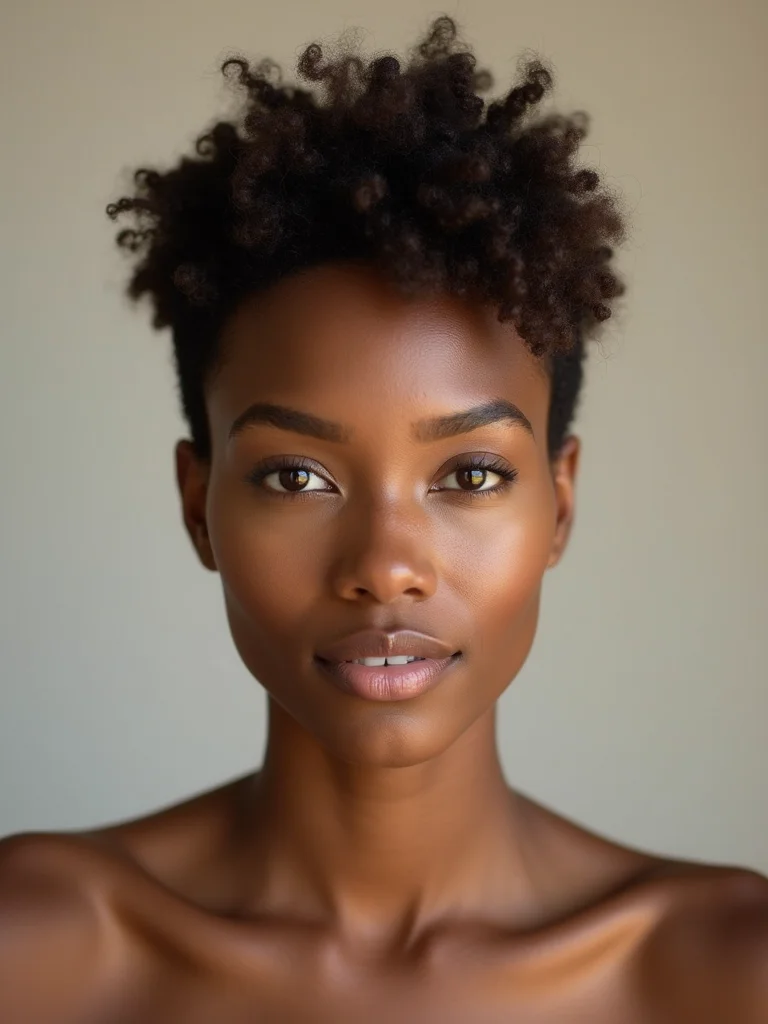
A curly pixie holds its shape differently than a straight one. Most pros point to the same reason: the curl pattern does the volume work that styling products handle on straight hair, so the cut can sit closer to the head without ever looking flat.
Fifteen curly pixie hairstyles follow, sorted by curl pattern, styling commitment, and finish, from a soft wash-and-go shape to a sculpted, glossy crop built for a stylist’s hand.
What Decides a Curly Pixie’s Shape
Curl pattern decides more about a pixie’s final shape than the haircut itself does; a tight 3C curl needs a different length-to-shrinkage ratio than a loose 3A wave.
A diffuser on low heat, not a blow-dryer on high, is what keeps a curly pixie’s shape intact through the drying process.
On tighter curl patterns, detangling gently from the ends up rather than pulling a comb from the root protects the hairline from unnecessary tension over time.
Soft Coil Pixie With Feathered Layers

Feathering removes bulk from the ends of a curly pixie, letting individual coils stay visible and break up what would otherwise blend into one rounded mass. Experts map this cut to looser curl patterns, roughly 2C to 3A, where the natural coil is defined enough to hold the feathered shape without extra styling.
- Keeps individual coils distinct across the whole shape
- Best suited to looser 2C-3A curl patterns
- A soft, low-effort shape for wash-and-go days
Tapered Pixie for Defined Ringlets

Tapering shortens the hair gradually at the nape and sides while leaving more length and curl at the crown, so the ringlets at the very top stay long enough to coil fully.
The shorter sides also mean less curl to manage day to day, which is a common reason this shape gets recommended to anyone new to wearing a pixie with natural texture.
- Length concentrated at the crown for full ringlet formation
- Shorter sides mean less curl to manage daily
- A common first pixie cut for natural texture
Curly Pixie With a Side-Swept Fringe

A side-swept fringe on curly hair behaves differently than on straight hair; the curl pulls the fringe toward one side naturally instead of needing to be trained there with product.
That natural pull means less daily styling than a straight side-swept fringe requires, though the fringe still needs regular trims to keep it from growing past the eyebrow and losing its shape.
- Curl pulls the fringe to one side without extra styling
- Lower daily upkeep than a straight side fringe
- Regular trims keep the fringe from overgrowing the shape
A few curl-pattern terms worth knowing before booking a curly pixie:
📖Shrinkage
How much shorter curls appear once dry compared to their stretched length; tighter curl patterns shrink more.
📖Diffusing
Drying curls with a diffuser attachment on low heat, which scatters airflow to preserve curl shape without blowing it straight.
Tousled Crop With Shattered Ends

Shattered ends are cut at irregular angles, breaking up what a single even line would create, and keeping the silhouette of a curly pixie from reading too rounded or helmet-like. A razor adds most of that irregular texture along the ends, more than shears alone would.
The irregular cutting works with curl texture, since curls already fall unevenly on their own; a blunt cut on the same curl pattern would fight that natural irregularity. Tousled styling only needs a small amount of curl cream scrunched through damp hair.
Undercut Pixie to Showcase Volume

An undercut shaves the hair close beneath a longer top section, creating a sharp contrast that makes the curled volume above look even fuller by comparison.
The shaved sides need upkeep of their own, typically a shape-up every three weeks or so to keep the line crisp as the shaved hair grows back in and starts to soften the contrast.
- Shaved sides create contrast that exaggerates top volume
- The shaved line needs its own separate upkeep
- Works well on thicker curl patterns with real volume to show off
Asymmetrical Pixie for Curl Balance

An asymmetrical cut leaves one side noticeably longer than the other, a useful trick on curl patterns that naturally sit denser on one side of the head than the other. It also reads more editorial than a symmetrical pixie, a look often requested specifically for photo shoots and formal events.
The asymmetry uses that natural imbalance as the design itself, and the asymmetrical pixie guide covers styling options for straighter textures too.
Micro Bangs on a Curly Crop

Micro bangs sit high on the forehead, well above the brow, and on curly hair they shrink up shorter than they appear when freshly cut wet.
Most pros size micro bangs generously on a curl pattern for exactly that reason, cutting them longer than the target length to account for the shrinkage once they dry and coil.
- Cut well above the brow, higher than standard bangs
- Sized longer than the target length to account for shrinkage
- The shortest, boldest bang option on a curly crop
Textured Pixie With Crown Lift

Crown lift refers to how much volume the cut builds at the very top of the head, and on curly hair, the curl pattern itself provides most of that lift without backcombing or heavy product.
Where the Lift Actually Comes From
Texturizing shears remove weight unevenly through the crown section, which lets the curls there stand up rather than lying flat under their own weight.
The result reads fuller at the top than a uniformly cut pixie of the same length, a useful trick on finer curl patterns that don’t hold volume as easily on their own.
“Micro bangs on curl are one of the few cuts where sizing them wet and dry both matters; skip the dry check and the bangs land shorter than planned nearly every time.”
Wash-and-Go Curly Pixie

A wash-and-go pixie is cut specifically to need nothing beyond a curl cream and air-drying or a low diffuser pass, no additional shaping or product layering required. It’s the lowest-maintenance version on this list, built around curl patterns healthy and defined enough to hold their own shape without help.
- Needs only curl cream and air-drying or a low diffuser pass
- The lowest-maintenance cut on this list
- Best suited to well-defined, healthy curl patterns
Pixie-Bob Hybrid for Loose Curls

A pixie-bob hybrid sits longer than a standard pixie but shorter than a full bob, a length that suits looser curl patterns needing a bit more length to show a defined coil.
Cutting Long, Wearing Short
Tighter curl patterns tend to shrink this length up shorter than intended, so the cutting length usually runs longer than the target finished look to compensate.
It’s a flexible in-between length in practice, one that reads as a pixie from some angles and a full bob from others depending on how the curls happen to fall that day.
Tight Curl Pixie With a Temple Fade

A temple fade tapers the hair at the temples down to skin, a sharp finishing detail that pairs well with tightly coiled curl patterns where the contrast between shaved skin and dense curl reads clearly. A fresh fade appointment, plan on around $30, keeps the line sharp roughly every three weeks.
- Tapers to skin specifically at the temples
- The sharpest contrast on the tightest curl patterns
- A fresh fade roughly every three weeks keeps the line from blurring
| Curl Pattern | Typical Shrinkage | Cutting Adjustment |
|---|---|---|
| 2A-2C (loose wave/curl) | Minimal | Cut close to the target length |
| 3A-3C (springy curl) | Moderate to high | Cut noticeably longer than the target |
| 4A-4C (coily) | Highest | Cut with the most extra length built in |
Curly Pixie With a Deep Side Part

A deep side part sends most of the top section to one side, a styling choice that reads more dramatic on curly hair than on straight hair, since the curl adds visible volume to whichever side ends up carrying more length.
Setting the Part Before the Curl Sets
The part itself needs re-establishing after every single washing, since curls don’t hold a part line the way straight hair does once fully dry.
A wide-tooth comb run through damp hair, right after applying product, sets the part before the curls dry into their final shape.
Sculpted Pixie for 3A to 3C Curls

A sculpted pixie relies on a curl cream and gel combination applied to soaking-wet hair, then diffused or air-dried into a defined, glossy shape. Experts map this technique specifically to the 3A-3C range, where the curl pattern is springy enough to hold definition but not so tight that it resists the styling product entirely.
- Applied to soaking-wet hair for maximum definition
- Mapped specifically to the 3A-3C curl range
- The most polished, styled finish on this list
Airy Layered Pixie for Fine Curls

Fine curly hair carries less natural volume per strand than thicker curl patterns, so heavy layering can leave a pixie looking sparse.
Light, airy layering removes just enough weight to let the curls move without thinning the overall density, a narrower margin than most curl patterns require.
A lightweight mousse keeps fine curls from weighing down under product they don’t actually need, more effectively than a heavier curl cream would.
A sculpted, defined pixie lives and dies on wet application; product added after the curl has already dried mostly just sits on the surface without ever shaping the coil underneath.
Low-Maintenance Pixie With Hydrated Definition

Hydration matters more to a curly pixie’s shape than most other styling factors combined; dry curls frizz and lose definition regardless of how well the cut itself is shaped.
Hydration First, Styling Second
A leave-in conditioner applied to soaking-wet hair, sealed afterward with a lightweight oil, keeps the curl pattern hydrated through the day without any extra restyling step.
Plan on a trim around ten weeks apart to keep the shape from growing out unevenly across the different curl densities found on one head.
Curly Pixie Questions, Answered
?Why does my curly pixie look shorter than what I asked for?
Shrinkage. Curly hair coils up shorter once it dries than its stretched length, sometimes by half or more on tighter patterns, so a cut sized for the wet length often finishes noticeably shorter once fully dry.
?Can a curly pixie work on very fine hair?
Yes, with lighter layering than a thicker curl pattern needs. Heavy layering removes too much of the limited volume fine curls already have, so a lighter touch keeps the shape from reading sparse.
?How often does a curly pixie need a trim to hold its shape?
Most curl patterns hold a defined pixie shape for roughly ten to twelve weeks before the growth starts to blur the line, though tighter patterns with faster-growing roots may need it sooner.
?Do I need a diffuser to style a curly pixie, or will air-drying work?
Air-drying works fine on healthy, well-defined curl patterns, though it takes longer and can look slightly less lifted at the crown than a diffuser pass on low heat would give the same hair.
Curl Pattern First, Cut Second
Every shape on this list works because it starts from the curl pattern already growing on the head, not a straight-hair silhouette forced onto natural texture.
Bring reference photos of the curl pattern itself, not just the finished shape, to a consultation, so a stylist can size the cut correctly for how much that particular texture actually shrinks.
Worth a Look