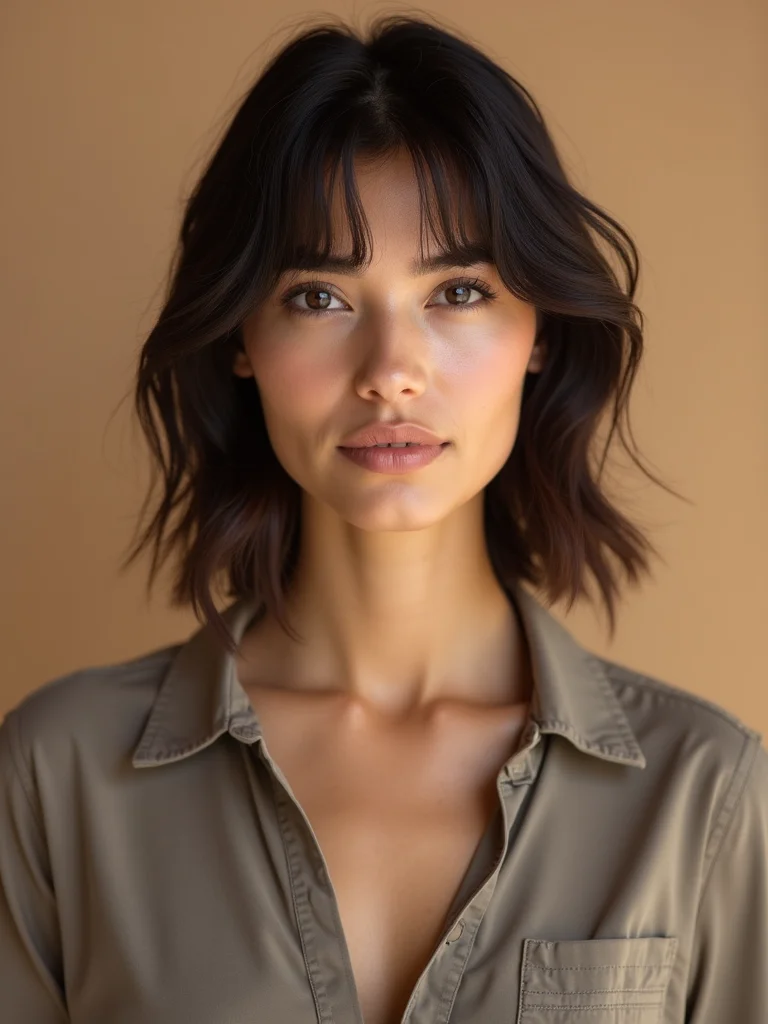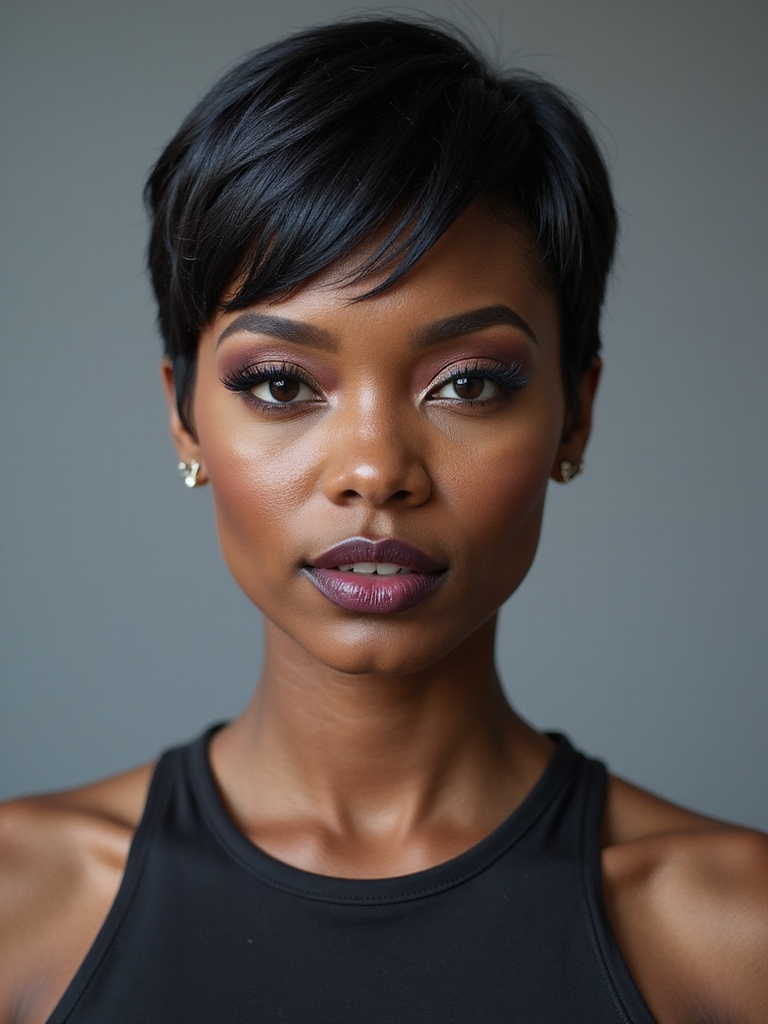
A pixie on Black hair is not the delicate, wispy crop the word usually calls to mind. It’s a whole different tradition, one built on sculpted tapers, defined coils, finger waves, and barber-sharp edges, where the shape can be as soft or as architectural as you want.
That range is the reason the Black pixie keeps its place as a bold, endlessly versatile short cut. From a freshly big-chopped TWA to a glossy wet-look to a crown of defined curls, the same short length carries a dozen different moods. Here are the styles worth knowing, each paired with what to request at the chair and how to keep it fresh, so the right match for your texture and your energy is easy to spot.
Black Pixie, Quick Answers
Does a pixie work on natural coils? Beautifully. From a rounded TWA to defined finger coils, the pixie celebrates natural texture, no heat or straightening required.
How sharp can it get? As sharp as you want. Tapered fades, shaved parts, and crisp edges make the Black pixie about as architectural as short hair gets.
How much upkeep? A shape-up every two to three weeks keeps a tapered or faded pixie crisp; a softer natural crop stretches longer.
The Sculpted Pixie With Sharp Edges
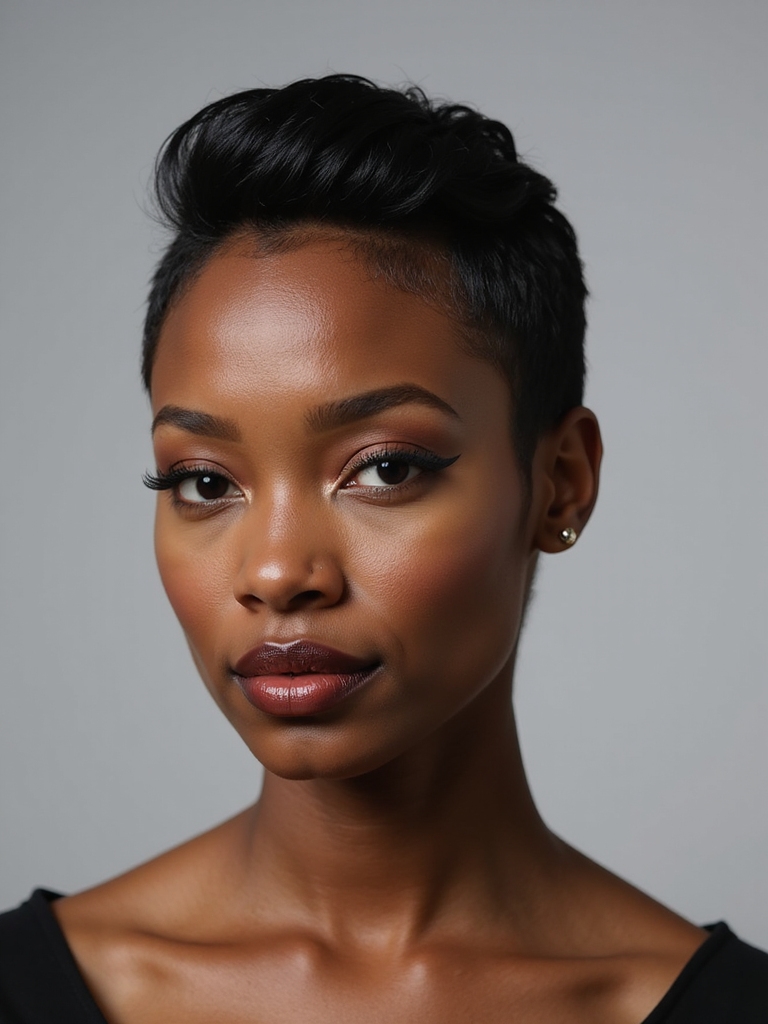
The sculpted pixie is all about precision, a smooth, close shape finished with the crisp, laid edges that a good barber or stylist lines in by hand. It’s the most polished version here. The edge work is what makes it. Everything reads intentional and sharp. How to keep it clean:
- Ask for lined, laid edges and a smooth, sculpted top for that polished finish.
- Keep it sharp with a shape-up every couple of weeks, since edges soften fast.
- Smooth the perimeter each morning with a dab of edge control and a soft-bristle brush.
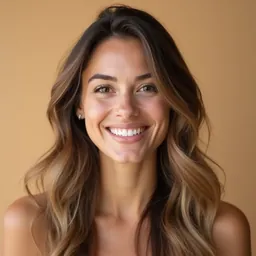
The Tousled, Textured Crop

For a softer, less structured take, the tousled crop leans into piecey texture and a worn-in ease rather than exact precision. Worn on looser curls or a light silk press, the pieces separate and fall a little undone, which reads relaxed and cool.
It’s the lowest-effort pixie here, since a bit of paste worked through with your fingers is the whole routine. Casual and worn-in beats barber-sharp with this one, and it forgives a grow-out with real grace.
| If you want | Try | Upkeep |
|---|---|---|
| Sharp and architectural | Tapered fade, sculpted edges, shaved designs | High: shape-up every 2-3 weeks |
| Soft and natural | TWA, defined coils, tousled crop | Low: shape-up every few weeks |
| Glam for an occasion | Finger waves, pin curls, wet-look | Per style; wrap at night |
The Curly Pixie With Defined Coils

This is the pixie that celebrates your natural pattern in full, cropped close and worn with the coils popping in every direction. It’s low-manipulation, wash-and-go friendly, and few short styles feel this free for curly hair. How to keep the coils happy:
- Have it shaped by a stylist who works with coily hair every day, on dry hair.
- Scrunch in a curl cream followed by a light gel to pop each coil.
- Moisturize daily and keep any tapering low-tension to protect your hairline.
The Tapered Pixie With a Soft Fade
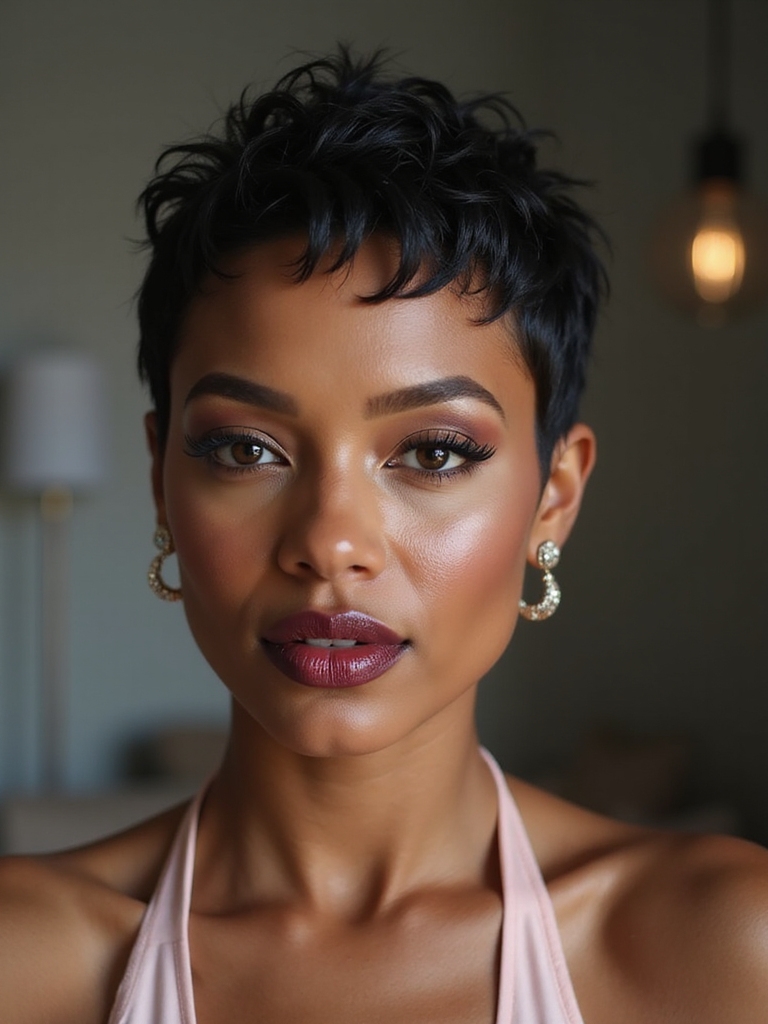
The tapered pixie brings barbering into the mix, with the sides and nape graduated down into a soft fade while the top keeps its length and texture. It’s the version that reads modern and a little androgynous, and the taper is what gives it that clean, sculpted line.
The fade can be soft and subtle or dropped low and sharp, depending on how bold you want it. Paired with defined curls or a smooth top, it’s a look that works everywhere from the office to a night out.
The trade-off is upkeep, since a fade grows fuzzy fast. Plan a shape-up every two to three weeks, usually $25 to $45 at a barber, to keep that graduated line crisp.
The Polished Pixie With Side-Swept Bangs
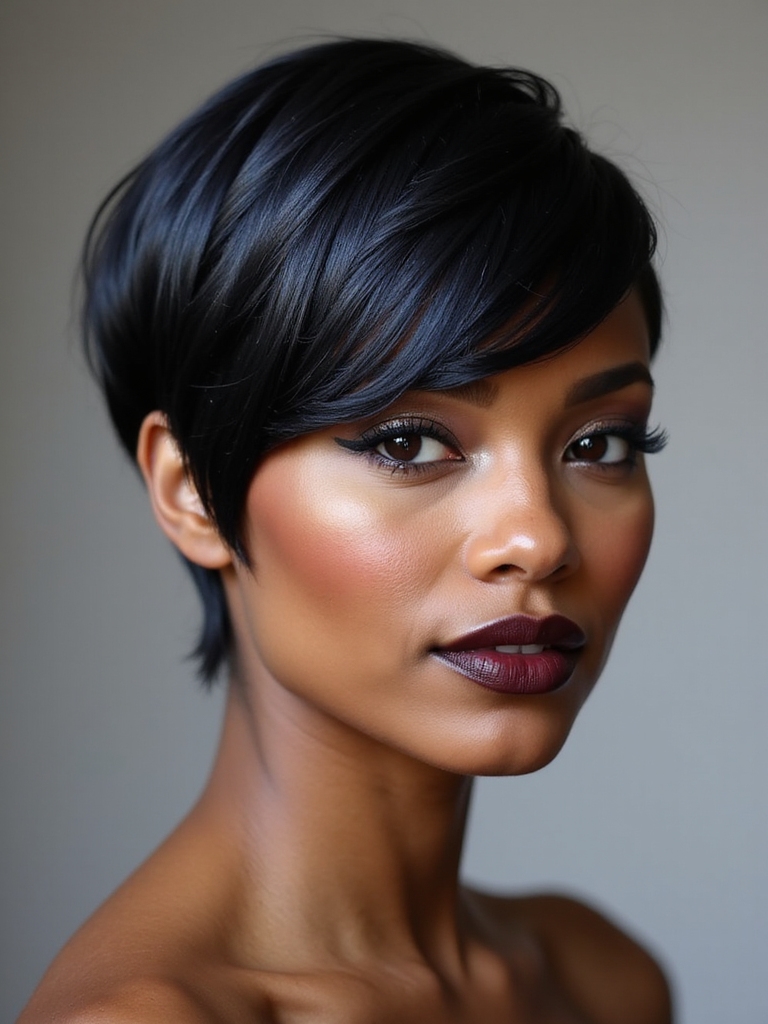
Adding a side-swept fringe softens the whole crop and draws a flattering diagonal across the face. On a smoothed or lightly pressed pixie, it reads elegant and grown-up, the version for a wedding or a work event. Why it flatters:
- The swept fringe frames the face and softens strong features.
- It suits a smooth silk press or a sleek, low-manipulation style.
- Sweep it with a little serum and a soft brush for a polished finish.
ℹ️One Cut, Many Moods
The Black pixie’s superpower is range. The very same short length can read barber-sharp with a fade and shaved part, soft and free as a defined TWA, vintage-glam in finger waves, or high-fashion in a wet-look. That’s why it never gets boring: you can restyle the mood week to week without ever changing the cut, which makes it about as versatile as short hair comes.
The Finger-Wave Pixie

Finger waves turn a Black pixie into a work of art, with the hair molded into those glossy S-shaped ridges that carry decades of style history. It’s a heritage look that keeps coming back, and on a short crop it’s pure glamour.
A Heritage Statement
The waves are set with a strong gel and a fine comb, pressed and pinned into shape while the hair is wet, then left to dry to a high shine. It takes practice and patience, but the payoff is a showstopping, vintage-glam finish.
It’s the pixie for an occasion, the one that turns heads at an event. Wrap it at night to keep the ridges crisp, and a touch of oil brings the shine back the next day.
The Asymmetrical Pixie With a Bold Part
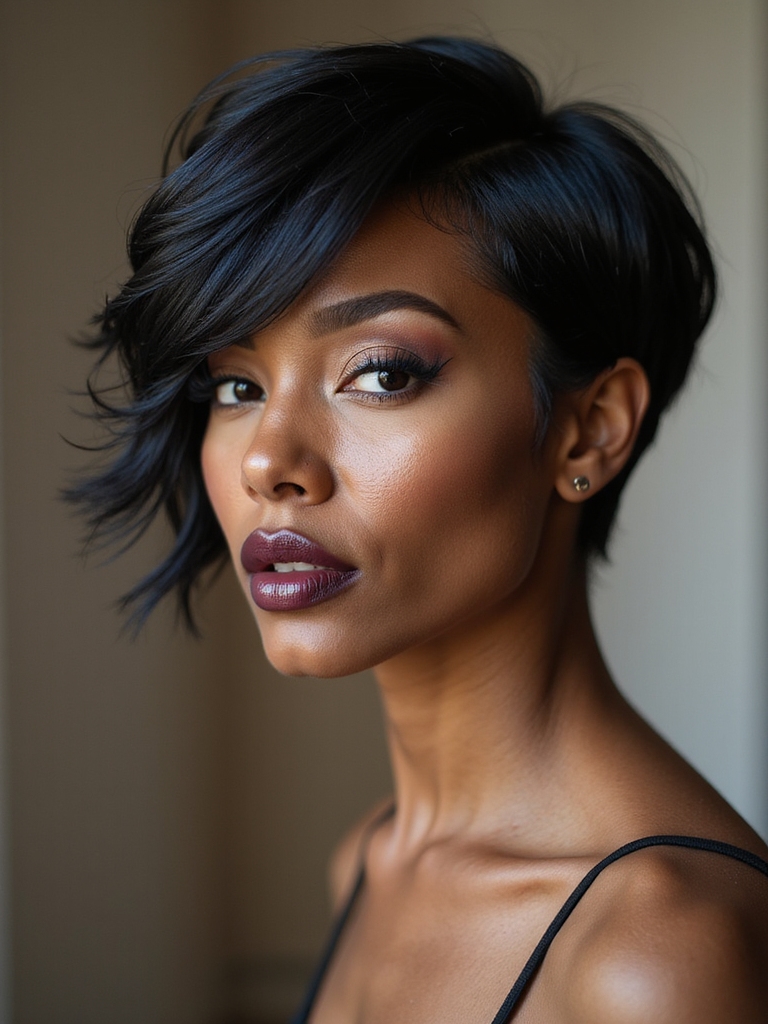
Cut one side longer and add a deep, dramatic part, and the pixie turns edgy and modern. The lopsided shape pulls focus and hands a plain crop real swagger, especially with a razor line carved into the part.
It’s a bold, art-directed shape for anyone who finds a symmetrical crop too tidy. A few notes:
- The deep part and uneven length are what make it feel intentional.
- A razor-lined part adds a graphic, defined edge if you want more drama.
- See the wider pixie roundup for more asymmetric shapes.
The Voluminous Crown With Snatched Sides

This high-drama shape keeps big volume up top while the sides stay close and snatched, for a bold silhouette with real height. The contrast between the full crown and the tight sides is the whole statement, built for hair that wants to own the room. How to build it:
- Ask for length and volume on top with close-tapered or snatched sides.
- Stretch and pick out the crown for maximum height and roundness.
- Keep the sides sharp with regular shape-ups to hold the contrast.
A few terms to bring to your stylist or barber:
📖TWA
Teeny-weeny afro; the shortest natural style, often the first stage after a big chop.
📖Taper / fade
Graduating the sides and nape shorter, from a soft taper to a sharp, dropped fade.
📖Snatched sides
Sides cut very close and tight against a fuller, higher crown for contrast.
The Micro Pixie With an Ultra-Short Fringe

The micro pixie takes it as short as it goes, cropped close all over with a tiny, blunt fringe up front for a bold, fashion-district statement. It’s the most daring length here, and it puts every bit of focus on your features and bone structure. What to know:
- The ultra-short crop flatters strong cheekbones and a graceful neck.
- The tiny fringe is a commitment, needing frequent trims to stay blunt.
- It’s freeing and light, about as wash-and-go as short hair gets.
The Pixie With Shaved Designs
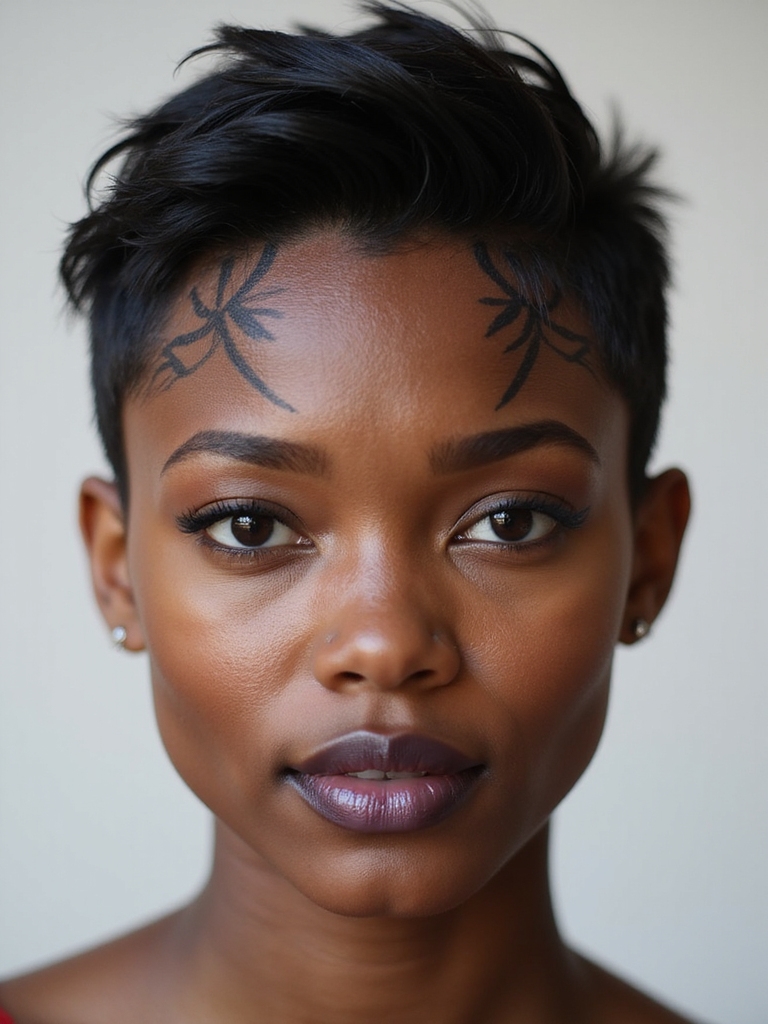
For the boldest personal statement, shaved designs turn the tapered sides of a pixie into a canvas, with lines, geometric patterns, or art shaved in by a skilled barber. It’s a tradition rooted in Black barbering culture, and it makes the cut unmistakably your own. How to wear it:
- Bring a clear reference so your barber can map the design to your head.
- Keep it crisp with touch-ups every couple of weeks as it grows in.
- Pair simple lines with a bold top, or go intricate for a full statement.
The Retro-Glam Pin-Curl Pixie
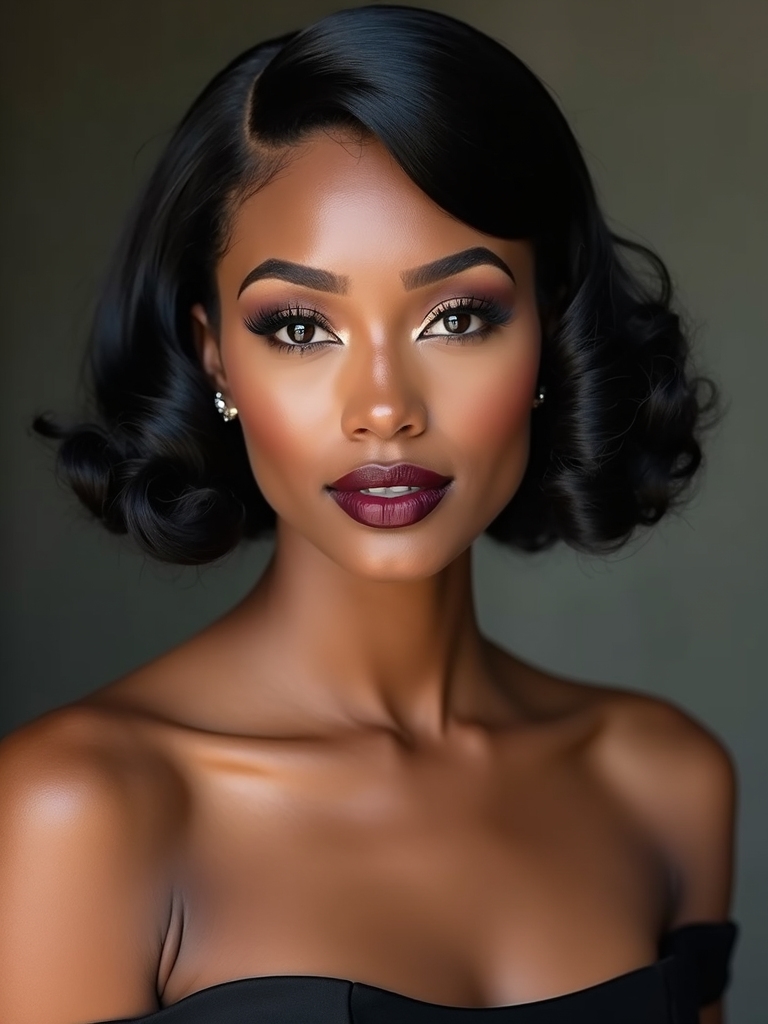
For old-Hollywood drama on a short cut, pin-curl accents bring vintage glamour, with sculpted, glossy curls set at the front or side for a retro finish. It nods to the same heritage glamour as finger waves, dressed up for a modern face. How to get it:
- Set pin curls at the front with gel while damp, and let them dry to a shine.
- Finish with oil sheen for that glossy, vintage-glam surface.
- It’s an occasion look, perfect with a bold lip and a statement earring.
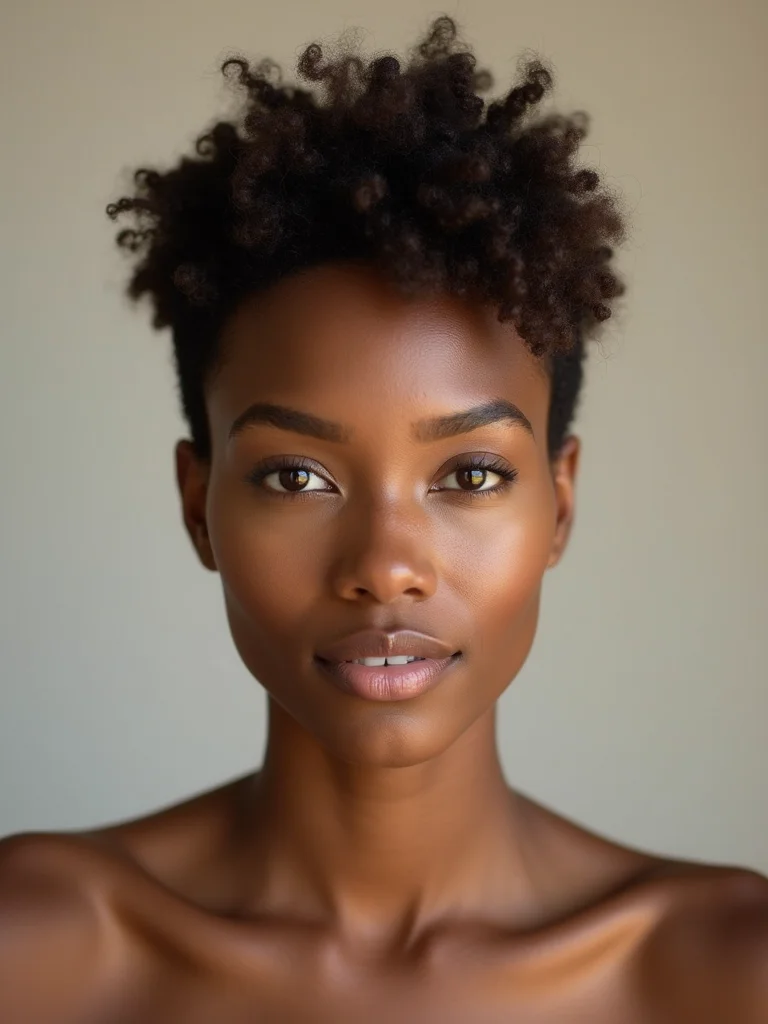
The Natural TWA With Shape and Shine

The TWA, or teeny-weeny afro, is the shortest natural pixie there is, the shape so many people wear proudly after a big chop. A TWA is no fallback. A well-shaped one is among the boldest, most freeing looks in the room, all bone structure and confidence.
The Big-Chop Classic
The key is a stylist who shapes it to your head and pattern, keeping it rounded and even, then a moisture routine that keeps the coils soft and shining. A little curl cream and a light oil bring out definition and gleam.
It celebrates your texture with zero fuss and near-zero styling time. Keep it hydrated and shaped up every few weeks, and see more short natural cuts for where the TWA can grow next.
👍A TWA works if
- +You want to celebrate your natural texture with zero fuss.
- +You just big-chopped and want to rock the growth proudly.
- +You love near-zero styling time and maximum freedom.
👎Look elsewhere if
- –You want length to style or hide behind.
- –You’re not ready for such a bold, face-forward look.
- –You prefer a sharp barbered line over soft natural texture.
The Long-Top Pixie With an Undercut

The long-top pixie keeps real length and texture on top over a closely undercut or tapered underneath, giving you a versatile crop you can slick, pick out, twist, or sweep. Styling options are exactly the point of keeping this much on top.
The Versatile One
That tucked-away undercut also thins out weight, a genuine help for thick, dense hair, so the top sits lighter and moves more freely. You can show off the undercut or keep it tucked under the length.
It’s the most flexible pixie here, since the long top restyles a dozen ways from one cut. Keep the undercut sharp with regular touch-ups, and the top hydrated and defined.
The Wet-Look Pixie

The wet-look pixie is pure sleek, high-fashion confidence, with the hair slicked into a smooth, glossy, just-out-of-the-shower finish. It’s bold and editorial. Think night out, think photo shoot. It shows off the shape of the cut completely.
Work a strong gel or a wet-look pomade through and comb it into place, then let it set to a high shine. It lasts all night without moving, and it pairs with a strong brow and a bold lip for maximum drama.
The Color-Popped Pixie

Adding color takes a Black pixie somewhere bold, with face-framing highlights, a copper melt, or a pop of vivid tone that plays off the crop’s sharp shape. On short hair the color is low-commitment and high-impact, since there’s less to lift and less to maintain. How to do it right:
- Face-framing pieces or a colored fringe pop hardest on a short crop.
- See a colorist who knows textured hair, and keep the lifted pieces moisturized.
- For a subtler route, lowlights add depth; see black hair with lowlights.
Who a Black Pixie Suits Best
What sets the Black pixie apart from any other crop is how many traditions it draws on at once. It’s a barbering canvas, where tapers, fades, shaved parts, and hand-lined edges turn a short cut into precision work.
It’s a texture celebration, where a defined TWA or a crown of coils says everything without a drop of heat. And it’s a heritage glamour, in the S-ridges of a finger wave or the gloss of a pin curl. Few short cuts hold that much history and range packed into one shape.
The honest part is the chair time. The sharper and more barbered your version, the more often you’ll be back for a shape-up, so a lined fade wants attention every two to three weeks while a soft TWA or tousled crop can be left alone for a month.
Two habits keep any version healthy: lay your edges gently and keep any taper low-tension so your hairline stays strong, and moisturize your texture faithfully so the coils stay soft and shining. Get those right, and the payoff is short hair that is bold, free, and unmistakably yours.
Black Pixie Questions
?Does a pixie work on natural 4C hair?
Yes, and few cuts feel as freeing for tight coils. A well-shaped TWA or defined crop celebrates 4C texture in full, with no heat or straightening needed. The key is a stylist who shapes coily hair regularly and cuts it to your head and pattern. Keep it moisturized daily and shaped up every few weeks, and a curly pixie is low-effort, bold, and beautiful on its own terms.
?How often does a tapered Black pixie need a shape-up?
Every two to three weeks for a crisp taper or fade, since the graduated line grows fuzzy fast and loses its sharpness. Expect to pay around $25 to $45 at a barber for a shape-up. A soft natural crop or TWA is far more forgiving and can stretch several weeks, so if frequent chair time isn’t for you, lean toward the softer, less barbered versions.
?How do I protect my edges with a Black pixie?
Keep any tapering or styling low-tension at the hairline, since tight, repeated tension is what thins edges over time. Lay your edges gently with a soft brush and a light edge control rather than heavy daily slicking, and give the hairline rest days. A good stylist will shape the taper without over-stressing the edges, so the cut stays sharp while your hairline stays healthy.
Short, Bold, and Yours
If a Black pixie proves anything, it’s that going short opens doors instead of closing them: sculpted fades and shaved art for the barber-sharp, defined coils and a proud TWA for the natural, finger waves and pin curls for the glamorous. One short length, and a dozen ways to be bold. Which version is yours depends on three things: your texture, your features, and the chair time you’re willing to give.
So pick the version that matches your energy, bring a clear photo to a stylist or barber who knows textured hair, and protect your edges and moisture along the way. Whether you’re rocking a fresh big chop or a razor-lined fade, wear it with confidence, because that’s the one thing every great pixie has in common.
Don’t Miss These