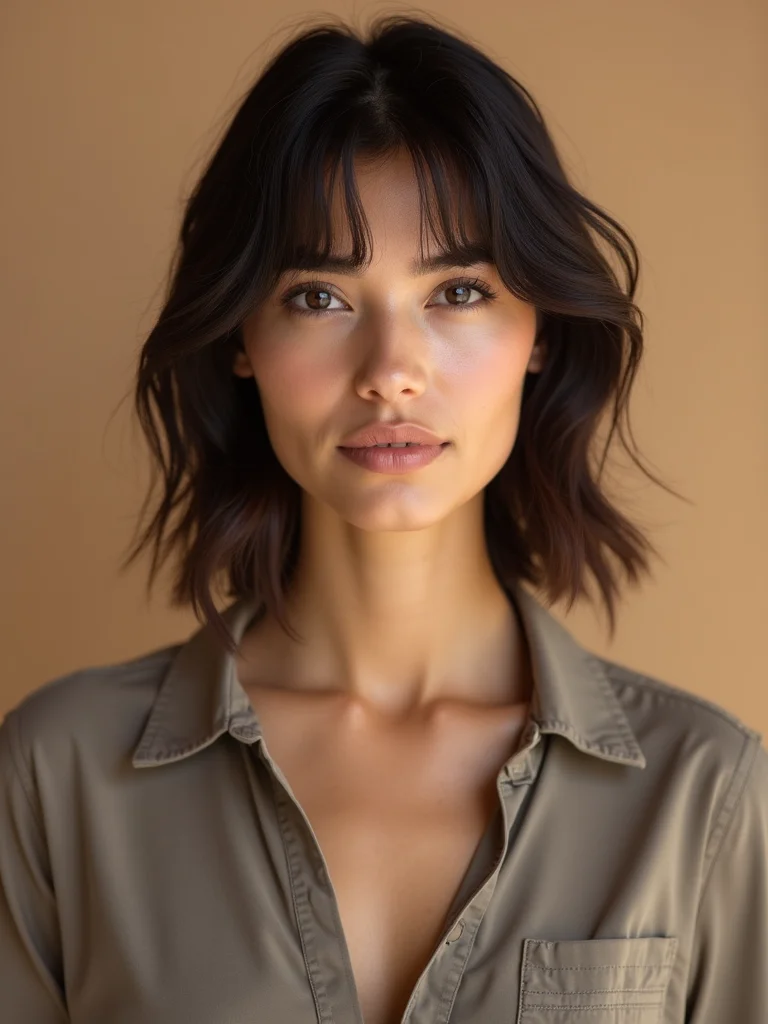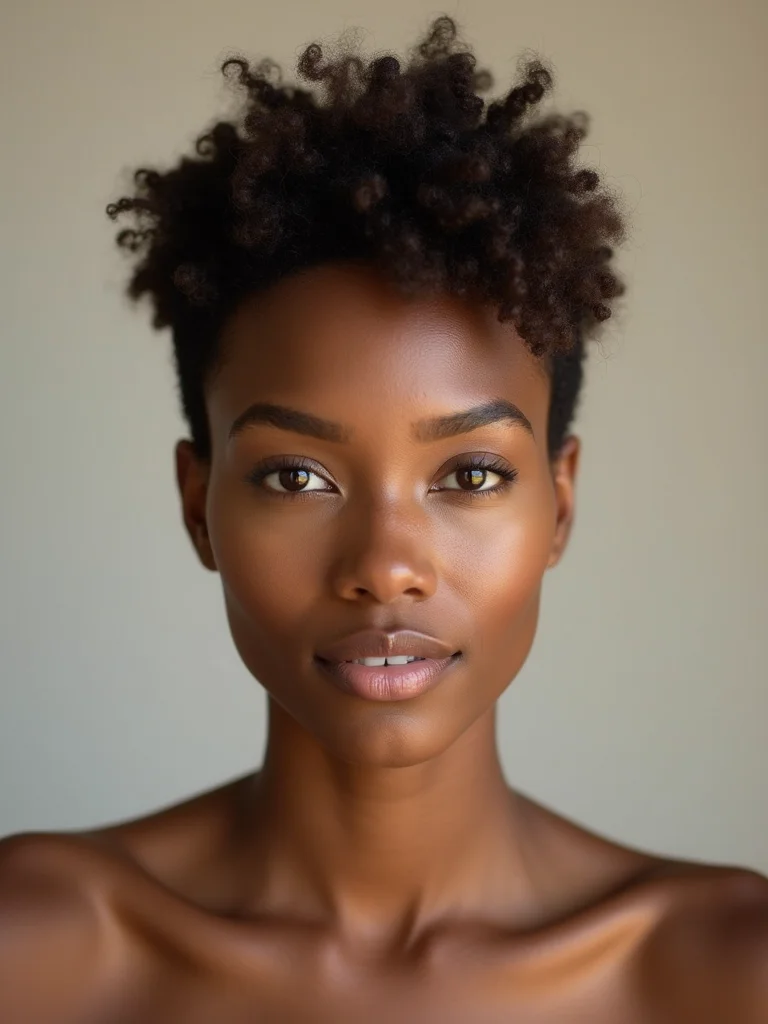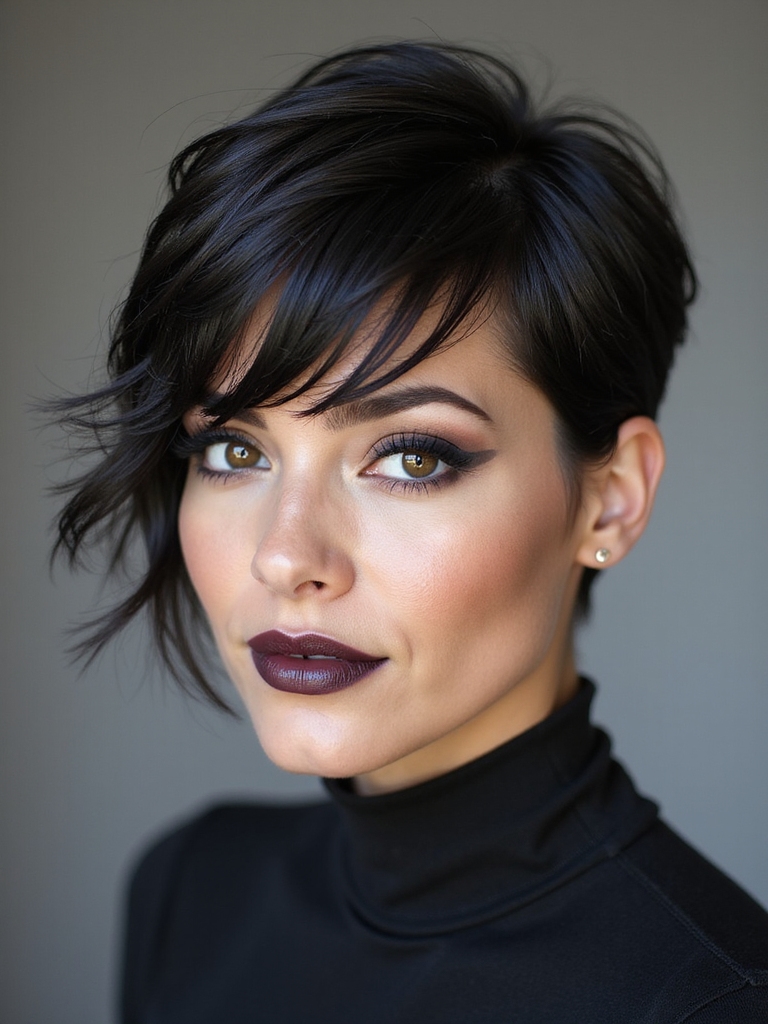
Picture the moment the clippers buzz one side down to velvet while a long, inky fringe still hangs over the opposite eye. That is where the edgy asymmetrical pixie lives: half shorn, half swinging, all attitude. This is not the soft, safe crop your aunt got talked into. It is the version with a razor, a fade, or a streak of neon in it.
The looks here sit at the bold end of the spectrum, the ones built to be noticed. Every one leans on hard contrast, sharp texture, or loud color, and every one wants a wearer with a little nerve. Below are the boldest ways to push a pixie into edgier territory, with how each is cut and what it takes to keep it looking sharp.
The Edgy Pixie, In Short
An edgy asymmetrical pixie takes the basic off-center crop and pushes every dial: harder length contrast, razored or shattered texture, undercuts and fades, and often a bold color. The result is a haircut that lands as a statement, not just a style, and it rewards confidence over caution.
The trade for all that drama is upkeep. Shaved and faded sections blur within a week or two, so plan on frequent clipper touch-ups, and lean on a little product daily to keep the texture spiky and the contrast crisp. It suits most face shapes as long as the balance of short and long is cut to flatter yours.
The Sculpted Side-Sweep
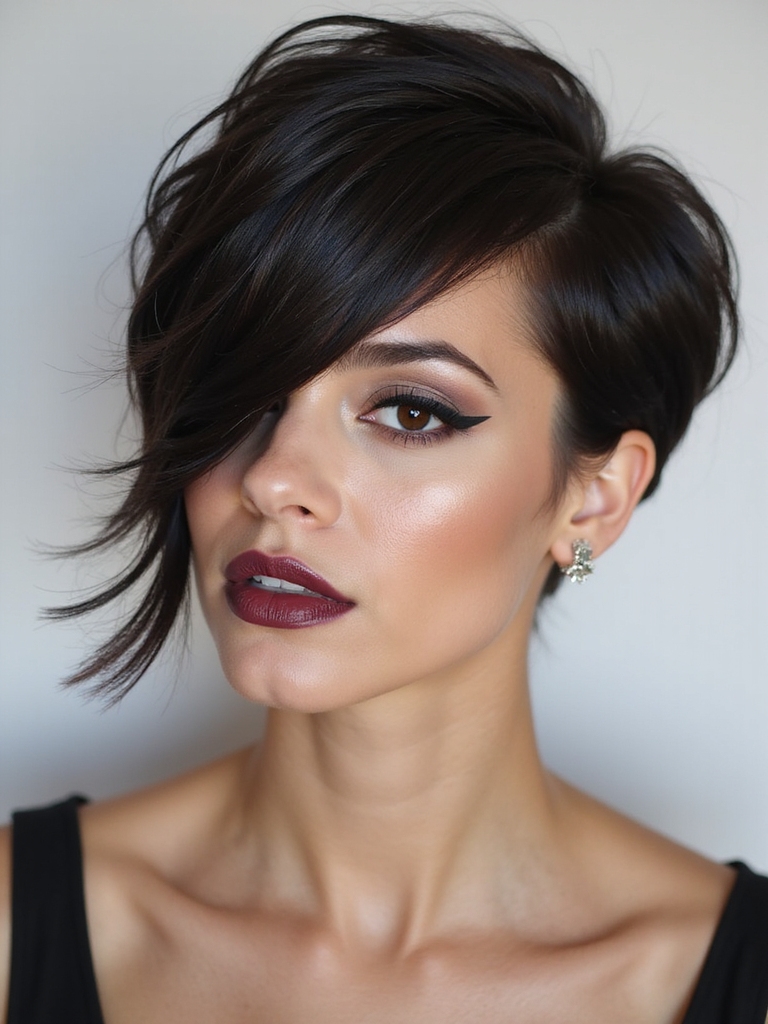
Even the edgiest version usually starts here, with a long top swept hard to one side and molded into a sculpted, glossy shape. It is polished enough for work but sharp enough to signal intent, the gateway drug to the bolder cuts below. What makes it edgy:
- The steep, molded sweep looks deliberate and a little severe.
- A short, tight opposite side sharpens the contrast.
- Product keeps it sculpted, so it never softens into cute.

A Razored Undercut Edge

This is where the pixie gets teeth. One side or the back is clipped into an undercut, and the perimeter is razored to a fine, ragged edge, so the whole shape looks cut with a blade instead of scissors. It is raw and modern.
The razored finish is the signature: feathered, piecey ends that move on their own and never sit too neat. It shines on healthy, medium hair; on fragile or very fine hair, a razor can fray the ends, so this one comes with a condition.
- The undercut buzzes one section close for hard contrast.
- Razored ends stay piecey and raw, never blunt.
- Best on healthy hair; skip the razor if your ends are fragile.
A razor is what separates an edgy pixie from a cute one. Scissors give you a clean line; a blade gives you attitude, those piecey, broken ends that move on their own.
Shattered Razored Layers

Turn the texture all the way up and you get the shattered pixie. Heavily razored, splintered layers break the crop into sharp shards, often finished with a blunt micro fringe for extra contrast. It is chaos, cut on purpose.
The clash of jagged length and a hard little fringe is what sells it. This is a look for people who want their hair to read as art-school rather than salon-safe, and it needs texture product to keep those shards standing apart.
- Splintered, razored layers give a spiky, deconstructed shape.
- A blunt micro fringe sharpens the contrast up front.
- Matte paste separates the shards; shine would flatten them.
The High-Contrast Temple Fade

Borrowed straight from barbering, the temple fade brings serious sharpness. The hair fades from skin at the temple up into the longer crop, and pairing that gradient with an asymmetrical top is about as crisp as short hair gets. How it works:
- The skin-to-length fade at the temple is precise and graphic.
- It pairs a barbered edge with a longer, swept, feminine top.
- The fade needs a touch-up every two weeks or so to stay clean.
Long Top, Cropped Back

This one maximizes the front-to-back contrast. The back is cropped close while the top and front stay long enough to fall over the face, so from behind it looks shaved and from the front it looks long, a hard front-to-back contrast. Why it lands as edgy:
- The dramatic length gap between back and front is the whole statement.
- It flips between hidden-edge and full-drama depending on how you wear the top.
- The cropped back needs regular tidying to hold the contrast.
A Graphic Side Fringe
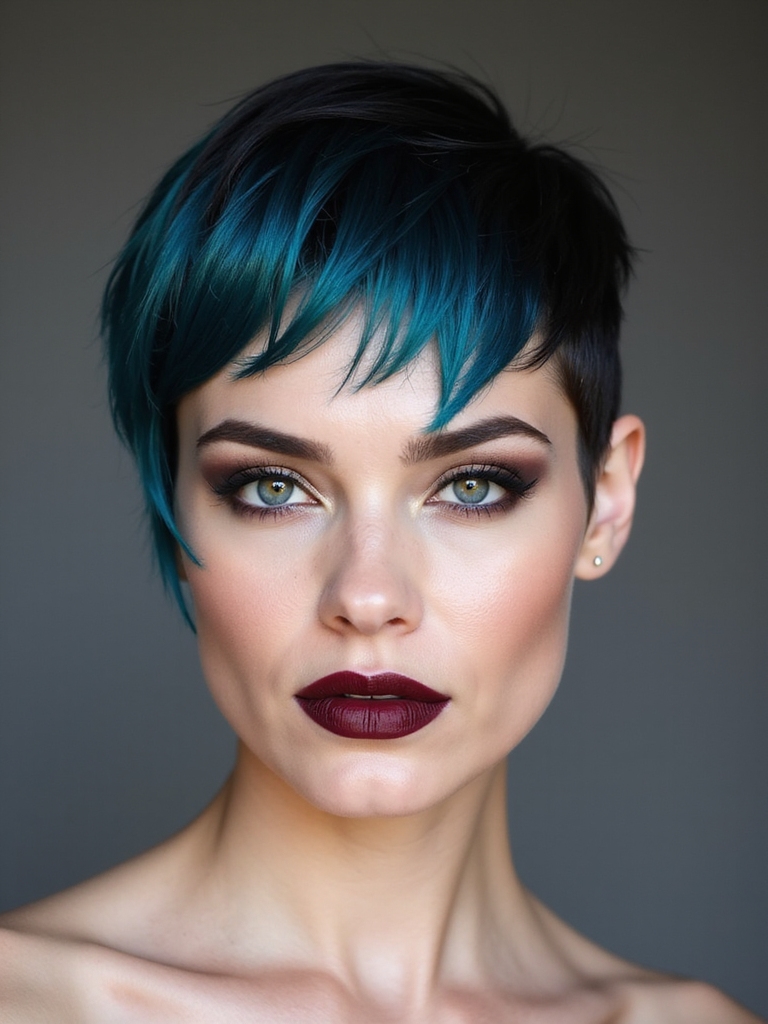
Sometimes the edge is all in the fringe. A long, heavy, graphic side fringe slashes diagonally across the forehead and past the cheekbone, carrying nearly the entire look on its own while the rest stays short and clean.
It is a striking, high-fashion way to wear the cut, and it doubles as a face-framer for anyone who likes a little cover. Blow it flat and sharp for maximum drama, and pin it back when you want the graphic line to disappear for a day.
Choppy Crown, Tapered Nape

For height and edge without a shave, this is the move. The crown is cut into short, choppy layers for lift and spike, while the nape tapers close and clean, so the volume all sits up top where it makes a statement.
The Wearable Punk
It is a gift for anyone whose hair falls flat, since the choppy crown stands up with a little paste and holds real texture. The tapered nape keeps the neck clean and the shape from looking bulky at the back.
This version looks punky but stays wearable, an easy entry point for anyone testing out a first bold step. Rough-dry it upward and pinch the crown to keep that spiky lift alive all day.
The Curly Edgy Pixie

Curls and edge are a powerful pairing, since natural coil already brings volume and drama an undercut can frame. Shaving one side and letting the curls pile high on the other is one of the boldest, most striking looks going, but it has to respect the texture. How to nail it:
- Cut the curly section dry, so the shape lands right once the coils spring up.
- Pair the volume with a shaved or faded side for maximum contrast.
- See a curly pixie for how the cut is built around your pattern.
Piecey Texture With a Shadow Root
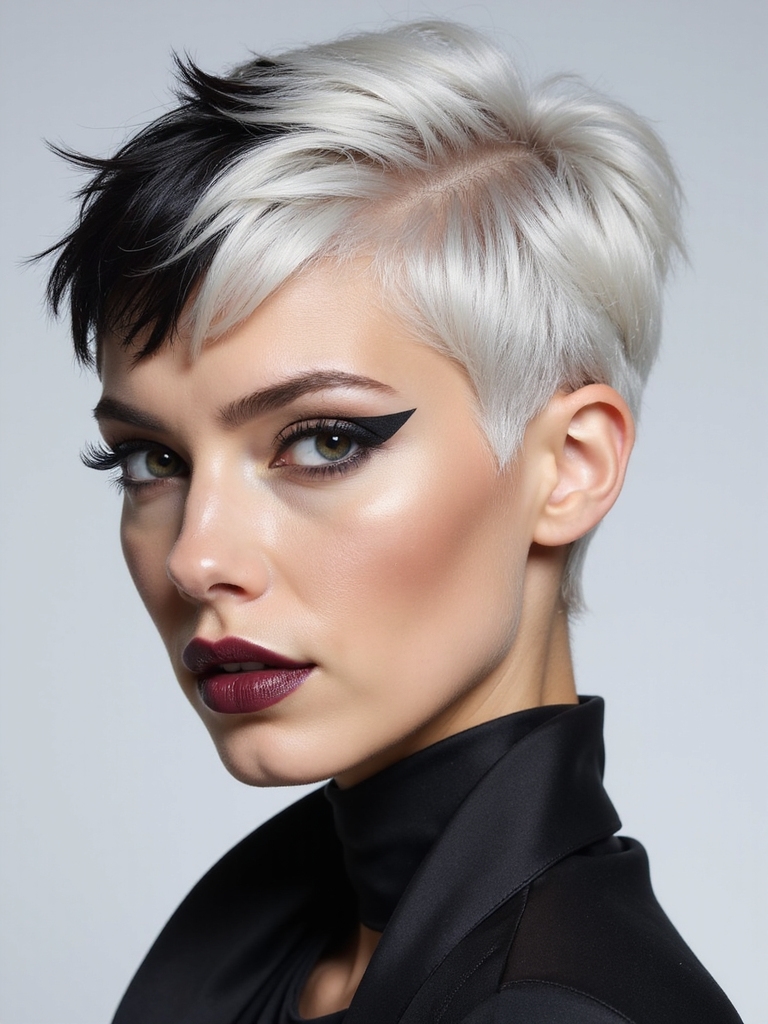
Color adds edge as much as any cut does. A shadow root, dark at the base melting into a lighter, piecey length, gives the crop depth and a grown-in, undone attitude, so the texture reads even sharper. What it brings:
- The dark root grounds the shape and makes the length pop.
- It grows out softly, which stretches the time between color visits.
- Piecey styling on top plays right into the shadowed, worn look.
Styling a piecey, shadow-rooted pixie:
1Rough-dry for lift
Blast it dry with your fingers, pushing against the growth to build height and rough up the texture.
2Pinch with matte paste
Warm a little matte paste and pinch random pieces to separate them, so the shadow root and the texture both show.
A Sleek Hidden Undercut

Not all edge has to be on show. A sleek side-part over a hidden undercut keeps a smooth, polished top that covers a buzzed section underneath, so the cut looks corporate from one angle and secretly wild from another.
Edge on Your Terms
It is the smart pick for anyone who wants an undercut but has a dress code to answer to. Worn down and glossy, no one knows it is there; flipped or tucked, the buzzed panel makes its entrance.
The maintenance is real, since the hidden section still needs buzzing to stay hidden-sharp. See an undercut pixie for how much shave to ask for and where to place it.
The Wolf-Pixie Hybrid

Cross a pixie with a wolf cut and you get shaggy, feral texture on a short frame. Long, wind-ruffled pieces up top and around the fringe meet a cropped back, for a look that is all movement and rock-and-roll mess. How it comes together:
- Heavy, shaggy layering builds the wolfish, unkempt texture.
- The longer, ruffled fringe carries the asymmetry and the attitude.
- It grows out beautifully, blending toward a long pixie as it goes.
Color-Blocked Asymmetry

Loud color is the fastest route to edge, and a pixie is the perfect small canvas for it. Color-blocking, splitting the head into bold panels of contrasting shade, traces the asymmetry and turns the cut into a graphic. The little bit of hair keeps even a wild shade wearable.
You can go as far as you like: a single neon panel on the long side, a dark-and-bleach split down the part, or a hidden pop that only shows when you move. The sharper the color line, the harder the edge.
- A single vivid panel on the long side swings the color when you move.
- A hard split between two shades turns the whole cut graphic.
- A hidden underneath pop keeps it subtle until you flip it.
🅰️Subtle edge
A hidden color pop or shadow root; sharp when you flip it, safe for the office when you don’t.
🅱️Full send
A neon color-block or bleach split that traces the cut and reads bold from across the room.
The Wet-Look Pixie Gloss

Styling alone can push a pixie edgy, and nothing does it faster than a wet look. Slicking the hair back and to the side with a high-shine gel gives a sleek, just-out-of-the-shower finish that lands somewhere between runway and after-dark.
Instant After-Dark Edge
It is all attitude and takes two minutes, the fastest route from a low-key crop to a night-out look. The gloss makes any asymmetry look intentional and sharp, tracing every line of the cut.
It’s a temporary styling choice that lasts the evening before it washes right out. Think of it as the pixie’s eveningwear, there when you want the drama and gone by morning.
A Disconnected Ear Reveal

A softer take on the undercut, the disconnected ear reveal tucks the hair up and away to bare one ear, with a clean break between the short side and the longer top. It shows skin and any earrings without a full shave.
Show Some Ear
The disconnection, a deliberate gap in length rather than a blended graduation, is what gives it the edge. It looks sharp and intentional, and it puts a stack of ear cuffs or studs right on display.
It is a gentler way into edgy territory, since nothing is buzzed and it grows out cleanly. Tuck it to reveal, or wear it down to cover, depending on the day and the outfit.
Two things people get wrong about edgy pixies:
❌ Myth: Myth: they only suit young or angular faces.
✅ Reality: The right balance of short and long flatters most faces and ages; it’s the proportions that matter, not your age or bone structure.
❌ Myth: Myth: an undercut is impossible to grow out.
✅ Reality: A buzzed section grows back like any hair; kept blended along the way, it moves into a shag or a longer pixie without a harsh stage.
The Buzz-to-Length Blend

The boldest cut here goes almost all the way off. One side is buzzed nearly to the skin while the other keeps real, swept length, for the most extreme short-to-long contrast a pixie can hold. It is a genuine statement. What to weigh first:
- The near-buzz side maximizes contrast and shows off your head shape.
- That length gap can be worn as one look down, another look tucked.
- The buzzed side grows fast, so a shape-up every two weeks or so keeps it sharp.
Maintenance & Care
Edgy pixies run high on upkeep, because the sharpness is the point and a blurred edge kills the look. Any shaved, faded, or buzzed section needs a clipper touch-up on a tight schedule, and the sharper cuts want a full shape-up about every three weeks, roughly $40 a visit. If you have a bold color in it, add toning or root work to that calendar.
The daily side is easier. Most of these style in a couple of minutes with the right product: matte paste or clay for spiky, piecey texture, a strong gel for the wet look, a little root spray for lift. Keep any bleached or razored hair conditioned so it does not fray, and finish to match the look you chose, matte and shattered or slick and glossy. For a softer entry point, the asymmetrical pixie roundup covers the gentler end.
Edgy Asymmetrical Pixie Questions
?How often do I need to trim an edgy asymmetrical pixie?
Often, because the sharpness is everything. A cut with a shave, fade, or buzz wants a clipper touch-up roughly every two weeks or so to stay crisp, and even a scissor-only version needs a shape-up about every three or four weeks. If you’re growing it out, you can stretch the long side while tidying the rest.
?Is an edgy pixie hard to style day to day?
No, it’s one of the fastest cuts once you know the product. Most versions need only a pinch of matte paste or a quick rough-dry to build the spiky, piecey texture, and the wet look takes two minutes with gel. The short length means product goes far and drying is almost instant.
?Will an undercut or shave damage my hair?
The shaved hair itself is fine; it’s just short. The thing to watch is razored or bleached length on top, which can fray or dry out if it’s already fragile. Keep it conditioned and bond-treated, and ask for scissor texture instead of a razor if your ends are delicate.
?Do edgy pixies suit older women?
Absolutely. A sharp, well-cut pixie is among the most flattering, low-fuss looks at any age, and the edge reads as confidence, not costume. The key is balancing the proportions for your face; the shave and texture are optional dials you can turn up or down.
?Can I get an edgy pixie if my job is conservative?
Yes, that’s exactly what the hidden undercut and shadow-root versions are for. A sleek top can cover a buzzed section completely, reading polished at work and wild when you flip or tuck it. Save the visible fades and neon for jobs with a looser dress code.
How Far Do You Want to Push It?
The beauty of the edgy asymmetrical pixie is that edge is a dial, not a switch. You can stop at a sleek sculpted sweep, go all the way to a buzzed, neon-streaked statement, or park anywhere in between, and every stop on that road is still recognizably you, just louder or quieter.
So if these keep catching your eye, start with the amount of contrast you can picture yourself wearing on a Monday, then push from there. A stylist who gets the look will help you place the shave, the texture, and the color where they flatter you. Maybe it is time to let the clippers do a little talking.
More to Explore