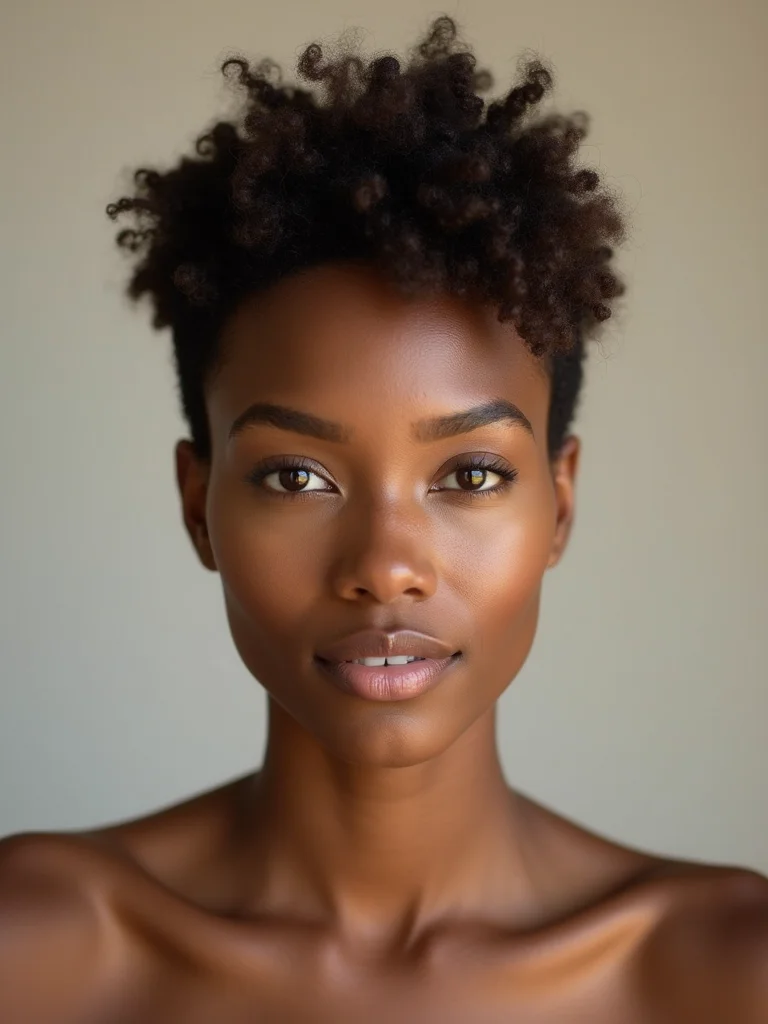
The most repeated thing about short hair is that it saves you effort. It does save time, dramatically, but that is a different claim from the one people usually hear, which is that the cut arrives finished.
It does not. A good short cut hands you a ceiling. Where you land underneath that ceiling gets decided every morning by two hands, ninety seconds, and whatever is sitting on your bathroom shelf. The women whose crops always look right are not carrying a better haircut than everyone else. They worked out early which problems belong to the stylist and which ones belong to them.
What the Chair Decides, What You Decide
- The stylist owns silhouette: how much height sits at the crown, where the sides fall against your ears, whether the outline is broken or clean. None of that is fixable at home.
- You own finish, direction and volume placement. All three change daily and all three are learnable within about a month of trying.
- The one thing you both own is timing. A crop shifts noticeably within four to six weeks, and the difference between sharp and tired is usually the calendar.
What Confidence in a Modern Pixie Is Actually Built On
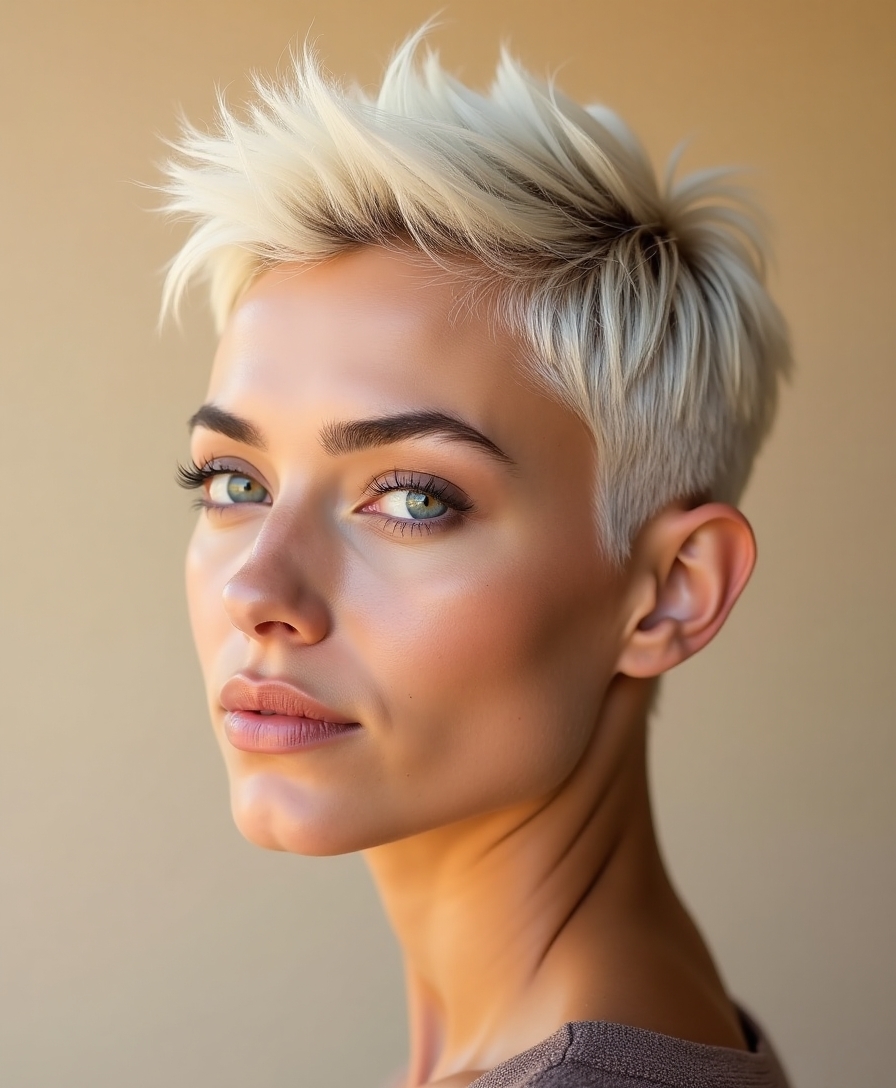
Two hours of skilled work buys you three things: the height at your crown, the closeness at your ears, and the quality of the outline. Those are structural. They exist whether you style the hair or fall asleep on it.
The Ceiling and the Floor
Everything else gets renegotiated each morning. Direction, separation, how much of the crown you lift, whether the front sweeps or sits flat. A stylist can demonstrate all of it and none of it transfers automatically.
So the useful mental split is a ceiling and a floor. The cut sets your best possible day. Your hands set your average one. Most disappointment with short hair comes from a wide gap between those two numbers, and that gap closes with practice far faster than people expect. The morning mechanics are broken down in how to style short pixie hair.

Matching the Shape to Your Face

Face shape governs one variable above all others: where the widest point of the hair sits relative to the widest point of your face. Stack those two on top of each other and the head looks broader. Offset them and the whole thing lengthens.
This is the conversation worth having before any photograph comes out of your phone. It takes ninety seconds and it prevents the most common bad outcome, which is a shape that would have flattered someone else entirely.
- Round faces do best with height concentrated well above the crown and the sides kept close
- Long or oval faces can carry width at the temples and a fuller front without stretching further
- Square jawlines soften under a side-swept front and a broken outline
- Heart shapes balance when a little weight is left near the jaw instead of all of it at the top
👍What short hair gives back
- +Twenty minutes returned to every morning, permanently
- +One product lasting months instead of weeks
- +A shape that photographs the same from most angles once it suits you
👎What it asks for
- –Salon visits every four to six weeks rather than twice a year
- –A learning month where your hands are slower than your expectations
- –No option to tie it back on a day you have not washed it
Uniform Length Against Broken Texture
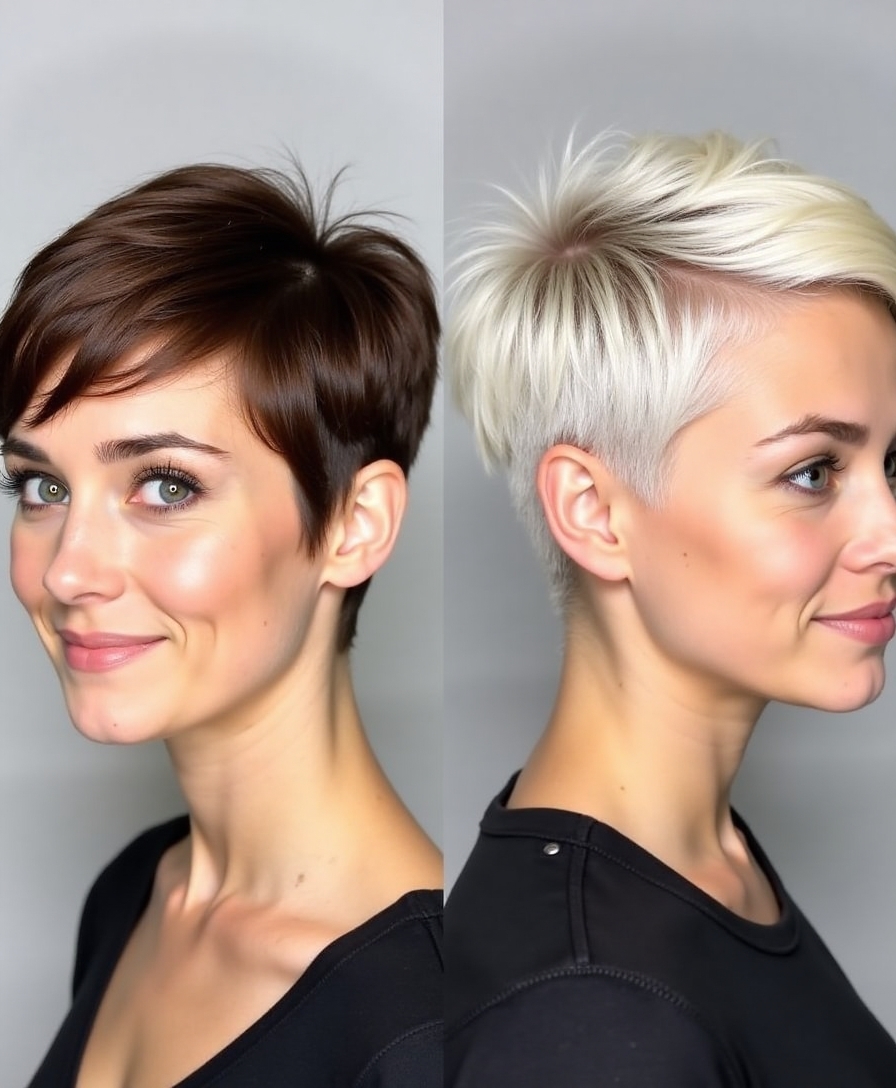
Ask for a crop and you will be offered several: a classic uniform pixie, a textured crop, a longer pixie, an undercut version, a curly one shaped to the pattern. The choice that decides your mornings is not which name you pick. It is how much the shape depends on you turning up.
Why the Same Length Behaves Differently
A uniform cut is a maintained object. It only looks right smooth, so it needs your hands every single morning and a humid commute can undo the whole thing before you reach your desk.
A broken, textured shape maintains itself. Weather, pillows and a skipped appointment barely register, which is why it goes to almost everyone who travels for work. The trade is that you give up sleek permanently. Neither answer is better; they just charge you at different times. There is more on how the staggering gets built in layered pixie cut.
The Short List of Tools Worth Owning
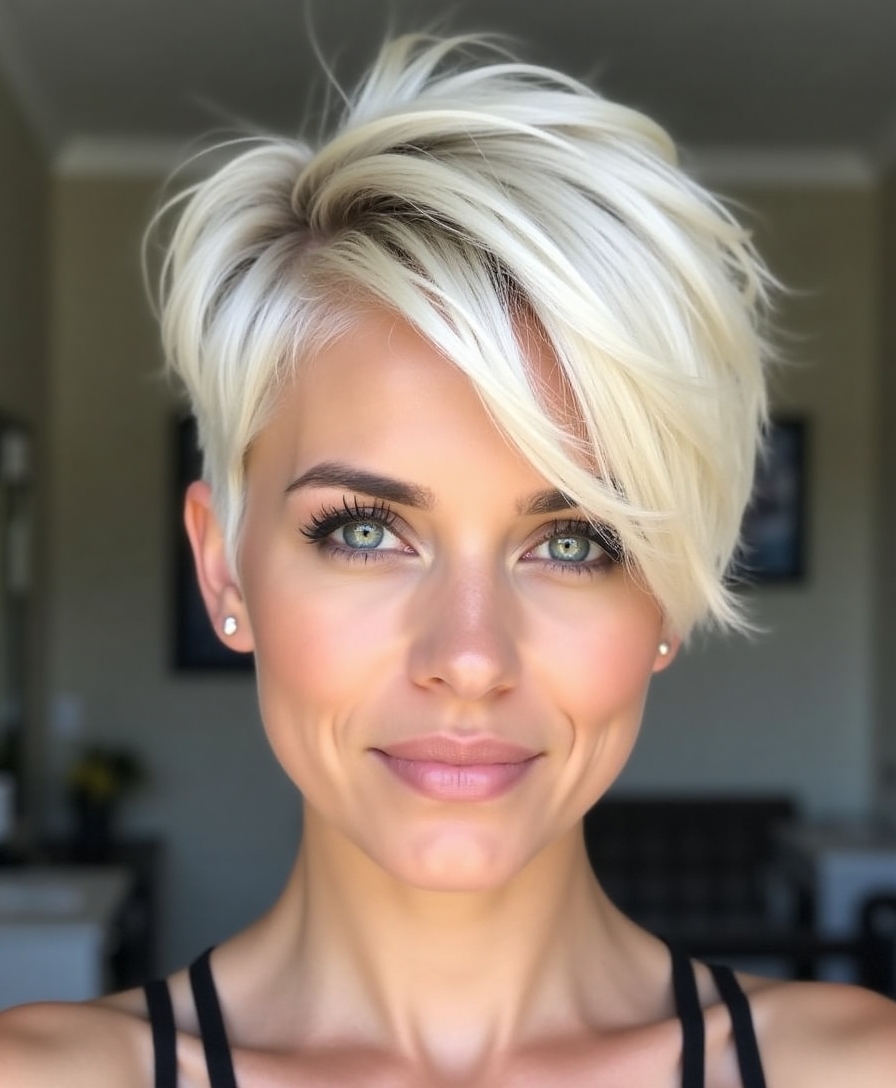
Short hair needs a startlingly small kit, and the shopping mistake is buying long-hair equipment in miniature. A round brush and a full-size dryer are the two things most new crop owners purchase and then abandon within a month.
What earns its shelf space: a dryer with a concentrator nozzle, one texturizing product, and a fine-tooth comb for the section around the ears. That is about $40 of equipment that will last years.
The nozzle is the piece people skip and the one that changes the most. Air aimed in a specific direction sets the hair where you want it. Air blasted from six inches away sets it wherever it happens to fall, which is usually flat against your head.
“Ask which of the two versions the stylist would put you in and why. Anyone who cuts short hair regularly will answer by describing how your hair behaves rather than how your face is shaped, because behavior decides whether a clean outline is still clean by Wednesday.”
Reading Inspiration Photos Honestly
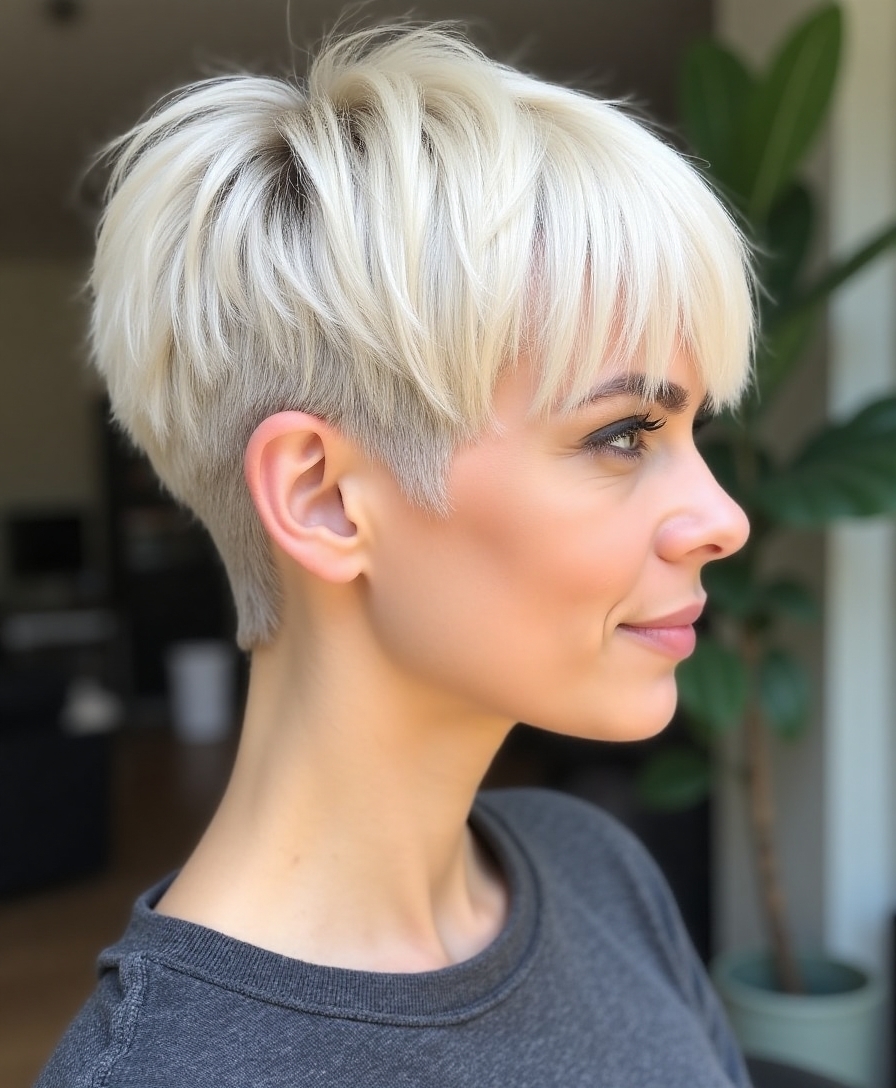
Bring photographs. Every stylist asks for them and there is a reason: the words we all use for short hair mean six different things depending on who is saying them.
The trick is knowing what a photograph can and cannot tell you. It shows silhouette, density and finish accurately. It hides hair type, product load, and the fact that someone stood behind that person with a dryer for twenty minutes.
So collect three or four instead of one, and pick images taken from different angles where you can find them. When I see four photographs, I can usually spot the single quality all four share, and that quality is what you actually want. One photograph tells me a person you like has hair.
Styling Changes With Every Inch
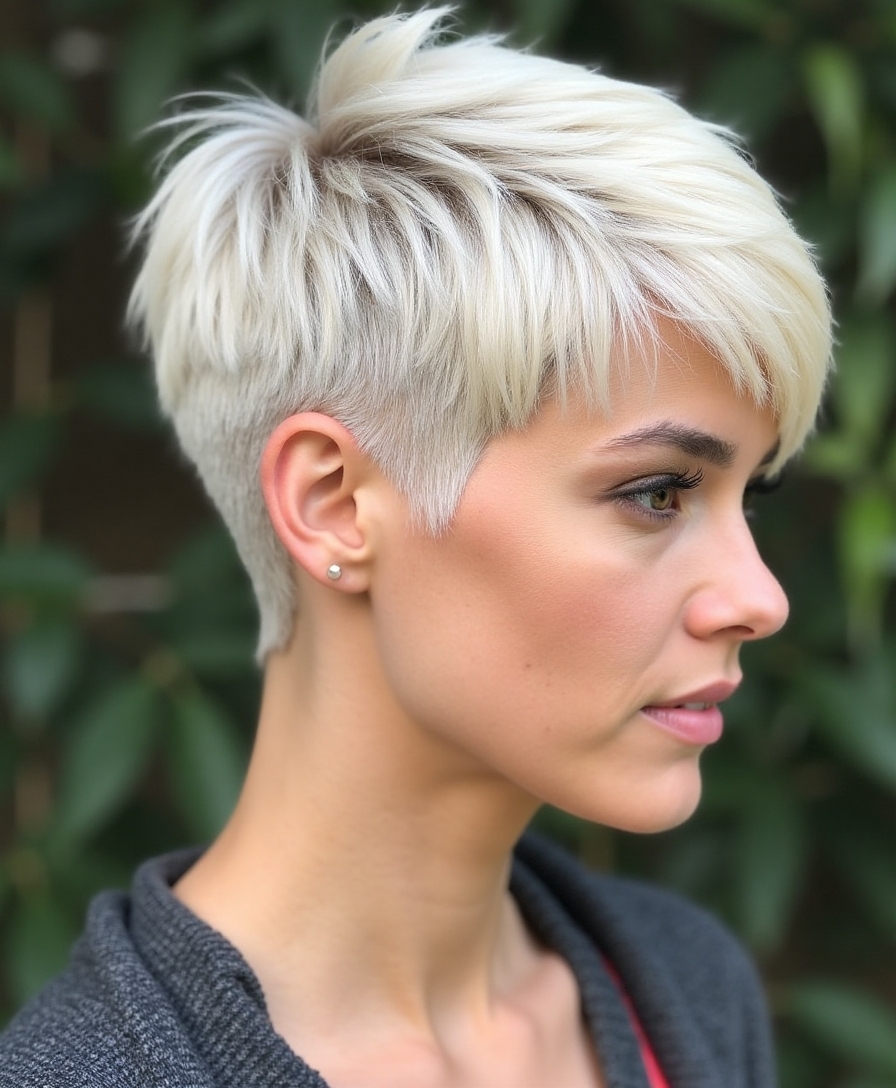
An inch of difference in length changes the entire method, which catches out people who have worn a crop before at a different scale. Very short hair gets styled at the root, because there is no length to influence. Longer pixie lengths get styled at the mid-shaft, where the bend happens. Using the root method on a longer crop produces lift with limp ends, and using the mid-shaft method on a very short one produces nothing at all except product build-up.
- Under two inches on top: work product into damp roots, then air-dry and forget it
- Two to four inches: dry the roots first for lift, then shape the ends once they are nearly dry
- Four inches and over: this is short-hair styling proper, and a small round brush finally earns its place
What Color Does at This Length
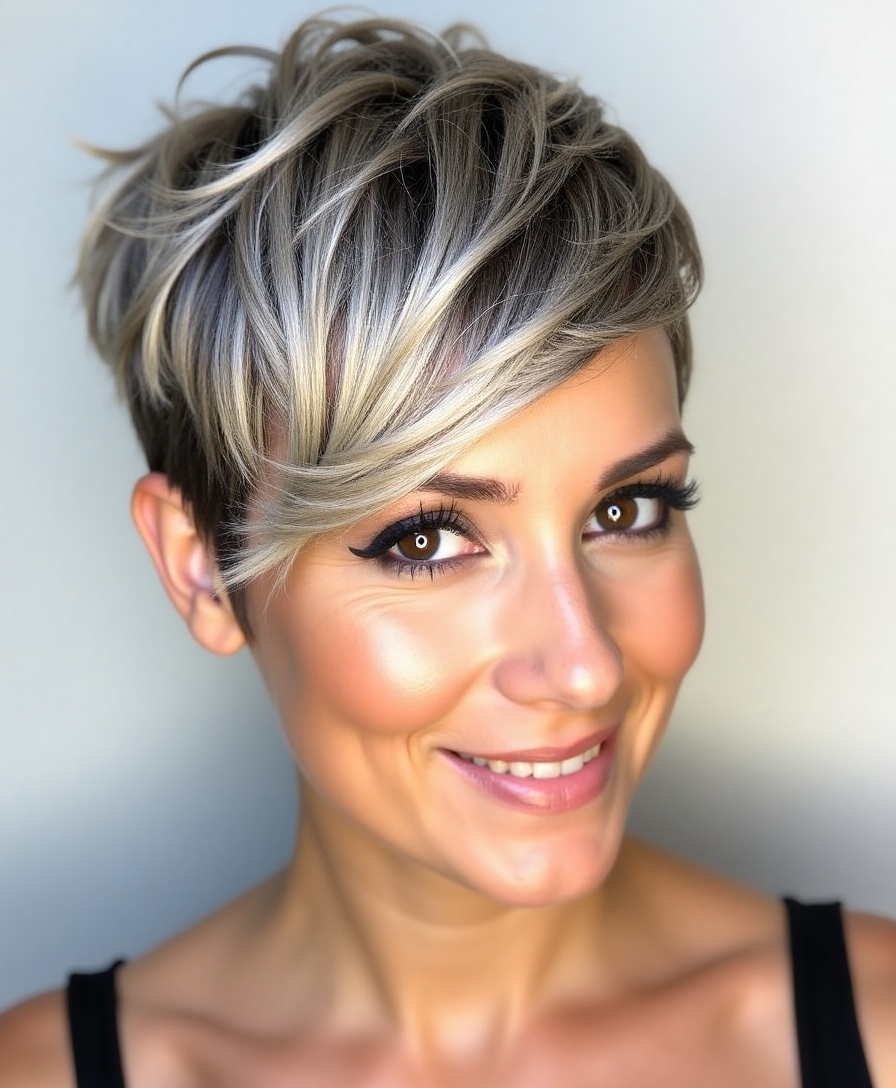
Color behaves differently on a crop because there is no length for a gradient to travel through. Anything subtle disappears entirely. Anything bold shows up at full strength within an inch of the root.
That makes placement the whole game. A few lightened pieces sitting on the surface at the crown make texture visible in a way no product manages, because separation shows up as light and shadow.
The cost consideration is real and worth saying out loud. Root regrowth on a heavily lightened crop is visible in about three weeks, against six or eight on long hair, so a full platinum commits you to a salon rhythm most people have not budgeted for. That math gets a fuller treatment in blonde pixie haircut.
Growing It Out Without a Bad Stage

Nearly everyone eventually wants length back, and the awkward months are avoidable. They are what happens when you stop cutting entirely and let every part of the head grow at the same rate.
The proportions break first, long before the length becomes a problem. The sides reach the ears while the crown is still short, and the head widens. Keeping the sides and the nape trimmed while the top runs free holds the silhouette together the whole way through.
Budget a trim every six to eight weeks during the grow-out, which is less often than maintaining the crop itself. It feels strange to pay someone to cut hair you are trying to keep. It is also the difference between four pleasant months and four you spend wearing hats. See growing out a pixie for what each stage actually looks like.
Three words that come up constantly during a grow-out and mean specific things:
📖Occipital
The bone at the back of the skull where the head curves in. It is where a growing-out crop either keeps its shape or starts to flare.
📖Weight line
The point where the hair is heaviest and stops moving. During a grow-out this creeps downward, which is what makes the sides widen.
📖Shaping trim
A cut that removes almost no length but restores proportion, usually at the sides and nape only.
Seasonal Updates a Pixie Actually Needs

Weather affects short hair more than long hair, which surprises people who assumed the opposite. There is less mass to resist humidity and less weight holding anything down.
Summer is straightforward: humidity swells the hair, so the shape gets bigger and softer on its own. Most people find they need less product and a lighter one, and a crop that was cut a shade too short in spring comes into its own in August.
Winter brings static and hat hair, and the answer to both is moisture instead of more hold. A dot of cream through the ends before a hat goes on, and the hair comes out of it looking handled. Hats also flatten the crown, which is the one part of a crop that cannot afford it.
Fine Hair and Thick Hair Need Opposite Things
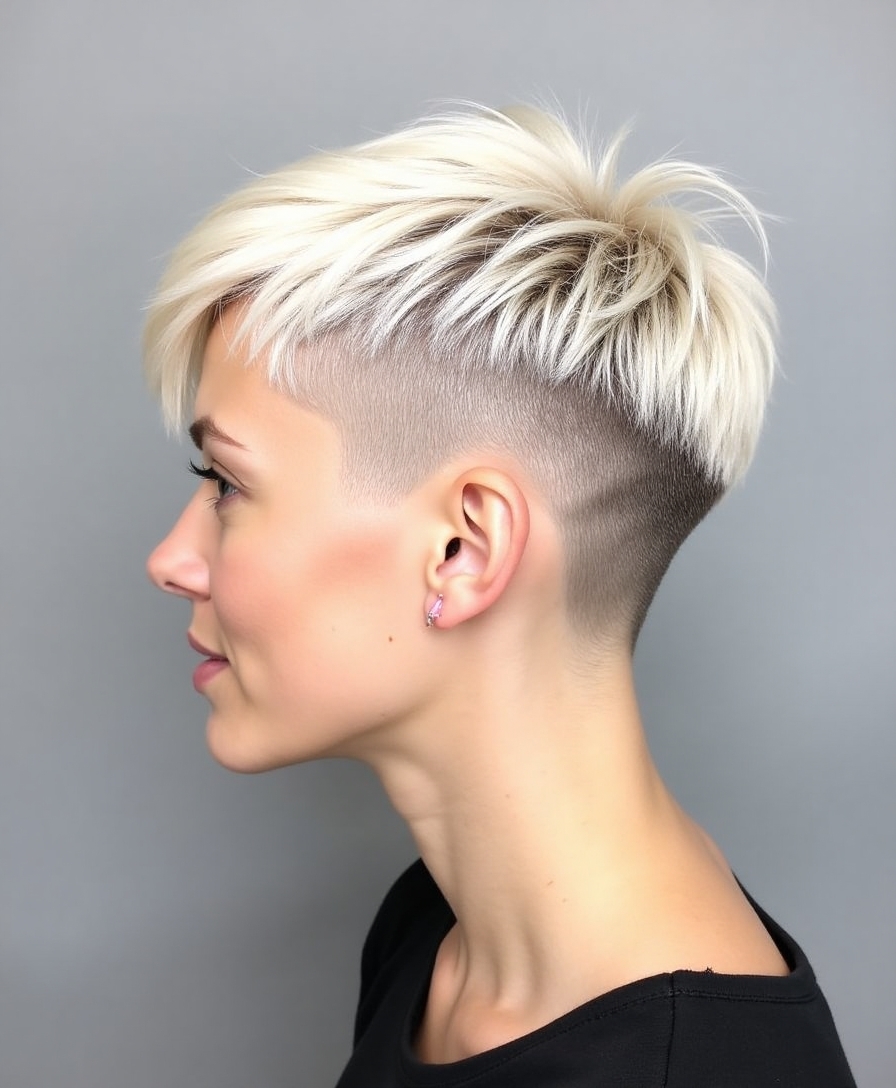
Density decides your entire approach and it is the variable most tutorials skip over. Fine hair has a lift problem. Thick hair has a bulk problem. The same product applied the same way solves one and worsens the other.
I keep two completely different products on the station for this reason, and I hand over whichever one matches the head in front of me.
- Fine hair: everything at the root, nothing on the ends, powder over paste
- Thick hair: weight removed underneath by the stylist, then cream through the surface to stop it expanding
- Fine hair benefits from being cut slightly shorter than feels comfortable, since weight is the enemy
- Thick hair benefits from a little extra length on top, which gives the bulk somewhere to go
Styling Products That Add Edge Without Adding Weight
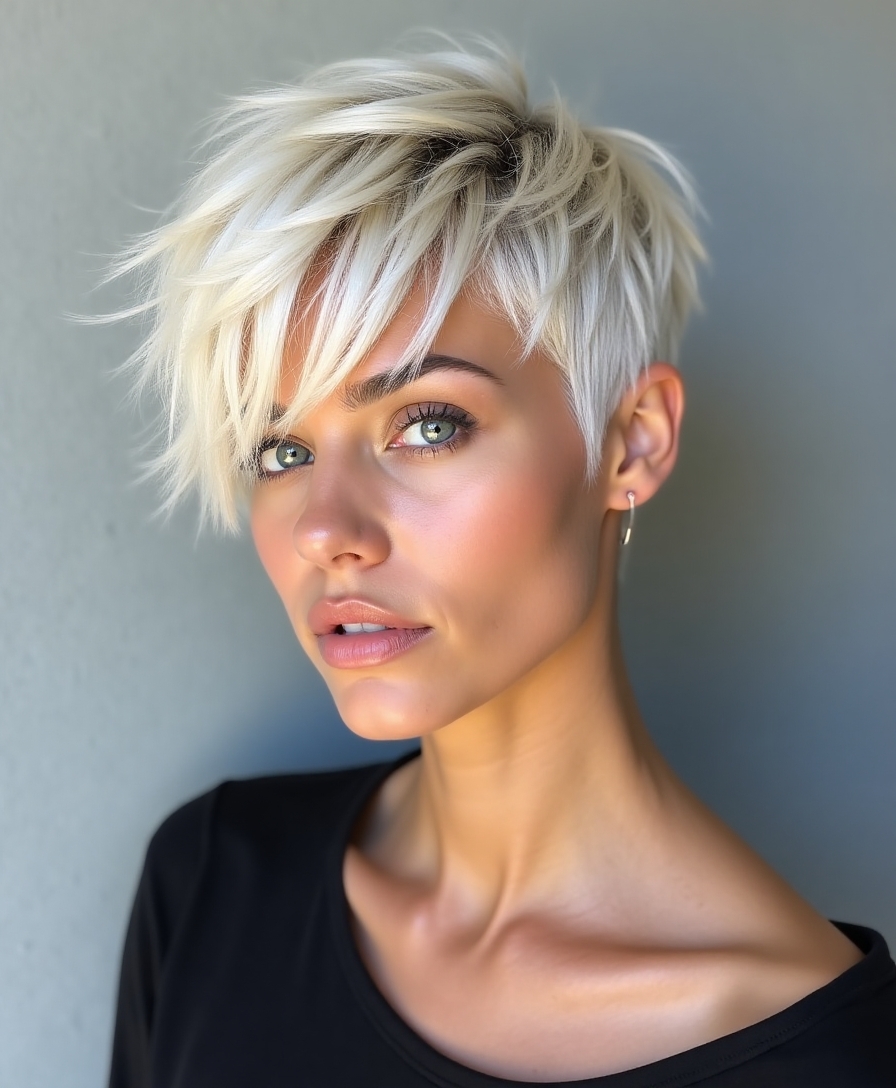
Three product categories cover almost every short-hair situation, and owning one of each costs about the same as a single salon-brand bottle. The mistake is owning four versions of the same thing, which is what happens when you shop by marketing language instead of by texture.
Debunking Four Common Pixie Myths

Some of these come up in nearly every consultation, and they change what people ask for in ways that work against them. Worth clearing out before anything sharp comes near your head.
Adapting the Cut to Your Hair Type

Hair type changes the cutting method before it changes the styling, and the most important question is whether your hair gets shaped wet or dry. Straight and wavy hair can be cut wet, because it falls close to where it will dry.
Curls and coils retract as they dry, which means a wet cut on textured hair regularly finishes a good deal shorter than the length everyone in the room agreed on. Ask directly how the stylist works, and ask whether they cut textured hair regularly.
- Straight: the outline is fully visible, so precision matters and so does booking on time
- Wavy: the most forgiving of the four, since the bend hides growth for weeks
- Curly: shaped dry, curl by curl, with the outline rounded to follow the head
- Coily: shaped dry and fully sprung, density kept even so the shape holds; our natural hair pixie cut guide covers pattern-specific shaping
Setting a Trim Rhythm You Will Keep
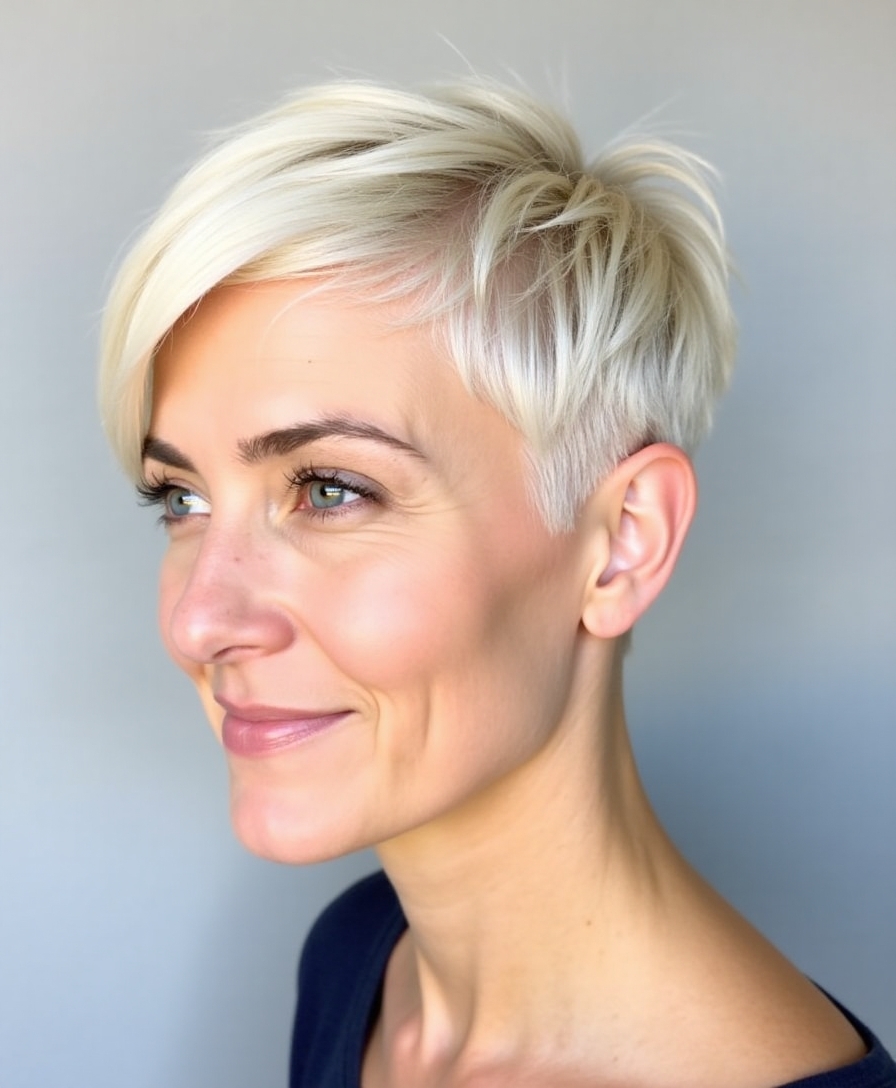
This is the part first-time crop owners underestimate, and it is where most of the running cost sits. A trim runs roughly $45-$75 in most cities and comes around considerably more often than a long-hair appointment, though it takes half the time.
Clips, Bands and What They Do to a Crop

Accessories work harder on short hair because there is nowhere for them to hide. On long hair a clip is a detail. On a crop it becomes the focal point, and that is either the entire point or a problem.
One Piece, Placed Deliberately
The reliable move is to place one thing on purpose. A single flat pin holding the front back on one side changes the whole line of the face, and the pin costs about $3 and the move takes four seconds.
Headbands need more thought. Anything sitting behind the crown flattens the height you spent the morning building, so the ones that work sit forward, close to the hairline, and let the top stay lifted.
💡Before you clip anything
Pin the front back before you add product rather than after. Product-loaded hair slides out from under a flat pin within an hour, and the fix is to set the position first and texture around it.
Transitioning From Long Hair in Two Steps
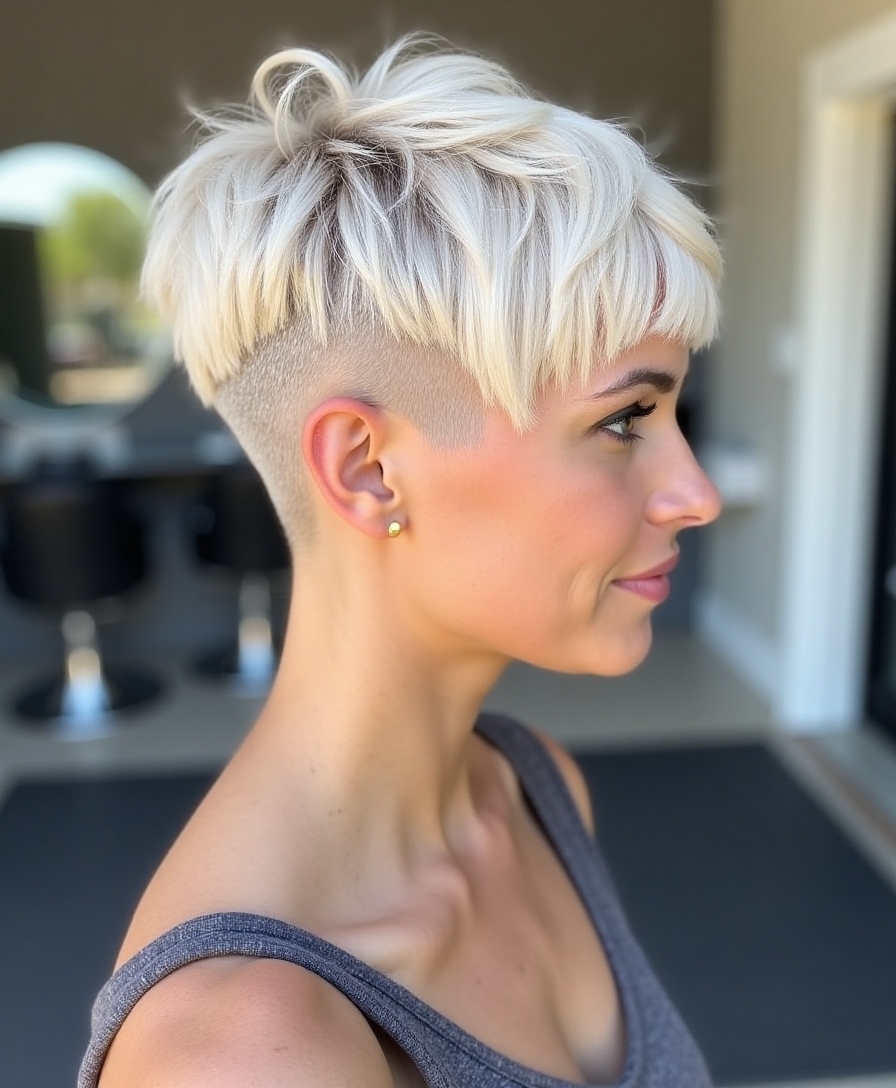
The jump from long to short is the biggest single change most people make to their appearance, and the sensible route is rarely one appointment. Two steps a few weeks apart let you find out how you feel about a bob before committing to a crop.
The First Two Weeks Are Physical
The part clients call me about is never the mirror. It is their hands: they keep reaching back for something that is not there, mid-conversation, for about ten days. Then it stops. What replaces it is the shower, which now takes under two minutes, and that is the detail almost everyone names first when they say they would not go back.
Hold off on any verdict until you have washed it yourself twice. Day one includes someone else’s twenty minutes with a dryer, and that is not part of the deal you signed. The haircut you own is the one your own arms can produce before work.
Taking a Pixie to an Evening Event
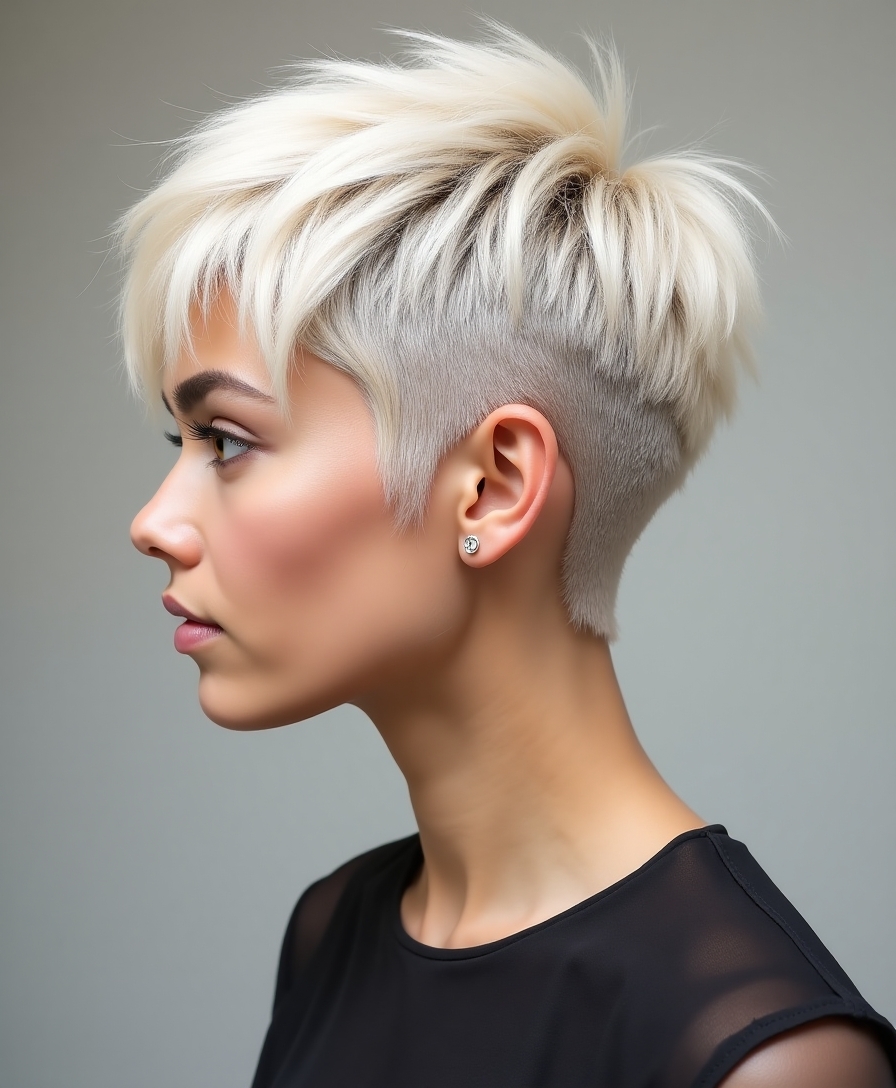
Short hair dresses up faster than anything else, which is worth knowing before a wedding season. There is no updo to book and nobody to pay for it.
The whole adjustment is finish. Whatever you normally do, do it, then add shine: a drop of oil warmed in the palms and pressed over the surface, never worked in. The shape stays exactly where it was and the light changes completely.
If you want more than that, direction is the second lever. Sweeping the top hard to one side and pinning it flat behind the ear is a formal look that takes under a minute, and it photographs far better than anything involving more product.
The Month That Changes Everything
Nearly everyone who ends up loving short hair went through the same four weeks, where the cut looked better in the salon than it did at home and it was not obvious why. That gap is a skills gap, and it closes.
So if you are weighing this up, weigh the version that exists a month from now instead of the one you would meet on day one. Book the consultation, ask which shape matches how often you can realistically return, and give your hands a few weeks to catch up with what the stylist handed you.
More to Try