Texture on a short cut is only half about how it looks. It is about how long it goes on looking that way, which is a different question and the one nobody asks at the consultation.
Any competent stylist can hand you a good pixie on day one. What separates these ten is what happens on day three, when you have slept on it twice, and at week five, when half an inch of growth has changed the whole proportion. That is the axis they are sorted along.
Texture Is a Time Purchase
What does texture actually buy you? Days and weeks. Hair cut to uneven lengths on purpose still looks deliberate after it has been slept on and after it has grown, where a smooth, precisely cut shape stops looking right within about ten days.
Does it cost density? Only if it is done with the wrong tool. Point-cutting varies where the ends stop and costs almost nothing. Notched thinning blades remove hair mid-shaft and surface later as short upright pieces where you part it, which is a different thing entirely.
How does it change the salon rhythm? It stretches it. A sculpted crop wants restoring around every four weeks; a properly textured one holds its shape closer to six, which at roughly $60 a visit is a real saving across a year.
Tousled Layers for Soft Lift
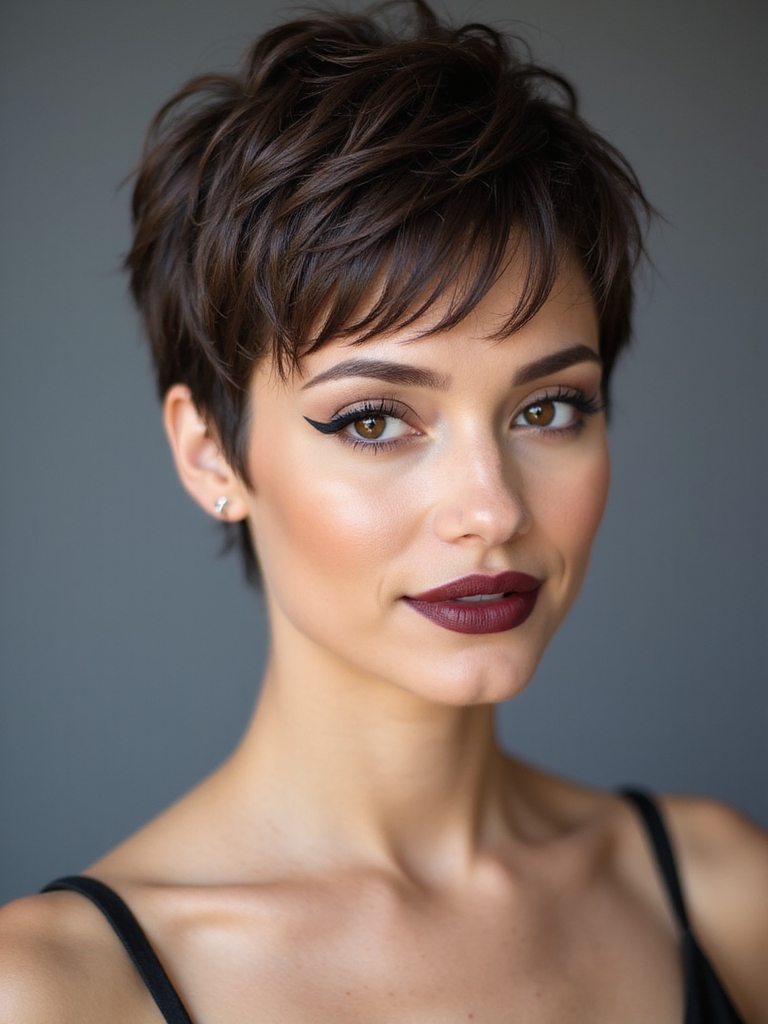
Day three is where this one proves itself. Uneven layering holds its arrangement through two nights on a pillow, because there was never a single smooth surface for a pillow to disturb.
By week five it has softened instead of growing out. The proportions shift, the lift drops a little, and the shape still reads as a decision. That combination is why this is the version most people end up wearing whichever one they started with. Our layered pixie cut guide covers the cutting.

Feathered Bangs With Soft Movement

Almost everyone books their touch-up because of the front, not the nape, though they arrive convinced it is the other way around. The front of a pixie ages faster. Bangs sit in your eyeline and half an inch is very obvious there.
Feathering buys about two extra weeks. Tips tapered to different lengths lengthen unevenly, so the fringe drifts into a softer version of itself and never crosses into looking overgrown.
Piecey Choppy Texture With Edge

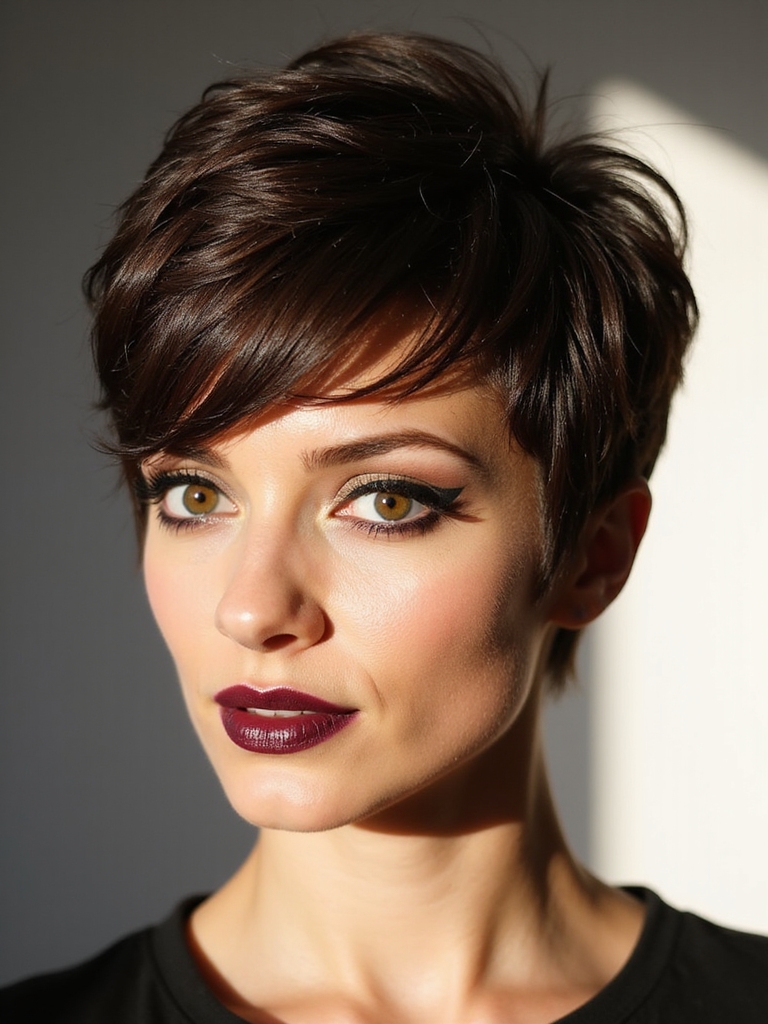
This is the longest-lasting shape on the page, and the reason is that it was never tidy to begin with. There is no line for growth to disturb.
It Never Looked Tidy, So It Never Stops
Day one it looks deliberate and slightly rough. Day five it looks the same. Week six it looks the same but larger, which is the point at which most people book rather than the point at which it stops working.
The trade is that it never looks polished, on any day. If you need a version that can be smoothed for an evening, this is the wrong one. Our choppy pixie cut guide covers the technique.
“The question worth asking at a consultation is what this looks like in four weeks. A fresh crop flatters almost everyone on day one, so that is not the information you need. How the stylist answers the four-week question tells you whether they are cutting for the appointment or for the month.”
A Curly Pixie With Defined Coils

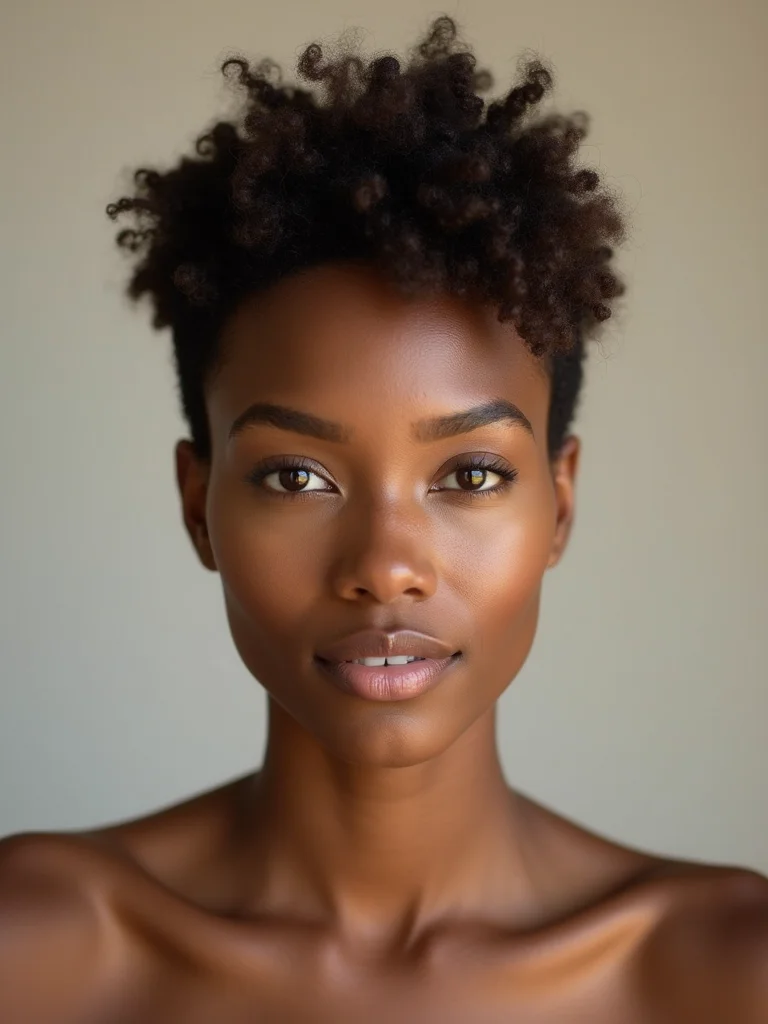
Coils come with their own timeline, and it runs differently from everything else here. A wash-day set holds three to five days if it is protected at night, then softens rather than collapsing, and the cut underneath goes on working for six or seven weeks because the pattern hides growth better than any cutting technique can. Our curly pixie guide covers pattern-specific shaping.
- Have the shape built on dry hair, since a coil sits well above where it hangs wet
- Protect it at night; a bonnet is the difference between three good days and one
- Rewet and add a touch of leave-in; gel over dry coils only builds up
A Side-Swept Fringe for Balance

A diagonal across the forehead is the most forgiving front on this page, and forgiving is the operative word: it works at every length the fringe passes through as it grows.
Short, it frames. Longer, it sweeps. Longer still, it becomes a face-framing piece and the cut simply becomes something else without any awkward week in between.
- Ask for it cut on a slant, brushing the lashes at one side and the cheekbone at the other
- Set the direction while damp; dry hair only ever gets negotiated with
- It is the front to choose if you are bad at booking appointments
How often will you really be back in the chair?
🎯Every four weeks, reliably
Anything precise is open to you: a micro crop, a razored finish, sharp tapered sides. These look their best in a narrow window and reward turning up.
🎯Every couple of months, honestly
Go choppy, shag-inspired, or piecey. All three change proportion as they grow instead of losing their shape, so a missed month reads as a slightly bigger version of the same cut.
A Soft Undercut for Hidden Volume

Hidden debulking is what the word soft is doing here, since nothing gets shaved anywhere visible. On thick hair it solves the specific problem of a crop that sits wide instead of tall, and because it is hidden, nothing about it dates or grows out awkwardly. Our undercut pixie guide covers the visible versions.
- Ask for weight taken out beneath the top section, and nothing clippered anywhere
- It buys you a shape that holds rather than spreads, roughly through week six
- Thick hair only; on fine hair there is nothing underneath to remove
A Micro Pixie With a Textured Crown

At micro length the timeline compresses hard. Half an inch is a third of the whole cut, so what looks precise on day one is visibly different by week four whatever anyone does.
Texturing the crown is the only real defense. Uneven lengths up top mean the growth arrives as extra volume instead of lost shape, which is the difference between a cut that ages and one that expires.
- Ask for the crown chopped to uneven lengths and the sides kept simple
- Expect a four-week rhythm regardless; texture softens the decline, it does not stop it
- It suits people who like a standing appointment and dislike thinking about their hair between them
ℹ️Why Texture Outlives Precision
Hair grows at roughly half an inch a month, and it grows evenly. On a precisely cut shape that evenness is the problem: every length moves together and the proportions the stylist balanced all shift at once. On a deliberately uneven cut the same growth changes very little, because the relationship between the pieces was never uniform to begin with.
A Shag-Inspired Pixie With Airy Ends
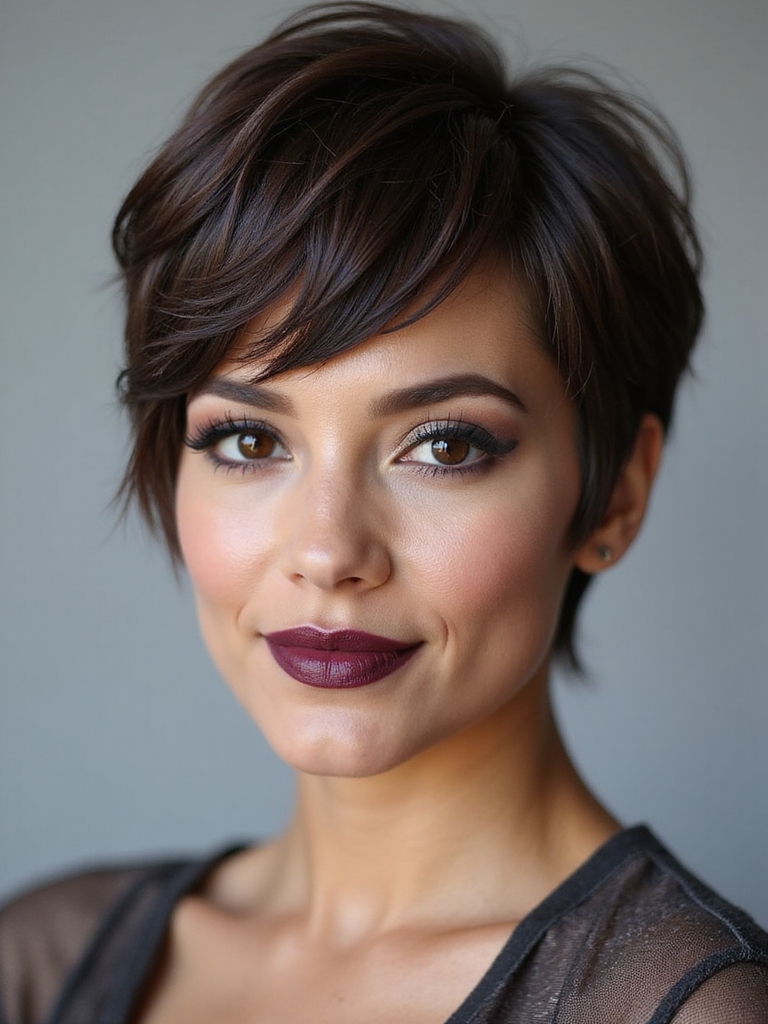
Borrowing shag layering means shorter pieces through the crown and slightly longer ones at the nape and around the ears, and on a pixie that produces the closest thing to movement any arrangement here manages.
It holds for a long time. The proportions were deliberately uneven to start with, so growth changes the ratio without breaking the idea.
Where it struggles is with fine hair. Shag layering assumes there is enough density for the shorter pieces to sit on top of something. Our shaggy pixie cuts guide covers the range.
A Razor-Cut Pixie With Wispy Dimension

A razor produces the softest edge available on short hair, and it is also the technique with the shortest window. Razored ends are the first part of any cut to go, which is worth knowing before you fall for one.
Beautiful on Day One, Gone by Week Four
Day one it is the best-looking thing here. Week four the fine points have worn and split away, so the ends read blunter than they were cut, and the whole shape feels heavier without anything visibly changing.
Whether this is available to you comes down to what your ends are already carrying. A blade needs an intact cuticle to slice against. Hair that has been lightened or heat-worn shreds instead of tapering, and the result puffs rather than separates by the second wash.
A Voluminous Top Over Tapered Sides

Contrast between a full top and close sides is the most flattering arrangement on this page, and it has an unusual timeline: the two halves age at different speeds.
The top improves for a couple of weeks as it gains enough length to move properly. The tapered sides start blurring after two, which is why this version tends to need a sides-only visit halfway through the cycle.
That split is worth knowing because it is cheap to solve. Twenty minutes on the sides restores the contrast without touching a top that is currently at its best. Our short pixie haircuts guide covers the shapes.
Messy, Modern, or Neither
Two words come up constantly here, and they buy completely different amounts of time. Messy is a finish, which makes it renewable: you reproduce it every morning in forty seconds with your fingers, and it costs nothing when it fails because tomorrow you do it again. Modern is a silhouette, which makes it a purchase, bought once at the chair and then spent down as the hair grows.
That distinction decides where your effort goes. A finish you have to earn every morning is a daily tax you keep paying; a silhouette that carries itself is a bill that arrives every six weeks. Most people who tell me their texture stopped working are describing a finish problem and booking a cutting appointment to solve it.
Worth sorting out which one you are chasing before you sit down. If it is the undone quality in the photographs, that is a styling conversation and you can test it tonight for the price of a tub of paste. If it is how the head is shaped in them, no product will get you there and the appointment is the only route.
How to Get the Look
Bring the timeline into the consultation, because almost nobody does. Saying how often you can realistically get to a salon changes which of these a stylist should be cutting, and someone booking every four weeks should be offered a different shape from someone who manages it twice a season.
Then name the tool you want, since the word textured on its own covers several techniques with very different outcomes. Asking for the ends to be point-cut or razored describes the result you have been looking at in photographs. Leaving it open invites whatever that stylist reaches for by default.
The daily side is small. A little paste warmed between the fingers and pushed through dry hair from the roots outward, then nothing else. The most common mistake at this length is using enough product to be visible, which welds together the pieces the cut spent an hour separating.
Textured Pixie Questions
?My last textured cut left short spiky bits along my part. What was that?
Notched blades. They bite hair out from inside the section at random points along the shaft, and every one of those cut strands regrows from where it was severed, arriving at your part as a halo of short pieces roughly eight weeks later. It is not damage and it will grow through, but it is worth naming the tool at your next appointment so it does not happen twice.
?Why does my textured pixie look flat two days after a salon visit?
Because the mirror at the end of the appointment is showing you a blow-dry. Hair dried over a brush by someone standing behind you falls in a shape your own arms cannot copy. Give it two washes at home before you decide anything; that version is the one you live with.
?Can fine hair carry a textured pixie?
Yes, with the texture kept at the surface and the front. Fine hair separates easily and does not need much help, so a light hand produces the effect. What fails is texturizing through the interior or razoring throughout, since both take density fine hair had none of to spare.
?Is there a version that survives a hat?
The choppy and shag-inspired ones, because both recover by being ruffled with damp fingers. A razored or sculpted finish compresses under a hat and has no way back without rewetting the whole head, which is worth factoring in if you spend the winter in a beanie.
Ask What It Looks Like in a Month
Ten versions, and the thing separating them is duration rather than appearance. The razored finish is the most beautiful on the day and the shortest-lived. The choppy one never looks polished and never stops working. Everything else sits between those two.
So the useful question to bring is not which of these looks best in a photograph. It is which of these will still look like itself on the morning you are running late and have not touched it. Save two or three, then look at what they have in common. That overlap is usually the cut.
Hand-Picked for You