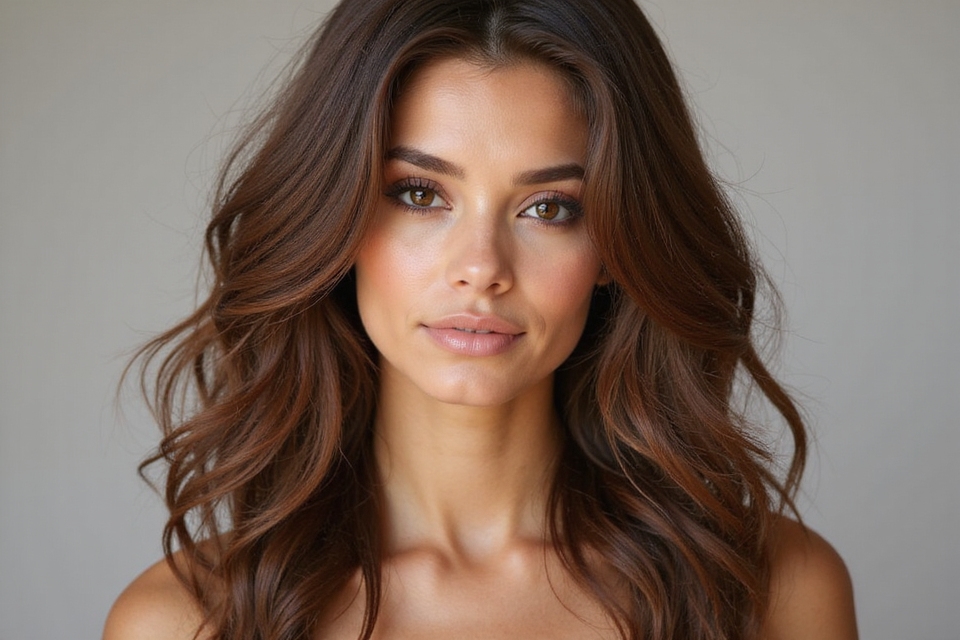
Why does the same brown look flat on one person and rich on another? After years of mixing chocolate shades at the color bar, I can tell you it comes down to two things: depth and warmth. Chocolate brown runs from creamy milk chocolate to the deepest Belgian dark, and the right spot on that range can make hair look glossy and rich without a single bright highlight.
Below are twenty-five chocolate brown ideas, from caramel and chestnut accents to deep cocoa melts and glossy shadow roots, plus how to choose your depth and keep the color from fading dull.
Chocolate Brown at a Glance
Does chocolate brown need bleach? Almost never. Most of its dimension comes from lowlights, gloss, and tone-on-tone painting, none of which require lifting your natural base.
What is the lowest-maintenance version? A single all-over cocoa or a dark shadow root. Both grow out softly and need little more than a gloss every couple of months.
Which depth suits me? Warm, golden, and olive skin glows with milk chocolate and caramel-warmed browns; cool and neutral skin loves deep dark chocolate and mahogany.
Chestnut Highlights for Natural Warmth

Chestnut is the gentlest way to lift chocolate brown. Its reddish-gold sits so close to the base that the highlights melt in as sun-warmed movement. The blend stays smooth. The look stays grounded in rich brown, and it flatters warm or olive skin especially, where the red-gold simply echoes the warmth you already have.
- Ask for fine, ribboned pieces so the warmth blends softly through the mid-lengths
- Keep the root dark; it makes the grow-out forgiving and stretches your appointments
- A toner every eight weeks stops the chestnut sliding toward orange
Deep Mocha Through the Layers

Mocha lands exactly between warm and cool, a coffee-and-chocolate brown with a balanced undertone that flatters more skin tones than almost any other shade. It rarely clashes with anyone.
The shade for the undecided
It is the color I hand to clients who can never choose between warm and cool brown, because mocha quietly satisfies both and rarely fights a complexion.
Worn through layered hair, the tone shifts as the pieces move and catch the light, so it looks dimensional even though it is really one well-mixed brown. If you want that depth even richer, a true chocolate base is the place to start.
A few terms colorists toss around at the chocolate end of the brown family:
📖Gloss (or glaze)
A semi-permanent, ammonia-free treatment that adds tone and shine without lifting. It refreshes faded brown in about thirty minutes.
📖Lowlight
The opposite of a highlight: darker pieces woven in to add depth and richness, with no bleach involved.
📖Balayage
Color hand-painted onto the surface, so the grow-out stays soft and line-free.
Mahogany Waves With a Red Glow

Mahogany brings a cool, red-violet depth to chocolate hair, the kind of jewel-toned glow that catches light on a wave and looks rich and polished.
The red here stays cool and violet-toned. That is why mahogany flatters cool and neutral complexions in particular, and it gives brunettes a lit-from-within shine with no lightening at all.
- Best kept glossy: smooth, healthy hair shows the red depth far better than dry ends
- Pair it with a deep root for contrast that makes the red look intentional
- Refresh with a red-toned gloss before it fades cool and flat
Hand-Painted Caramel Balayage

Caramel balayage hand-paints warm, golden-brown light into chocolate hair for soft, sun-kissed dimension that stays where the painter places it.
Why the upkeep stays low
Because the root is left rich and dark, the contrast looks natural and the regrowth never leaves a hard line, so you can stretch months between visits.
A full balayage runs about $150 to $300. Plan on roughly three hours in the chair, then little more than a gloss to keep those caramel-warmed browns bright.
Heads-Up
Red and mahogany tones are the first pigments to wash out, so a mahogany chocolate can fade cooler and flatter within a month or two. If your hair is porous or was previously highlighted, the red can also grab unevenly. Ask for a tone-on-tone formula and budget for a toning gloss every six to eight weeks.
Espresso Fading Into Chocolate

An espresso ombre starts at the deepest, near-black root and melts into a slightly warmer chocolate or caramel toward the ends. The shift stays subtle.
Because the whole range stays dark, it is far more grown-up than a blonde ombre; the gradient adds movement without ever leaving the brown family.
The dark root also means a forgiving grow-out. This is the rare ombre that still looks deliberate months later, long after a blonde version would beg for a touch-up.
Hazelnut Lowlights for Lost Depth

If your highlights have left your brown washed out and one-note, hazelnut lowlights are the fix I reach for most after a summer of over-lightening. They weave warm, mid-brown pieces back through the base, adding depth from the dark side. That restores the body and richness that too much lift tends to strip away.
- Best for hair that has been highlighted too far and now looks flat or ashy
- Adds dimension without any bleach, so it is gentle on already-processed hair
- Ask for lowlights two shades deeper than your base for natural-looking depth
What clients get wrong about going dark or trying ombre:
❌ Myth: Ombre always means bleached blonde ends.
✅ Reality: Not here. An espresso-to-chocolate ombre stays inside the brown family, so it needs little or no lifting and still looks grown-up and polished.
❌ Myth: Dark brown is boring.
✅ Reality: A deep base is exactly what makes every warm reflection pop. Dimension comes from contrast, and there is no better backdrop than rich espresso.
A Cinnamon Spice Beneath the Brown

Cinnamon-spiced undertones tuck a warm, reddish glow beneath chocolate brown so the color seems to warm up in the light, especially through fall and winter. It is a subtle effect, showing most when the sun hits, and it gives the brown a cozy character without committing to visible highlights.
- Flatters warm and golden skin, lending a soft red shimmer
- Shows up in sunlight and photos more than under flat indoor light
- Lean into it in autumn; pull back to a cooler gloss if it ever turns too orange
Soft, Understated Walnut

Walnut is the muted, medium-brown cousin of chocolate, balanced between warm and cool so it feels natural and quiet.
There is no high shine or drama here, just a soft, true brown for people who want depth without anything flashy. Think quiet, not loud.
Its easy neutrality flatters a wide range of skin tones, and because nothing is lifted, the maintenance is close to nothing beyond a shine gloss now and then.
👍Warm chocolate: the upside
- +Glows on golden, olive, and tan skin
- +Looks sun-warmed and dimensional with no bleach
- +Forgiving grow-out when the root stays deep
👎What to watch
- –Warm pigments fade brassy in sun and chlorine
- –Needs a toning or blue-based shampoo to stay true
- –Can look orange if the base is lifted too far
Maple Sugar Swirls of Light

Maple-sugar swirls blend warm, golden-brown light through chocolate hair for a soft, dimensional finish. The pieces blend into each other, so nothing looks striped.
The golden tone adds movement and a sweet warmth, while the swirled, painted placement looks natural and grows out softly with no harsh regrowth line.
It is at its best on warm and neutral skin, where these golden-brown swirls feel like color the sun left behind.
Quiet Burnt-Almond Streaks

Burnt-almond streaks add deep, toasty-brown pieces through chocolate hair for dimension you feel more than see. Because the almond tone sits so close to the base, the streaks come across as quiet depth. They keep the color cohesive while breaking up any flatness.
- A smart pick if you want texture in your color but nothing obvious
- Works on darker browns where lighter highlights would look stark
- Pairs well with a glossy finish that makes the tonal play catch the light
Rich Cocoa, All Over

Sometimes the most striking chocolate brown is a single, rich, all-over cocoa done well. A deep, even color comes across glossy and timeless, with the dimension coming from shine alone.
I talk more people into this than out of it: a single-process color runs about $65 to $120, grows out without a stripe, and a gloss every couple of months is the only real upkeep. Done right, one shade can outshine a head full of highlights.
Toffee Flashes of Sweetness

Toffee highlights sit between caramel and chestnut, adding warm, golden-brown sweetness that lifts chocolate brown without straying far from it.
How they look on dark hair
The toffee flashes blend in as natural warmth, so they brighten the color without the hard, high-contrast look of true highlights.
They flatter warm and neutral skin and give brunettes a soft glow, and the painted pieces grow out gently. For most brunettes, it is an easy yes.
The Velvety Chocolate Melt

A chocolate melt blends a darker root into a slightly lighter chocolate through the lengths, creating a soft gradient with no visible line.
The smoothest way to add depth
It is the most blended form of dimension there is; the color seems to shift on its own from deep at the root to warm at the ends, like melted chocolate.
Because the transition is so gradual, it grows out beautifully. The result looks like color you were born with.
A Dark Chocolate Shadow Root

A shadow root keeps the base deep and rich while the lengths stay a touch lighter, adding weight at the crown and a grow-out so soft you may forget your last appointment.
The clients who stretch the longest between color visits are almost always my shadow-root ones; the dark root grounds everything and pushes touch-ups out to every ten to twelve weeks.
- Great for anyone tired of a harsh regrowth line every month
- Makes lighter pieces look brighter by contrast
- Pairs with balayage or stays simple over a single base
Silky Milk Chocolate

Milk chocolate is the lighter, creamier end of the family, soft and glossy with golden warmth. It lifts the whole face.
It feels rich but bright, which makes it an approachable choice for warm and neutral skin and a gentle first step for anyone going lighter within brown.
- Brightens the complexion more than a deep brown does
- Warmer tones can fade brassy, so plan on a toning shampoo
- Ask for a soft, even melt so the lighter brown glows from the mid-lengths down
A Truffle Gloss Finish

A truffle gloss deepens and enriches chocolate brown while adding intense shine, all without lifting a single strand.
It refreshes faded color, cancels brassiness, and makes brown look richer in one quick step. A salon gloss runs about $40 to $65. It takes barely thirty minutes, and I wish more brunettes booked it between color appointments.
It is the finishing touch that makes any brown look polished, and the single easiest thing you can do to keep chocolate looking deep and shiny.
Reflections of Golden Chestnut

Golden-chestnut reflections add warm, golden-red light that catches in chocolate hair as it moves.
Color you only see in motion
The reflections are subtle, showing most in sunlight, which gives the brown a warm, dimensional shimmer with no visible highlight lines.
They flatter warm and neutral skin and are an easy way to add glow if you want dimension that stays quiet under indoor light. Ask your colorist for fine, face-framing pieces in a golden-red half a shade warmer than your base, and the effect will catch sunlight without ever looking like stripes.
Cherry-Infused Chocolate

Cherry-infused chocolate weaves deep red-cherry tones through the base for a rich, jewel-toned warmth that glows in the light. The red adds character without bright highlights, and these cherry tones look especially striking in autumn, when warm light brings the fruit out against the deep brown.
- Flatters cool and neutral skin with its red-brown blend
- Adds a fruity edge without the upkeep of a full red
- Expect the cherry to fade first, so refresh with a red gloss
The Sun-Kissed Mocha Sombre

A sombre is a softer, subtler ombre, and a mocha sombre fades chocolate brown into gently lighter mocha ends.
Because the transition is far softer than a classic ombre, it keeps the look natural and grown-up while still adding sun-kissed movement.
It suits a wide range of skin tones and is a good middle ground for anyone who wants brightness on the ends without an obvious gradient. The grow-out is kind. It softens the line so completely that you can let it grow for months and still look pulled together.
Frosted Cappuccino Tips

Frosted cappuccino ends lift just the tips of chocolate hair into a creamy, light-coffee tone for a soft, modern contrast. Concentrating the lightness on the ends draws the eye down and adds brightness where it shows most, while keeping the upkeep low because only the tips are touched.
- A low-commitment way to try lightness without a full highlight
- Grows out softly since the root and mid-lengths stay dark
- Best on healthy ends; lightened tips need a weekly mask to stay soft
Caramel Ribbons Running Through

Caramel ribbons run warm, golden-brown light through chocolate hair in soft, flowing streaks.
They read as smooth bands of warmth, adding glow and movement that follows the hair as it falls. The effect stays fluid and soft.
Warm caramel against deep chocolate flatters warm and neutral skin and is a lovely way to warm up brown for spring and summer. Because the ribbons are painted, not foiled, the regrowth stays soft and you can stretch the time between visits.
Brewed-Coffee Depth

A brewed-coffee brown is a deep, slightly cool chocolate that looks sophisticated and glossy. It captures the dark warmth of fresh coffee, balancing depth with just enough warm glow to keep it from looking flat or harsh, and it looks especially rich on sleek, shiny hair. It is comfort in a color.
- Flatters a wide range of skin tones thanks to its balanced tone
- Looks its best smooth and glossy, so a shine treatment helps
- A near-zero-maintenance brown if you keep it well conditioned
Butterscotch Flecks of Amber

Butterscotch flecks scatter warm, golden-amber light through chocolate hair for a sweet, glowing dimension that catches the eye when you move.
The scattered placement keeps the effect soft and natural, and the amber warmth flatters golden and tan skin with a sunny finish. It looks like sun caught in the hair. Because the flecks are tiny and spread out, they grow in without any line, so you can wait a long stretch before a touch-up.
- Adds bright sparkle to deep chocolate without heavy lightening
- Scattered, not sectioned, so it grows out without a line
- Tone it down with a gloss if the amber ever turns too gold
The Deepest Belgian Chocolate

Belgian chocolate is the richest, deepest, most saturated dark brown in the family, glossy and indulgent. Shine does all the work here.
The dimension comes from shine and subtle tonal play within the depth, no highlights needed. This even darkness flatters cool and neutral complexions while looking striking on healthy, glossy hair. For the full range, see these deep dark chocolate ideas.
- About as deep as brown goes while still looking brown
- Holds color longer than warm browns, so fewer touch-ups
- Demands shine: dull hair makes deep brown look flat, so gloss often
A Spiced Cocoa Infusion

A spiced cocoa infusion blends warm, reddish-spice tones into deep cocoa for a color that is rich, warm, and full of character. The spice adds a subtle red-gold warmth that glows in the light, giving deep brown a cozy, autumnal depth without bright highlights or any lifting of the base.
- Flatters warm and neutral skin with its red-gold warmth
- A good way to warm up a very dark brown that has gone flat
- Refresh the warmth with a red-gold gloss every couple of months
How to Ask Your Stylist
The fastest way to a chocolate you love is to bring two or three photos and name the depth and warmth you want, not just the word brown. Say whether you lean warm (caramel, chestnut, toffee) or cool (mahogany, espresso), and whether you want all-over color or painted dimension.
Be honest about upkeep, too. Tell your colorist how often you can really come in, and ask which option grows out softest. If your hair has old highlights or box color, mention it; that history changes how the brown takes and whether you need a filler first. A good colorist will point you toward the version that fits both your hair and your calendar, whether that is a single rich shade or dimensional brown with painted warmth.
Pick Your Depth First
If you take one thing from all twenty-five of these, let it be this: with chocolate brown, depth matters more than the accents. Get the milk-to-dark range right for your skin and your warmth, and the highlights, gloss, and painted pieces are just the finishing touches.
So decide where you want to sit on that range, save the two or three shades that caught your eye, and bring them to your colorist. Chocolate is a forgiving color to wear, so trust the depth that feels like you and let the shine do the rest.
More Worth Saving