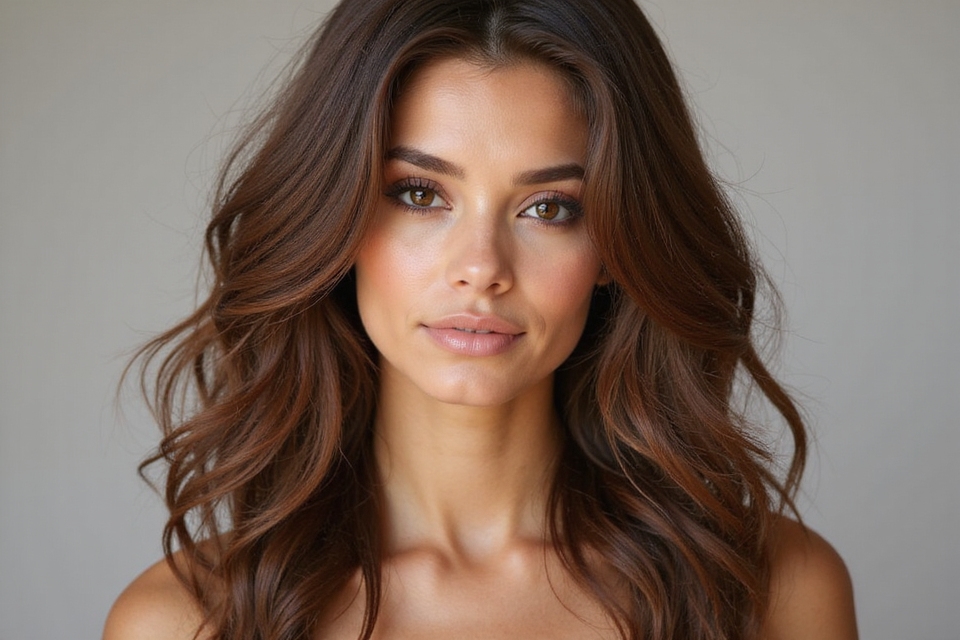
A client once sat in my chair and said the saddest thing I hear about brown hair: that hers had gone flat and lifeless, one solid block of color with no light in it. We did not lighten it much at all. We just added dimension, a few woven tones and a gloss, and she left looking like she had been on vacation. Brown had been doing her a disservice only because it was one-note.
That is the heart of beautiful brown: depth, not just shade. This guide covers how to make brown hair rich and dimensional instead of flat, from choosing your base and reading your undertone to highlights, balayage, glossing, and the at-home care that keeps it all looking expensive.
The Short Version
Flat brown is almost always a dimension problem, not a shade problem. Woven tones, highlights or lowlights, balayage, and a good gloss are what give brown hair the light and movement that make it look rich and full of life.
Getting it right means matching the brown to your undertone, choosing the dimension technique that fits your upkeep, and protecting the color at home with a sulfate-free routine and a standing toning appointment. A skilled colorist ties it all together.
What Makes Brown Hair Look Dimensional

Dimension is simply variation in tone, lighter and darker pieces woven through a base so the hair catches and reflects light at different depths. It’s what separates a flat wall of color from a brown that actually looks alive. When people say a brunette’s hair looks expensive, dimension is almost always what they are reacting to.
A single, solid brown absorbs light and reads dull, especially on fine hair or in harsh lighting. Add a few tones around it and the same shade has movement, depth, and shine. The change is striking. Contrast is what does the work, not going lighter.
- Lighter pieces (highlights) lift and brighten.
- Darker pieces (lowlights) add depth and the look of fullness.
- A gloss ties the tones together and adds shine.

Choosing Your Brown Base

Everything starts with the base, the overall depth and warmth of your brown. Chocolate brown hair and espresso sit deep and rich; chestnut brown hair, mocha, and cocoa are softer and warmer; ash and mushroom run cool and smoky. The base sets the mood, and the dimension you add on top refines it.
Most people are happiest within a shade or two of their natural depth, since it flatters the skin they already have and grows out softly. Going dramatically lighter or darker is where upkeep and that flat, grown-out look creep in. See our brown bob guide for the full shade spectrum.
- Deep: espresso, chocolate, glossy and bold.
- Warm: mocha, cocoa, chestnut, soft and flattering.
- Cool: ash, mushroom, smoky and modern.
Which brown direction is yours? Start with your undertone:
🎯Warm or golden skin
Lean into warm browns, chocolate, mocha, cocoa, chestnut, with caramel or honey dimension.
🎯Cool or pink-toned skin
Cooler browns, ash and mushroom, with sandy or beige dimension keep you flattering and fresh.
🎯Not sure which way you lean
Check your jewelry drawer: if gold flatters you more than silver, you’re probably warm; if it’s the reverse, you’re probably cool.
Techniques That Build Depth

There are only a few core techniques that create dimension, and knowing them helps you talk to your colorist. Highlights lighten select pieces; lowlights deepen them; balayage hand-paints a soft, grown-in gradient; and a gloss or toner unifies and shines. Most beautiful brown uses two or three of these together. One technique alone rarely does it.
Which combination is right depends on how much contrast you want and how much upkeep you will do. A soft balayage with a gloss is the low-maintenance favorite; highlights plus lowlights build the richest, fullest dimension. Your colorist will mix them to suit your base and your routine.
Working With Your Undertones

The single biggest factor in whether brown flatters you is undertone, both your skin’s and the color’s. Warm and golden complexions glow against warm browns, caramel, honey, chocolate, while cooler, pinker skin looks best in ash, mushroom, and other cool browns. Match them and your skin looks brighter. Mismatch them and you can look washed out.
I see this in my chair all the time. A client thinks she hates brown, when really she has only ever worn the wrong temperature of it for her skin. The fix is rarely a different shade depth, just a warmer or cooler version of the same brown.
If you are not sure which way you lean, look at whether gold or silver jewelry flatters you more, or simply bring photos to your colorist and let them read your undertone in person.
| Technique | What it does | Upkeep |
|---|---|---|
| Highlights | Lighten select pieces for brightness and lift | Roots show sooner; more frequent |
| Lowlights | Deepen pieces for richness and the look of fullness | Grow out almost invisibly |
| Balayage | Hand-painted, soft, grown-in dimension | Forgiving; every 3 to 4 months |
| Gloss / toner | Adds shine and unifies tone | Quick refresh every couple of months |
Placing Highlights and Lowlights

Placement is what separates dimensional brown that looks intentional from highlights that look stripey or dated. A skilled colorist thinks about where light naturally falls, and texture changes that math: on fine or straight hair, pieces need to sit close together to register at all, while on curly or coily hair the same amount of lightener reads as far more dramatic once the curl clumps and catches light from every angle.
- Brightest pieces around the face to lift the complexion.
- Lowlights woven underneath and through for depth and fullness.
- Highlights concentrated where light would naturally hit, the top and ends.
Movement With Balayage

Balayage is the most popular way to add dimension to brown because it looks natural and grows out softly. Hand-painted through the lengths and kept off the roots, it creates a gradual, sun-touched gradient with no harsh regrowth line, so you can go three to four months between appointments. Three reasons brunettes keep choosing it:
- Soft, hand-painted dimension that looks grown-in.
- No harsh regrowth line, so the upkeep is forgiving.
- Brightness placed toward the ends and around the face.
How a dimensional brown appointment usually goes:
1Consult and read undertone
Bring photos; your colorist assesses your base, undertone, and how much contrast suits you.
2Place the dimension
Highlights, lowlights, or balayage are painted or woven where they flatter your face and catch light.
3Gloss and tone
A gloss refines the exact tone, ties the pieces together, and adds the shine that makes brown read rich.
4Take-home plan
Sulfate-free products, a gloss schedule, and a realistic touch-up timeline keep the color looking fresh.
Keeping Brown Rich at Home

Brown fades faster than most people expect, and it’s worth understanding why rather than just memorizing a checklist. Hot water swells the hair’s outer layer open, which lets color molecules rinse straight out with the water. Heat tools do something similar by drying and roughening that same outer layer, so each blowout or flat-iron pass strips a little more tone than the last.
Sun works differently but just as fast: UV light breaks down pigment molecules directly, which is why color left uncovered at the beach or pool fades noticeably within days rather than weeks. Once you know which mechanism is doing the damage, the fixes stop feeling like arbitrary rules and start feeling like the obvious response to each one.
Products Brunettes Need

A short, deliberate product list beats a crowded shelf. A sulfate-free color-safe shampoo and conditioner are the foundation. Sulfates strip color fastest. From there, a glossing or color-depositing conditioner refreshes the tone between salon visits and keeps brown from looking faded.
The short list that actually matters
A weekly bond or moisture mask matters most if your brown includes lightened pieces, which need extra care to stay healthy. And a heat protectant is non-negotiable if you use hot tools, since heat dulls color and damages the cuticle.
If your brown runs warm and tends to go brassy, a gentle blue toning conditioner used now and then keeps it true. If it runs cool, skip the purple and use a richness-boosting gloss instead.
The regret I hear most isn’t about going brown, it’s about going the wrong temperature of brown. Depth was never the problem for most of those clients.
Brown Color Mistakes to Avoid

The most common mistake is going too solid. A single flat color with no dimension is exactly what makes brown look heavy and lifeless, so even if you love a deep shade, ask for a little tonal variation or a gloss to keep it from going one-note.
Solid color is the usual culprit
The second is ignoring undertone, choosing a brown by depth alone and ending up with a color that fights your skin. The third is over-washing, which strips the tone and the shine within weeks of leaving the salon.
The last one I see often is chasing too much lightness at home, which turns brown brassy and patchy. If you want brightness, that is exactly the job to leave to a colorist.
Adjusting Brown Through the Seasons

Brown lends itself beautifully to small seasonal shifts. In the warmer months, adding a few brighter caramel or honey pieces around the face gives a sun-touched lift; as the year cools, a richer gloss deepens and warms the same color for a cozier autumn-and-winter feel.
Small shifts, big payoff
Because a gloss or a handful of added pieces usually does it, they keep both cost and commitment low. Your underlying base stays the same; only the accents shift.
It is a satisfying way to feel a change without overhauling your hair, and it keeps your brown feeling current as the light and your wardrobe change.
Face-Framing for Brown Hair

If you want one change that does the most for your face, brighten the pieces that frame it. A money-piece or soft face-framing highlights placed just a shade or two lighter than your base draw the eye in and lift your complexion, which is why they are such a popular, low-commitment way to add dimension to brown. You brighten only the front, and the effect reaches the whole look.
- Keep face-framing only a shade or two lighter for a soft blend.
- A bolder money-piece makes a bigger, brighter statement.
- Pairs beautifully with curtain bangs or a center part.
Glossing and Toning

If there is one service that makes the biggest difference for the least money, it is a gloss. A glaze or toner is a sheer wash of color that adds shine, refreshes the tone, and ties your dimension together, and it is the quickest way to take faded brown back to rich. A gloss does three things at once:
- Adds instant shine and depth to dull, faded brown.
- Corrects brassiness or evens out tone between color appointments.
- Costs roughly $30 to $60 and takes only a quick visit.
When to Invest in Pro Color

Plenty of brown upkeep can happen at home, but the dimensional work is where a professional earns the cost. Placement, lifting, and toning are skills, and a colorist reading your base and undertone in person will get a result a box simply cannot. A full dimensional color with balayage or highlights commonly runs $150 to $300 or more.
It can feel like a lot, but because dimensional brown grows out so softly, you go in far less often than with all-over color or blonde. Spread across the year, the cost often works out lower than you would think.
A simple rule sorts it out: glossing and care, do at home; lifting and dimension, leave to a pro. Our brown balayage guide covers what to expect from the dimensional work.
Protecting Your Dimension

Lightened pieces need more protection than the base color around them, and there’s a real reason why: lifting hair opens the cuticle further than a same-depth color ever does, which leaves those specific strands more porous and thirsty for moisture than the rest of your head. Treat the highlighted or balayaged sections as a slightly different hair type from the rest of your color.
- Focus leave-in moisture and mask time specifically on the lightened pieces, not the whole head evenly
- Wear a hat or UV spray in strong sun, since lifted hair loses tone to sunlight fastest
- Ask your colorist whether your specific lift needs a bond treatment worked into upkeep visits
Roots and Touch-Ups

How often you deal with roots depends entirely on your color. If you have stayed close to your natural depth, or gone the balayage route, regrowth blends in and you may barely need touch-ups at all. That soft grow-out is one of brown’s great advantages over blonde.
If you have gone much darker or lighter than your natural color, roots will show sooner and need a touch-up on a tighter, month-and-a-half-ish rotation to stay clean. This is worth weighing before you choose a dramatic change.
A root smudge or shadow root, where your colorist blends a soft darkness at the root, is a clever way to stretch the time between touch-ups while keeping the look intentional.
A Color-Safe Routine

Pulling everything above into an actual week looks less complicated than the individual tips suggest. This is the plan I lay out for clients who want the short version written down.
- Two or three wash days, spaced out, always in cooler water than feels natural at first
- One of those wash days gets the deep mask instead of regular conditioner
- Heat protectant every single time a hot tool touches your hair, no exceptions for a ‘quick’ style
How to Ask Your Stylist
The fastest way to get rich, dimensional brown is to use the right words at the consultation. Use the words dimension and depth, bring two or three photos of brunettes whose hair you admire, and be honest about how much upkeep you will realistically do. Those three things tell your colorist almost everything they need.
It also helps to mention what has gone wrong before, flat color, brassiness, fast fading, so your colorist can plan around it. And ask directly about cost and how often you will need to come in, since the best color is the one that fits your budget and your routine. See our brown and blonde hair and caramel highlights guides if you are weighing how much brightness to add.
Brown Worth a Second Look
Brown gets unfairly called boring, but the truth is that flat brown is the only boring brown. Add dimension through highlights, lowlights, or balayage, match the tone to your skin, finish with a gloss, and protect it at home, and the same color that read dull becomes rich, glossy, and full of light. The shade barely has to change at all.
If your brown has gone flat, you do not need to go blonde to fix it. Try a gloss and a little dimension first, and see how far that takes you. Bring your photos to a colorist, talk through your undertone and your upkeep, and give brown the depth it has been missing.
More Worth Saving