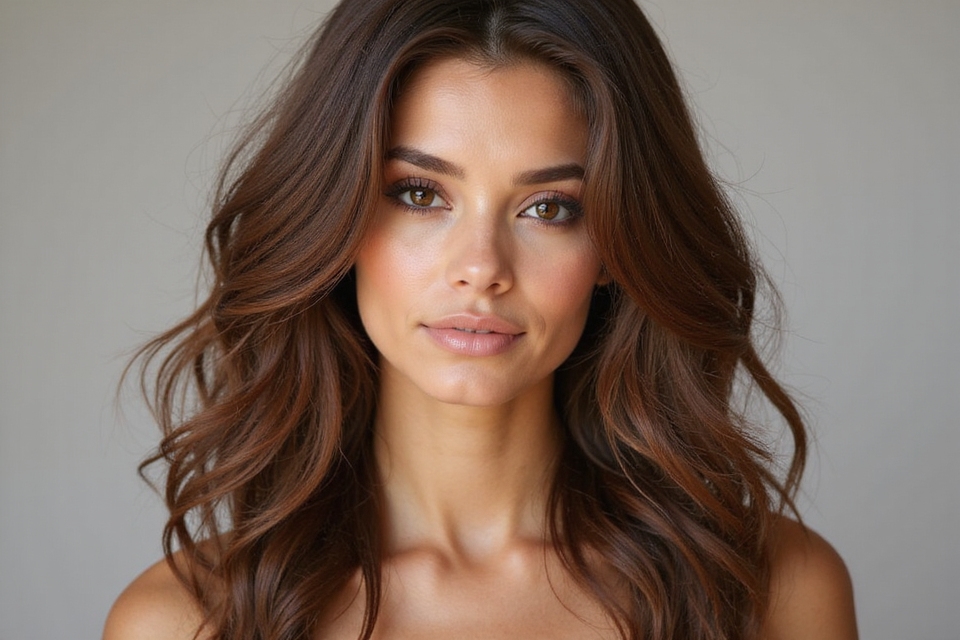
The real decision with brown and blonde hair isn’t which shade pairing looks prettiest. It’s how much of your actual head you’re willing to turn blonde.
Eighteen looks follow, and each one sits at a different point on that scale: a handful of pieces here, a defined zone there, a near-total shift further down the list. Read them by proportion first, shade second, and the right one gets a lot easier to spot.
Read This by Proportion, Not Just Shade
- Every look here sits somewhere on a scale from a few lightened pieces to a near-full color change; more surface area lightened means more upkeep, almost regardless of the specific shade.
- Undertone still matters, but it’s the second decision. Decide how much of your head you actually want to see blonde before you decide which blonde.
- The smallest-proportion options (scattered highlights, face-framing) are the cheapest and easiest to walk back if the result isn’t what you pictured.
Classic Balayage: The Reference Point for This Whole List

Balayage is worth starting with because it sets the middle of the proportion scale everything else on this list gets measured against. Hand-painted from a brown base into the lengths, it lightens roughly a third of the hair’s surface, concentrated where light naturally lands.
Why Balayage Became the Default
Because the paint stays off the root, you’ll notice the line between your natural color and the applied color stays soft instead of sharp. That’s the real reason this became the default brown-and-blonde technique rather than one option among many.
Plan on around $200 for a full balayage on shoulder-length hair, and expect three to four months before it needs a real refresh.
Scattered Highlights: A Handful of Pieces, Not a Section

Scattered sun-kissed highlights sit at the smallest end of the proportion scale: a handful of fine, individual pieces rather than a whole section of hair, placed where sun would naturally lighten it on its own.
You’ll notice the brunette base barely shifts. That’s the entire appeal, a lift subtle enough to pass off as a season outdoors rather than a salon appointment.
- Far fewer pieces than balayage, concentrated at the crown and around the face
- The base stays clearly brunette; nothing about the hair’s identity changes
- Grows out with almost nothing to manage, since so little was lightened to start
A Honey Ombre: Blonde Takes Over Only the Ends

An ombre moves the proportion question onto a different axis. Instead of scattered pieces, blonde takes over one defined zone, usually the bottom third of the length, while the root and crown stay completely untouched. A honey tone keeps that transition warm instead of stark.
- Darkest at the root, warming into honey by the tips
- Only the transition zone itself needs real upkeep
- Cutting length later removes the blonde zone entirely, a built-in undo button
Chocolate Brown With Caramel Streaks Woven In

Caramel streaks through a chocolate base sit closer to the highlight end of the scale than balayage or an ombre: individual streaks rather than a full section, placed with more density than the scattered highlights above.
The chocolate base carries the depth here on its own, so the caramel only needs to cover around a quarter of the surface to register as real dimension instead of a stray strand. That small proportion is precisely why it photographs as glossy and expensive rather than busy.
High-Contrast Face-Framing, Concentrated at the Front

Face-framing puts nearly its entire blonde budget into one small, high-visibility zone: the two panels that fall around the face. Everywhere else stays a true, deep brown.
That concentration is the trade-off worth understanding. You get a dramatic result without lightening much surface area at all, because the panels do the visual work the rest of the head never has to.
- Bright panels sit only at the front, framing the face directly
- The rest of the head stays untouched, deep brown
- A smaller lightened area means a smaller, cheaper touch-up down the line
Icy Blonde Tips on a Deep Brunette Root

Icy tips push the proportion scale toward the ends specifically, a defined cool-toned zone at the bottom of the hair while the root stays deep, almost espresso brunette. The dip-dye effect only works because the contrast between those two zones is sharp.
- A cool undertone matters most on the ends, or the icy tone drifts warm fast
- The root zone needs no maintenance at all, since it stays natural
- A bond-strengthening step matters here, since the ends are usually lifted several levels
🅰️Wants blonde in one defined zone
Icy tips or a honey ombre: the color lives in a clear section, root or crown left untouched.
🅱️Wants blonde spread evenly instead
Balayage or scattered highlights: less contrast, but blonde touches more of the head overall.
Chestnut Brown With Sandy Blonde Woven Through

Chestnut and sandy blonde land in the middle of the proportion scale, more coverage than a face-frame but softer and less defined than an ombre’s hard zone. The red in chestnut needs a blonde with enough warmth of its own to sit comfortably next to it, or the pairing looks mismatched instead of intentional.
- Sandy, neutral blonde balances the reddish warmth in chestnut
- Highlights stay soft and blended rather than concentrated in one spot
- A gloss on a steady schedule keeps the warmth from sliding toward orange
Ash Brown and Platinum, the Most Blonde on This List

Ash brown blended with platinum sits at the far end of the scale. More of the head turns blonde here than in almost anything else covered, and the two tones stay close enough in coolness that the transition looks like one continuous color rather than two competing ones.
This is the proportion trade-off made explicit: the more surface area that goes blonde, the more toning and bond care it needs, and platinum asks for both at the highest rate here.
Go in knowing this sits closer to a full commitment than a highlight refresh.
Two terms worth knowing before a conversation this far up the proportion scale:
📖Bond treatment
A strengthening step added during lightening to protect the hair’s internal structure when lifting several levels at once.
📖Toner
A tinted step applied after lightening to correct unwanted warmth and settle the blonde into the right shade.
Espresso Brown With Creamy Blonde Softening the Edge

Espresso is about as dark as brown gets, so even a modest amount of creamy blonde creates real contrast against it. The proportion here stays small while the effect still looks dramatic, since the dark base is carrying most of the visual weight.
- A warm, creamy blonde softens the contrast more than an icy tone would
- Accents concentrate near the face and along the ends
- A warm toner keeps the blonde from looking gray against such a dark base
Auburn With Golden Blonde, Kept in the Warm Family

Auburn and golden blonde share a warm foundation, so even a moderate proportion of blonde extends the red naturally instead of competing with it.
Where Temperature Beats Proportion
One rule matters more than proportion here: temperature. A cool blonde dropped into a warm auburn base fights it and turns muddy, no matter how little or how much surface area is involved. Golden, honeyed blonde is the version that sings against red-brown, since it shares the same warm family the auburn is built from.
Keep both tones warm and the color glows instead of clashing.
Two quick questions before booking an auburn-and-gold appointment:
1Does your skin lean warm or cool?
Warm skin is the safer match here; cool skin can still work but needs a colorist who’s deliberate about keeping the gold, not ash, family.
2Do you color-treat your hair already?
If your base is already dyed, bring the formula history so the colorist can predict how it will react before adding gold.
Warm Bronde for a Natural, Blended Glow

Bronde erases the proportion question almost entirely. Brown and blonde blend so evenly that you can barely tell where one starts and the other stops, which is what makes it look like one rich, dimensional color rather than a brown base with blonde added. The bronde bob guide covers this same blend on a shorter cut, if you’re curious how it wears at length.
You’ll notice it flatters an unusually wide range of undertones for exactly this reason: there’s no sharp line anywhere for a mismatched tone to clash against.
- The softest, most blended proportion on this entire list
- Suits nearly every undertone, warm or cool, because nothing sits in hard contrast
- Grows out with the least visible line of anything covered here
Dark Roots, Buttery Blonde Ends

A deliberately dark root melting into buttery blonde ends puts most of its blonde proportion in the lower half of the hair, on purpose. As your real roots grow in, they blend straight into the design instead of creating an obvious line.
Why the Dark Root Is Doing You a Favor
Buttery blonde is the most forgiving shade to pair with a dark root, soft and warm rather than sharp, since the warmth bridges the gap between the two zones.
This is one of the lower-maintenance ways to wear a real amount of blonde without the monthly root touch-up a solid blonde would demand.
Read the Root Line Before You Book
A dark root looks deliberate only when it’s placed with intention. Asked for without guidance, it can come across as an accident of neglect instead of a design choice, so bring a clear reference photo and say the word ‘shadow root’ specifically.
Golden Brown With Sunlit Strands

Golden brown moves the proportion question to the base color itself rather than the highlights added on top. The base is already a warm, light brown sitting halfway to blonde before a single strand gets lightened.
A few sunlit strands woven through then add gentle dimension without a dramatic change, since the underlying shade is already doing most of the visual work.
Because so little needs to shift, the upkeep stays minimal and the color suits warm and neutral skin tones equally well, with an easy, healthy glow.
Light Brown With Champagne Blonde Touches

Champagne blonde is a soft, neutral-to-cool blonde with a faint pink-beige cast, and against a light brown base it looks refined rather than loud. The two tones sit close together in depth, so even a fair amount of blonde still looks understated.
A Pairing Built on Closeness, Not Contrast
Because both shades are already light and gentle, the grow-out stays soft and the overall effect stays delicate rather than sharp.
Keep the champagne true with a gentle toning routine, since pale, cool blondes tend to drift warm over time.
Mocha Brown With Honey Blonde Balayage

Mocha is a soft, milky brown with cool undertones, and painting honey blonde through it creates a warm-meets-cool balance that looks refined rather than costume-y. The cool mocha keeps the look modern while the honey adds just enough warmth to flatter skin.
This pairing works at almost any proportion because the two tones sit close in depth to begin with, so the dimension stays subtle whether you go light on the highlights or heavier.
Light Ash Brown With Soft Blonde Highlights

Light ash brown is cool and a touch smoky, and soft blonde highlights woven through keep the whole look in the cool family for a clean, modern result. Even a moderate proportion of highlights stays controlled rather than golden.
This is a smart pick if warmer tones tend to look brassy on you, since everything here stays cool. A blue or violet toning conditioner helps hold the ash and keep any warmth at bay.
Caramel Highlights on Medium Brown

Medium brown is the most common starting base of all, and caramel highlights are the classic way to bring it to life. Warm caramel pieces woven through add golden movement, turning a flat, everyday brown into something with real depth.
Caramel glows against warm and neutral complexions alike and stays rich rather than washed out, so it delivers noticeable dimension while staying recognizably brunette.
It’s also adaptable by proportion: a few fine pieces look natural, while a heavier placement pushes the whole look closer to bronde territory.
Toffee Brown With Bright Blonde Flashes

Toffee is a warm, golden brown, and bright blonde flashes through it add pops of light that keep the look lively. The flashes are placed for impact, bolder than fine highlights but still far short of a full balayage’s coverage.
The toffee base keeps everything grounded, so the bright pieces catch the eye without the color ever feeling cold or scattered.
- Bolder, brighter blonde flashes than a standard highlight package
- A warm toffee base keeps the brightness from reading cold or harsh
- A gloss between full appointments keeps both tones looking fresh
Brown and Blonde Hair Questions
?How much of my hair actually needs to go blonde to see a real difference?
Less than most people expect. Even a few scattered highlights near the crown and hairline register as visible dimension, since that’s where light naturally lands and where eyes go first, long before any full section gets lightened.
?Does a bigger proportion of blonde always mean more upkeep?
Generally yes, but placement matters as much as amount. A defined zone like an ombre or dark-root melt can cover real ground while still growing out cleanly, since there’s no scattered regrowth line to chase.
?How do I decide between warm and cool tones?
Match the blonde to your skin’s undertone first, not to the trend you saw last. Warm or golden complexions tend to glow in caramel, honey, and golden blonde; cool or pink-toned skin generally suits ash, sandy, champagne, or icy blonde better.
?Can I go from a small amount of blonde to a much bigger amount later?
Yes, and it’s actually the safer order to go in. Starting small lets your colorist judge exactly how your hair takes lightener before committing to a larger, harder-to-reverse proportion down the road.
Pick a Proportion, Then Pick a Shade
Every look on this list works on the same underlying scale, from a handful of lightened pieces to a near-full color change, and the shade pairing matters less than most people assume once that proportion is decided.
Start by being honest about how much upkeep you actually want, then choose from the shades that fit that proportion. The ash blonde hair, ashy blonde hair, and black and blonde hair guides are worth a look if the cooler or higher-contrast end of this list caught your eye.
More to Explore