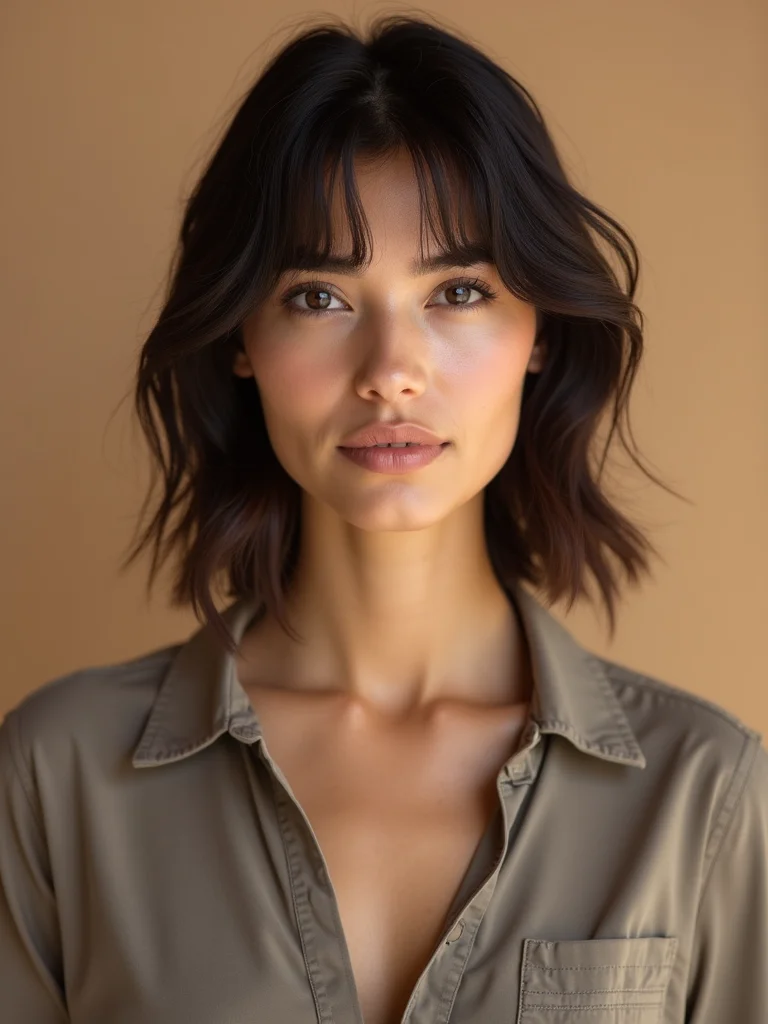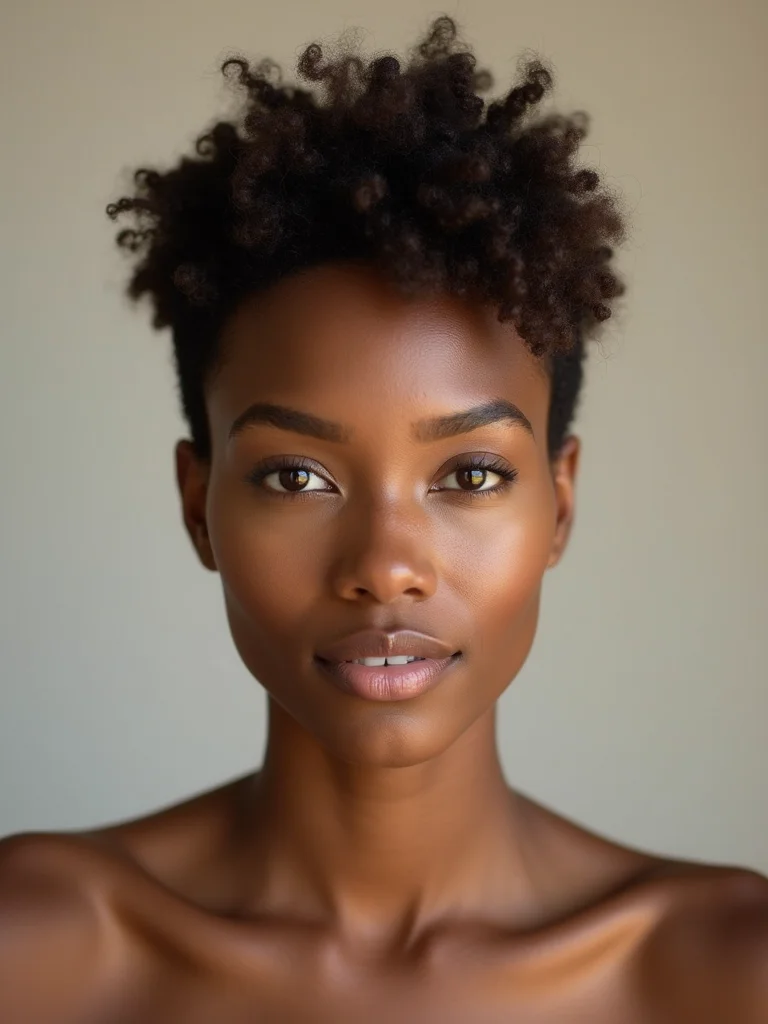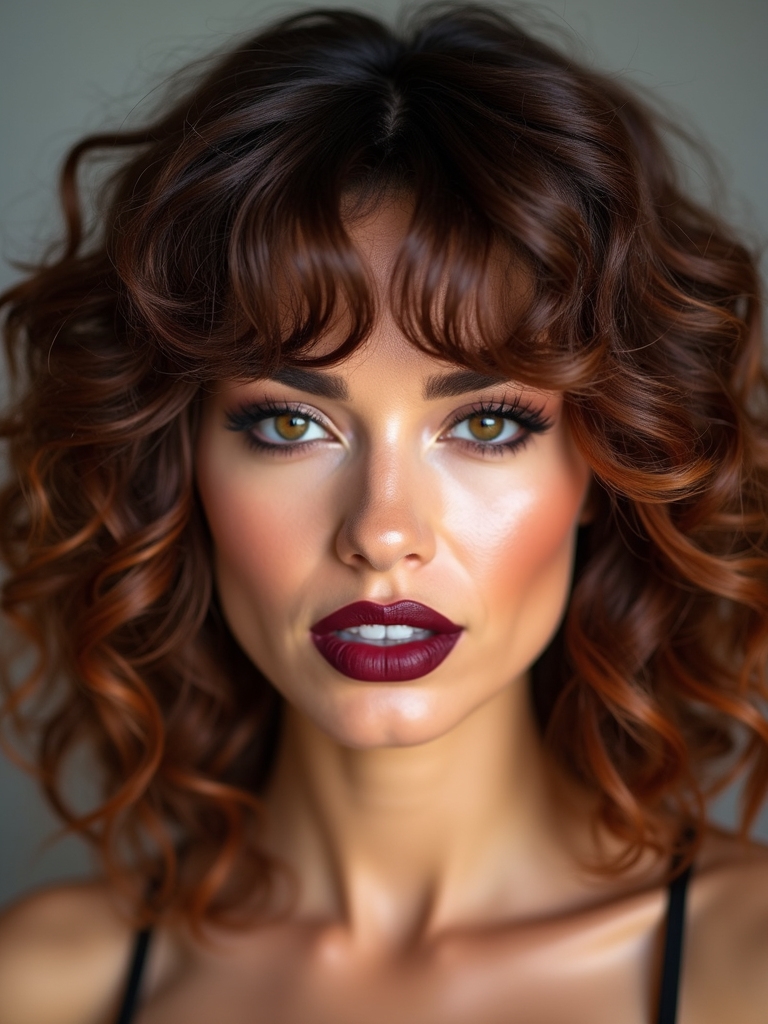
For years the advice handed to curly-haired clients was simple and wrong: skip bangs, curls are too unpredictable to trust with a fringe. That advice never held up. Curly hair takes a fringe well once the cut accounts for how much curl shrinks on the way from wet to dry.
The real skill is matching fringe style to texture. It’s not a one-shape-fits-all decision. Fifteen versions follow, moving from loose waves through tight coils, each paired with the cutting detail that actually makes it work.
Before You Book: What Actually Matters
- Every curly fringe gets cut with extra length built in, since curls always land shorter once they’ve fully dried and sprung.
- Looser waves suit soft, sweeping shapes; tighter coils suit shorter, bolder fringes that show off the pattern directly.
- None of this requires heat. Working product through bangs while they’re fully wet, then diffusing or air-drying, gives cleaner definition than a flat iron ever will.
Airy Curtain Bangs for Looser Waves
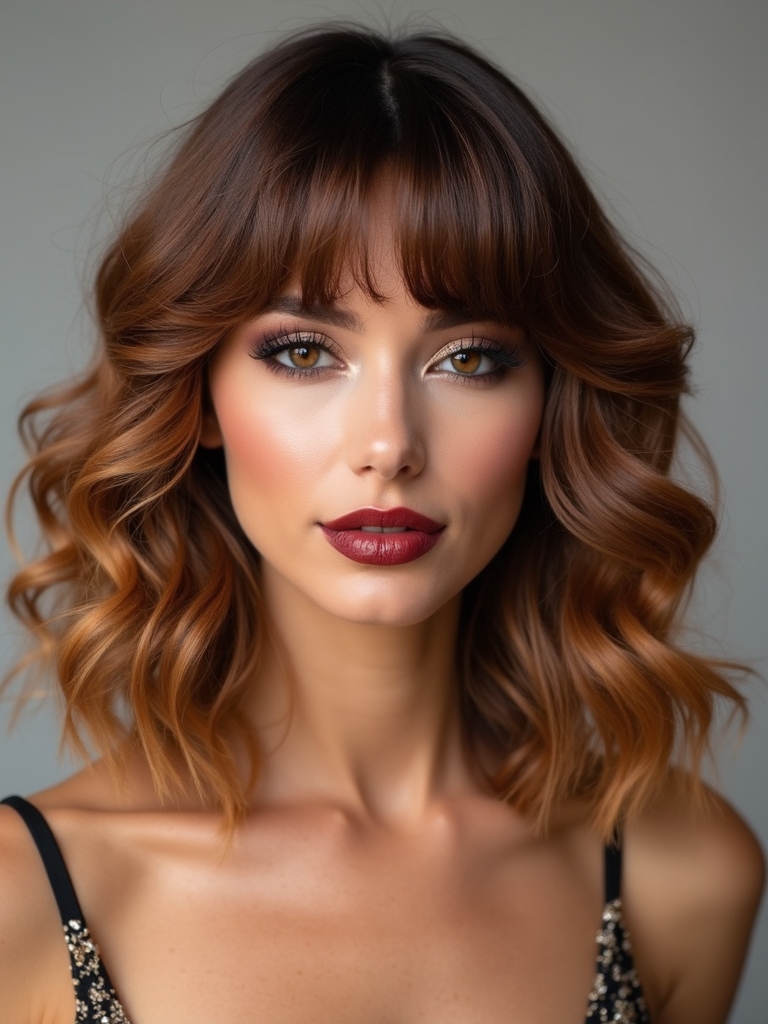
Curtain bangs parted down the middle and swept to either side count among the most forgiving fringe shapes for looser wave patterns. The natural bend flows straight into the curtain shape. No hard line ever forms.
The Most Forgiving Entry Point
There’s real reassurance in how this one grows out. Left untouched for a few extra weeks, a curtain fringe still looks deliberate. It matters to anyone nervous about committing to bangs for the first time.
This version suits 2B through 3A wave patterns best. Our curly bangs guide looks at the same idea from a wider angle.
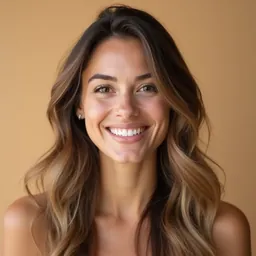
Micro Fringe on Coily Texture
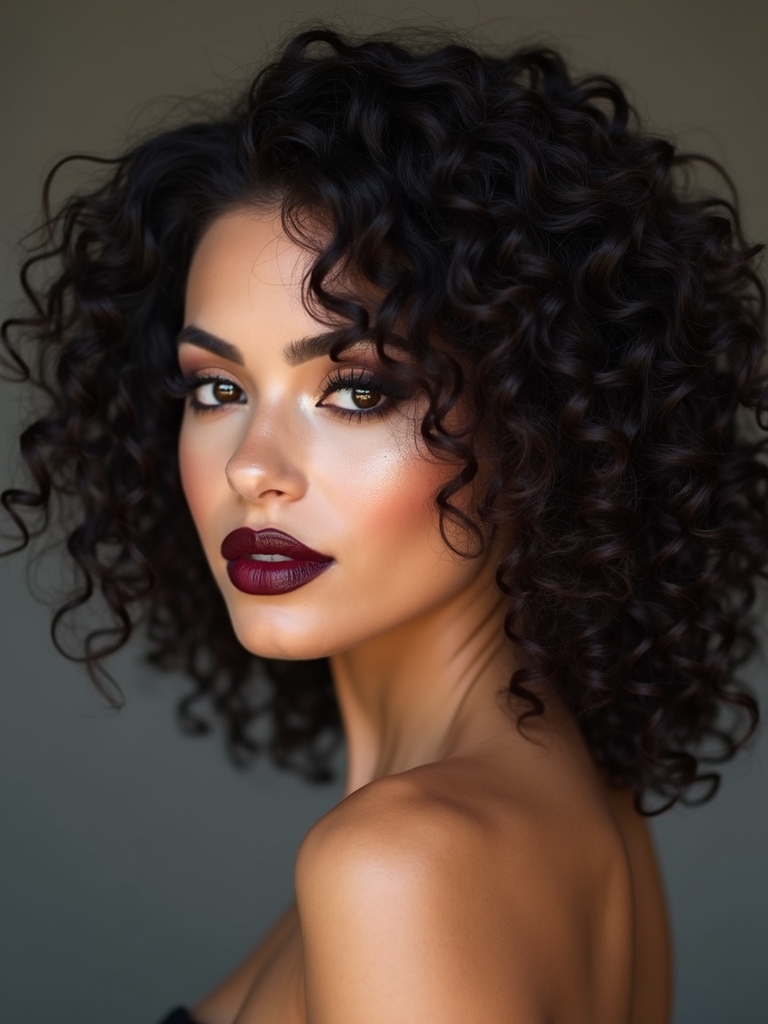
A micro fringe sits well above the brows, short and springy. On tight coils, it becomes a bold, joyful detail rather than a risky one.
Coils Do the Heavy Visual Lifting
The coils bring their own volume from the start. This cut does most of its visual work the moment it’s finished, with no extra styling needed to fill anything in.
Getting the length right takes real care. Coils can spring up dramatically once dry, so the cutting has to plan for that shrinkage from the first section, not fix it afterward.
Shaggy Layers With a Curly Fringe
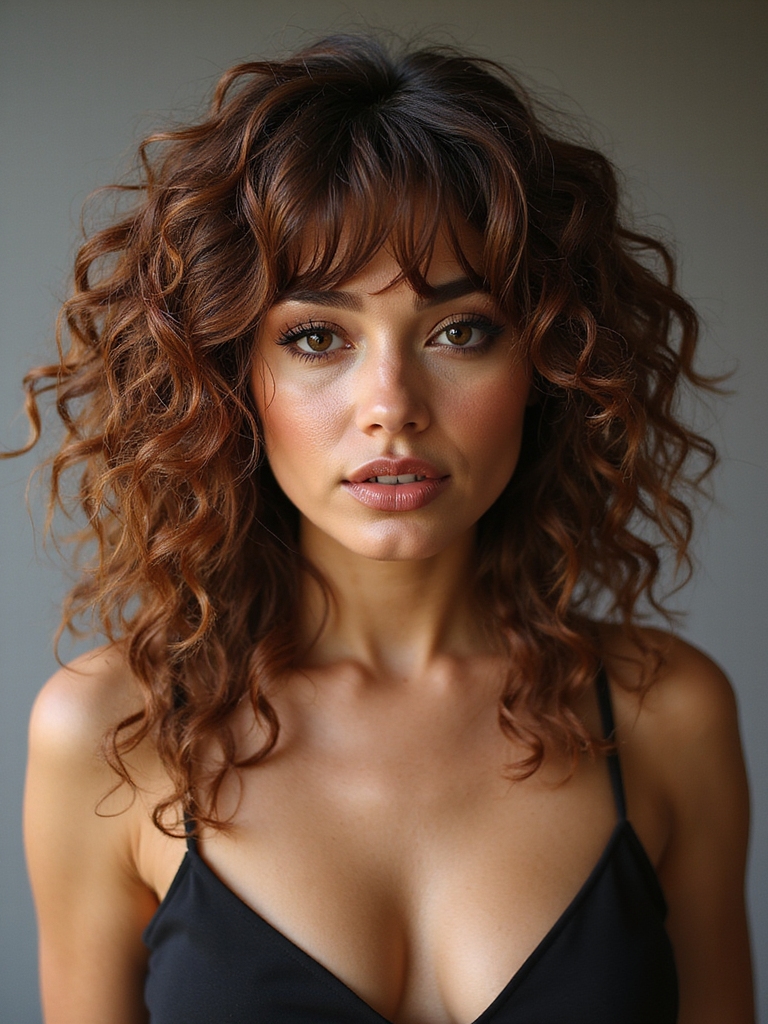
Blending a curly fringe into shaggy layers lets the bangs move with the cut instead of sitting apart as their own section. The shag framework suits nearly every curl pattern; the layering removes bulk and gives curls somewhere to go. Our curly shag with bangs guide takes this specific pairing further.
It grows out gracefully too. That’s a real selling point for anyone still deciding whether a fringe is a long-term commitment or a short experiment.
- Removes weight so a dense fringe sits soft, not puffed out
- No hard line to manage as it grows
- Works across a wide span of curl types with minor tweaks
ℹ️How Much Coils Actually Shrink
A tightly coiled section can spring up to roughly half its stretched-out length once fully dry. Cutting to a wet or stretched measurement without planning for that shrinkage is the single most common reason a coily fringe ends up shorter than intended.
Side-Swept Bangs for Defined Ringlets
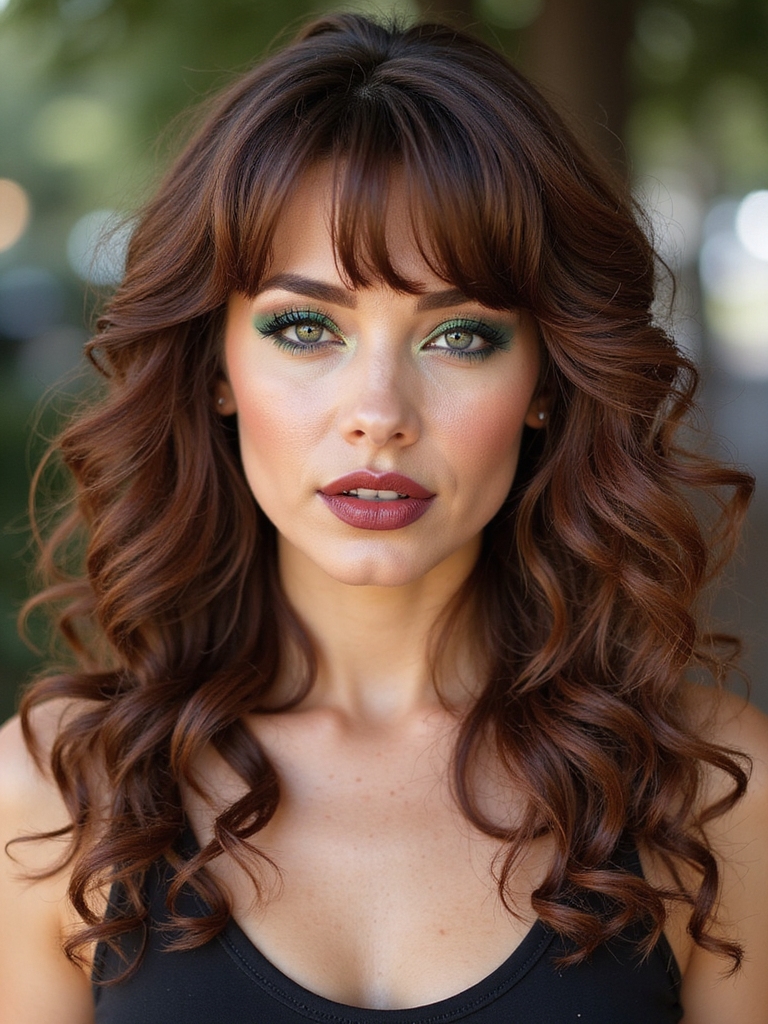
Side-swept bangs carry defined ringlets diagonally across the forehead, softening and subtly lengthening the face in one motion. The diagonal line flatters a prominent forehead or a rounder face shape especially well.
Setting the sweep takes a diffuser and a cupping motion, guiding curls toward whichever side they’re meant to fall. Once trained, they hold that direction. No brush or heat required. A quick refresh with water and a pea-sized amount of curl cream resets the sweep after a workout or a humid afternoon.
Wolf Cut Curls With Face-Framing Fringe
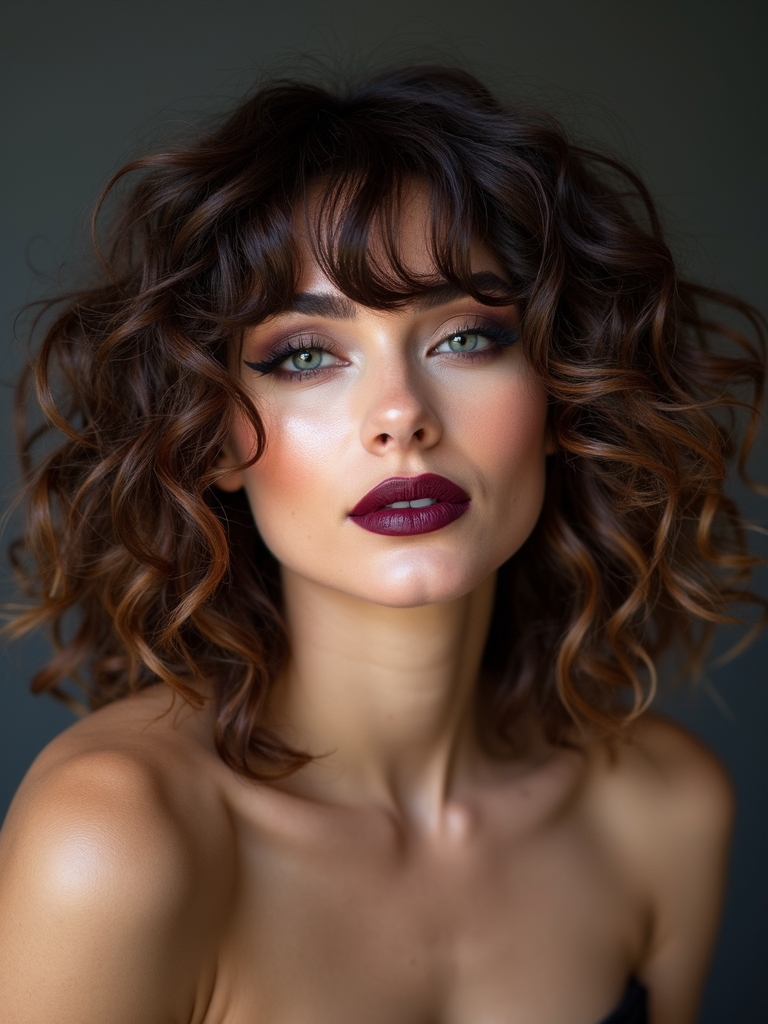
This mashup layers heavy, choppy sections through the crown and lets a curly fringe run right into them, so the whole silhouette reads edgy rather than tidy. Curls pick up extra movement from the layering, and the fringe pulls that energy forward onto the face.
This shape needs more upkeep than a plain shag would. A texturizing product worked through damp curls keeps every layer visibly separated. Booking it is worth planning for. The full cutting breakdown sits in our wolf cut for curly hair piece.
- Bolder and more fashion-forward than a standard curly fringe
- Settles into a softer shag shape as it grows
- Needs a texturizing product to stay piecey through the day
👍What Side-Swept Ringlets Get Right
- +Softens a strong forehead or angular jawline
- +Holds its direction without daily heat once trained
- +Blends naturally into the rest of a curly cut
👎What to Watch For
- –Takes practice to diffuse the sweep consistently
- –Can shift on humid or windy days
- –Less forgiving than a center part if grown out unevenly
Dense Curly Bangs With Balanced Volume
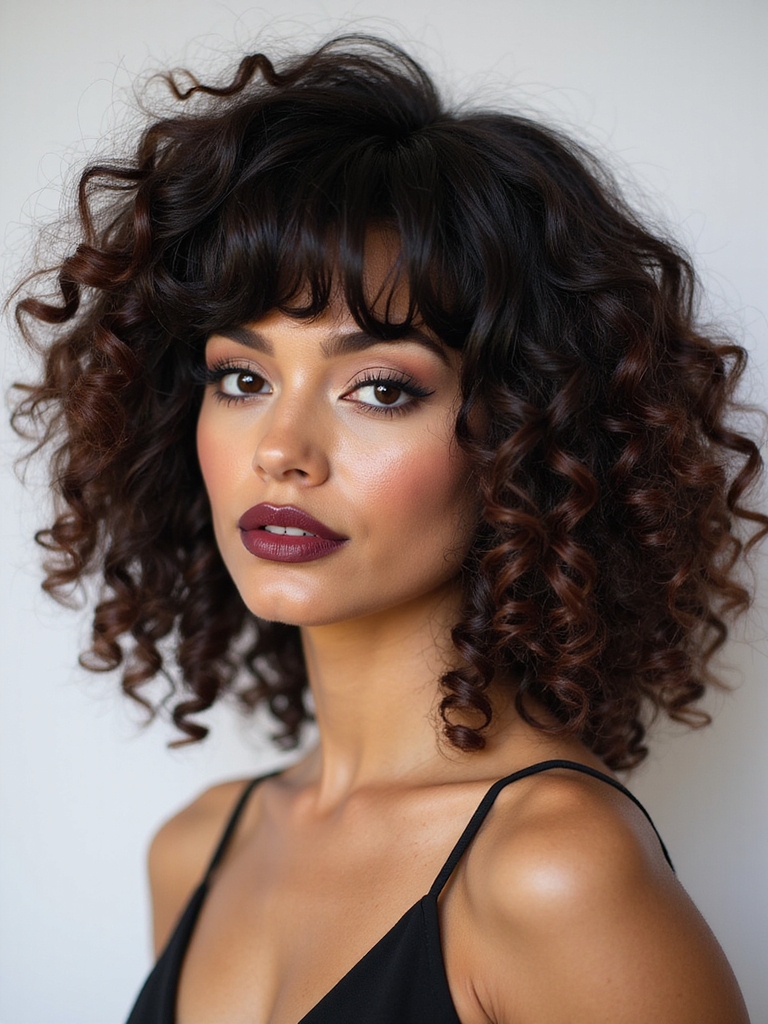
A dense, full curly fringe only works when the volume stays balanced against the rest of the shape, so the bangs frame the face instead of taking it over.
Density is where this version most often goes wrong. A fringe left too heavy tends to puff outward instead of settle. The fix is almost always thinning from underneath, not cutting more length off.
A stylist experienced with curl texture earns their fee here more than almost anywhere else on this list. That judgment call, how much to remove and from where, decides whether the whole thing works. Expect a curl-specific fringe trim to run $25 to $45 on top of a regular cut.
Wispy Bangs for Loose Beachy Curls
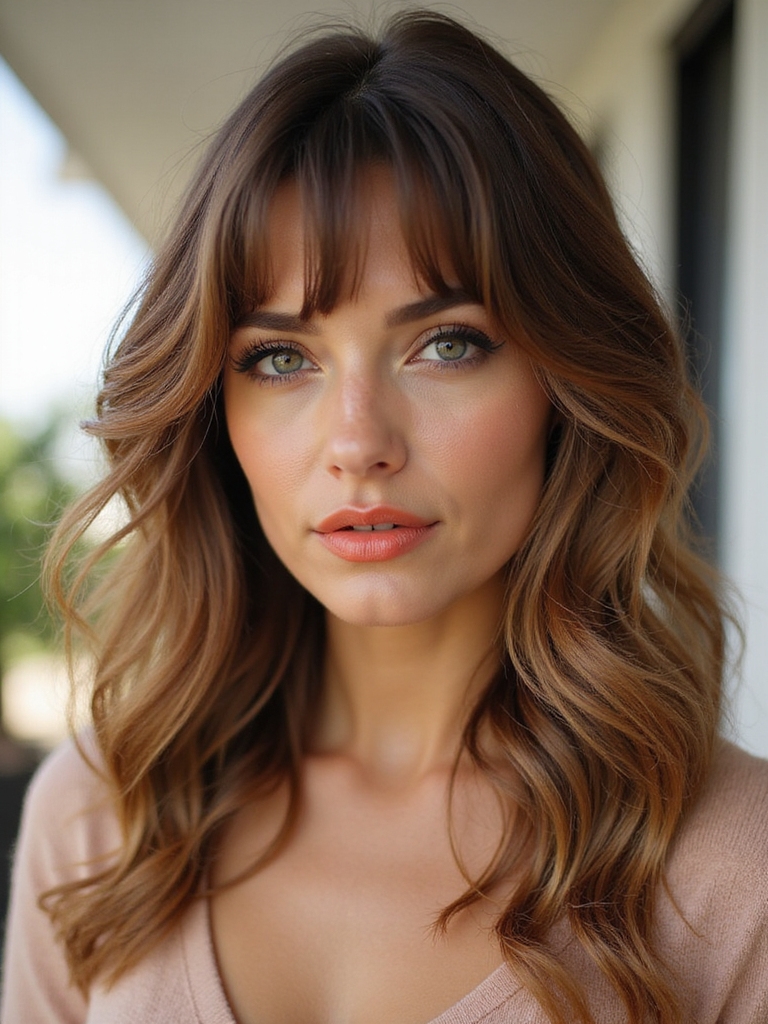
Wispy bangs, thin and see-through by design, keep an otherwise full look soft on loose, beachy curl patterns. A lighter fringe moves with the curl instead of fighting it, which makes this a sensible first attempt for anyone who has never worn bangs before. It photographs well too, since the sparse strands never fully hide the eyes.
- A sea-salt spray brings back separated, beachy texture fast
- Forgiving on fine or lower-density curls that can’t hold weight
- Pins back easily on a second or third wash day
Bottleneck Bangs for Oval Faces
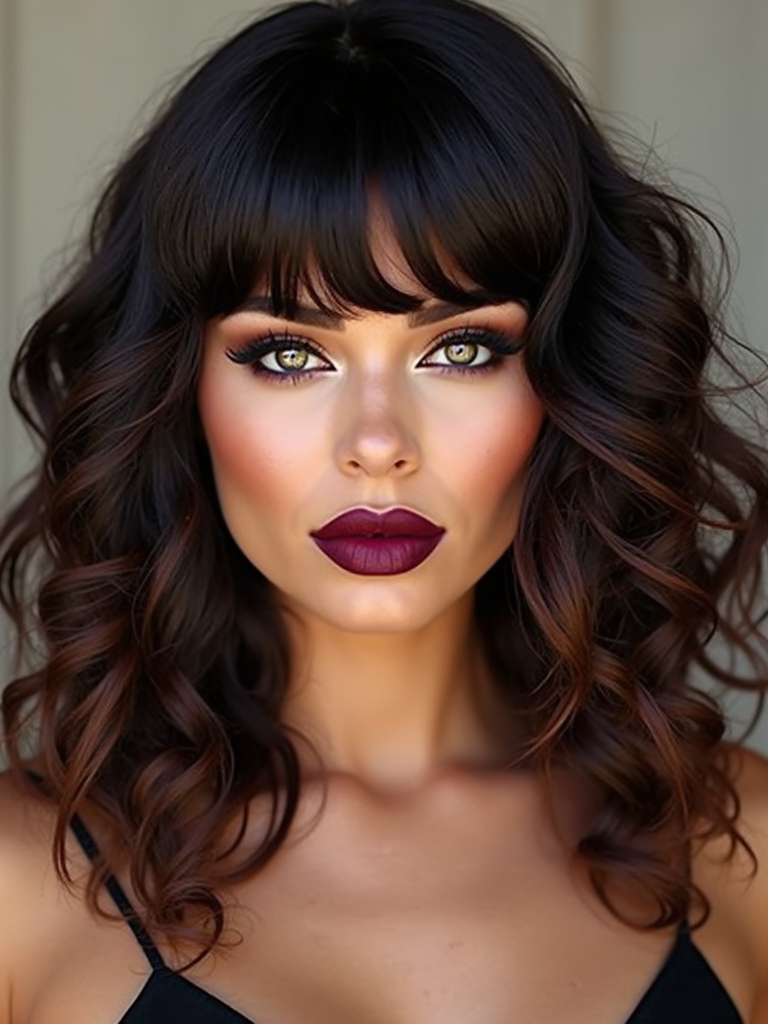
Bottleneck bangs run shorter through the center and longer toward the sides, curving in and back out in a shape that echoes the neck of a bottle. The style flatters oval faces particularly well, and curl texture adds a softness a straight bottleneck fringe rarely reaches on its own. It comes across more sculpted than a plain curtain fringe, worth knowing if a bolder silhouette is the goal.
- Tapered shape frames the cheekbones and opens the eyes
- Blends into the surrounding lengths for an easy grow-out
- A diffuser keeps the spring while holding the taper
“Most stylists who work with wavy and curly clients regularly steer first-timers toward the lightest fringe option available. Adding more length or density later is simple. Growing out a heavier cut that didn’t work is not.”
Asymmetric Bangs to Soften Angles
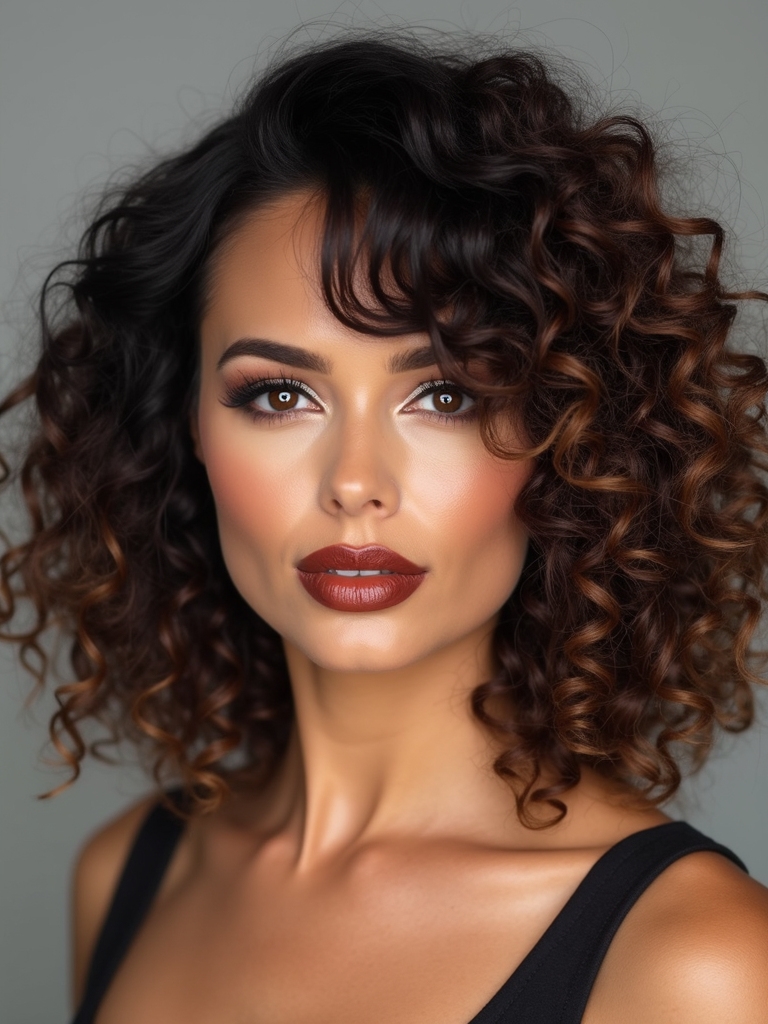
Asymmetric curly bangs run longer on one side than the other, and that uneven, curl-softened line does real work balancing a strong jawline or angular features. The asymmetry pulls the eye along a flattering diagonal instead of straight down the center. It’s closely related to the effect covered in our face-framing curtain bangs guide.
- Natural curl keeps an uneven line soft, not choppy
- Draws the eye across the face on a balancing diagonal
- Can be parted toward the longer side for extra coverage
Baby Bangs on Tight Corkscrews
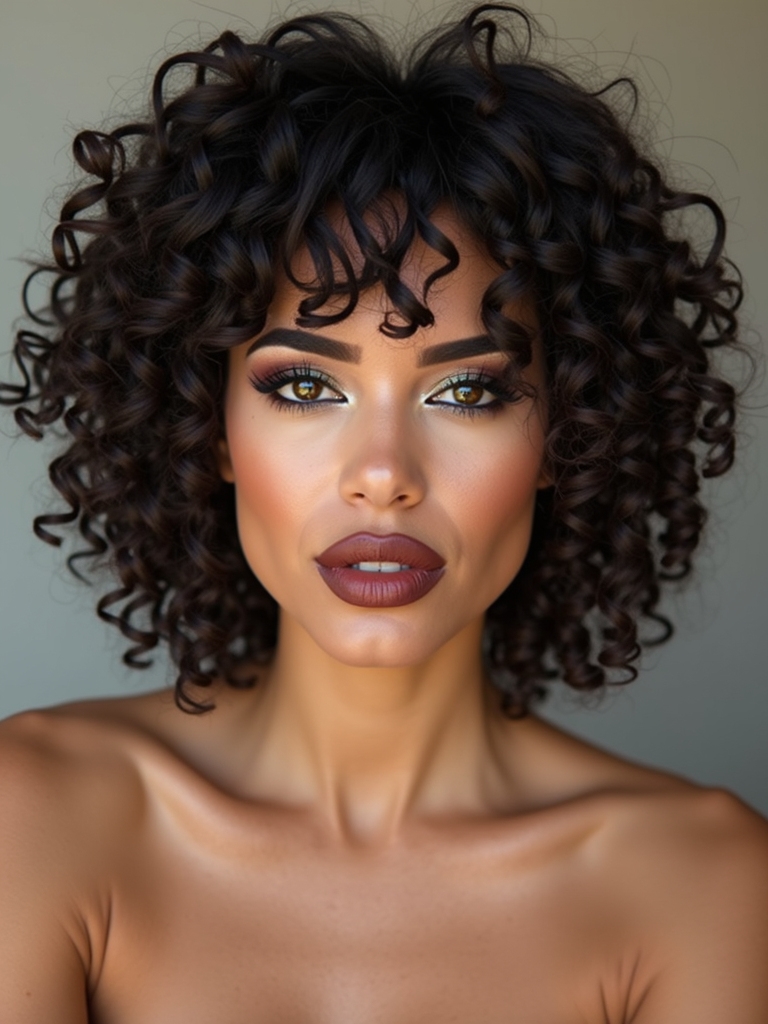
Baby bangs sit noticeably higher than a standard fringe, cropped well past the brow line, and on tight corkscrew curls they make a bold, high-energy statement. The springy density of tight coils gives even a very short fringe all the volume it needs to look intentional.
The Boldest, Least Reversible Option Here
This is the boldest, highest-commitment choice on this list, a close cousin to a micro fringe but pushed shorter and higher still.
Cutting has to happen dry, with shrinkage accounted for at every section, or the result lands shorter than planned. Sit down for this one only once truly certain.
Long Curly Fringe for Easy Upkeep
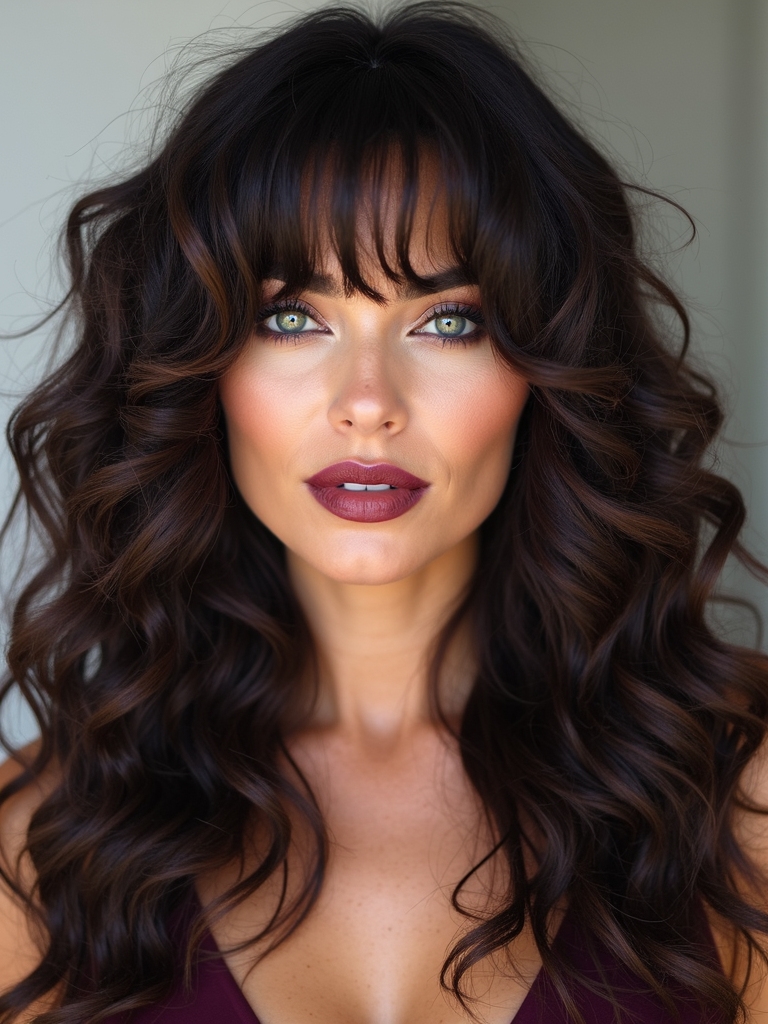
A long curly fringe grazes the cheekbones and blends softly with the lengths around it. It’s the lowest-effort way to wear bangs on this entire list, by a wide margin.
It pins back in seconds on a rushed morning and grows out with almost no awkward in-between stage. For anyone wanting face-framing softness without frequent trims, this is usually the first version worth trying.
- Pins back instantly for the gym or a busy morning
- Stretches well past two months between fringe-only trims
- Grows out with barely a visible line to hide
Layered Bangs Across 3A to 3C Curls
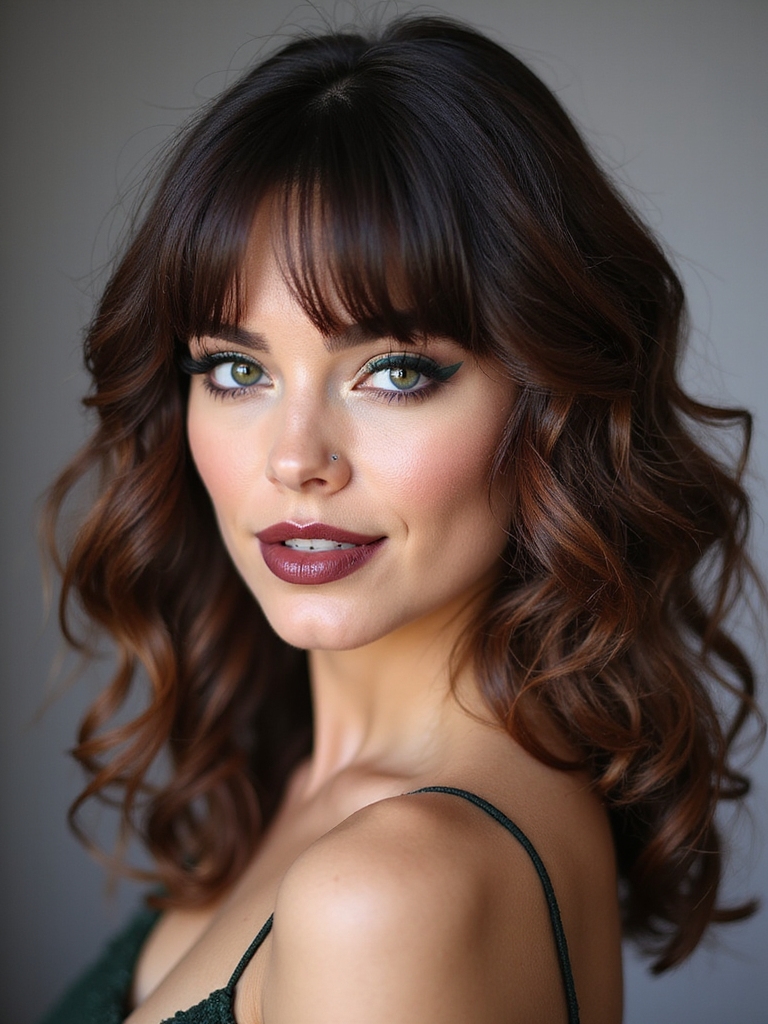
Layered bangs flatter a broad range of curl patterns because the layering gets tailored to each texture’s spring and density instead of applied the same way across the board. The thinning removes bulk so a fringe sits light, not blocky, especially on tighter 3C patterns. Our layered bangs guide covers the technique on its own terms.
- Looser 3A curls take soft, blended layering through the fringe
- Tighter 3C curls need shorter, shrinkage-aware shaping
- Layering thins bulk so the fringe stays light, not dense
📋Before Asking for a Long Curly Fringe
- ✓Confirm the length plan accounts for your curl pattern’s shrinkage
- ✓Ask how the fringe transitions into your length, not just where it starts
- ✓Show your stylist a reference at rest, never stretched or blown out
Coily Halo Bangs for a Round Frame
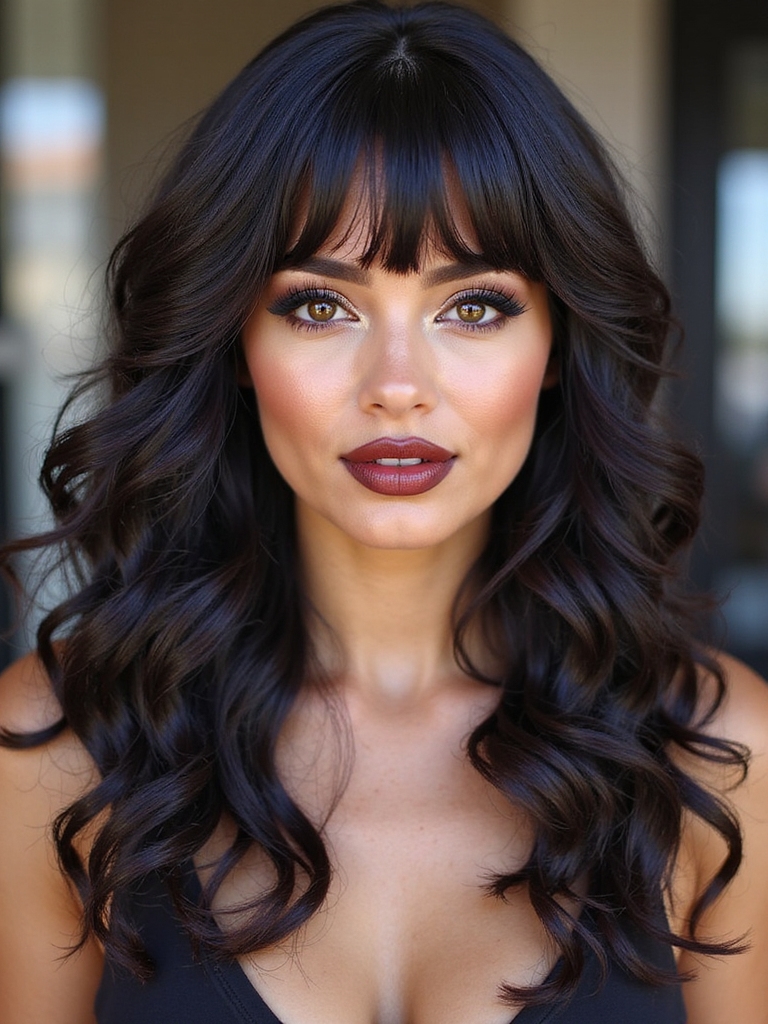
Coily halo bangs ring the whole face in a soft, rounded frame of curl, putting tight coily texture on full display. The fringe blends into the surrounding curls, so the shape lands as one even, voluminous halo, not a separate piece.
- Celebrates 4A through 4C coils with no heat or stretching
- A curl-defining cream plus a diffuser keeps the halo even
- A wide-tooth pick at the roots adds lift when needed
Defined Spiral Bangs With a Diffused Finish
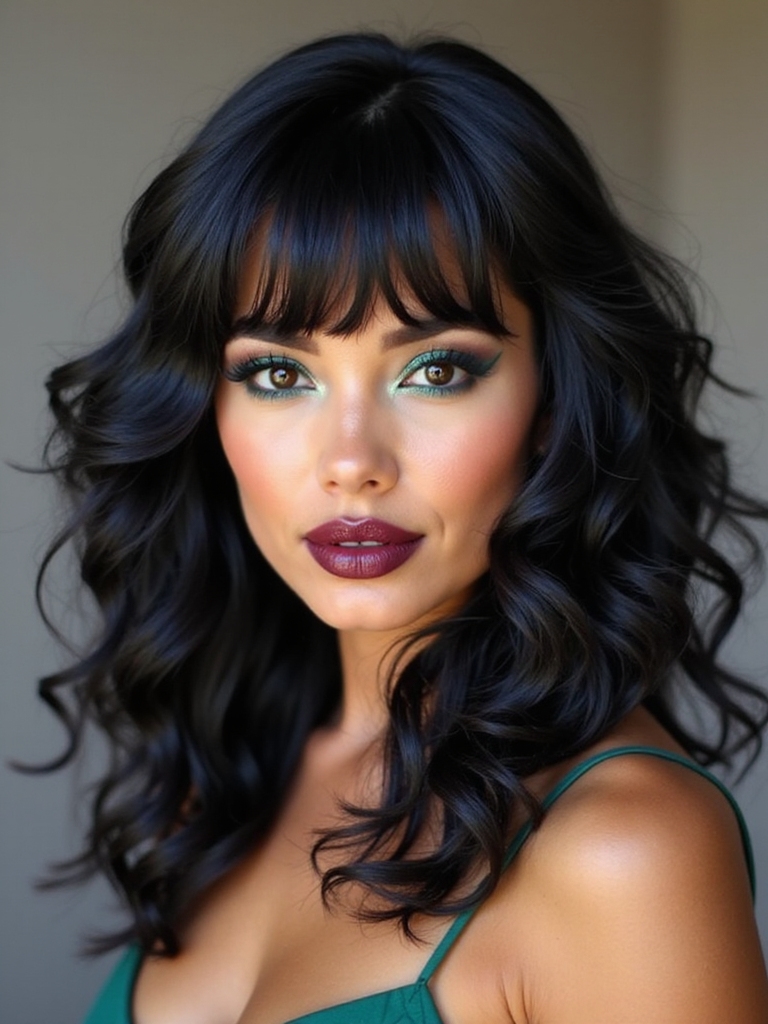
Spiral bangs spring into crisp, well-formed curl, and a diffused finish gives them real bounce along with the polished edge most people are actually after. That level of definition comes down to drying technique, not the cut itself.
- Cream worked through bangs while still soaking wet forms the cleanest spiral
- A diffuser on low heat and low speed protects the pattern while drying
- Leaving curls undisturbed while drying keeps the spiral from breaking apart
A Heatless Routine for Your Curly Fringe
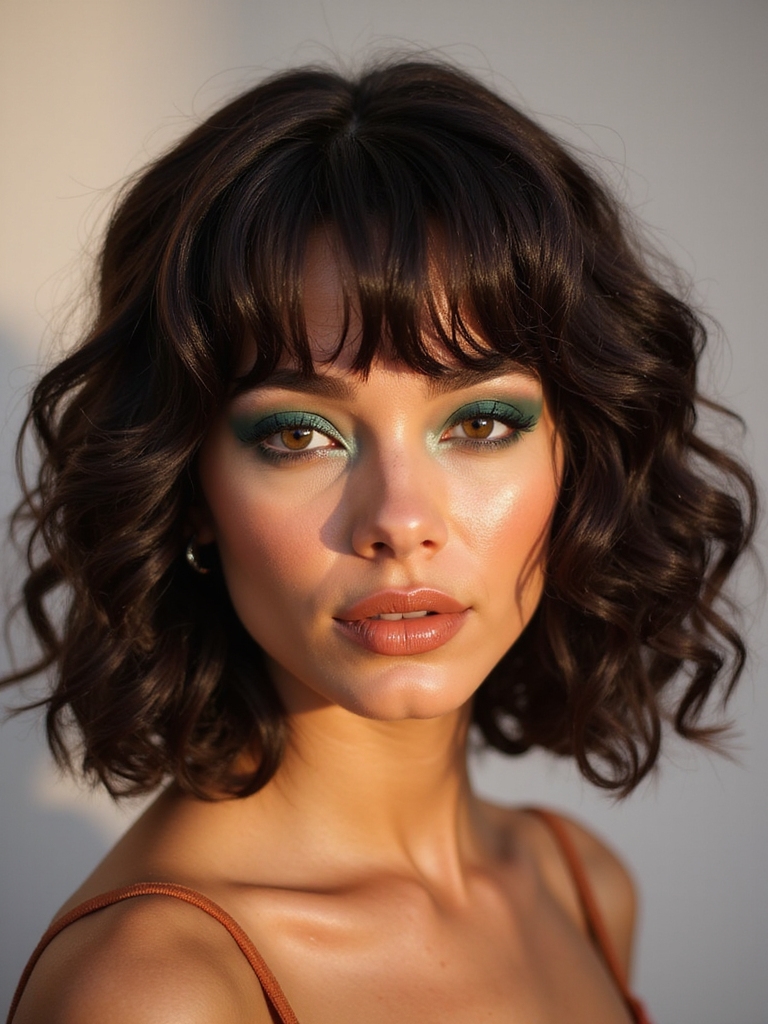
The healthiest-looking curly fringes tend to belong to people who keep a hot tool away from them entirely. Heat dries out a short section faster than the rest, and a fringe gets handled more throughout the day than almost any other part of the head.
Why Heat Wears a Fringe Out First
Protecting it from that repeated heat pays off directly in shine and in how long the cut holds its shape. The routine stays short. A curl cream on soaking-wet bangs right out of the shower, a gentle scrunch to set the pattern, then a diffuser on low or a simple air-dry.
Between full washes, a light mist of water plus a small amount of reworked cream keeps things defined. Leaving the flat iron in the drawer does more for a curly fringe’s long-term health than any single product could.
Cut for the Curl, and the Fringe Follows
The old idea that curly hair simply can’t wear bangs was never accurate. It just needed cutting technique most stylists weren’t trained in. Account for shrinkage, match the shape to an actual curl pattern instead of a photo, and nearly every texture, loose to tight, can carry a flattering fringe.
Finding a stylist truly experienced with curls matters more here than the specific style chosen. Once that piece is in place, styling heatless by defining curl on wet hair keeps the whole thing looking intentional day after day.
More Worth Saving