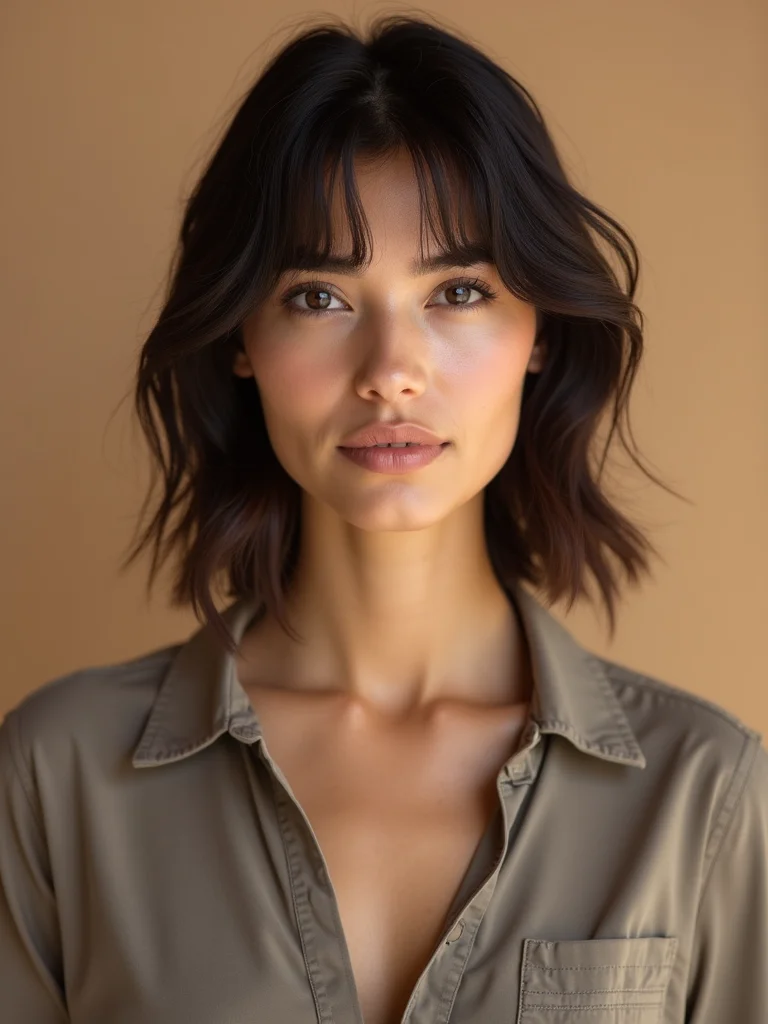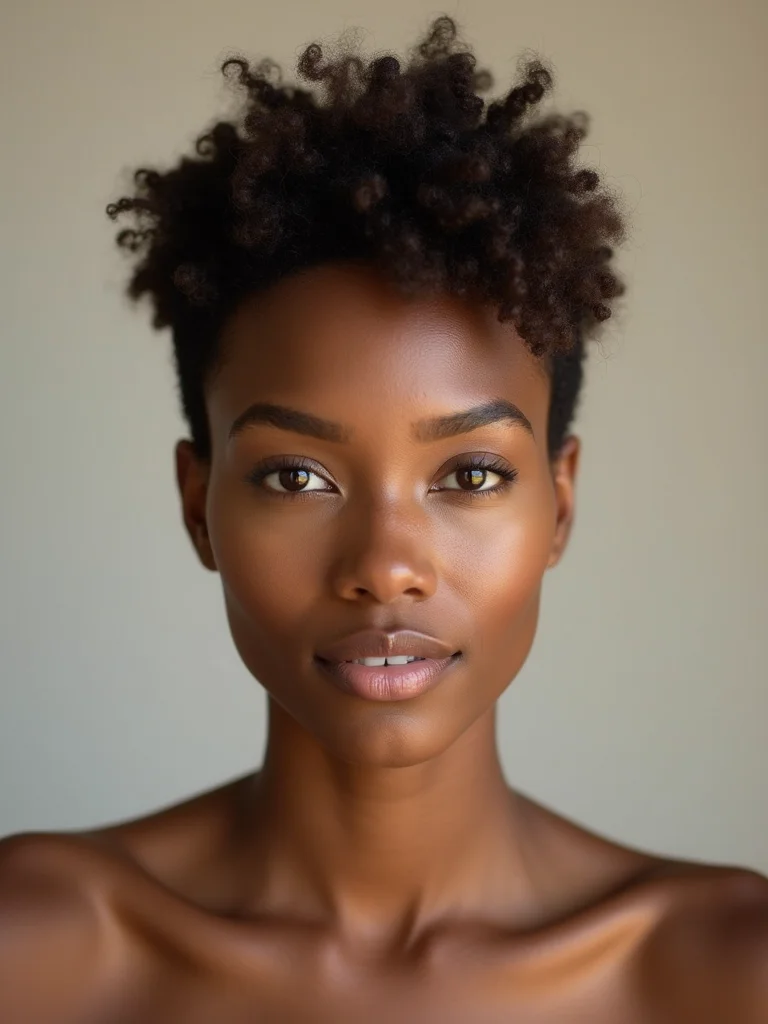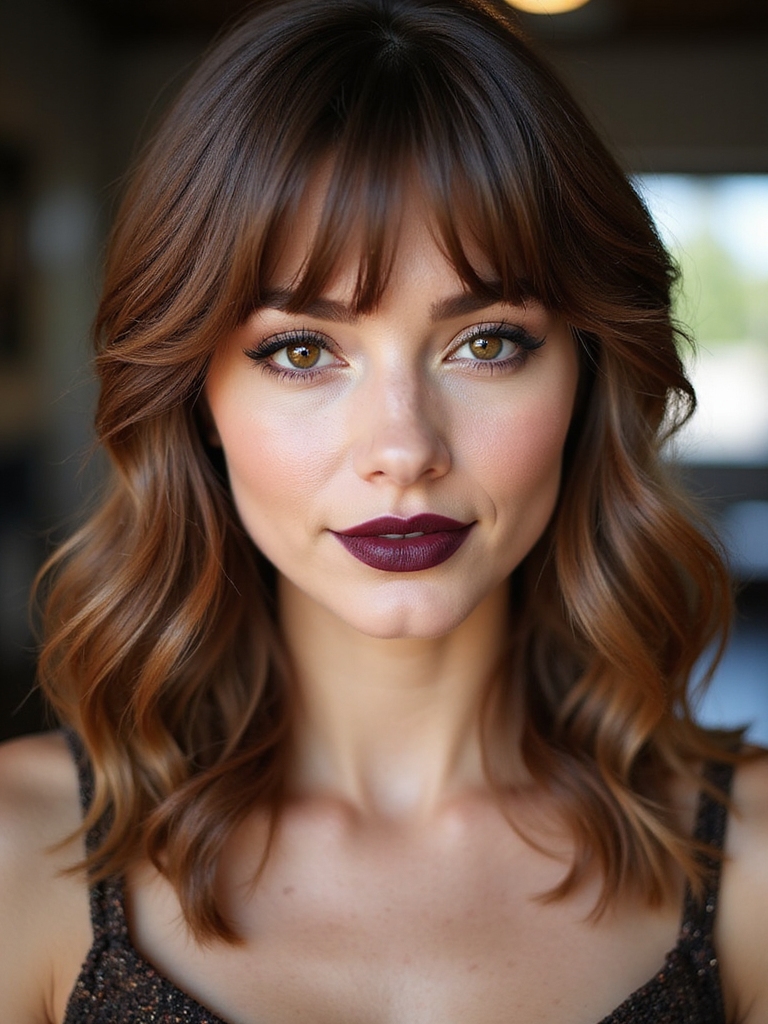
The biggest myth about bangs is that they are all one thing: a heavy curtain dropped flat across the forehead. Layered bangs prove otherwise. By cutting movement into the fringe itself, they swap that solid block for something soft, piecey, and full of life.
That layering turns a fringe modern, whether it is wispy and barely there or choppy and bold. These fifteen layered bangs styles show how much a fringe can change a face, and how different one can look from the next.
What Layering Does for a Fringe
- Layered bangs have movement cut into the fringe, so it falls in soft, piecey sections instead of one blunt line.
- The layering keeps a fringe light and easy: most styles forgive a little grow-out and fall into place with a quick blow-dry.
- Ask your stylist to point-cut the fringe and leave it a touch long; layered bangs trim shorter easily but never grow back overnight.
Wispy Curtain Bangs for Soft Framing
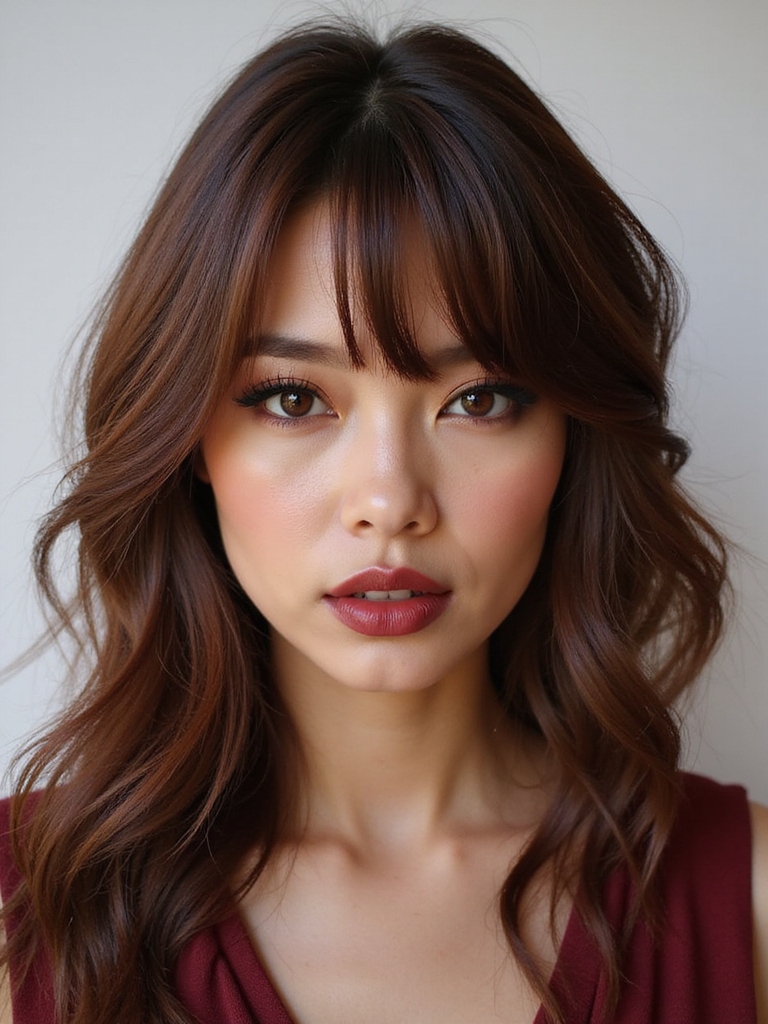
Wispy curtain bangs are layered bangs at their gentlest, the ends feathered so they part softly and graze the cheekbones. The layering inside the fringe is what keeps them light and soft. They frame the face without weight and grow out into soft face-framing pieces.
That makes this the easiest fringe to try first, especially for anyone who has never worn bangs before. Our curtain bangs guide goes deeper if this is your pick.
- The lightest, most forgiving layered fringe.
- Blends into longer face-framing layers as it grows, no awkward stage.
- A quick round-brush bend is all the daily styling it needs.
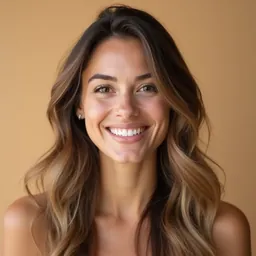
Piecey Shag Bangs
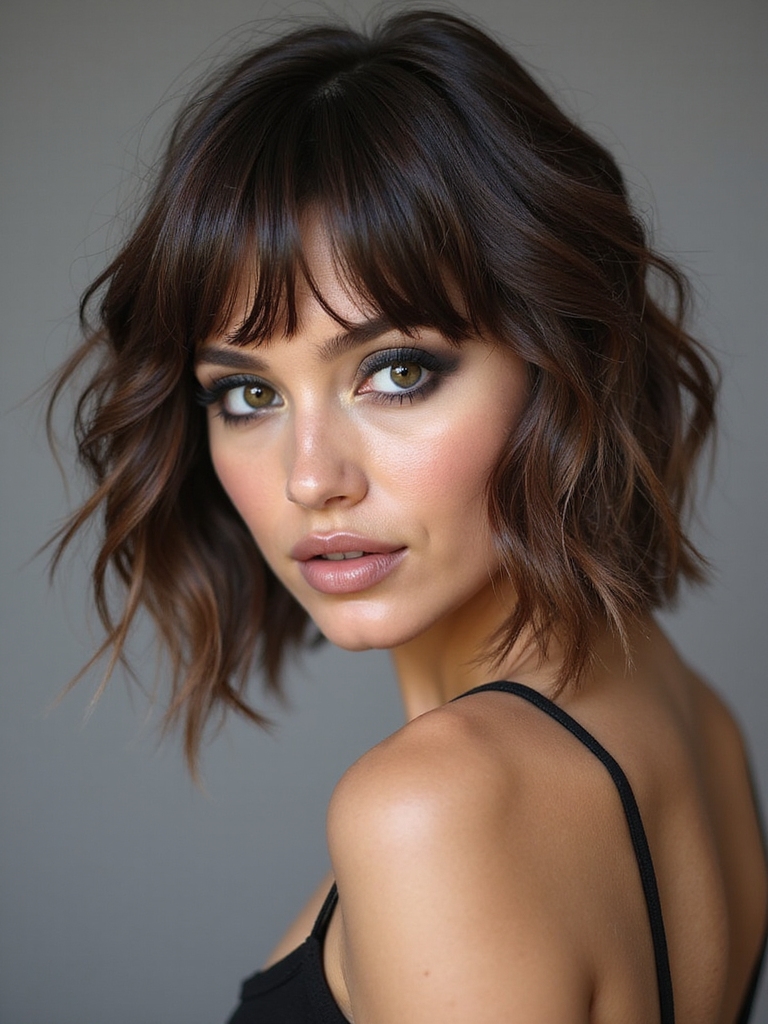
Choppy, piecey shag bangs separate into soft sections for a relaxed, undone fringe. The layering breaks the bangs into soft, separate pieces. They suit a textured cut and look best a little grown out, which makes them low-fuss between trims.
The piecey separation is the whole look, so styling is about texture, not polish. A shag fringe pairs naturally with a layered shag cut. Worn with loose, undone lengths, the bangs pull the whole look together.
Getting that piecey separation:
1Rough-dry
Dry the fringe with your fingers, not a brush, for natural movement.
2Add grit
Work a little texture paste or sea-salt spray through the pieces.
3Separate
Pinch the ends apart so they fall in distinct sections.
Long Face-Framing Layers
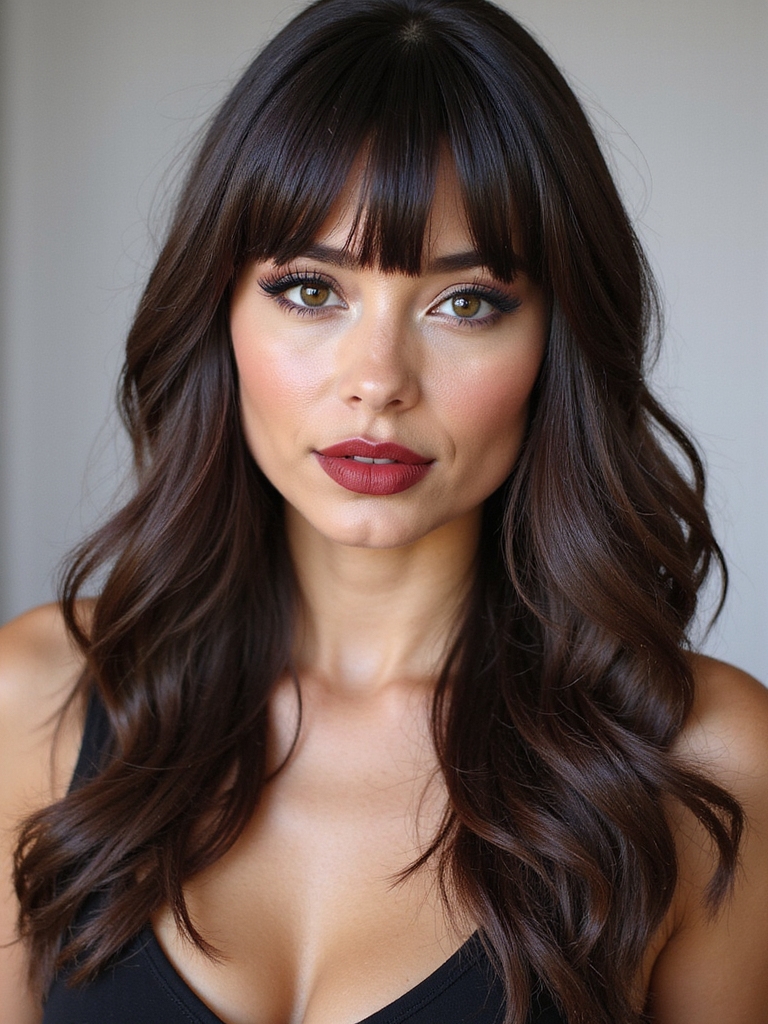
Not every fringe sits across the forehead. Long, layered face-framing pieces part down the center and sweep back, framing the face while leaving the forehead open. They work like a soft fringe with none of the commitment, which is why they win over so many people who are nervous about a full fringe. Here is why they feel so low-stakes:
- They frame the face on both sides at once.
- They grow out smoothly into your length.
- No forehead is covered, so they suit anyone unsure about bangs.
Side-Swept Layered Bangs
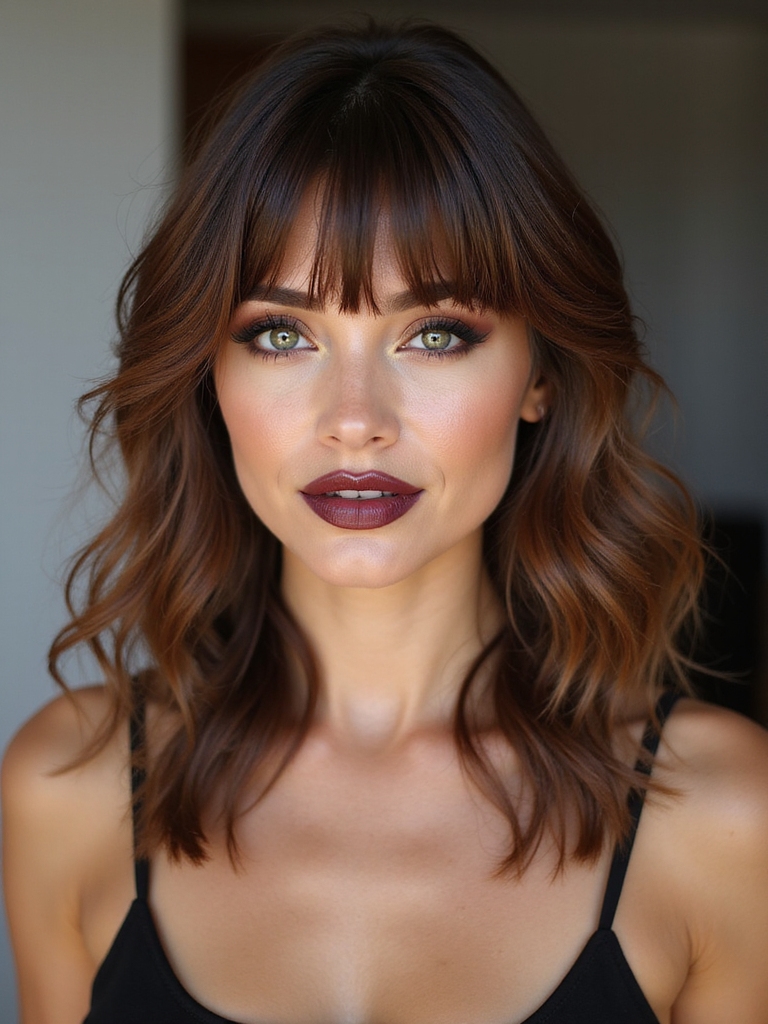
Swept to one side and layered through, these bangs add a soft diagonal across the face. The layering keeps the sweep light and full of subtle movement. It is a flattering, low-key fringe that suits most faces, and because the sweep can be worn dramatic on a night out or barely there on a work morning, it flexes harder than almost any fringe you can name.
Quietly slimming
The diagonal is quietly slimming, carrying the eye sideways across the face. It grows out easily too, blending back into your length as it lengthens. A light blow-dry sets the sweep in seconds.
For a fuller version with more weight, side bangs lean further into the swept shape. Either way, a deeper part gives the sweep somewhere to fall from.
“A side sweep holds far better off a slightly deeper part. Part too shallow and the fringe flops back to center by midday.”
Micro Layered Bangs
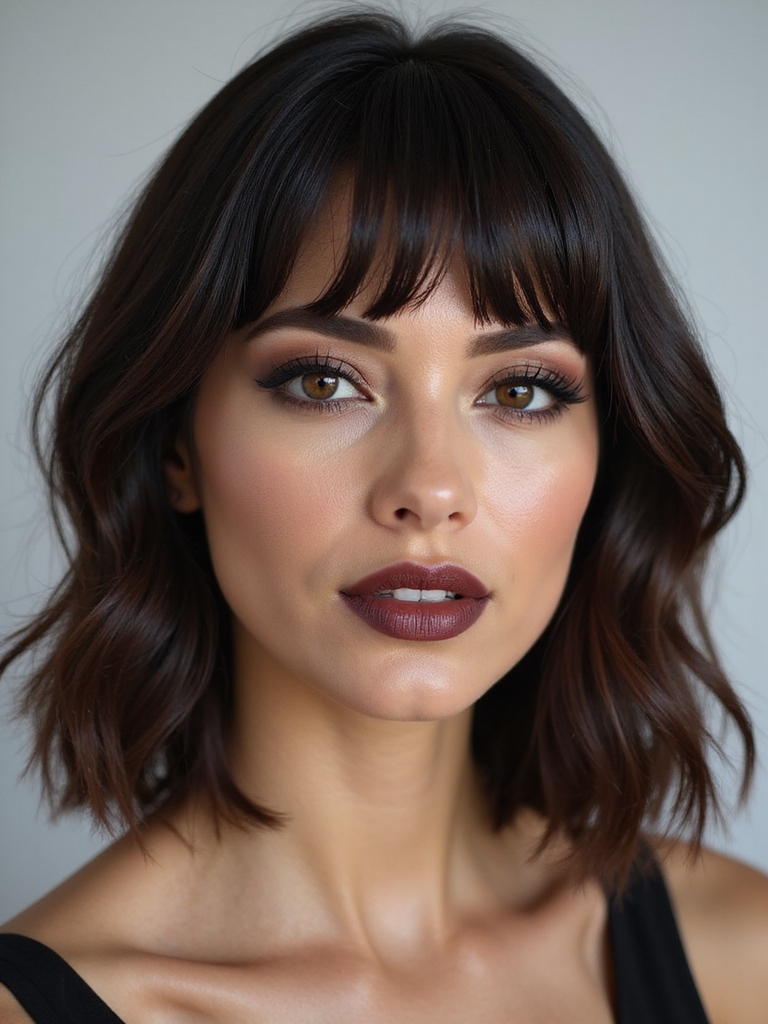
A short micro fringe usually looks blunt, but layering softens the edge into something far less severe. The tiny layers keep the bold length from looking harsh, so you get a daring micro fringe with a softer, more wearable finish. Among the shortest options here, it still stays wearable day to day, the kind of fringe that turns a bold, blunt micro cut into something you can actually picture keeping. A few things to know first:
- Sits well above the brows, so forehead height shows.
- Layering keeps the short length from looking stark.
- Needs a fresh trim roughly every three weeks, the highest upkeep here.
Curly Layered Bangs
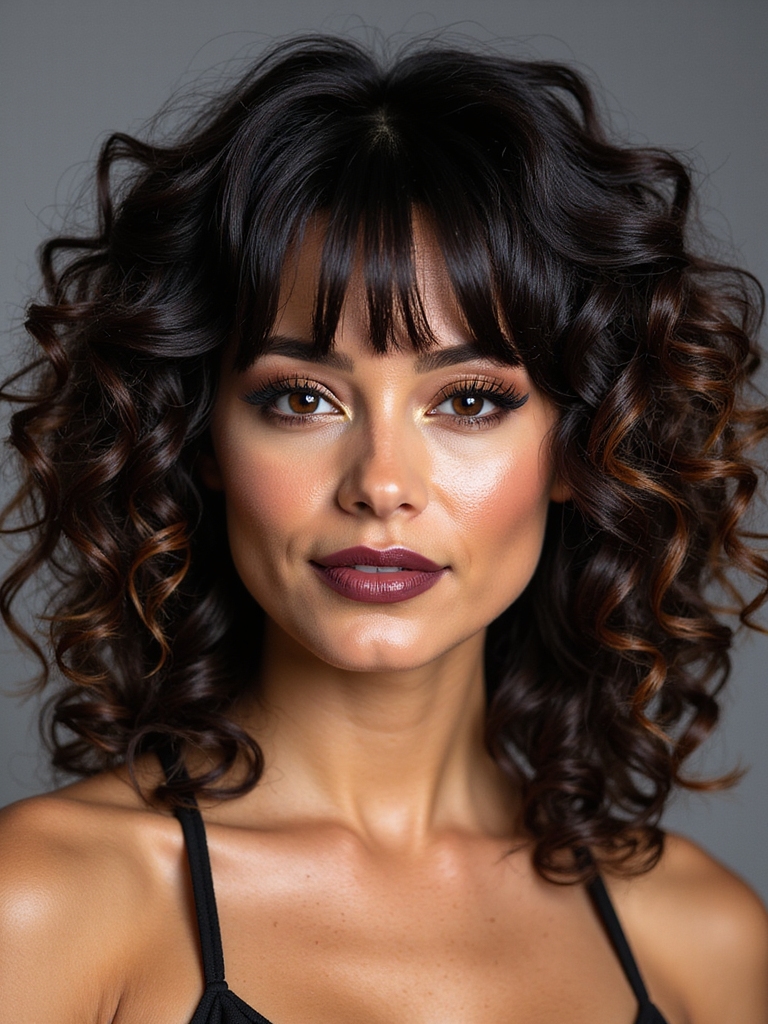
On curly hair, layered bangs let the natural coils spring into a soft, defined fringe. The layering gives each curl room to form and spring cleanly. I cut curly bangs dry, in their natural state, so I can shape the fringe and account for shrinkage, which pulls curly bangs up far shorter than they look wet. To keep a curly fringe happy:
- Cut dry, so the fringe falls with your real curl pattern.
- A little leave-in keeps the curls defined and bouncy.
- Skip the brush; scrunch and let the curls set.
Two myths worth busting:
❌ Myth: Curly hair cannot pull off bangs.
✅ Reality: It absolutely can. The cut just has to be done dry and layered to your curl pattern, so the fringe springs up soft and defined.
❌ Myth: Layered bangs are high-maintenance.
✅ Reality: Most are the opposite. Wispy, curtain, and side-swept versions forgive grow-out and fall into place with a quick dry.
Wavy Layered Fringe
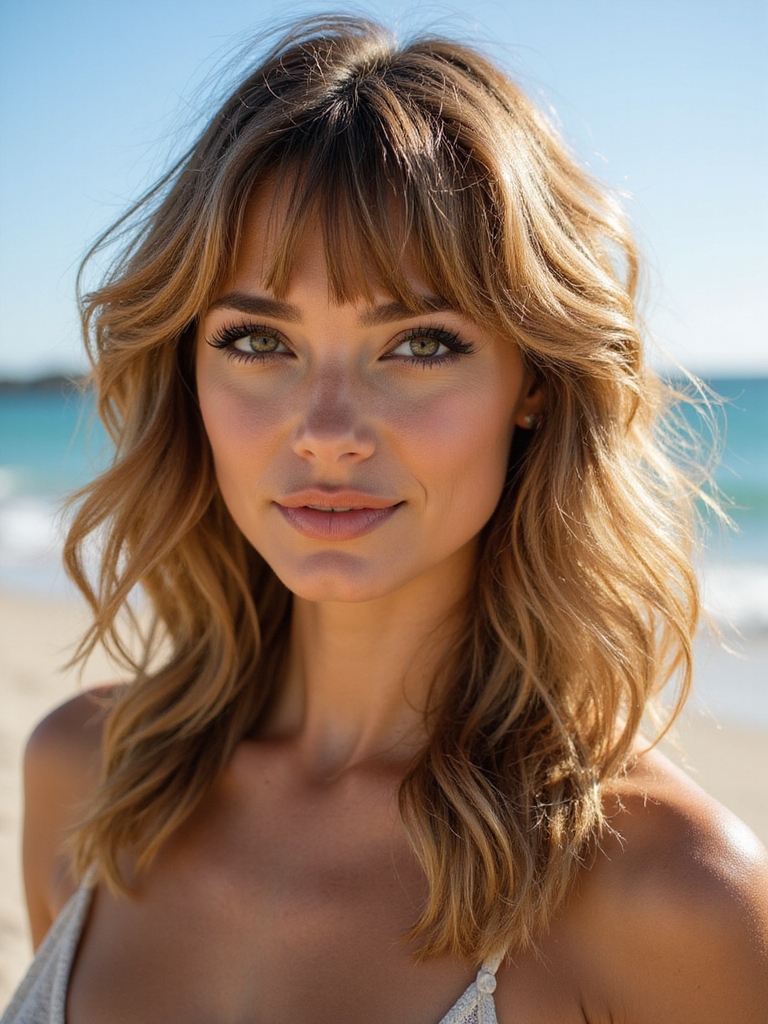
A layered fringe on wavy hair falls into soft, beachy texture with built-in volume. The layers give the waves room to move within the fringe. It looks relaxed and full, a low-fuss fringe for anyone with natural wave. To make the most of it:
- Let your natural wave do the work; air-dry where you can.
- A light sea-salt spray boosts the beachy texture.
- Scrunch the fringe to hold the wave through the day.
Feathered Bangs for 70s Glam
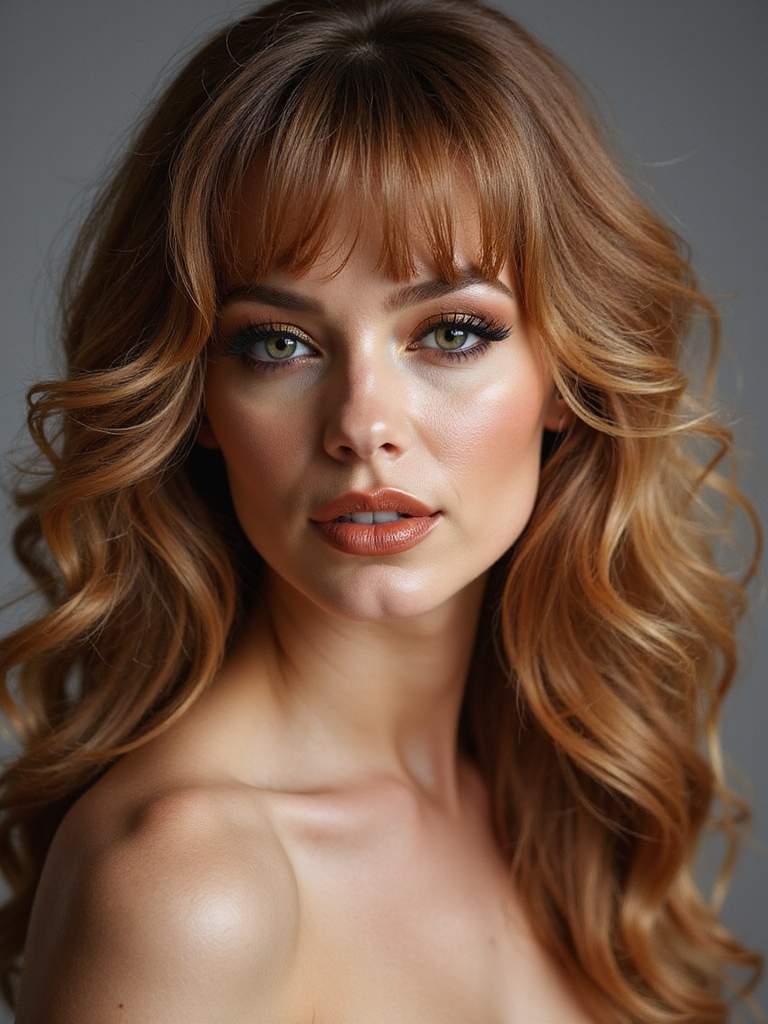
Heavily feathered and flicked back at the sides, these bangs nod straight to seventies glamour. The layering creates the feathered, wing-like shape that defined the era. They suit long, layered hair especially, where the wings can blend into the lengths for a full retro effect that still looks current when the surrounding layers stay soft too. To get the feathered flick:
- Ask for heavy feathering through the fringe and sides.
- Round-brush the sides back and out for the wings.
- A flexible spray holds the flick without stiffness.
🅰️Soft and feathered
Wispy, curtain, and 70s feathered bangs frame the face gently and grow out with ease.
🅱️Bold and choppy
Micro, shag, and choppy layered bangs bring texture and attitude, with a little more upkeep.
Choppy Layered Bangs
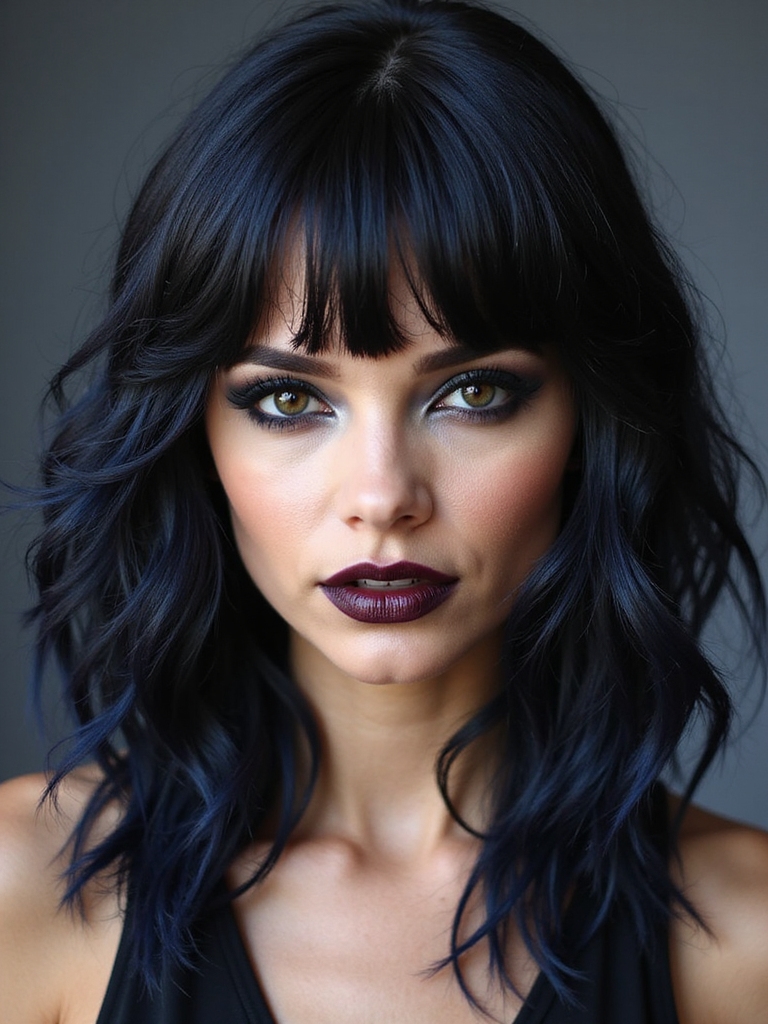
Cut choppy and uneven, layered bangs read edgy and modern. The choppy layering adds bold texture and a piecey, deliberate finish, the kind of fringe that announces it was a choice rather than something that happened on the way to a trim. Reach for it when you want attitude up front instead of soft framing.
The unevenness is the point, so a little messiness only helps. A matte paste defines the choppy pieces and holds them apart. It pairs best with a textured cut that matches the energy.
Bottleneck Bangs With Gentle Tapering
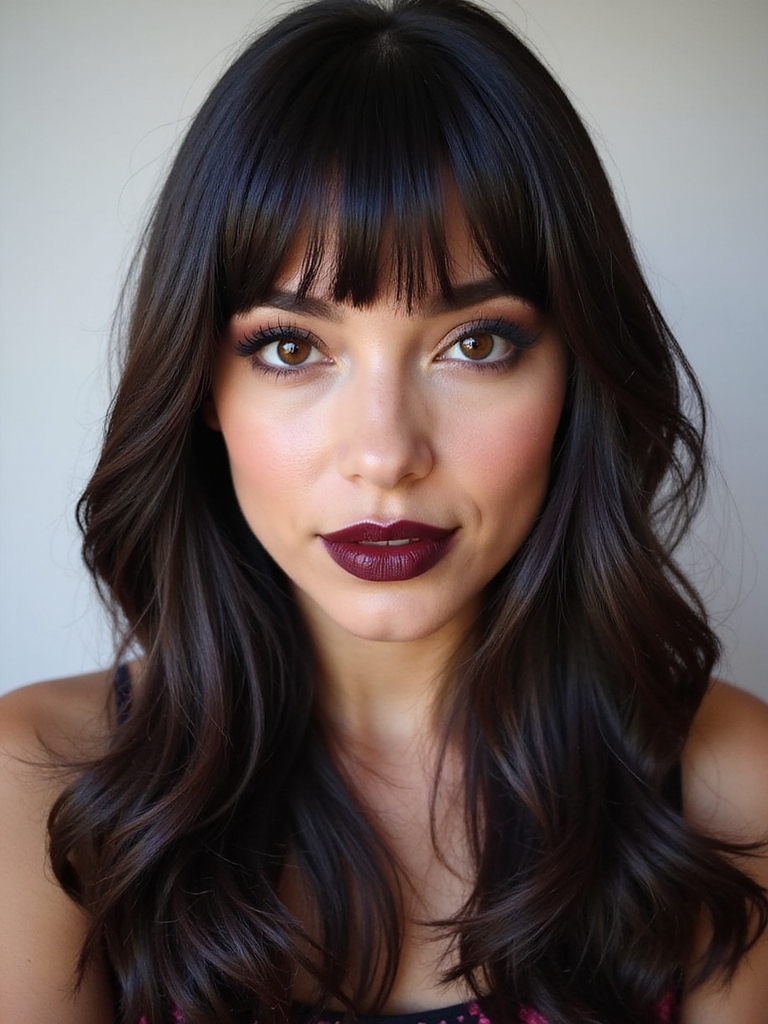
Shorter in the center and tapering longer at the sides, bottleneck bangs curve in to frame the face. The gentle tapering is a soft form of layering that eases the shape. They are a flattering, modern fringe that suits a wide range of faces.
The curved shape is exactly why they wear so easily, hugging the face with no hard line anywhere. They sit somewhere between a full fringe and curtain bangs, which is a big part of the appeal. A quick blow-dry with a brush sets the curve into place.
- Shorter at the center, longer at the sides, for a soft curve.
- Suits nearly every face shape thanks to the curved line.
- Round-brush the sides back to keep the bottleneck shape.
Layered Bangs on a Bob
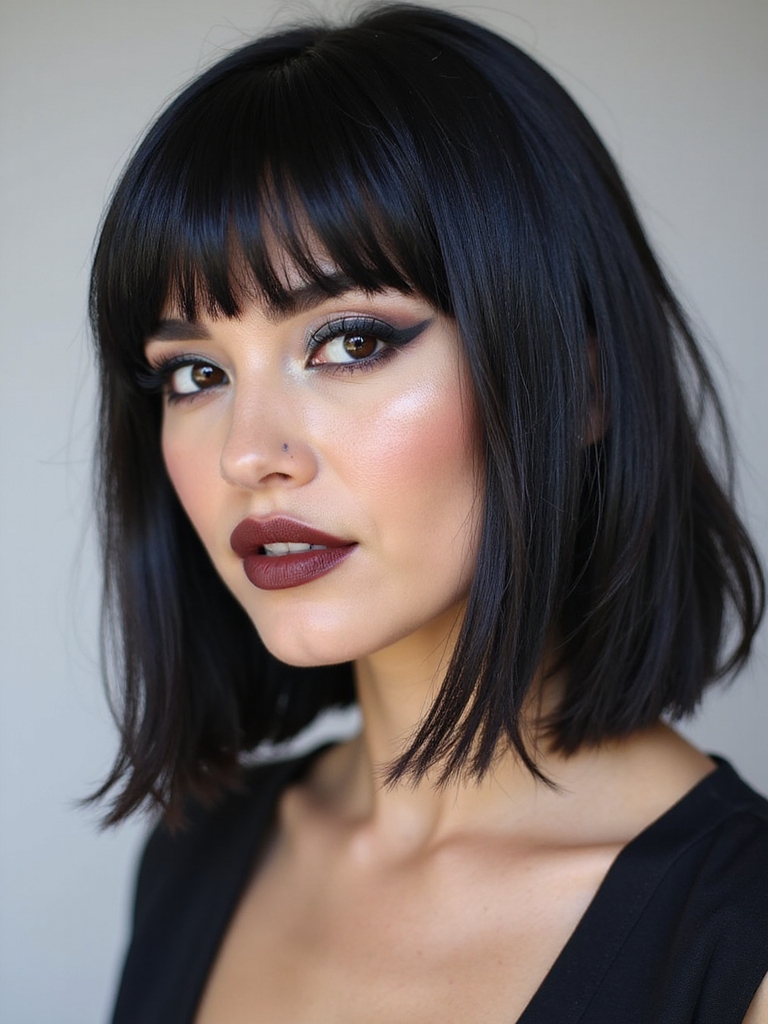
Paired with a bob, layered bangs add a structured, modern frame to a clean shape. The fringe sharpens the front while the bob keeps the lines crisp, and the contrast between a soft fringe and a sharp bob is exactly what reads contemporary. For the pairing in full, layered haircuts with bangs cover the combination. What makes it work:
- The soft fringe offsets the bob’s sharp lines.
- Best on a blunt or A-line bob for contrast.
- Keeps a clean bob from looking severe.
Airy See-Through Bangs
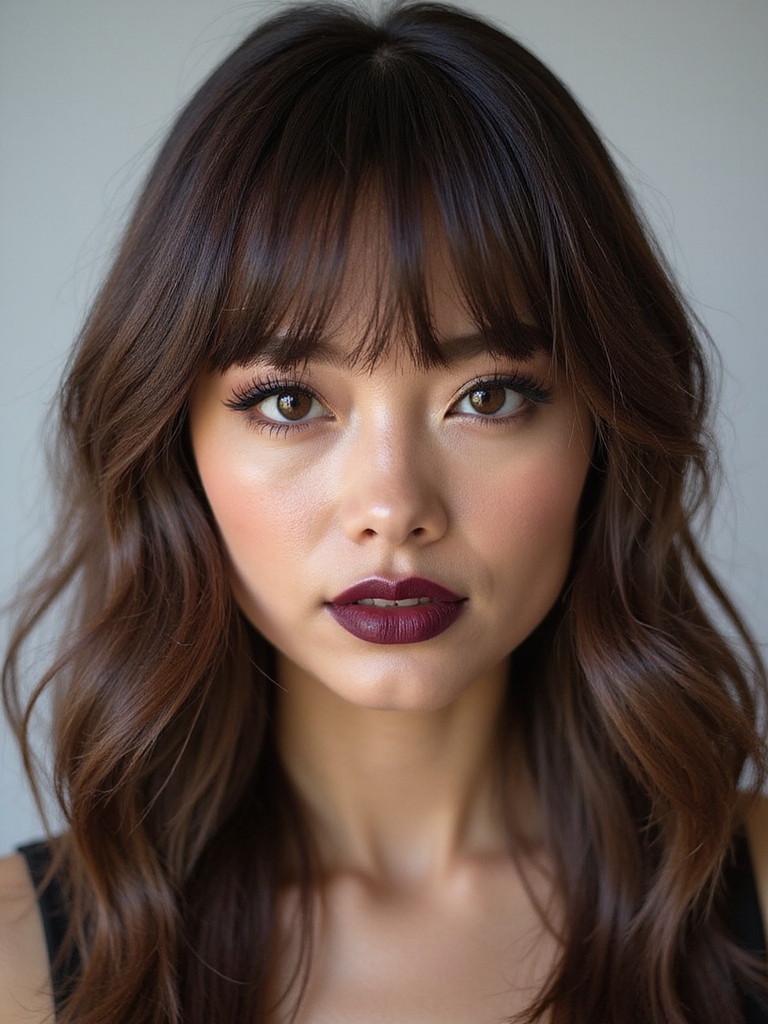
A sheer, see-through fringe lets a little forehead show through the layered ends. Heavy layering thins the fringe so it sits light and airy, the lightest layered bangs of the bunch. It is soft and modern with almost no weight.
The sheerness only works if the fringe stays truly thin, so this is one to leave to a stylist who can point-cut it sheer. I always cut a fringe a little longer than the client asks for, because a fringe this fine trims shorter easily and can’t be lengthened once it’s off.
Style it with the lightest touch of product, since anything heavy makes the sheer pieces clump. A quick round-brush dry keeps them airy and forward. The lighter the hand, the better they sit.
Thick Layered Bangs
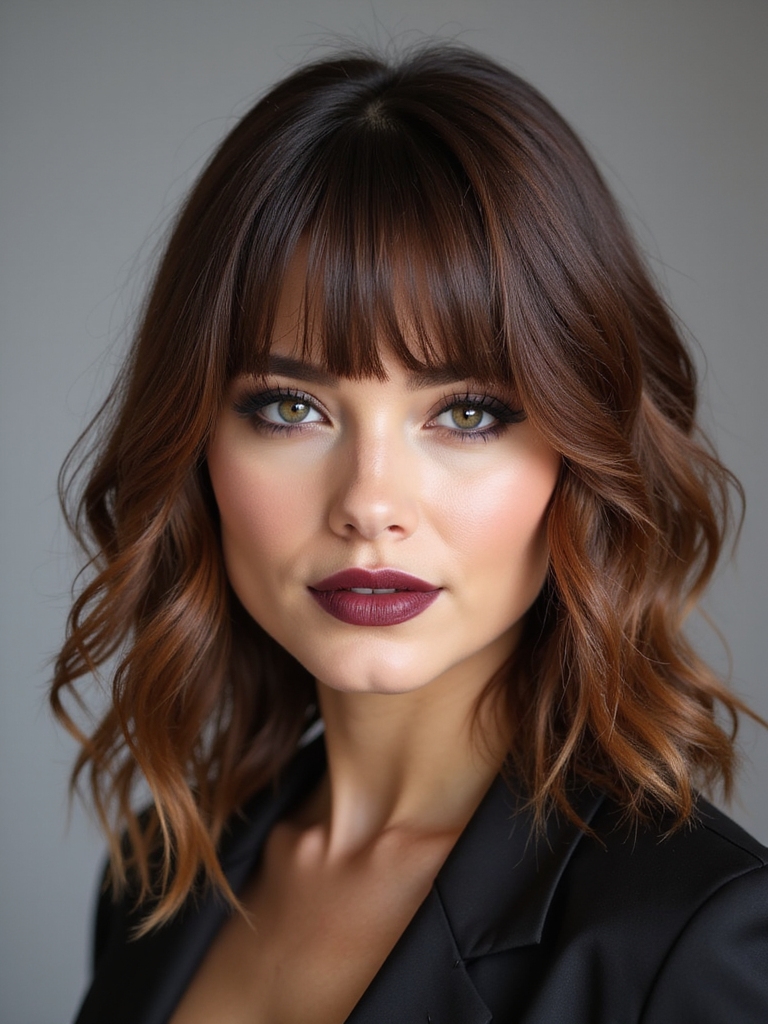
Thick hair really comes down to controlling fullness in the fringe, with internal layering keeping a heavy fringe from sitting like a block. The layers add movement and balance, so the bangs keep their motion instead of sitting dense and flat. It marks the difference between thick bangs that look intentional and ones that look like a wall. To keep thick bangs light:
- Ask for internal layering to remove weight from underneath.
- Point-cutting the ends keeps the line from going blunt.
- A little smoothing cream tames bulk without flattening movement.
Swooped Layered Bangs for Round and Heart Faces
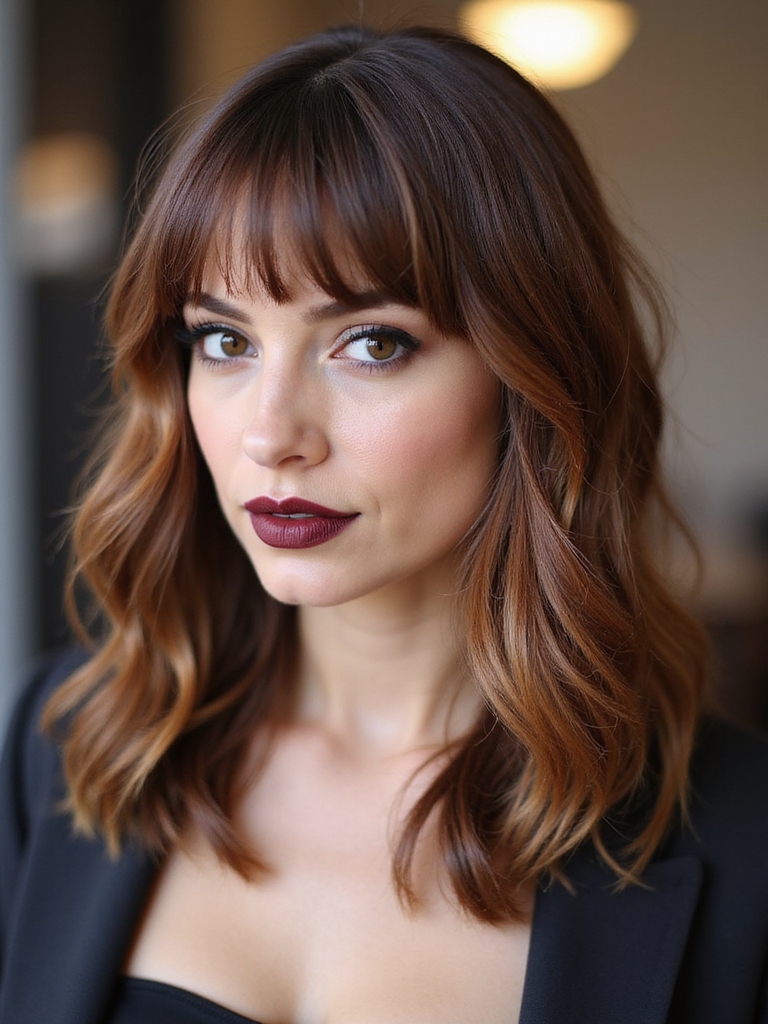
Swooped to the side with layered length, these bangs add a slimming diagonal that flatters round and heart-shaped faces. The sweep draws the eye across the face rather than straight down. It is a smart fringe choice for balancing softer or wider proportions.
The layered length is what keeps the swoop soft and moving, falling in separated pieces across the brow. It blends into face-framing layers as it grows, so the grow-out stays easy. A deep side part sets the swoop.
If your goal is to slim or balance the face, this is the fringe to ask for. Pair it with long layers and the whole effect lengthens. A round brush keeps the swoop full and soft.
Layered Bangs With a High Pony or Updo
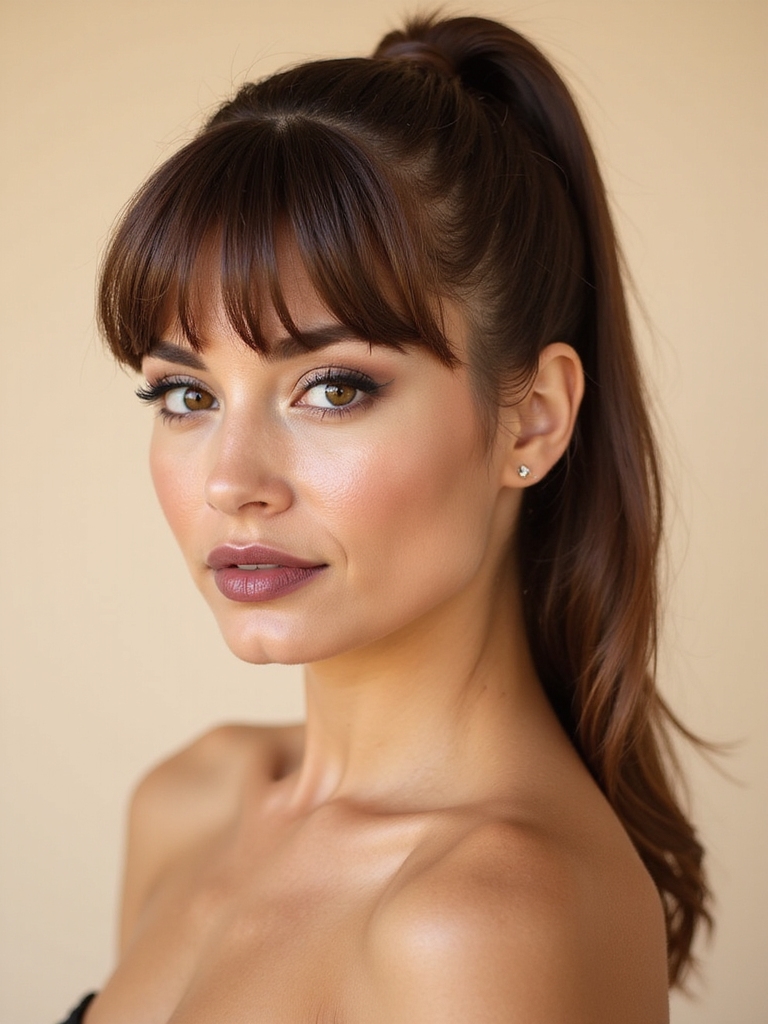
Layered bangs do not have to be worn down. Pulled into a high pony or an updo, the fringe frames the face while the rest is swept up and out of the way. The layering keeps the bangs soft against the face even when everything else is slicked back.
It is proof a fringe earns its keep whether your hair is up or down. On a day you want the bangs to do all the framing, an updo lets them. Leave a couple of shorter pieces loose at the front to finish it.
- Frames the face even with everything else pulled up.
- Leave a few layered pieces loose at the front.
- Works for events, gym days, and heat waves alike.
Maintenance & Care
Layered bangs are easier to live with than blunt ones, but a fringe still needs upkeep. The cut itself is cheap, often a $15 to $40 bang trim or free with a full haircut, but it grows fast. Plan a quick trim every two to four weeks for short styles like micro or see-through bangs, and less often for longer curtain or side-swept ones.
The clients who keep a fringe looking sharp are the ones who learn a two-minute blow-dry and resist cutting it themselves between visits. Dry the bangs first, ahead of everything else, so they do not set into a cowlick. A brush and a whisper of light product cover the whole routine most days.
A Fringe With Movement
Layered bangs turn the fringe from a flat, heavy block into something soft, piecey, and full of movement. That single change, cutting layers into the bangs themselves, is what makes them feel modern and easy to wear, whatever your hair type or face shape.
So pick the style that matches your mood, from wispy and gentle to choppy and bold, and bring a photo to your stylist with one request: point-cut, and leave them a little long. The right fringe really can transform a look.
More Worth Saving