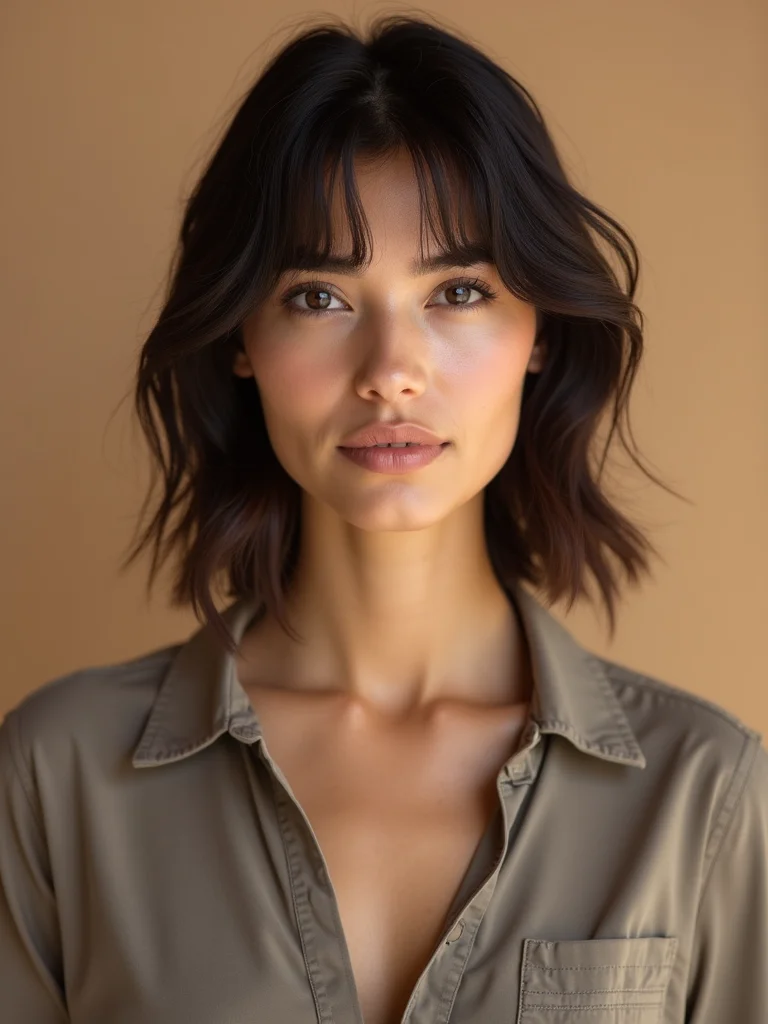
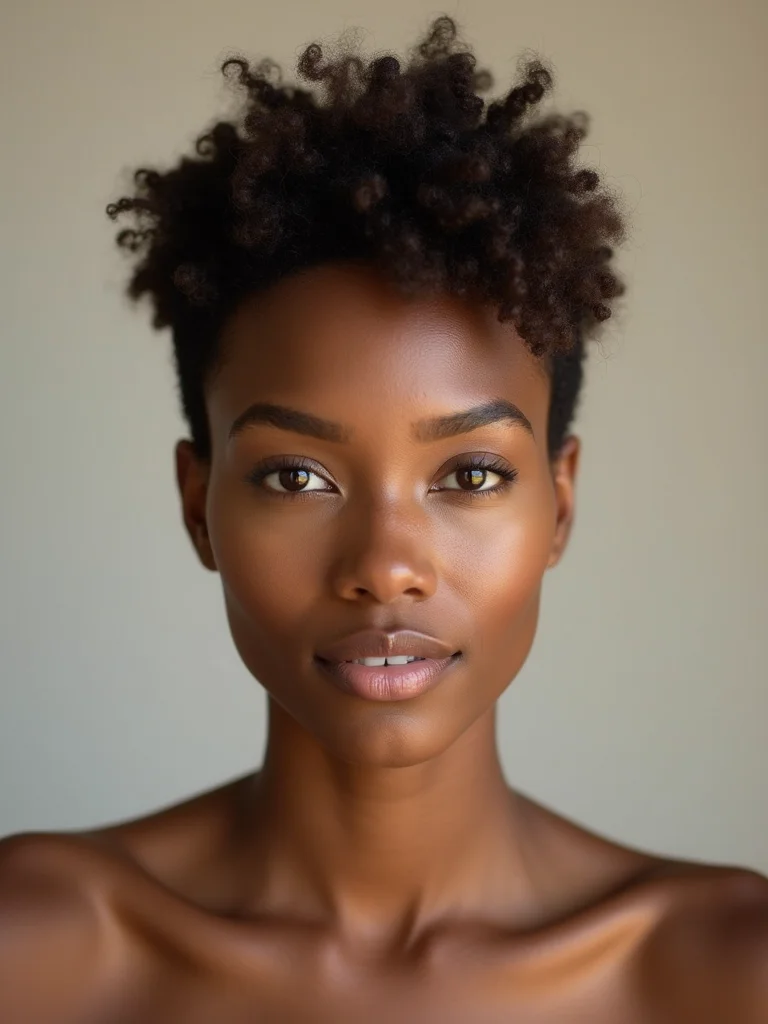
A friend forwards a photo mid-scroll: a shag with all the right texture, perfect curtain bangs, exactly what she’s after. She books the same fringe onto her own sleek, one-length lob, and it just sits there, orphaned, not doing anything close to what it did in the photo. The fringe was never the problem — the cut underneath it was.
Layered haircuts with bangs work as a matched pair, not two separate decisions: the fringe frames the face, the layers move everything behind it, and the real skill is pairing the right one to the right cut. Fifteen combinations follow here, organized by cut first and fringe second, so the whole look gets saved, not just the bangs.
Fringe-and-Cut Pairing, Fast
- The fringe and the cut behind it have to be chosen together — the same bangs read completely differently on a shag versus a sleek lob.
- Fringe upkeep varies enormously by type: a micro or baby bang needs trimming far more often than a soft curtain or side-sweep.
- Styling adds a few minutes most mornings regardless of fringe type, since bangs are shaped as much through blow-drying as through the original cut.
Shaggy Layers With Curtain Bangs

A shaggy layered cut and curtain bangs is the pairing that gets screenshotted constantly, and the attention is earned. The heavy, piecey shag and the center-parted fringe share the same undone energy, so the bangs settle into the surrounding layers instead of sitting apart from them.
The catch — if there is one — is almost nonexistent here: nothing about this combination has to sit perfectly to look right, which makes it one of the more forgiving pairings on this list.
- A few spritzes of a texturizing spray covers most of the daily routine.
- The undone energy of both pieces reinforces rather than fights.
- One of the lowest-effort fringe pairings to maintain.

Long Layers With a Wispy Fringe

Long layers with a wispy fringe keep nearly all of the length while still transforming the front. The sheer, feathery bangs sit light against the forehead, and the long layers carry that same softness all the way down to the ends.
- The wispy fringe is thin enough to grow out without an awkward, stranded stage.
- Suits a wider range of face shapes than a heavier bang typically would.
- A light texture spray plus a quick finger-tousle finishes the look most days.
📋Before Choosing Any Fringe
- ✓Decide honestly how often a trim actually fits the schedule — that alone rules out half the options here.
- ✓Match the fringe to the cut underneath it, not just to a photo of the bangs alone.
- ✓Ask whether a quick fringe-only trim is included free between full visits.
Blunt Bangs With Feathered Layers

A blunt fringe over feathered layers plays a sharp line against soft movement underneath — the heavy, graphic bang frames the eyes with a strong edge, while the feathered lengths below keep everything past the fringe light rather than dense.
- Best suited to straight, medium-to-thick hair that can hold a clean blunt line.
- The feathered layers keep the blunt fringe from reading too severe on its own.
- A blunt fringe shows regrowth fast, so plan on more frequent shaping trims.
A Wolf Cut With Soft Face-Framing
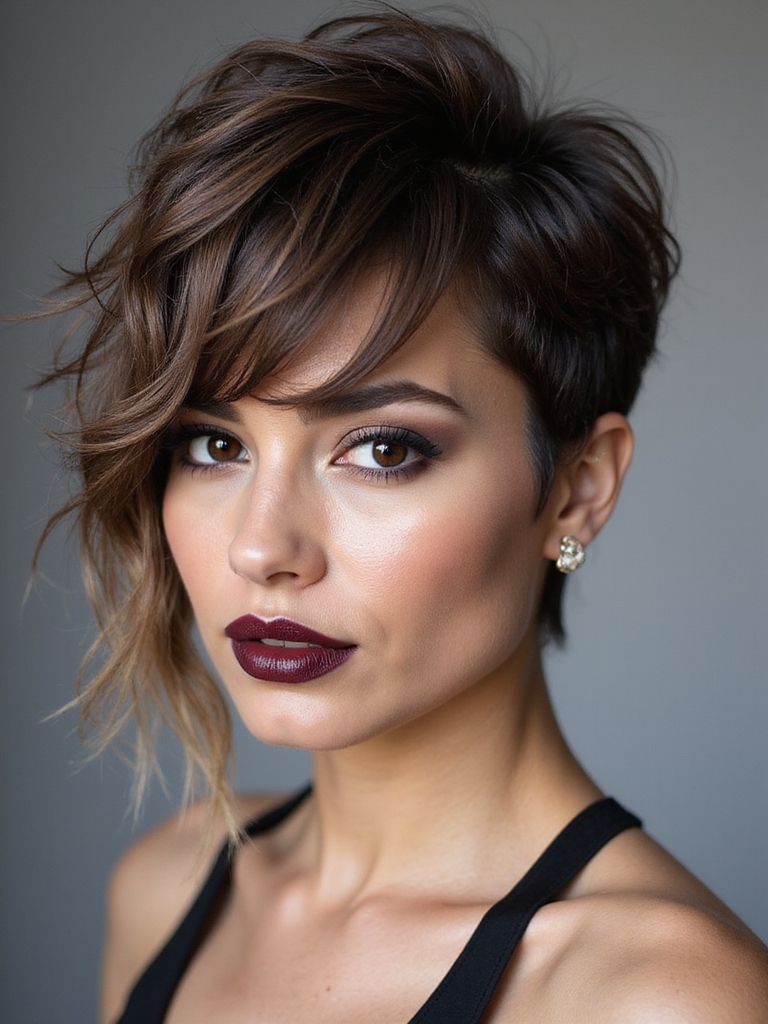
A wolf cut paired with soft face-framing bangs is the boldest combination on this list, all crown volume and shaggy ends softened by a gentler fringe up front.
Where this pairing struggles is on very fine hair — the wolf cut’s heavy crown layering can leave finer strands looking thin rather than voluminous, so density matters more here than on most other combinations.
- Crown volume and shaggy ends balanced by a softer front.
- The face-framing fringe takes the harshest edge off the wolf shape.
- A texture spray worked through with fingers finishes most days.
A couple of terms worth knowing before this pairing.
📖Face-framing bangs
Bangs cut longer at the outer edges and shorter toward the center part, blending into the surrounding layers rather than cutting straight across.
📖Crown volume
Lift built into the top layers of a cut, typically through shorter interior layering at the crown.
Midi Layers With Airy Voluminous Bangs

Midi layers with airy, voluminous bangs lean retro and full — the fringe blown out big, the layers built for bounce, echoing a much older era of hair.
Where Natural Body Does Half the Work
This works best specifically on medium-length hair that already carries some natural body; on very fine or very straight hair, the volume needs more active styling to hold through a full day.
A round brush lifting the fringe up and back builds most of the volume, and a flexible-hold spray keeps that body from collapsing by midafternoon.
Choppy Layers With a Micro Fringe

Choppy layers with a micro fringe sit at the fashion-forward, daring end of this whole list — sharp, graphic, and not built for everyone.
The catch is real commitment: a micro fringe sits well above the brow with nowhere to hide regrowth, so it asks for a shaping trim on a noticeably tighter schedule than any other pairing here.
- Piecey, point-cut layers give the surrounding lengths visible texture.
- The micro fringe sits high, with almost no room to blend into a longer stage.
- Worth it only for someone truly willing to keep the trims up.
A Layered Lob With Side-Swept Bangs

A layered lob with side-swept bangs is the easiest, most everyday pairing on this list, the fringe sweeping across on a soft diagonal over collarbone-length layers.
The Low-Effort Default
That side-sweep flatters round and square face shapes especially well, while the lob itself keeps daily effort low regardless of face shape.
Both pieces grow out gently together, and a quick blow-dry is usually enough to set the whole shape for the day.
🅰️Curtain Fringe
Parts down the center and blends outward — the lowest-commitment option, forgiving a missed trim entirely.
🅱️Side-Swept Fringe
Sweeps fully to one side on a diagonal — slightly more structured, but just as easy to maintain day to day.
Curly Layers With Piecey Bangs

Curly layers with piecey bangs prove a fringe works just as well on texture as on straight hair, with coils springing through both the layers and the fringe itself. The one firm rule: the fringe gets shaped dry, one section at a time, so it lands at the length it will actually sit at once every coil springs back up.
- Cutting it wet risks a fringe that shrinks up far shorter than intended.
- Layers throughout free the curl pattern to define on its own.
- A curl cream on soaking-wet hair defines both the fringe and the lengths together.
Invisible Layers With Bottleneck Bangs

Invisible layers with bottleneck bangs make for a polished, distinctly modern pairing. The invisible layering keeps hair looking thick and close to one length while it moves, and the bottleneck fringe curves in at the center before flicking out at the sides for a soft, rounded frame.
- Invisible layers preserve a thick, sleek-looking surface.
- The bottleneck shape curves in, then flicks outward at the ends.
- A round-brush blowout is what actually holds that curved shape.
ℹ️Fringe Note
A bottleneck fringe is best thought of as a more rounded, more shaped cousin of the curtain bang — worth mentioning by name if a stylist isn’t already familiar with the term.
Heavy Layers With a Textured Fringe

Heavy layers with a textured fringe suit thick hair that actually needs taming — the layering removes bulk throughout, and texturizing the fringe itself keeps it from sitting like one dense slab across the forehead. The key detail is texturizing both the layers and the fringe together, not just the lengths; a blunt, untextured fringe on thick hair tends to look heavy and flat rather than soft.
- Layering removes bulk without sacrificing overall density.
- Texturizing the fringe specifically keeps it from reading like a solid block.
- A smoothing cream on the ends controls frizz without weighing the layers down.
Voluminous Layers With Swoop Bangs

Voluminous layers with swoop bangs read as pure glamour — the fringe swept to one side with real height, the layers blown out full to match.
That swoop adds a soft asymmetry that photographs particularly well, which makes this a natural pick for events rather than an everyday routine. Medium-to-thick hair with enough natural body holds the blowout longest without extra product.
Razor-Cut Layers With Split Bangs

Razor-cut layers with split bangs make for an editorial, cool-girl pairing — the razored layers feather every end into a fine, piecey taper, while the split fringe parts sharply down the center for a deliberate, fashion-forward front.
- Suits medium-to-thick hair best, since a razor can leave fine hair looking stringy.
- The split fringe looks intentionally styled with almost no active effort.
- Simply parting and pushing each side is usually enough finishing work.
Fine Hair Layers With Light Baby Bangs

Fine hair with light baby bangs is the boldest pairing for delicate hair specifically — the surrounding layers stay soft, while the baby fringe itself gets cut high but kept deliberately sheer. Keeping it thin matters more here than on any other texture, since a denser baby fringe borrows too much visual weight from the crown behind it.
- Sheer density keeps the statement fringe from overwhelming fine hair.
- Suits someone confident wearing a bold, attention-getting front piece.
- Regrowth shows quickly, so expect more frequent shaping trims.
A Layered Pixie-Bob With a Soft Fringe

A layered pixie-bob with a soft fringe is the short, textured version of this pairing — longer than a true pixie, shorter than a full bob, with a gentle fringe keeping the front from reading severe.
- Layers add lift throughout an otherwise short, compact shape.
- The soft fringe is largely what keeps this version wearable rather than harsh.
- A monthly reshape is roughly what the short length actually asks for.
Sleek Layers With a Blended Bang Veil

Sleek layers with a blended bang veil are the most refined pairing on this entire list — the fringe blended so smoothly into the surrounding layers that it reads as one continuous, glossy veil rather than a distinct bang.
There’s no obviously separate fringe here, just a soft, sheer frame around the face — the softening effect of bangs without the maintenance that usually comes with an obvious one.
- A flat iron smooths the whole veil into one continuous line.
- A shine serum finishes the polished, glossy effect.
- Takes only a few minutes yet reads considerably more expensive than that.
What to Expect
Upkeep across all fifteen of these pairings comes down almost entirely to fringe type rather than the cut behind it. A micro or baby fringe asks for a shaping trim on a noticeably tight rhythm, often just $15 to $25 for a fringe-only visit; curtain, wispy, and side-swept fringes grow out far more gently in comparison.
Many salons will do a quick fringe-only trim at no charge between full cuts, so it’s always worth asking. Budget a few minutes most mornings regardless of which pairing gets chosen, since bangs get shaped as much through styling as through the original cut itself.
Layered Bangs Questions, Answered
?Can curly hair really wear bangs the same way straight hair does?
Yes, though the fringe needs to be cut dry rather than wet, since curls shrink noticeably once they spring back to their resting length. Cutting it wet risks a fringe that lands far shorter than intended.
?Why do some fringes need trimming so much more often than others?
It comes down to placement more than anything else. A micro or baby fringe sits high on the forehead with regrowth showing almost immediately, while a curtain or side-swept fringe blends gradually into the surrounding layers as it grows.
?Does the cut underneath really matter more than the fringe style itself?
In most cases, yes. The same fringe can look intentional on one cut and out of place on another, since the layers behind it either support that fringe’s texture and movement or work against it.
Save the Whole Look, Not Just the Bangs
A fringe photographs beautifully in one picture and falls flat in the next for one consistent reason — it’s rarely the bangs themselves, it’s whether the cut underneath actually matches them.
Pair the fringe to the cut first, be honest about how often trimming actually fits a real schedule, and the whole combination holds up well past the day it was first cut.
More Ideas Here