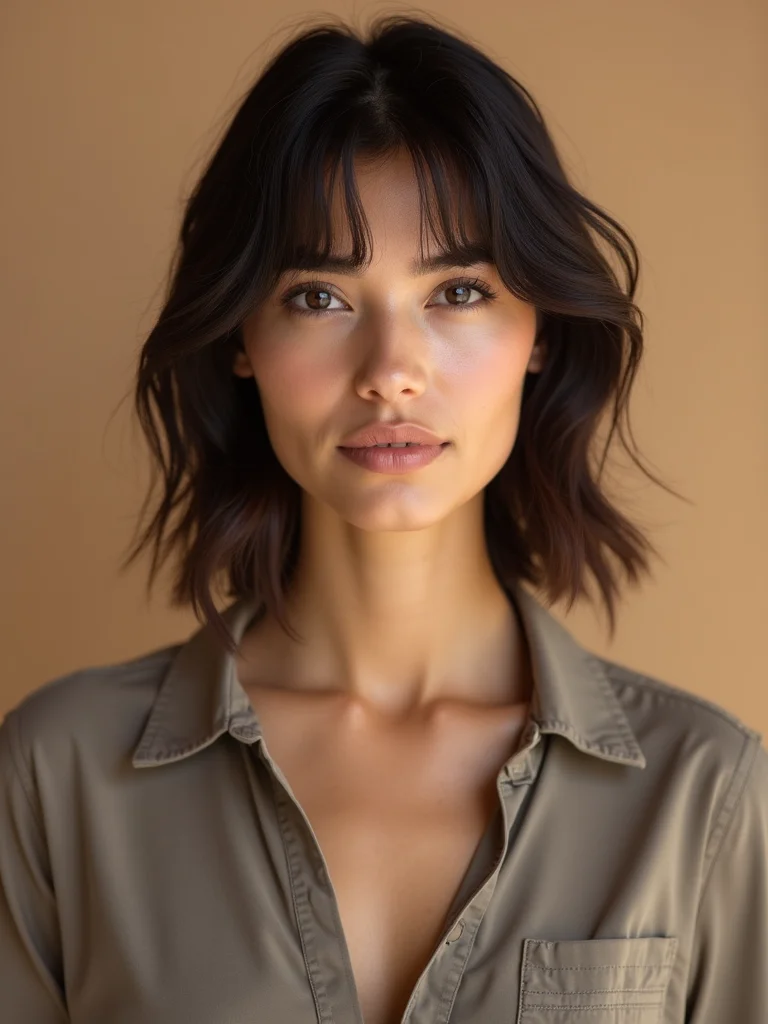
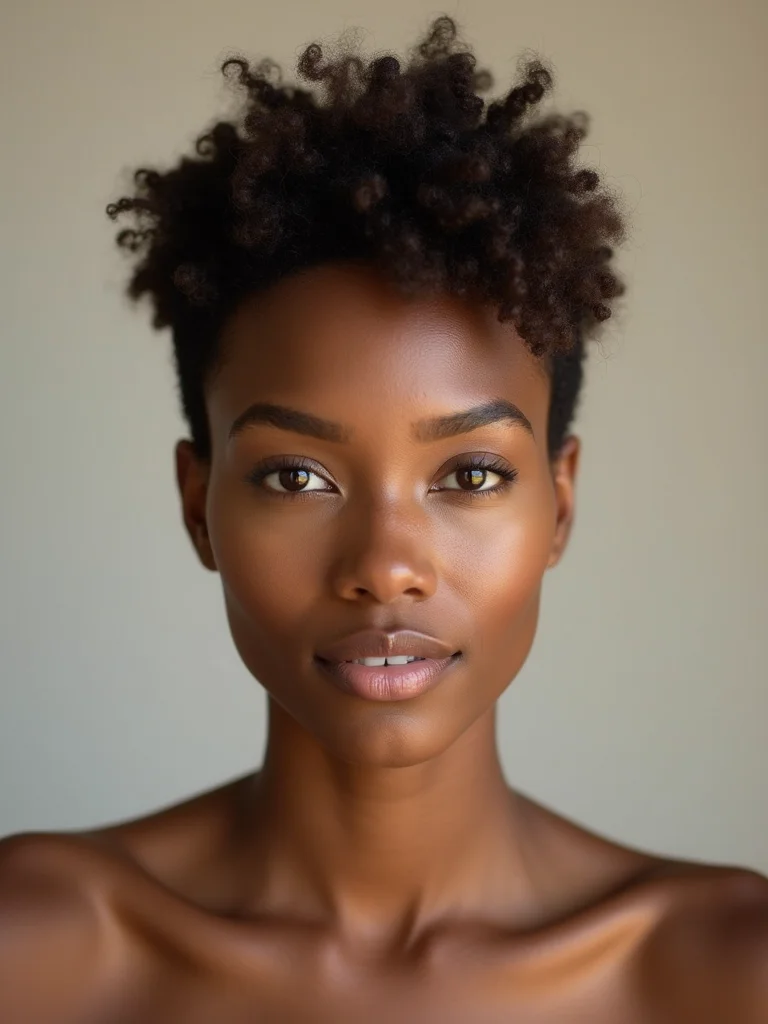
A client booked wolf cut hair bracing herself for something her office would side-eye, then spent the next month telling everyone how easy it was to live with. That gap, between how bold the wolf cut looks and how soft it actually wears, is the thing nobody tells you.
It looks like a haircut with a wild streak, all choppy layers and attitude, yet it air-dries in minutes and tones down for a meeting without losing its edge. Here is the honest guide to wolf cut hair: what it is, who it flatters, how to style and grow it out, and how to wear it to work without anyone blinking.
Wolf Cut Hair, In Short
- The wolf cut blends a shag’s choppy layers with a mullet’s shorter crown and longer length, built for volume and movement.
- It looks bold but wears easy, since the texture is cut in and it is designed to air-dry rather than be styled.
- It flatters most faces and every texture once the layering and fringe are tuned to you, and it is a real gift for fine hair.
- Expect a shape-up every six to eight weeks, roughly $50 to $90, though it grows out more gracefully than its drama suggests.
What a Wolf Cut Actually Is
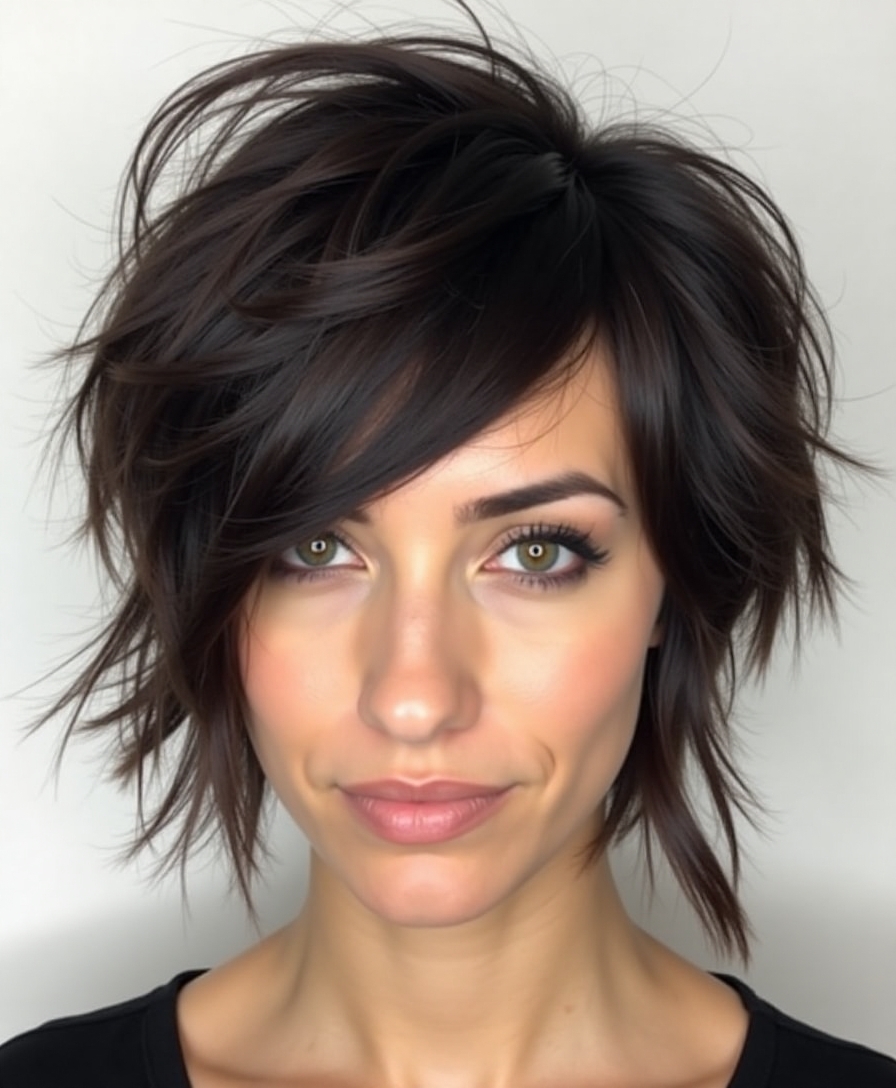
At its simplest, the wolf cut is a hybrid: take the choppy, piled-up layers of a shag, add the shorter-crown-and-longer-length disconnect of a mullet, and you land at something wilder than either. It is among the most-requested cuts in my chair right now, and the name fits, since it is built to look a little untamed.
What separates it from a plain shag is volume and contrast. The crown is cropped and full while the length stays, so the shape has real dimension rather than falling in one even sweep.
It is controlled chaos, and the operative word is controlled, because a good wolf cut is precisely layered to look casually messy, not actually messy. A softer take, like a soft wolf cut, simply dials the same idea down.

The Wolf Cut’s Rise From K-Pop

The wolf cut did not come from nowhere. It surged out of Korean and K-pop styling and spread worldwide through TikTok, where its low-effort, high-impact look was tailor-made for a generation that films getting ready.
- Its roots are in Korean and East Asian styling, where layered, textured cuts have long been popular
- It went global as a Gen-Z trend, but it has outlasted the usual trend cycle
- That staying power comes from substance: it genuinely suits most people and asks little of them
Is the wolf cut your cut? Match your priority:
1I want bold personality with a one-minute morning
Yes, this is your cut; it is built to look wild and air-dry easy.
2I want zero styling and zero trims
Think twice; the wolf cut is low-effort, but it still wants a little product and a regular shape-up.
Tuning It to Your Face
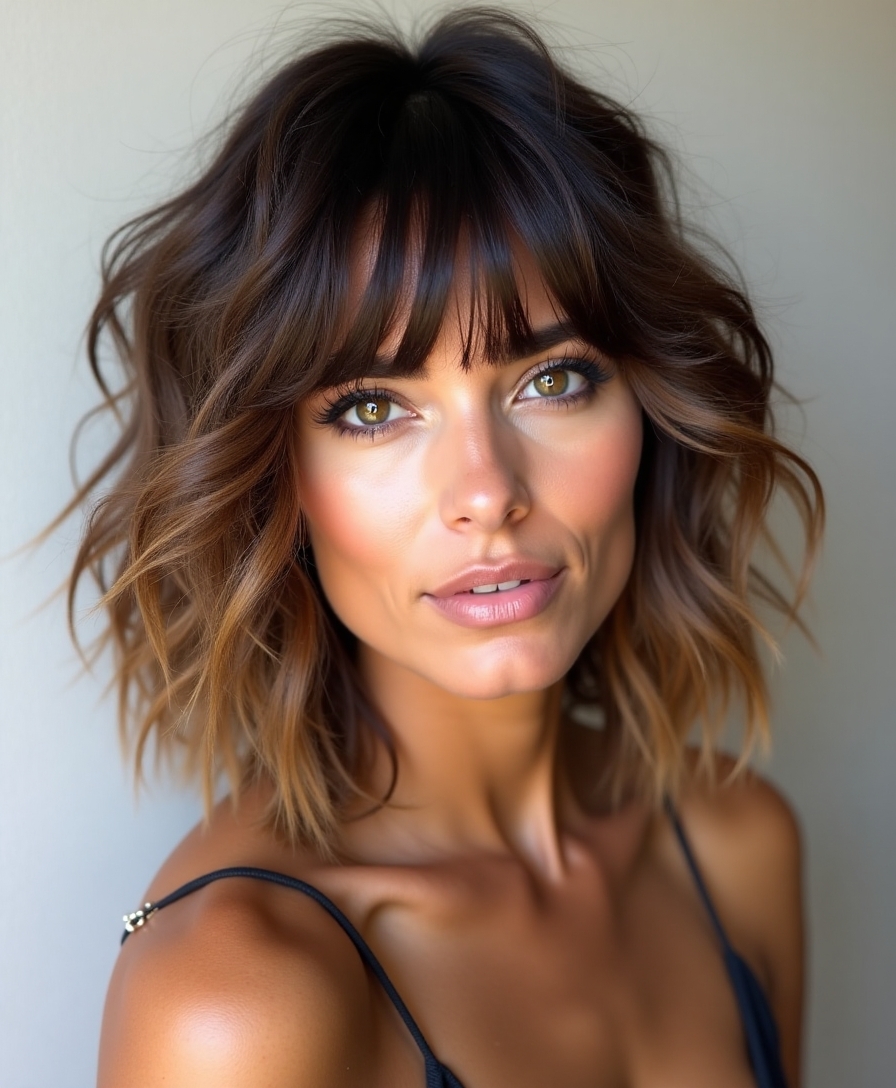
The wolf cut is not one fixed shape, which is exactly why it flatters such a range of faces. The two levers a stylist moves are where the layers start and where the fringe falls.
Layers and Fringe Do the Work
Round and full faces are slimmed by longer face-framing pieces and height kept at the crown, drawing the eye up and down. Long faces do better with fullness through the sides and a fringe to break the vertical line, while square jaws soften under wispy, broken-up pieces rather than a hard edge.
Bring a photo and ask where your layers will begin; that single answer tells you more about how the cut will suit you than any chart.
Essential Tools for Styling
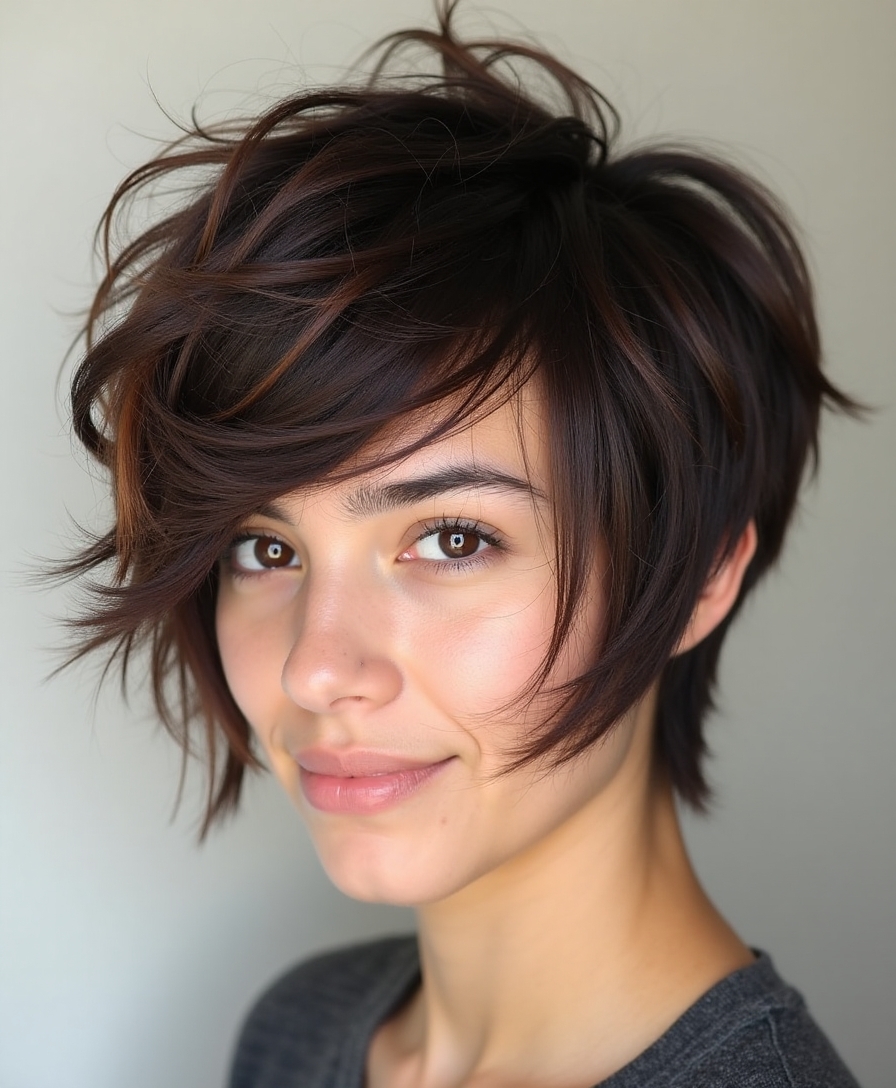
Part of the wolf cut’s appeal is how little it demands of your bathroom. The whole point is a cut that styles itself, so the tool list is short.
Product Over Gadgets
A diffuser for wash-and-go days and a blow-dryer with your fingers for volume cover most of it; a flat iron or wand is optional, only for the days you want a sharper, flipped finish.
The real investment is product rather than tools, since the right texture spray does the work a curling iron would on a smoother style.
ℹ️Worth Knowing
A good wolf cut takes more precision than a blunt one, not less. The messiness is engineered: every layer is placed to fall a specific way, which is exactly why a wolf cut from a stylist who knows the shape looks intentional, while a rushed or DIY attempt just looks shaggy. The undone look is the product of real skill, not the absence of it.
Maintaining It Between Cuts
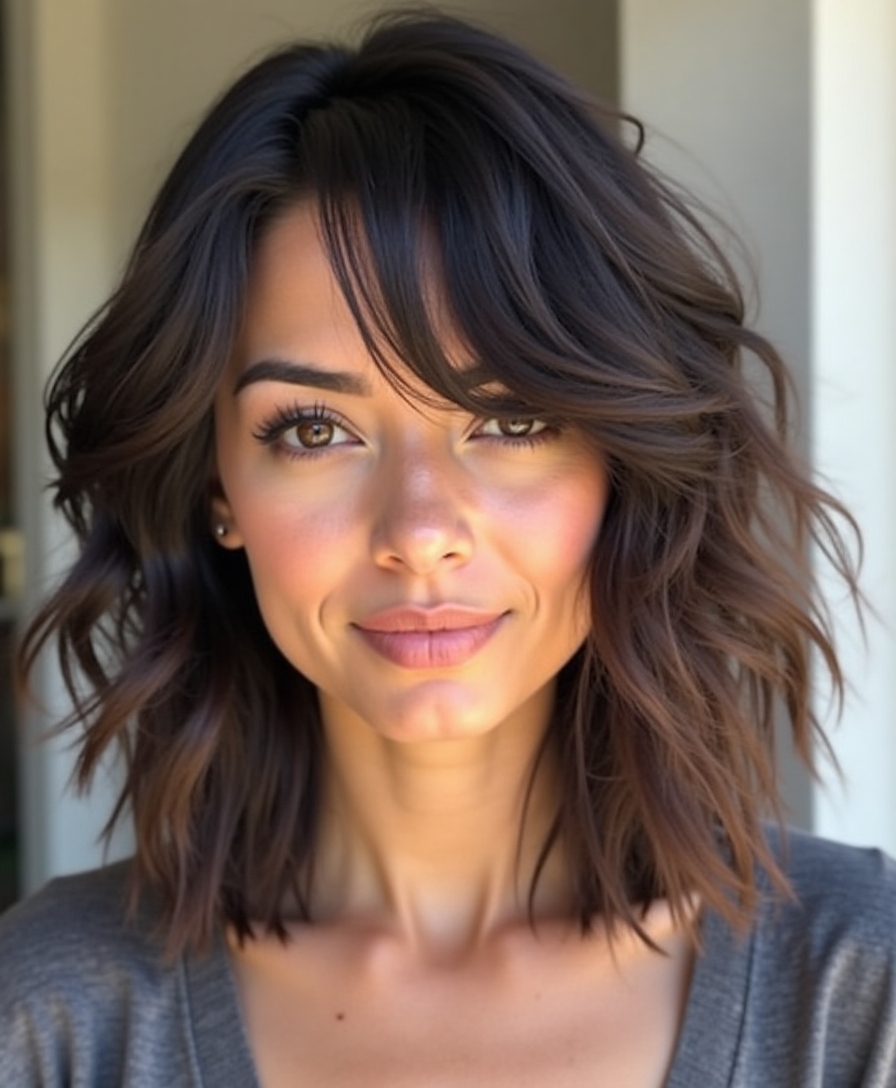
Here is the relief nobody mentions when they talk you out of a bold cut: the wolf cut grows out far more kindly than its drama suggests, because the shape is already broken up and piecey.
- The in-between weeks read intentional, since there is no blunt line to grow shaggy
- A shape-up every six to eight weeks, roughly $50 to $90, keeps it crisp, but a missed appointment never looks like a mistake
- When you are ready to move on, it eases into a long shag or layered lob with simple trims
Short, Medium, or Long
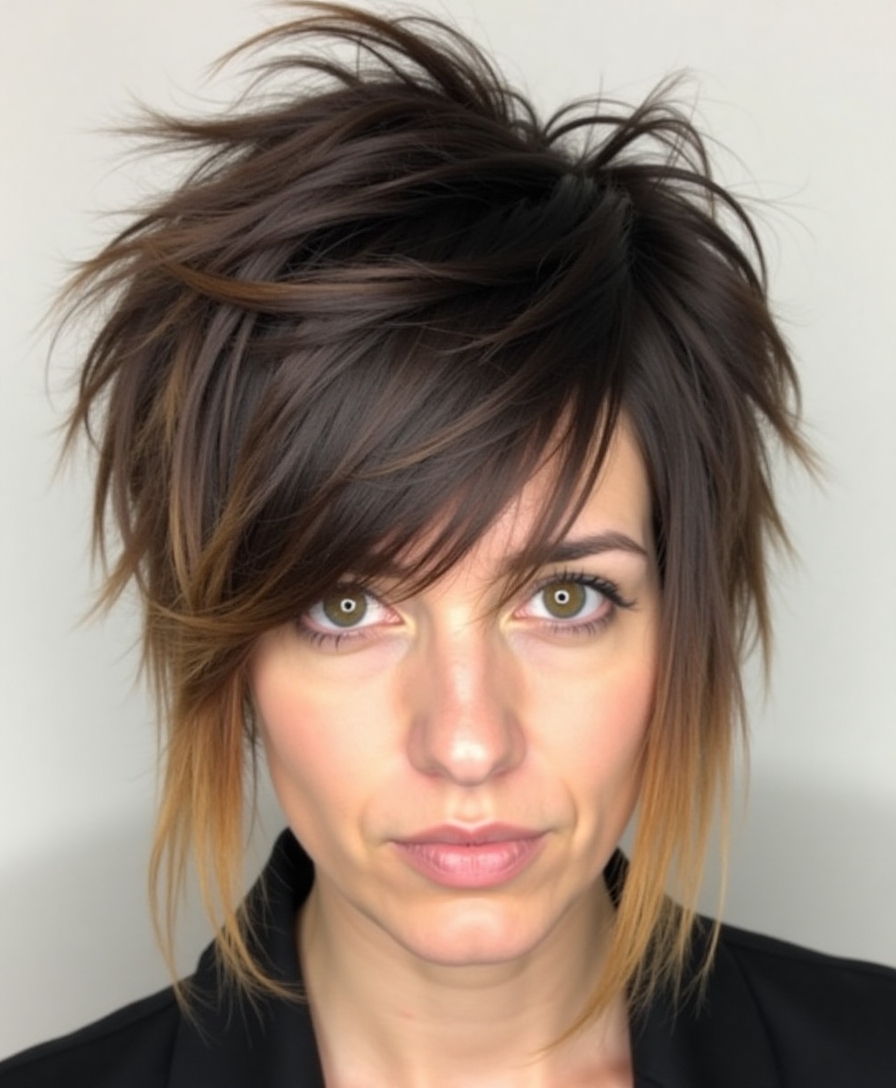
One reason the wolf cut suits so many people is that it scales across every length, dialing the boldness up or down with the inches you keep. The same layering logic reads completely differently short versus long.
If you are nervous, the longer version is the gentle way in, since it keeps real length while delivering the volume and movement.
- Short: the boldest and most editorial, cropped and full, with the strongest disconnect
- Medium: the easy middle ground, shoulder-skimming, where the cut reads exactly as intended
- Long: the softest take, keeping length so it passes as a shaggy wolf cut from the front
Products That Enhance the Texture

The product rule for a wolf cut is simple: it wants grit, not slip. Heavy, shiny, slippery products weigh the choppy layers down and erase the separation that makes the cut work, the same rule that governs a medium wolf cut or any length.
- A texture or sea-salt spray for piecey separation and lived-in grip
- A matte paste or clay to define a few pieces, used a little at a time
- A dry shampoo to revive volume on second and third-day hair, skipping the rich oils
A Gift for Fine Hair
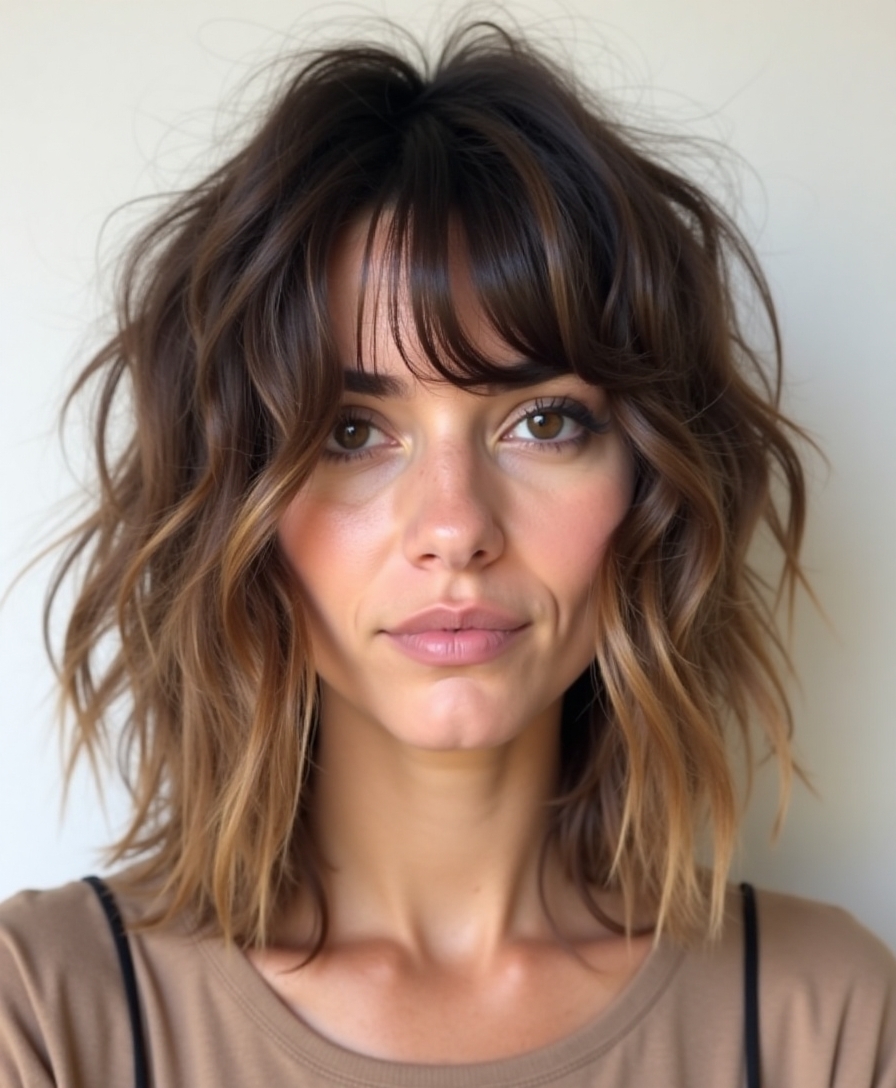
Counterintuitively, fine hair is one of the wolf cut’s best matches, since the heavy layering creates volume and the illusion of fullness that fine hair rarely holds on its own. I have watched fine-haired clients walk out looking like they grew more hair overnight.
Volume Where Fine Hair Needs It
The trick is keeping the layers concentrated at the crown for lift and resisting the urge to over-thin the ends, which fine hair cannot spare.
A volumizing mousse before air-drying sets the lift, and the cut does the rest, which is why it converts so many fine-haired skeptics.
A few wolf-cut terms worth knowing:
📖The disconnect
The contrast between the shorter, fuller crown and the longer length; the heart of the wolf cut and the mullet alike.
📖Internal layers
Layers cut inside the shape to remove weight and build volume without changing the outline.
📖Point-cutting
Cutting into the ends at an angle for soft, piecey separation instead of a blunt line.
The Wolf Cut on Curls

Curls and the wolf cut want the same thing, shaped volume, which is why a wolf cut on curly hair looks more natural than almost any other version. The layering simply channels the volume your pattern already makes.
Cut It Dry, on Your Pattern
The one rule I never break in my chair is cutting curly and coily hair in its dry, natural state, so each layer lands where your curls actually sit rather than where they hang stretched and wet.
On coily and 4-type textures this becomes a low-manipulation, wash-and-go style: define with a leave-in and curl cream, encourage the shape with your hands, and let it dry undisturbed.
Mistakes to Avoid
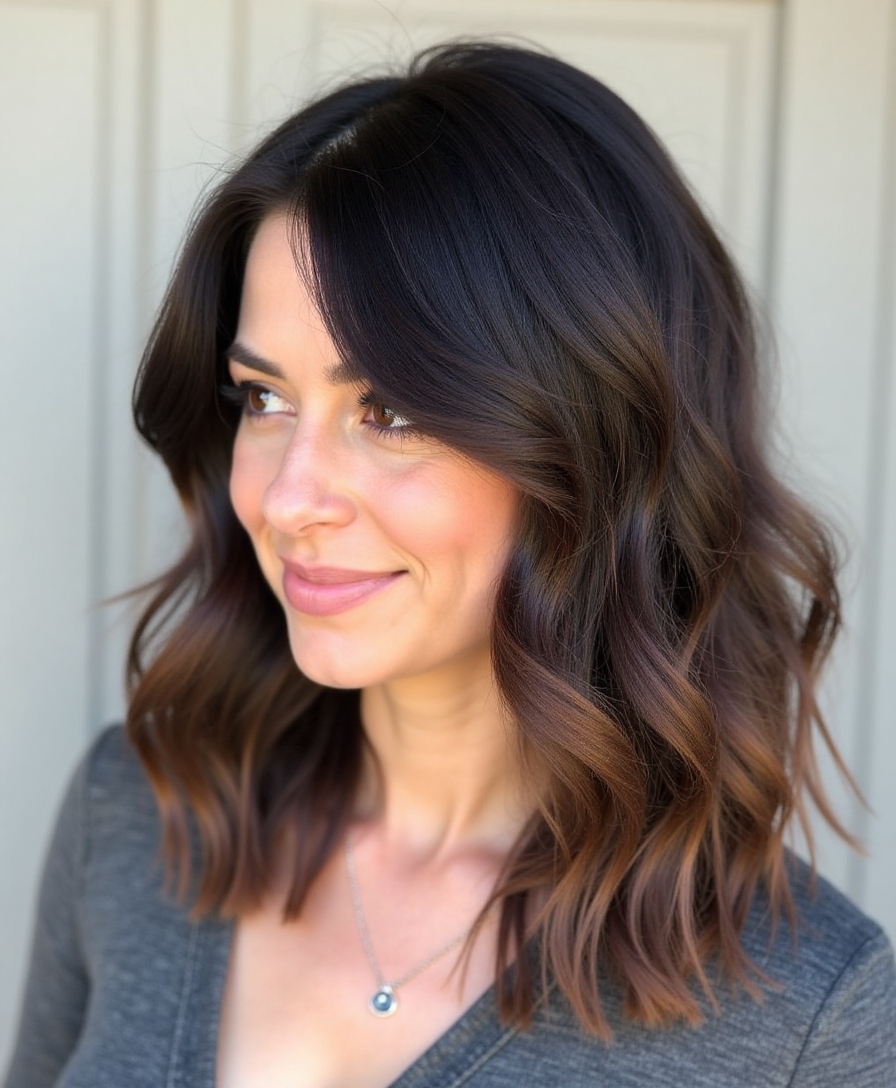
A wolf cut can tip from cool into costume, and the mistakes are easy to sidestep once you know them. The biggest is a hard, unblended line between the short crown and the longer length, which reads dated rather than modern; the disconnect should be softened with layering, never a sharp shelf.
The others are about finish. Over-smoothing it with a flat iron flattens the very texture you came for, and reaching for heavy, shiny product turns the piecey separation greasy. Keep the transition blended, the finish matte, and the styling undone, and it stays firmly on the cool side of that line.
Gathering the Right Inspiration
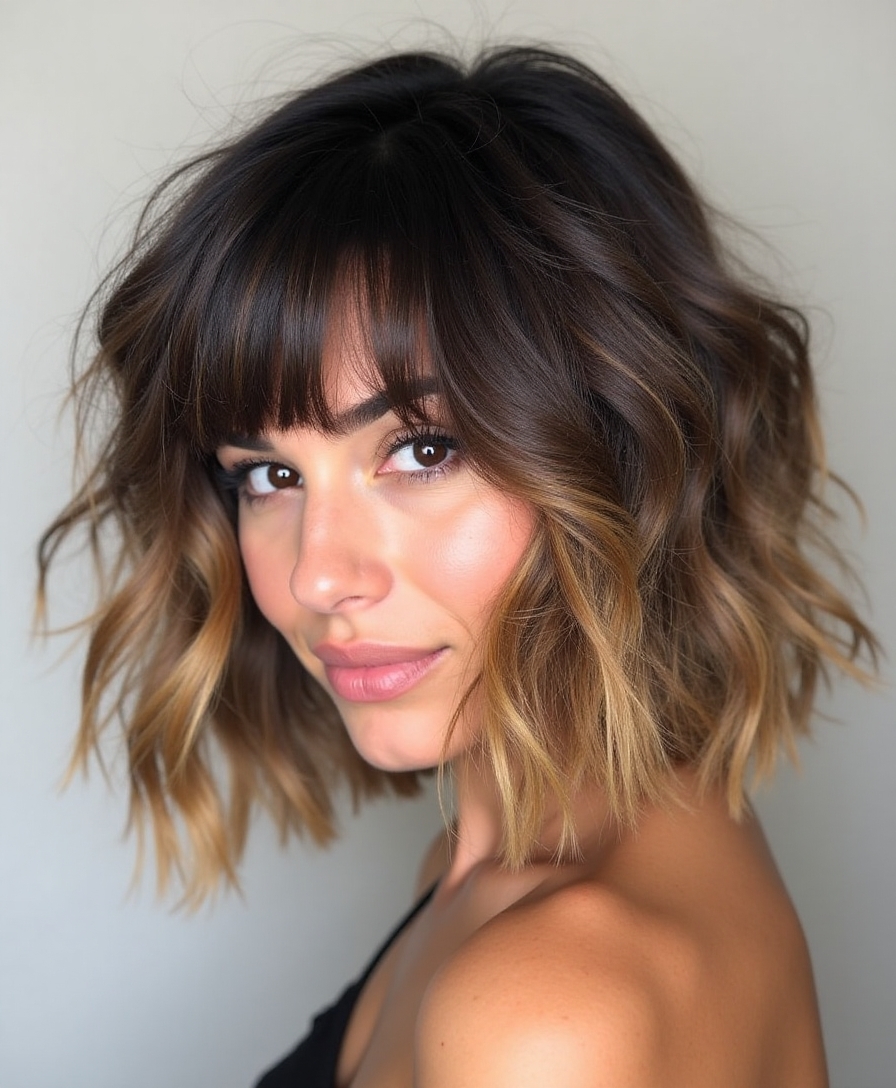
The consultation makes or breaks this cut, and the photos you bring shape the whole result. The classic mistake is bringing a picture of someone whose hair texture is nothing like your own.
- Gather a few references that share your length, density, and curl pattern
- Photos of the back and sides help your stylist far more than a single front-on shot
- Say what you do not want too, like ‘not this short on top,’ which steers the cut as much as the photos you love
Seasonal Adjustments

The cut itself stays put all year, but a couple of finishing tweaks keep it behaving as the weather turns. Humidity and dry winter air each work against the texture differently.
- Summer: lean on a stronger texture spray and an anti-humidity product to fight the droop and frizz
- Winter: a tiny amount of light oil on the ends only, never the roots, stops the static that flattens the shape
- Year round: keep moisture on the ends and grit at the roots, and the wolf cut holds its movement
Color That Moves
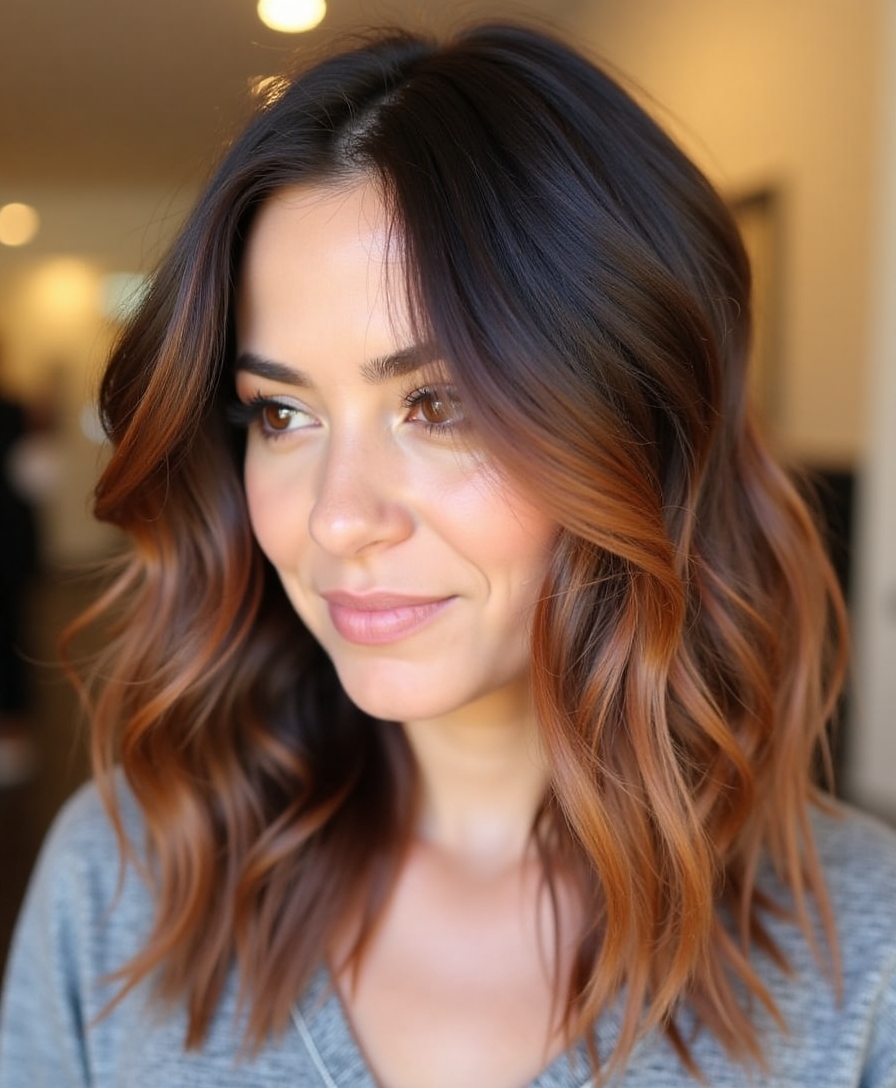
All those layers are a canvas, and color is what makes the movement read in a photo. The most flattering options are the soft, dimensional ones that play into the cut’s lived-in spirit.
- A soft balayage or shadow root catches the light as the layers fall and keeps upkeep low
- Hidden peekaboo panels flash a pop of color only when the hair moves, a fun, reversible bit of boldness
- Skip a hard, high-contrast block color, which fights the cut’s relaxed, broken-up feel
The Two-Minute Morning

Here is the part that wins people over: the daily routine is genuinely a couple of minutes, and most of it happens while you are doing something else. The cut does the styling, so you are only finishing it.
On a wash day, scrunch a leave-in or mousse through wet hair and let it air-dry; on other days, you are just reviving.
- Mist with water or a refresher, scrunch, and break up the pieces with a little paste
- A diffuser on low speeds the dry without killing the texture if you are short on time
- Finish with a texture spray, and resist over-touching, which only causes frizz
Styling It From Day to Night
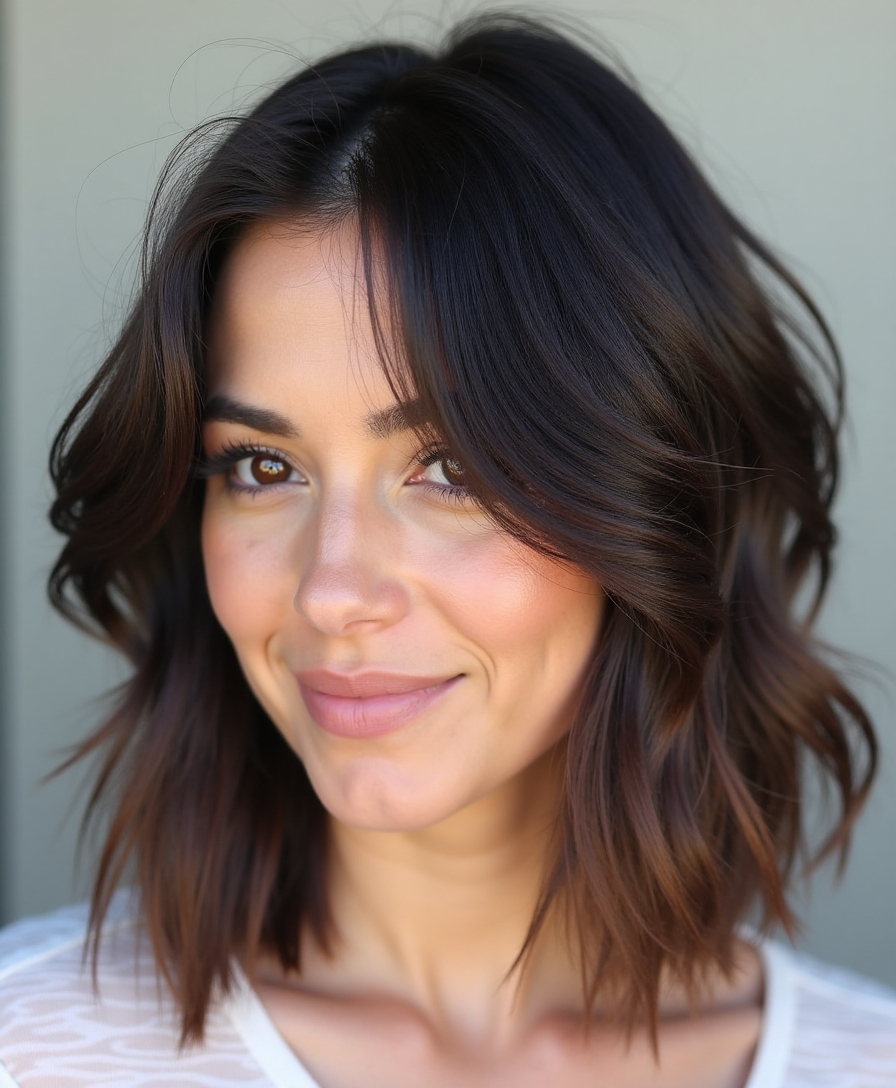
The wolf cut shifts from day to night in seconds, which is part of why it fits a real life. The same cut reads polished or playful depending on a couple of finishing moves.
- For evening, add a few bends with a flat iron and a mist of shine for a sharper, going-out finish
- Or rough it up the opposite way, scrunching in more texture spray for a bolder, undone look
- A bold lip and a statement earring let the cut stay simple while you read dressed-up
A Work-Appropriate Wolf Cut
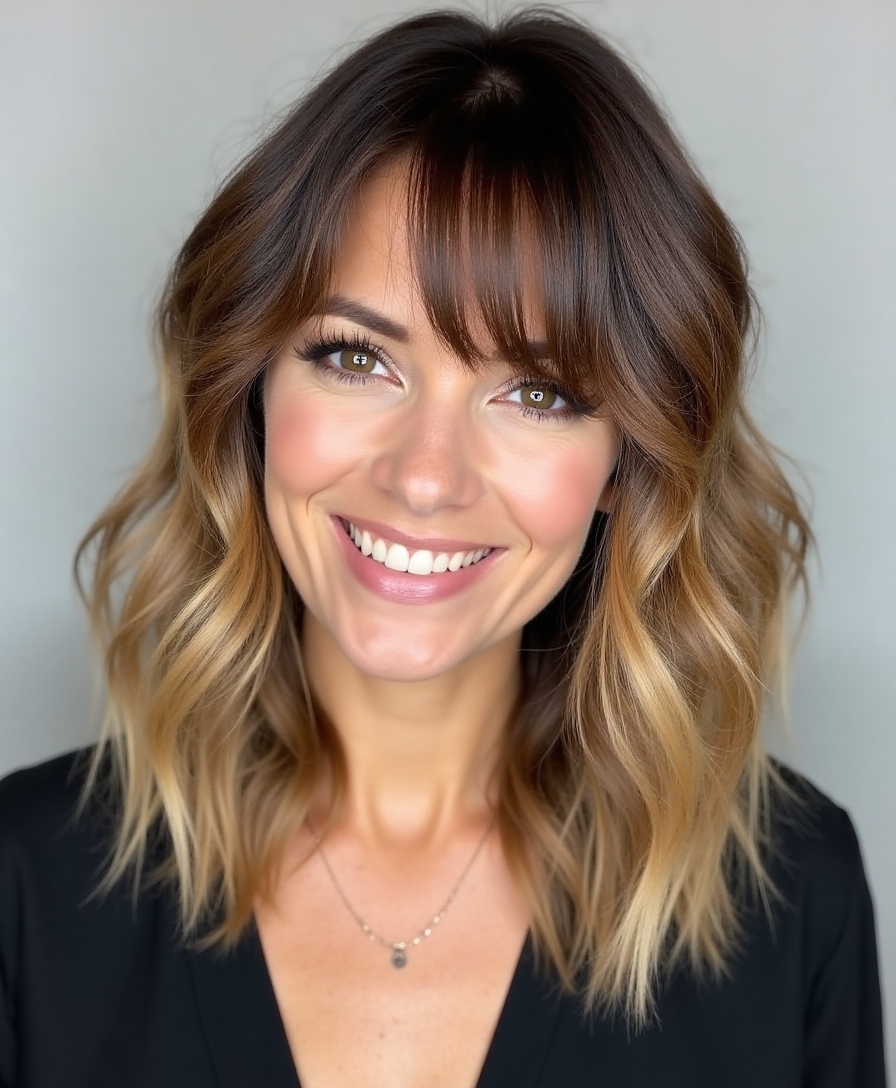
The worry I hear most in my chair is whether a wolf cut is too much for a professional setting, and the honest answer is that it tones down beautifully without losing its character. The cut is not the problem; the finish is the dial. Pairing it with soft curtain bangs makes it read even more polished.
- Smooth the crown and the fringe a little more, leaving the texture mainly in the lengths
- Choose a softer, dimensional color over anything high-contrast or fashion-bright
- Wear the longer or medium version, which reads as polished layers more than an edgy crop
Transitioning to Another Style
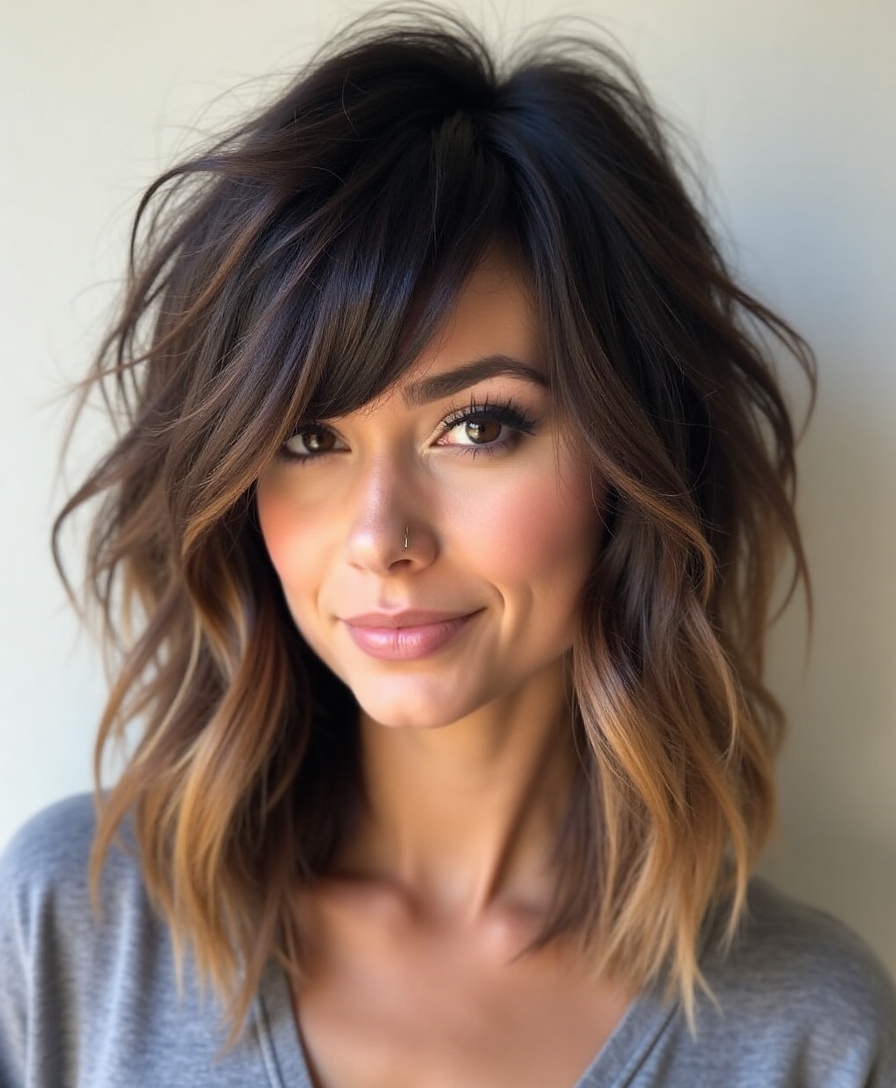
When the time comes to change, the wolf cut is one of the easiest bold cuts to transition out of, precisely because of all that layering. There is no awkward, mushrooming stage the way there is growing out a blunt cut.
No Awkward Stage
The smart move is to let your stylist guide it rather than waiting it out: every few visits, the layers are blended down into the growing length, easing the shape into a long shag and then a layered lob.
Done that way, every in-between haircut is a style in its own right, so you are never stuck looking grown-out while you wait.
The Honest Verdict: Who Loves It
Two kinds of people sit in my chair asking for this cut, and only one leaves thrilled. The ones who thrive already air-dry their hair, reach for a little product without resenting it, and genuinely prefer movement and texture to a smooth, set finish. If that describes your relationship with your hair, you are going to love it.
The other kind wants the wolf cut to be a magic shortcut: zero product, zero trims, and the exact look from a photo of someone with completely different hair. That setup for disappointment is real, because the wolf cut trades a fussy routine for a quick one, not for none, and it pays off most when the cut is built around your own texture rather than copied from a screen. Be honest about which camp you are in, and the decision makes itself.
Wolf Cut Questions, Answered
?Is a wolf cut high-maintenance?
It depends entirely on which kind of maintenance you mean. Day to day it is among the lowest-effort cuts there is, built to air-dry with no heat and a minute of product. The catch is the trim cycle, which is the one place it genuinely asks for your time, since the layered shape needs a regular shape-up to stay crisp, as the maintenance section above explains.
?What is the difference between a wolf cut and a shag?
A wolf cut is basically a shag pushed further, with a shorter, fuller crown and a stronger disconnect between the top and the length, so it reads bigger and bolder. A shag is softer and more even; the wolf cut adds the mullet-style contrast and extra volume on top.
?Does a wolf cut work on thick or coarse hair?
Very well, with one adjustment. Thick hair can balloon if it is over-layered, so ask for internal weight removal, or debulking, rather than heavy surface texturizing, so the cut moves instead of expanding. Done right, thick hair holds the wolf cut’s volume and shape beautifully, often better than fine hair, just with the bulk taken out from inside.
Wild on the Outside, Easy to Live With
That contradiction is the whole story of the wolf cut: it has the nerve of a dramatic haircut and the temperament of a low-maintenance one. The drama lives in how it looks; the ease lives in how you live with it, which is a rarer combination than the trend cycle would have you believe.
If it has been tempting you, gather a few references that match your hair, find a stylist who cuts texture often, and ask exactly where your layers will start. The wild part really is mostly in the name, and the wearing of it is the part that wins people over.
Next Up