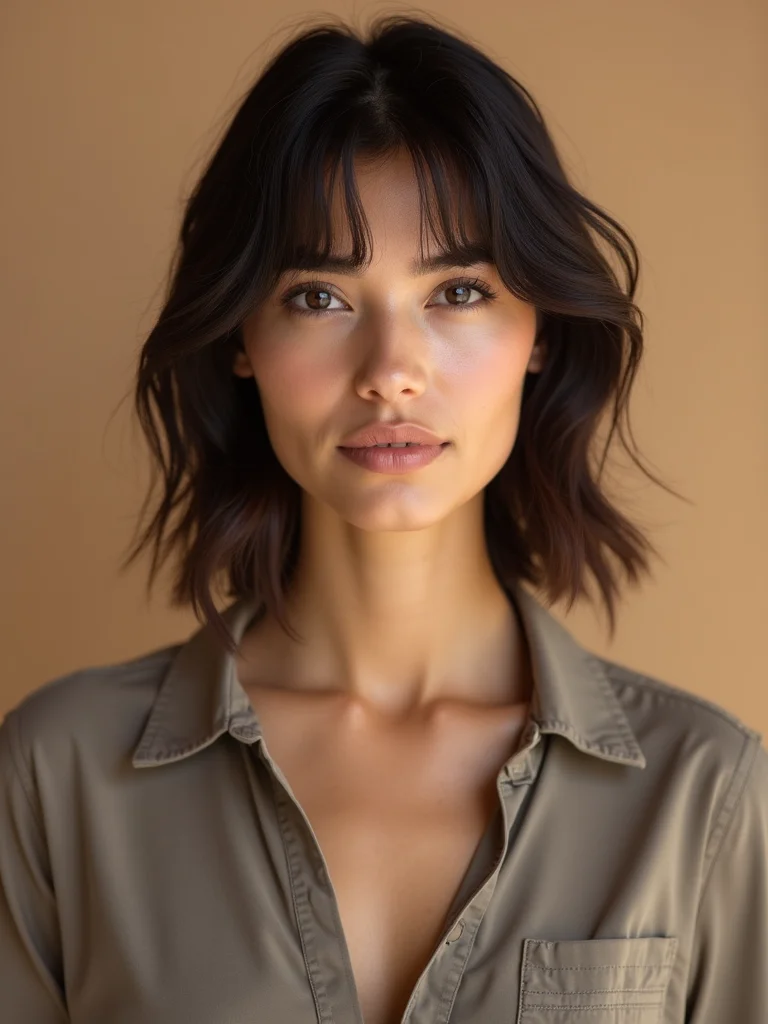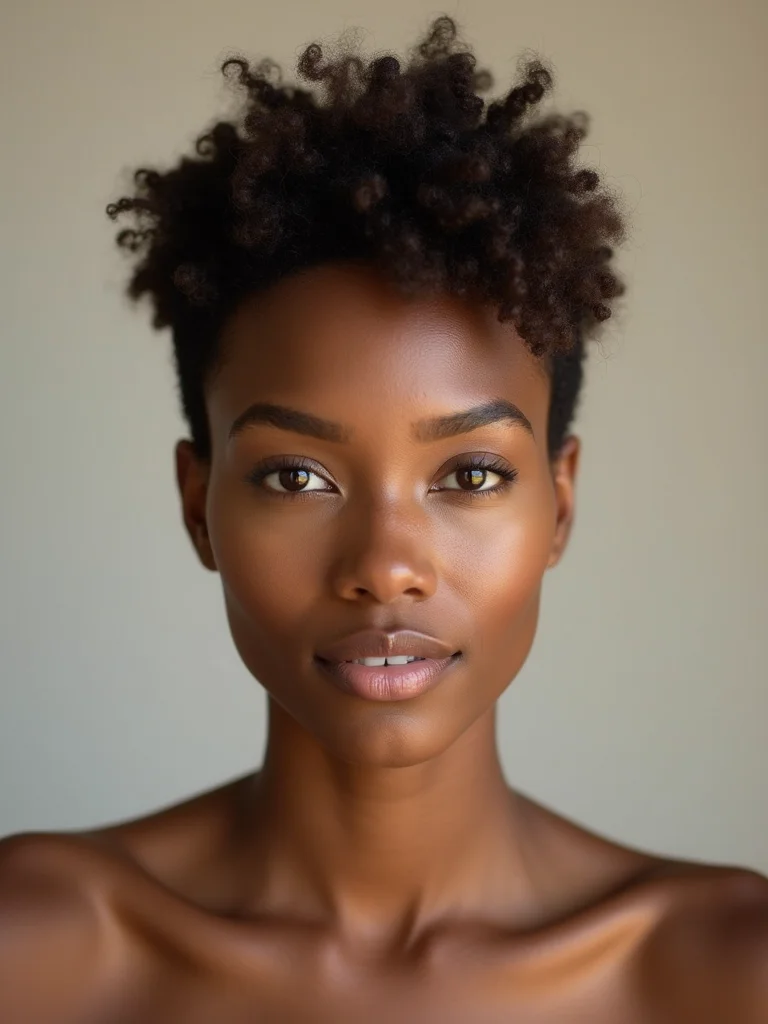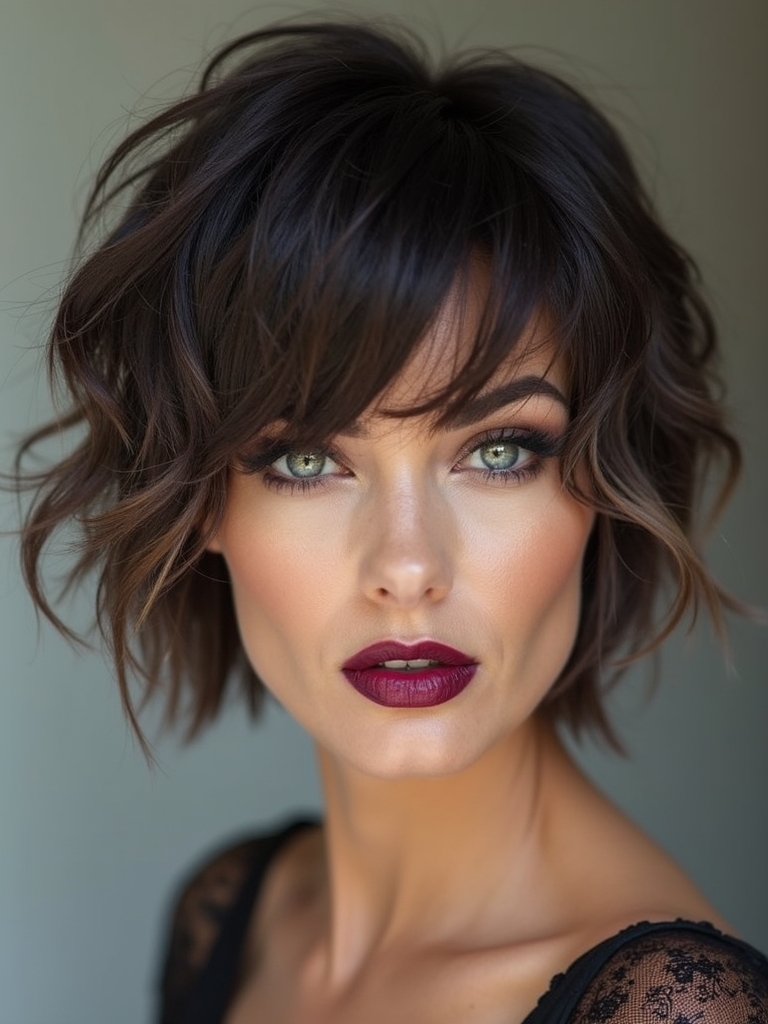
Fifteen browser tabs, one word typed into every search bar: wolf cut. That’s how most people land on a list like this, scrolling near-identical grids of choppy layers until the photos start blurring together. The shape is having a real moment at medium length, and it earns the hype: the same basic cut bends completely differently depending on your texture, your ends, and how much color you’re working with.
What follows are medium-length wolf cuts sorted by texture and finish, chosen for how differently each one actually wears in real life. Every look comes with an honest note on who it flatters and roughly what it takes to keep it sharp.
Where to Start, Fast
- The medium wolf cut is one shape with endless variations; your ends, texture, and color decide the final energy.
- Soft and blended reads polished. Razored and piecey reads edgy. Pick your lane before you sit down.
- The shape-up cadence lands close to what any heavily layered cut needs, so plan on real, repeat upkeep.
An Airy, Feathered Shag for Everyday Wear

The soft shag is the medium wolf cut at its most wearable. Feathered layers and airy texture bring movement without a single hard edge, which is exactly why it works for offices, school runs, and every ordinary day in between. Keep the layers blended and the ends soft.
Air-dry it with a light mousse worked from mid-length to ends, and you’re done in minutes. It’s worth suggesting to anyone who wants the trend without committing to constant styling.

Choppy Layers Paired With Curtain Bangs

Add curtain bangs to a choppy, layered wolf cut and you land on the most-requested combination in this whole roundup. The bangs frame the face while the choppy layers carry the shaggy texture the cut is known for.
It stays approachable without going flat or safe. If this pairing calls to you, our curtain bangs guide breaks down styling the fringe on its own.
- Choppy layers build shaggy texture throughout the cut.
- Curtain bangs open the face without a hard line.
- Reads as edgy-lite: bite without full commitment.
👍Soft Shag Pros
- +Air-dries into shape with almost no tools
- +Blends into nearly any face shape or texture
- +Grows out with barely a visible line
👎The Trade-Off
- –Less visual drama than choppier versions
- –Fine hair needs a lighter hand with texturizing
- –Loses definition fast without any product at all
Feathered, Tapered Layers Built for Fine Hair

Fine hair gets an undeserved bad reputation with the wolf cut, but a sleek, feathered version actually builds the illusion of fullness. Tapered layers at the crown lift the roots, while the ends stay slightly heavier so they don’t wisp away to nothing.
Restraint with the texturizing shears matters most here. Done lightly, it fakes volume convincingly. Overdo it, and fine hair thins out fast.
- Tapered crown layers lift the roots for volume.
- Slightly heavier ends hold density and shape.
- Light texturizing only; heavy thinning backfires on fine hair.
Wavy Texture With Face-Framing Layers

Wavy hair and a medium wolf cut make an easy match. The waves already bring their own texture, so the layers just give them room to move, and face-framing pieces draw everything up toward the eyes.
I cut these with a bit of extra length built in for shrinkage, then style using a curl cream, diffusing on low heat until dry. The face-framing piece does the flattering work, skimming the cheekbones as the waves settle.
For the full air-dry method on loose waves, see the wavy wolf cut guide.
Sculpted Layers That Define Curly Texture

Curly hair turns the medium wolf cut into something closer to sculpture: springs and volume shaped around where each curl naturally wants to sit. I shape these dry, reading the natural pattern before committing to any length.
Cut Dry, Every Time
Stacking lift at the crown while leaving the framing pieces slightly longer keeps a round curl-halo from forming. I always overshoot the length too, since shrinkage can pull a coil up several inches once it dries.
Lock the curls with a curl custard and a brush-through gel, then diffuse without touching the hair as it dries; handling curls mid-dry triggers frizz faster than almost anything else. The curly wolf cut guide goes deeper into shaping for each curl pattern.
Razored Ends for Real Edge

When someone wants genuine grit, the razor comes out. Razored ends shatter into a piecey, undone texture that scissor work alone can’t fake. The catch is that it isn’t for every head. Best on medium-to-coarse hair that can take the texture without fraying; skip it on fine or color-damaged ends.
- A matte paste worked through finishes the shattered, piecey look.
- Ask specifically for razoring on the ends, not the whole head.
- Color-treated hair should be in good condition before you commit.
A few terms worth knowing before your appointment:
📖Razoring
Cutting with a blade instead of shears, leaving softer, feathered, less blunt ends.
📖Point-cutting
Snipping vertically into the ends with shears to soften them without a full razor.
Low-Maintenance With a Soft, Airy Fringe

For the lowest-effort version here, pair the medium wolf with a soft, airy fringe. The see-through bangs add face-framing without the upkeep a heavier fringe demands, and the whole cut air-dries into shape on its own.
This is the pick for the busiest mornings. A scrunch of mousse, a flip of the part, and you’re out the door.
It forgives a missed trim too. The airy fringe simply blends into the surrounding layers as it grows out.
Blunt Ends for a Polished, High-Contrast Finish

Most wolf cuts taper down to soft, piecey ends. A blunt-ended version flips that script for a polished, high-contrast finish, with a shaggy, layered crown sitting above a clean, straight-cut perimeter.
Why the Contrast Works
The contrast reads as modern and deliberate, and it keeps more visible weight at the ends, something both fine and medium hair tend to appreciate. It does need a smooth blow-dry to show off that blunt line properly.
Ask for layered texture up top and a blunt finish at the bottom. Resist the urge to over-texturize for extra piecey-ness, especially on fine or fragile hair; that combination undercuts the whole point of the contrast.
Piecey Texture With Side-Swept Bangs

Piecey texture and side-swept bangs make a relaxed, cool-girl version of the medium wolf. The ends separate into deliberate pieces while the fringe sweeps softly to one side.
Define the pieces with a matte paste pinched through just the ends, leaving the roots untouched. Our side-swept bangs guide covers the sweep itself in more detail.
The side-swept fringe is the easiest bang to wear day to day. It blends into the layers, tucks away when you want it gone, and looks unplanned in the best possible way.
Volume Control for Thick Hair

Thick hair and a medium wolf cut make a strong match, because all that density finally has somewhere to go. The layers remove weight so hair actually moves.
I debulk the mid-lengths and just under the crown, keeping the face-framing pieces longer so the shape doesn’t balloon outward as it grows. A light mousse with scrunch-outs is the styling routine; heavy oils stay off the top.
Expect some outward expansion between visits. That’s normal for thick hair carrying this much layering, not a sign anything went wrong.
A Tousled, Undone Finish

The tousled version leans fully into texture for a relaxed, undone finish: piecey layers, a little root lift, and ends that look like you slept on them, in the best way.
Building the Mess on Purpose
I build it with a salt spray scrunched through damp hair and a quick rough-dry. Once you wake up, break up the set with your fingers, then press a pea of matte paste into the ends to separate them.
The goal is movement that looks accidental even though the cut is doing the real work underneath. This look forgives more than any other version here; a little extra mess only helps it.
Asymmetrical Lines for Modern Balance

An asymmetrical wolf cut breaks the symmetry on purpose, with one side cut shorter or angled more sharply than the other for an off-kilter, editorial balance. It’s bolder than it looks in photos, and more flattering than most people expect.
- One side runs shorter or more angled than the other.
- The imbalance draws the eye and adds real edge.
- Style it with intention; the asymmetry is the whole point.
| Day | Product | Technique |
|---|---|---|
| Day 1 | Salt spray on damp hair | Scrunch, then rough-dry |
| Day 2 | Dry shampoo at the roots | Finger-tousle, skip the brush |
| Day 3 | Pea of matte paste | Twist small pieces for separation |
A Wolf-Mullet Hybrid for Bold Style

Lean the wolf cut closer to its mullet roots and you land on the boldest version in this entire roundup. The crown stays shaggy and layered while the back holds onto more length, a nod to the mullet without going full eighties.
It’s a statement cut, built for someone who wants hair that leads the room. Our wolf mullet guide covers the shape in full if you’re ready to commit.
Subtle Highlights That Wake Up the Layers

Add subtle highlights to a layered wolf cut and the movement comes alive. Color woven through the layers catches the light as hair swings, making the texture look truly three-dimensional.
Keep the highlights soft and concentrated near the face for this version, so the brightness lifts the front without demanding a high-maintenance grow-out schedule. Babylights or a soft balayage run closer to what a partial color service costs than a full head of foils.
- Highlights woven through the layers add real dimension.
- Soft, face-framing placement matters more than heavy coverage.
- Babylights or a soft balayage keep the grow-out easy.
Deciding how far to lean into the mullet side?
🎯Subtle Nod
Keep the length difference small: shaggy crown, barely-there back extension.
🎯Full Commitment
A dramatic length gap front to back, styled for maximum contrast and attitude.
A Heatless Routine for Between-Cut Days

You can keep a medium wolf cut looking sharp without ever touching a hot tool, which protects both the texture and the ends over time. The layers already hold a bend on their own.
Overnight, damp-braid the hair, or twist and pin a few sections to set soft waves. Undo it after you wake, then scrunch a dab of paste into just the ends.
On day-two hair, a damp brush through the front paired with a spritz of texture spray brings the shape right back. Lately, more clients ask for this exact heatless routine, and their ends are better for it.
Who It Suits Best
This cut works across nearly every texture, straight, wavy, curly, or coily, as long as the layering is placed for what your hair actually does. It suits people who want variety: soften it for the office, razor it for the weekend, and it still reads as one cohesive cut.
The wolf cut guide is worth a look if you’re still deciding between the medium length here and a shorter or longer version.
Medium Wolf Cut Questions From the Chair
?What’s the actual difference between a wolf cut and a wolf mullet?
A wolf cut is a shaggy, heavily layered shape all over the head. A wolf mullet pushes that same shagginess up top while keeping noticeably more length at the back, borrowing the mullet’s silhouette without fully committing to it.
?Which version here needs the least daily styling?
The soft shag with the airy fringe. It air-dries into shape on its own and holds up well between salon visits, needing little more than a scrunch of mousse most mornings. Razored and blunt-ended versions ask for more daily attention, and a full shape-up typically runs $60 to $140 depending on your salon.
?Can I add highlights and heavy layering at the same appointment?
Yes, though most stylists cut first so the color can be painted onto the finished shape. That order lets the colorist follow exactly where the layers fall.
One Cut, Fifteen Ways to Make It Yours
The medium wolf cut earns its staying power by refusing to be just one thing. Soften it for work, razor it for the weekend, add bangs, highlights, or asymmetry, and you get a completely different look from the same foundation shape.
Save the versions here that caught your eye, screenshot them, and bring the folder to your next appointment. Your texture and your ends will decide where the final shape lands, and that’s exactly how it should work.
Related Reads