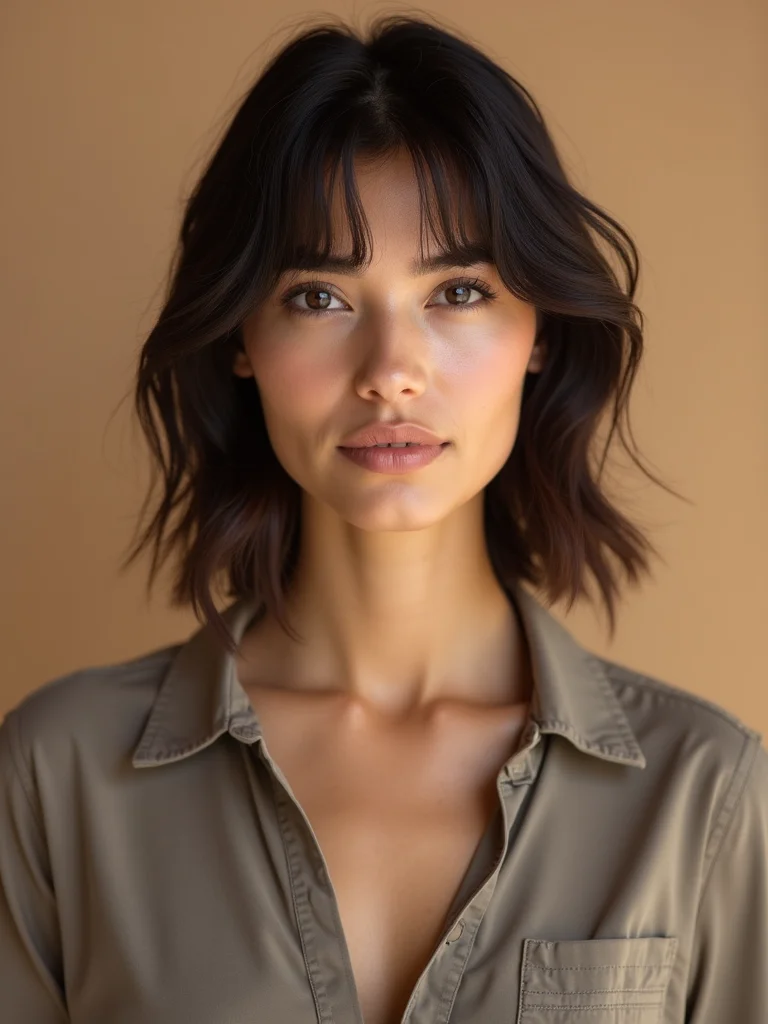
A one-length bob sits still no matter how you shake your head. Add layers underneath and a fringe up front — a layered bob with bangs — and suddenly two different parts of the cut are moving at once, the lengths bending where they’ve been thinned, the fringe shifting right where the eye lands first.
Fifteen pairings follow below, each one matching a specific layering style to a specific fringe, since the two elements actually work as a team rather than as separate decisions.
How Layers and Bangs Work Together
Why pair a fringe style with a specific layering style? Because they’re solving related problems together: the layers free the lengths to move, and the fringe puts a moving piece right at the face.
Which part of this combination needs the most upkeep? Almost always the fringe. A blunt or micro fringe needs a shaping trim on a noticeably tighter schedule than a soft, blended one does.
How should the pairing change by texture? Fine hair leans toward feathered lift, thick hair toward internal debulking, and curly or coily hair toward a dry cutting approach for both the layers and the fringe.
A Wispy Fringe on Textured Layers
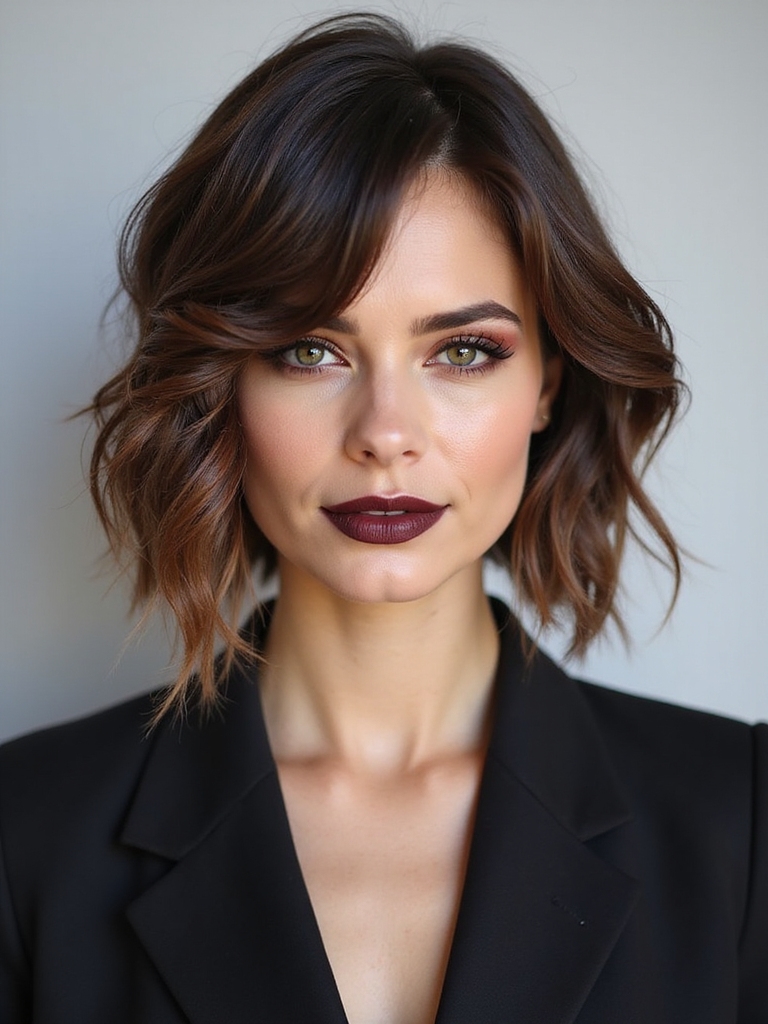
This pairing sits at the gentlest end of the range. A wispy fringe stays light across the forehead while textured layers break the rest of the bob into airy, separated pieces, so the whole front moves as one connected unit.
The Gentlest Way Into Bangs
Nothing about it feels heavy. There’s so little weight involved that movement happens almost on its own, which makes it a forgiving place to start for anyone who’s been put off by a heavier fringe before.
Fine to medium hair suits this pairing especially well, since a blunt fringe on that same texture tends to sit flat.
Blunt Bangs Against Choppy Layers
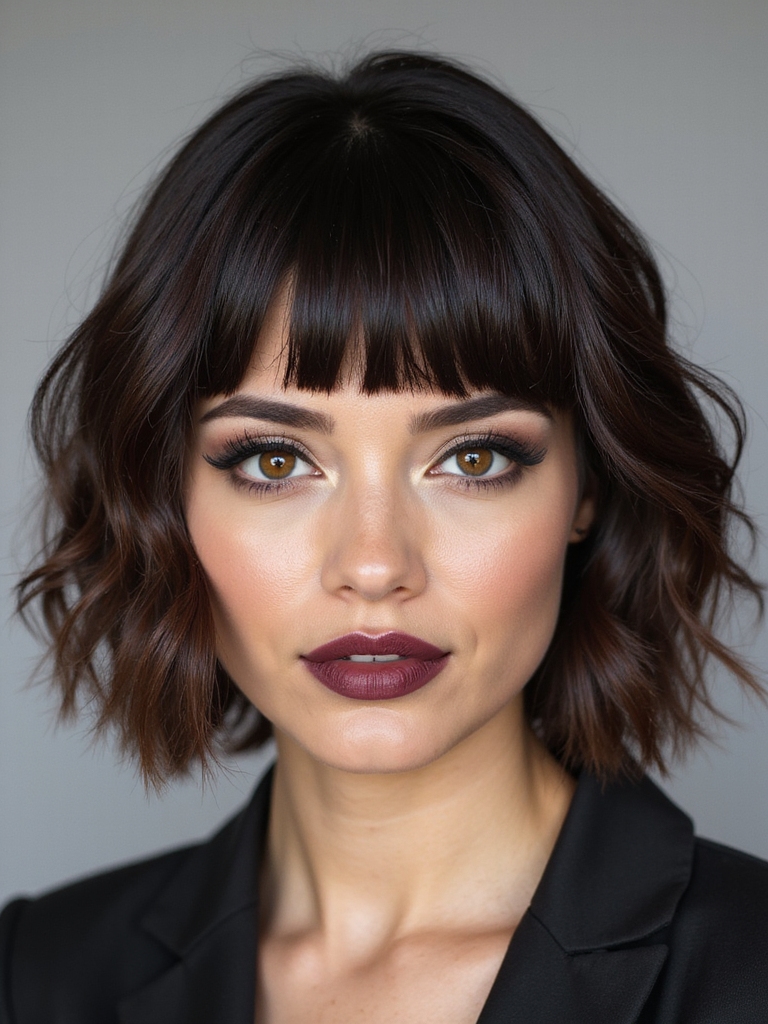
Here the front and the rest of the head play opposite roles on purpose. A heavy, graphic blunt fringe holds one strong, clean line, while point-cut, choppy layers break everything behind it into separated, restless pieces.
That contrast, structure up front, motion everywhere else, is what carries the whole look. Nothing about it is subtle. The look lands bold precisely because the two halves aren’t trying to match.
The trade-off is real: a blunt fringe shows regrowth within days, so budget for a shaping trim about every 15 to 18 days if that crisp edge matters to keep.
Curtain Bangs Blended Into a Shaggy Bob
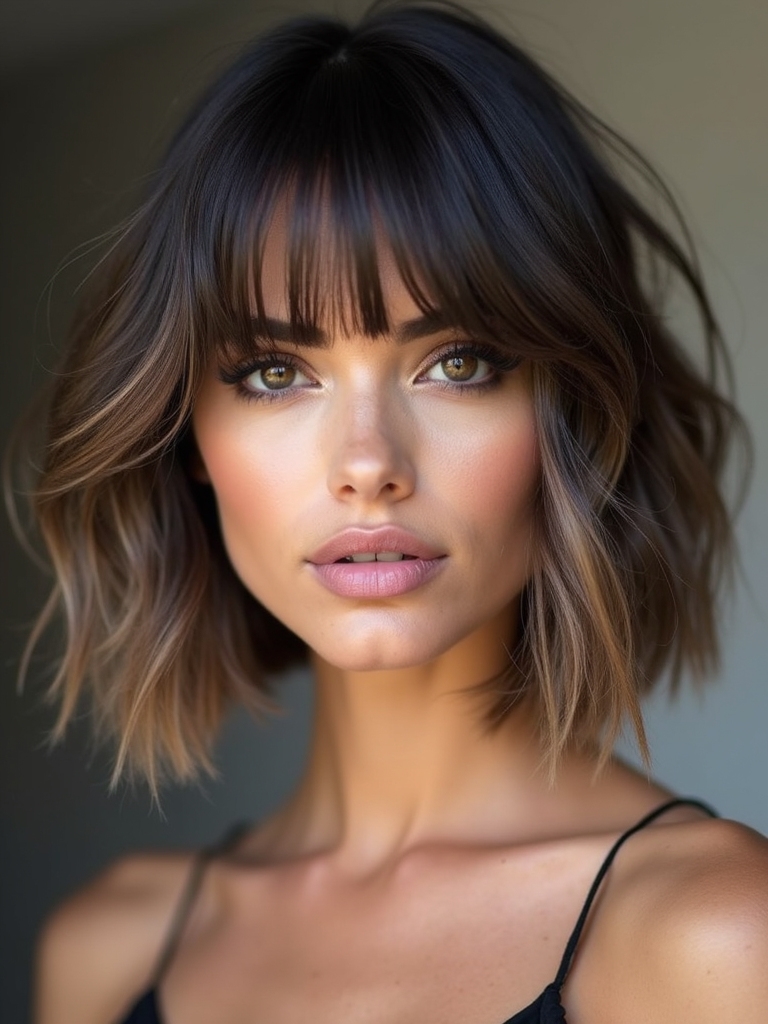
Curtain bangs and a shaggy bob share the same underlying logic: heavy texturing throughout, with the fringe parted center and swept loosely to each side.
One Continuous Texture, Front to Back
Because the fringe flows straight into the surrounding shag layers, nothing about the front looks like a separate piece glued onto the cut.
This ranks among the most forgiving pairings here. Heavy layering already hides small unevenness, and the grow-out blends so gradually that there’s no obvious awkward stage to push through.
A Diagonal Sweep With Graduated Layers
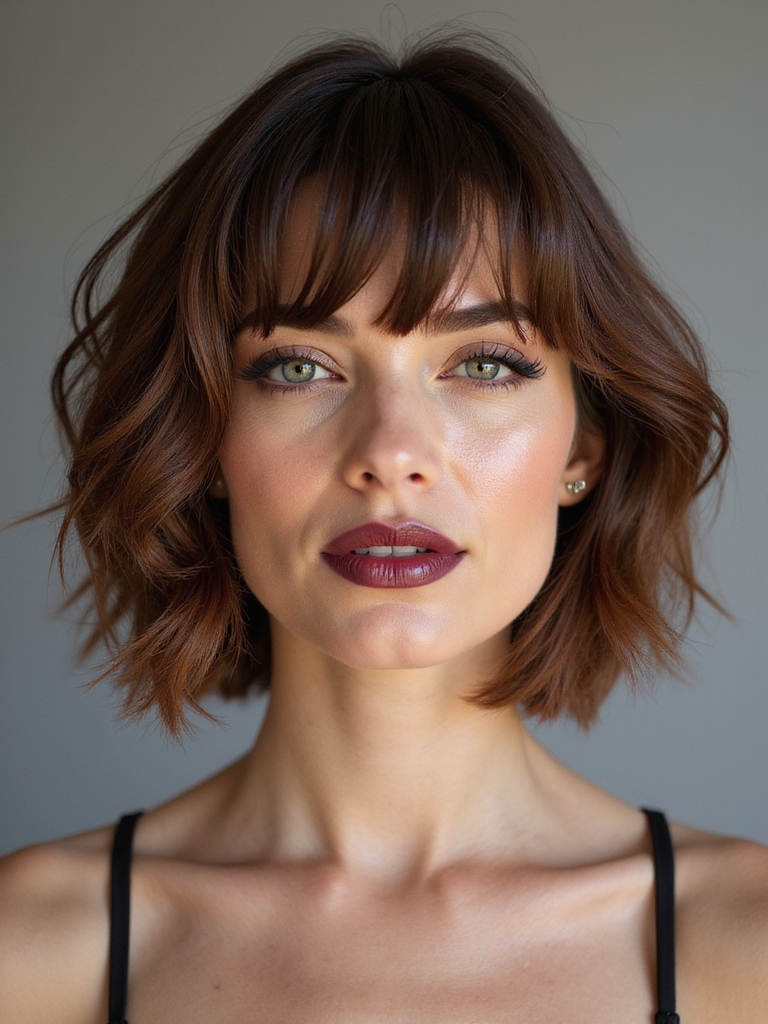
Side-swept bangs set a diagonal line across the forehead. The angle rarely wavers. Graduated layers carry that same line down through the rest of the bob, tracing one slimming path from brow to ends.
- Softens round and square face shapes especially well through that diagonal.
- The part placement decides everything; too shallow and the fringe drops into the eyes.
- A deep part set just past the arch of the brow is the usual sweet spot.
👍Why a Deep Side Part Works
- +Creates instant asymmetry and a flattering diagonal line.
- +Adds volume to the fuller side without any extra product.
- +Pairs naturally with graduated layers already doing similar work.
👎What to Watch For
- –Too shallow a part lets the fringe drop into the eyes.
- –Too deep a part can start to look staged.
- –A stubborn cowlick may need training over several washes.
Feathered Layers and a Soft Fringe for Fine Hair
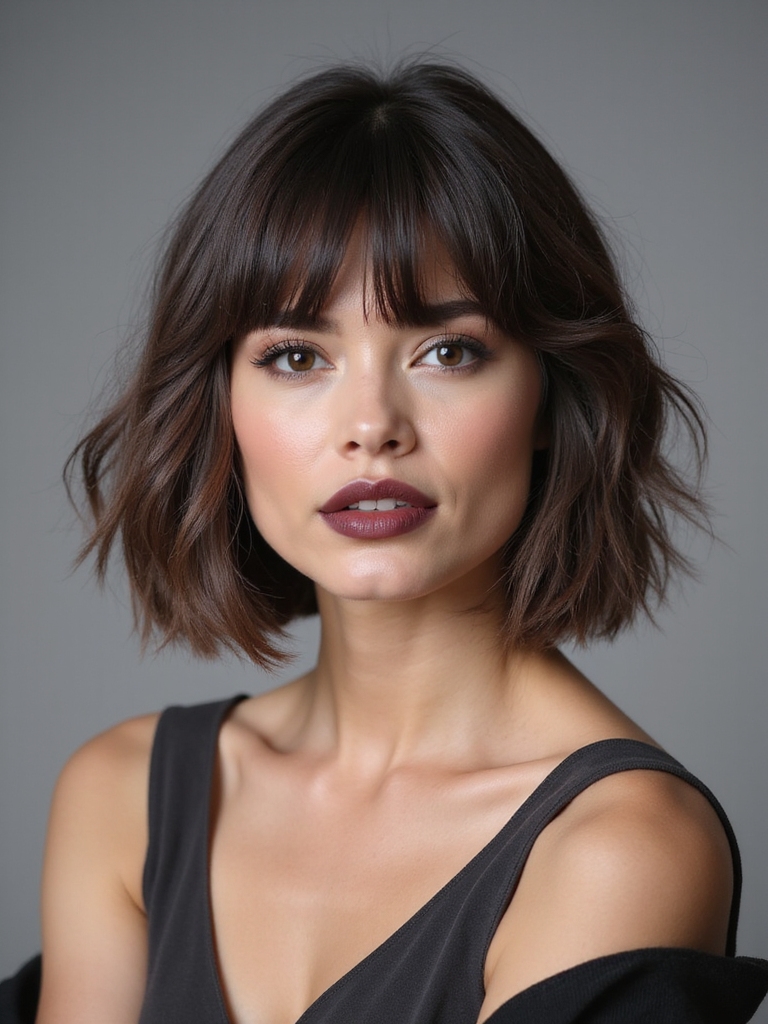
Fine hair fights flatness by nature, and feathering is the direct fix. Light, feathered layers lift and separate the bob while a soft fringe adds body right at the front, tricking the eye into reading more density than the strands actually carry.
- Keep the layering soft and concentrated high, never carved through the ends.
- Over-layering does the opposite of the goal and thins fine hair out fast.
- A volumizing mousse worked in at the roots outperforms any product applied to the lengths.
Piecey Bangs Riding the Same Wave Pattern
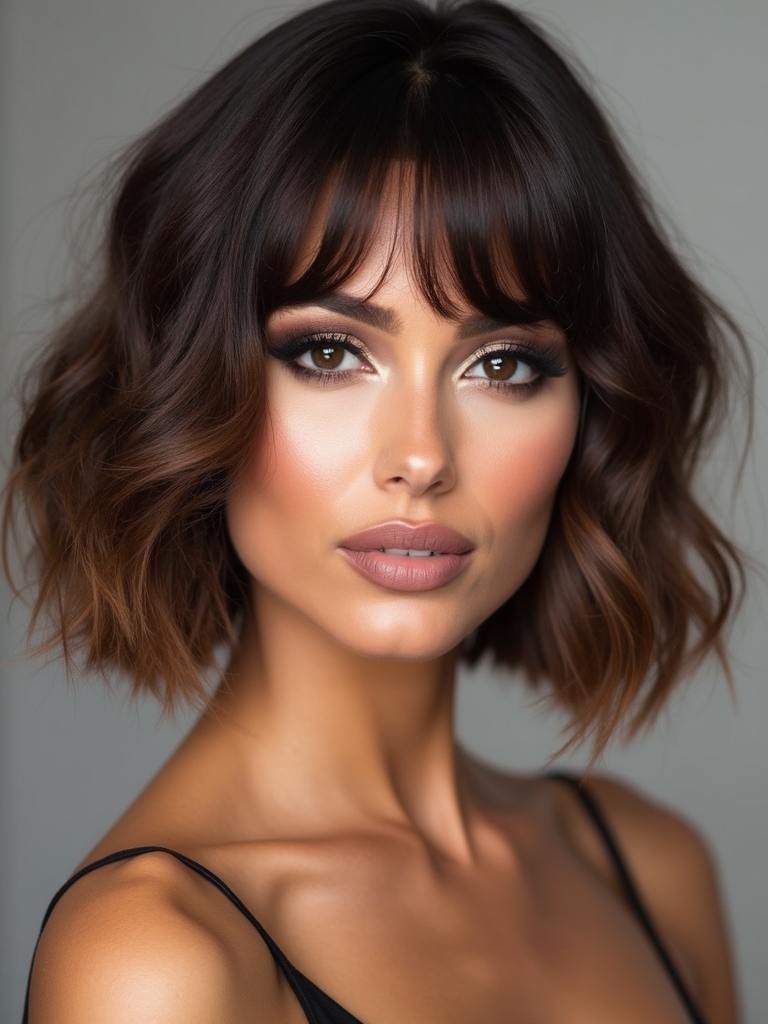
Waves and piecey bangs share the same texture naturally, so the pairing barely needs coaxing. The layers give the waves room to bend, and the fringe gets sliced into separated pieces that pick up that identical wave pattern.
The result reads like one continuous, sun-worn texture, the fringe folded directly into the wavy lengths. It’s also the lowest-effort pairing in this whole range, since existing texture does most of the visible work.
Any small unevenness in the cut disappears into the waves, which makes this a kind option for a stretch of busy weeks between salon visits.
A Lightly Shaped Fringe on Curly Layers
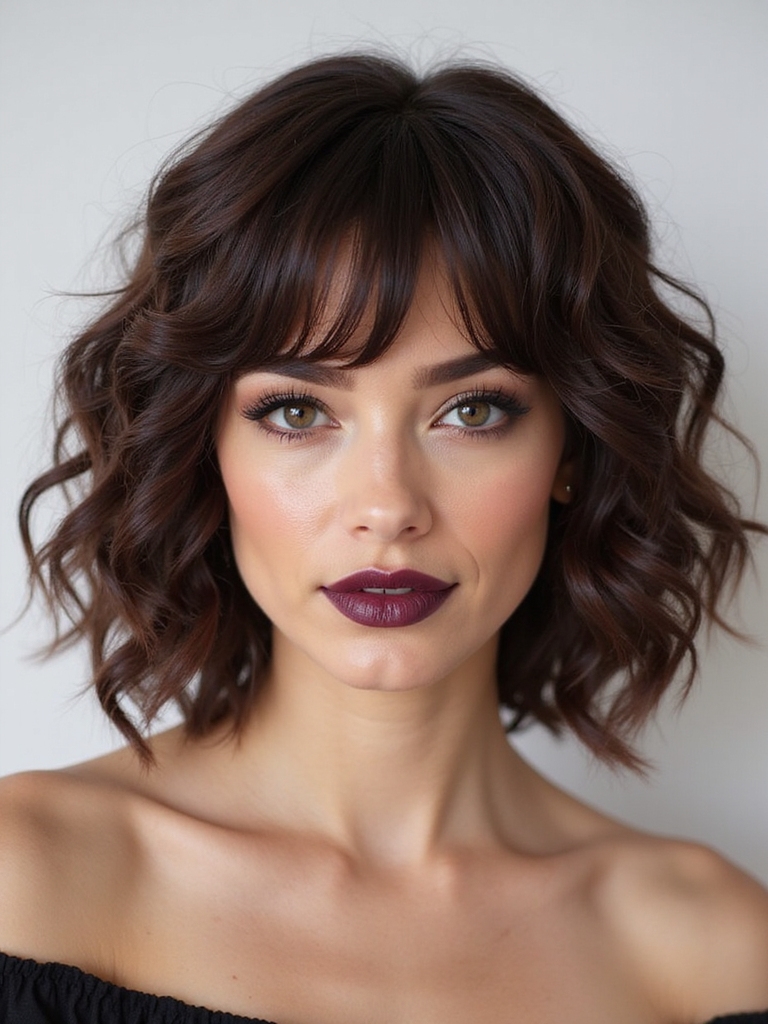
A curly bob with a fringe bounces in a way a straight cut simply can’t replicate, since the spiral pattern shows up equally in the fringe and the lengths behind it.
The layering gives curls room to stack and move, and a lightly shaped fringe frames the face while still letting the curl pattern keep its own spring.
- Both the bob and the fringe need shaping on fully dry hair, one section at a time.
- A stylist works with where each curl actually settles once fully dry.
- Cut on wet hair, curls tighten up and land shorter than anyone planned.
A couple of terms worth knowing before a curly-bob consultation:
📖Dry cutting
Shaping hair while it’s completely dry, so the stylist sees exactly where curls settle in their natural state.
📖Shrinkage
How much shorter curls appear once fully dry compared to when stretched, which can be dramatic on tighter curl patterns.
Airy Micro Bangs on a Jaw-Length French Bob
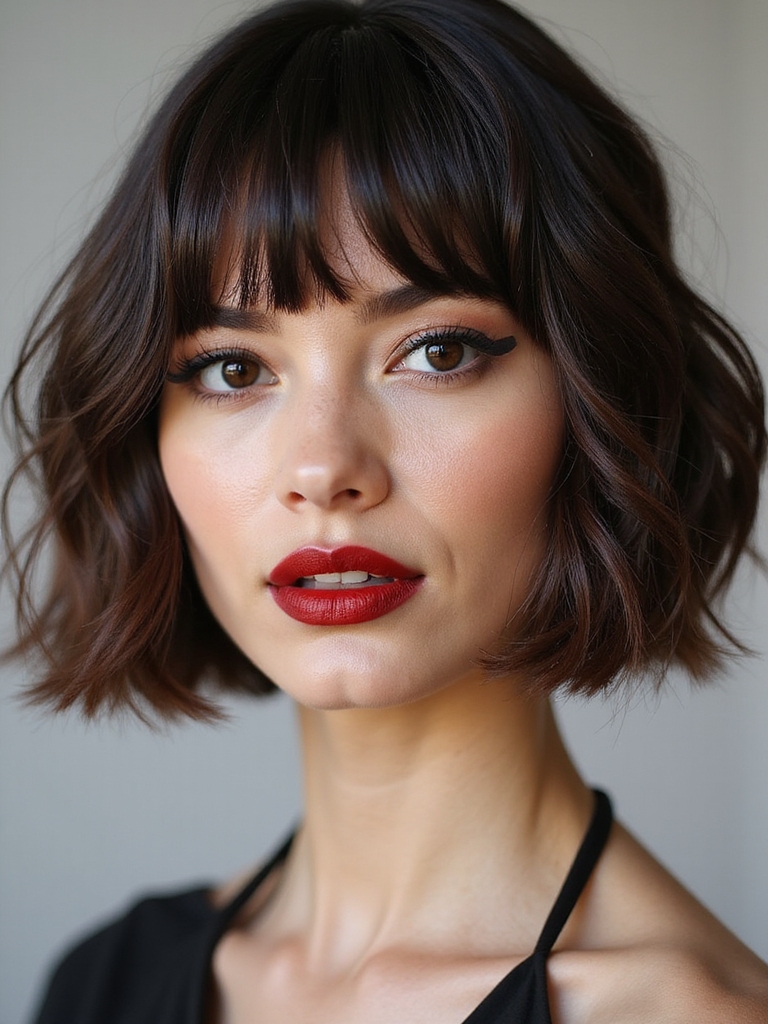
Short and chic by nature, the French bob pairs naturally with airy micro bangs sitting high above the brow, kept thin and see-through so the whole front stays light instead of heavy.
- Soft layers through the bob keep the overall shape from feeling stiff.
- Best on straight to lightly wavy hair, where the short fringe stays neat.
- A micro fringe grows out fast, so expect a shaping visit roughly every two weeks.
Swoopy Side Bangs on an A-Line Shape
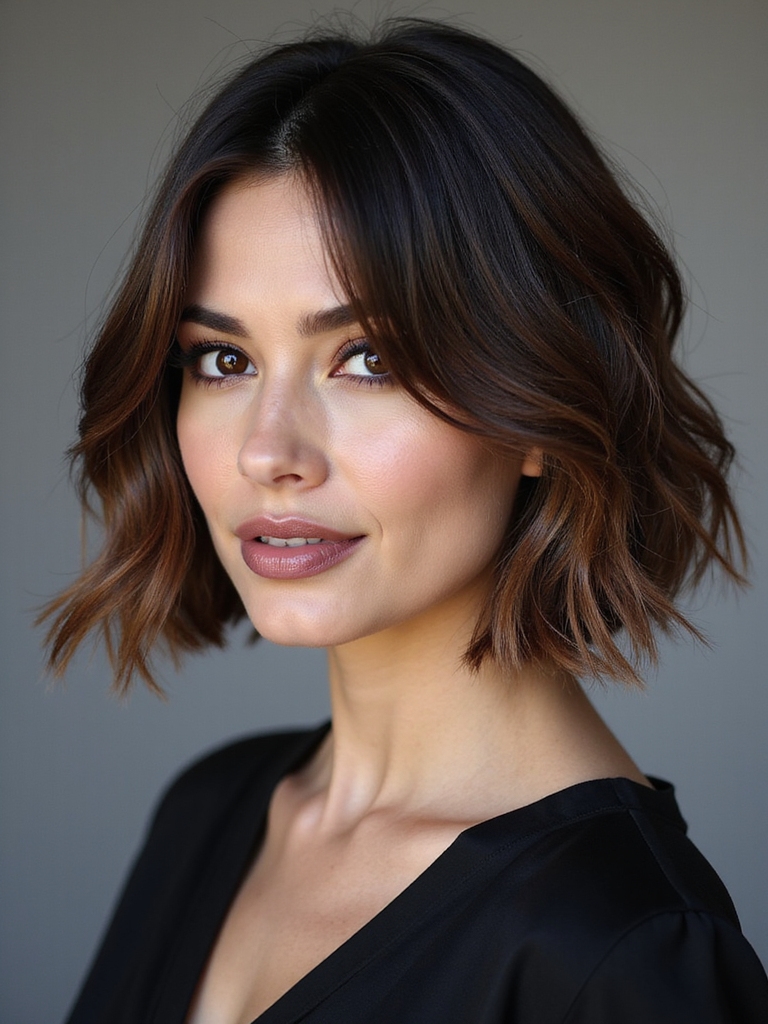
An A-line bob keeps the nape short and lets the front sections stretch down toward the jaw, and swoopy side bangs pick up that identical forward slope, sweeping into those longer front pieces so the whole line travels in one unbroken direction.
- The line looks polished and modern while still carrying real movement.
- Suits straight to lightly wavy hair best, where the angle stays crisp.
- A quick blow-dry sweeping everything forward is usually the entire routine.
A quick myth check on A-line pairings:
❌ Myth: An A-line bob only works with a blunt, heavy fringe.
✅ Reality: Swoopy side bangs actually complement the angle better for most faces, continuing that same forward line.
❌ Myth: The shorter back of an A-line means less overall maintenance.
✅ Reality: The angled front usually needs just as much shaping attention as the back, since the visible line is longest there.
A Face-Framing Fringe on a Layered Lob
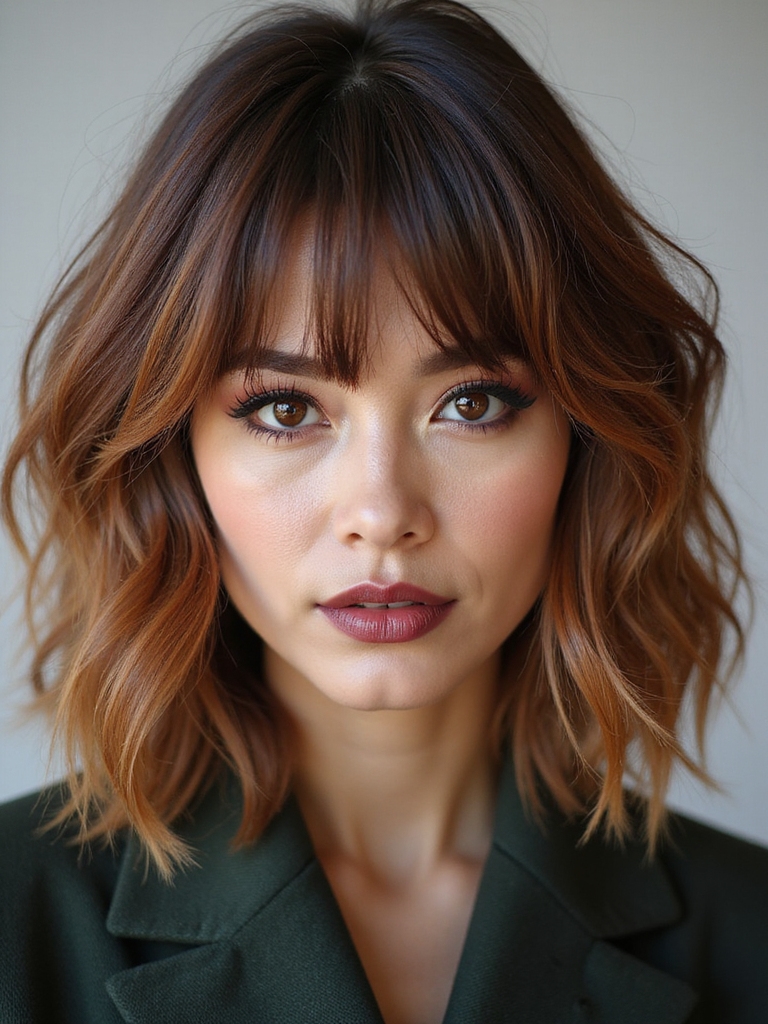
For anyone not ready to lose real length, a layered lob paired with a face-framing fringe is the gentlest entry point available. It grazes the collarbone, carries long layers through its length, and opens at the front with a fringe that lengthens as it sweeps back into the framing pieces.
This pairing suits the hesitant especially well, since there’s very little to lose by trying it. The fringe blends directly into the surrounding layers, and if bangs turn out not to be a fit, they grow out into the lob almost invisibly.
Most pros point newcomers here first, precisely because the commitment stays so low.
Soft, Separated Bangs Balancing a Stacked Back
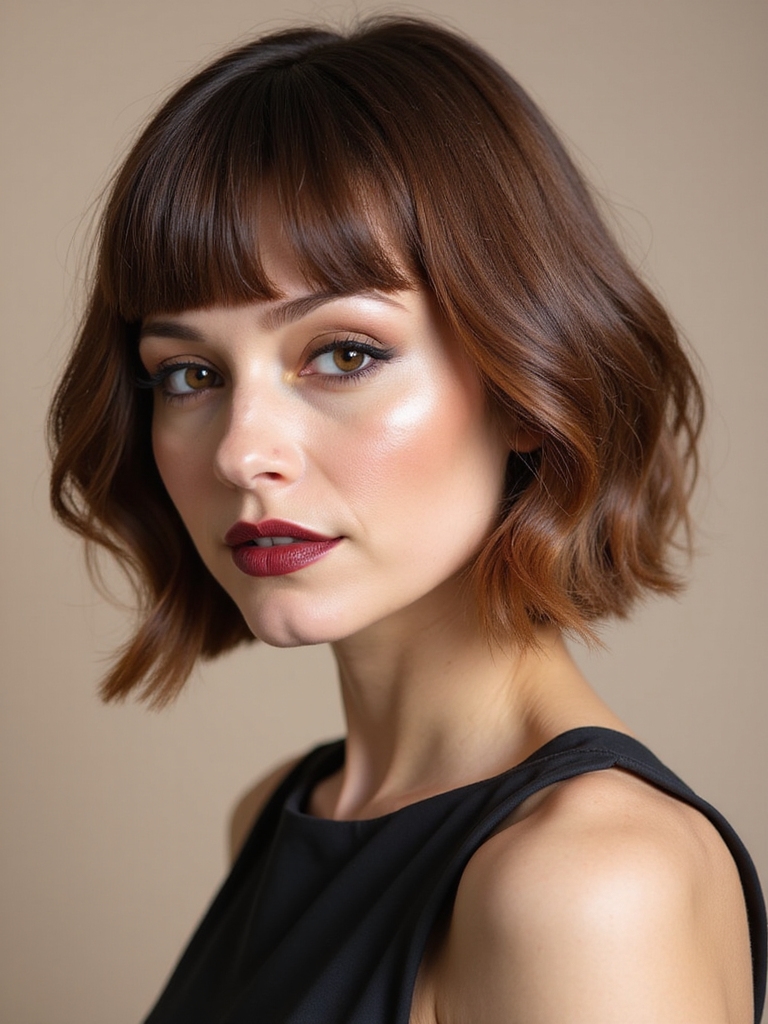
A stacked bob piles short, graduated layers at the back to round the crown and push volume upward. Soft, separated bangs balance that back-heavy shape by adding a light, moving element up front, keeping the overall weight distribution even.
Without that front balance, a stacked bob alone can feel heavy in back and bare around the face; the separated fringe corrects that in one move.
- Balances a back-weighted stack with movement at the front.
- Finger-separating the bangs keeps them reading piecey rather than solid.
- Expect more frequent trims, since the short stacked nape grows out quickly.
Long, Blended Bangs on a Tousled Bob
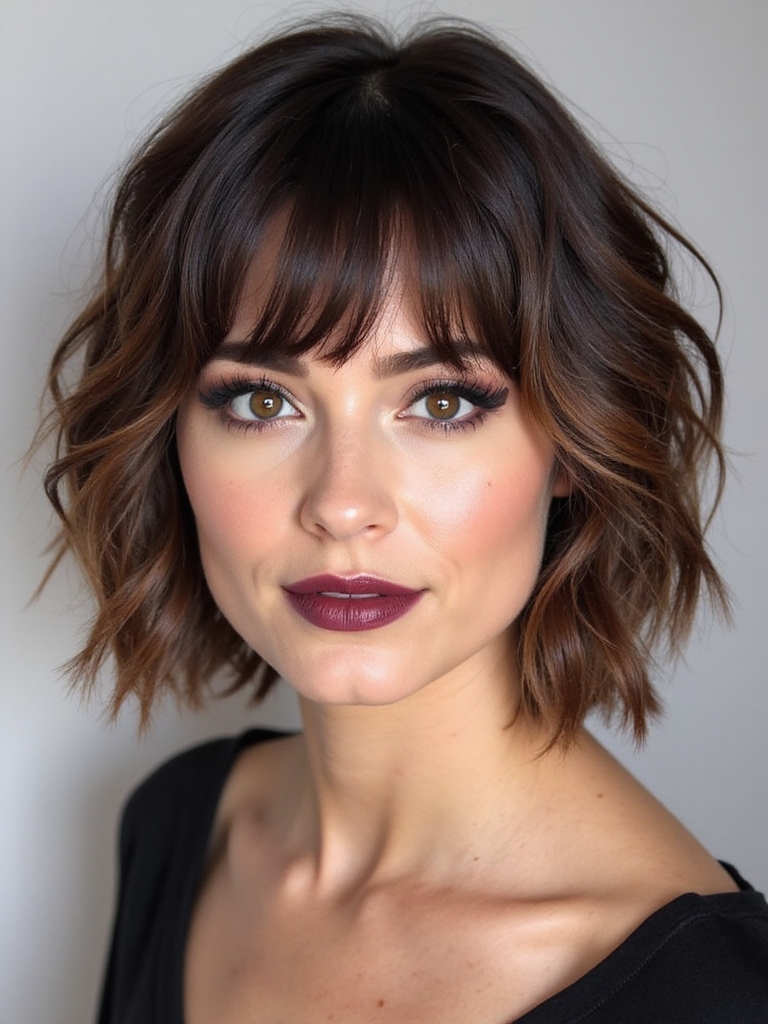
Long, blended bangs work almost like a shortcut: a fringe cut so long and softly shaped that it melts directly into the surrounding face-framing layers, asking for barely any upkeep of its own.
On an already tousled, undone bob, the two elements come together as a single piece of relaxed texture.
- The longest, lowest-commitment fringe pairing on this list.
- Grows out with no defined awkward stage to manage.
- A texture spray worked through with fingers is the whole styling routine.
ℹ️Why Long, Blended Bangs Barely Show Growth
A fringe cut long and heavily blended into the surrounding layers has no single sharp edge to mark when it’s overdue for a trim, which is the entire reason this pairing stretches so much longer between visits than a blunt one.
Razor-Feathered Layers With a Curtain Fringe
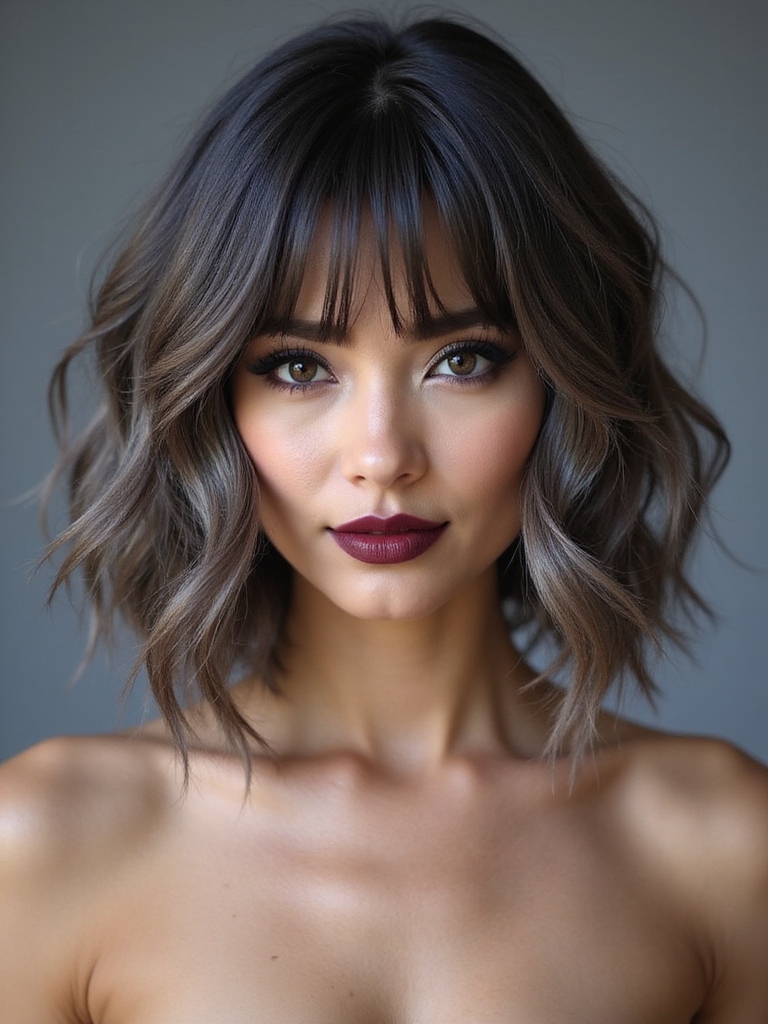
Razoring feathers both the layers and the fringe at once, tapering every end down to almost nothing. Paired with a wispy curtain fringe, the whole bob takes on the lightest, most weightless movement in this entire range.
- Beautiful on medium-to-thick hair that has weight to spare.
- On very fine hair, the razor needs a lighter hand or ends thin out fast.
- Razored tips dry out sooner than blunt ones, so conditioning matters more.
Textured Baby Bangs on an Inverted Shape
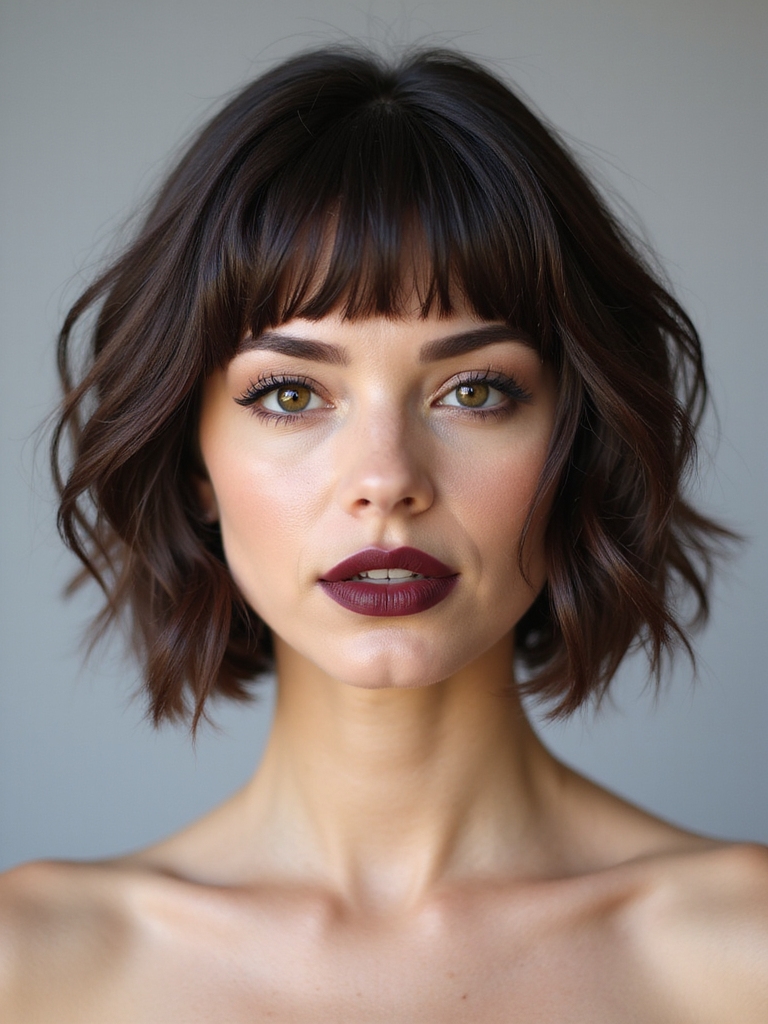
An inverted bob stacks tight and short at the back while angling longer toward the face, and textured baby bangs add a bold, high fringe up front to match that drama.
A Bold Pairing, Honestly Assessed
This ranks among the most daring pairings here, all crown volume paired with a graphic, above-the-brow fringe. It plainly isn’t low-maintenance.
Baby bangs sit high enough that regrowth has nowhere to hide, so a shaping trim lands roughly every two weeks. Texturizing the fringe softens the line just enough to keep it wearable day to day.
A Soft Halo Fringe on Coily Layers
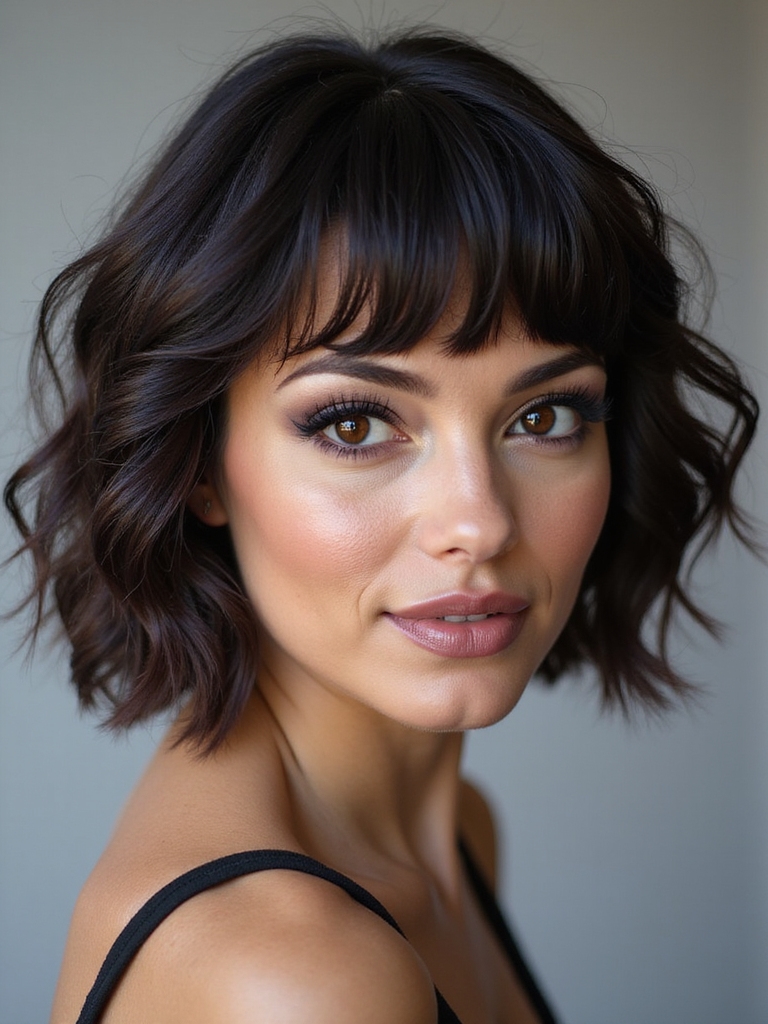
On coily, tightly textured hair, a layered bob paired with a halo fringe celebrates the natural pattern. The layers remove bulk that would otherwise flatten the coils, while a soft halo fringe, shaped to curve gently around the face, moves with real, springy volume.
The cutting approach has to respect the texture from the start: shaping happens on completely dry hair, one section at a time, so each coil gets trimmed exactly where it settles after shrinkage, which on tightly coiled hair can be considerable. The pattern stays intact this way.
A stylist experienced with this texture works with that shrinkage, cutting each coil where it naturally settles, which is what actually protects the pattern long-term.
How to Get the Look
Naming the fringe type and the layering style as two separate requests sets a stylist up to succeed on the first try, well beyond what a single photo can convey. Specifics save time. Describe the texture plainly too, since fine, thick, wavy, curly, and coily hair each pull the same request in a different direction.
Budget matters here as well: expect the base cut to run $45 to $85 depending on the salon and region, with the fringe upkeep as the real ongoing cost, since many salons include a quick bang trim free between full appointments.
Ask specifically about that free-trim policy before booking, since it changes the real-world cost of a higher-maintenance fringe considerably.
Layered Bob With Bangs, Answered
?Does a fringe work on a layered bob if the hair is curly?
Yes. Layers truly help by removing the weight that flattens curls, and a fringe can frame the face well once it’s shaped correctly. The firm rule is that both the bob and the bangs get cut on dry hair, so each curl is trimmed where it actually lands.
?How often does a fringe on a layered bob actually need trimming?
It depends entirely on the fringe style. A blunt or baby fringe shows growth within days and needs shaping every couple of weeks. A curtain, wispy, or long blended fringe grows out gradually and can often stretch to match the regular cut schedule.
?Will bangs make a bob look shorter overall?
Visually, sometimes, since the eye reads the fringe as the front edge of the cut. The true length underneath doesn’t change at all; it’s an illusion created by where the eye lands first, not an actual loss of length.
?Is there a pairing that suits thick hair specifically?
Feathered or razor-cut layers paired with a wispy or curtain fringe tend to work best on thick hair, since both techniques remove bulk from an already heavy texture. A blunt fringe can suit this texture too, though it usually needs a shorter trim cycle to keep the edge from thickening up between visits.
Pick the Pairing Before the Photo
Every look above is really the same idea worn fifteen different ways: a layering style and a fringe style chosen to work together. Feathered layers with a wispy fringe move quietly; choppy layers with a blunt fringe move boldly; coily layers with a halo fringe move with their own natural spring.
Starting from an honest read of texture is what actually narrows down the right combination fast. Once a pairing clicks with a specific need, that’s the detail worth bringing into the next consultation.
More Ideas Here