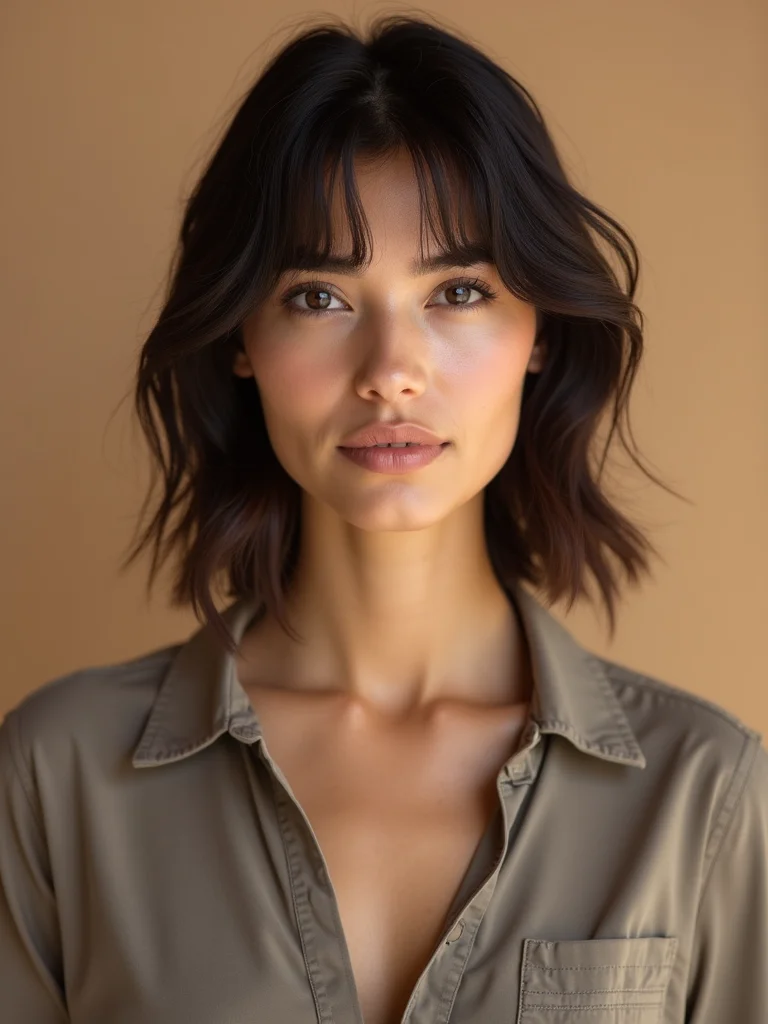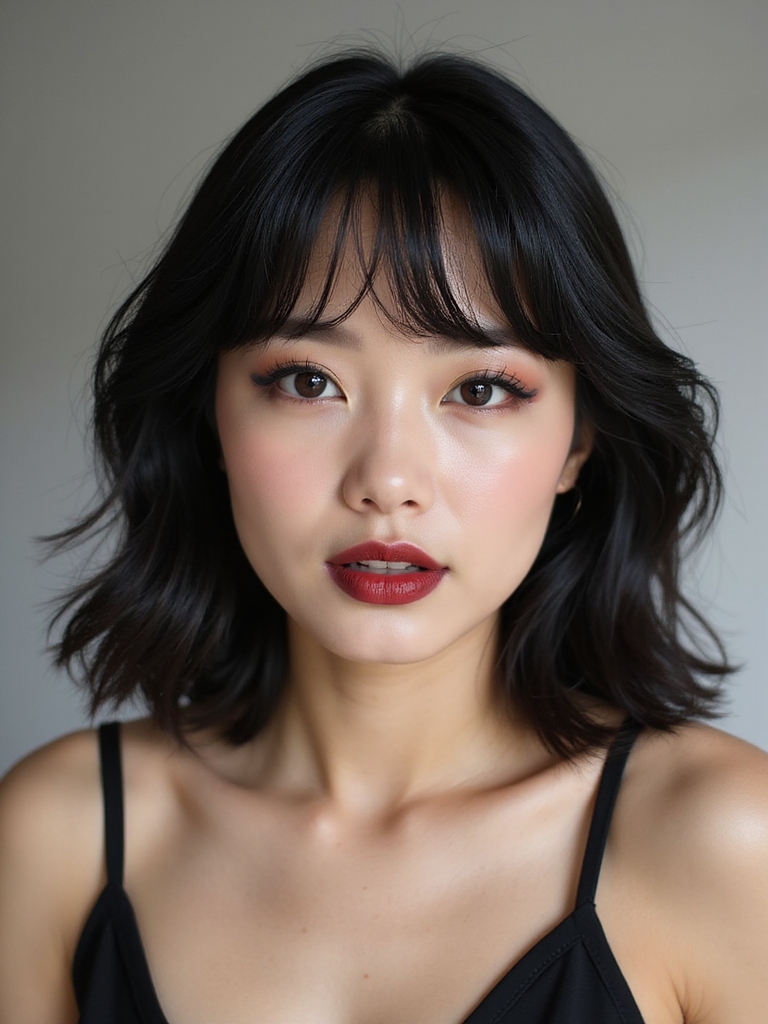
A heavy, blunt fringe announces itself the moment you walk into a room. Korean bangs do the opposite: thin, wispy, and see-through, the kind that lets skin show between the strands instead of forming a solid wall across the forehead.
Under that one idea sits real range, from a barely-there micro fringe to airy curtain bangs to a polished S-curve. Fifteen ways to wear it follow below, along with the terms worth knowing at the salon and the honest trim and styling notes that actually matter day to day.
Korean Bangs, at a Glance
| Style | Best For | Upkeep |
|---|---|---|
| See-through fringe | Anyone told bangs won’t suit them | Trims every few weeks to stay thin |
| Curtain bangs | Low-commitment, most face shapes | Grows out with almost no awkward phase |
| S-curve bangs | Polished, dressier occasions | A few minutes of styling most days |
The Wispy See-Through Fringe
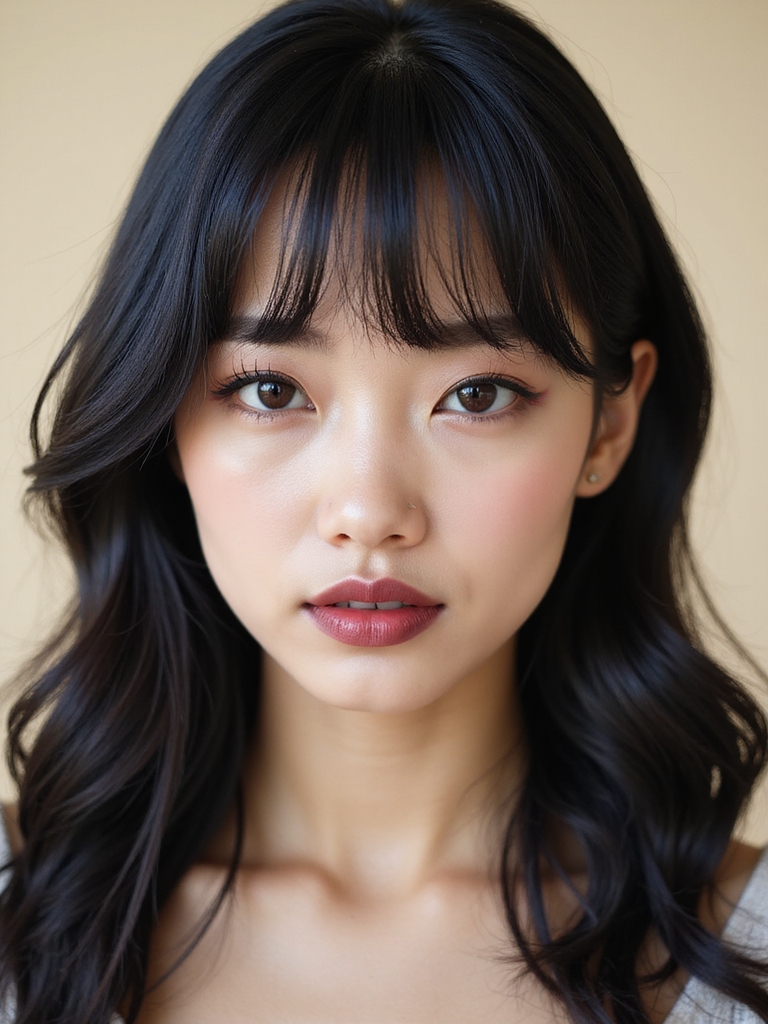
This fringe is the signature of the whole trend: thin, gauzy, and deliberately sparse enough that skin shows between the strands. It softens the face without the weight of a full fringe, and it’s a real option for anyone once told bangs simply wouldn’t suit them.
The catch is that restraint is everything here. Pack in too much hair and the transparency disappears, so thinness matters more than length or shape. A light texture spray on dry strands keeps the pieces separated and stops them clumping into a solid line.
Airy Curtain Bangs

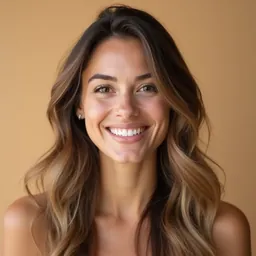
Curtain bangs part down the center and sweep softly to either side, framing the face without ever announcing themselves the way a solid fringe does. They run longer and far more forgiving than a micro fringe, since there’s no short length to grow past.
Where This Style Wins
You control the sweep, and that’s the whole appeal: a little more curve narrows a round face, while a softer, straighter fall lengthens it. For a fuller, more dramatic version, curtain bangs cover the same ground with more density.
Day to day, they pin back the moment you’re tired of them, which is a big part of why this is the most grow-out-friendly option on this list.
| Decision | Softer Result | Bolder Result |
|---|---|---|
| Density | Thin, see-through | Fuller, more coverage |
| Finish | Air-dried, natural wave | Round-brush curved |
Soft Curved Air Bangs

Air bangs are styled to float over the forehead with a soft inward curve, always kept light and lifted. The name is the whole brief: airy, weightless, barely there.
This is about the finish more than the cut, which means the same curve works across a range of fringe lengths. A small round brush or a velcro roller curves the ends gently inward, left in for just a few minutes while you get ready.
Light Face-Framing Layers
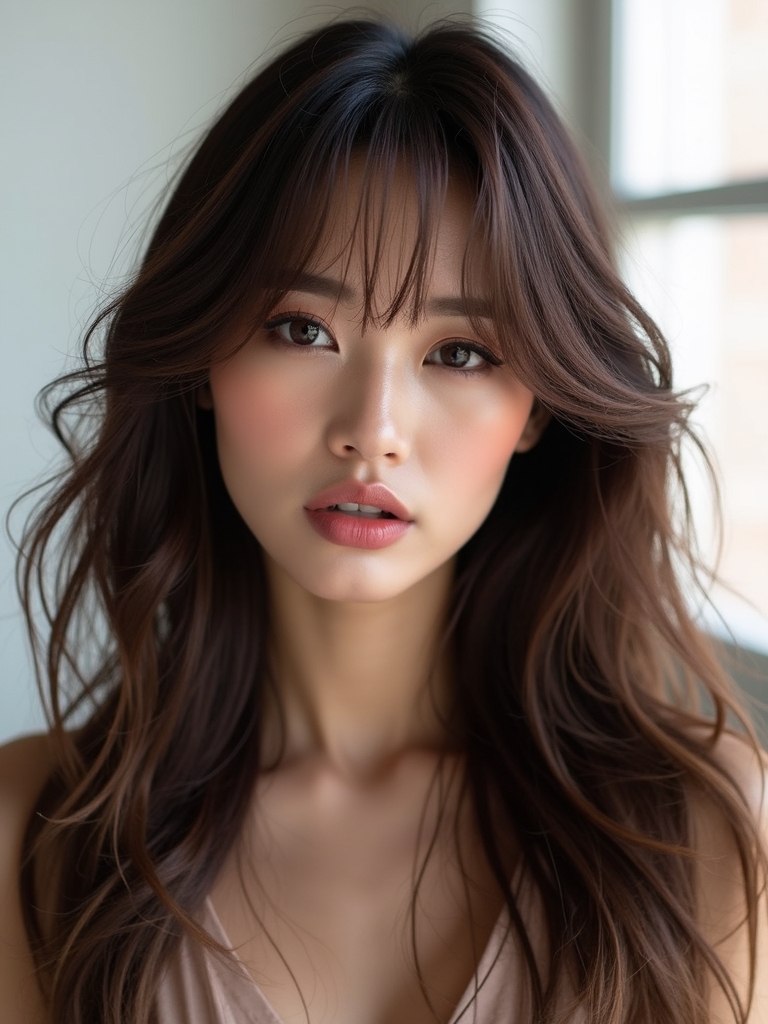
Face-framing layers blend a soft fringe into longer pieces around the face, so the bangs flow into the haircut rather than sitting apart from it. The graduated lengths soften the cheekbones and jaw at once, and grow out without the usual awkward phase, since the framing pieces keep doing their job even as they lengthen. For a dedicated version, face-framing layers with bangs lean fully into this blended idea.
- Works best on hair that already has some layering to blend into.
- No sharp chin-length stage to dread as it grows.
- Asks for a trim roughly every five to six weeks to keep the blend soft.
📋Before You Ask for a Korean Fringe
- ✓Bring a reference photo, but say the words ‘thin’ and ‘see-through’ out loud too.
- ✓Ask how the density will be cut, not just the length.
- ✓Confirm how often you’ll need to come back for a trim before you commit.
Baby Bangs, Softened

The Korean take on baby bangs keeps the short, high length but takes the edge off it, so a fringe cut well above the brows still reads gentle rather than severe. The see-through density is what does that work; the length stays daring, the effect stays soft.
If you love the idea but want it shorter and bolder still, baby bangs push the same length further without the softening.
- Sits well above the brows, so forehead height shows more than with any other length here.
- A little texture product keeps short pieces from clumping into one thick line.
- The shortest style on this list to trim, since there’s no length to hide regrowth.
A Textured, Wavy Fringe

A wavy fringe adds soft movement to the see-through idea, the gentle bend keeping it from ever falling flat against the forehead. It suits naturally wavy hair especially well, since you’re working with texture that’s already there (curlier textures do best with curly bangs instead, cut with different density rules). Getting the floating curve without much heat comes down to order:
- Dry the fringe section first, while everything else stays damp, so it doesn’t set into an odd shape.
- Curve the ends gently inward with a small round brush or a velcro roller.
- Revive the wave between washes with a curl refresher or a light texture spray.
Setting the wave without heat, start to finish:
1Dry first
Blow-dry just the fringe section while everything else stays damp.
2Curve
Wrap the ends around a small round brush or velcro roller.
3Set and release
Let it cool or sit for a few minutes, then release and separate with your fingers.
Long, Layered Bangs

Long layered bangs graze the cheekbones and blend smoothly into the surrounding layers, which makes them the most low-commitment version of the whole idea. Because they’re long, they pin back in a second and grow out without a single awkward stage.
This is the one worth suggesting to anyone who wants the softness of the trend but travels too much, or moves too fast in the morning, to fuss over a shorter fringe daily.
A Side-Swept, Soft Fringe

A side-swept fringe sweeps the wispy bangs gently to one side, adding a flattering diagonal that suits round and long faces alike. It’s soft and forgiving where a heavier side fringe can feel like a lot. Setting the sweep is quick:
- Part the fringe a little deeper than your usual part.
- Blow-dry across the forehead, directing air the way you want the sweep to fall.
- Set with the lightest mist of spray, just enough to hold the movement without stiffness.
S-Curve Bangs

S-curve bangs are styled into a soft, sweeping S, a distinctly polished finish that adds movement without losing the softness of the trend. The curve flows from the part across the forehead and back, catching light as it moves.
Where This One Struggles
Because the curve is a styling choice remade each morning, the same fringe can look like a relaxed everyday sweep one day and a dressier, editorial wave the next. A little heat and a round brush are all it takes to shape it.
The catch is time: this is the dressiest option here, better saved for occasions than a rushed weekday morning, since it asks for more than a quick blow-dry.
A Feathered Micro Fringe

A feathered micro fringe takes a short bang and softens the edges, so it floats across the forehead with no hard line at the bottom. The feathering blends the short length into the face, much gentler than a blunt micro fringe ever reads. A few ways to narrow down which Korean fringe actually fits:
- Want the softest, most forgiving option? A see-through fringe or curtain bangs flatter almost everyone.
- Want low commitment? Long layered or grow-out-friendly styles blend in with no awkward phase.
- Want a little edge? This feathered micro or a tousled shaggy fringe brings more drama.
Blunt Yet Sheer Bangs

Blunt yet sheer bangs cut a straight line but keep the density thin enough to see through, folding two different looks into one. You get the structure of a blunt edge with the softness of low density, closer in spirit to french bangs than to a typical thick blunt fringe. What makes it work:
- A clean, straight line for real shape and definition.
- A deliberately low density so the forehead still shows through.
- A precise cut that rewards a skilled stylist, not a bathroom-mirror trim.
Tousled, Shaggy Bangs

Tousled shaggy bangs are deliberately piecey and undone, pairing naturally with a layered shag for a relaxed, current finish. The rough texture is the whole point, and it grows out gracefully since there’s no clean line to protect.
- Best on hair with some natural movement, or an existing shaggy cut to match.
- Forgiving between trims, since a little mess is the actual goal.
- A texturizing paste or sea-salt spray keeps the pieces separated instead of falling flat.
A Piecey Center-Part Fringe

A center-part fringe splits the bangs down the middle into two soft, separated halves, framing the face on both sides at once. It grows straight into curtain bangs with no awkward transition, one of the reasons it’s spread so fast this year.
- Reads easy and current on most face shapes.
- Grows directly into curtain bangs as it lengthens, with nothing to fix along the way.
- A part set slightly off your usual line looks more natural than a perfectly dead-center one.
ℹ️Center Parts Aren’t Permanent
A center-part fringe can be swept to one side on days you want a different look, without a trim or a redo. The part is a styling choice, not a commitment.
Styled Without Heat

Korean fringe styling leans hard into heatless methods, setting bangs with velcro rollers or clips instead of daily heat. It protects the hair while still shaping that soft inward curve, which matters for a fringe styled most mornings of the week.
A small velcro roller left in while you get ready gives the fringe its lift with no hot tool involved at all. Over weeks of daily styling, skipping the heat is the real difference between a fringe that stays soft and one that frays at the ends.
The Grow-Out-Friendly Styles

Much of the appeal of this whole trend is how gracefully certain versions grow out. The soft, layered, see-through styles blend into the hair as they lengthen, skipping the blunt-fringe wall everyone dreads right around eye level.
If an easy exit matters to you, start with a shape built for it from day one. The people who regret bangs least are almost always the ones who chose a curtain or long layered style they could pin back on a rough day.
- Curtain and long layered styles blend smoothly as they grow past the chin.
- Pin or sweep them back once they reach cheekbone length.
- Far easier to grow out than a blunt, one-length fringe.
What to Expect
Whatever shape you choose, a few habits keep a Korean fringe looking its best. Dry the bangs section before anything else, so they don’t set into a cowlick, and lean on heatless rollers or a quick round-brush curve over daily heat.
On cost, the cut itself is a quick, inexpensive service, often under $20 or free with a full haircut, since it’s a short add-on rather than its own appointment. The real expense is time, not money: plan a fringe-only trim roughly every three weeks for the shortest styles, and less often for long layered or curtain versions. Keep product light, since a heavy cream collapses the float that makes these bangs work in the first place.
Korean Bangs Questions, Answered
?What’s the difference between see-through bangs and air bangs?
See-through bangs describe density: a thin, sparse fringe you can see the forehead through. Air bangs describe styling: bangs curved to float with a soft inward bend. Many Korean fringes are both at once, sparse in the cut and airy in the finish.
?Do Korean bangs work on thick or coarse hair?
Yes, but they take more thinning and more regular styling to stay sheer. A stylist removes bulk so the fringe reads as light rather than dense, and everyday velcro-roller setting becomes worth the extra few minutes.
?How is this different from a regular curtain fringe?
Mostly density and finish. A regular curtain fringe can be cut with normal thickness and worn any way you like, straight or wavy or swept back. The Korean approach specifically thins the density and styles toward that soft, floating curve every time, which is really the whole point of asking for it by name.
Softness, on Your Own Terms
Korean bangs win people over by being light, wispy, and soft, the gentle answer to a dense, blunt fringe. From a barely-there micro fringe to airy curtain bangs and a polished S-curve, the whole family frames the face gently, and because each version can be cut sheer and styled to float, it ends up suiting more people than a heavy fringe ever could.
If bangs have always tempted you but the commitment scared you off, this is the gentlest place to start. Save this guide, pick a grow-out-friendly shape if you’re unsure, and bring the right words, not just a photo, to your next appointment.
Where to Next