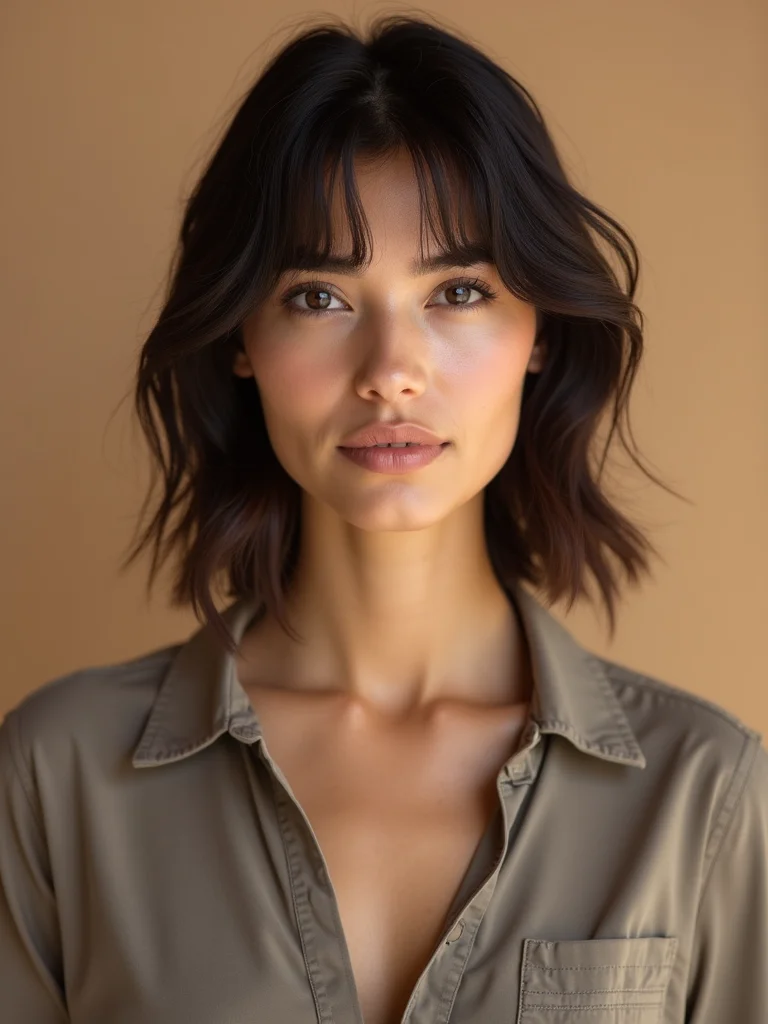
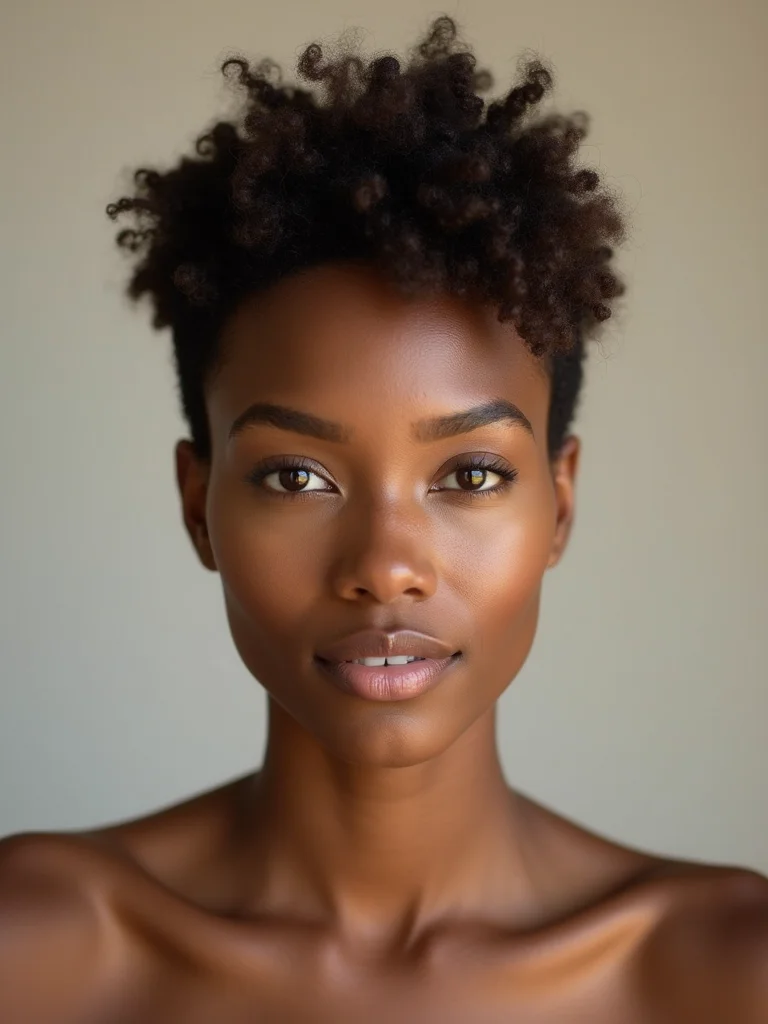
Why do shag bangs keep getting compared to a fringe from forty years ago? The texture that made them famous, feathered, broken-up, and a little undone, is exactly what makes the modern version work with almost any face and hair type. The heavy, blunt fringe most people picture instead belongs to a different cut entirely.
Fifteen versions of the shag fringe follow, sorted by texture, length, and hair type. Expect real notes on upkeep throughout, not just which one photographs best.
Shag Bangs, Fast
- Texture is the whole mechanism: point-cut, feathered ends move where a blunt fringe just sits.
- Nearly every hair type adapts to it, fine, thick, wavy, or curly.
- A shape-up runs close to what any fringe trim costs, roughly $20 to $35 at most salons.
Curtain Shag Bangs for Soft Framing

Curtain shag bangs take the familiar center-parted shape and break it up with feathered texture. The fringe is point-cut so the usual two smooth panels split into soft, separated pieces that sweep away from the part.
The result frames the face on both sides without the weight of a blunt fringe. A plain curtain fringe is cut for a clean, sweeping line; this version stays deliberately piecier and softer throughout.
You’ll notice it suits nearly every face shape, which is part of why stylists tend to suggest it first to anyone trying shag bangs for the first time.
A Soft, Wispy Fringe With Feathery Ends

A wispy shag fringe is the gentlest way to wear the texture, ends thinned until they sit light and almost see-through across the brow. The bulk comes out of the bottom edge, leaving tapered points instead of the solid line a blunt fringe would draw.
Because the ends carry so little weight, this version flatters delicate features and works especially well on finer hair, where a heavier bang would sit flat within a day.
- Ends are thinned and tapered, never left blunt.
- Best on fine-to-medium hair that a heavy fringe would flatten.
- Lets a little forehead show through for an open feel.
Choppy Micro Shag Bangs for a Bold Edge

Choppy micro shag bangs sit short and high on the forehead, well above the brow, leaning hard into texture for a fashion-forward front. The fringe gets cut short, then chopped and notched so the edge stays broken rather than a clean, precise line.
That choppiness is what separates it from a baby fringe. It suits angular faces especially well and draws the eye straight up, with the shattered edge keeping the whole thing from tipping into doll-like territory.
A Wolf Cut Fringe With Piecey Texture

The wolf cut borrows the shag’s heavy layering and pushes the fringe straight into the face-framing layers, so there’s no hard line between fringe and length. The bangs get cut long and connected, then heavily textured so they fall in distinct, separated strands. Our wolf cut guide covers the full shape.
- The fringe merges directly into the layers around the face.
- Sits between a soft curtain and a full shag fringe.
- One continuous, shaggy frame rather than a separate piece.
A few cutting terms worth knowing:
📖Point-cutting
Snipping vertically into the ends to soften a hard line without a razor.
📖Feathering
Thinning strategic sections so the fringe tapers instead of ending abruptly.
A Long, Layered Fringe With Face-Framing Pieces

A long layered shag fringe keeps the bangs skimming the cheekbones, blended into soft face-framing pieces rather than cut as a distinct front. The whole face reads as one soft frame instead of a fringe stapled onto a haircut.
This length grows out with almost no in-between phase, a solid reason to pick it for a first attempt at shag bangs.
- Grows out gracefully with no in-between stage.
- Tucks away or sweeps to the side as needed.
- A forgiving length for anyone new to bangs.
Curly Shag Bangs That Honor Natural Texture

Curly shag bangs work with natural coils instead of fighting them, springing into a defined, bouncy front once cut correctly. The layered approach gives curls room to stack and spring rather than collapsing into one heavy block.
The rule here is the cut itself: curly and coily fringe needs to be shaped dry, since curls shrink a good amount as they dry and a wet cut leaves the bangs shorter than planned. Cutting dry, coil by coil, lets the stylist see exactly where each curl lands.
- Always cut dry, never wet, for an accurate length.
- Define with a curl cream once the shape is set.
- Expect noticeable shrinkage the first time you see it dry.
Styling the long layered fringe:
1Rough-dry first
Dry the fringe mostly with your fingers before reaching for a brush.
2Set with a round brush
Finish with a small round brush at the roots for lift, then let the rest fall.
A Wavy Shag Fringe With Airy Movement

A wavy shag fringe lets natural waves move through the bangs for a relaxed, beachy front. The layering gives the wave room to bend and separate, so the front falls in loose pieces instead of one flat sheet.
It suits naturally wavy hair with almost no effort, and straight hair can borrow the same soft bend up front with a little help. A sea-salt spray brings that bend out within seconds.
- A sea-salt spray is the entire daily routine.
- Suits wavy hair naturally, straight hair with a little help.
- Movement is the whole point here.
A Textured Fringe Built for Fine Hair

A textured shag fringe ranks among the better ways to make fine hair at the front look fuller. The feathered layering creates the impression of more strands and body, giving the fringe presence instead of lying flat against the forehead.
The key is gentle, restraint with the texturizing shears. Over-thinning fine hair leaves the fringe frayed and sparse instead of full, so a good stylist removes just enough weight to build separation while keeping the ends healthy.
- Restraint matters more than heavy texturizing here.
- The goal is fullness, never thinness.
- Works best when your stylist checks density before cutting.
A Blunt-Meets-Shag Hybrid Fringe

A blunt-meets-shag hybrid pairs a fuller, blunter top edge with soft, point-cut ends, blending density with texture. The weight up top gives it presence, while the textured ends keep it from looking severe.
Bold Up Top, Soft at the Ends
It suits anyone who wants the boldness of a blunt bang but worries a fully solid line will look too heavy. The shag texture at the bottom softens things just enough to land modern.
Ask for a blunt cut first, then have your stylist point-cut and notch the ends afterward to break them up. Our curtain bangs guide covers a softer alternative if the hybrid feels like too much.
A Side-Swept Shag Fringe

A side-swept shag fringe sweeps across the forehead on a soft diagonal, feathered texture keeping it light as it frames the face. The diagonal suits round, square, and heart-shaped faces alike, and there’s no hard line across the forehead to manage. Our side-swept bangs guide covers the sweep on its own.
- No hard line across the forehead to maintain.
- Grows out painlessly and tucks away easily.
- A round brush sets the sweep during styling.
👍Hybrid Pros
- +More visual presence than a fully wispy fringe
- +Softer than a pure blunt line
- +Works on medium-to-thick density
👎Worth Weighing
- –Needs two techniques in one appointment
- –Regrowth shows the blunt line first
- –Not the lowest-maintenance option here
Heavily Shattered Shag Bangs

Heavily shattered shag bangs push the texture to its rawest, cut into deeply broken, uneven points for a piecey, edgy front. Where a wispy fringe stays soft, this one turns sharp and a little punk, with shattered ends built for real attitude.
- A matte clay defines the shattered pieces; skip anything glossy.
- Pairs naturally with a shag or wolf haircut overall.
- The boldest, most textured fringe on this list.
Shag Bangs Paired With a Short Bob

Shag bangs and a short bob or lob make a natural pairing, the textured fringe echoing the choppy, piecey layers already in the cut. The fringe ties the whole look together, carrying the bob’s texture up to the face.
Cut to Talk to Each Other
It’s a flattering, low-fuss combination, since both the bob and the bangs get cut for movement rather than a smooth, blunt finish.
Ask for the fringe and the bob to be cut to match, with the same piecey, point-cut texture running through both.
Shattered bangs are the fringe to ask for once you’ve already decided you want attention on the front of the cut, not just a soft frame.
A Heavy, Eye-Skimming Shag Fringe

A heavy eye-skimming shag fringe falls full and dense right at the lash line, though the shag texture keeps all that weight from sitting blunt or solid. It’s dramatic and face-framing, pulling every glance straight to the eyes.
Built for Longer Faces
The density gives it presence, while point-cut, feathered ends break up the bottom edge so it moves instead of sitting flat. It flatters longer faces especially well, since the heavy line visually shortens the forehead.
Expect this to be the highest-maintenance fringe on the list. It needs the most frequent trims of anything here to keep skimming the eyes.
Grown-Out Shag Bangs

Grown-out shag bangs blend softly into the length, feathered texture keeping them from ever looking shapeless as they lengthen. This is the real advantage of a shag fringe: it grows out gracefully, piecey ends melting into the face-framing layers with no awkward stage.
Once the bangs reach the cheekbones, they simply become long, sweeping face-framing pieces. Shaping trims guide the transition along the way.
- No awkward in-between stage to manage.
- Shaping trims guide the transition, not a full re-cut.
- Becomes face-framing layers rather than disappearing.
Shag Bangs Brightened With Soft Highlights

Soft highlights brighten a shag fringe well, with a few face-framing pieces or a single money piece placed to catch the texture and light. Color pools where the fringe moves most, making the piecey texture more visible.
Because a shag fringe already reads broken-up and dimensional, highlights amplify that movement. A color-safe routine keeps the brightness from fading fast.
Maintenance & Care
A shag fringe is built to be low-effort, so upkeep is mostly about working with the texture rather than fighting it. Rough-dry the bangs first, then break them up with fingers and a little texture spray or matte paste, pulling pieces apart instead of brushing them flat.
Wash the fringe on its own schedule apart from the rest of your hair, since the forehead’s natural oils flatten it faster than the scalp does overall. A quick rinse-and-restyle between full washes keeps it looking fresh.
Shag Bangs Questions From the Chair
?What actually makes a fringe count as shag bangs instead of a regular fringe?
The cutting technique. Shag bangs are point-cut and feathered rather than cut in one clean line, so the ends break into separated pieces that move. A regular blunt fringe sits as a solid shape by comparison.
?Will shag bangs work if my hair is naturally straight?
Yes. The texture is cut into the shape itself, so it doesn’t depend on natural wave or curl to look right. A light styling product and a rough-dry finish are usually all straight hair needs.
?Can I try shag bangs without committing to a full fringe?
The long, layered version is the easiest way to test the idea. It blends into face-framing layers, grows out with no hard stage, and can be tucked away entirely on days you’re not feeling it.
?Do shag bangs need more upkeep than a regular fringe?
Not really, though the shortest, densest versions need trims more often than the longer ones. Most shag fringes ask for the same basic wash-and-restyle routine as any other bangs.
?What should I say at my appointment to avoid getting a blunt fringe by accident?
A photo helps, but the key phrase is asking specifically for point-cut, feathered ends rather than a blunt, one-length edge. That single request is usually the difference between the two results.
A Fringe That’s Grown Past Its Reputation
Shag bangs have outgrown the dated image most people still carry around. The modern version is feathered, piecey, and built to be forgiving, looking better the less you fuss over it.
Whatever your hair type or comfort level, there’s a version here that fits, from the softest wispy fringe to the boldest shattered one. Bring a clear photo, ask for point-cut texture over a blunt line, and let the cut do most of the work.
Hand-Picked for You