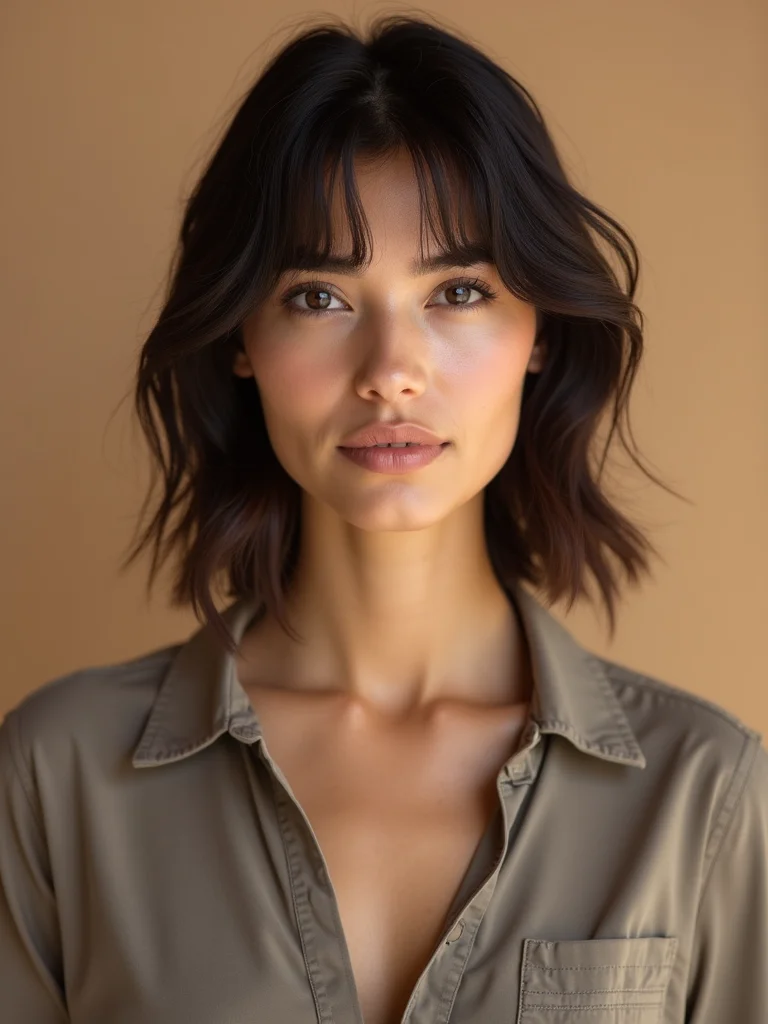
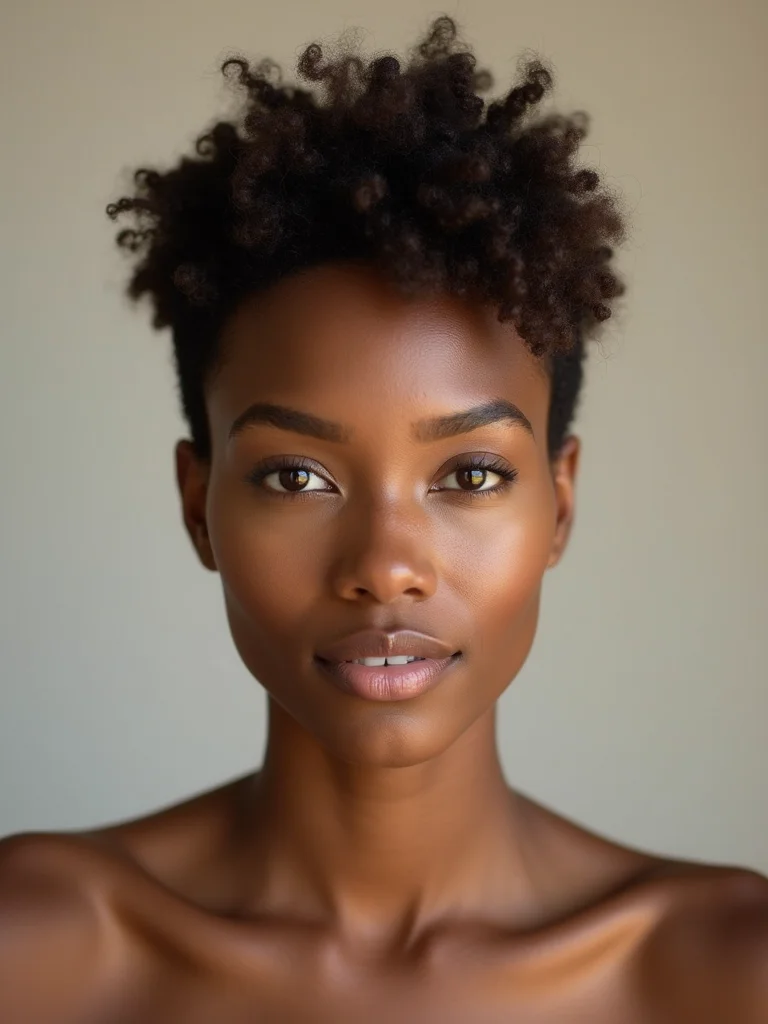
The fringe decides more about a short shag than the cut underneath it ever does. Change the bangs and the whole style comes across differently, even if not one other inch gets touched. That’s the appeal of pairing a shag with bangs, and also the trap: pick the wrong fringe and the shape fights your routine every single morning.
This roundup sorts sixteen short shag styles by fringe type first, cut second, since the bang is usually the detail people settle on last, once they’re already in the chair. Some fringes ask nothing past a shampoo. Others want heat styling most mornings and a tight trim schedule. Know which is which before you commit.
Fast Answers Before You Choose a Fringe
Which fringe on this list needs the least daily effort? Wispy and curtain bangs blend into the shag’s layers and air-dry into place, so they survive a missed styling day better than any blunt-edged fringe can.
Which one demands the most upkeep? Micro and blunt bangs. Both are cut to a hard, deliberate line, and that line softens fast, so they sit on the shortest trim rotation of any fringe here.
Does hair type actually change which bang works? Yes. Fine hair usually does better with a piecey, razor-cut fringe than a blunt one, and curly hair needs the bang cut dry, in its own pattern, or it comes out shorter than planned.
The Wispy Fringe That Barely Announces Itself

Wispy is where most short shag with bangs stories should start. The fringe is thin and see-through by design, a handful of separated pieces that graze the brow, leaving no hard line to commit to. On an already-airy shag, you’d swear the hair simply grew that way on its own.
Where this fringe struggles is on very thick or very straight hair. The pieces tend to clump together there, so a little texture spray worked into the root keeps them apart. It also grows out kindly: because the ends are already broken up, there’s no single length where the whole thing suddenly falls apart, which makes it the fringe I point nervous first-timers toward.
- Sits soft and see-through across the brow
- Softens a high forehead and a strong jawline
- Grows out without a hard demarcation line

Micro Bangs: No In-Between Fringe

Cut well above the brow line, micro bangs are the boldest fringe in this roundup, and there’s no soft version of them. On a short shag the choppy ends keep the look from feeling severe, but the fringe itself still carries real weight on its own.
The catch: a blunt micro line grows out fast and unevenly, so it wants shaping close to every month or the cut loses its edge within a few weeks. Our micro bangs guide goes deeper on that upkeep rhythm if this is the fringe you’ve already decided on.
- Confirm your forehead can carry a fringe cut this high before booking it
- Ask for choppy, softened ends if this is your first micro fringe
- Budget for a trim close to every month, on top of your regular cut
The Pixie-Shag Hybrid, Where the Fringe Takes Over

At its shortest, a short shag with bangs starts to look more like a pixie, and the fringe stops being an accent and becomes the entire point of the style. The crown stays cropped and choppy while the bangs carry all the movement forward across the forehead.
In my chair, this is the version confident clients walk in already wanting, a deliberate pick from day one. There’s almost nothing to style. A little matte paste worked through with fingers is really all it takes, since the length is too short for a brush.
It suits sharp, defined features best. Softer, rounder faces can wear it too; I’ll simply leave the fringe a touch longer and piecier on those clients to keep it gentle.
Curly Bangs, Cut for the Curl and Not Against It

Curl and coil patterns can absolutely wear a fringe. The mistake is cutting it wet, which is where shrinkage turns a planned eyebrow-skimming bang into something two inches shorter once it dries.
Why Dry-Cutting the Fringe Matters
A feathered curly fringe is cut dry, strand by strand, in the hair’s own pattern, with a little extra length left to account for spring-back. Product-wise, a curl cream through damp bangs and an air-dry or a low diffuse is the whole routine.
Where this goes wrong is a stylist who treats curly bangs like straight ones and cuts to a wet length. Ask specifically for a dry cut on the fringe, even if the rest of the shag gets cut wet. See our curly bangs notes for product picks beyond what’s covered here.
Curtain Bangs for the ‘I Hate Bangs’ Client

Center-parted and angled softly to each side, curtain bangs are the easiest fringe to live with on a wavy short shag, mostly because they melt fully into the surrounding layers as one continuous shape.
What Curtain Bangs Won’t Fix
They’re also long enough to tuck behind an ear on a day you don’t want a fringe at all, which is exactly why I point people who say they want bangs but hate maintaining one toward this version.
Styling is a round brush pulled away from the face for volume, or a rough dry that lets the natural wave do the work. Either way, there’s no flat-iron requirement here. Our curtain bangs guide has more on the parting and the grow-out timeline.
“Clients who swear they hate bangs almost always mean they hate committing to bangs. Curtain fringe gets around that: grow it out a week and it just passes for longer face-framing layers, no awkward re-cut required.”
Blunt Bangs Against a Shattered Shag

A blunt fringe cuts one straight, deliberate line across the brow, and set against choppy, shattered layers, that contrast is the whole reason the pairing works.
Who a Blunt Line Actually Flatters
This line needs density to look crisp, so straight-to-wavy hair with decent thickness carries it best. On fine hair the gaps between strands show through a blunt edge, so I cut a piecier version for those clients instead.
The trade-off is real commitment. Plan on shaping the line every three weeks or so and reaching for a flat iron most mornings to keep the edge sharp, since blunt bangs relax and lose their shape faster than any other fringe covered here. A bang-only shaping between full visits often runs $15–25, sometimes free; the shag cut itself is the bigger spend, typically $45–85.
Side-Swept Bangs, the Low-Drama Choice

Side-swept bangs angle across the forehead and blend into the longest face-framing layer, which makes them the most forgiving fringe here and also the least demanding.
The diagonal line slims a round face and softens sharp angles on a square one, and styling is just fingers pulling the fringe in the direction it already wants to fall. No round brush, no real routine. If it starts sliding into your eyes, that’s your cue for a trim, usually closer to a month out than three. Our side-swept bangs roundup covers the style on its own, without the shag underneath, if you want to compare.
Razor-Cut Bangs for Fine Hair That Won’t Go Flat

Fine hair and a fringe can be a rough match, since a solid, heavy bang just lies flat and shows scalp underneath. A razor-cut, piecey fringe fixes that by breaking the hair into separated, tapered points that read as texture.
Styling It Without Weighing It Down
Those gaps are exactly the effect a razor is built for. I keep the surrounding layers just as short, for the same reason, so the density illusion carries through the entire cut.
Product-wise, less is more. A light texturizing mist at the roots and almost nothing on the ends; heavy product is what flattens fine hair fastest, fringe included.
A quick check before you book a fringe:
1Does your hair go flat by midday even with root volume?
Lean toward a razor-cut, piecey fringe over a solid blunt one; a solid edge is what shows through fine strands fastest.
2Do mornings only allow for a five-minute routine?
Wispy or curtain bangs are built for that. Blunt and micro ones need more tool time than you’ll want to give.
3Is your hair curly or coily?
Ask for the fringe to be cut dry, in its own pattern, with a little extra length left for the spring-back.
4Do you want the fringe to be the main statement piece on this cut?
Micro bangs or a pixie-shag hybrid put the fringe front and center, the clear focal point of the whole style.
Taking the Weight Out of a Thick Fringe

Thick hair gets the opposite problem. Left alone, a thick fringe turns into a heavy block that sits across the forehead like a visor, barely moving with everything else.
The fix is thinning from underneath: taking bulk out of the interior and feathering the ends so movement comes from beneath. Ask specifically for internal thinning along with the usual length trim, and expect the rest of the shag to need reshaping roughly every two months to keep the volume in balance.
A Feathered Fringe for the Longer Shaggy Bob

At the longer end of short, a shaggy bob pairs well with a feathered fringe that blends softly at the edges, so nothing about it reads as a hard add-on.
This is the most polished pairing on the list, soft and graduated enough that you can’t quite tell where the bangs end and the rest of the bob picks up. It’s the cut I recommend to clients who want texture but still need to look put-together at a desk job.
Styling runs either direction: a round brush for a smoother finish, or a scrunch of product for more movement. The length at the sides keeps the whole thing from tipping into overly casual. Our shaggy bob guide covers the shape on its own, past just the fringe pairing.
Retro Rock Bangs, Pushed Back or Off to One Side

This is the shag at its most rock-and-roll: choppy, feathered, and just a little undone on purpose, and the bangs amplify that energy, matching the shag’s attitude piece for piece.
The fringe here is messy by design, swept to one side or pushed back for height, with plenty of texture left loose across the forehead. Perfection isn’t the goal; the choppier the ends, the better this style works.
Build height at the root with a spray and a rough dry, then break up the fringe with a small amount of matte paste worked between fingers. This one has been showing up more with younger clients lately, after years of sitting quietly in the background.
The Sleek, Blown-Out Version of the Shag
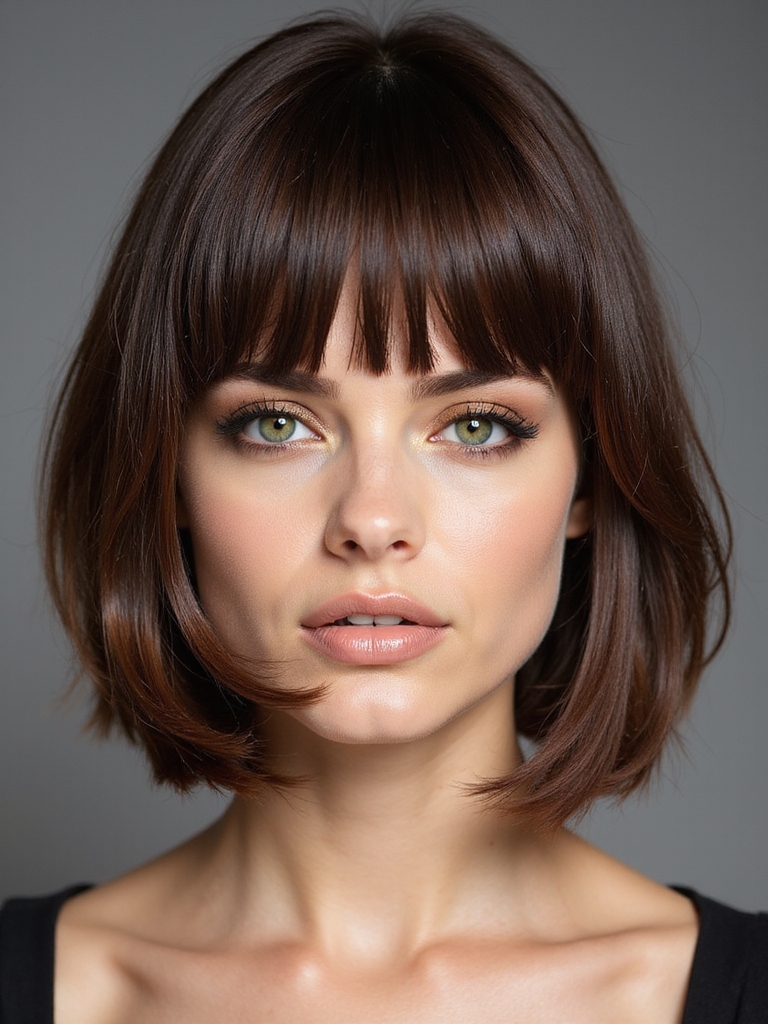
Not every short shag has to look tousled. A sleek take keeps the choppy layer structure underneath but smooths the surface, with the fringe blown out straight and glassy for a sharper, more editorial finish.
It proves the shag can be dressed up. This finish sits easiest on hair that’s straight to loosely wavy. Curly textures can get a modified version too, though it costs real time at the blow dryer to pull off.
The kit is simple: a round brush, a smoothing cream, and roughly ten minutes most mornings. A glossing serum run over just the fringe at the end seals the polish and keeps flyaways down.
Highlighted Ends Where Color Meets the Fringe

Color and bangs make an efficient pair, since the fringe sits right at eye level and puts whatever brightness you add exactly where it gets noticed first.
Keeping the Grow-Out Easy
Painting the ends and the tips of the fringe a shade or two lighter makes choppy texture read more clearly and adds movement without touching the whole head. Keeping the root soft and close to natural means the grow-out stays easy to live with, which matters on a section of hair you’re already trimming often.
Placement work like this tends to run $90–160, closer to a partial-color appointment than a full head of foils, since the color only goes where it actually shows. Time a toning gloss to whenever you’re already back in the chair for something else, and cooler tones won’t get the chance to turn brassy in between.
| Placement | What It Covers | Typical Upkeep |
|---|---|---|
| Ends-only gloss | Brightens just the tips of the fringe and cut | Timed alongside a normal color visit |
| Face-framing pieces | A few pieces around the fringe and cheeks | Grows out softly, low-maintenance root line |
| Partial placement | Fringe plus the top layer of the crown | Falls between a gloss and a full head in cost |
Bangs Mid-Grow-Out, and Why That’s Not a Bad Stage

Sometimes the best fringe is the one you’re only halfway finished growing out, and on a short shag that in-between length actually comes across as intentional. Once the bangs reach the cheekbones, the line dissolves into the face-framing layers around it, with no clear edge to mark where the growing-out started.
- Bangs blend into cheekbone-length face-framing pieces
- No awkward stage between short fringe and full length
- Tuck behind the ears easily on days you want it out of the way
Letting the Fringe and the Face-Framing Layers Talk to Each Other

The real payoff of bangs on a shag shows up where the fringe meets the layers already framing your face. Done well, the two pieces flow into one soft, continuous line down the cheeks.
Tell your stylist which features you want played up or softened before the first cut, and let that early conversation guide where the framing actually lands. A heart-shaped face gains balance from fuller pieces at the jaw; a longer face shortens visually with a fringe that adds width up top.
- Ask for the blend to be checked at every regrowth appointment, not assumed
- A stylist can angle the framing higher or lower depending on where you carry width
- This pairing takes longer in the chair than a single-length fringe, so book extra time
👍Where This Pairing Wins
- +Softens the whole face shape, forehead included
- +Stays intentional-looking even as the fringe grows out
- +Works across straight, wavy, and curly textures
👎Where It Asks More of You
- –Depends on a stylist who blends by eye, past just following a length chart
- –Framing pieces need reshaping as the surrounding cut grows
- –Less dramatic overall than a stand-alone blunt or micro fringe
The Air-Dried, No-Heat Version for Busy Mornings

When the actual goal is spending less time on your hair, a wash-and-go short shag with a soft fringe is the answer. The choppy layers dry into shape on their own, and a wispy or curtain bang needs no heat tool at all.
This is the cut I send early-shift clients and anyone chasing a toddler home with. The whole routine is a scrunch of texture spray and a shake, nothing more.
- Choppy layers air-dry into their finished shape
- Wispy or curtain bangs skip the heat tool entirely
- One product step: scrunch, shake, done
The Fringe Questions Worth Asking First
?Can a short shag with bangs work if I have fine hair?
Yes, with the right cut. A razor-cut, piecey fringe breaks fine hair into separated points, so it doesn’t lie flat and show scalp the way a solid blunt line can. Keeping the rest of the shag layered short too helps carry that same illusion of thickness.
?What’s the actual difference in upkeep between a wispy fringe and a blunt one?
A wispy or curtain bang can stretch a month or more between shapings and forgives a missed trim. A blunt or micro line relaxes fast, so it needs attention closer to every three weeks to keep the edge crisp.
?Can curly or coily hair wear a fringe on a short shag?
Yes, as long as it’s cut dry, in its own curl pattern, with extra length left for the spring-back. Cut wet, that same fringe can end up two inches shorter than planned, so confirm with your stylist beforehand that the bangs specifically get the dry-cut treatment.
?Does the fringe change how often the shag itself needs a cut?
Not really. The shag itself typically holds its shape for around two months between reshapes. The fringe runs on its own, faster schedule, since it grows into your eyes long before the rest of the shape loses definition.
Match the Fringe to Your Actual Mornings
A short shag with bangs is really two decisions in one, since changing the fringe alone can reset the entire look without touching the length underneath. Match the bang to your actual hair type and your actual patience as much as the photo you saved, and the cut will hold up past the first week.
If you’re torn, start soft: a wispy or curtain fringe forgives more and costs less in upkeep than you’d expect, and nothing stops you from going bolder once you’ve lived with bangs for a season. Picture an ordinary Tuesday morning with this fringe already in place. Would you actually reach for it, or just admire it in the photo?
Related Reads