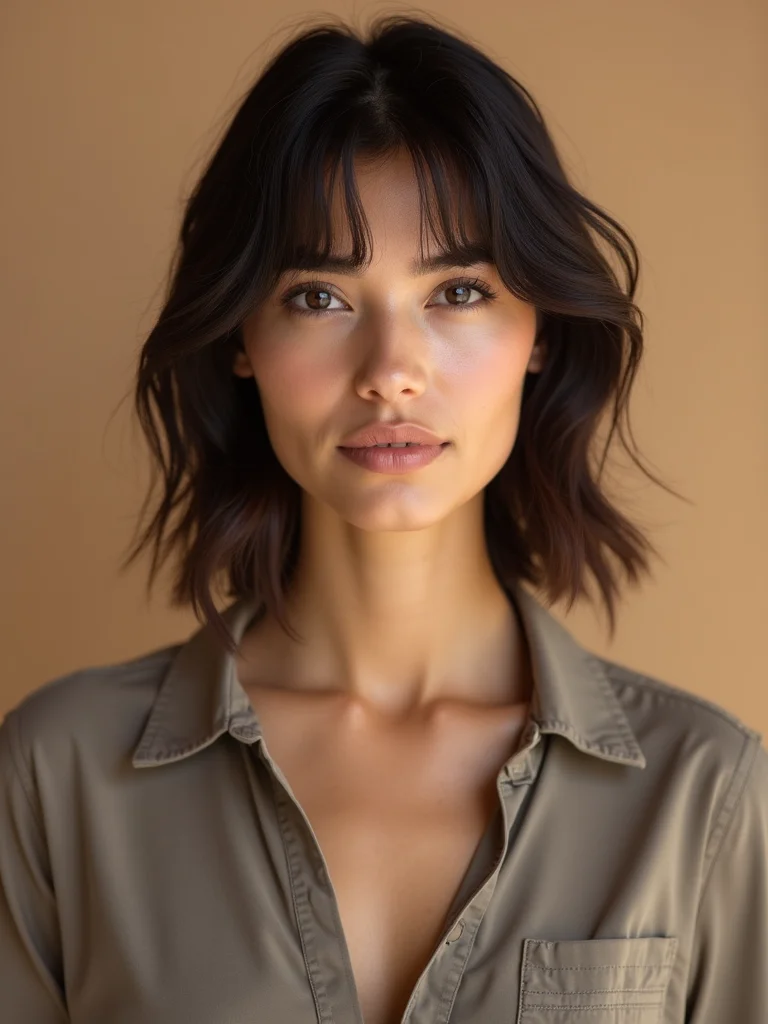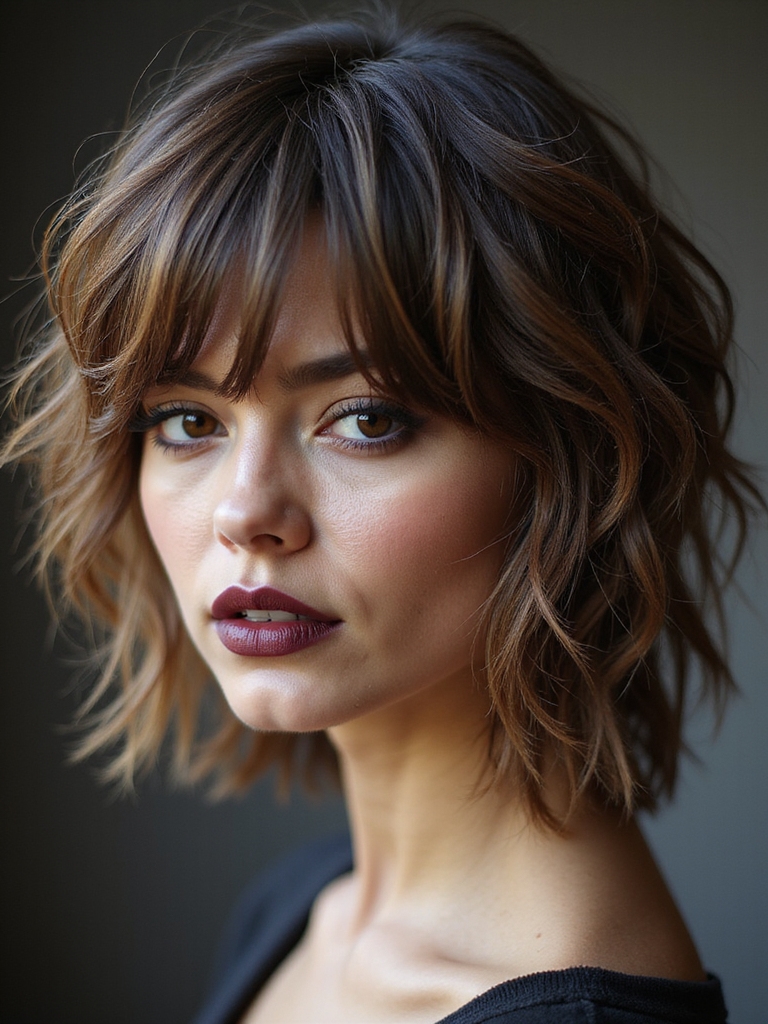
There is a specific swing a curtain bang makes when it is cut right, a soft sweep that grazes the cheekbone and settles just past it. On a wolf cut, those curtain bangs sit over choppy, stacked layers, and the contrast between the soft front and the textured crown is the whole appeal. You get edge and softness in one haircut.
The catch is that this look lives or dies on two measurements: how long the fringe is cut and how much weight comes out of the layers. Nail those for your face and texture and it air-dries into shape. Miss them and it just looks overgrown. So let us go texture by texture, with the bang lengths, products, and salon language that get it right.
The Quick Version
- A wolf cut with curtain bangs pairs choppy crown layers with a soft, center-split fringe
- It flatters most face shapes once you match the bang length to your features
- It air-dries well and works on straight, wavy, and curly hair with the right cutting approach
- Budget about $70 to $130 for the cut, with a trim every 8 to 12 weeks
Why the Shaggy, Face-Framing Shape Works

Before the name even registers, this cut announces itself: shaggy texture up top, undone volume through the crown, and a face-framing fringe that softens every angle. What makes it work is the balance. The choppy layers bring the edge, and the curtain bangs pull it back toward pretty, so the look never tips fully into rocker or fully into sweet.
- Ask for shattered internal layers with weight removed from inside, where it counts
- Keep the bangs cheekbone-skimming so they melt into the face frame
- Finger-tousle and flip the part to let the movement lead

Who This Wolf Cut Flatters
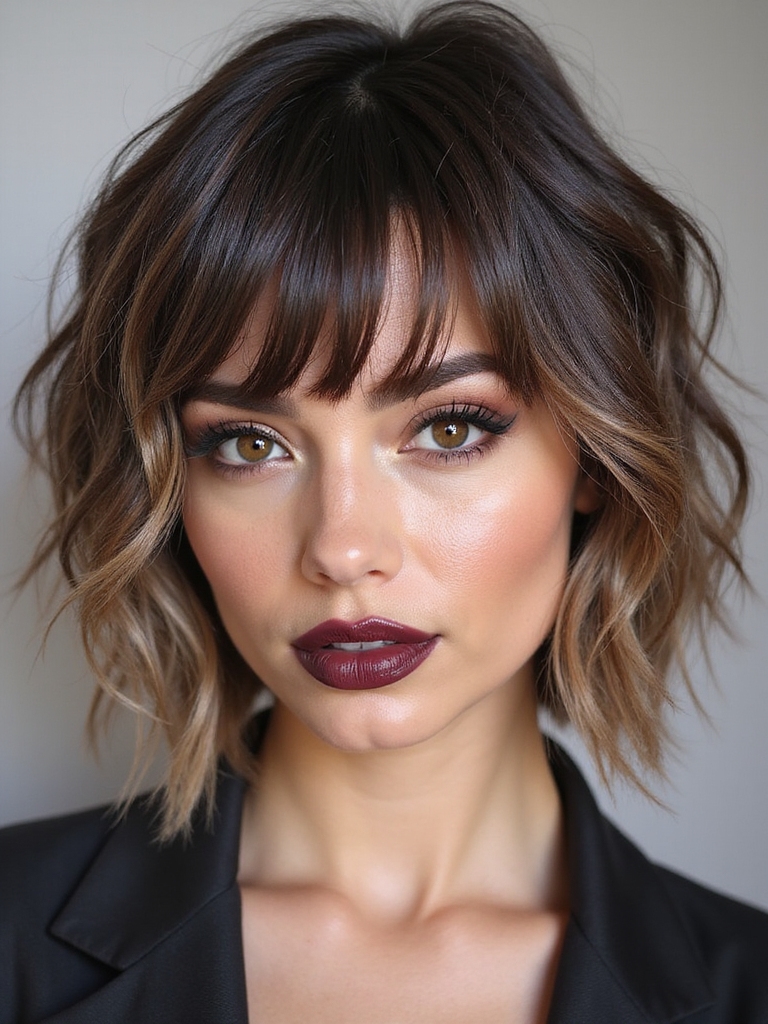
The good news is this shape flatters more faces than almost any cut, because you have two levers to adjust: the layers and the fringe. Round and square faces lean on the choppy crown height and a longer, cheekbone-grazing bang to add length and break up width. I have watched the right bang length soften a strong square jaw in a single sitting.
Matching bang width to your features
Oval and heart shapes can wear almost any version, though heart shapes look best when the bang is a touch wider to balance a narrower chin. Long faces want a fuller, lower fringe to cut the vertical line.
The features this cut highlights are your eyes and cheekbones, since the split fringe frames them directly. If you want a curtain bang that opens the eyes, ask for the inner edges to start right at the brow.
Three terms worth knowing before your appointment.
📖Shag
A layered, textured base cut that builds movement and undone volume.
📖Curtain bang
A center-split fringe that sweeps toward each cheekbone to frame the face.
📖Internal layering
Weight removed inside the hair to add lift without changing the outer length.
Choosing Curtain Bang Length and Density

Bang length sets the whole mood, so it is the first thing I decide in the chair. Brow-grazing bangs give a soft, peek-a-boo effect that reads younger and bolder. Cheekbone-level bangs sculpt and elongate, and they are the more forgiving choice if you are new to a fringe. For that airy wolf feel, I keep the density light so the fringe floats and splits on its own.
- Brow-grazing for a bold, youthful peek; cheekbone-skimming for a softer, longer line
- Ask for feathered ends to cut bulk and keep the movement high
- Lighter density splits and sweeps on its own; heavy density needs daily styling
Soft Shag vs Full Wolf Layering

Both versions share that undone feel, but the layering level changes everything. A soft shag is a gentle cascade: longer layers, airy movement, and minimal weight removal. It is the low-fuss choice for people who want flow over drama.
How to pick by your styling time
The full wolf goes bolder, with choppy stacks, real crown volume, and dramatic face-framing. It needs more styling time but rewards you with serious lift. If you cannot decide, a blended version sits in the middle: a shag base with a wolfier crown.
Choose by lifestyle, not just by photo. A soft wolf cut suits a five-minute morning, while the full wolf wants ten minutes and a texture spray. Be honest about which you will actually do.
Bang length is the single biggest decision you make with this cut. Everything else is adjustable later; the fringe sets the mood from day one.
Sleek, Layered Styling for Straight Hair

Straight hair needs a smart layer density, enough texture to move without thinning out at the ends. The hard part on straight hair is blending the curtain bangs into the face frame so they do not separate into two stiff pieces or sit flat against the forehead.
For styling, straight hair shows everything, so polish matters. I use a heat protectant, a gloss-enhancing serum, and one quick round-brush pass to bevel the bangs under at the cheekbone.
Nine times out of ten, when a client tells me her bangs never sit right, it turns out to be a blow-dry habit and not the cut. Refresh the bangs alone between washes with a flat iron on low and a drop of serum. Straight hair holds a fringe shape well, so a midday touch-up is rarely needed.
Shaping the Wolf Cut for Wavy Hair

Waves are the natural home for this cut, since the texture does half the styling. The goal is to amplify the movement without letting it puff, so I keep the layers mid-to-long to avoid triangle bulk and carve soft face-framing to blend the bangs in.
Why over-thinning ruins waves
I point-cut the ends for airy lift and slide-cut through the mid-lengths to keep them soft. Over-thinning is the fastest way to turn waves frizzy, so I go light.
Diffuse on low with a curl cream, then pinch a little salt spray at the crown for tousled swing. A wavy curtain bang wants to air-dry undisturbed, so resist touching it until it sets.
“On straight hair, the bangs are the part that betrays a rushed blow-dry. Spend the extra thirty seconds beveling them under with a round brush and a cool shot. That one step is the difference between a fringe that frames your eyes and one that hangs like a flat sheet.”
Dry Cut Layering for Curls and Coils
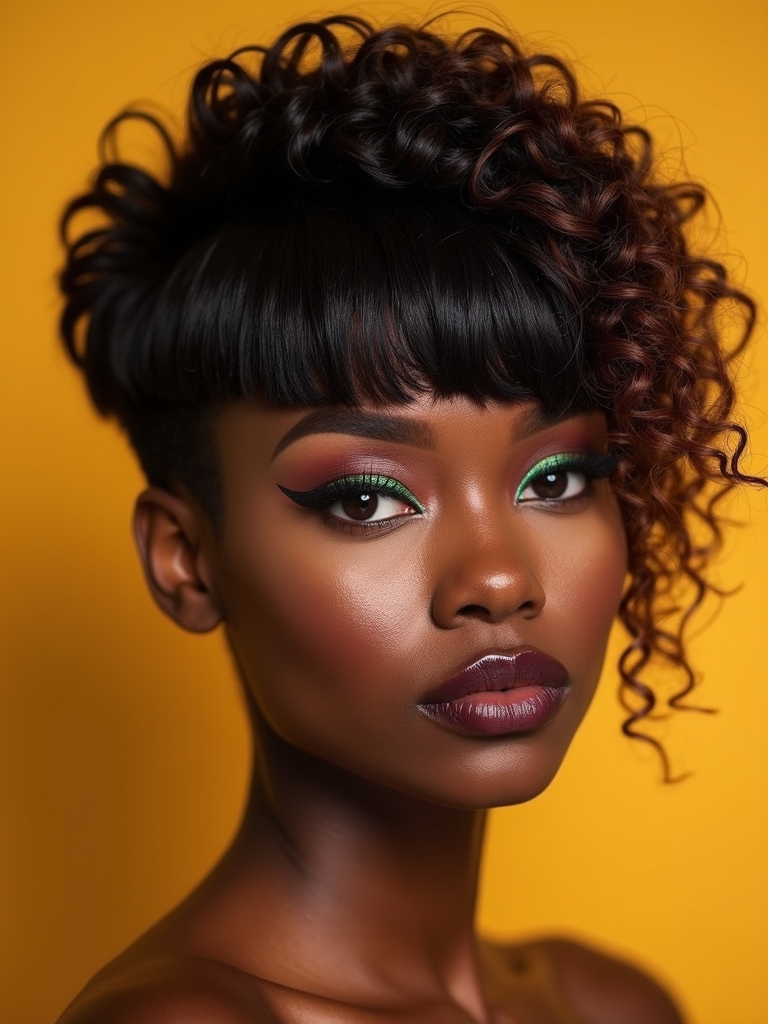
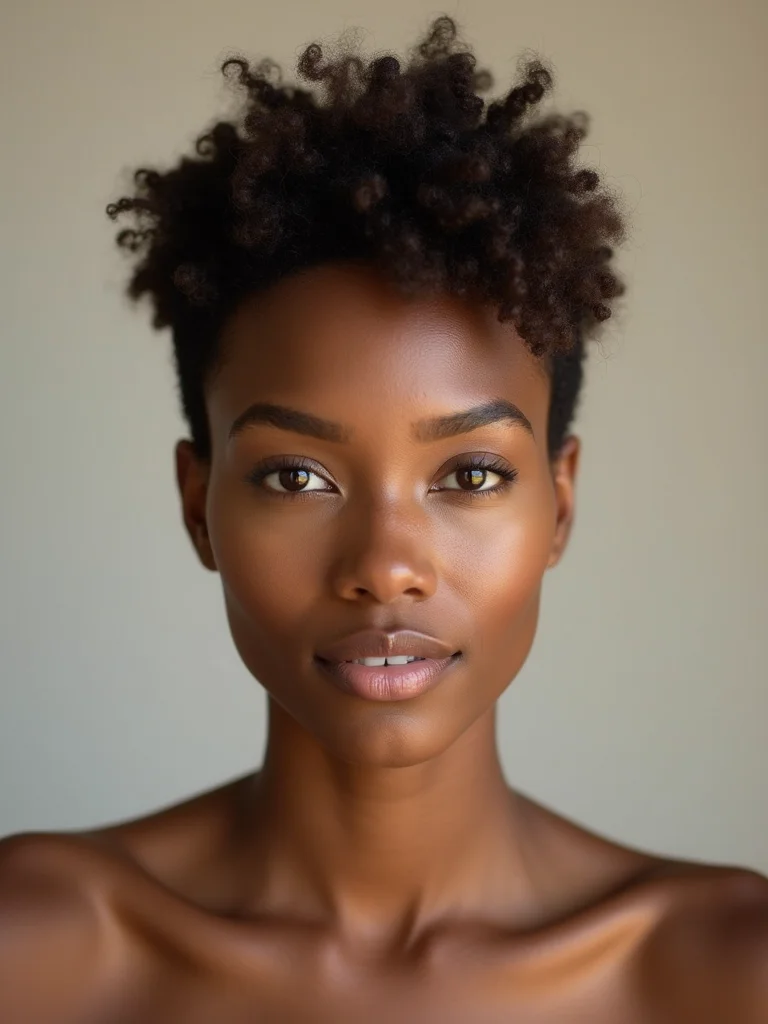
The question clients bring me almost every week is whether curls can wear a fringe, and the answer is yes, every time, as long as it is cut dry. Curls and coils need smarter architecture than waves, and the cut should always be done dry so your stylist can read the true spring of each curl.
Curtain bangs on curly hair become more of a soft halo than a flat curtain, cut a little longer to allow for shrinkage and beveled at the ends to stop frizz. The perimeter stays dense to hold the shape, and the layers are placed to release volume without creating shelves.
- Insist on a dry cut so shrinkage is built into the shape, especially on coily 4a to 4c hair
- Point-cut and twist-cut sparingly to protect your curl clumps
- A curly curtain bang needs only a light touch of gel to define, never a hard cast
Low-Maintenance Upkeep and Grow-Out

The shaggy shape is forgiving as it grows, which is part of why it is so popular. I book full trims every 10 to 12 weeks to keep the silhouette crisp while the length grows, and I reshape the bangs, not the length, in between.
Day to day, protect the layers with satin at night, shampoo less, and co-wash midweek to keep the texture soft. Smooth flyaways with a lightweight cream and clarify about once a month. A standalone bang trim runs $15 to $25 every three to four weeks, or free at many salons if you booked the cut there.
The most common worry I hear about curtain bangs on curls.
❌ Myth: Myth: curly hair cannot pull off curtain bangs
✅ Reality: Fact: curls wear them beautifully when cut dry and a little long to allow for shrinkage.
❌ Myth: Myth: bangs mean constant straightening
✅ Reality: Fact: cut for your texture, a curtain fringe air-dries into a soft swoop with almost no heat.
Root Lift and the Layered Blowout

Crown volume is what makes a wolf cut hit its peak, and it starts at the roots. After years of blow-drying fine hair, the root is the only place I bother chasing volume. I prime with a lightweight root-lifter at the scalp, then lift and blast each section with the nozzle to lock in height where the cut wants it most, right at the crown and the front seams that frame the bangs.
- Spritz a root-lifter only at the scalp, then blast with the dryer for height
- Over-direct the top sections and roll them off a round brush
- Clip the cooled sections up for a few minutes so the lift sets
A Fast Refresh, Shape, and Seal Routine
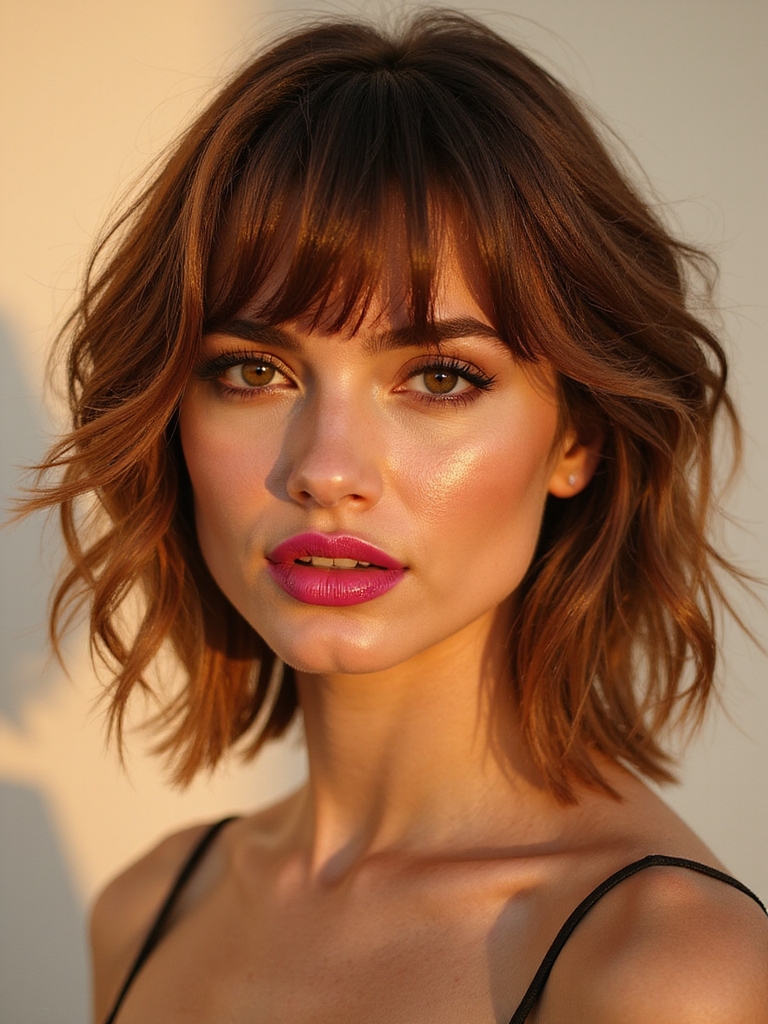
Most mornings I keep this cut fresh with a three-step ritual that takes under five minutes: refresh, shape, seal. Mist a lightweight reviver to wake up the movement, coax the fringe and layers into place with your fingers, then finish with a touchable hold so nothing goes stiff. Consistent and fast beats elaborate every time.
- Refresh: dry shampoo at the roots for lift and a clean start
- Shape: a flexible cream on the ends to redefine the layers
- Seal: a micro-mist of hairspray to set without crunch
Heatless Textured Air-Dry Methods

If you want to skip heat, this cut air-dries with intention as long as you set it while it is still wet. I micro-plop with a T-shirt for ten minutes, then twist the face-framing pieces away from my cheeks to set a soft swoop.
For body, I clip the roots for lift, rope-braid the mid-lengths for loose bends, and scrunch upside down. Soft foam rollers at the crown overnight add height with no heat at all.
The one rule with air-drying is hands off until it is completely dry. Touch it too early and you trade definition for frizz, so wait, then fluff at the roots once it sets.
Product Playbook: Layering Light to Strong

The air-dry choreography works harder with the right product order. I layer light to strong, building hold gradually, starting on damp hair and finishing once it is dry so the bangs stay touchable.
Prime with a volumizing spray at the roots and mist the bangs lightly. Rake a featherweight cream from the mid-lengths to the ends to define without weight.
Finish by pinching a matte paste on the tips and bangs for airy separation. The whole point is intentional texture, so keep every layer thin and build only where you need it.
Face-Framing Color and Highlights

Color is the quiet upgrade that makes the shape read custom. Face-framing highlights along the fringe and front layers catch the light every time the bangs move, and a shadow root keeps the grow-out soft and the upkeep low. The texture of a wolf cut hides regrowth better than a blunt cut, so you can stretch your color appointments.
- Place money pieces along the curtain bangs for the brightest payoff
- Add a shadow root so highlights grow out without a hard line
- Budget roughly $120 to $250 for face-framing highlights on top of the cut
How to Ask Your Stylist for the Shaggy Wolf
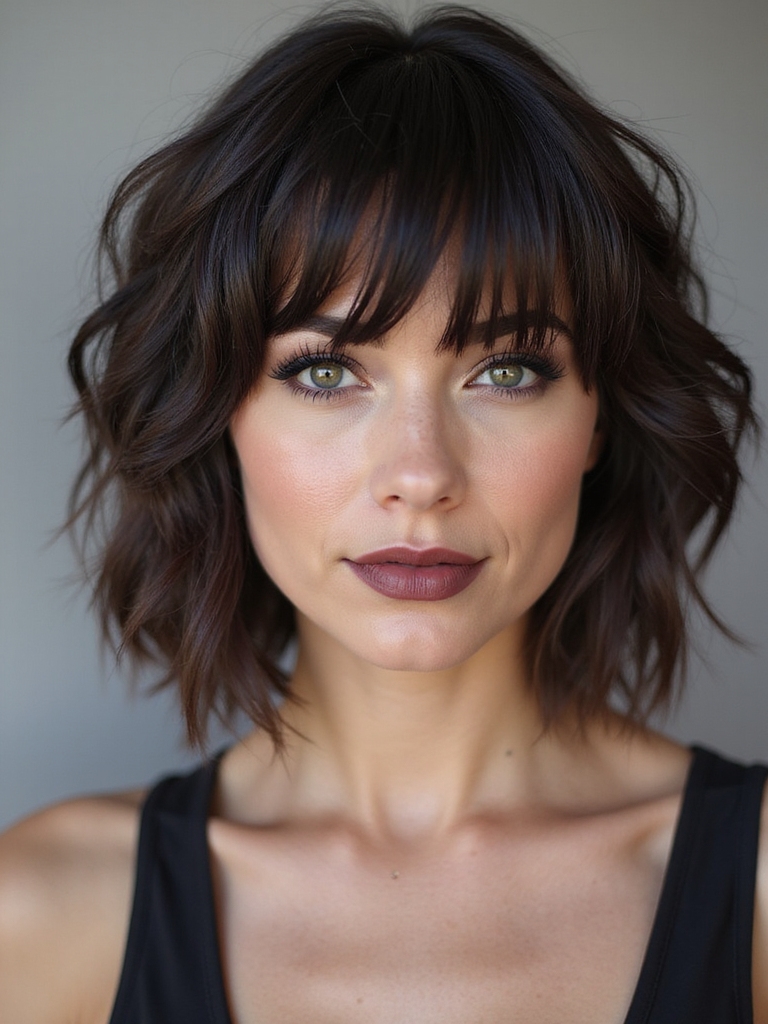
Salon language matters here, because shaggy means ten different things to ten stylists. Bring two or three photos and name the parts: choppy internal layers, crown volume, and cheekbone-skimming curtain bangs. Say how much styling time you actually have, since that tells your stylist whether to go soft shag or full wolf.
Then talk about your texture honestly. If your hair is fine, ask them to go easy on the thinning. If it is curly, confirm they will cut it dry.
- Say ‘choppy internal layers and a soft, center-split fringe’, not just ‘a wolf cut’
- Name your styling time so they match the layer density to your routine
- Ask to keep the first fringe a little long, since you can always trim more
Shaggy Wolf Variations to Try Next

Once you have lived with the basic version, there are easy ways to evolve it. A bolder crown and a disconnected layer or two push it toward rocker. A softer, longer fringe and looser layers walk it back toward a relaxed shag.
You can also play with the fringe alone. Widen it for more coverage, split it higher for an open face, or add a few shorter pieces for a piecey edge. Each tweak changes the mood without a full restyle.
- Go bolder with a disconnected crown layer for more rocker edge
- Soften it with a wider, longer curtain fringe
- Try a short curtain bang version if you want less length to manage
Common Mistakes to Avoid
In the chair, the mistake I fix most often is a fringe cut too short and too blunt, which turns a soft curtain into a heavy band that sits flat. If you are unsure, always start longer; the second visit can take more off once you see how it falls. The other frequent miss is over-thinning, which leaves the layers wispy and stringy when you wanted choppy and full.
On curly and coily hair, the big error is cutting wet, which ignores shrinkage and leaves the bangs far shorter than expected once they spring up. And across every texture, skipping the styling conversation is what sends people home with a cut they cannot recreate. Talk through your real routine before the first snip.
Wolf Cut and Curtain Bang Questions
?How often do curtain bangs on a wolf cut need trimming?
The bangs grow faster than the layers, so plan a quick fringe trim roughly once a month and a full cut every 8 to 12 weeks. Many salons tidy the fringe free between cuts if you booked the original look there.
?Will the curtain bangs separate or look stringy by midday?
Light density and a touch of matte paste keep them sweeping instead of splitting into two pieces. If they go flat, a quick spritz of dry shampoo near the scalp and a finger-comb revives the swoop in seconds.
?Can I get a wolf cut with curtain bangs on curly hair?
Yes, and it looks great when cut dry and a little long to account for shrinkage. The bangs become a soft halo around the face, defined with a light gel rather than a hard cast.
?How much does a wolf cut with curtain bangs cost?
Expect roughly $70 to $130 for the cut depending on your city and salon, with face-framing highlights adding another $120 to $250 if you want color worked in.
?How do I grow out the bangs without a full chop?
As the bangs grow, keep reshaping just the fringe and leave the length alone. Once they pass the cheekbone, ask your stylist to blend them into the face-framing layers so they melt into the shape and grow out cleanly.
Soft Fringe, Bold Shape, Your Call
What keeps people coming back to a wolf cut with curtain bangs is how much it bends to the wearer. The same two ingredients, choppy layers and a soft split fringe, can read rocker on one person and gentle on the next, depending on how you set the bang length and the layer density. It is a haircut you grow into, adjusting the fringe and the texture as you learn what your face and routine want.
If you are weighing it, save this for your next appointment and start with the bang-length conversation. That single choice shapes everything that follows, and getting it right is what makes the cut feel like yours.
More Hair Inspiration